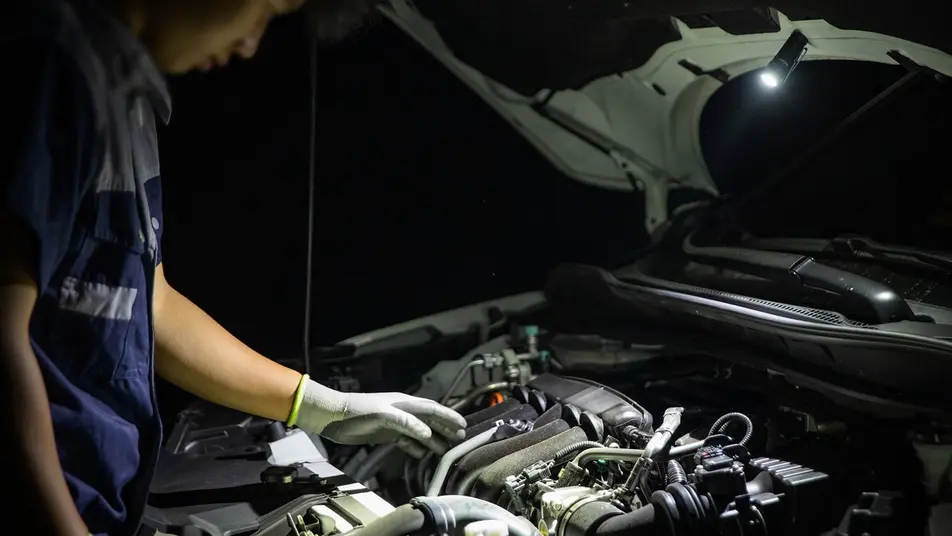
Finding the best mechanic flashlight is essential for accurate auto repair. Working in cramped engine bays demands specialized lighting that combines high lumens, hands-free mounting, and chemical durability. From identifying complex wiring to spotting refrigerant leaks with a uv flashlight, professional mechanics require versatile tools like a high-CRI work light or a mechanics flashlight with a magnetic base. Explore our top picks and real-world diagnostic strategies.
Auto repair demands specialized illumination. Working under the hood, deep inside wheel wells, or beneath a vehicle chassis requires lighting that is bright, hands-free, and resilient against oil, dirt, and drop impacts. Standard household lights often fall short in these harsh environments. For professional auto repair technicians and DIY home mechanics, selecting the right tools is critical to performing accurate work and preventing mistakes.
This guide details what makes a great mechanic flashlight, analyzes key features to look for, and compares the top high-performance options on the market.
Table of Contents
- The Mechanic's Lighting Trifecta (Main + UV + Hands-Free)
- 5 Must-Have Features for Auto Repair
- Top Mechanic Flashlight Picks
- Technical Specifications Comparison
- Real-World Scenarios (Timing Belt / AC Leak / Fuse Box)
The Mechanic's Lighting Trifecta (Main + UV + Hands-Free)
An efficient automotive workspace relies on a combination of different lighting tools. Relying on a single handheld light is rarely sufficient for complex repairs. A professional setup typically consists of three primary light types:
- 1. Main Work Light (Floodlight): The primary work light provides broad, uniform illumination over a large area, such as the entire engine bay. This light eliminates harsh shadows and reduces eye strain during long repair sessions.
- 2. UV Inspection Light: A specialized UV flashlight is indispensable for diagnosing leaks in automotive systems. By illuminating fluorescent dyes added to coolants, refrigerants, and oils, a UV light helps pinpoint precise leak origins that are invisible under standard white light.
- 3. Hands-Free Utility Light: Auto repair is a two-handed job. Whether you are using a torque wrench, removing a caliper, or pulling a wiring harness, you need a compact mechanics flashlight that can be magnetically mounted, clipped, or hung directly over your work area.

5 Must-Have Features for Auto Repair
Before purchasing an automotive flashlight, you must evaluate several critical physical and electrical specifications:
High CRI for Accurate Wire Color ID
CRI (Color Rendering Index) measures how accurately a light source reveals the true colors of objects compared to natural sunlight. In automotive diagnostics, identifying correct wire colors in a complex harness or fuse box is crucial. A low-CRI light can make red, orange, and brown wires look identical, leading to costly wiring mistakes. Look for high-CRI LEDs to ensure absolute clarity. According to optical measurement standards detailed in the National Institute of Standards and Technology (NIST) Optical Radiation Group, Color Rendering Index metrics evaluate how source spectra faithfully reproduce target object colors compared to natural reference illuminants (Source: National Institute of Standards and Technology Optical Radiation Group).
Magnetic Base for Under-Hood Work
The best mechanic flashlight must feature a strong integrated magnetic base. Steel frames, hoods, and suspension components offer endless mounting surfaces. A powerful magnet allows you to position the beam at any angle, keeping your hands free to handle tools.
UV Mode for Coolant/Refrigerant Leaks
Leaking air conditioning lines, oil pans, and radiators are common issues. A dedicated uv flashlight with a 365 nm wavelength is ideal because it minimizes visible blue glare, making fluorescent leak-detection dyes glow with maximum contrast.
Compact Flat Body for Tight Spaces
Traditional cylindrical flashlights can be difficult to wedge into tight spots and tend to roll away when placed on flat engine surfaces. A compact, flat-bodied, or rectangular light sits securely where you place it and slips easily between the radiator and the engine block.
Impact and Chemical Resistance
Automotive shops are harsh environments. Your light will inevitably contact motor oil, brake fluid, gasoline, and hard concrete floors. Ensure your choice has an anodized aluminum body, a high IP rating (IPX7 or IPX8 waterproof), and rated impact resistance to survive drops. As outlined in standard environmental testing protocols published under the International Electrotechnical Commission (IEC 60529), Ingress Protection (IP) ratings establish strict laboratory criteria for enclosure resistance against dust, fluids, and liquid immersion (Source: International Electrotechnical Commission).
Top Mechanic Flashlight Picks
Best Overall: Olight Baton 4
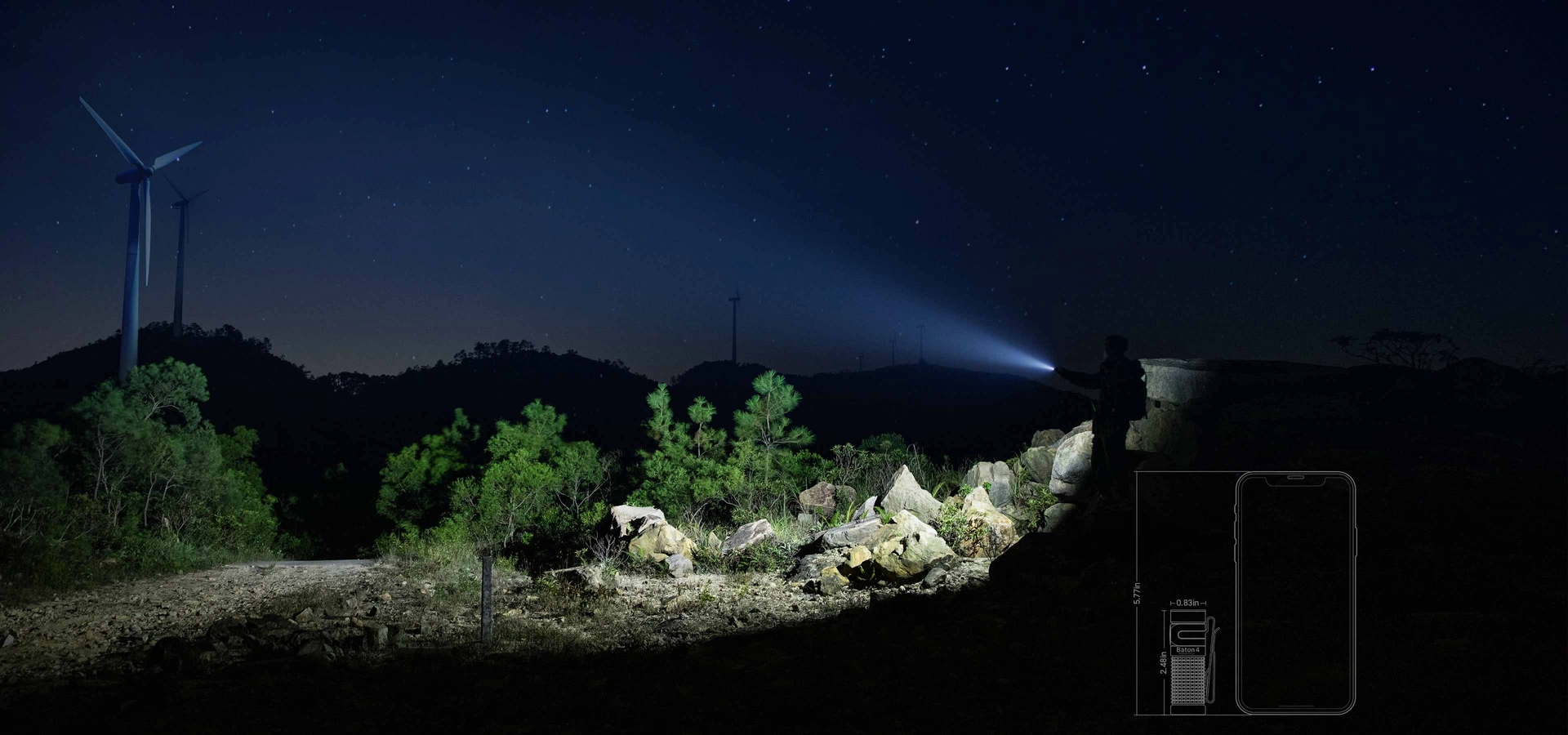
The Baton 4 delivers an incredible 1,300-lumen beam in an ultra-compact body, making it a remarkably powerful inspection tool for its pocketable size class.
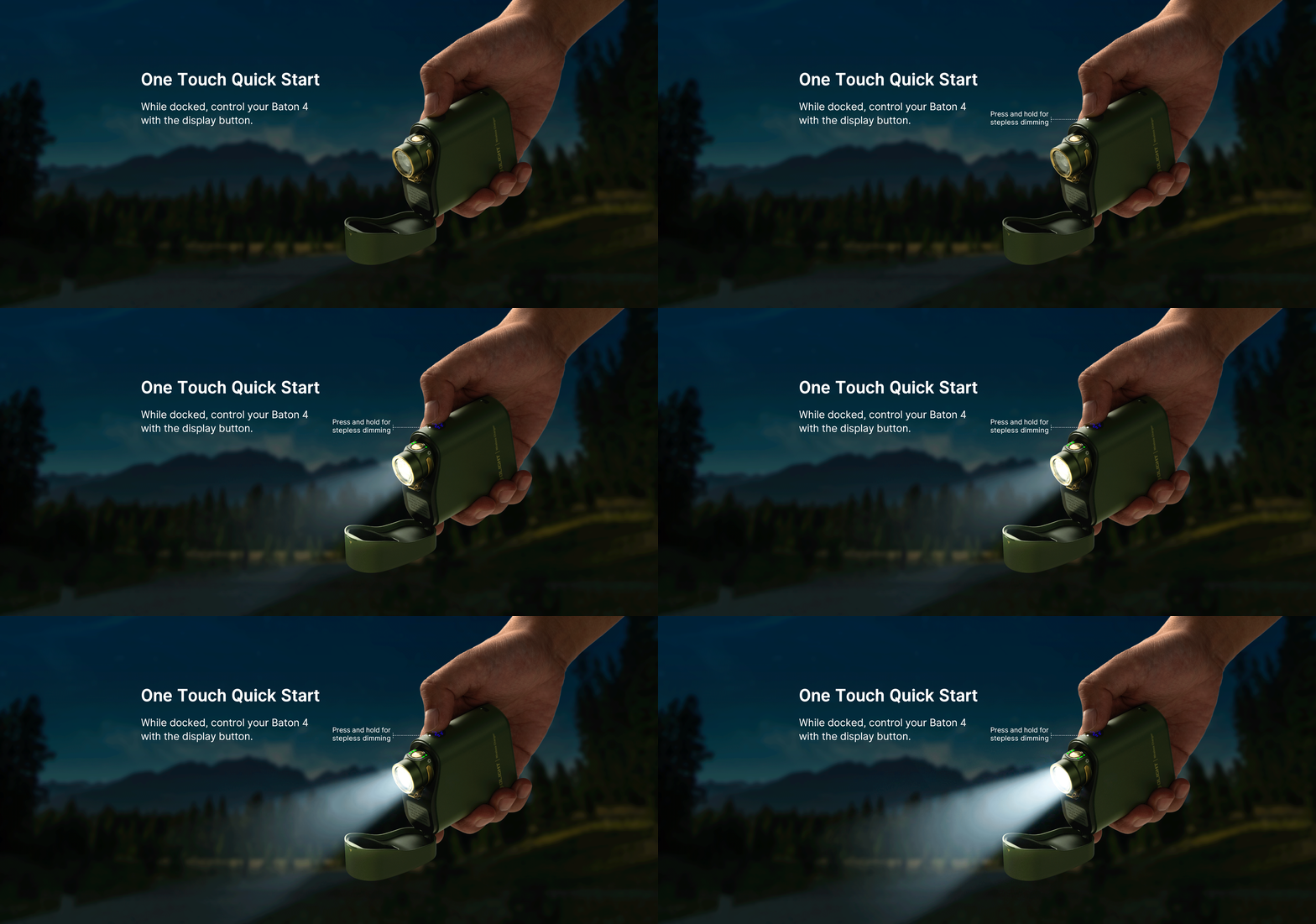
The Baton 4 features a robust metal side switch that resists wear and tear. Its laser microperforated indicators display battery levels clearly. The Premium Edition includes a 5,000mAh portable wireless charging case, extending the total runtime up to 190 days. The charging case provides extended runtimes, easy external control, and multi-device charging capability.
Olight Baton 4
- Max Output: 1,300 lumens
- Max Beam Distance: 170 meters
- Reflector Type: TIR Optic Lens
- Max Light Intensity: 7,225 candela
- Charging Interface: MCC Magnetic Charging Port / USB-C via Charging Case
Best UV Combo: Arkfeld Pro
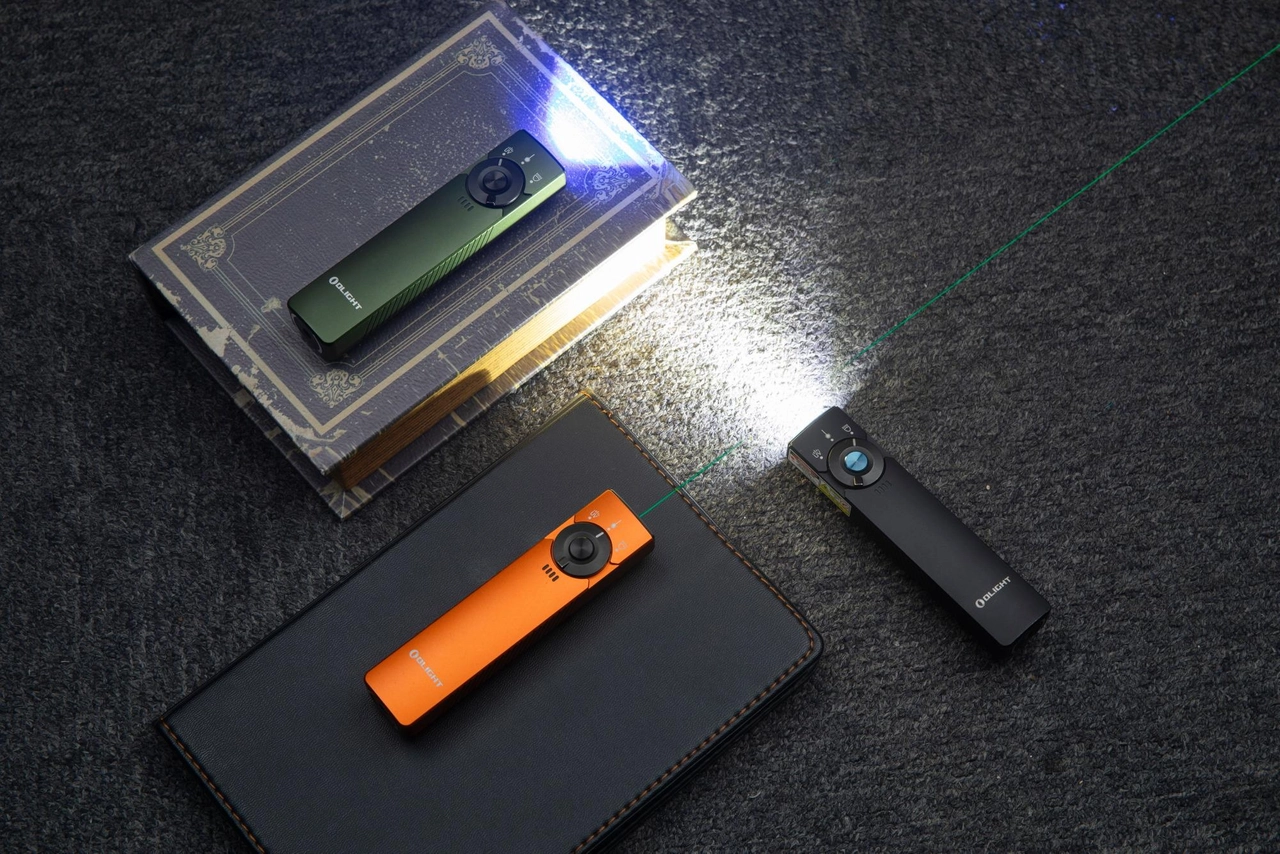
The Arkfeld Pro is a versatile 3-in-1 tool that serves as a high-powered work light, a dedicated uv flashlight, and a green laser pointer. This combination makes it an elite choice for modern automotive diagnostics.
The flat rectangular body prevents the light from rolling off sloped surfaces under the hood. The 900mW UV light is highly pure and excels at detecting AC refrigerant leaks and coolant traces. Its Class 3R green laser is useful for pointing out specific engine components during vehicle check-ins.
Olight Arkfeld Pro
- Max White Light Output: 1,300 lumens
- UV Light Power: 900mW (365nm wavelength)
- Laser Rating: Class 3R Green Laser
- Battery Capacity: 1500mAh Lithium Polymer Battery
- Form Factor: Flat, rectangular profile with an intuitive rotary selector dial
Best Hands-Free: Olight Oclip Pro
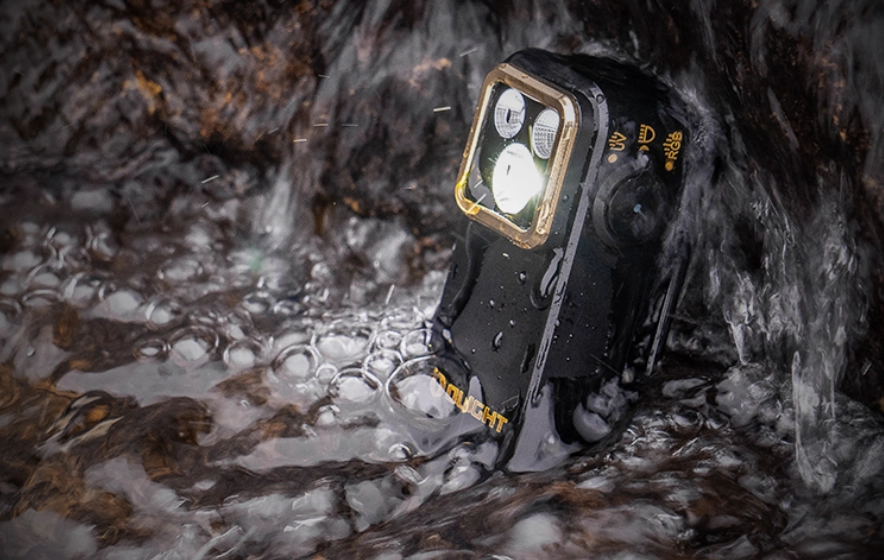
With a heavy-duty clip and magnetic base, the Oclip Pro can mount to clothing, gear, or steel surfaces for convenient hands-free lighting in extremely tight areas.
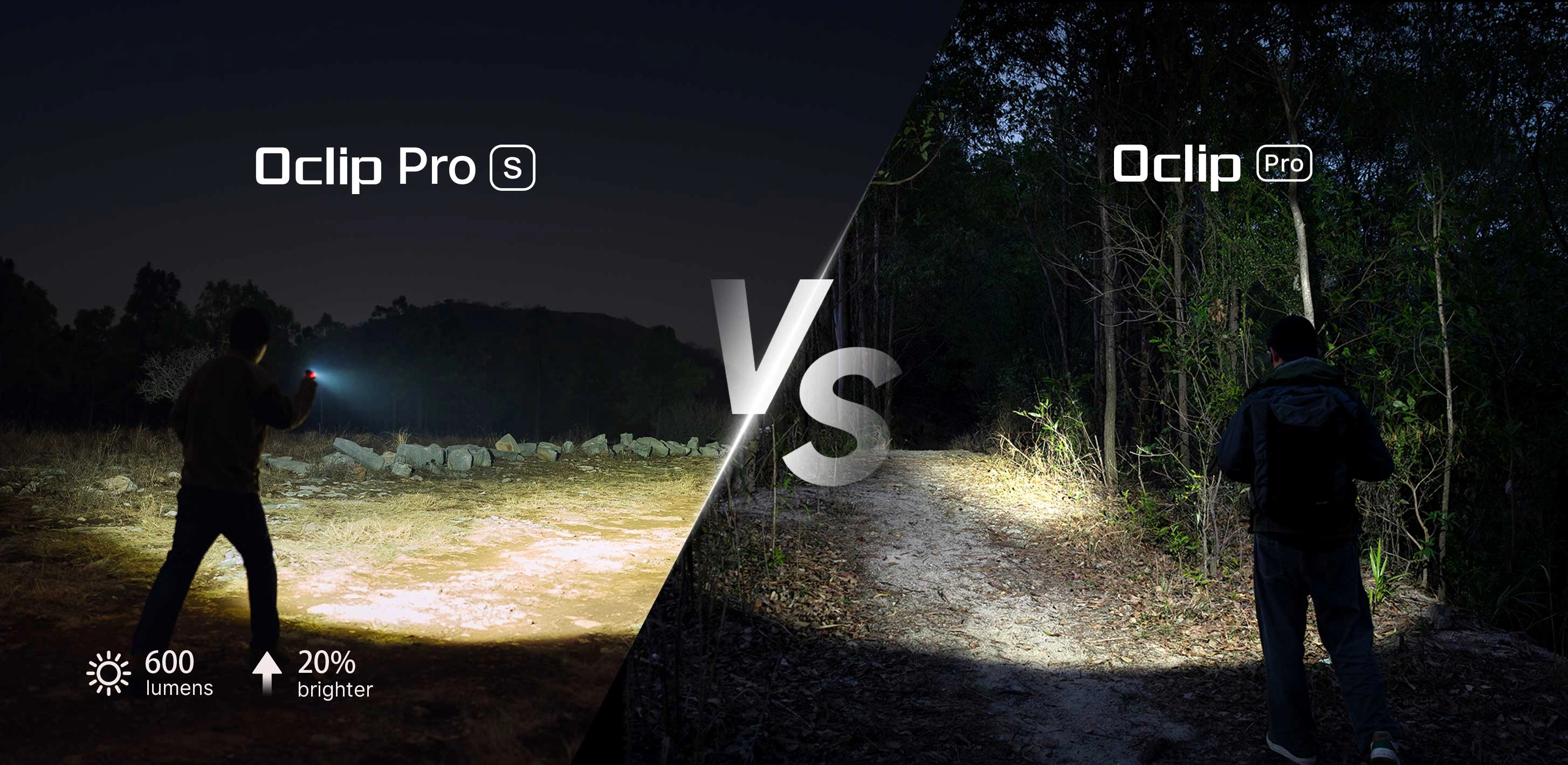
The Oclip Pro S variant features a 5-in-1 lighting system including white floodlight, high-purity 365 nm UV, and versatile spot and flood beam options, casting precise illumination exactly where your hands are working.
Olight Oclip Pro
- Max Output: 500-600 lumens (depending on model variant)
- Lighting Solutions: Wide floodlight, long-range spotlight, and secondary red/RGB lights
- Mounting Options: Built-in spring clip, lanyard hole, and magnetic base
- Charging Interface: USB-C charging port protected by a metal dust cover
Technical Specifications Comparison
| Feature / Model | Olight Baton 4 | Arkfeld Pro | Oclip Pro Series |
|---|---|---|---|
| Max Output (White) | 1,300 lumens | 1,300 lumens | 500 - 600 lumens |
| Max Beam Distance | 170 meters | 102 meters | Up to 120 meters (Spot mode) |
| Integrated UV | No | Yes (900mW, 365nm) | Yes (Oclip Pro S / VN models) |
| Mounting Features | Magnetic Base, Two-Way Pocket Clip | Magnetic Base, Pocket Clip | Spring Clip, Magnetic Base, Lanyard Hole |
| Charging Type | Magnetic Charging (USB-C Case) | Magnetic Charging | USB-C (Waterproof Port) |
| Form Factor | Compact Cylindrical | Slim Flat / Rectangular | Ultra-Compact Clip-on |
Real-World Scenarios (Timing Belt / AC Leak / Fuse Box)
Here is how to utilize this mechanics flashlight lineup to solve common automotive repair challenges:
Scenario 1: Replacing a Timing Belt (Tight Space Navigation)
The Challenge: Timing belts sit on the side of the engine block, deep inside a narrow space crowded by the frame rail, engine mounts, and accessory pulleys.
The Solution: Use the Olight Oclip Pro. Magnetically mount it onto the inner fender wall or clip it directly to a nearby wire loom. Its compact body fits into tight clearances, directing a bright floodlight onto the timing marks on the crankshaft and camshaft sprockets without casting shadows from your hands.
Scenario 2: Diagnosing an Air Conditioning Leak
The Challenge: Slow AC refrigerant leaks are hard to detect visually as the gas evaporates, leaving only trace oils behind.
The Solution: Inject fluorescent dye into the AC system, run the vehicle, and then inspect the lines using the Arkfeld Pro in UV mode. The high-purity 365nm UV beam causes the dye at the leak point to glow brightly, revealing the damaged hose, joint, or condenser core immediately.
Scenario 3: Inspecting a Cabin Fuse Box under the Dashboard
The Challenge: Cabin fuse boxes are typically hidden deep under the driver-side dashboard, near the pedals. This space is extremely dark, cramped, and hard to illuminate.
The Solution: Attach the Baton 4 to a metal bracket under the dash using its magnetic tail cap. Set it to a medium brightness mode (around 60 to 150 lumens) to get a clear view of the fuse labels and wire paths without being blinded by glare. The high-quality TIR optic lens ensures a soft, balanced light, allowing you to easily read tiny fuse ratings and colored wire insulation.