



TL;DR: Explosion-proof equipment uses an enclosure designed for a specified gas or vapor hazard. A work light needs authorization for the exact area and configuration, which may require a different protection method. Confirm the area, light, and battery with your site contact before entry. Keep personal lights outside unless the site explicitly approves them.
📋 Table of Contents
- 1. Check the area before checking the flashlight
- 2. Are there any flashlights that are intrinsically safe?
- 3. Are LED lights explosion proof?
- 4. How do you know if a flashlight is intrinsically safe?
- 5. Make the handheld light policy easy to follow
- 6. Put personal lights to work only in permitted ordinary areas
- 7. Frequently Asked Questions
Check the area before checking the flashlight
| What to check | Where to confirm it |
|---|---|
| Exact work area and access route | The site's current area information and work authorization |
| Exact portable light | The site's current equipment list and the light's own model label |
| Battery, pack, and accessories | The approved configuration and manufacturer instructions |
| Uncertainty or conflicting information | Stay outside and ask the designated site contact |
A work order may name the machine to inspect and the doorway that gets you there. The approved portable light may be listed somewhere else. Check both while you are still in the area where the site allows you to do so. If an authorized light is missing or a personal one is still in your pocket, speak to the person who issued the work before you go through the door. That is easier to resolve at a check-in desk than at an uncertain boundary halfway through a job.
In the 2025 annual edition of the Code of Federal Regulations, OSHA's hazardous-location equipment rule addresses electrical hazards associated with flammable vapors, liquids, or gases and combustible dusts or fibers. It calls for separate consideration of each room, section, or area when determining its classification. An entire facility name gives you little to go on. A warehouse, a doorway into a processing room, and the office where badges are issued may have different rules. Ask about the whole route you are assigned, including places where you might stop along it.
The same rule describes several routes for equipment to meet the requirements of a classified location. At the worker level, follow your employer's documented equipment decision for the specific area. A person holding a flashlight should never try to determine the area classification or approve a substitute on the strength of a retail listing. If your instructions cover one room and your work moves to another, get the change resolved through the site's process.
Start a new work order with the name of the person who can answer a location or equipment question. That may be the person issuing the job, the supervisor responsible for the area, or someone assigned to verify portable equipment. Find out during the briefing. If the usual contact is away, check who is covering before starting. A label is useful evidence for that conversation, and the site contact can relate it to the room, route, and work authorization.
Even a familiar room can have a temporary restriction. A door may be closed for a work activity, a supervisor may move a prejob meeting to another building, or a site may direct contractors along a different route. Tell the site contact about such changes before carrying the light farther. The questions stay simple. Where is the work now? How can I get to it? Which device and configuration are authorized for the new plan?
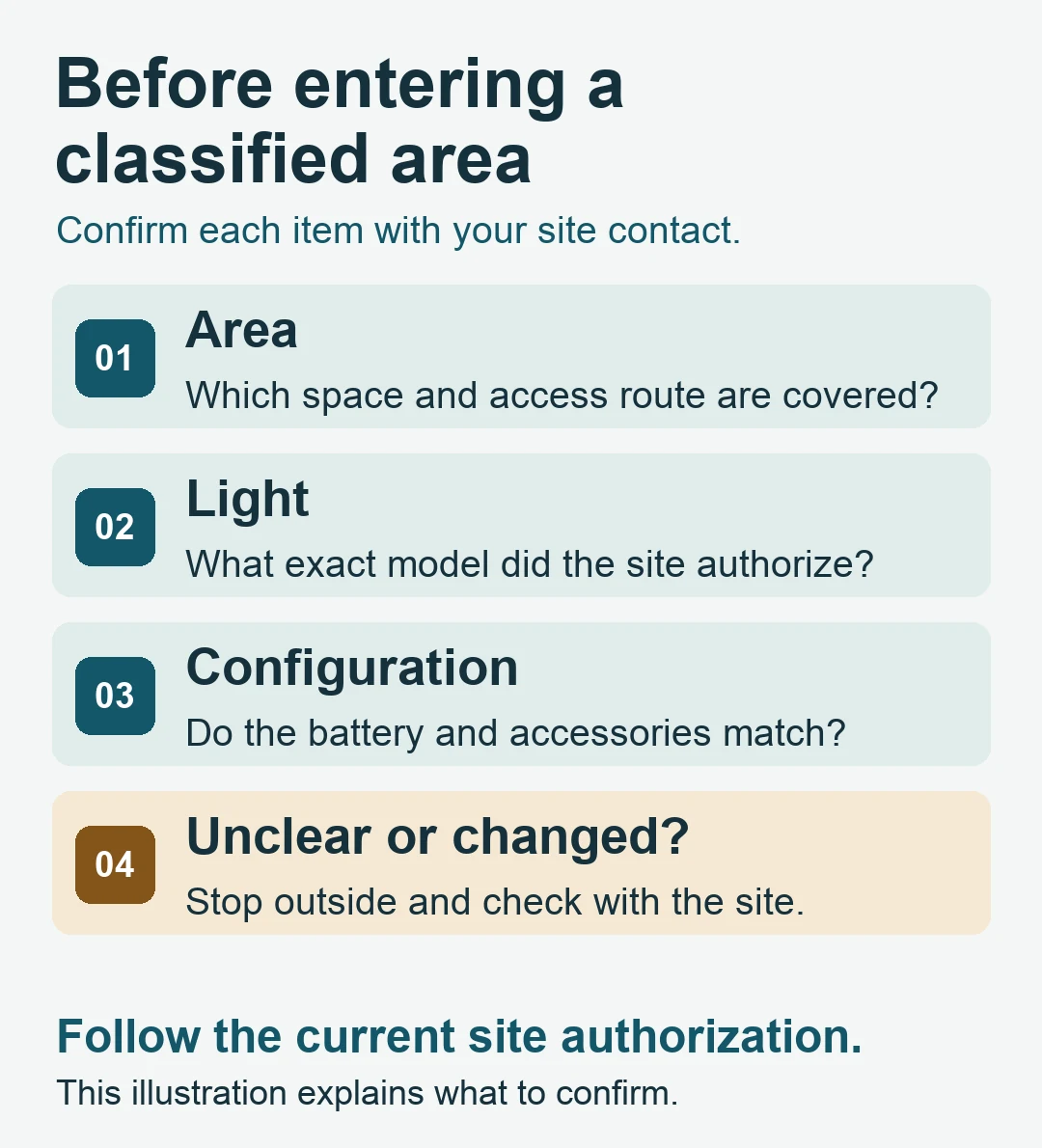
Confirm the exact area, approved light, and permitted configuration before you cross the site boundary.
Are there any flashlights that are intrinsically safe?
Yes. Some portable lights are certified as intrinsically safe for specified hazardous locations. For workplace use, ask for the exact model and approved configuration on your site's equipment list. Check that the device and its record match. A certificate for a related model or a different configuration leaves that question open.
The 2025 federal workplace text treats intrinsic safety as suitable only for the hazardous locations for which particular equipment has been approved. The 2025 annual CFR definitions for OSHA electrical rules describe an explosion-proof enclosure that contains an internal explosion of a specified gas or vapor and prevents ignition of the surrounding specified atmosphere, including from the exterior temperature. Neither term says a lamp can be used in every kind of classified location.
This is useful when looking at an issue-room label or a piece of purchasing documentation. One light may have a record for a particular use and another light may use a different protection method. Treat the names as clues for finding the relevant record. The terms describe how equipment meets particular requirements, and your site's decision addresses where that particular device can go.
For instance, a contractor might be issued a light from a common storage rack and later offered a smaller spare by another crew. The spare might offer the same brightness and have an apparently similar label. The useful information is the exact model and the authorization for your assignment. Keep using the issued light as directed. If it stops working, get a confirmed replacement through the same site process before you continue. An approved spare can save a trip back to the tool room when the crew has already identified it.
A buyer might first see “intrinsically safe” in a summary line on a quote. Ask the supplier to send the current certification record and the full model or ordering code. Bring those to the site's equipment lead so purchasing and the tool room can plan around the same device. An order acknowledgement, invoice, or line on a webpage is useful for receiving the shipment. The technical approval information needs to come from the applicable record and be tied to the unit actually ordered.
Combustible dust needs its own attention. The federal hazardous-location equipment rule addresses both flammable gases and combustible dusts. The approval information for one gas or vapor area cannot establish suitability for a dust area. If your job includes grain handling or a dust-producing process, report the exact work location to the site and ask what equipment it authorizes there. The scope of the authorization matters more than what the lamp is called.
Are LED lights explosion proof?
Some LED lights are designed and approved for particular classified locations. The LED describes the light source. Explosion protection and suitability depend on the evaluated equipment, its specified configuration, and the location. Use the site's authorized equipment and check the exact device record. Treat an LED label, a rugged case, or an ingress rating as separate facts.
A claim about water or dust ingress tells you something about how an enclosure was evaluated for ingress. The worksite question is whether the complete device is acceptable for the identified ignition hazard. The light source, control, battery, construction, and conditions all belong to that question as handled by the manufacturer, certification body, and employer. An everyday flashlight's rugged construction can't settle that question on its own.
The same principle applies to a high-output lamp that's part of your usual work bag. A lockout mode can be useful for ordinary transport. It gives you a way to prevent an unintended button press in the situations covered by the manufacturer's instructions. There is still a battery and an assembled device in the bag. If the site excludes personal lights from the area, turning one off or locking its switch leaves the carry rule in place.
| What you may see or hear | What to confirm |
|---|---|
| An LED or high lumen rating | Which exact device is authorized for the area |
| A dust or water ingress rating | The separate approval information relevant to the location |
| A similar model name on another light | Full model and variant on the device and approved list |
| A mark shown in a catalog photo | The actual unit, complete current record, and applicable scope |
| A lamp carried switched off | Where the site allows that personal equipment to be stored |
Be precise when reporting the difference between a performance claim and a certification claim. For a unit advertised as waterproof and drop-resistant, put those terms in the part of the inventory that describes ordinary use. Keep the field for workplace equipment approval separate. A new employee searching the equipment list should be able to tell which entry describes a marketing feature and which identifies the record checked by the site. This avoids carrying a description forward as a substitute for verification.
A receipt, shipping label, case label, belt pouch, and device can each identify something different. If the receipt says the family name and the case shows a different suffix from the light, set it aside and ask the issuer to reconcile them. The same issue can come up when two shifts share a cabinet and items have been returned to the wrong shelf. A clear storage system makes it easier to see the exact identity without taking equipment out of its expected configuration.
An orange housing or conspicuously marked pouch can help people find the right shelf. Use those as storage and recognition cues. The approval trail still needs to connect to the actual device and configuration. The place to settle a discrepancy is the designated check-in or equipment area, where authorized staff can compare records and issue a compatible replacement if needed.
How do you know if a flashlight is intrinsically safe?
Read the exact model and markings on the light and match them to the certification record and the site's approved equipment list. Confirm the allowed battery or pack and any conditions that apply. If the model, configuration, or area is unclear, keep the light outside and ask the person who authorizes equipment for that work.
Start with the device and the manufacturer's instructions
Read the model on the equipment you will actually carry. A store page may combine several variants, and a shipping carton may be used again for returns. A model suffix that looks like a color code can still help distinguish what you received from what a listing covers. Give the exact text to the person checking it instead of shortening the name to the product family.
Look for the manufacturer's documentation associated with that identity. If the record specifies a particular battery, a compatible-looking battery of similar shape or capacity does not by itself prove the configuration matches. Keep the device as issued. Resolve questions about a charging dock, spare pack, clip, helmet mount, or replacement part through the site before taking it farther. A person receiving the equipment can note the concern without opening or changing the unit.
A rubbed-off label or conflicting records call for a pause. Keep the device at the permitted issue location and report what's missing. An identifiable working replacement from the approved pool can reduce downtime while the site investigates the first unit. Avoid taking a spare from a nearby crew until your site contact knows which model it is and has confirmed it for your assignment.
Handle replacements away from the equipment boundary, at a place the site designates for that purpose. A spare can arrive with a different charger, a changed part number, or a sticker with an earlier revision. Set the new parts aside as a kit for the issuer to check. If some accessories belong to old equipment that is being retired, keep them separately identified until disposal or return. That leaves fewer similar-looking parts in the supply tray and makes the next issue easier to check.
Match the record to the intended workplace
A mark tells you where to look for the relevant information. Record the organization that issued the certification and the number or identifier attached to it. The product record can show the equipment that was evaluated and the conditions the certification addresses. A symbol standing on its own does not show that the mark covers the whole light in your hand or that its conditions match your workplace.
Ask the equipment issuer for a complete applicable certification record if you have only a screenshot or a cropped photo of the label. Use the identifier on the device when requesting the record, and have the issuer confirm that it applies to the configuration you were given. Record details from the applicable source so someone else can confirm the same model and scope.
An international document may show up in the supplier's packet along with U.S. information. The IECEx Certified Equipment Scheme FAQ explains how its online system holds the controlled version of an IECEx certificate and how to check its status. If an IECEx or ATEX document is present, send it through the site's normal review with the documents required for your U.S. facility. Leave decisions about applicable recognition and coverage to the people responsible for them. The existence of an international certificate doesn't establish acceptance under U.S. workplace rules.
Certifications also apply with conditions. A product may be listed with an ambient operating range or another condition that an equipment lead needs to confirm. Keep the complete record available instead of transcribing one line from the front page. Include any referenced manufacturer instructions needed to find the allowed configuration. Giving the reviewer the full file is useful when an apparently familiar light has been revised and the current documentation differs from the sheet already in the local folder.
A record should make the conversation more specific. For an unresolved check, you could report that the site list names one model, the unit in the issue tray has a different suffix, and the battery in the tray belongs to another kit. Tell the contact where you are and what work is waiting. This lets them check the discrepancy or issue a complete replacement while you stay on the permitted side.
Make the handheld light policy easy to follow
A useful workplace policy explains where the personal-device rule starts, who can answer equipment questions, and how to get a replacement. A worker may arrive early, collect a badge at one desk, and meet a crew at another place. Write the instructions so the worker can use them at the first point of contact. Give the actual name the site uses for the issue room or prejob location and identify who is responsible when a regular supervisor is away.
Put the model and approved configuration into the equipment list in a way that tool-room staff can compare with the physical unit. Make a clear distinction between the actual approving record and a note about where the light is stored. Retire earlier list versions when they no longer apply. A close-looking template with an out-of-date part number can slow down the same shift that needs a replacement most.
Make an easy option for a borrowed work light and a permitted place for personal items. If a worker learns that a usual lamp stays outside only after walking across the site, someone may need to pause the job and go back. When the policy identifies the drop-off place and the issue point up front, keeping personal lighting out of the wrong area becomes straightforward. Give visitors and contractors the same practical information early enough for them to act on it.
The light may be shared across shifts. In an end-of-shift note, preserve the device identity and describe the actual issue, such as an unreadable label, an unexpected accessory, or a missing approved spare. A short record lets the next shift know which equipment to leave out of rotation. It also lets the right person check whether a restock should involve the exact same model or a new approved item.
When giving an update by phone or radio, state where the people and equipment are right now and the point beyond which they have been told to wait. Ask for the revised instruction through the normal site channel. One person can walk back to the issue point only if the site has identified a permitted route. If the next crew inherits the work, pass along the unresolved question and the current location reference. A handover that says only “waiting on a light” loses the reason the work is paused.
Suppose equipment is issued for an inspection from one corridor and the permit lead switches the approach to another route after the briefing. The workers need the updated route and any related equipment decision before proceeding. A phrase like “same piece of equipment” tells them about the task. The briefing should also confirm where they'll be carrying their light. A policy that tells them who to ask and where to wait makes that handoff easier.
Audit the policy from a first-time worker's point of view. Can the person tell which light they're being handed and where the authorization begins? Can they ask the same questions at night? Can they put a personal device away without walking back through a restricted entrance? These are administrative checks a site can practice at a briefing point. A demonstration that a light turns on or holds its charge is about usability only and does not approve it for any hazardous area.
Make sure the night shift can get the same answer as the day shift. If a staffed counter closes, list the designated after-hours contact or equipment issue location. Train people to bring a missing label or a device mismatch to that point and to wait for a confirmed replacement. For a practice exercise at the check-in desk, show two empty cases with different model labels and have the team explain who they would contact. Keep that exercise about reading and reporting equipment identity.
An approved light can still be out of service. Follow the site's normal process if the body, label, switch, or battery system appears to have changed since issue. At the handover point, note where it came from, identify the reported issue, and arrange an authorized replacement. Keep the damaged unit out of the work until the responsible person has assessed it under the site's process. There is no need for the next worker to improvise a repair to meet a schedule.
Put personal lights to work only in permitted ordinary areas
Check the site's classification and personal-equipment policy even in a space that looks like an office, a parking lot, or a locker room. A site may put its change point at a particular gate or keep personal gear off the property entirely. When it confirms an area is nonclassified and permits an ordinary light there, choose one for the task you actually do in that space. Your flashlight does not get approval for a different area because you used it earlier outside.
For example, a compact flashlight may help read a shelf label in a permitted gear room. A rechargeable flashlight needs its specified charging equipment and a place where the site allows charging. Keep the issued light and personal gear in the places the site names. If you need to pass through an area with different rules after charging or packing, account for that before you pick up your bag.

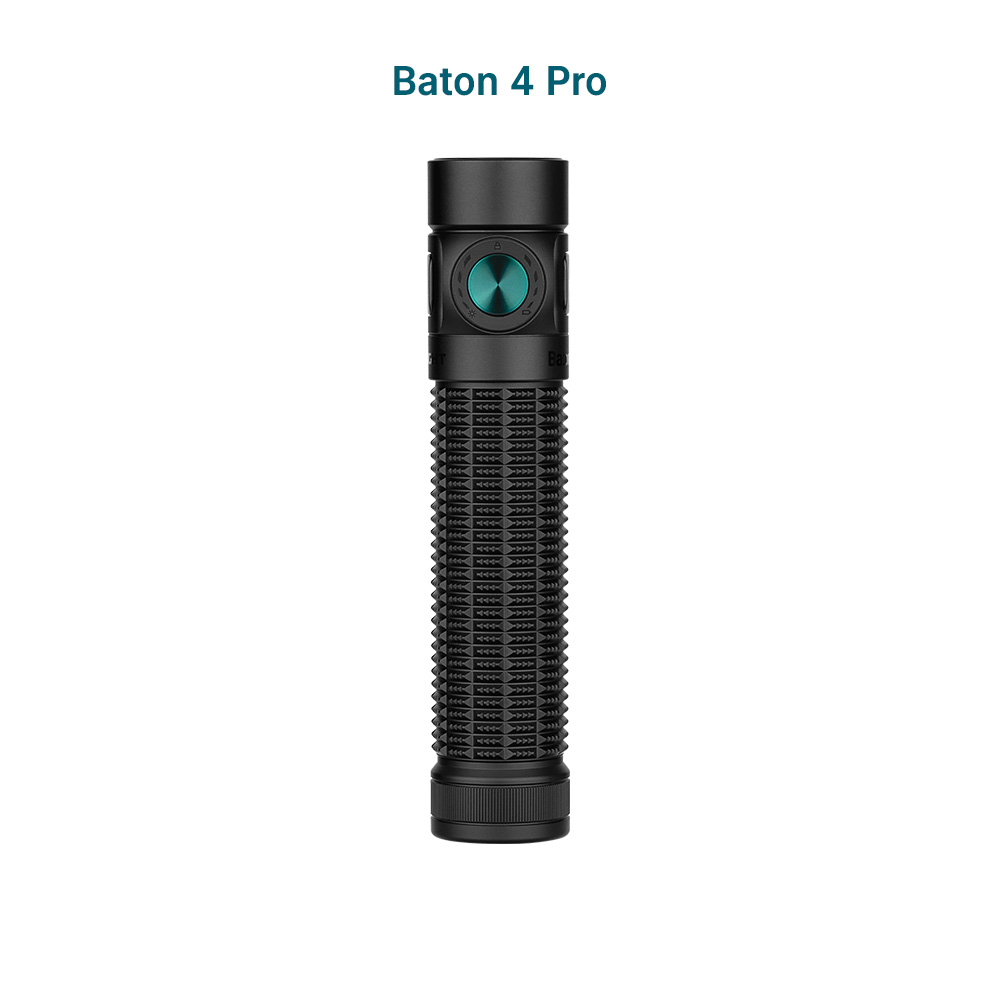
Good storage cuts down the chance of mixing up two similar products. At a site that allows personal lights in part of the property, use the assigned cabinet or other place to separate them from equipment issued for classified work. Keep return labels and device records clear. If the employee's next task crosses a boundary, return the personal light before picking up the approved device.
Consider what happens between an ordinary task and a classified assignment. One worker may read an inventory list in a permitted room and then meet a crew at the issue point. Give the personal light an appropriate home before the changeover so it doesn't stay clipped to a bag. If you need reading light while returning equipment, use the fixed light at the counter or the option provided by the site. The simplest setup gives every item an assigned place at the moment the work changes.
A personal light can be a practical addition to a kit for the ride home or for work in a clearly designated ordinary space. Reserve the workplace equipment decision for the people responsible for the actual site. A smoother day starts with being able to find the right equipment, confirm it, and ask for a substitute without entering an uncertain area to finish a task.
Frequently Asked Questions
Changelog
- November 19, 2026. Checked the 2025 annual CFR passages, IECEx certificate guidance, the exact model manuals and gallery evidence, and the original site-check illustration.




