


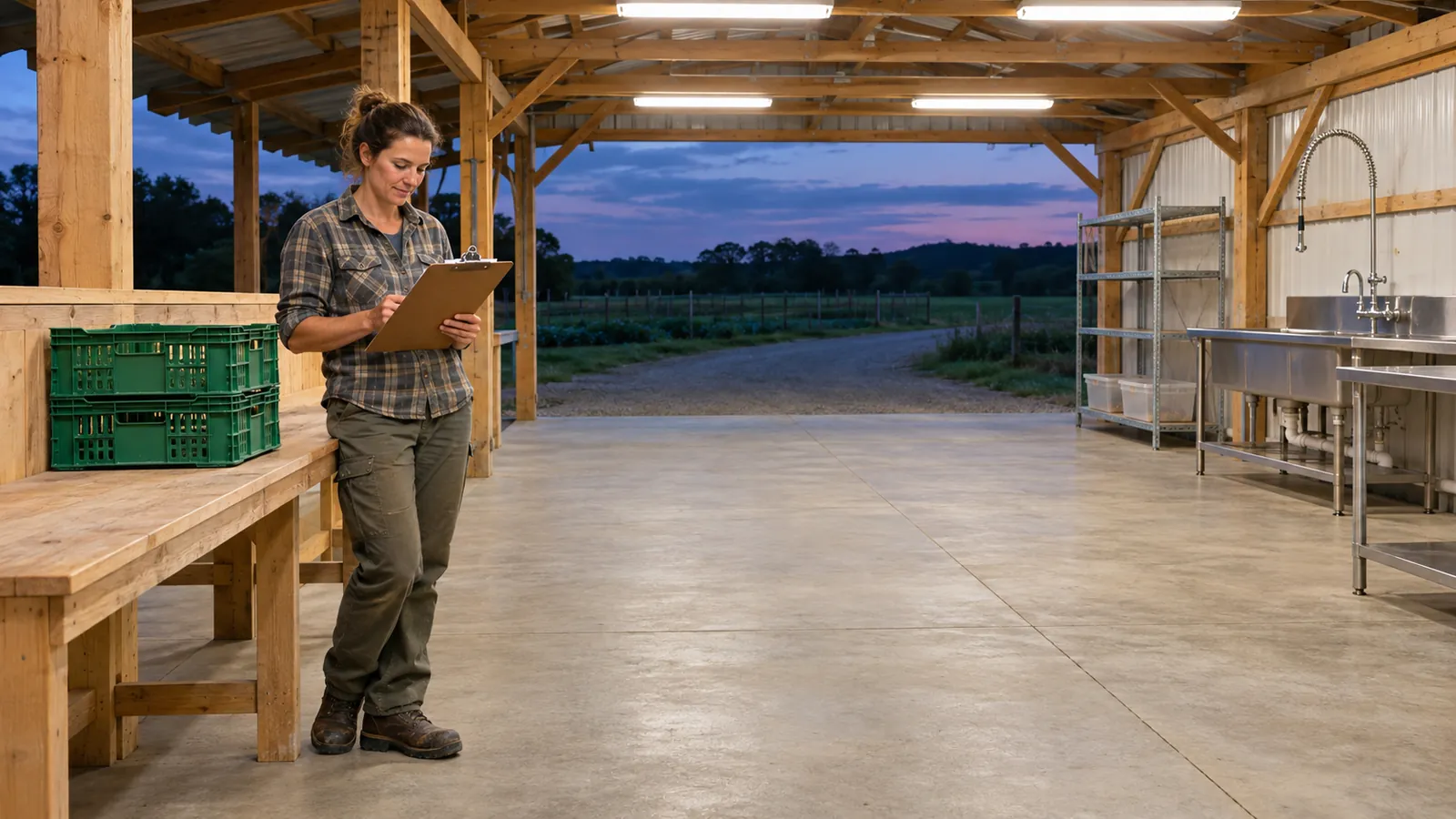
TL;DR: Keep the packing shed's established lighting on while people finish records and leave. A personal light can help an approved dry task, such as reading a label or checking a shelf from the aisle. Stay out of unlit or wet areas, follow the farm's closing procedure, and record anything the next shift needs to address.
📋 Table of Contents
- 1. Leave the walking route visible until the crew is out
- 2. Can a handheld flashlight replace packing shed lighting?
- 3. Should I use a headlamp or a handheld at the dry bench?
- 4. What should I do if I see a wet spot near the exit?
- 5. Put labels, records, and personal lights where they belong
- 6. Set up a dry place for the shift change
- 7. Frequently Asked Questions
Leave the walking route visible until the crew is out
| End-of-shift task | What to do with the light |
|---|---|
| Walk between the work area and the exit | Keep the established route lighting in use and the aisle clear |
| Finish records at a dry bench | Use the normal bench light and add an approved personal light only where useful |
| Read a label on a dry shelf | Stand in the clear aisle and illuminate the item you need |
| Notice water, glare, or a dark section | Stop on dry footing and report the exact location |
| Hand the area to the next shift | Say what remains out of use and who will follow up |
A produce packing shed changes as people finish work. The records bench may still be in use after the wash area closes. Someone may be putting away bins while others leave. Keep enough established lighting in use for all of those people to see their work and their way out. Work through the site's closing sequence before anyone starts switching lights off.
Take a look at the whole aisle before the last few tasks begin. Look from the position where a person actually starts walking, with the equipment in its normal place. If the aisle enters darkness at a doorway, stop at the last usable point and tell the person in charge. A handheld can help you describe what you see from that position. The farm still needs its usual plan for anyone who works in or passes through the area.
The University of Vermont Extension overview of wash and pack stations calls out lighting, drainage, recordkeeping, and marked containers as layout considerations. Those functions may all be present in one building. The crew's end-of-day job is to keep the real route and work zones usable until the last assigned task ends. The arrangement depends on the farm and the work in progress.
Look for a place to set things down before you need to read a list or change a light setting. If someone is carrying a stack that blocks their view, have them use the site's handling procedure rather than following someone else's beam. A helper can point out the established route while the worker is stopped. Move supplies only where the farm has assigned space and keep them out of the aisle.
At an open-sided shed, the floor can seem visible from the bench while its far edge fades into the ground outside. Check the doorway and exit approach under the conditions the last people will use. Evening daylight might have been enough an hour earlier. If the exterior route changes after sundown, confirm the approved way out before anyone tries a shortcut.
Make clear who is responsible for leaving the fixed lights as required. A person turning off the wash area might be unaware that another worker is still finishing a record at the dry bench. Tell the closer which tasks are open. Follow the established timing and switch assignments for the site, and keep any required lights in service.
Consider an example in which two workers close a small shed with a sliding door at one end. One finishes the returns sheet under the bench light while the other lets the lead know the packing area is empty. They can keep the regular route in view while they work. If shutting the door would cut off their usual exit, they can follow the closure order already set for the building. An outdoor opening that remains bright enough to see from the bench may look different from the side of the door.
Where the crew comes and goes at different times, put the responsible person's name or role on the approved closing list. The person recording the last tote count can tell the closer before they leave. A late worker can check in with the same person if they have an open task. The payment or inventory sheet is a poor place to hide instructions about a route change. Make that information available through the normal site channel.
Can a handheld flashlight replace packing shed lighting?
Use a handheld for a brief detail check while the shed's established route and work lighting are in service. Follow the site's instructions if fixed lighting goes out. Stop the affected task, notify the person in charge, and use the designated way out when it can be followed safely.
Check why you need the handheld. There is a difference between seeing one small stock code on an otherwise visible shelf and finding your way through a section where an overhead light is out. A short beam on a label solves a local reading problem. A dark stretch of aisle can affect everyone who works there. Report the second problem so the farm can deal with the area.
A poorly aimed beam can make a familiar route harder to read. Metal shelves, wet patches, and glossy plastic can turn a spot of light into glare. Stop on a dry, clear surface before moving the beam. If the detail is visible from where you are, say what and where it is. If you would need to step into an unlit space to find out more, leave that check for the person who can arrange suitable conditions.
The University of Illinois Extension packing facility checklist asks whether the facility is organized to minimize accidents, whether floors are clean and dry, and whether lighting is covered to protect produce and contact surfaces if it breaks. These checks belong to the packing facility. A portable light is only a tool for an approved task, away from food-contact surfaces. Follow the farm's food safety and hygiene procedures.
Use a clear phrase when the fixed lights fail. Name the aisle or doorway, say whether the problem affects a work surface or the travel route, and tell the lead where the crew stopped. Ask which steps the site wants you to take. If someone else might walk into the area, use the site's way of reporting or keeping people out. Wait for the appropriate people to assess the lighting or open the area again.
Look at the route from a safe position before work resumes. A repaired or restored light should allow the tasks that use that area to be checked by the responsible person. An additional flashlight can help identify a particular shelf detail under normal conditions. It does not establish that an area is usable for the rest of the crew.
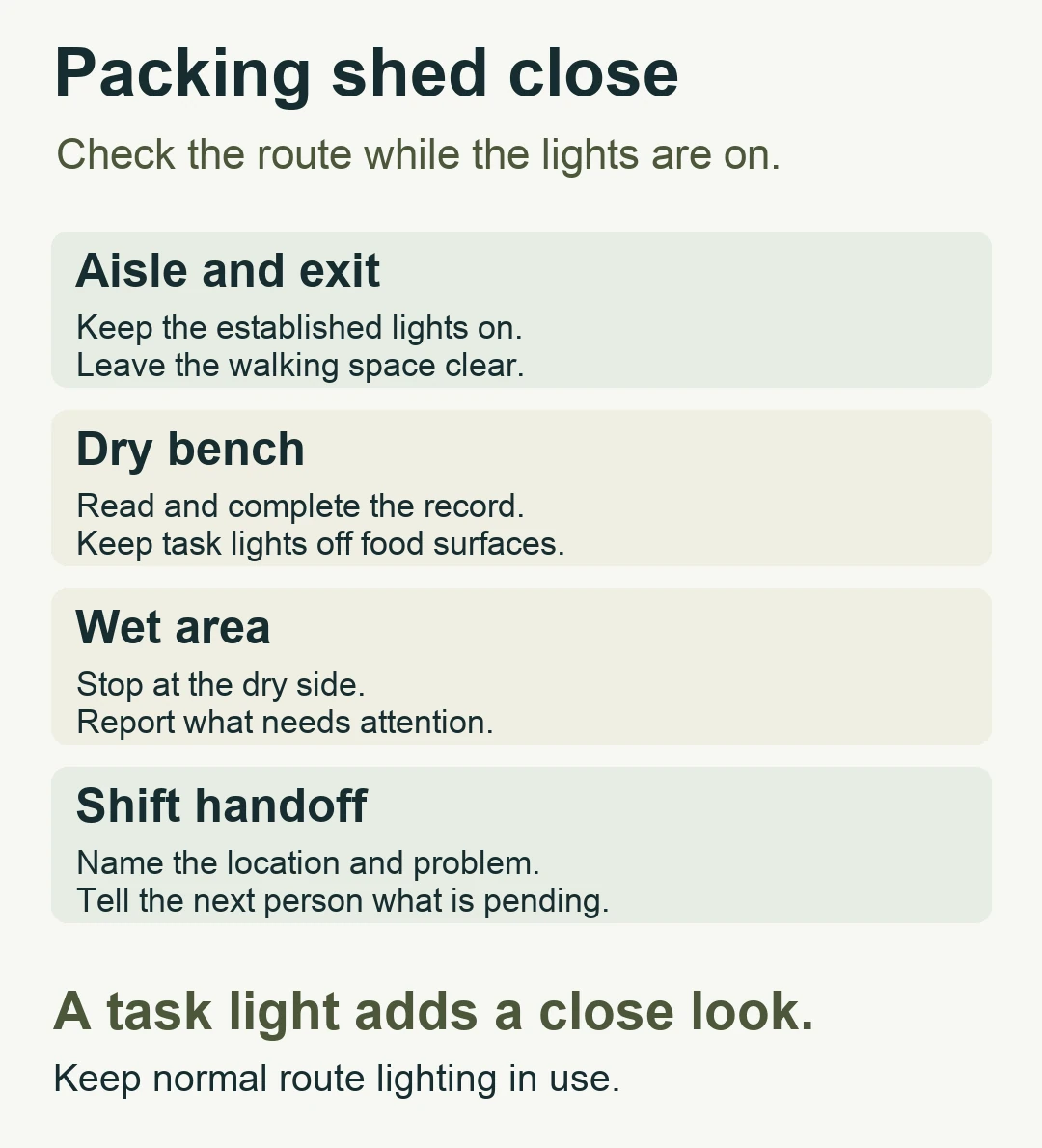
Keep the aisle lit while people finish records and report any wet areas.
Should I use a headlamp or a handheld at the dry bench?
Use a headlamp for an approved dry task when you need both hands, such as holding a folder while checking a count. Use a handheld for a brief look at one shelf label from clear footing. Keep either light away from produce and food-contact surfaces, and follow the site's rules for portable equipment.
A dry bench helps when the work is mostly reading and writing. Put the clipboard, pen, and reference list within reach of the person who checks the records. A ceiling fixture may light the middle of the bench while leaving the nearer line of a form in the worker's shadow. Move the paper to a clearly lit part of the authorized surface before adding a light.
Look at an example label in the conditions you actually use. A black number on a matte page can stay legible when a reflective label turns nearly white under a beam. Try another angle or hold the page in the established light. If a repeated task needs a better label or a differently placed desk light, tell the lead while you can describe which mark you couldn't read.
A headlamp follows wherever you turn. Aim it down while you are stopped and switch it off before looking across the bench if other lighting is sufficient. Try it with any gear the job requires. If something makes the headband shift, use the normal bench light or a handheld from the stopped position rather than adjusting clothing around equipment.
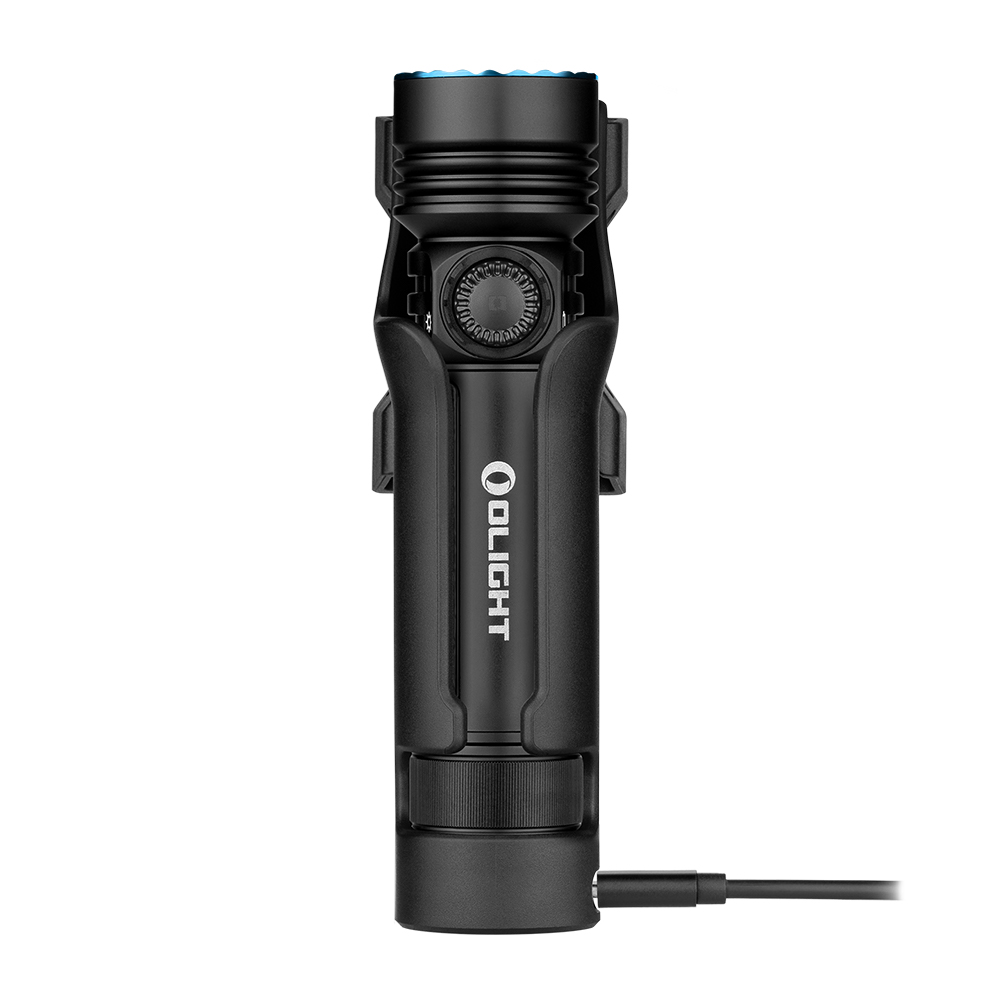
A compact flashlight can be useful for a short close check when one hand is free. Put it away before lifting something that needs both hands. Agree where shared portable lights live and return them after the task, rather than leaving them beside crates or on working surfaces. Follow the model's handling, cleaning, and charging directions as well as the site's equipment policy.
If you need to see a label on the far side of a bin, first decide whether you are authorized and able to move the bin under the site’s usual handling procedures. People sometimes try to solve a reading problem by leaning into a shelf or reaching around a stack. Stay on stable footing and use a place where you can read the item safely. Ask the appropriate worker to retrieve the item if necessary.
The brighter the base lighting, the easier it is to put a light away before turning or carrying things. Pick a handheld light because it can do the brief check at a suitable setting. A large maximum output is an optional feature. A good control, a beam you can hold steady, and a setting that leaves the code readable carry more weight when you use it close to a shelf.
| What the crew sees | First adjustment |
|---|---|
| A hand casts a shadow across the count | Shift the paper on the dry bench or use an approved headlamp aimed at the page |
| A glossy label reflects the beam | Change the light or reading angle from a stable place |
| The lit dry bench is crowded | Move the record work to another approved clear area |
| The aisle or outside approach is dark | Pause and tell the lead, even if a flashlight can reveal an item |
Check how you normally put the tool away. A light held in the hand can be easy to direct, but it occupies a hand between the bench and its storage point. A headlamp can free both hands at the bench, then stay on someone's head after their short job ends. Make returning the portable light part of the actual assignment so it doesn't end up on the nearest worktop or travel to an area where it isn't allowed.
Read labels in the condition the next worker will find them. If a label on an empty tote stays clear at one spot on the shelf but becomes hard to read behind a second row, record exactly which row you checked. The worker handling stock can correct a placement or label under the site's normal process. A flashlight can help with one reading, but it won't make a distant shelf consistently legible for everyone.

What should I do if I see a wet spot near the exit?
Stop on dry footing and tell the person in charge where the wet spot is and which route it affects. Follow the site's instructions for keeping people clear or using another route. A flashlight can help describe a detail from a safe position. Leave cleanup and reopening to the people responsible for the area.
The University of Arizona Cooperative Extension publication on small produce wash stations recommends good lighting and addresses drainage, pooled water, and slippery floors in the station's layout. Consider those as site design and maintenance topics. An employee closing a shift can help by saying what the floor looks like and where it affects travel. Stay in the portion of the route that is already usable.
A reflection may be the first thing you notice from a dry side. Move the light without changing your footing so you can describe what you see. Wetness can be hard to distinguish from a glossy finish, especially if the far side is in shadow. Report it as a possible wet area if you're unsure. The people assigned to address it can check under the conditions and procedures appropriate for the work.
Try giving a location another worker can find without searching. For example, say that there is visible water near the inside threshold next to the north records bench, or say which shelf marks the start of the wet stretch. Say whether the normal walking route is affected. Use names people actually know from the building. If the closest route is already closed, pass along the approved directions and the name of the person who gave them.
The job may involve something very ordinary, like noticing that the approach to a door has water on it after the wash area closes. You can leave a dry records task unfinished for a moment while the lead confirms the way out. The crew may continue the paperwork at an authorized dry station. Give people enough established light to see their way to that station.
In one Vermont Extension grower case study, the farm describes permanent water lines, floor drainage, and overhead lights as part of a new covered area, alongside efforts to reduce trips from hoses and cords. It shows how a packing work area can be arranged around ordinary traffic. Use the layout your own farm has approved. Send recurring issues to the people who can decide on changes rather than moving lines or fixtures during closing.
Check what will happen to an incident note after you give it to someone. The next crew needs to know whether the farm has handled it or whether a route stays unavailable. Check that the person taking over understands what you did and saw. A short follow-up can stop a note about the floor from getting lost among other packing details.
Put labels, records, and personal lights where they belong
Choose the authorized place where counts and notes are usually completed. The packing bench and the records surface may be close together, so mark where the paperwork belongs before the shift gets busy. Put a readable copy of the approved list at that surface. If part of a form is hard to see at closing, hold it closer to the normal light or request a better place to work.
Think through the order of a label check. The person writing needs a clear reading position, enough light to see the label, and a place to put the clipboard if they need their hands. There is no benefit in trying to carry an open folder through the aisle and switch on a handheld at the same time. Use a stationary point to check and confirm the text, then finish the next task.
A shelf label and a form can need different angles even when both have adequate light. A worker can notice that the ink on a side-facing label turns faint under one beam angle. A coworker can read the list from the established position on the dry bench. Have them compare the actual text if the label and paperwork disagree, and follow the site's usual process for corrections. Leave uncertainty visible in the record.
Keep personal lights off any place used for produce or food contact. A device may have been in a pocket, touched with work gloves, or used elsewhere on the farm. Store it at the approved point before leaving the building. The light can be useful for reading the printed record from an approved dry place. The record itself needs to show whether the site's actual checks were completed.
If a printed identifier is unreadable and the farm has a way to leave it for the incoming crew, use that option. A stronger light cannot make a rubbed-out digit legible with confidence. Mark that the code needs a check and describe where to find it. Avoid guessing at the label just so the list looks complete.
Consider an ordinary example with two similar boxes on a shelving unit. During the day one label is easy to distinguish because the sun reaches the shelf from the side. Under the late light the two boxes look alike from the records bench. Walk over only if the aisle is clear and lit. Stop at a position where you can read a label, then write down exactly what the label says under the normal checking procedure. If stock is stored somewhere you aren't meant to enter, ask the worker responsible for it.
Set up a dry place for the shift change
Agree where the day crew will leave the record or tell the next person what remains open. Put the handoff point on a familiar, lit route and use it while the established lights are working. If it normally takes two people to finish the shed tasks, confirm who will remain and who communicates with the lead. People who are leaving should be able to see the whole route they need after they return a shared light.
Use the same sequence for a handoff on days when the work does change. Say what finished, what remains, what affected visibility, and who took responsibility. The incoming worker can check the list while speaking with the closer. Information about a dark spot belongs near the relevant action so it doesn't get buried under a label note or a tally from the last hour.
Make the note specific to the light and location. A clerk who couldn't read a shelf number needs a better view of that one number. A worker who couldn't see the approach to the exit needs the site to address the route before someone else depends on it. Describe the two situations separately. The manager can decide how and when to correct each problem.
A recurring problem at closing can be different from an isolated problem, even if it looks similar on the form. If the corner of the records bench goes dark at nearly the same point each evening, note that it depends on daylight or that the beam is blocked by a piece of equipment normally there. If the spot is dark because a fixture stopped working, report that as a change. The person responsible for the building can arrange any assessment or repair.
Walk through the handoff once with the equipment in its usual place. Start where the last worker normally finishes. Look at the route, work surface, and spot where the person checks out. The exercise can reveal that the clipboard or familiar switch point belongs to a station that already closed. Report that practical problem so the farm can decide whether to change the sequence or location.
Plan for the portable lights to be returned before everyone disperses. Leave them where the farm stores them and report any damage or unusual behavior. Follow the manual and workplace rules for storage and charging. If the only return light is still being used, arrange the handback after the wearer gets to the approved lit location. Keep the crew's exit available throughout this step.
For an ordinary end-of-day note, include the time if it helps explain the change. A door area that was clear before the last wash task may need to be reviewed for the next group. If somebody returned later and confirmed it was ready for use, tell the custodian or lead who decided. If you simply completed the records in a different approved place, say that without implying the dark or wet location was corrected.
Make a distinction between equipment that belongs with the building and tools the crew brings to the bench. The first belongs on the building or maintenance list when it fails. The second belongs in its designated case and may need a battery check before the next shift. A worker who can identify both in the report gives the lead a practical way to respond. Keep the route available while those details are being handed off.
Frequently Asked Questions
Changelog
- November 19, 2026. Checked the packing shed sources from Vermont, Illinois, and Arizona extension programs, the exact U.S. product photographs and manuals, and the original closing checklist illustration.




