


⚡ TL;DR
A military label does not identify one headlamp issued to every service member or prove that a retail light meets a particular organization's requirements. Start with the actual equipment rules, then compare ordinary lighting needs: useful brightness, secure fit, controls, power, and documented durability. For camping and household tasks, those details matter more than a military-looking housing.
📋 Table of Contents
- 1. Start with the requirement, then choose the light
- 2. Read a durability claim as a document, not a look
- 3. Choose useful light before maximum light
- 4. What red light helps with, and where white light still matters
- 5. Perun 3: a head-to-hand option with a larger power reserve
- 6. Perun 3 Mini: make the mounting arrangement part of the choice
- 7. Check the fit through an ordinary evening routine
- 8. Plan power, packing, and an alternative light
- 9. Three ordinary situations that expose a poor choice
- 10. Check the complete package before comparing value
- 11. Frequently Asked Questions
- 12. Make the purchase around the job you can describe
Start with the requirement, then choose the light
If a headlamp is being purchased for an organization, obtain its current equipment requirements before choosing a model. Ask the person responsible for equipment what is supplied, what personal purchases are permitted, and whether there is an approved list. A product photograph, an online recommendation, or a manufacturer's description cannot answer those administrative questions for a particular workplace or organization.
For a personal purchase, begin with the tasks the light needs to support. Reading an equipment label, organizing a tent, walking an established campground path, and checking a household item during a power outage are different jobs. A useful light should help with the relevant task while remaining comfortable and straightforward to maintain. There is no need to borrow someone else's equipment list when the intended use is different.
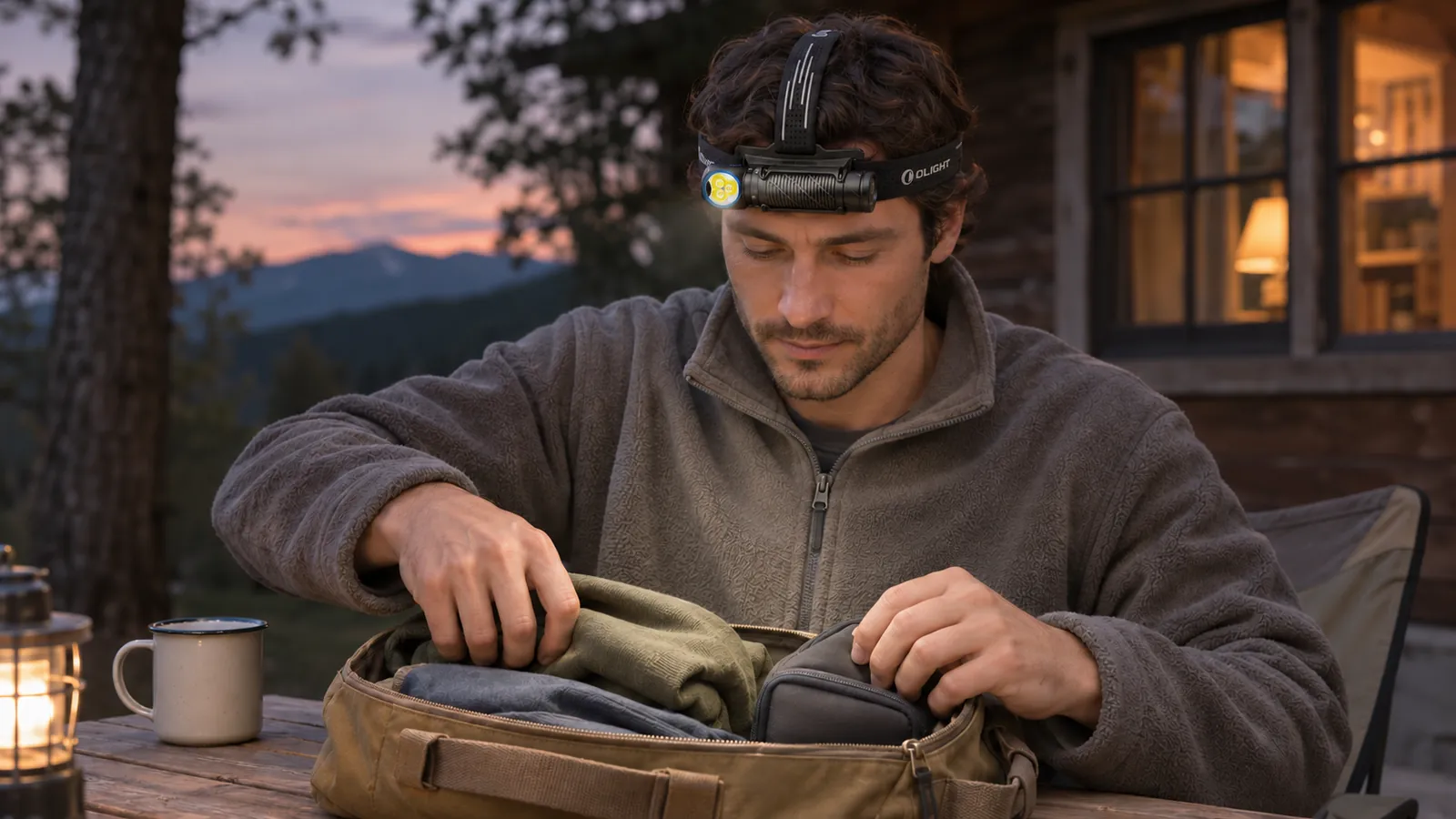
A headlamp is especially useful when both hands already have a job. Holding a zipper, sorting belongings, or carrying an ordinary bag becomes awkward if a hand is also occupied by a phone flashlight. Wearing the light solves the hand-availability problem, but introduces other decisions: where the beam points, how the band fits, and whether looking toward someone puts the light in their face.
Write down the conditions that actually affect the purchase. Include the clothing or hat normally worn, the expected time away from a charging point, the tasks done at close range, and whether the light also needs to work in the hand. Keep required workplace protective equipment separate from optional personal accessories. A comfortable recreational headband does not establish compatibility with a particular safety helmet or required work arrangement.
| Question to settle | Why it changes the purchase |
|---|---|
| Is there an actual organizational requirement? | Personal preferences cannot replace an approved equipment specification |
| Are both hands occupied? | A secure headband may solve a problem a handheld light does not |
| Is the task close reading or walking? | Beam direction, useful lower levels, and clear visibility matter differently |
| Will the light move between head and hand? | The mounting arrangement becomes part of the daily workflow |
| Where will charging happen? | The complete cable and power-source arrangement must be practical |
| What conditions are documented? | A specific rating is more useful than a rugged-looking exterior |
Read a durability claim as a document, not a look
A dark finish, metal housing, aggressive texture, or word such as tactical does not explain which conditions a product has been evaluated under. Look for a stated rating, the corresponding conditions, and instructions for the exact model. A useful claim answers a specific question. A broad adjective leaves the buyer to guess what the manufacturer meant.
The Defense Logistics Agency's MIL-STD-810 description explains an environmental tailoring process based on performance requirements. That is a reason to ask what was evaluated and under which conditions when a seller refers to the standard. A reference to its name alone does not describe a particular retail headlamp's complete evaluation or establish acceptance by a specific organization.
Keep different types of evidence separate. A water-resistance statement concerns defined exposure conditions. A stated impact rating concerns another type of evaluation. Neither one, by itself, establishes comfort, glove compatibility, battery condition, or suitability for every job. The relevant question is whether the documented information addresses the conditions you actually expect, with the manufacturer's restrictions still observed.
A rating also does not make inspection unnecessary. Check the body, lens, controls, charging equipment, and carrying accessories before depending on the light. A damaged part or an unusual change in behavior deserves attention regardless of what a new product was rated for. Follow the manufacturer's service guidance rather than treating a specification as permission to keep using damaged equipment.
Avoid buying a light around a destructive demonstration. Dropping it at home or deliberately exposing it to water is unnecessary for deciding whether its headband fits or its ordinary controls are understandable. Read the documented claim, keep the equipment within its instructions, and use the return period to assess ordinary fit and usability. A purchase decision does not need an improvised durability experiment.
Choose useful light before maximum light
The maximum output number is one point in a product's specifications. It does not tell you whether a nearby label is comfortable to read, whether the beam lands where your hands are working, or how the light behaves throughout the intended operating period. Read the mode table and runtime information together rather than treating the largest brightness figure as the normal setting for every task.
Close work often calls for a different setting from a walk along an established path. A reflective label, pale tent fabric, or shiny household surface can make an unnecessarily bright setting unpleasant. Start with the visibility the actual task needs and adjust within the product's instructions. The goal is being able to see the important detail clearly, with a manageable lighting direction.
Do not turn lower brightness into a rule that overrides visibility. If a surface, obstruction, or label is difficult to distinguish, change the lighting arrangement or stop the task. The lowest available setting is not automatically the right setting for walking. A specification sheet cannot judge the condition of the ground, the weather, or the person's ability to identify a hazard.
Consider what happens when the wearer looks away from the task. A headlamp moves with the head, including toward a companion during a conversation. Aim it thoughtfully, lower or switch off the light when appropriate, and avoid directing it into another person's eyes. A removable light can also be useful when a fixed direction suits the task better than following every movement of your head.
Separate beam distance from the ability to understand a scene. A published distance figure is not a promise that every small detail will be clear at that distance under real conditions. For ordinary buying decisions, describe the job first: seeing the latch in front of you, organizing equipment at a table, or following a familiar designated route. That makes the specifications easier to interpret without inventing a universal brightness threshold.
What red light helps with, and where white light still matters
A red setting can be useful for certain shared nighttime activities. The National Park Service includes red flashlights or headlamps in its night-hiking advice and discusses preserving night vision. For a person attending a stargazing event or organizing belongings near others, a suitable red setting can be a useful additional choice when it provides enough visibility for the task.
That benefit does not establish that every red mode is dim, comfortable, or appropriate everywhere. Check which red settings the exact model provides and use the one suited to the activity. A bright red light can still be distracting. Follow the event organizer's or location's requirements, and consider the effect on people nearby rather than assuming the color settles the question.
White light remains useful when color carries information. A colored label, a marked cable, a map symbol, or similar-looking belongings may be harder to interpret under a different light color. If recognizing the actual color is part of the task, use an appropriate white-light arrangement. Do not assume that a red setting preserves all of the visual information available under white light.
Treat white and red as distinct options rather than a contest over which is always better. A campsite task may call for one setting while checking a colored instruction label calls for another. Choose a product whose documented modes match the activities you expect, and learn the relevant instructions before relying on it away from home. There is no reason to seek extra colors simply to complete a feature list.
Perun 3: a head-to-hand option with a larger power reserve
Perun 3 combines white and red light with a headband, magnetic tail, clip, and lanyard. The current US description lists five white-light modes, two red-light modes, and a rechargeable battery rated at 5,000 milliamp-hours. These features make it worth considering when the same light needs to serve several ordinary positions during camping or household tasks.
The practical value of a head-to-hand arrangement is the change in viewpoint. A headlamp can illuminate what the wearer is looking toward while both hands work. Once removed, the same light can be held away from the face or directed from another position. That may help with an awkward label or a nearby object without requiring the wearer to keep the head at an uncomfortable angle.
Its magnetic tail offers another possible support when a suitable surface is available. Check the actual material and attachment stability before letting go, and keep the light where a fall would not create another problem. A magnetic feature does not make every nearby surface compatible. A painted, curved, dirty, or otherwise unsuitable support needs a different arrangement, rather than extra confidence in the word magnetic.
The larger battery capacity is relevant to the power plan, but it is not a complete runtime comparison. Output level, mode, and operating conditions still matter. The advertised maximum white output is not a promise that the light will maintain that maximum through the night. Compare the manufacturer's output stages and durations for the setting you intend to use, then consider how charging fits the trip.
Perun 3's large metal side button is described by Olight as glove-friendly. That gives a buyer a concrete feature to assess with the gloves actually worn. It does not establish how every thick winter glove will behave. The button's concave form is also described as helping avoid unwanted activation; follow the exact storage and lockout instructions rather than assuming button shape replaces them.
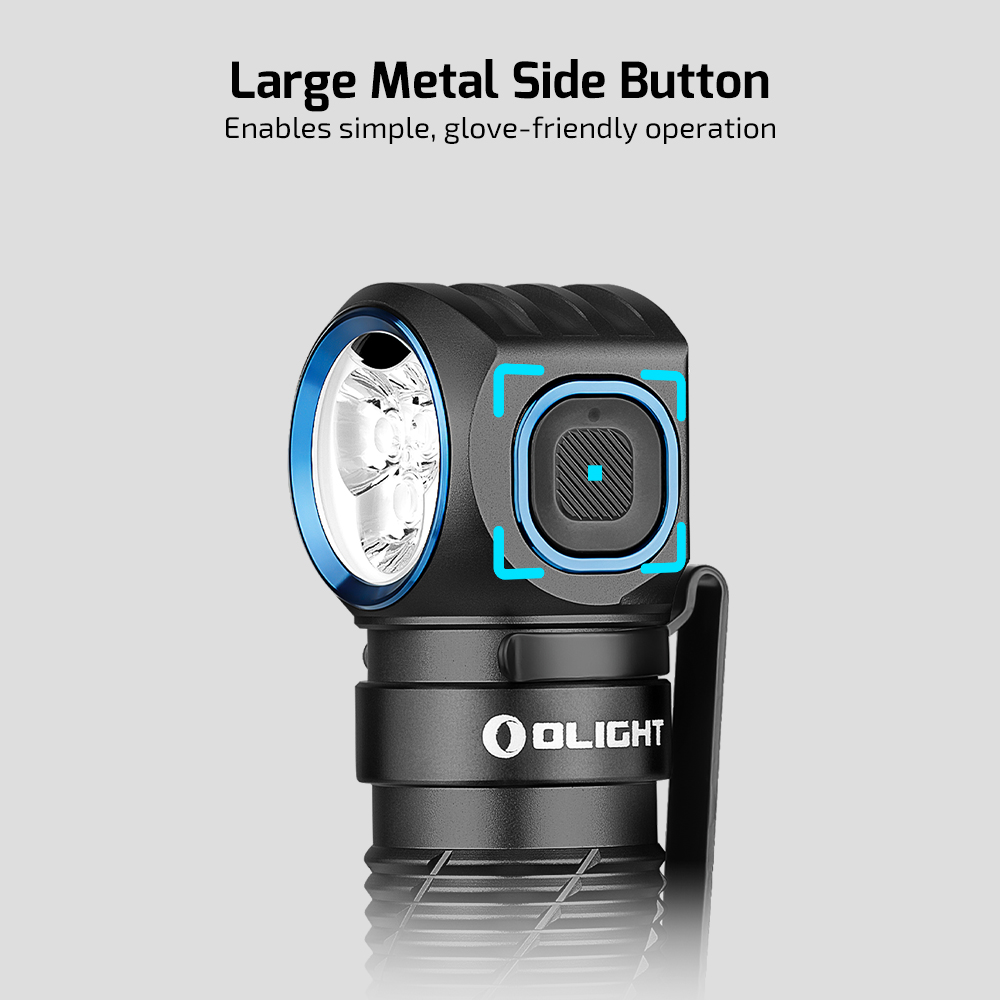
Official Perun 3 button detail; check its operation with the gloves actually worn.
There is a useful physical tradeoff to notice before buying. Olight warns that the metal headlamp mounting bracket can scratch the body when the light is repeatedly taken in and out. If frequent head-to-hand changes are central to the routine, include that cosmetic effect in the decision. The note is more informative than expecting a detachable metal assembly to remain visually untouched indefinitely.
Perun 3 Mini: make the mounting arrangement part of the choice
Perun 3 Mini offers another head-to-hand arrangement, with a quick-release bracket, pocket clip, magnetic tailcap, and lanyard hole. For a person repeatedly changing between a head-worn task and a handheld task, the mounting system is a meaningful feature. It addresses how the light moves through the activity rather than merely adding another attachment option to a list.
The quick-release bracket can reduce the need to work the entire band off the head when a handheld view is useful. Imagine sorting equipment at a camp table, then needing to direct light into a bag from a different angle. The benefit is a change of position within the ordinary task. Check that the light is properly seated again before returning to a head-worn arrangement.
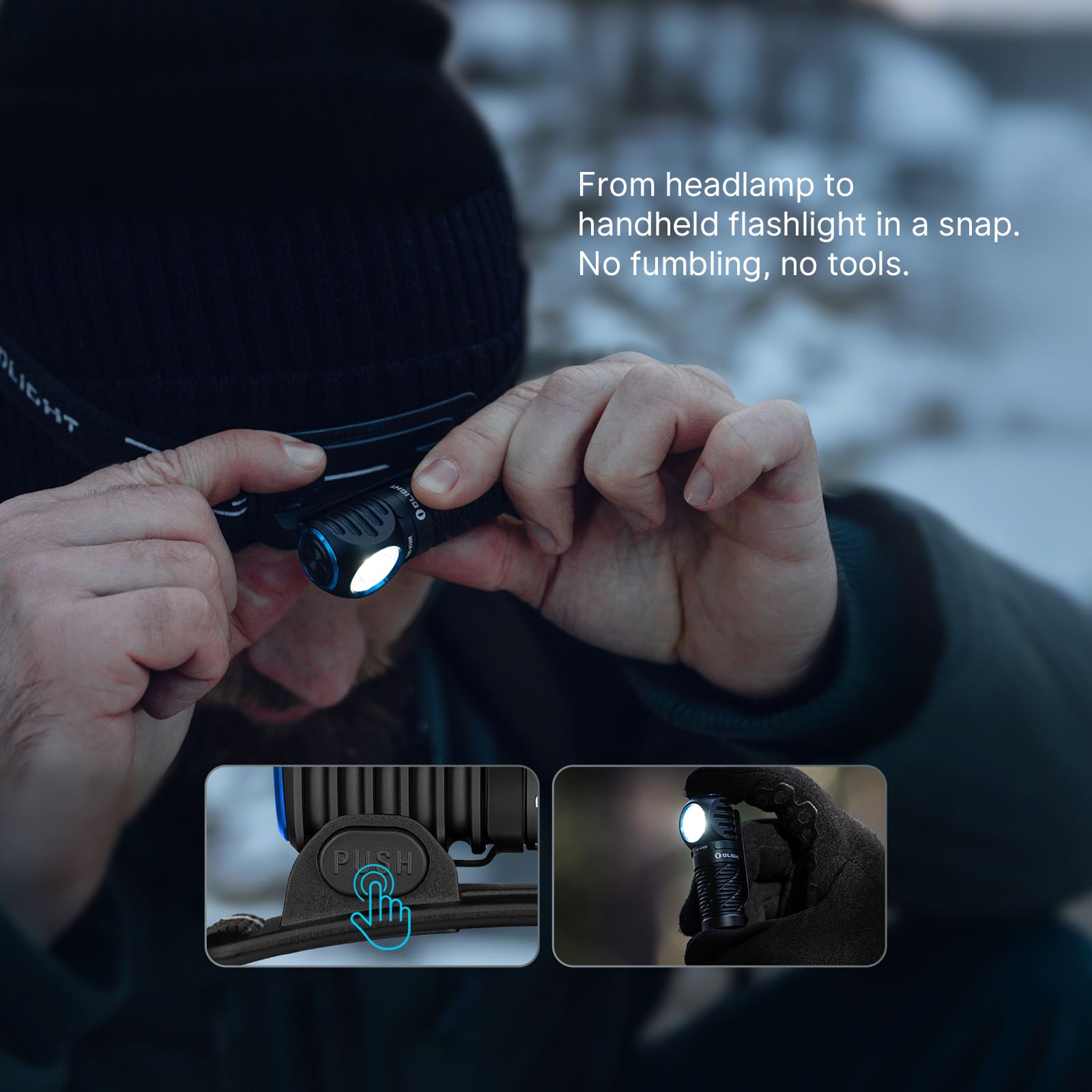
The official photo identifies the quick-release bracket and shows the same light used separately in the hand.
The current US page also describes a breathable mesh headband with an anti-sweat strip and reflective elements. These features are relevant to contact with the forehead and to wearing the light during ordinary movement. They do not establish comfort for every person or replace a fit check. Consider the hat, hair, glasses, and other clothing normally worn at the same time.
Check the selected version carefully. The Black CW standalone configuration and the HCRI version are distinct choices, and Premium packages add charging-case equipment. Do not apply one version's advertised output or package contents to every option on the page. The charging case's capacity belongs to that separate accessory; it should not be mistaken for the battery capacity inside the small light.
The ordinary buying question is whether the smaller format and quick-release arrangement solve the task more conveniently than another configuration. A light that is easy to pack still needs a suitable charging routine, enough documented runtime at the chosen setting, and a secure fit. Smaller does not automatically mean better, just as a larger battery does not settle every comfort or carrying question.
Check the fit through an ordinary evening routine
Assess fit with the light off first. Adjust the band according to the product's instructions, then wear the clothing and other ordinary items that will be used with it. Look for uncomfortable pressure, interference with glasses, and movement that makes the arrangement unstable. Do not tighten a band excessively to force an unsuitable combination to remain in place.
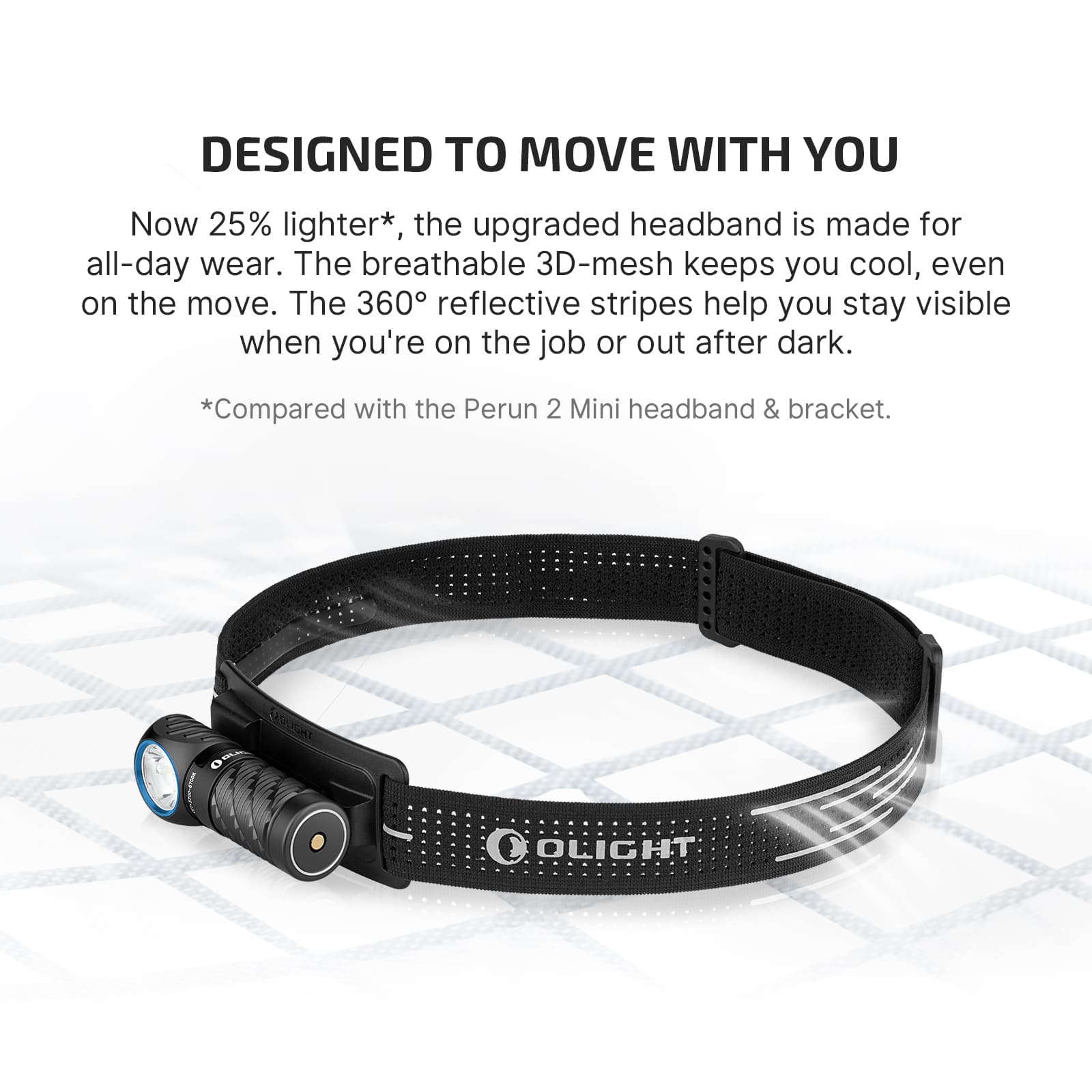
Official Perun 3 Mini headband illustration; the 25% comparison is for the headband and bracket versus Perun 2 Mini.
Once the fit is appropriate, check the lighting direction on an ordinary safe surface. A headlamp sitting comfortably on the forehead is only part of the arrangement; it also needs to illuminate the intended area without requiring a strained posture. A table task and a standing task may call for different angles. Reassess the direction when a hat or another layer changes the position.
With the actual gloves, use the documented controls in a suitable setting before the first trip. Find out whether the switch can be located and operated without repeatedly dislodging the light. If the arrangement is frustrating at home, additional darkness or cold will not simplify it. Choose a different suitable combination rather than assuming practice must overcome an incompatible glove and control layout.
Keep the check proportionate to the purchase. Ordinary wearing, switching, and packing can reveal a practical mismatch without becoming a timed trial or a claim about everyone else's experience. If the light shifts with normal movement or the band causes persistent discomfort, address the fit before relying on it. The useful outcome is a repeatable setup for the person who will actually wear it.
Plan power, packing, and an alternative light
A charging plan includes the correct cable, a suitable power source, and a place where charging can happen under the manufacturer's instructions. Check the exact package rather than assuming every accessory shown on a shared product page comes with every configuration. Keep the necessary equipment together so the light does not arrive ready for a trip while its charging cable remains in another bag.
For a longer outing, compare the expected lighting tasks with the documented runtime at the relevant settings. A battery indicator can help with routine checks, but do not substitute its appearance for planning the entire activity. Weather, delays, and a change in the task can affect the margin available. Keep the plan conservative without inventing a fixed number of extra hours that fits every outing.
An independent compact flashlight can provide another way to handle an ordinary lighting need if the headlamp is unavailable. Give it a defined place and an appropriate power routine of its own. Two rechargeable lights with no working charging equipment do not solve the same problem as a maintained primary light and a usable alternative.
Before putting the headlamp away, follow its documented off, lockout, and storage guidance. Protect the controls from pressure and keep an operating light from becoming buried in fabric or other material. Do not pack damaged charging equipment because the device still turns on. A simple departure check is more useful than discovering an avoidable problem only after arriving somewhere dark.
After use, inspect the headband and mounting parts as well as the light itself. Follow the cleaning and drying instructions for the relevant materials, and resolve damage before the next outing. Keep equipment out of unauthorized reach, especially where children can access a shared bag. Good storage preserves the practical value of the light between uses instead of treating maintenance as a separate hobby.
Three ordinary situations that expose a poor choice
At a camp table, the first problem may be shadows rather than insufficient advertised output. A bag opening, your hands, and the edge of the table can block the view of a small item. Change the light's angle or position before increasing brightness. A detachable light can be useful if another stable, suitable position provides a clearer view than the forehead position. Avoid balancing it where reaching into the bag could knock it down.
Include the person across the table in that decision. Following a conversation with your head also moves the beam. If the task is finished, turn the light off or use a suitable arrangement that does not sweep across other people. A group packing shared equipment may benefit more from considerate placement than from everyone using the strongest setting. Each person still needs enough light to handle the actual object safely.
During a household power outage, identify the immediate need before opening several unfamiliar functions. Finding a household item, reading an instruction, and moving along a clear familiar route are separate tasks. Keep the light directed toward the relevant surface, avoid unnecessary glare from mirrors, and maintain the ordinary precautions the task requires. A headlamp provides visibility; it does not make an electrical, heating, or structural problem safe to investigate personally.
A known equipment fault, exposed wiring, a burning smell, or another potentially dangerous condition calls for an appropriate response and qualified help. Do not turn a lighting purchase into a reason to attempt unfamiliar maintenance. The same principle applies outside the home: a bright light cannot establish that a damaged path or unfamiliar area is suitable to enter. Change the plan when the conditions exceed the ordinary activity you prepared for.
At a public stargazing event, the organizer may ask visitors to limit disruptive lighting. Find out the requirements before arriving and keep the controls familiar enough to select the appropriate ordinary setting. Use sufficient light when moving where visibility is needed, and respect other participants when stationary. A red setting can be useful here, but event instructions and the actual surroundings still guide the decision.
After the event, getting back to a vehicle can create a different lighting need from sitting by a telescope. Reassess the task instead of remaining with a setting simply because it was appropriate earlier. The transition is a useful way to judge a headlamp purchase: can the wearer comfortably select the needed ordinary mode, direct the beam appropriately, and keep the equipment ready without managing unnecessary complexity?
Check the complete package before comparing value
Compare what will actually arrive, not just the product name at the top of a page. Shared product pages can contain several colors, light configurations, and bundles. Record the exact selected option and read its included-equipment information. A photograph of a charging case or another accessory elsewhere on the page does not establish that it belongs to the option in the shopping cart.
Look at the accessories already owned with the same care. A familiar-looking connector, headband, or bracket does not prove compatibility with a new model. Check the manufacturer's stated compatibility or ask support about the exact part. The useful saving comes from reusing equipment that is genuinely suitable, rather than buying a light first and improvising a way to attach or charge it afterward.
Include the location of the purchase in the plan. If charging normally happens at home, make sure the appropriate equipment has a defined place there. If the light lives in a camping bag, decide whether the cable stays with the bag or transfers before a trip. A low purchase price can become inconvenient when a required accessory must repeatedly be borrowed from another routine.
Finally, consider replacement and service information before it is urgent. Keep the exact model and configuration in the purchase record so a request for a headband, mounting part, or charging accessory identifies the right equipment. Ask the manufacturer about damaged parts instead of choosing a visually similar substitute. This is a practical ownership question, independent of whether a product has a military-sounding name.
Frequently Asked Questions
Make the purchase around the job you can describe
Before checking out, name the ordinary task, the wearing arrangement, and the charging routine. Confirm the exact version and included equipment, then read any limitations that affect repeated mounting, storage, or maintenance. If an organizational requirement applies, settle that requirement first. This turns a broad search for a military headlamp into a specific equipment decision with a clear reason for each feature.
Choose the light whose documented capabilities fit that decision. A useful red setting, an understandable control, a suitable band, or a convenient head-to-hand mount can each solve a real problem. None needs an unverified story about who uses it to become valuable. The practical result is a light that is comfortable to wear, straightforward to keep ready, and appropriate for the ordinary work it is meant to support.
Changelog
- November 18, 2026: Product information and buying guidance reviewed.




