


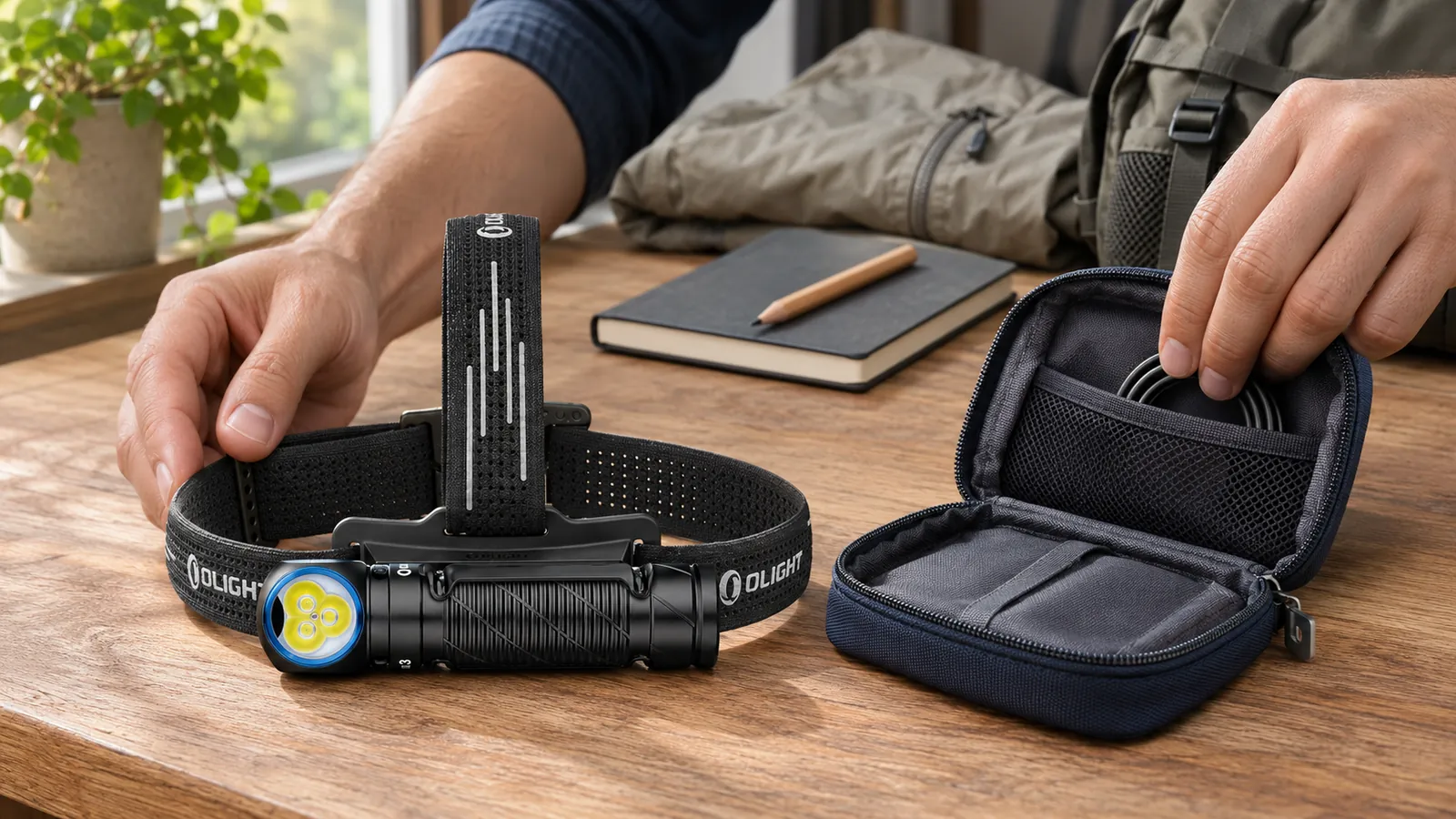
⚡ TL;DR
For the configurations compared here, US listings checked on November 17, 2026 put a compatible clip-light and strap setup at $57.98, a standalone mini headlamp at $64.99, and a full-size headlamp at $89.99. Budget for the complete wearing and charging arrangement, then choose around your actual tasks, fit, and operating time rather than a price tier alone.
📋 Table of Contents
- 1. Start with what the purchase needs to include
- 2. Use a dated, exact-configuration price comparison
- 3. A clip light and compatible strap can be an entry route
- 4. What changes when choosing a dedicated mini headlamp?
- 5. When the full-size arrangement deserves a closer look
- 6. Choose between reusing, expanding, and replacing
- 7. Put expected use into the budget without inventing a price rule
- 8. Compare ownership costs with inputs you actually know
- 9. Package details that can change a good-looking deal
- 10. Check useful output before paying for a bigger number
- 11. A first-trip shopping check
- 12. Frequently Asked Questions
- 13. Buy the complete arrangement you have a reason to use
Start with what the purchase needs to include
A headlamp purchase begins with a practical question: what needs to leave the house ready to work? The answer may include the light, a suitable headband and mounting parts, the specified charging equipment, and an appropriate power source. Check the exact package before comparing totals. Accessories photographed elsewhere on a shared product page may belong to a different configuration.
Separate the task from the shopping category. Setting up a campsite, organizing equipment during a power outage, and preparing for an ordinary outdoor evening can involve different wearing periods and charging opportunities. Give the light a clear role before deciding what to spend. Buying around a named price bracket leaves those important questions unanswered.
Look at equipment already owned. A compatible clip light may need only its approved headband accessory to gain another wearing option. Someone starting with no equipment needs to compare the complete light-and-accessory total. Those are different budgets. Including an existing light's original purchase in one comparison and ignoring it in another can make an accessory look artificially expensive or inexpensive.
Include the person who will wear the light in the decision. A headband, hat, glasses, hair, and the light's mounting position all affect the arrangement. The most appealing listed price will be disappointing if normal movement makes the light shift or the controls are inconvenient. A higher total is useful only when it addresses a real need in the complete setup.
Use a dated, exact-configuration price comparison
The figures below are selected US product-page prices checked on November 17, 2026. They identify configurations, not universal market price tiers. Tax, shipping, current stock, and checkout offers require their own check. A displayed price alone does not establish that the selected option is currently available to purchase, and a shared page can contain several differently equipped versions.
| Compared arrangement | Listed price at the check | Budget boundary |
|---|---|---|
| Oclip 2 Pro Black plus Oclip Series Headlamp Strap | $49.99 + $7.99 = $57.98 | Two separately listed items; not a quoted bundle or transaction total |
| Perun 3 Mini Black CW standalone | $64.99 | The identified standalone configuration, without assuming a Premium charging case |
| Perun 3 Black | $89.99 | The identified full-size configuration; confirm the actual supplied equipment |
These examples provide a concrete starting point for budgeting without establishing the lowest possible price for a useful headlamp. Other products and configurations may cost less or more. The useful comparison is whether an identified complete arrangement meets the task, rather than whether every shopper can be assigned to the same inexpensive, midrange, or premium category.
Record the selected version when making your own comparison. Keep its full model name, configuration, included equipment, and price together. If the page changes when a color or bundle is selected, update the whole line. A standalone price and a charging-case photograph should not quietly become one imagined package in the budget.
Treat delivery-related costs separately. Check the actual destination and cart before deciding that a small difference between two listed prices determines the winner. Do not assume a particular shipping threshold, tax amount, discount, or promotion applies. The table is useful because its boundaries are clear, not because it can replace the transaction you will actually be offered.
A clip light and compatible strap can be an entry route
Oclip 2 Pro Black was listed at $49.99 in the check above. It offers a clip and an independently adjustable head, with a current description specifying a head tilt of 115 degrees and clip rotation through 360 degrees. These are useful features when an ordinary task calls for an attachment point that faces a different direction from the object being illuminated.
The practical benefit is separating two decisions. First find an appropriate place to attach the light, then consider where the light needs to point. A suitable bag strap and a nearby label may face different ways. Check actual stability and fit before relying on the attachment. The range of adjustment does not establish that every garment or support is suitable.
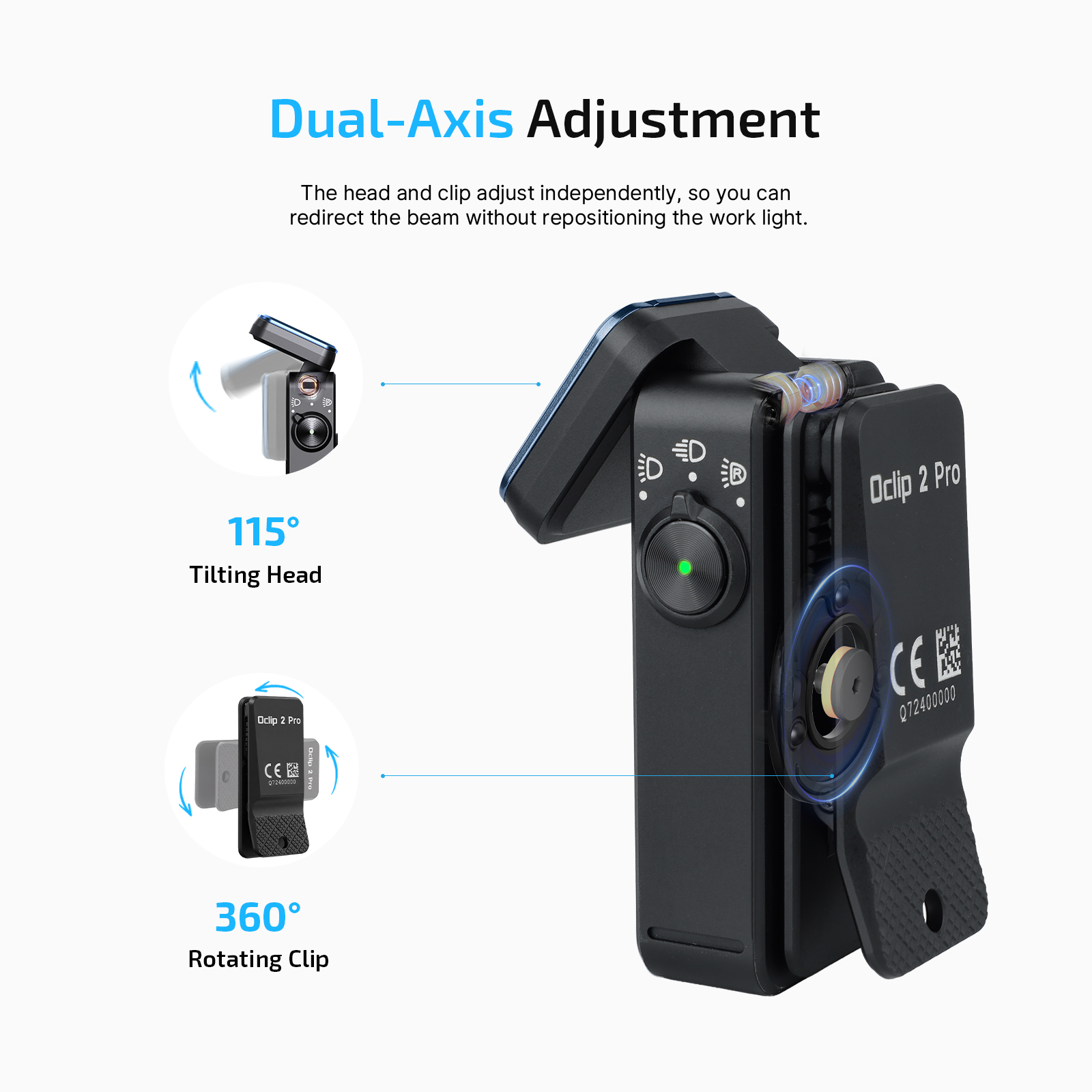
Official Oclip 2 Pro diagram: aiming the head and choosing the attachment direction are separate adjustments.
The selected light provides white flood, a separate spot source, and red light. Choose the source around the task rather than treating the number of modes as a reason to buy. Close sorting, looking at an object, and a shared nighttime activity can call for different arrangements. Use enough light to understand what you are doing, and follow the model's instructions and the requirements of the location.
The current description supports USB-C and MCC charging, while Premium versions include a separate mobile charging dock. Check what belongs to the selected Black configuration before budgeting for the dock or treating it as included equipment. A second charging option can help fit a home or travel routine, but the appropriate equipment still needs a defined place and the manufacturer's stated compatibility.
The Oclip Series Headlamp Strap was separately listed at $7.99. Its current compatibility statement includes Oclip Pro, Oclip Pro S, Oclip Ultra, Oclip 2 Pro, and Oclip 2 Ultra. The Oclip 2 Pro combination in the table is therefore based on an explicit model match. Do not apply that list to every item with Oclip in its name or to any other light simply because it has a clip.
At those checked prices, the two separately listed items add to $57.98 before tax and shipping. If the compatible light is already owned and still appropriate for the task, the incremental accessory purchase is a different decision from buying both items. Assess the complete wearing arrangement either way: band fit, control access, lighting direction, attachment stability, and what happens when the light returns to its other ordinary role.
What changes when choosing a dedicated mini headlamp?
Perun 3 Mini Black CW standalone was listed at $64.99 in the same comparison. Its quick-release bracket provides a head-to-hand arrangement, while the current page also describes a clip, magnetic tailcap, and lanyard hole. The useful buying question is whether changing between those ordinary positions makes the recurring task easier to manage.
Consider an evening that moves between wearing the light while organizing equipment and holding it to look into a bag from another angle. The mounting system becomes part of the workflow. A convenient release is less important if the light normally remains in one position for the whole task. Choose around what happens repeatedly instead of assigning equal value to every listed attachment option.
The headband's breathable mesh, anti-sweat strip, and reflective elements are relevant to wearing conditions. They do not determine comfort for every person. Include normal clothing and other worn items in an ordinary fit check. If the arrangement shifts or creates uncomfortable pressure, address the fit rather than using the listed price as a reason to tolerate an unsuitable combination.
Pay particular attention to the version. The Black CW standalone light, an HCRI option, and Premium charging-case configurations are separate selections. Specifications or included accessories from one should not be transferred automatically to another. The capacity of an accessory charging case belongs to the case, and its appearance on the page does not make it part of every package.
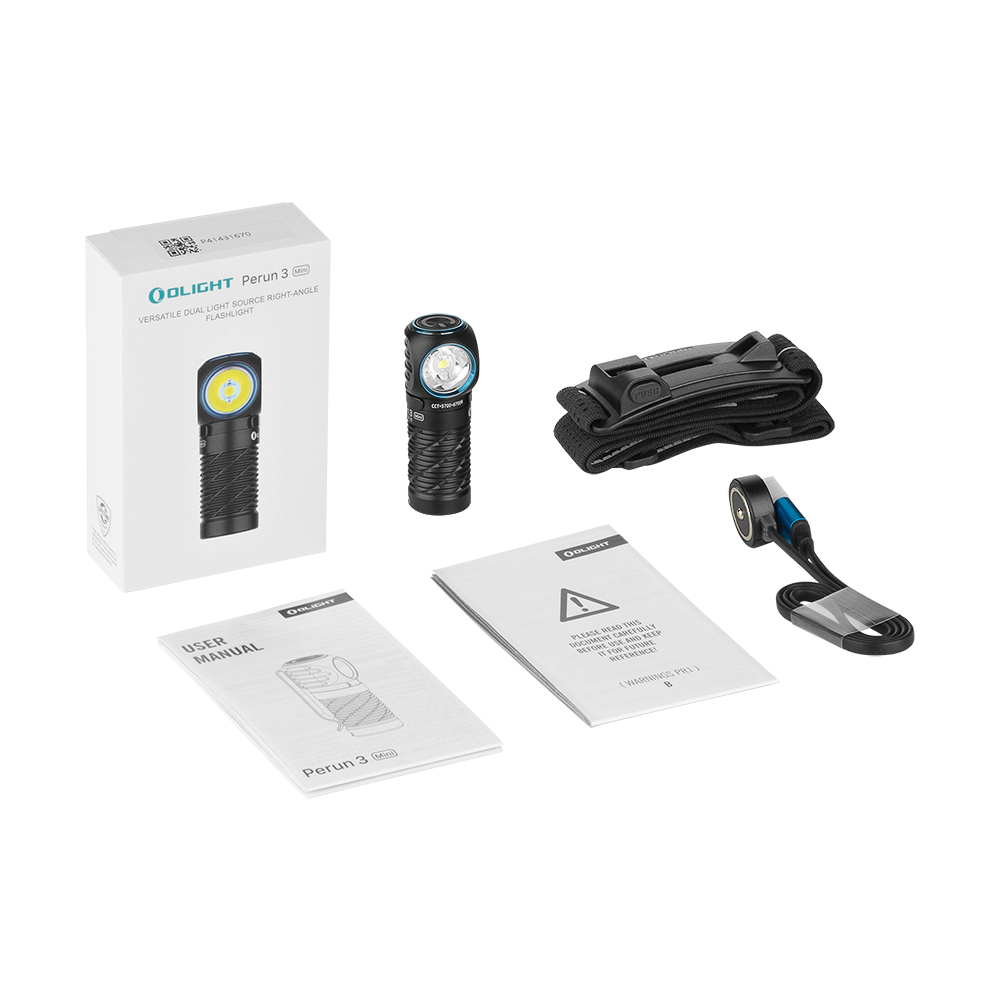
Official Black CW Perun 3 Mini package image; confirm the selected option's equipment list rather than assuming a Premium charging case.
The listed difference between this standalone Mini and the two-item clip setup above was $7.01. That arithmetic does not establish which arrangement will suit the wearer better. It gives a specific price difference to place beside the mounting, fit, charging, and other actual task requirements. A relatively small difference still deserves an explanation in the buyer's own routine.
When the full-size arrangement deserves a closer look
Perun 3 Black was listed at $89.99. Its current US description includes a rechargeable battery rated at 5,000 milliamp-hours, five white-light modes, two red-light modes, and a headband, magnetic tail, clip, and lanyard. These features make the power and placement questions useful starting points for comparing it with a smaller option.
Battery capacity is an input to the decision, not a complete statement of operating time. Read the output levels and durations for the settings the activity requires. A maximum-output number and a long runtime quoted for a low setting describe different operating conditions. Keep them separate rather than assuming the light runs at maximum throughout an evening.
The large metal side button is described by Olight as glove-friendly. A person who often wears gloves has a specific feature to assess, following the actual model instructions in a suitable setting. Different gloves and wearing arrangements behave differently. The concave button shape is also described as helping avoid unwanted activation, but the documented off, lockout, and storage guidance still applies.
Head-to-hand and magnetic placement options can be useful during ordinary campsite or household tasks. Directing the light from a different position may help with a nearby label or object without requiring a strained head angle. Check the actual support and stability before relying on magnetic attachment. A feature that offers several positions still needs a suitable position for the particular job.
Olight also warns that repeated removal and insertion in the metal headlamp bracket can scratch the body. Someone planning frequent transitions should include that cosmetic effect in the ownership decision. A product photograph shows a new example; the manufacturer's stated limitation explains something about repeated handling that the photograph cannot establish.
Choose between reusing, expanding, and replacing
If a compatible clip light is already part of the household kit, first check that it is still suitable for its existing role and the proposed wearing arrangement. The new shopping question may be whether the separately listed strap adds a genuinely useful option. Keep the full light-and-strap comparison for a buyer starting from nothing. Reusing appropriate equipment can change the budget without changing the task that needs to be done.
If an existing headlamp has a damaged band or mounting part, ask the manufacturer about the exact replacement part before treating the whole light as disposable. Identify the model and configuration from the purchase record. A compatible part may address the specific problem, while a visually similar substitute may not be appropriate. Obtain the actual price and availability instead of assuming replacement is always cheaper or that every part can be replaced separately.
For a new user, make a complete starting list and compare it with the selected package contents. Mark each item as included, already owned and compatible, or still required. Leave optional equipment on a separate list. This simple distinction prevents both underbudgeting for a missing necessary item and buying an accessory that already comes with the selected configuration. Recheck the list whenever the option in the cart changes.
For a household planning several users' equipment, assess fit and readiness for each person who will actually use a light. One person's comfortable band adjustment does not establish another person's fit. Decide which equipment is genuinely shared and where it lives between activities. A family budget can become confusing when the same cable or light is counted as available in several bags at once.
Include the activity schedule in that shared-equipment decision. A light needed at home cannot simultaneously be assumed to be ready in a camping bag somewhere else. A separate maintained light may solve a real availability problem, while an extra accessory without a clear location may add confusion. Write down where each item stays and which items transfer before departure, then buy only what the working arrangement still requires.
At the checked prices, the full-size configuration was $25.00 above the standalone Mini and $32.01 above the separately assembled clip setup. Place those differences beside the particular features relevant to the intended activity. The additional cost may be justified by a preferred power or wearing arrangement, or the lower-cost choice may already be adequate. The arithmetic helps make the decision specific without declaring a universal winner for every household.
Put expected use into the budget without inventing a price rule
Estimate the activities already on the calendar rather than the ones a new light might inspire. Occasional equipment sorting at home, several camping evenings, and regular outdoor chores create different routines. Record the relevant wearing time and whether charging is available between activities. This helps identify which features deserve attention without turning a guessed number of monthly hours into a universal price bracket.
A person who expects only occasional use may reasonably value a simple arrangement that is easy to find, charge, and store. Someone with a recurring task may care more about a mounting transition or a preferred control location. The difference is the actual inconvenience and frequency, not an assumption that every frequent user should buy the most expensive model.
A limited budget can favor keeping an existing suitable light and purchasing only an explicitly compatible accessory. It can also justify waiting if the current equipment already handles the task. Write down what a replacement would improve before buying it. The useful result of a comparison may be a smaller purchase or no immediate purchase, rather than a larger collection of lights.
If the light serves a workplace role, establish the relevant equipment requirements first. Personal price preferences cannot replace those requirements or determine compatibility with required protective equipment. Keep employer-provided tools and optional personal accessories distinct. A recreational wearing arrangement does not establish suitability for a particular workplace task or helmet.
Compare ownership costs with inputs you actually know
For an ownership budget, start with the purchase price and required accessories. Add replacement items only when the exact product instructions and the intended routine call for them. Keep optional upgrades on another line. This makes it easier to see whether a larger total reflects a necessary working setup or a collection of extras that could wait.
A simple worksheet can use four categories: initial equipment, necessary charging equipment, expected replacement consumables, and any charging-energy cost being estimated. Record the period the worksheet covers. A five-year total is only meaningful when its assumptions are stated; the number five does not supply missing information about operating hours, battery condition, replacement needs, or continued ownership.
For a disposable-battery comparison, use the actual compatible battery type, the price of the batteries you would buy, and the documented or personally observed replacement pattern for the relevant light and setting. A generic count of batteries per month may bear little relation to the intended use. Keep any uncertain assumption visible instead of presenting the total as a measured saving.
For a rechargeable option, check the actual charging arrangement and the information needed to estimate energy use. Use the applicable electricity rate and reasonable charging inputs if that calculation is important to the budget. Otherwise keep it as an uncalculated category. The presence of a rechargeable battery does not establish a precise lifetime cost, and an unsupported small electricity figure does not improve the comparison.
Avoid mixing unlike starting points. A charger already owned, a new power source needed for travel, and an optional mobile dock are different costs. Decide which ones are genuinely required by the selected configuration and routine. This prevents an accessory-heavy budget for one light from being compared with a bare product price for another.
Package details that can change a good-looking deal
Look for the exact included-equipment list after selecting the desired configuration. Shared pages can change accessories when a bundle or version changes. Keep the selected model name and contents together in the purchase record. If an important item remains unclear, ask the manufacturer or retailer about that exact selection before treating the package as complete.
Check charging connections with equal care. An appropriate USB-C arrangement and a specified magnetic charging accessory are different systems, even when both serve rechargeable lights. Similar-looking hardware does not establish compatibility. A rechargeable flashlight that moves between home and a camping bag still needs its actual charging equipment to be available in the right place.
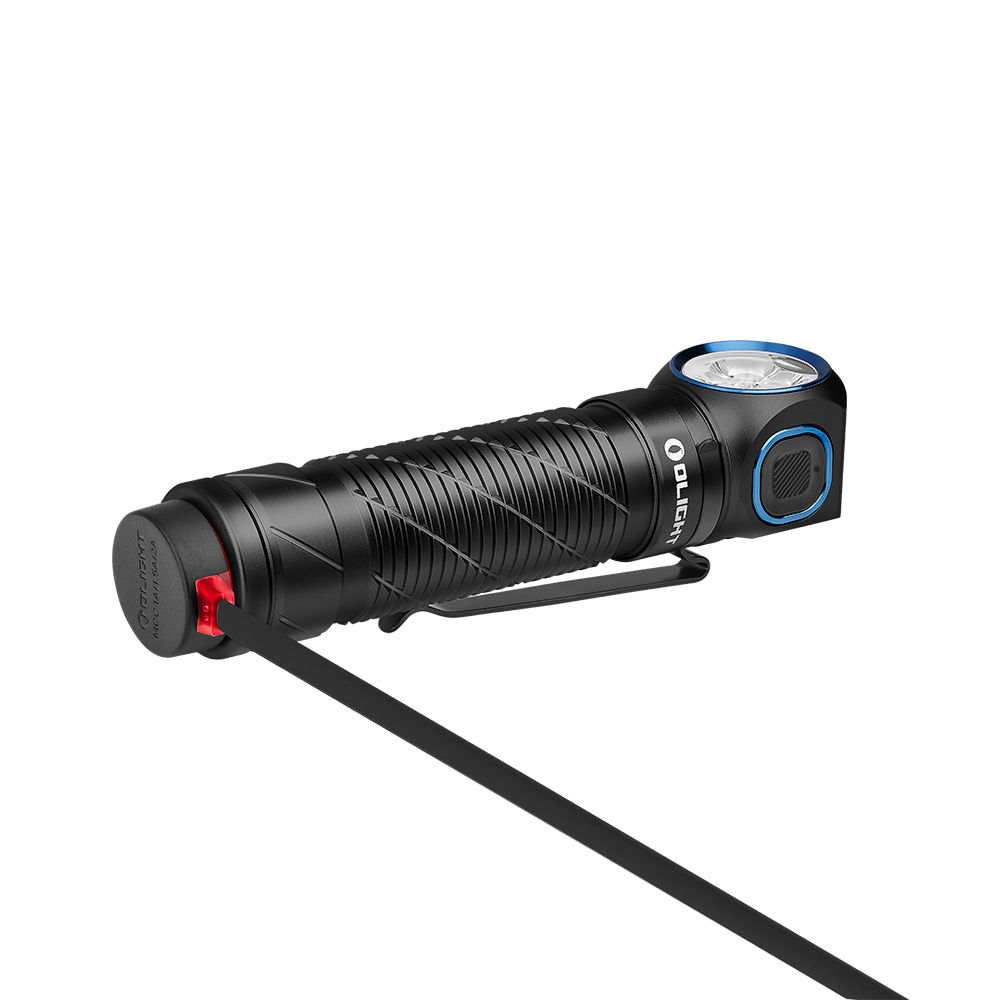
Official Perun 3 magnetic tail charging view; the correct cable belongs in the complete equipment check.
Think about duplicate ownership. A second cable may solve a recurring location problem if it is a genuine compatible accessory, while a mobile dock may have no useful role in a routine that already has convenient charging. Identify the problem before adding the accessory. Buying every available charging option is not required to make a rechargeable light practical.
Keep storage costs proportionate to the task. A defined place for the light and its equipment can be enough; there is no need to assume that a new organizer is mandatory. If a protective or carrying accessory is needed, check the manufacturer's compatibility guidance. A visually similar pouch or bracket should not be treated as an approved replacement without support for that use.
Read current sales and return conditions before relying on a purchase to assess ordinary fit. Know what is permitted, retain the required packaging and parts, and keep the product within its instructions. An improvised drop or water demonstration is unnecessary for deciding whether a band is comfortable or a control is understandable, and should not be assumed to fall within a return policy.
Check useful output before paying for a bigger number
Look at the object and distance involved in the ordinary task. A nearby reflective label, the interior of a bag, and an established path call for different lighting arrangements. Useful output is the level and direction that make the relevant detail clear. A higher peak figure alone does not explain how comfortable the light is to use or how long the appropriate setting lasts.
Keep the mode and runtime connected when reading specifications. A long low-mode figure does not describe a brighter mode's duration. Manufacturer figures also have stated test conditions and limitations. Follow the exact model information rather than borrowing a number from a related version or using battery capacity to guess an operating time.
Consider light color when the task includes recognizing color-coded information. White light may be the suitable choice for a marked label or colored instruction. Another mode can be useful for a different ordinary activity without replacing the information needed for this one. If visibility remains inadequate, change the arrangement or stop the task instead of forcing the activity to fit a preferred mode.
A first-trip shopping check
Before leaving home, confirm that the complete arrangement is present and ready. Fit the band according to the instructions, learn the relevant controls in a suitable setting, and verify the appropriate charging equipment. Give the light a defined place in the bag so it can be retrieved without unloading other contents. A good budget decision still needs an ordinary preparation routine.
Include the clothing that will actually be worn. Glasses, a hat, and another layer can change where the band sits and how the controls are reached. Check the direction of light on an ordinary safe surface after adjusting the fit. A purchase that looked comfortable in the hand can behave differently when the entire wearing arrangement is assembled.
For outdoor activities, consider a maintained alternative lighting arrangement appropriate to the trip. The National Park Service includes illumination in its Ten Essentials. Budgeting for readiness means knowing what equipment is available and how it is powered; it does not require buying every light in a comparison or treating a phone's remaining charge as an unlimited resource.
After the activity, follow the manufacturer's cleaning, drying, and storage guidance. Inspect the band, mounting parts, light, and charging equipment, and address damage through appropriate support. Keeping the existing equipment ready can be more useful than repeatedly shopping for a new setup because the current one has become difficult to find or maintain.
Frequently Asked Questions
Buy the complete arrangement you have a reason to use
Before checking out, explain what the light needs to do, how it will be worn, and where it will be charged. Confirm the exact version, compatible accessories, and included parts. Then compare the total with the equipment already available. A clear reason for the purchase is more useful than finding a product that happens to sit inside an attractive price category.
Keep the plan manageable after the purchase. Choose a defined storage location, an appropriate charging routine, and the features relevant to the ordinary activity. A good headlamp budget supports that routine without hiding necessary costs or filling it with optional equipment. The useful result is enough well-chosen lighting equipment, ready when the task actually calls for it.
Changelog
- November 18, 2026: Product information and buying guidance reviewed.




