


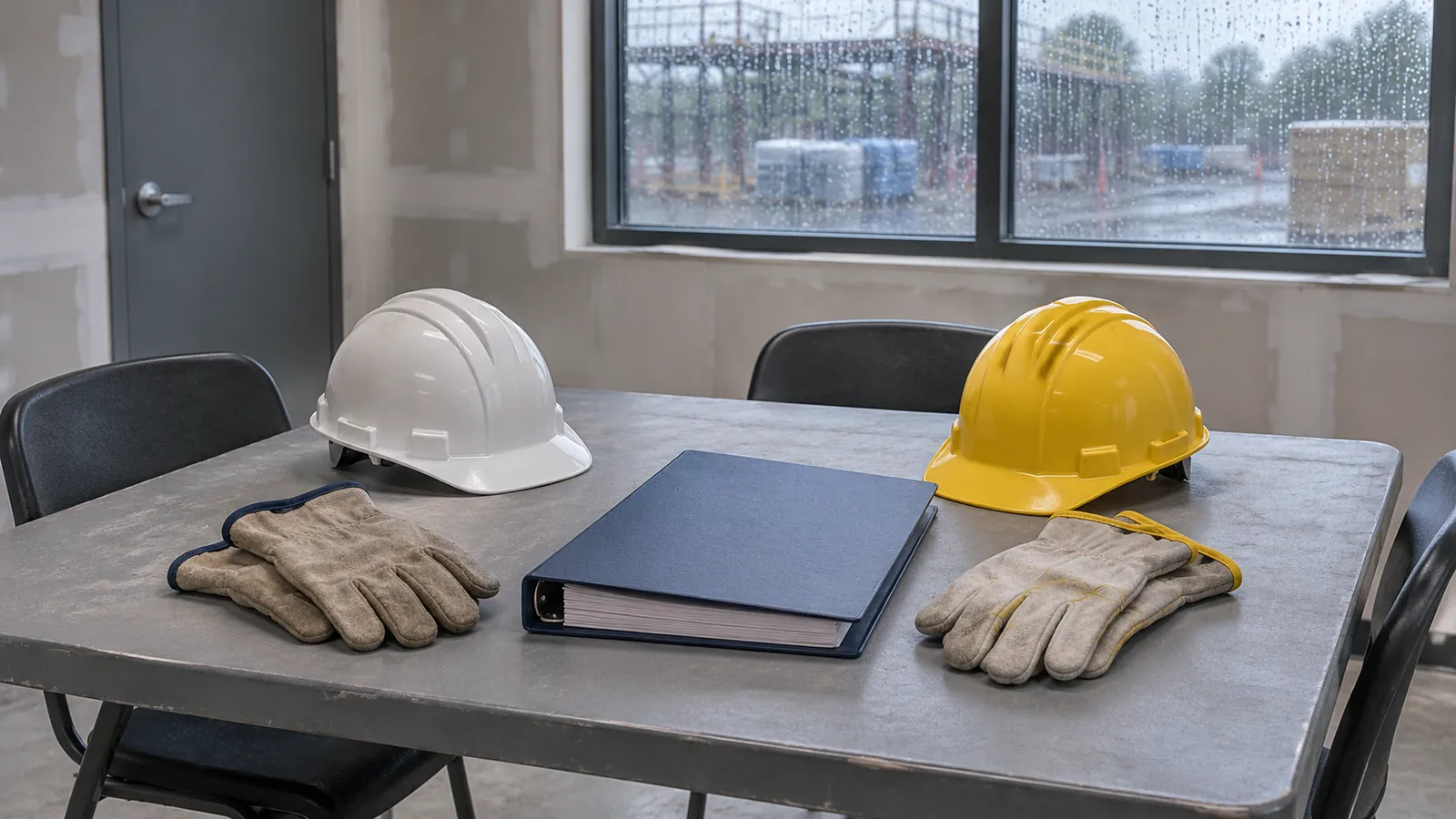
TL;DR: Before severe weather, tell the crew when work stops, where to go, and who accounts for people. Name the backup communication and lighting already approved for the site. A headlamp or flashlight can help with a permitted task, but never delays shelter or evacuation. End by having workers repeat their assignments.
📋 Table of Contents
- 1. Give the crew a plan they can repeat
- 2. Use this ten-minute crew script
- 3. What is a 5-minute safety talk?
- 4. What are the 5 P's of preparedness?
- 5. What should I stock up on before a storm?
- 6. Assign portable lighting only to permitted tasks
- 7. Leave temporary power and the return decision with the site
- 8. Record who heard the plan and what still needs an owner
- 9. Frequently Asked Questions
Give the crew a plan they can repeat
| Briefing topic | What to fill in before you speak |
|---|---|
| Weather and work changes | Official forecast, affected work, and the person who announces changes |
| Stop and move | The trigger from the site's plan, destination, and approved route |
| Check in | Who accounts for employees and how visitors or other crews report |
| Supplemental light | What is already issued and where the site allows it |
| Resume | Who gives the return instruction and how it reaches the crew |
Get three items in front of you before anyone gathers. Use the current local forecast or alert, the site's approved plan or briefing notes, and the actual shift list. If you see a difference between them, resolve it through the site's chain of responsibility. A forecast provides weather information. It does not tell a particular crew where its employer expects it to go or which person will receive its call. Fill in that part from the applicable site documents.
Start with the actual place and shift. A crew working beside a building may have a different shelter plan from a group assigned to a separate yard. Two people can hear the same warning and think they're headed to different places. Name the approved destination and the person who can clarify it while there's time to ask. Say how the crew will hear a change after the briefing.
A toolbox talk is a short point of contact, so give workers decisions they already have authority to carry out. Discuss putting materials away while conditions allow it and the site has approved the work. Explain what workers should leave in place once there is a stop, shelter, or evacuation instruction. Keep charging gear, tools, and personal items from becoming extra errands on the way to safety.
Review the local forecast and the site's current plan before speaking. The National Weather Service's lightning guidance for outdoor workers recommends monitoring forecasts and avoiding tasks you can't quickly stop when thunderstorms threaten. If you hear thunder, stop and seek safe shelter. Identify the site-approved shelter consistent with that guidance, such as a substantial building. An open-sided cover by the tools is a poor choice for lightning.
Decide which parts of the briefing should change for the likely hazard. For thunderstorms, review where people can reach appropriate shelter and how the warning gets to workers who may be spread out. For a winter event, check whether the assigned route or reporting point could change because of access conditions. A named trigger from the actual plan is more useful than a prediction that everyone's work will stop at a particular hour. Make room in the talk for an update if forecasts change.
If a rain or wind event could close the usual approach, discuss the alternate route the site actually authorizes. National Weather Service flood safety guidance says to avoid walking or driving into floodwater. A lamp can help a person see a route marker, but it cannot show that water is safe to enter. Report a blocked route from a safe location and follow your site's direction.
Use this ten-minute crew script
The times below are an agenda for a normal prework briefing. Fill in the site information beforehand. Shorten or expand the discussion to fit the crew and the work. If a hazard is already imminent, follow the actual response plan instead of completing the talk.
Minutes zero through two. Name the weather and affected work
“Here is the official weather information we checked for this site and shift. Here is the work our plan calls for us to postpone or finish early. The lead named on the shift notice will post updates. Tell me now if your assignment is different from the one we have on the list.”
Give one detail people can locate immediately, such as which crew will be on the far side of a fenced work area. Say where the current plan or route information can be found. Ask that crew to repeat the location they will report to if work stops. If a late-start group misses the meeting, give them the same information before they begin. A written note to the next lead can carry the plan without relying on a rumor about the forecast.
Introduce the weather report with its location and time. A message for a nearby town may refer to a different period than today's site alert. Tell the crew which report the supervisor is using and where later updates will come from. If teams are working in multiple areas, put the area name in the message. Workers should know which information applies to them without using a private phone while they're already carrying out another job.
Minutes two through four. Confirm moving and checking in
“Here is the destination for this crew and the route the site has assigned. Here is the backup communication if the usual method is unavailable. When the stop instruction comes, go as directed and report to the person named for your group. Do not go back for a light, a charger, or personal equipment.”
The 2025 annual CFR text on OSHA construction emergency action plans describes escape assignments, accountability, reporting, and responsibilities for plans required by a particular OSHA standard. Use the plan that applies to your workplace. Explain how a temporary worker or visitor checks in. If two crews share a shelter, make clear how their counts reach the people coordinating the response.
Explain any accommodation already arranged through the site's plan. A supervisor can confirm assistance, accessible routes, and communication before the meeting. Workers who receive instructions in different ways should be able to repeat the applicable direction in their own words. Don't announce personal details to the group. Give people a reliable way to ask for clarification.
Ask the person collecting the count how they'd handle a worker who has moved from one team to another during the shift. The briefing should give the current reporting arrangement and a way to pass a correction. Keep the question about the actual roster and assignment. If someone is missing during an incident, report it through the employer's plan. A headlamp is never a reason to send a coworker back to look.
Minutes four through six. Describe the plan for lights and power
“Fixed and installed lighting stays with the site's plan. Here is the approved supplemental light you may already have for an ordinary permitted task. Use it only where allowed. If the route or the official lighting is affected, report what you see from a safe point and follow the site's directions. Leave temporary electrical work to the designated personnel.”
Break the lighting conversation into the equipment needed before weather arrives and any permitted tasks afterward. Showing someone where to find an issued light on a normal shift is useful. Sending them to fetch it after an evacuation call defeats that purpose. Place the equipment in an accessible, approved location and explain its role before the forecaster or supervisor announces a change.
You can demonstrate the ordinary portable equipment while general lighting is available. Show the exact item and the place it belongs, with the light aimed at a nearby object and away from the group. Keep the demonstration about recognizing issued gear and returning it. Conditions may be colder or damper than this room. Check the actual instructions and permit restrictions before that device is assigned to a different spot.
Minutes six through eight. Separate storage from response
“Here are the routine items the site wants secured early and who is assigned to them. When the plan says stop, leave unfinished work to the person in charge of the response. Tell us which item or area is still outstanding. Here is the location of the sign-in information and who receives it.”
Some crew members may think of the meeting as a list of tasks to finish before departure. Help them distinguish work approved for normal conditions from what a person should do once the plan changes. Store shared accessories, chargers, and forms during ordinary work. Confirm a backup contact if a job lead is away, so a missing cable or a blocked gate has a clear route to the right person.
Minutes eight through ten. Ask for the plan back
“Where are you going if we stop? Whom do you report to? If the normal message can't get through, what is your backup? Who will tell you whether you can return?”
Ask people in different parts of the worksite to answer. Keep the check focused on practical location and responsibility. If someone repeats the normal entrance instead of the named route, correct the assignment and ask again. Record open items for the responsible supervisor. Attendance tells you who was in the room. Hearing the route and contact back gives a better indication of what the crew understood that day.
What is a 5-minute safety talk?
A five-minute safety talk is a brief prework discussion about a particular risk and the actions workers need to remember. For a storm, state the trigger and site-approved destination, name the check-in contact, and say what to do if a route or message fails. Ask someone to repeat the instructions before ending.
Use the shorter version when the crew already knows the site and you need to confirm today's changes. Read the current alert and say which assignment it affects. Point people to the current route and destination rather than repeating language from a previous job. If the plan, route, or roster is unfamiliar, give the crew time to resolve the gap before starting the affected work.
A quick talk works better when you pose specific questions. “Any questions?” may get silence from a new worker who hasn't found the assembly point. Ask one person to name the route from their actual work position. Ask another to identify the contact who would receive a report from the shelter. Repeat the correct decision and show them where they can find it again.
One short talk might sound like this. The main group has been reassigned and will report as directed by its lead. Visitors report through the arrangement that the site has already set up. The usual radio channel may not reach everyone, so use the backup contact in the plan. Pause and ask a person from each group to say whom they report to. Replace these example details with confirmed information before speaking to your own crew.
A short follow-up can go to a worker who arrives later, to a contractor who changes assignments, or to a night crew that takes over a different part of the site. Include the same destination, reporting channel, and authority for the next update. A handover sent while the site is operating normally is easier to check than a last-minute message with an unfamiliar location name.
What are the 5 P's of preparedness?
Different preparedness programs use different wording. For this storm talk, use the prompts people, place, power, portable lighting, and permission to resume. Name who checks in, where they go, who handles temporary power, which lights the site allows, and who announces reentry. Treat the words as a memory aid for the actual plan.
Use the prompts as checks for your notes. People means the current crew, visitors, and others whose status someone must account for. Place means the destination and route that the employer has already identified for the conditions. Write down who gives the update if either changes. Avoid a drawing or instruction someone might mistake for an official map if all you need is a note about the assignment.
Power belongs with the people the site has designated. Portable lighting belongs with a defined task in a permitted area, such as reading a check-in sheet at an ordinary indoor station. Permission to resume should have an identified source and way to reach people. If a prompt has no clear answer, take it to the person responsible for the plan during normal operations.
The five prompts also help when a plan uses a name workers do not recognize. If the document uses one term for a building and the crew uses another, show how those terms correspond during ordinary work. Identify an approved translation or communication method when people need one. Keep the person in charge of the plan involved so an informal phrase cannot accidentally send someone to the wrong door or waiting point.
A supervisor can use that list after a briefing as well. A name without a way to reach the person is incomplete. A destination without a route may be hard for a first-time visitor to find. A light or charger without an owner can get left on the wrong shelf. A return announcement that reaches only one crew may cause different people to act on different information.
What should I stock up on before a storm?
For a crew, use the site's preparedness list. Confirm potable water, appropriate layers, working communications and backup power where allowed, and the required emergency supplies. Check the portable lights and charging equipment the site has authorized. Buy for the actual people and locations, then place supplies where the plan allows safe access.
The needs can differ between people working at the main building, in a separate yard, or at a temporary staging location. Gather the crew size and allowed time at each place from the actual plan. Check who owns supplies and where someone is allowed to retrieve them. If a kit has a battery-powered item, verify compatibility and storage instructions before putting it into the kit.
Check how you'll manage supplies that belong to different crews. If a dry storage area serves multiple teams, give the people who issue equipment the actual list of items and their usual locations. A spare set of light batteries or a charging accessory should match the exact device. Keep incompatible equipment out of the issued kit. A person collecting gear shouldn't need to guess based on whether two connectors have the same shape.
Set a simple routine for removing damaged or depleted portable gear from ordinary service. A note that identifies the exact model and charging accessory is more helpful than “light needs attention.” Report a missing part before the next work period if it affects the assigned task. There should be a way to route the issue to the person authorized to replace the gear without moving it into an unsuitable area.
Label a rechargeable flashlight and its compatible accessories when the site issues it to a regular station. For permitted hands-free tasks, a headlamp still needs to fit with the personal protective equipment and work the site allows. Put the device away if that arrangement interferes with required equipment or changes the worker's normal task.
Assign portable lighting only to permitted tasks
| Worksite situation | What to confirm |
|---|---|
| Check a list at a permitted station | The smallest task area that needs light |
| Handle paperwork with both hands | Whether a headlamp is allowed with the protective equipment |
| Issue or return portable lights | Exact light, compatible accessories, and location |
| Work in wet, cold, or restricted conditions | The equipment limits and the site's explicit approval |
| Move between work areas during a warning | Follow the plan and assigned route without stopping for gear |
Check the work area before putting a portable light on a list. An ordinary room reserved for paperwork can still have instructions about what equipment workers may carry, which exits should remain unobstructed, and how cables are handled. A workroom, stairwell, and mechanical space serve different functions. A light that is permitted at one location does not give a person permission to carry it through another. Resolve the actual route and restrictions when the plan is reviewed.
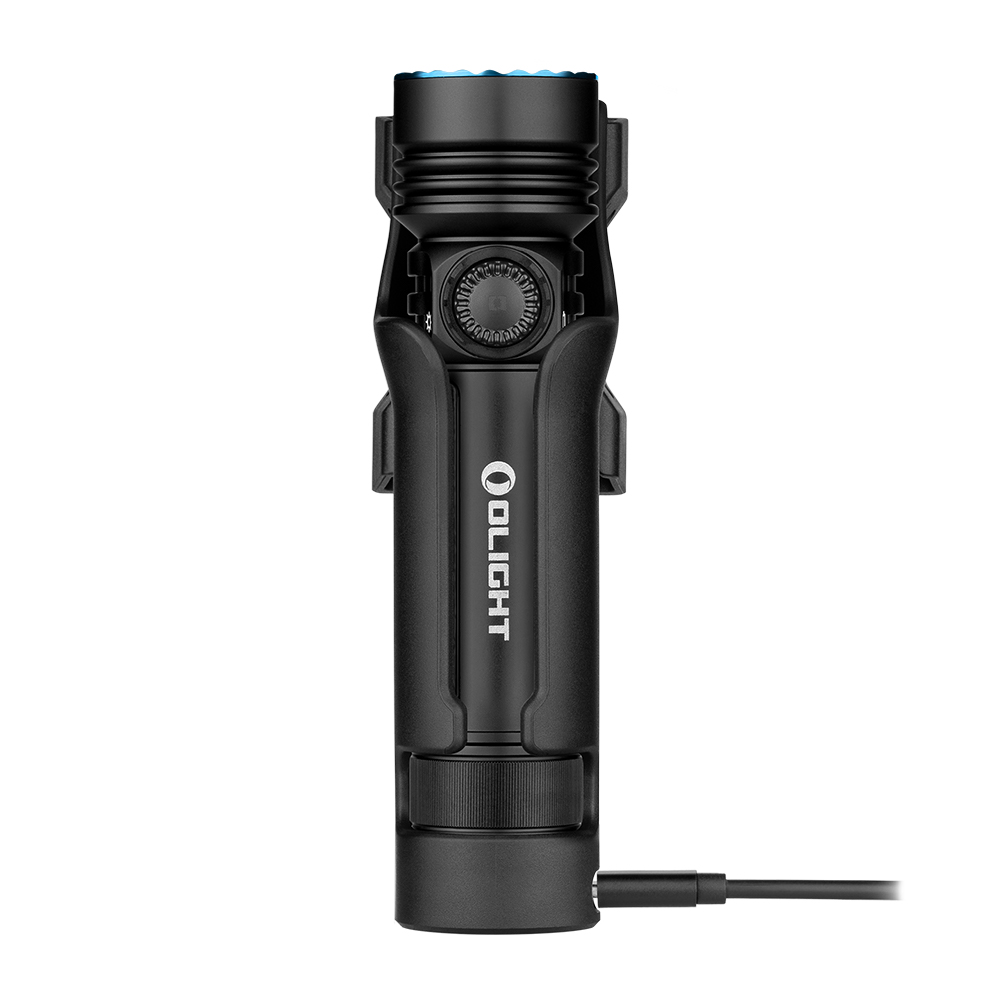
The products below are examples for permitted, nonclassified areas. The listed working range for both models is 32°F to 104°F (0°C to 40°C). Choose an appropriate site-approved light for cold or wet conditions the model cannot serve. Follow the manual for charging and storage. Keep these products out of service when the conditions or the site rules do not allow them.
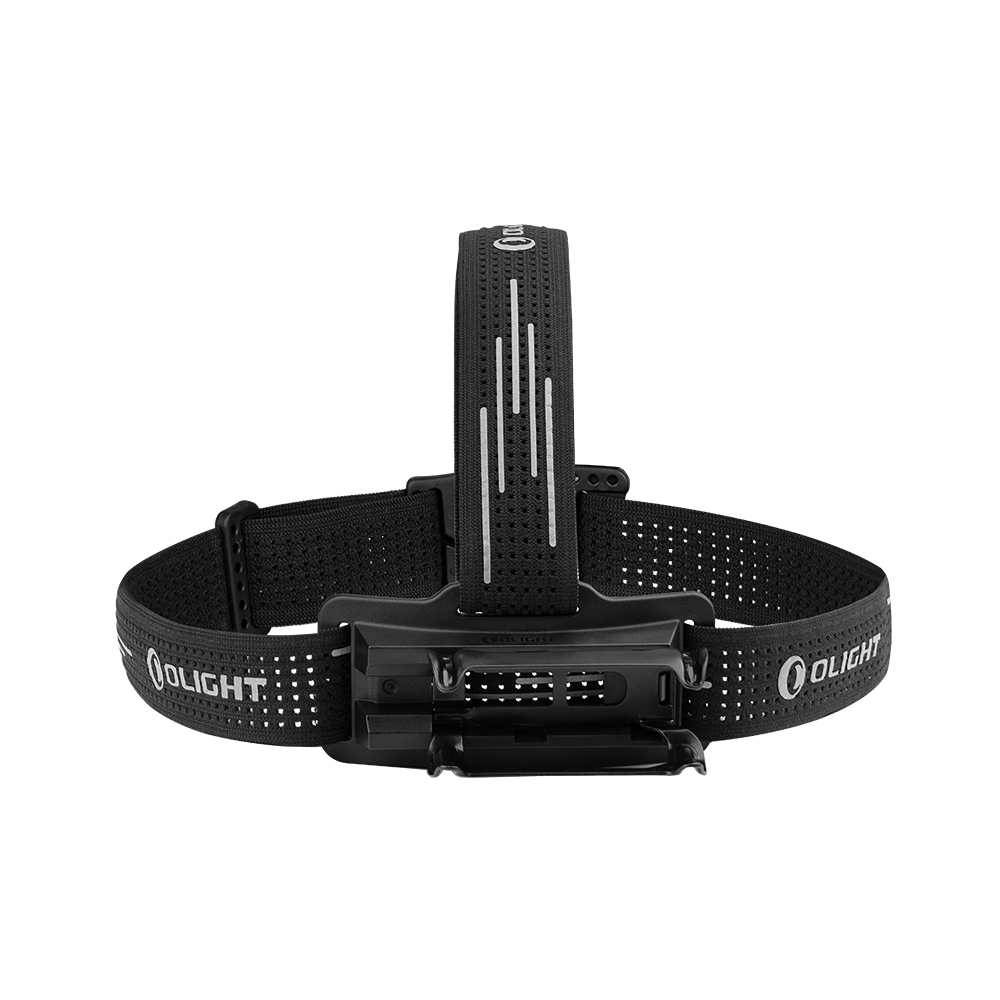
The Black Perun 3 gallery detail shows the separate headband and mounting bracket to check at the issue point.
A removable headband leaves more than one part to account for at an issue point. Check the components during normal operations and follow the instructions for how the light attaches. Confirm the fit with the equipment the site requires before you issue it. Plan that work at a dry, permitted place with good general lighting.

Leave temporary power and the return decision with the site
A flashlight does not grant access to a cord, panel, equipment cabinet, or generator. If the storm has affected power, tell the designated site contact what you can observe from a permitted location. Leave setup, connections, damaged equipment, and attempts to restore power to the assigned personnel. Never touch fallen lines or follow a cable into a wet or restricted area to investigate it.
NIOSH's workplace carbon monoxide guidance explains the risk from engine exhaust and warns against using gasoline-powered equipment in buildings or partly enclosed spaces. Keep the crew away from unsafe conditions and leave portable generator placement and operation to the designated people under the actual site plan. If there is a suspected exposure or an immediate danger, call 911, get to fresh air as safely as possible, and follow emergency directions.
After the warning, the crew may see a charger that got wet or a temporary cabinet that was displaced. Report the location and leave the condition as observed from a safe area. The people assigned to evaluate the site need to know what area or item you saw without having coworkers handling it in the meantime. Resume charging or issuing portable equipment only at a suitable location under the appropriate instructions.
A storm can move away from the site while roads, equipment, or temporary arrangements still need review. Teach workers who announces the return and how that message will reach their group. Light coming back on or another crew walking past doesn't authorize return for everyone. The decision for that location belongs to the site and any applicable official restrictions still in effect.
When you record a post-event issue, note where the worker was and what could be seen. If the path was clear but a sign was hard to make out, report those as separate observations. Encourage a worker to say what they couldn't verify. The next decision may depend on getting the right person to examine the issue later, when the site has established a safe way to do that.
Record who heard the plan and what still needs an owner
Record the date, site, shift, person leading the talk, weather information used, and assignments that were discussed. Note who attended according to the site's process. Keep a separate line for anyone who needs the same briefing later. An attendance record works best alongside the actual site documents that people will need, including any revisions made for that day's work.
Write down unanswered questions as actions with an owner. If a worker does not know who's collecting the count at another location, route that question to the person responsible for the plan and report the verified answer. If a charging accessory is missing, give the model and location to the person assigned to equipment. Keeping those requests separate makes it easier to close them before work depends on the answer.
Agree on where the record lives after the meeting. The lead may need the version at a named site office while the next crew relies on another approved communication channel. Use the current location and route labels in both so people can refer to the same assignment. Mark an unresolved item as open until someone responsible has confirmed the answer. Finish the briefing around what people will do, then use the record to make sure outstanding questions get resolved.
At the next normal briefing, review any problem that affected a previous shift. A temporary sign may have been hard to read. Two groups may have heard a different destination name. A shared headlamp may have been returned without a component. Describe the specific change and ask the people affected to repeat it. Make sure informal notes match the actual instructions issued by the site.
Frequently Asked Questions
Changelog
- November 19, 2026. Checked National Weather Service lightning and flood guidance, the 2025 annual CFR construction planning text, current NIOSH workplace carbon monoxide material, and the exact product manuals and U.S. gallery images.




