Table of Contents
With smartphones handling just about everything these days, it’s fair to ask whether a dedicated flashlight is still worth carrying. But if you’ve ever dropped a screw under your car seat or walked a dark suburban block during a power outage, you already know a phone light falls short fast. In 2026, keychain flashlights have turned into serious everyday tools that take up almost no space on your keys. This guide explains why they still matter, which features are actually useful, and which models are setting the standard this year.
Why a Keychain Flashlight Is a Must-Have in 2026
Phones can do a lot, but they’re still not great flashlights. A keychain flashlight fills that gap in a way that actually fits real, everyday American life, quick errands, late nights, and the stuff that always seems to happen after dark.
1. Everyday Convenience and Portability
If you’ve ever tried unlocking your door after a long shift or walking out to the curb to grab the trash on a winter evening, you get it. An everyday carry flashlight is there without thinking about it. It’s light enough to live on your keys full-time and small enough that it never feels like extra gear.
2. Safety and Emergency Uses
From a surprise flat tire to a dark parking garage after a game or concert, having a dedicated light makes situations feel more manageable. A keychain flashlight is easier to aim and hold than a phone, and it lets your phone stay free for calls, GPS, or emergency messages.
3. Compact Design Without Compromising Brightness
Older keychain lights were barely better than nothing. That’s changed. New designs pack real lumen output into bodies about the size of a AA battery. You get practical brightness without carrying anything bulky, so “small but powerful” is finally real, not marketing talk.
Key Features to Look for in the Best Keychain Flashlight
Not all keychain flashlights are worth carrying. Some look good on paper but fall short once they’re clipped to your keys. Focusing on a few core features helps you avoid that mistake and end up with a keychain flashlight for everyday carry that you’ll actually rely on.
1. Brightness and Beam Distance
Lumens tell you how bright the light is, while beam distance, often called “throw” , shows how far that light travels. For a keychain flashlight, 50 to 150 lumens is ideal for everyday tasks like unlocking doors or searching a car interior. Higher output models can reach farther, which is useful for outdoor walks or checking dark corners.
2. Battery Life
A bright light isn’t helpful if it dies quickly. Efficient keychain flashlights offer more than one mode, letting you use low brightness for simple tasks and save high output for when it matters. This balance helps stretch battery life when you’re away from a charger.
3. Rechargeable Options
In 2026, USB-C charging is the standard most people expect. Rechargeable models, like the i1R 2 Pro, eliminate disposable batteries and make charging easy using a laptop, car charger, or power bank you already carry.
4. Waterproof Ratings
Everyday carry means exposure to rain, spills, and the occasional dropped keychain. A flashlight with an IPX8 waterproof rating keeps working even if it gets soaked, so you don’t have to worry when weather or accidents happen.
Top Picks for Best Keychain Flashlight 2026
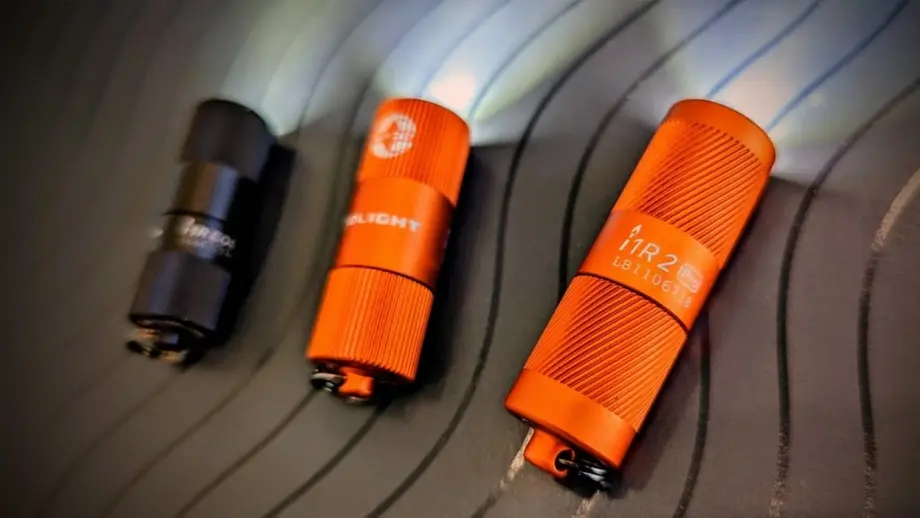
After real use in everyday American settings, neighborhood walks, late night commutes, weekend hikes, and quick garage fixes, three Olight models consistently rise to the top. Each one balances size, output, and durability a little differently, which makes it easier to match a light to how you actually live, not just the specs on paper.
1. Higher-Performance Keychain Flashlight: i1R 2 Pro
The i1R 2 Pro is often seen as the sweet spot for an EDC keychain flashlight in 2026. It uses a high performance LED with a TIR optic lens to produce a clean, evenly spread beam that feels comfortable to look at while still delivering up to 180 lumens, plenty for sidewalks, parking lots, and quick inspections around your car.
What really separates it from older designs is how simple it is to use day after day. The built-in rechargeable lithium-ion battery charges through USB-C, and you don’t have to take anything apart. A quick twist reveals the charging port. That same twist-to-turn-on design also helps prevent the light from turning on accidentally in your pocket or bag, which makes it especially practical for daily carry.
2. Toughest Aluminum Keychain: iUltra OAL
The iUltra OAL is built for people who care more about toughness than maximum brightness. It puts out around 80 lumens of steady, cool white light and is housed in an ultra durable OAL aluminum body that’s designed to handle rough treatment. It includes a built-in USB-C charging plug and a magnetic base, which is useful when you need light but also need both hands free.
Even with its rugged construction, it stays light at roughly 20 grams, so it won’t weigh down your keys. This flashlight works especially well in garages, workshops, campsites, or job sites where gear gets bumped around. The anodized finish resists scratches from keys and tools, and the single output setup keeps operation simple and reliable.
3. Mono-Output LED Keychain Flashlight: i3E EOS
Sometimes simple really is better. The i3E EOS is built for people who want dependable light without dealing with modes, apps, or charging cables. It delivers a steady single output of 90 lumens in a body that’s barely bigger than the battery inside, which makes it easy to carry and easy to trust.
What makes the i3E EOS especially practical is its power source: one standard AAA battery. That means it works just as well on a daily keychain as it does tossed into a kid’s backpack or a glove box. If the battery dies, replacements are everywhere from gas stations to grocery stores, so you’re never stuck hunting for a charger.
On a typical alkaline AAA, the i3E EOS puts out about 90 lumens with a beam reach of roughly 44 meters, and it runs for around 1 to 1.2 hours. It’s not flashy, but it does exactly what it’s supposed to do, every time you turn it on.
Comparison of Top Keychain Flashlights
Here’s a quick side by side to make the differences clearer:
|
Feature |
i1R 2 Pro |
iUltra OAL |
i3E EOS |
|
Max Brightness |
180 Lumens |
80 Lumens |
90 Lumens |
|
Battery Type |
Integrated Rechargeable |
Integrated Rechargeable |
1 x AAA (Alkaline/NiMH) |
|
Charging Port |
USB-C |
USB-C |
N/A (Replaceable) |
|
Material |
Aluminum Alloy |
Ruggedized Aluminum |
Aluminum Alloy |
|
Weight |
0.93 oz (26.5g) |
0.85 oz (24g) |
0.68 oz (19.4g) |
|
Best For |
Daily Tech/Office EDC |
Outdoor & Industrial Use |
Simple Backup / Emergency |
Each of these keychain flashlights does one thing particularly well, which makes the right choice less about chasing specs and more about how and where you’ll actually use it.
Maintenance Tips to Extend Your Keychain Flashlight’s Lifespan
Even a solid keychain flashlight benefits from some basic upkeep. A little attention here and there keeps the light dependable instead of fading out when you actually need it.
1. Regular Cleaning and Lens Care
Pocket carry means dust, lint, and grit build up fast. Wipe the lens now and then with a microfiber cloth. If the beam looks dull, a small dab of rubbing alcohol will clear residue and restore brightness.
2. Battery Maintenance and Replacement
Rechargeable lights last longer when they aren’t left at zero for long stretches—plug them in before they’re fully drained. For models like the i3E EOS that use a AAA battery, check occasionally for leaks, since old batteries can damage the inside. Following these simple habits can help extend your flashlight’s life and keep your keychain light reliable for years to come.
3. Check and Tighten Loose Components
Keys take a beating every day, drops, rattling, and constant movement. Every few months, make sure the flashlight head and keyring connection are tight so nothing loosens or falls off without you noticing.
4. Prevent Overheating During Extended Use
High lumen output creates heat in a small body. If your flashlight starts feeling hot, switch it off or step down to a lower mode. That protects the LED, internal electronics, and your hands.
FAQ
1. Can I Carry a Keychain Flashlight on Airplanes?
Yes. Keychain flashlights are generally allowed in both carry on and checked bags since they’re not considered weapons. Just make sure the battery is built in or securely installed and not loose in your bag.
2. What Battery Type Is Best for Keychain Flashlight Use?
For everyday carry, integrated lithium-ion rechargeable batteries are the most convenient and powerful. If you’re building an emergency kit, AAA batteries (alkaline or lithium) are still a solid choice because they store well for long periods.
3. Are Keychain Flashlights Good for Camping or Hiking?
They work great as a backup light. You’ll still want a headlamp or larger flashlight for night hiking, but a keychain light is perfect for finding gear in a tent, walking around camp, or handling quick tasks after dark.
4. Do Keychain Flashlights Produce Heat During Long Use?
Yes, especially higher output models. Heat is normal with LEDs at higher brightness levels. Most well designed lights have built-in thermal protection that automatically lowers output if things get too warm.
5. Can Children Use Keychain Flashlights?
Generally, yes. They’re safe for kids to use, especially lower output models. For brighter lights, it’s a good idea to have adult supervision so they don’t shine them directly into someone’s eyes.
Conclusion
Choosing the right keychain flashlight in 2026 really comes down to finding the balance between size, usable brightness, and long-term durability. A model like the rugged iUltra OAL makes sense if toughness matters most, while the rechargeable i1R 2 Pro fits naturally into a tech-heavy everyday carry. For those exploring reliable options, an Olight flashlight is another solid choice, offering consistent performance and compact convenience. Either way, having a dependable light on your keys means fewer moments fumbling in the dark, whether it’s during a power outage, a late-night walk, or a quick fix in the garage. It’s a small tool, but one that quietly earns its place over time.