



⚡ TL;DR
Searching for the best light weight rifle for women often begins with a concern about comfort. A responsible starting point is a qualified safety course, a secure storage plan, and a clear understanding of the responsibilities involved. Treat the advertised weight as one piece of information while making room for training, household needs, maintenance, and ordinary outdoor lighting.
📋 Table of Contents
- 1. Start with the responsibility you are considering
- 2. Find instruction that makes basic questions welcome
- 3. Understand what an advertised weight can and cannot answer
- 4. Arrange secure storage before equipment comes home
- 5. Make household communication part of the plan
- 6. Use the manufacturer and qualified service support for maintenance questions
- 7. Keep ordinary outdoor lighting independent
- 8. Give the ongoing costs and time a place in the decision
- 9. Frequently asked questions
Start with the responsibility you are considering
A product description cannot tell you whether a new responsibility fits your household. Before comparing equipment, identify the lawful activity you have in mind and the instruction it requires. Ask how you will learn the relevant safety rules, where the equipment will be stored, and which qualified people can answer questions about its care. Those decisions deserve time before a purchase.
There is no single equipment profile that describes every woman. Experience, accessibility needs, personal circumstances, and household arrangements vary. A useful conversation begins with those actual circumstances rather than assumptions about height, strength, confidence, or appearance. You should be able to ask basic questions without someone treating uncertainty as a reason to hurry or to make a decision for you.
Separate the concern that started the search from the proposed solution. If the immediate problem is seeing the path to a barn or checking whether a gate is closed, ordinary lighting and a safe route may address that task directly. If the interest is a lawful supervised sporting activity, begin with its instruction and participation requirements. These are different planning conversations.
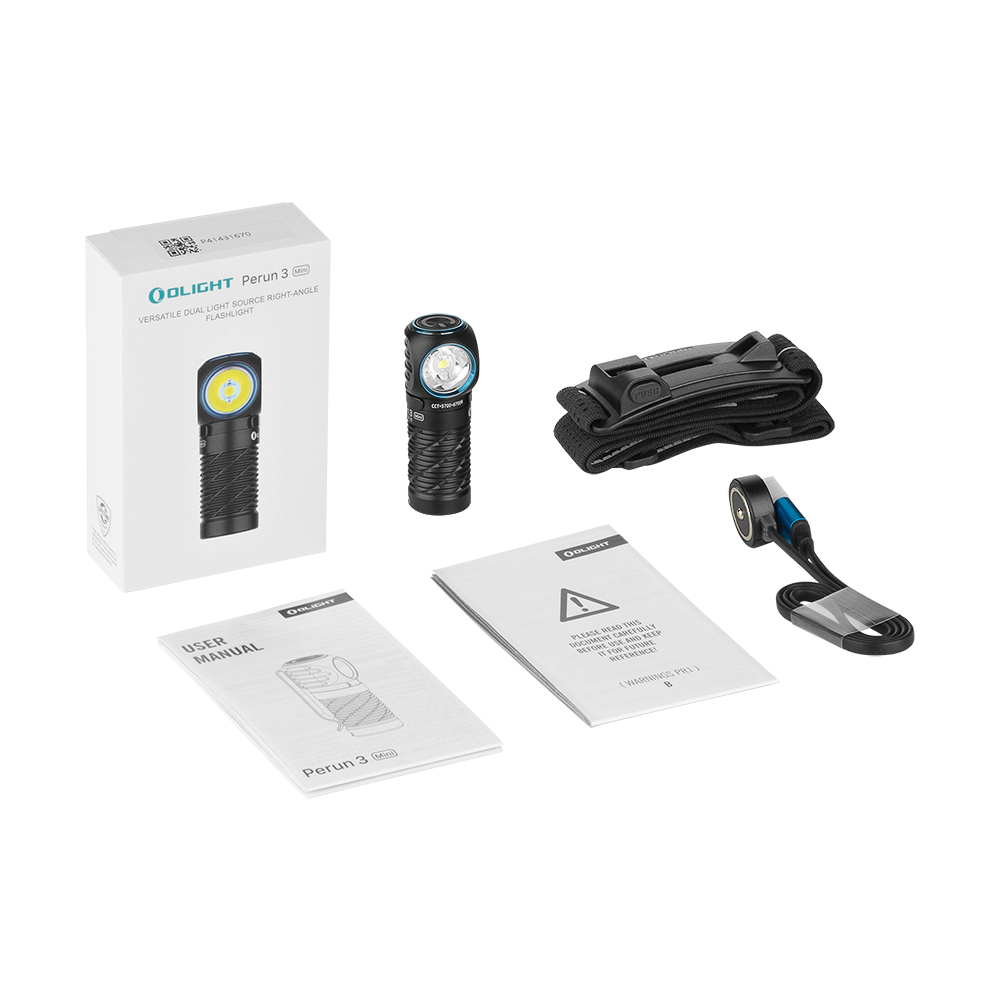
Official kit photo showing a portable light, headband, magnetic charging cable, and printed instructions; check the selected configuration.
Write down what you need to understand before committing money. Include the course, secure storage, maintenance support, applicable rules, and the time you can devote to learning. A clear list can make an appointment more productive and help you recognize when an answer does not address your circumstances. You do not need a final equipment decision to begin that preparation.
| Question to resolve | Who or what can help | Useful result |
|---|---|---|
| What instruction is appropriate for a beginner? | A qualified safety instructor and the course provider | Clear prerequisites, supervision, and learning expectations |
| How will unauthorized access be prevented? | Authoritative storage guidance and a suitable storage provider | A practical plan established before equipment arrives |
| What rules apply to the activity and location? | Relevant official authorities and qualified advice | Accurate requirements for the actual circumstances |
| Who will handle service questions? | The manufacturer or an authorized service professional | A known source for model-specific care and support |
| What ordinary outdoor tasks need light? | A daylight walk-through and suitable independent lighting | A clear route and a manageable routine without involving a firearm |
Find instruction that makes basic questions welcome
Ask about the course before enrolling
Contact the course provider and describe your experience honestly. Ask whether the course is intended for first-time participants, what safety topics it covers, and what preparation is expected. Find out whether there is a classroom component and how any supervised practical component is organized. A clear explanation should leave you knowing what you are signing up to learn.
Ask about the instructor's relevant qualifications and experience with beginners. A professional reputation in one area does not automatically explain how a particular course is taught. Request enough information to understand the provider's approach, supervision, and safety expectations. If the answers are vague, seek a provider who can explain the program without relying on pressure or sales language.
Discuss accessibility and communication needs before the day of the course. These might involve hearing instructions, reading materials, managing a long session, or navigating the facility. Describe the accommodation you need instead of assuming that a course labeled beginner will address it automatically. The provider can explain what is available and whether another format would be more appropriate.
Ask how questions and pauses are handled. A beginner should know how to request clarification, report discomfort, or stop participating when something is unclear. The instructor should establish the rules for doing that in the actual setting. Understanding the communication process beforehand can make it easier to speak up during a busy session.
Keep learning separate from pressure to purchase
Find out whether the course requires you to own equipment and what arrangements are available if you do not. Do not assume that buying first is the only way to attend introductory instruction. Course providers have different policies, so ask the specific provider. Understanding the requirement can prevent an unnecessary purchase made simply to avoid asking a question.
If equipment is provided during instruction, ask who manages its preparation and supervision. Follow the provider's documented process rather than bringing unrequested items or improvising arrangements. The purpose of the initial conversation is to understand responsibility and the learning environment. It should not require you to decide among unfamiliar products while also trying to learn the rules.
Consider the ordinary logistics of attendance. Confirm the location, arrival requirements, appropriate clothing, protective equipment requirements, and how to contact the provider if plans change. Leave enough time to arrive without rushing. These practical details can affect the learning experience even though they are absent from a product comparison chart.
Budget for continued learning rather than assuming one appointment settles every future question. Ask what support is available after the course and how the provider directs students to further instruction. Keep the course information and contact details with your records. A dependable route for later questions is more useful than relying on memory or informal advice from an unrelated setting.
Understand what an advertised weight can and cannot answer
A manufacturer may list a weight for a particular model or configuration. Before using it in a comparison, check what that figure includes and whether the other listing describes the same kind of configuration. An unclear specification should remain a question for the manufacturer or a qualified professional. Do not fill gaps with a number from a similar-looking product.
The listed figure does not describe the complete responsibility of owning, storing, transporting, and maintaining the equipment. A protective case, secure storage, and required supporting items create their own practical demands. Include those demands in your planning rather than treating the smallest number in a product table as a complete answer to everyday manageability.
Discuss concerns about comfort with the qualified instructor in the appropriate supervised setting. Describe what you are finding difficult and what you need explained. If you experience pain or another health concern, stop and seek appropriate professional advice. Do not treat an online comparison or someone else's experience as an assessment of your physical circumstances.
Avoid adopting a universal threshold for women or petite adults. A fixed number cannot establish a person's training needs, safe storage arrangement, or ability to manage a particular responsibility. Ask for individualized instruction and clear explanations. Confidence should grow from understanding the rules and your own circumstances, rather than being expected because an item is advertised as lightweight.
Keep the information you collect organized. Note the exact model and version attached to each manufacturer specification, the date you checked it, and any unanswered questions. A comparison that mixes versions can become misleading even when each individual number came from a real page. Bringing a short, accurate record to a professional appointment is more useful than a long list of disconnected claims.
Arrange secure storage before equipment comes home
Secure storage is a household decision that should be made in advance. Authoritative firearm-safety guidance recommends storing firearms unloaded and locked, keeping them inaccessible to children and unauthorized people, and storing ammunition securely and separately. Follow the applicable laws and the manufacturer's instructions, and obtain qualified help for equipment-specific questions. Establish the routine before relying on it.
Consider who can enter the home, including visitors, children, relatives, service workers, and people who sometimes stay overnight. A location that seems private during an ordinary week may be accessible during a family visit or a repair appointment. Plan for those predictable changes instead of assuming that everyone will remember an informal rule about a room or a drawer.
Choose storage equipment intended for the purpose and appropriate to the circumstances. Ask the provider to explain capacity, installation requirements, access control, maintenance, and documentation. Arrange any required professional installation rather than improvising it. The storage arrangement needs to work as a complete system, including the location and the management of keys or codes.
Keep access credentials away from anyone who is not authorized to use them. Do not treat a code as a household convenience that can be shared without thought. Decide who is responsible for access, what happens if a key is misplaced, and how changes in household circumstances will be handled. Keep those decisions consistent with the storage equipment's instructions and applicable requirements.
Think through an ordinary day
Describe the routine in plain language: who is responsible for ensuring storage is secure, when the arrangement is checked, and where the relevant instructions are kept. The routine should be understandable without depending on a particular person's memory of a demonstration. If more than one authorized adult is involved, make sure responsibilities are clear rather than assuming the other person completed the task.
Include interruptions in that discussion. A phone call, a visitor, or an unexpected change of plans should not leave equipment unattended or a storage area unsecured. Ask the instructor how to handle interruptions safely within the relevant procedures. Planning the question in advance helps identify a gap that a tidy photograph of a storage cabinet would never reveal.
Revisit the arrangement when the household changes. A visiting child, a move, a new roommate, or a change in who has access to the home can create a reason to reassess security. Follow authoritative advice and applicable law for the new circumstances. A plan made years ago should not be assumed to fit every later situation without review.
Keep the surrounding area organized, too. Storage instructions, maintenance products, accessories, and unrelated household belongings should have appropriate places. A crowded cabinet or a collection of unidentified items makes it harder to understand what belongs in the system. Ask the manufacturer or a qualified professional about any storage requirement you do not understand instead of guessing from the appearance of the equipment.
Plan for visitors and time away
Put predictable household events on the review list. Overnight guests, holiday gatherings, a renovation, or time spent away from home can change who enters a room and how the house is used. Review the storage arrangement before the event, rather than adding an informal reminder when people are already arriving. Keep authorized access and responsibility clear throughout the change.
If an extended absence requires a different arrangement, resolve it through the appropriate lawful channels and qualified advice beforehand. Do not leave another person to improvise responsibility without understanding the requirements. Establish who will be contacted if there is a security concern, and keep relevant emergency contact information accessible to the responsible adults without exposing storage credentials.
Make household communication part of the plan
Talk with the other responsible adults about the storage arrangement and the boundaries of the activity. Establish who is authorized to manage access and who should be contacted about a concern. The conversation should be specific enough that nobody has to infer responsibility from ownership alone. Shared understanding matters even when only one adult participates in the activity.
Children's curiosity should not be treated as a storage method. Keep firearms inaccessible regardless of whether a child has heard safety messages or promised not to touch them. Age-appropriate education can support a broader safety plan, but adult responsibility and secure storage remain essential. Discuss suitable educational resources with a qualified provider rather than assuming adult course material is appropriate for every age.
Consider homes your children visit as well. Authoritative guidance encourages adults to discuss firearm storage with the responsible adults in those homes. Ask plainly and respectfully about secure storage arrangements. The purpose is to understand the environment before a visit, rather than make assumptions based on how well you know the family or how long the children have spent time together.
If a storage or access concern arises, take it seriously and seek appropriate professional help for the circumstances. Do not leave a known gap unresolved because raising the subject feels awkward. The plan should make it possible to report a problem without an argument about blame. Clear responsibility and a practical response matter more than preserving the appearance that the original arrangement was perfect.
Use the manufacturer and qualified service support for maintenance questions
Keep the exact product instructions accessible. A guide for a related model, an old video, or an informal description may omit details that matter to the equipment you have. Ask the manufacturer how to identify the correct current manual and authorized service options. Save that information with the purchase record so it remains available when a question arises later.
Do not turn an unfamiliar maintenance concern into a home experiment. If equipment is damaged, operates unexpectedly, or needs a procedure you do not understand, stop using it and contact the appropriate qualified professional. Follow the relevant safety and service instructions. An online discussion of a symptom does not establish that the same cause or solution applies to your equipment.
Plan for the practical side of service. Find out how to contact support, what information the provider needs, and which procedures apply to arranging professional assistance. Check the applicable transport and shipping requirements through the proper authorities and service provider. Do not assume that an ordinary parcel routine or a policy for a different item applies.
Store any maintenance products according to their labels, away from children and inappropriate household areas. Ask about the correct products and any relevant precautions rather than substituting something because it is already in the garage. Keep the original labeling and instructions. Responsible maintenance planning includes how supplies are stored and managed, as well as who performs the work.
Set aside a simple record of service contacts and manufacturer correspondence. Note the exact product involved and the issue discussed. Keep personal identifying information secure, and do not post serial numbers or other sensitive records publicly to ask a routine question. A clear private record can help a qualified provider understand the history without relying on a collection of unrelated forum suggestions.
Keep a useful private ownership record
An ownership record serves a different purpose from a maintenance reminder. Keep the identifying information and purchase documentation needed for a loss or theft report in a secure place separate from the equipment. ATF provides a personal firearms record for this purpose. Decide where the record belongs and which responsible adult knows how to locate it if needed.
Organize the record so an exact item can be identified without guesswork. Retain the manufacturer's model information and the original documentation, and make sure any photographs or copies are stored privately. Avoid keeping the only record inside the same container as the equipment it identifies. A record that disappears with the item is less useful when reporting a loss.
Review how digital copies are protected. A phone photo album shared with relatives or an automatically public folder may be an unsuitable place for sensitive ownership details. Use an appropriate private storage arrangement and understand who can access it. Do not send a complete record to an unfamiliar account merely because someone offers to help identify a product online.
If equipment is missing or believed stolen, promptly contact the appropriate law-enforcement authorities and follow the applicable reporting requirements. Provide the accurate information requested rather than guessing from memory. Ask the relevant authority about the requirements for your circumstances, and keep a record of the report. A privately maintained inventory supports that process without creating a reason to publish personal ownership information.
Keep ordinary outdoor lighting independent
Checking a garden gate, reading a shed label, or walking to a barn is an ordinary visibility problem. Plan the route in daylight and identify steps, uneven ground, water, low branches, and other obstacles. Decide whether a household fixture, a portable light, or a change to the route would help. A firearm is not a general-purpose tool for lighting those tasks.
Keep a suitable independent light available where the household can find it. Charge or maintain it according to its instructions, and check that it works before going outside. The light should serve the ordinary task without requiring any firearm to be handled. This separation also makes the routine easier to share with another adult who simply needs to reach a doorway or locate an item.
When both hands need to remain available
Perun 3 Mini is an example of a portable light that can be used with its headband or separately from it. Its quick-release bracket and portable form make it relevant to ordinary household and outdoor tasks. Choose the exact configuration and accessories for the task, and follow the current instructions rather than assuming every version includes the same package.
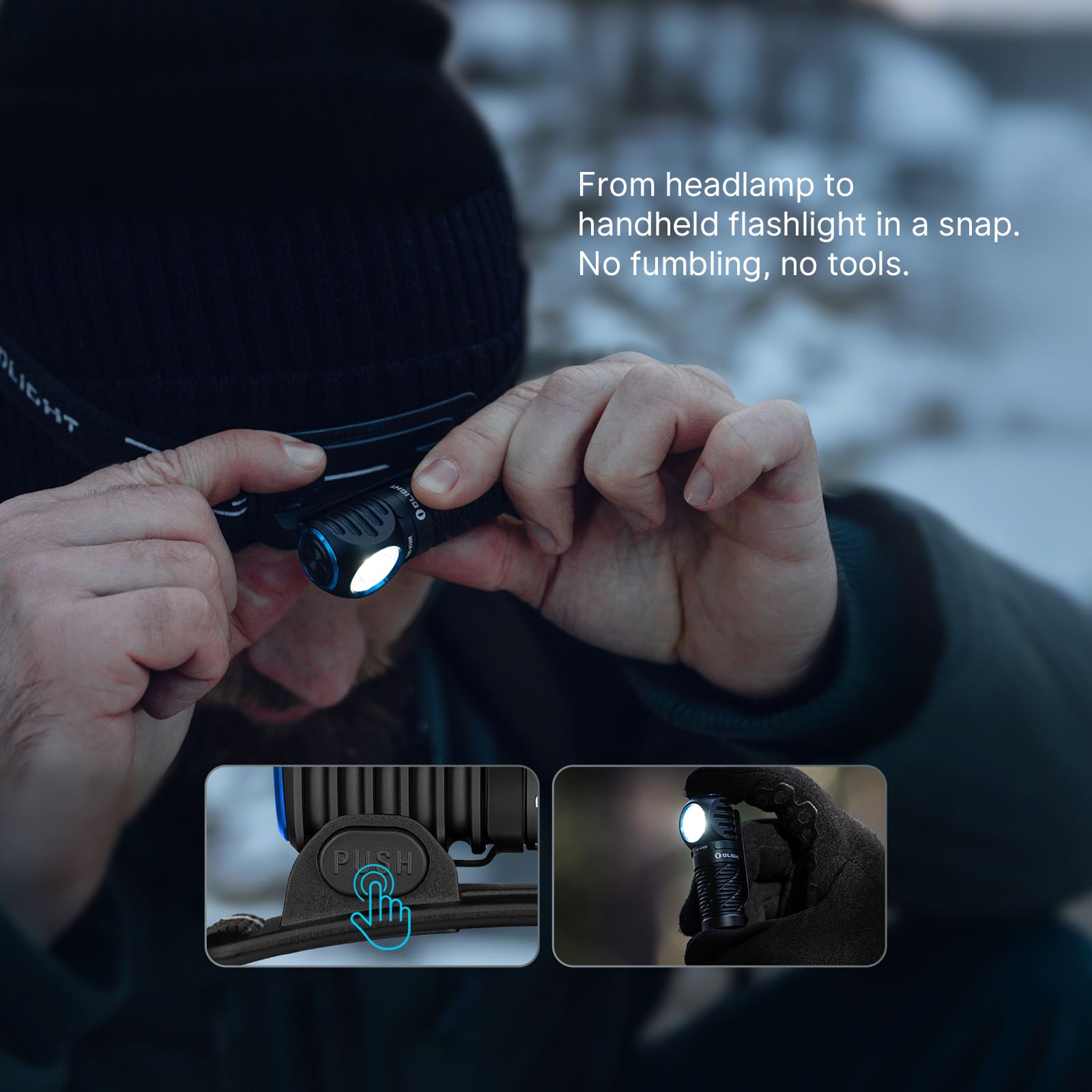
Official Perun 3 Mini bracket illustration showing the light separated from its headband for handheld use.
A headlamp can help when you need to manage an ordinary gate latch or carry household supplies. Aim it toward the working area and keep it out of other people's eyes. Stop walking before examining a small detail or adjusting equipment. Hands-free light supports a manageable chore; it does not remove the need to watch the actual ground and surroundings.
When a light needs a separate place near the task
Oclip 2 Pro is a portable clip light with independently adjustable head and clip positions. That can be useful when an appropriate stable support is available for an ordinary task. Check the support and the direction of the light before relying on it. Keep the light clear of moving equipment, loose material, and the walking route.
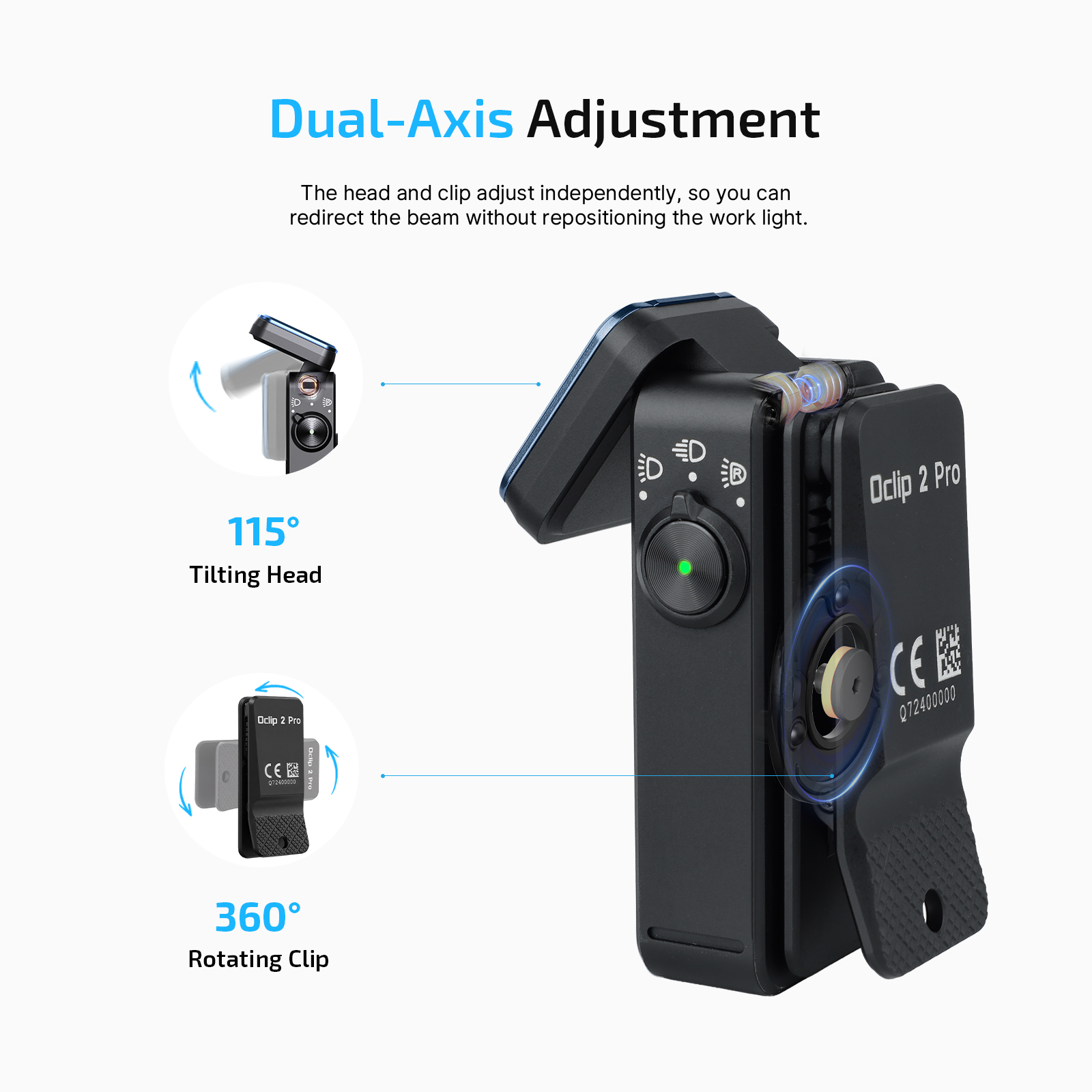
Official Oclip 2 Pro diagram: the head tilts independently of the rotating clip, separating light direction from support position.
A separate compact flashlight can also be kept with a household outdoor kit. Choose a manageable arrangement with accessible controls and a dependable charging routine. Maximum output alone does not establish comfortable close-range visibility. Use a suitable setting for the distance and reflective surfaces, and maintain awareness of other people, animals, and nearby homes.
Keep outdoor checks proportionate to the circumstances. If you cannot see a safe route, encounter an unfamiliar hazard, or believe something requires professional assistance, stop and seek the appropriate help. Do not let a portable light turn an uncertain situation into an obligation to investigate. Ordinary maintenance can often wait for daylight or for someone qualified to address it.
Give the ongoing costs and time a place in the decision
A responsible plan includes instruction, secure storage, manufacturer-recommended care, and appropriate supporting equipment. Ask about those requirements before setting a budget around a single advertised item. Costs and availability can change, so obtain current information from the relevant providers. Avoid assuming that the least expensive initial purchase produces the simplest or least demanding routine afterward.
Time matters as well as money. Consider how you will attend instruction, maintain records, manage storage, and arrange professional service when needed. An activity that requires preparation should fit your actual schedule. If the necessary routine is unclear or unrealistic, resolve that concern before taking on the responsibility rather than expecting enthusiasm to carry the process indefinitely.
Discuss the plan without pressure to justify a particular purchase. You may decide to continue learning, use a provider's available arrangements where appropriate, or postpone a decision while sorting out storage and household needs. Those are legitimate outcomes of a useful information-gathering process. A good appointment should leave you better informed, even if it does not end with equipment coming home.
Frequently asked questions
Changelog
- November 18, 2026: Product information and buying guidance reviewed.




