


⚡ TL;DR
Choose a small pocket knife for women around the actual cutting job, hand fit, and places it will travel. Small scissors may handle tags and packaging without a dedicated knife blade. A folding knife makes sense when its particular cutting function is useful and permitted. Check destination rules before making either tool part of your everyday bag.
📋 Table of Contents
- 1. Start with what you cut, not who the tool is marketed to
- 2. Three different tools, three different reasons to carry one
- 3. A comfortable tool needs room for your hand
- 4. Keyring, pocket, or bag: give the tool a defined place
- 5. Office, school, hospital, and courthouse rules are separate decisions
- 6. Air travel: inspect the complete tool before packing
- 7. Make ordinary cutting jobs easier to control
- 8. Frequently asked questions
- 9. Buy the routine you will actually use
Start with what you cut, not who the tool is marketed to
Gender does not determine the right blade, handle, or carrying method. The useful questions are concrete: do you usually trim thread, open a taped carton, cut a food item, or grip a loose fastener? How much space does your clothing or bag provide? Can you retrieve, operate, close, and store the tool comfortably in a suitable place?
Look at a normal week before shopping. A tag attached to a new shirt calls for a controlled snip close to the attachment. A taped delivery carton calls for opening packaging without damaging what is inside. A loose screw requires the correct driver. Buying the smallest knife available does not automatically solve all three tasks well.
Small scissors can be particularly useful when the material needs to be held between two cutting edges. A dedicated knife performs a different motion and needs an appropriate cutting surface and clear space. Neither tool should be forced through material beyond its intended capacity. If the job regularly needs heavy shears, a full-size work tool may belong at the workstation instead.
Separate flexible packaging from rigid packaging in that task list. A loose paper label, a plastic bag, and a hard sealed retail package do not behave alike when pressure is applied. A tool that handles the first comfortably may be awkward on the last. Do not use a difficult package as a reason to keep increasing force with a tool that cannot control it.
Consider what is attached to the material, too. A cable tie close to an electrical lead or a tag close to a delicate seam leaves little room for an error. Put the item somewhere you can examine the attachment, and choose the appropriate equipment for that specific job. A small carry tool is most useful when the task genuinely fits its limits.
Keep personal preference in the decision. Some people like a separate tool attached to a keyring; others find a small pouch easier to manage. A handle that feels secure in one person's hand can feel cramped in another. The useful size is the one you can control comfortably, not necessarily the one that disappears most completely into a photograph.
| Recurring job | A sensible starting point | Check before choosing |
|---|---|---|
| Snipping tags and loose thread | Small scissors | Access to the material without nicking the garment |
| Ordinary packaging | Scissors or a suitable dedicated opener | The packaging type and what sits directly beneath it |
| Small gripping or adjustment jobs | A compact multitool | Whether its actual pliers and drivers suit the job |
| Food preparation away from home | A suitable clean food-use tool | Cleaning, a proper surface, and destination rules |
| Reading a label in poor light | A separate small light | Whether carrying a cutting tool is necessary at all |
Three different tools, three different reasons to carry one
NexTool S0: begin with the scissors
The NexTool Micro Sailor Scissors S0, sold through OSelect, is a scissors-centered keychain multitool. Its listed functions include scissors, tweezers, a file, screwdrivers, a bottle opener, and a keyring. The current US listing gives a weight of 35 grams. That makes it an option to consider when small snipping and adjustment jobs dominate the task list.
The distinction that matters is the absence of a separate knife blade, rather than the claim that a scissors tool has no cutting edges. Its scissors are still sharp tools, and other functions still need to be considered when checking a building's policy. A description such as travel-ready does not establish permission at every checkpoint or destination.
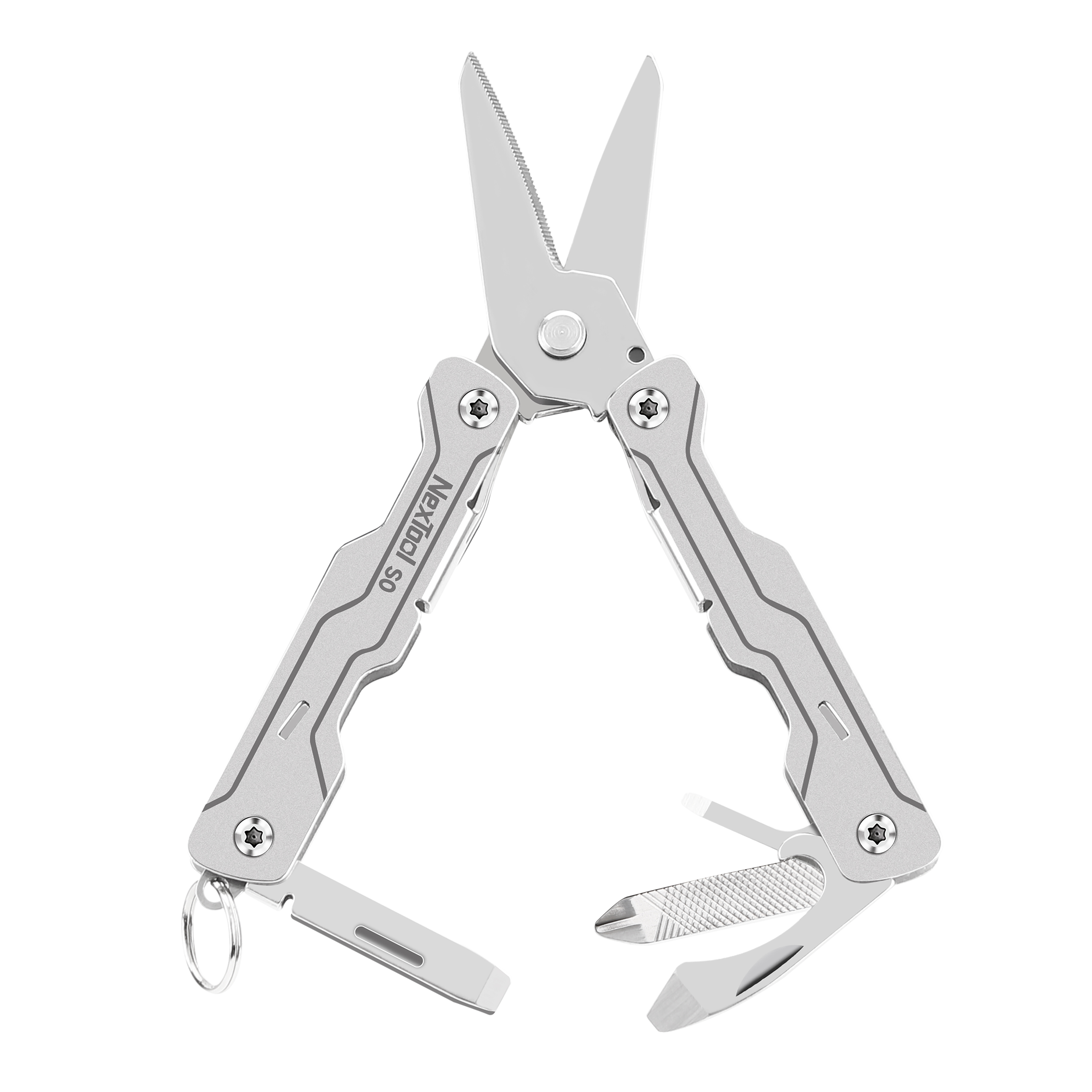
The S0's scissors are the main cutting feature; the additional folding functions make the complete tool different from an ordinary pair of scissors.
For clothing tags, first see how the attachment is arranged. A plastic loop, a short piece of thread, and a tag stitched into a seam are different jobs. Pulling on the tag can distort the fabric before you make a cut. Set the garment on a stable surface, keep the fabric clear of the cutting edges, and use the appropriate tool for the attachment.
The scissors have a serrated cutting edge in the official product image. That feature does not establish a particular finish on every material. If the appearance of a cut matters, assess the tool on a suitable scrap before using it on a finished garment or visible ribbon. Fine sewing work may still call for dedicated fabric scissors kept clean and separate from packaging jobs.
NexTool F12: consider whether the extra functions earn their space
The NexTool Mini Flagship F12 adds a different mix of functions, including pliers, scissors, and a locking main blade. The current US page lists the compact tool at 79 grams. Its dedicated knife blade changes both the available tasks and the questions to ask before carrying it into a restricted setting.
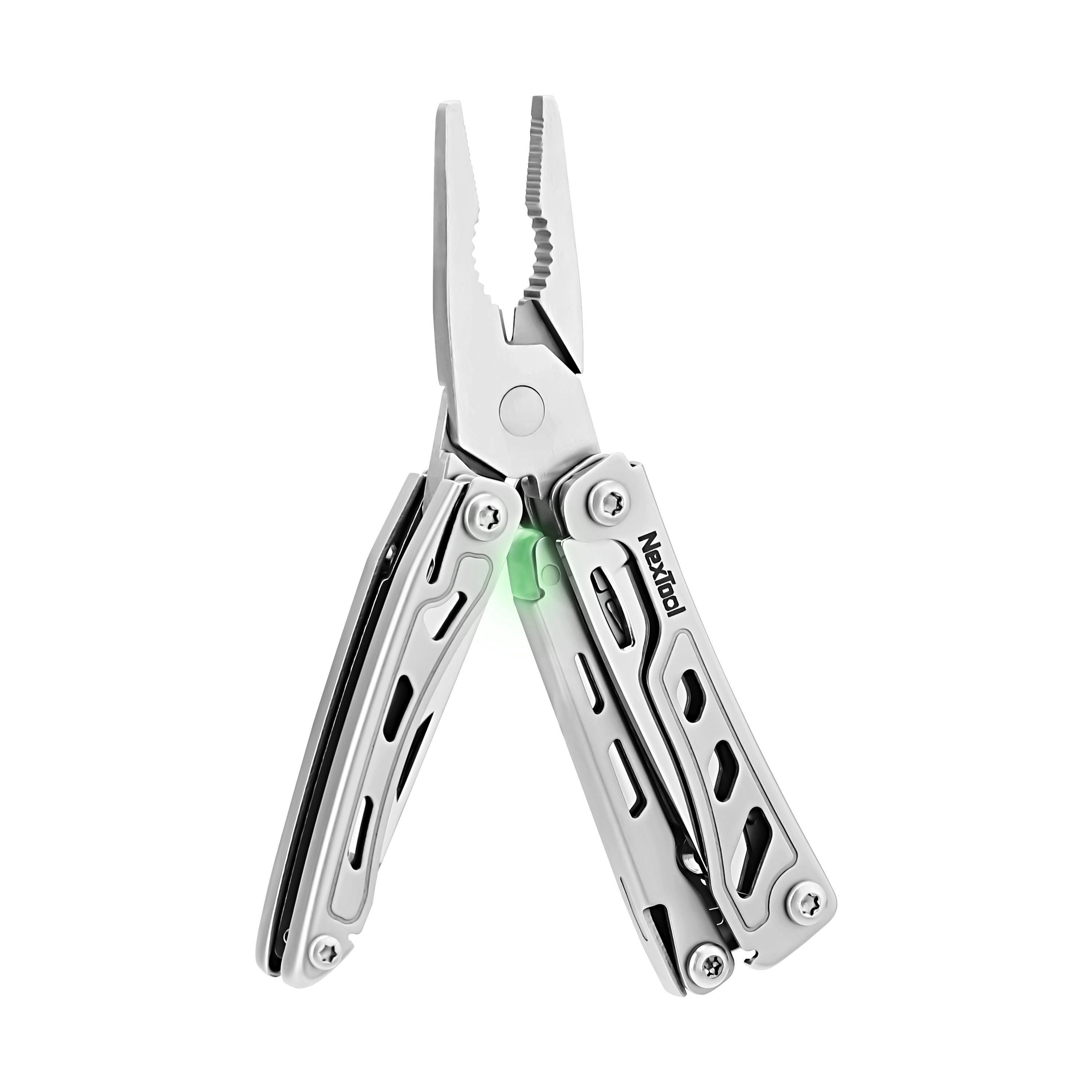
Official NexTool F12 pliers view: the folding handles contain the other tool functions.
Choose a multitool because you repeatedly need its particular functions. If you often grip a small part as well as cut packaging, the pliers may be useful. If almost every task is trimming thread, carrying additional functions may add weight without solving a recurring problem. The number of tools in a product name is not a measure of how often you will use them.
A small driver must fit the fastener rather than merely reach it. A compact pair of pliers has limits, too. Stop when a job needs more leverage, access, or control than the tool provides. Using the right full-size tool at a workstation is a useful part of an everyday-carry system, even when that means leaving a quick repair until later.
OKNIFE LK: combined cutting and lighting has a specific tradeoff
The OKNIFE LK combines a folding knife with a rechargeable light. The current model uses an M390 tanto blade and a button-lock mechanism; the US listing gives a weight of 86 grams. Its integrated white light and separate colored-light functions make it a different choice from a simple keychain scissors tool.
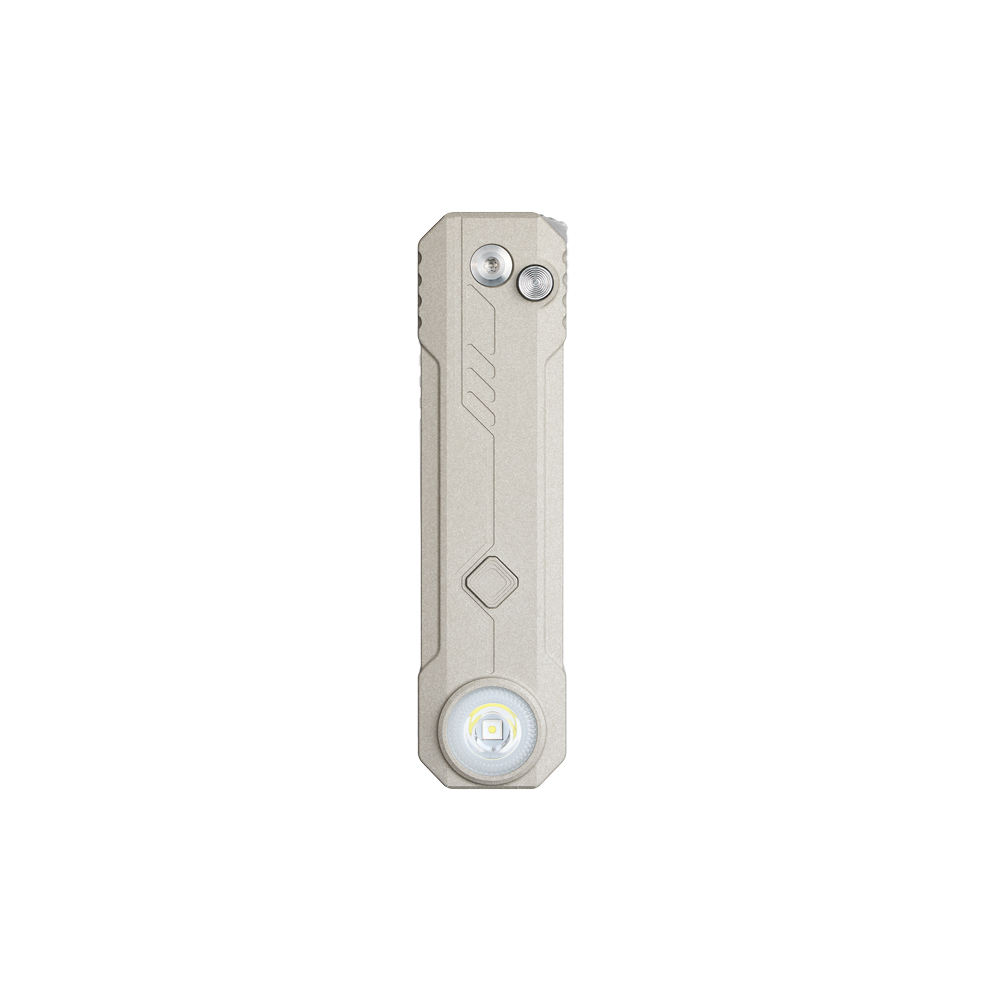
Official OKNIFE LK-MAO folded view: its light is integrated into the knife rather than carried as a separate item.
Combining functions can reduce the number of separate items you manage, but it also ties them together. If the destination does not permit the knife, you cannot bring the combined tool just to use its light. If all you need at work is to read labels or find something in a bag, a separate light can be a more suitable arrangement.
Do not choose a blade shape because it looks more capable in a product image. Think about the actual material, the work surface, and the maintenance you are prepared to do. A compact folding knife is not a universal substitute for kitchen, craft, or workplace cutting equipment. Keep a suitable tool available for tasks that need a different edge or handle.
| Current US model | Main reason to consider it | Listed weight | Important distinction |
|---|---|---|---|
| NexTool S0 | Small scissors and supporting keychain functions | 35 g | No separate knife blade; scissors still require policy checks |
| NexTool F12 | Scissors, pliers, and a dedicated blade in one tool | 79 g | Includes a locking main blade |
| OKNIFE LK | Combined folding knife and rechargeable light | 86 g | Lighting travels with the knife rather than independently |
These are manufacturer-listed weights for the named products, not the weight of a complete keyring or pouch. Keys, clips, a case, and other accessories add to what you carry. Compare the whole arrangement you intend to use instead of treating a bare-tool figure as the final weight in your pocket.
A comfortable tool needs room for your hand
Check access and grip together
A very small handle can be easy to store and awkward to hold. When comparing tools in an appropriate retail setting, assess how the closed handle sits in your hand and where your fingers naturally land. Ask for a safe demonstration of the opening and closing system. You should understand the mechanism without trying to learn it during a rushed task.
Check whether you can identify and reach the intended controls without pressing against a cutting edge or improvising a grip. Different hands, nails, joint mobility, and dexterity can change what feels practical. A product marketed as easy to open does not settle that question for every buyer. If a mechanism is uncomfortable or confusing, choose a different tool rather than planning to work around it.
Single-handed operation is not a requirement for every everyday task. There is often a better option: put the package on a stable surface, free both hands, and open the tool deliberately. Do not make a purchase around the idea that you must handle a cutting tool while also holding groceries, a phone, and a moving bag.
Check the handle in the conditions where the tool belongs. Gloves can make a small mechanism difficult to reach, but gloves do not make an unsuitable task safe. If the work regularly involves protective equipment, follow the workplace's tool selection and operating requirements. Personal convenience should not replace an approved tool or the training that goes with it.
Understand the lock without treating it as permission to push harder
A blade lock and a comfortable handle address different questions. A lock is intended to help keep a blade in its open position during appropriate use; it does not make the tool suitable for prying, striking, or every cutting motion. Read the instructions for the exact model and ask about any mechanism you do not understand.
Keep opening and closing separate from the cutting job. Find a clear place, establish where the cutting edges and moving parts are, and follow the manufacturer's procedure. If a mechanism does not operate normally, put the tool aside and seek the appropriate service advice. Do not attempt to compensate for a loose, damaged, or unreliable mechanism by changing how you hold it.
Choose a tool that is manageable when it is time to put it away, too. A purchase that feels convenient to open but difficult to close can become a poor fit for everyday use. Check both parts of the routine before making the decision. Closing and storage should receive the same attention as the first impressive demonstration.
Keyring, pocket, or bag: give the tool a defined place
A keyring is easy to remember because it travels with something essential. It can also become crowded with keys, a car fob, and other accessories. Before adding a tool, consider how you will separate it from that cluster for an ordinary task. Do not assume the rest of the keyring will make a useful handle or remain conveniently out of the way.
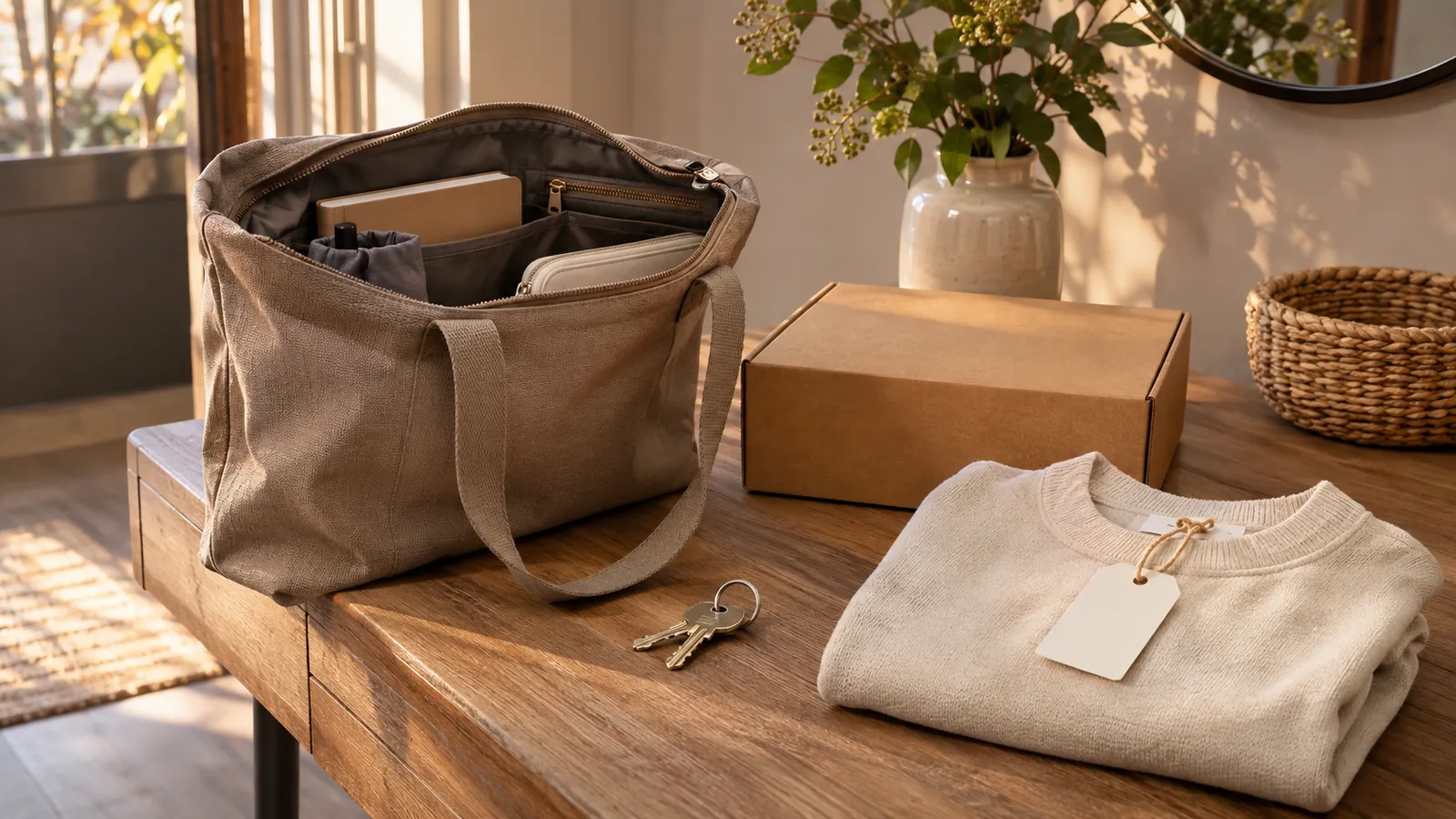
An organized bag pocket can keep a tool from moving among loose belongings. Use the case or protective arrangement intended for the product, and store the cutting edges fully protected. Keep it separate from objects that could catch a control, obstruct closing, or damage the tool. A known storage location is more useful than having to search the bottom of a bag.
For pocket carry, check the actual garment. Pocket depth, fabric, clip tension, and the position of nearby seams matter. A placement that feels comfortable while standing may press against you when seated. Try normal movement with the tool closed and safely secured in a permitted setting, then check whether it interferes with sitting, bending, or fastening a seat belt.
Look at the other objects sharing that pocket. A phone screen, keys, and a metal tool can create an uncomfortable cluster even when each item is compact. Give frequently used items enough room to be retrieved without pulling the tool out with them. If the pocket is crowded, moving one item to a suitable bag compartment may solve more than buying a lighter version.
Do not make a delicate waistband carry a tool simply because the product has a clip. A pouch or a different bag may be more appropriate. If your clothing has no suitable secure location, that is a reason to change the carrying arrangement. It does not mean a larger or more aggressive clip will solve the problem without affecting the fabric.
Keep shared bags in mind. If another adult borrows a tote, they should not discover a cutting tool unexpectedly while reaching for a charger. Use a defined protected compartment and discuss what belongs in it. When children can access the bag, store the tool somewhere they cannot retrieve it, rather than treating a zipped pocket as a complete storage plan.
The same thinking applies to lighting. A small keychain light can make a dark bag or label easier to see without opening a cutting tool. Keep its controls accessible and follow its own instructions. Separating the lighting task from the cutting task can simplify both the carrying decision and the routine at a destination where blades are not permitted.
Office, school, hospital, and courthouse rules are separate decisions
Start with the policy for the actual place you will enter. An ordinary office, a school building, a hospital workplace, and a courthouse can have very different requirements. A product's compact size, friendly appearance, or keychain attachment does not establish permission. Check the complete tool, including any secondary blade or other sharp function, rather than describing only the feature you usually use.
For an office, ask about the written workplace policy and the tool provided for the task. A personal multitool may be unnecessary when the shipping area already has an approved carton opener. If a tool is permitted for work, find out where it should be stored and whether particular departments or visitor areas have different restrictions. Permission for one task should not be assumed to cover every part of the building.
For schools and hospitals, check the specific institution and your role. A staff member performing an approved task is not necessarily in the same position as a visitor carrying a personal item. Do not turn a general online discussion of small knives into permission for a particular campus, clinical area, or event. Ask the relevant office before bringing the tool, and use the equipment the institution approves.
Courthouses can prohibit scissors and other sharp objects as well as knives. For example, the Southern District of California lists weapons and sharp objects among prohibited courthouse items. That is a specific court's entry policy, not a national permission chart for other buildings. The federal courts also direct visitors to consult local courthouse rules, so check the actual location before traveling there.
Plan storage before departure. Do not expect a security desk to hold a prohibited item while you attend an appointment. Some facilities do not provide storage. Leaving an unnecessary tool in an appropriate secure location before the trip avoids a rushed decision outside an entrance. Do not pass it to an unprepared companion or leave it where someone else could find it.
State and local requirements are another layer, separate from an employer's permission or a building's screening policy. Relevant rules can depend on the tool's features and how and where it is carried. Do not choose a universal legal blade-length number from a shopping guide. Check the applicable official rules and obtain qualified advice for a specific legal question.
Air travel: inspect the complete tool before packing
The size of a keychain tool does not establish carry-on permission. In its 2023 published interpretive rule, TSA distinguished knives from certain permitted small scissors and tools. Check current TSA guidance for the complete tool before packing, even if you only intend to use a screwdriver.
Scissors have their own requirements, and a product without a separate knife blade is not automatically cleared for every trip. Check the current TSA guidance for the exact components, along with the rules at the other end of the journey. International routes can involve different screening requirements. Do not rely on an air-travel claim in a product listing as the final packing decision.
If a tool is permitted in checked baggage, protect its sharp edges as required and consider every other feature before packing it there. A combined rechargeable light and knife introduces a battery-related packing question as well as a blade-related one. Check the airline and relevant transport rules for that exact equipment; do not assume that moving a combined item to another bag resolves everything.
Make a separate travel check of a familiar everyday bag. Open the small compartments, check the keyring, and remove tools that do not belong on the trip. Carrying the same tote all week makes it easy to overlook an item that normally has a perfectly ordinary purpose. Pack from an intentional list rather than counting on memory at the checkpoint.
Make ordinary cutting jobs easier to control
For a delivery carton, place it on a stable surface and understand where the contents sit before opening the packaging. Choose a tool suited to the tape, ties, or outer material. Keep hands and other people clear of the cutting path. A crowded reception counter or a package balanced on your lap is a reason to move the job somewhere more suitable.
For a tag or thread near clothing, remove the garment when practical instead of working close to your body. Good light makes the attachment easier to distinguish from the fabric. If visibility is poor, a separate pocket flashlight can help you inspect it before choosing a tool. Put the light in a suitable stable position or have another adult manage the view; avoid juggling several objects during the cut.
Food use deserves its own decision. A tool used on adhesive tape and dirty packaging should not move straight into picnic food preparation. Choose an appropriate food-use utensil, follow its cleaning instructions, and use a suitable surface. An integrated battery-powered tool may have cleaning restrictions, so do not assume it can be immersed or washed like an ordinary kitchen knife.
Small utility jobs can wait when the setting is wrong. Set the item aside if the material is tensioned, the workpiece will not stay still, or you cannot see where the edge will go. More force is not the first solution to an awkward job. Changing to the right tool and work surface often matters more than carrying a different model every day.
After use, check the tool before returning it to storage. Follow the manufacturer's cleaning and drying instructions, and keep debris out of moving parts. Do not keep using a damaged edge, loose mechanism, or contaminated tool because the task appears small. Arrange appropriate maintenance rather than improvising repairs with another item from the keyring.
Frequently asked questions
Buy the routine you will actually use
Before ordering, describe one ordinary task and one ordinary destination. Choose the necessary function for the task, then verify whether the destination permits the complete tool. Check how the closed tool will be protected and stored, who else can access it, and whether the mechanism is comfortable. Resolve those questions before deciding which color or extra function is appealing.
If possible, compare the actual closed size against the pocket or pouch you plan to use. Allow room for your keys, wallet, and phone rather than measuring an empty pocket in isolation. Ask about the exact package, instructions, maintenance, and return conditions. A product page can describe a feature, but your carrying arrangement still needs to make sense as a whole.
Keep the exact product name and instructions with the purchase record. Similar names can describe different tools or later versions, so confirm the functions and mechanism of the specific item being supplied. If service or a replacement accessory becomes necessary, that record helps identify the right product. Do not assume that a photograph of a related model describes the equipment in your hand.
There is also value in keeping a simple household alternative. A pair of suitable scissors in a known drawer can handle a task after you have deliberately removed a tool from a work or travel bag. An everyday system does not have to put every function on your person. It needs to make the right tool reasonably available without creating avoidable carrying problems.
Keep the first routine simple. Give the tool one protected storage location and use it only for suitable jobs in permitted places. Pay attention to the functions you genuinely need and the situations where a different tool is better. That experience can guide a later purchase without requiring a collection of barely used gadgets to discover what works.
Changelog
- November 18, 2026: Product information and buying guidance reviewed.




