


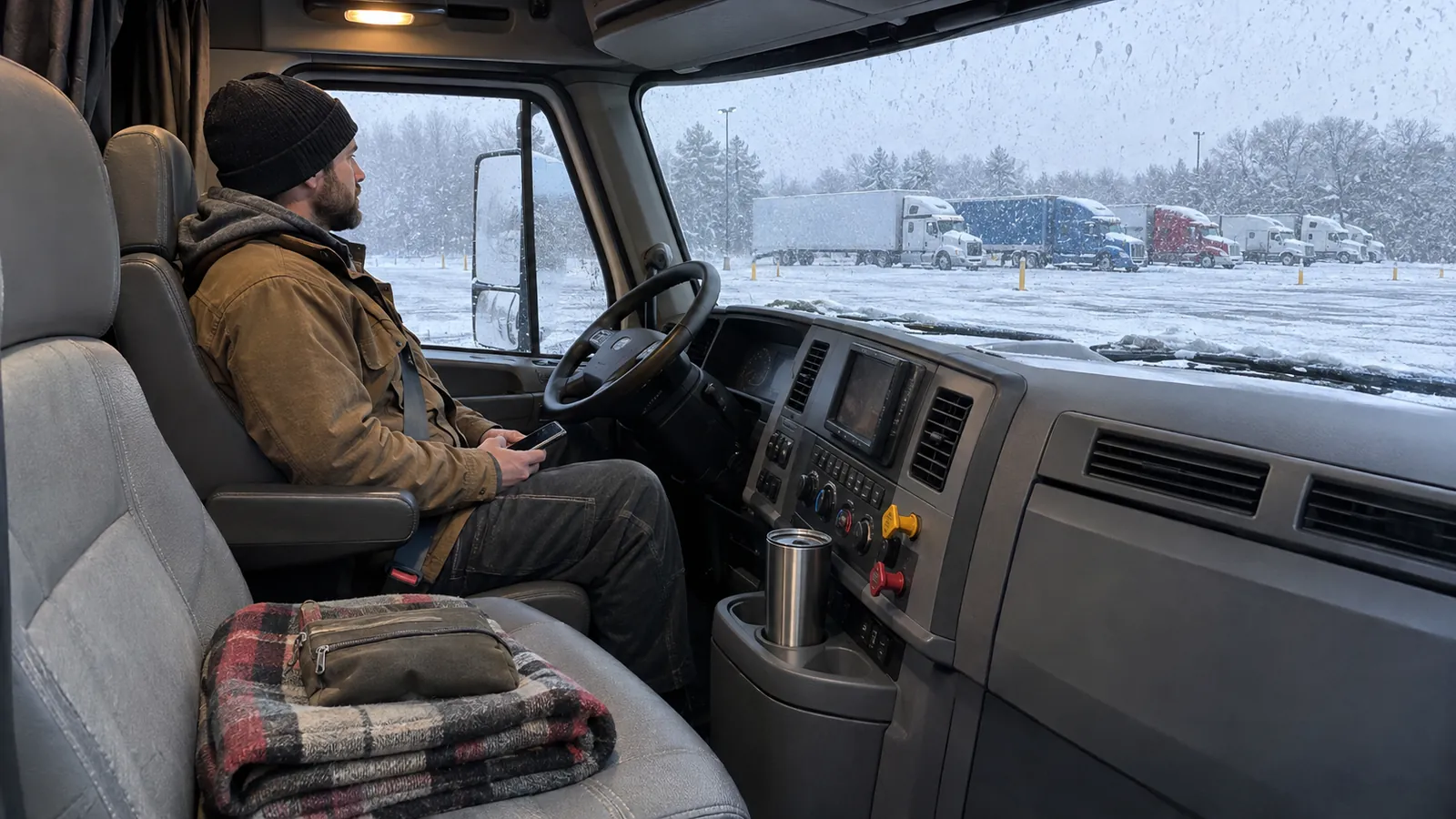
TL;DR: Pack dry layers, a blanket, water, food, a charged phone, and an independent light where you can reach them in the cab. When stopped by a winter road closure, follow official directions and tell dispatch where you are. Call 911 if there's an immediate threat, including suspected carbon monoxide exposure.
📋 Table of Contents
- 1. Pack what you will need before leaving
- 2. What are some good emergency kits for trucks?
- 3. What are the top 10 survival items to carry?
- 4. What should I keep in my truck at all times?
- 5. Send your location when it is safe to use the phone
- 6. Take carbon monoxide or an exhaust problem seriously
- 7. Plan lighting for a cold cab
- 8. Keep the delay record current before restarting
- 9. Frequently Asked Questions
Pack what you will need before leaving
| Priority | What belongs in a secured, reachable place |
|---|---|
| Warmth | Dry layers, gloves, and a blanket or sleeping bag |
| Communication | Charged phone, correct cable, and charged spare power |
| Light | A flashlight or headlamp rated for the conditions and an independent backup |
| Food and water | Potable water and food that doesn't need cooking |
| Personal needs | Essential medication, a first-aid kit, and the carrier's contact details |
A closure can begin while there is still daylight and last until the windshield is dark. The first problem may be explaining where you stopped. The next one may be reaching warm clothing without moving everything around in the cab. If the weather forecast warrants preparing for a long wait, put the essentials where you can get them after parking. A kit buried behind equipment in an exterior compartment leaves some of its value out of reach.
The National Weather Service's cold-weather preparation guidance lists a charged phone and spare charger, light and spare batteries, dry clothing, blankets, food, water, and first-aid supplies for a winter vehicle kit. Give those items places suited to the actual truck you use. Leave the pedals, controls, entrance, and normal exit path clear. Secure everything before driving, even if you expect to reach your destination before the weather changes.
Put the driver-specific pieces together. The truck number, dispatch number, carrier safety contact, and medication you normally need should be easy to get to. If your work phone carries all the numbers, keep a paper copy where you can find it. Keep food and potable water separate from wet gear or cleaning items. Pick supplies you can use without cooking in the cab.
Set up the kit during daylight before putting it into its regular place. Sit in the parked cab and open the compartment with one hand while wearing the gloves you plan to bring. See whether the blanket or bag presses against the latch. If opening the door to the compartment requires moving a seat or sliding another bag into the aisle, choose an approved spot with easier access. Make sure the compartment closes securely again. The setup should work with the regular load in the truck, including anything a second driver normally carries.
Plan for the stretch when daylight goes away and the truck's accessory power may be unavailable. A charging cable that normally lives near the dash can migrate to the sleeper or into another person's bag. Identify one complete spare charging setup and keep its pieces together. For a team, tell both drivers where it is and decide which phone will remain ready to receive a dispatch call. Use the equipment intended for your devices, and keep each backup where a second person can find it without asking.
Check weather and official road information before departure. A better kit is still a second line of preparation when a route is closed or known to be unsafe. Coordinate the route and alternate stopping locations with dispatch. Update the plan if conditions change, and leave road-closure barriers in place. Do not use a suggested detour unless the road authority and carrier have confirmed it is suitable for the vehicle.
What are some good emergency kits for trucks?
A good emergency kit for a winter truck delay covers warmth, communication, light, food, water, and any personal needs. Pack dry clothing, a blanket, a charged phone and power source, and a flashlight that is rated for the temperature. Keep the first items in a secured place you can reach while parked.
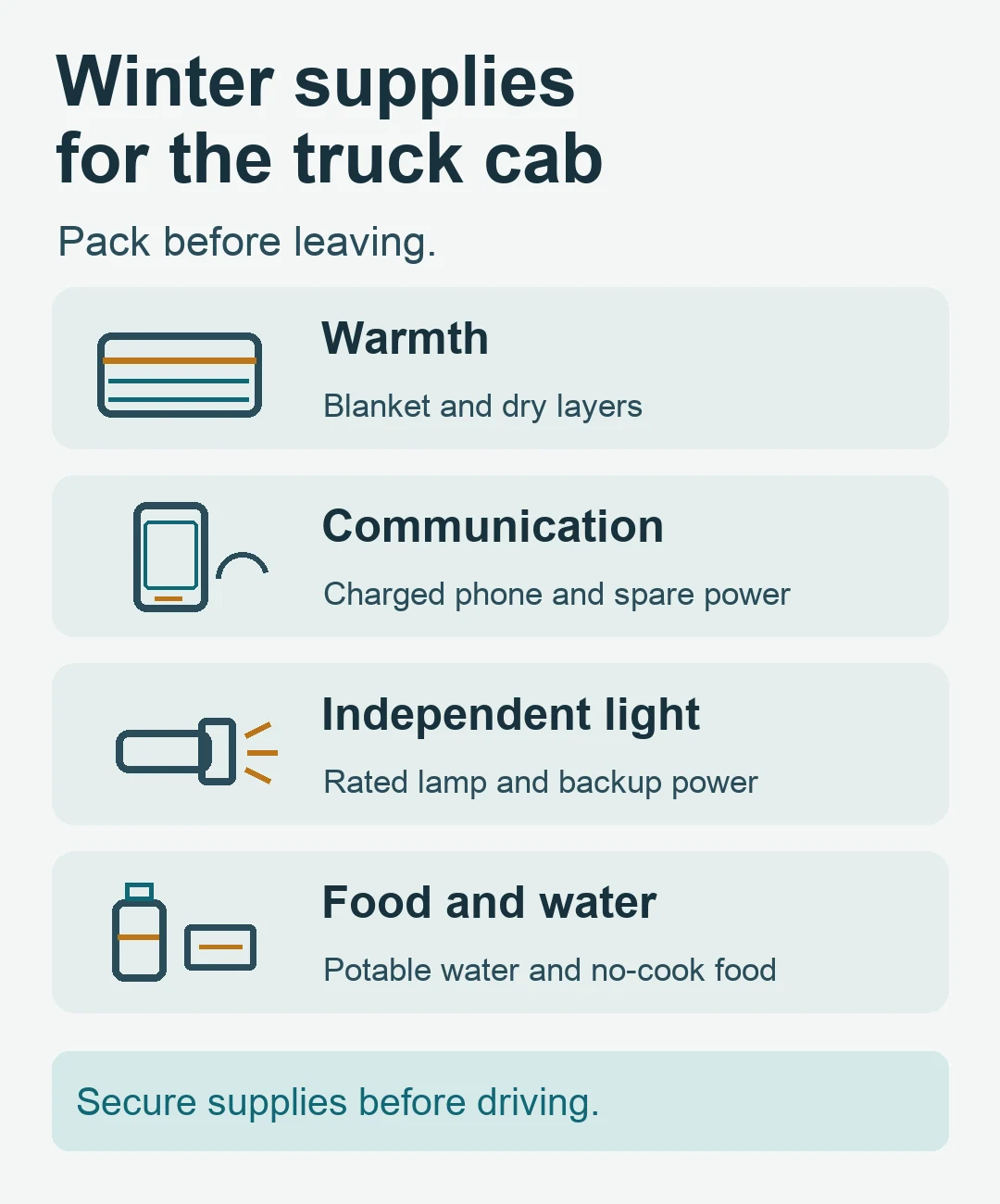
Pack the things you may need first in a secured place you can reach from the cab while parked.
Start with the things you would otherwise be tempted to retrieve from outside. If that is a blanket, the correct phone cable, or a flashlight, move it to an approved, secure place in the cab before leaving. The first few tasks after parking should be within reach. Keep a wider inventory for vehicle equipment and any supplies the carrier requires. A compact personal kit and the truck's equipment serve different purposes.
If another driver uses the same cab, keep the first-use items in an agreed place. Use a bag that is easy to identify without taking it out of its storage spot. Look at it with the overhead light on and again with a small light to be sure you can tell it apart from other bags. Let the next driver know if the reserve was used or needs to be recharged.
Pick layers you can use in the seat and any sleeping area you are authorized to use. An extra pair of gloves and dry socks may be easier to get than replacing an entire wet outfit. Keep the blanket dry and use it as insulation, clear of electrical and heating equipment. Keep any items needed for a co-driver or other authorized occupant accessible too.
Check the particular kit you're buying if it comes ready packed. Look for what the photos or label show about a charger, a light's power source, and enough room to add garments that fit. Prepacked emergency supplies can share a case with tools or vehicle items, leaving little room for anything the driver uses personally. If there is a long list of pieces, find the ones you would actually reach for and check where they ride. Move a frequently needed item into a safe, approved place if that makes it more accessible. Keep any carrier-required vehicle equipment in its normal location.
If a warmer garment or bedding is already part of the truck setup, work from what is actually in the cab that day. On a slip-seat shift, an item that stayed with the other tractor is missing from today's kit. Keep the personal pieces in a secured bag you can move to the current truck, then verify the vehicle equipment separately before leaving. For a co-driver, count the dry layers and water for both occupants. Put something that belongs to a specific person, such as prescribed medication, where that person can reach it.
What are the top 10 survival items to carry?
For a winter road delay, start with dry layers, a blanket, drinking water, ready-to-eat food, essential medication, a first-aid kit, a phone, a charged power bank, a rated flashlight or headlamp, and backup light or power. Pack for the expected weather and follow the carrier’s equipment guidance for the truck.
These items cover the things you can plan before the stop. Add checks that reflect your route and crew. Verify how much water is usable rather than assuming a frozen bottle can serve that job. Bring food you can eat without opening a stove or setting up on the road. Keep daily medication accessible and follow its storage instructions, particularly if the cab may get much colder or warmer than usual.
The phone cable should fit the phone and the power source you carry. Try the connection at home or at the terminal. A charged reserve is of little help if the lead ends in the wrong plug or is being shared with a device you no longer carry. Put the actual cable beside the backup power, and check both before leaving on a route with a chance of closure.
For lighting, choose a primary that can work without the truck's electrical system and a second working source you can locate in the dark. A spare for one particular lamp may need its own listed battery or charger. A second lamp gives you another option until you can safely check the first one. Protect exposed terminals and connections as the manufacturer directs.
Think of the first-aid kit and other personal supplies as part of the whole plan. Return any item you removed before the next trip, and replace expired supplies. Let the carrier know if required equipment is missing or unsuitable for the vehicle. If there is a medical emergency during the wait, contact emergency services instead of attempting to solve it with the supplies alone.
A readable emergency card can save time if someone else is making a call from the cab. Use large print for the carrier name, dispatch number, truck number, and any procedure reference. Update the card if you're assigned a different tractor, and keep the public emergency number prominent. Store private medical information separately if it doesn't need to be on the card. Include a blank space for the last verified road, direction, or exit so you can read it back accurately if the phone disconnects.
Manage the first few essentials together even if you carry the rest somewhere else. For example, a sealed water bottle that spends the shift in an exterior locker may freeze while the small bottle already in the cab is usable. Check your water before you need it and keep the container secure. Think about opening a snack or getting gloves on with cold hands. A simple package that can be used from a seat is easier to handle than supplies that need water, heat, or counter space to prepare.
What should I keep in my truck at all times?
Keep basic lighting, a charged communications option, the carrier's contacts, water, and personal emergency supplies within reach from the cab. Add season-appropriate dry clothing, a blanket, and a reliable power reserve before cold trips. Store them securely and review their condition before departure, especially if the truck is shared.
Make the review small enough to do every time winter weather is possible. Check the charge in the phone, backup power, and both lights. Confirm the right cables and whether your current route is open. Scan the clothing and water storage. Look for anything loose that could shift into the pedal area. Verify the contact number if you haven't used it since the last trip.
Do the review again after a long delay, when something may be depleted or damp. A driver who used the backup phone battery has a different kit now than the one packed earlier. A wet garment belongs away from the reserve layer. Leave a note for the next driver about what was used and what has been replaced. That makes the next predeparture review about actual supplies.
A rechargeable flashlight can work as a cab light if the charging gear and temperature suit it. Think about whether you plan to carry it in your own bag between shifts or leave it in a parked truck. Read its stated limits and avoid assuming a closed cab always stays warm. Keep an independent lamp rated for the forecast conditions.
Send your location when it is safe to use the phone
| Situation | Next practical action |
|---|---|
| Road is closed and you are stopped in an authorized location | Follow instructions and tell dispatch where you are |
| You cannot identify the exact stop | Use a visible sign or safe location reference and say what you cannot confirm |
| Your location becomes unsafe or someone is in immediate danger | Call 911 and explain the location and risk |
| Tailpipe may be blocked or exhaust is suspect | Keep the engine off if you can safely do so and seek professional guidance |
| An alarm sounds or you suspect carbon monoxide exposure | Call 911 immediately, get to fresh air as safely as possible, and follow instructions |
Once you're safely stopped, send the road number, travel direction, nearest exit or mile marker you can verify, and truck identifier. Name the designated staging location if you're in one. Mention if you're still close to traffic. Indicate whether there is an urgent threat. A short complete message can be easier to act on than a series of guesses about where the cab is.
If you can't see a marker, use the location information you can verify without leaving the cab. Have the phone ready before winter travel and keep an approved route reference available if reception is poor. Avoid guessing a distance or naming an exit you have not actually passed. If account or location settings make the map uncertain, state that uncertainty and provide another known reference.
A location message can be brief. You might say that you are eastbound at a signed staging area, that the last exit number you saw is the only road marker you can verify, and that your tractor is parked in the row nearest the entrance. Add the actual truck identifier and a number for a return call. If you are still near a travel lane, say so early. A dispatcher or responder can ask for more detail, and a first message with a firm location gives them something to work from.
Keep the release source with each update. A truck next to you starting its engine, or a message sent for the opposite direction, may tell you nothing about your own ability to move. If you hear two different updates, ask which one applies to the road segment and vehicle you're on. While waiting, record the latest verified instruction and where it came from. This gives a second driver or dispatcher the same information without requiring you to piece together the history later.
The National Weather Service's during-storm guidance says a stranded person should usually stay with the vehicle in winter weather because cold, blowing snow, and limited visibility can quickly make walking hazardous. A closure is a poor place to walk for help or inspect equipment beside traffic. Follow responders' directions for your location. Immediate threats such as a fire or suspected carbon monoxide exposure call for emergency help.
Send an update if location, safety, or weather changes. Preserve enough phone power for a return call, and use the charging equipment compatible with your phone and power source. Confirm the next contact if dispatch gives you one. The kit helps you maintain communications but cannot guarantee coverage. If a message didn't send, leave it clear in your incident record and follow your carrier's contact procedure.
If there is no urgent threat and the carrier has provided a check-in time, you can keep the phone available for calls while using your separate cab light for routine jobs. A phone charger isn't useful if it is in another vehicle or if its connector won't stay seated. Check the connection before you stow the phone and keep it where you will hear the next call. During an emergency, make the emergency call first and give the best location you have, even if some details remain uncertain.
Take carbon monoxide or an exhaust problem seriously
A blocked tailpipe can allow carbon monoxide to accumulate in a vehicle. The Centers for Disease Control and Prevention's winter tailpipe guidance advises checking the tailpipe for snow before driving after a storm. Make any predeparture inspection where it can be done safely under the carrier's procedures. At a stranded roadside position, don't head into traffic, snow, or a blind area to inspect it yourself.
Keep the engine off if you suspect its exhaust is blocked and can do so safely. Tell dispatch or responders if you can't verify the condition. A cracked window, a clear view through the windshield, or a flashlight beam cannot establish that the cab air is safe. Follow direction for the truck and the actual situation. Use dry clothing and blankets for your wait, and keep fuel-burning camping devices and open flames out of the cab.
Carbon monoxide has no odor or color. NIOSH's workplace carbon monoxide guidance describes symptoms such as headache, dizziness, nausea, or fatigue and directs people with symptoms to get to fresh air and seek medical help immediately. If an alarm sounds or you suspect exposure, call 911 immediately. Get to fresh air as safely as possible, avoid heading into traffic, and follow the dispatcher’s instructions. Do not drive yourself.
Explain if you are close to moving traffic or unable to leave the cab safely. That matters to the person directing the response. Tell them whether someone has symptoms or whether an alarm sounded. Don't wait for symptoms to confirm a concern about carbon monoxide. If another truck or piece of equipment is contributing exhaust nearby, share that observation and follow directions for the location.
Treat a carbon monoxide alarm as an emergency cue, and use only equipment intended for the application and approved for the cab. An alarm does not make using an engine with a potentially obstructed exhaust safe. If you're planning to add one, ask the carrier or vehicle manufacturer what equipment and placement is appropriate. Keep any installed system maintained according to its instructions.
Plan lighting for a cold cab
Read the manufacturer's working range before putting a light in the kit. A cab can cool during a closure, and a parked cab may already be near the outside temperature when you get in. A lamp kept in a warmer place may be useful for a cab task while conditions are within range. Choose your primary and backup gear for the cold you actually expect. Product pages written for ordinary environments do not establish the performance of every model left in a truck overnight.
At the top of your kit, keep a light you can handle in gloves and set low for finding a cable or reading a card. Switch it on only while parked or as an authorized passenger. Aim inside the work area. A bright spot reflected in the windshield or mirrors can affect your view of what is outside, and someone nearby may be looking directly toward the glass.
A headlamp can free both hands while you connect a phone cable, read paperwork, or retrieve an item from an approved compartment. A handheld can stay pointed at one label while you turn your head. Both are jobs for the stationary cab. Follow emergency instructions for vehicle visibility, and keep portable work lights separate from the truck's prescribed signaling equipment or lights.
Before adding a light to the kit, put the actual manual beside it and find the working range. Then find the separate charging and storage directions. The fact that a light can operate at one temperature is not enough to establish that it can be charged there. If the manual lacks guidance you would need for an unheated truck, check with the manufacturer and carry a model with a suitable documented range. Use a warm, dry location when the instructions call for one.
Practice finding the primary and reserve at the terminal while the truck is parked and there is ample light. Put on gloves and see if you can release the actual compartment latch, find the lowest useful setting, and put the lamp back securely. A headlamp in a bag next to the reading light is an option for a second set of hands. A separate source with suitable power can cover a lamp that was used on the previous shift. Keep both away from air vents and heated surfaces.
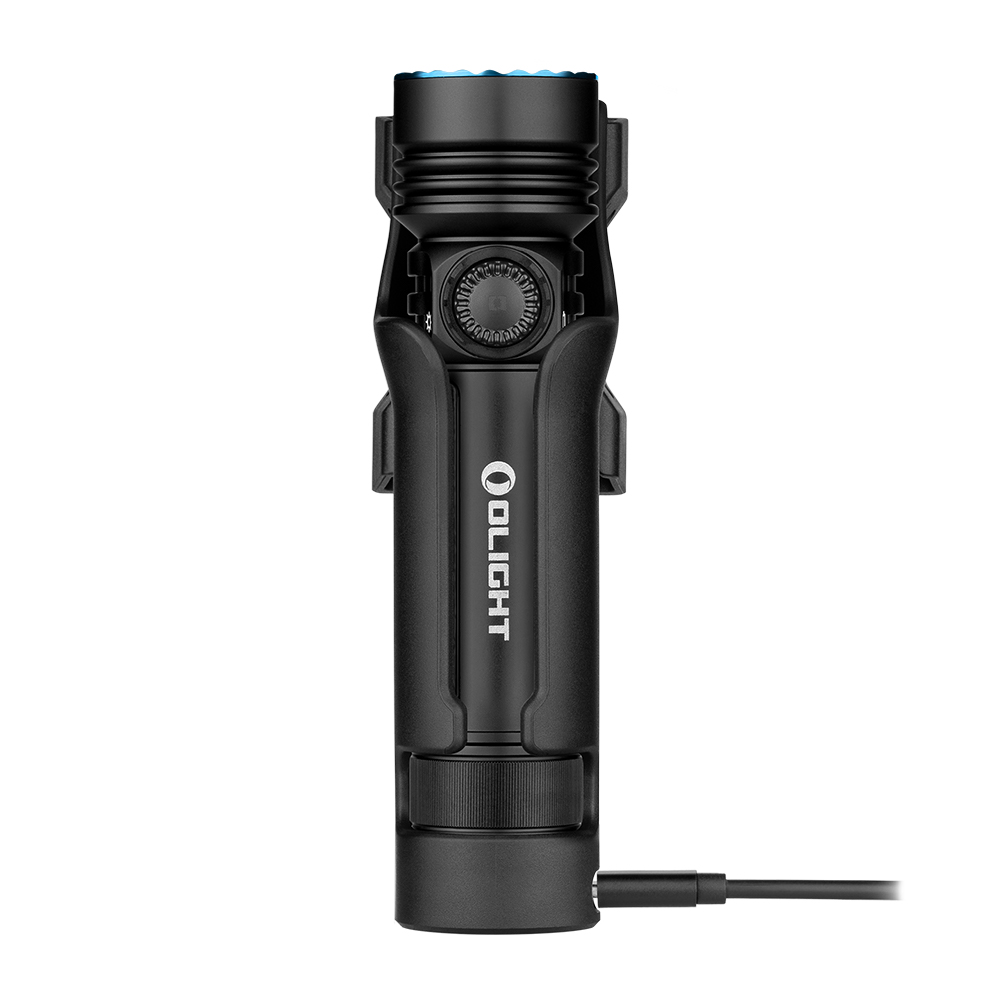

You may already own a compact flashlight that fits the secure storage location and expected cab temperature. Check where you can access it and how you will keep the backup ready. If these products won't cover the expected temperature, use a rated primary for those conditions. The primary and reserve need to be chosen for the actual forecast and storage, not the maximum setting of a lamp.
Keep the delay record current before restarting
The 2025 annual CFR edition of the driver's record of duty status rule describes recording duty status and changes. A closure by itself doesn't tell you which entry applies to the work you're doing. Keep an accurate timeline and check your carrier's normal compliance process for your specific situation. Follow current applicable rules before you resume driving.
Keep a short record of when you stopped and when you contacted dispatch or emergency services. Add when the road authority released the route and record any change in your location. A note with a specific event is easier to revisit than a rough estimate later. Leave meal and delivery timing decisions to the people who can use the current road and carrier information.
When you hear the route is reopening, confirm it through the road authority or responders. Check whether it applies to the direction you're traveling and the type of truck you operate. Follow the carrier's instructions before returning to the route and complete required predeparture checks only where they can be done safely. Take care of any visibility, vehicle, or medical concern before moving again.
Return to the route in stages. First confirm who released your road segment and whether traffic controls remain in place. Then let dispatch know your vehicle and personal situation, including anything you cannot safely check from where you sit. Follow the applicable rules and company process for fatigue, paperwork, and equipment. Even if a closure lifted while you were warm and comfortable, the road condition at the moment of release can be different from the forecast you saw before leaving the terminal.
After the trip, replace any depleted reserve and let the carrier know about equipment that needs attention. Clean and dry the kit as appropriate. If you had trouble getting an item while parked, move it to a secure, approved location and tell the next driver about the change. At the next safe stop with good lighting, check that the new arrangement lets you open the compartment and reseal it easily.
Frequently Asked Questions
Changelog
- November 19, 2026. Checked current NWS winter preparation and stranded guidance, CDC and NIOSH carbon monoxide sources, the federal duty record text, exact model manuals and gallery evidence, and the original kit diagram.




