


⚡ TL;DR
The best tactical headlamp for ordinary outdoor use is the one that fits the task, stays comfortable, and has a practical power plan. Pay for useful controls, suitable light levels, a dependable wearing arrangement, and documented product limits. Compare a clip light with a compatible strap against a dedicated headlamp before assuming the more expensive option solves the problem better.
📋 Table of Contents
- 1. Decide what the extra money needs to change
- 2. Separate brightness, controls, and wearing comfort
- 3. Perun 3: consider the power plan and repeated handling
- 4. Perun 3 Mini: pay attention to the release and the selected version
- 5. Oclip Pro and a compatible strap: compare the complete kit
- 6. A price comparison that identifies what is being priced
- 7. Put the price difference next to a recurring inconvenience
- 8. Check controls and fit before the first outing
- 9. Use red light for the activity, not the label
- 10. Plan charging around the way the light is stored
- 11. Which arrangement fits a real evening?
- 12. Frequently Asked Questions
- 13. Spend on the problem that remains after a fit check
Decide what the extra money needs to change
Start with the inconvenience that prompted the search. Perhaps holding a flashlight makes packing a tent awkward, a small button is difficult with your gloves, or a light shifts whenever you look down. Those are useful buying questions because a specific feature may address them. A military-looking finish does not explain whether any of those problems will improve.
Describe the ordinary activity in enough detail to compare alternatives. Include whether the light will be worn for a short household task or an extended camping routine, whether it moves between head and hand, and where charging happens. A product that suits occasional equipment sorting may not be the most convenient arrangement for repeated wearing and removal throughout an evening.
A headlamp moves with the wearer's head. That is useful when looking into a bag or following a task with both hands, but it can also move the beam away from a fixed work area. Decide whether the light should follow your view, remain aimed at a suitable nearby surface, or do both at different points in the activity.
The word tactical does not settle these decisions. For organizational use, check the actual equipment requirements before making a personal purchase. For camping, household preparation, and ordinary outdoor chores, compare the documented consumer features with the job. A claimed association or a rugged appearance is not a substitute for instructions, fit, or a charging arrangement that works.
Separate brightness, controls, and wearing comfort
A maximum brightness number is easy to compare and easy to overvalue. Read the output levels and durations together. An advertised peak is not a promise that the light maintains the same output throughout an evening. A useful lower setting, appropriate beam direction, and enough documented runtime at that setting may matter more for the task than the largest number on the page.
Think about the surface you need to see. A reflective label or pale tent panel may be more manageable at a suitable lower setting than at maximum output. Walking calls for enough visibility to understand the route, which is a different requirement from reading an object at arm's length. Do not choose a level solely because it is the lowest or highest available.
Controls deserve a separate check. A selector can help distinguish light sources, while a large button can give a gloved hand something easier to locate. Neither feature establishes performance with every glove. The relevant question is whether the exact control arrangement remains understandable and comfortable with the clothing used for the activity, following the model's instructions.
Comfort is another independent decision. A headband, light body, mounting bracket, hat, glasses, and other worn equipment interact. A low purchase price does not compensate for a setup that shifts during normal movement, and a higher price does not guarantee a good fit. Assess the complete arrangement rather than treating the lamp body as the whole product.
Perun 3: consider the power plan and repeated handling
Perun 3 provides white and red light with a headband, magnetic tail, clip, and lanyard. The current US description lists five white modes, two red modes, and a rechargeable battery rated at 5,000 milliamp-hours. This configuration is worth considering when ordinary tasks call for several positions and the power plan is an important part of the purchase.
The larger battery capacity gives the buyer a reason to examine the relevant runtime table, rather than a reason to assume maximum output lasts all night. Work out which setting suits the activity and compare its stated duration with the expected use. Include the correct charging equipment in the plan. Capacity by itself does not describe the complete operating period or charging arrangement.
A head-to-hand configuration can be useful when the lighting viewpoint needs to change. Wearing the lamp may suit packing equipment, while holding it away from the face can make an awkward label easier to inspect. The useful feature is the ability to change position appropriately. It does not require carrying several lights on the body simply because several attachment options exist.
The magnetic tail offers another possible position on a suitable surface. Check the actual material and stability, and keep the light where an unexpected fall would not create a hazard. A curved or unsuitable support calls for another arrangement. Magnetic attachment should be assessed as an option for the particular task, not assumed to work on every nearby object.
Olight describes the large metal side button as glove-friendly and its concave shape as helping avoid unwanted activation. A person who regularly wears gloves has a concrete feature to assess here. Follow the actual storage and lockout instructions; button shape alone does not replace them. Check the arrangement in a suitable setting before relying on it during an outing.
Repeated handling brings a stated tradeoff. The US page warns that the metal mounting bracket can scratch the light body when it is repeatedly removed and replaced. Someone expecting frequent head-to-hand changes should include that cosmetic effect in the decision. The note helps set an ownership expectation that a photograph of a new light does not communicate.
Perun 3 Mini: pay attention to the release and the selected version
Perun 3 Mini offers a quick-release bracket for moving between headlamp and handheld use. This is a useful distinction when the same evening includes wearing the light, setting equipment on a table, and looking into a bag from another angle. The benefit comes from the change in position, rather than from treating the bracket as a decorative extra.
Consider how often that transition happens. If the light normally stays on the head until the task ends, a release mechanism may be less important than comfortable wearing. If the task repeatedly changes the lighting viewpoint, the mounting arrangement deserves more attention. Learn the exact attachment instructions and check that the light is properly seated before wearing it again.
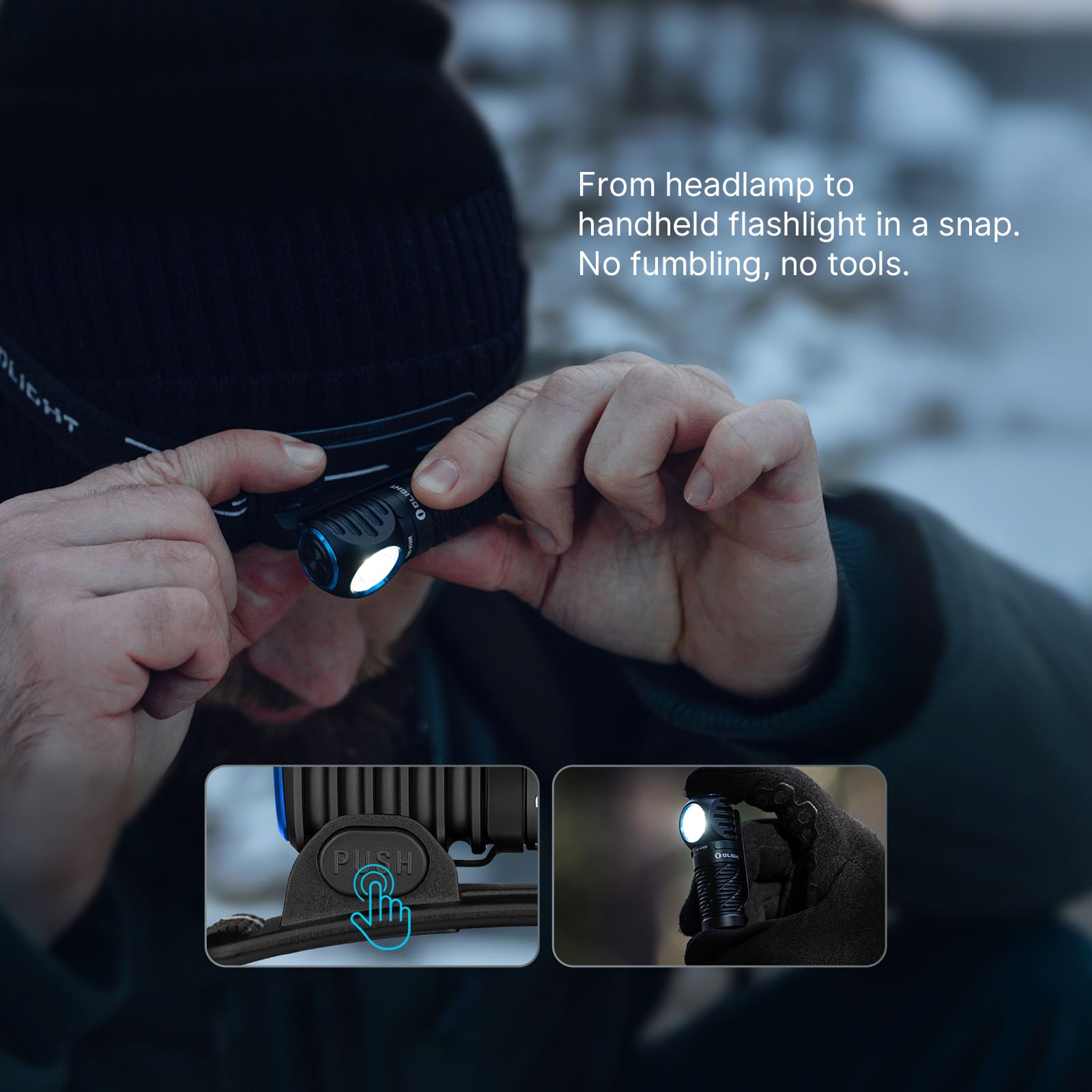
Official Perun 3 Mini quick-release and handheld views; check secure seating before wearing it again.
The page describes a breathable mesh band, an anti-sweat strip, and reflective elements. These features relate to contact, wearing conditions, and visibility. They do not establish comfort for everyone or compatibility with all hats and work equipment. Assess the complete combination with the clothing normally worn, without trying to force an unsuitable fit by excessive tightening.
Do not collapse every option on the page into one specification. The standalone Black CW model, the HCRI version, and Premium packages are distinct selections. A Premium charging case is separate equipment with its own capacity. Its battery should not be mistaken for the battery inside the small flashlight, and a case pictured elsewhere on the page should not be assumed to arrive with the standalone option.
This is also why a comparison should identify the exact configuration. A price beside one selected version does not establish the price or availability of all the others. Choose the version that addresses the task, confirm what is included, and compare the complete setup with the alternatives. The smallest format is useful only when the wearing, power, and attachment arrangements still work.
Oclip Pro and a compatible strap: compare the complete kit
Oclip Pro is a clip-light option with white flood, a separate white spot source, and red light. The selected original Oclip Pro Black configuration uses a side selector to change light sources. Its shared US page also offers Oclip Pro S variants, so make sure the selected model matches the features being compared.
For an ordinary task, separating a broader nearby view from a more focused lighting direction can be useful. Choose the source that helps you see the actual object, and keep enough visibility for movement. The presence of several sources does not mean all of them are needed for every activity. A simple task may still call for one appropriate white-light arrangement.
The original Pro configuration includes a clip, magnetic base, and lanyard hole, with USB-C charging under a metal cover. These features suit different carrying and placement routines. A person already using the clip light around the house may find value in adding another wearing option. Someone starting from scratch should compare the entire arrangement with a dedicated headlamp rather than assessing the light alone.
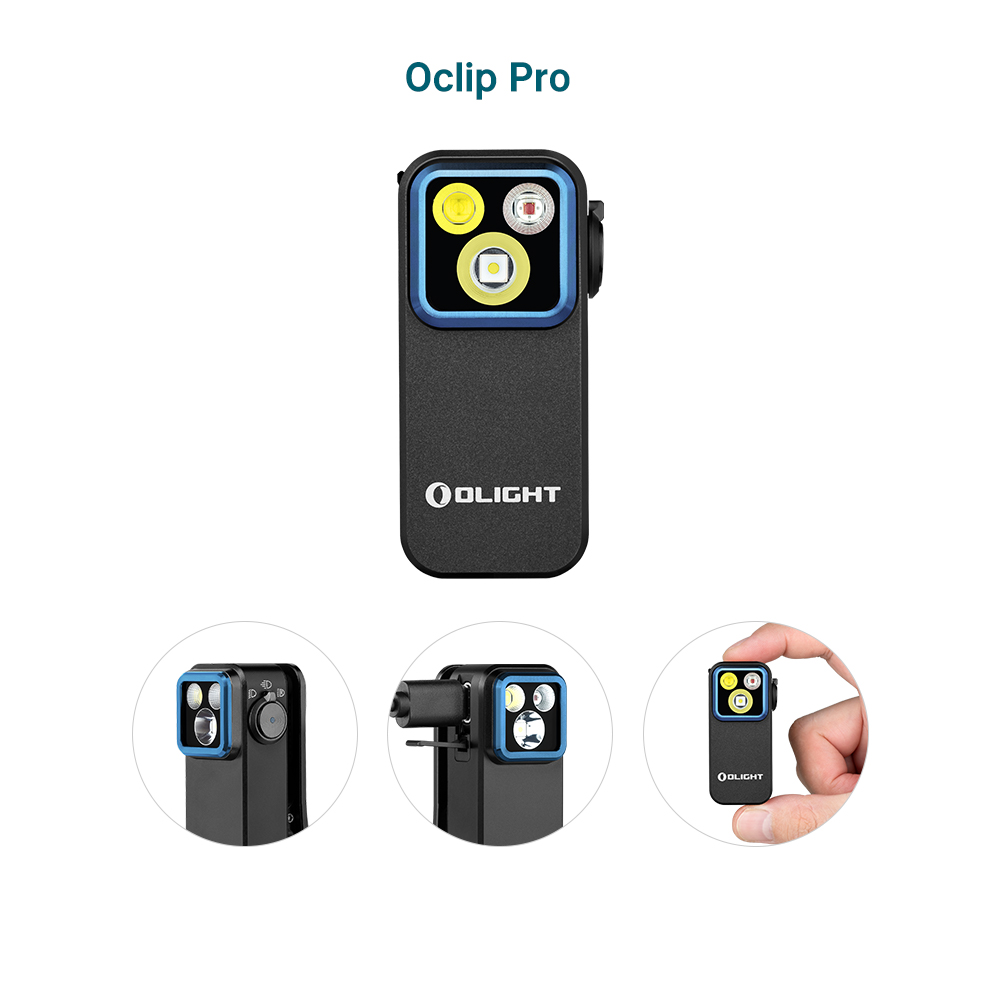
Official original Oclip Pro detail: separate light sources, side selector, and USB-C charging connection.
The Oclip Series Headlamp Strap is a separate accessory. Its current US compatibility statement includes Oclip Pro, Oclip Pro S, Oclip Ultra, Oclip 2 Pro, and Oclip 2 Ultra. Match the exact model to that statement rather than assuming every light with a clip fits. Similar names do not establish compatibility for an unlisted product.
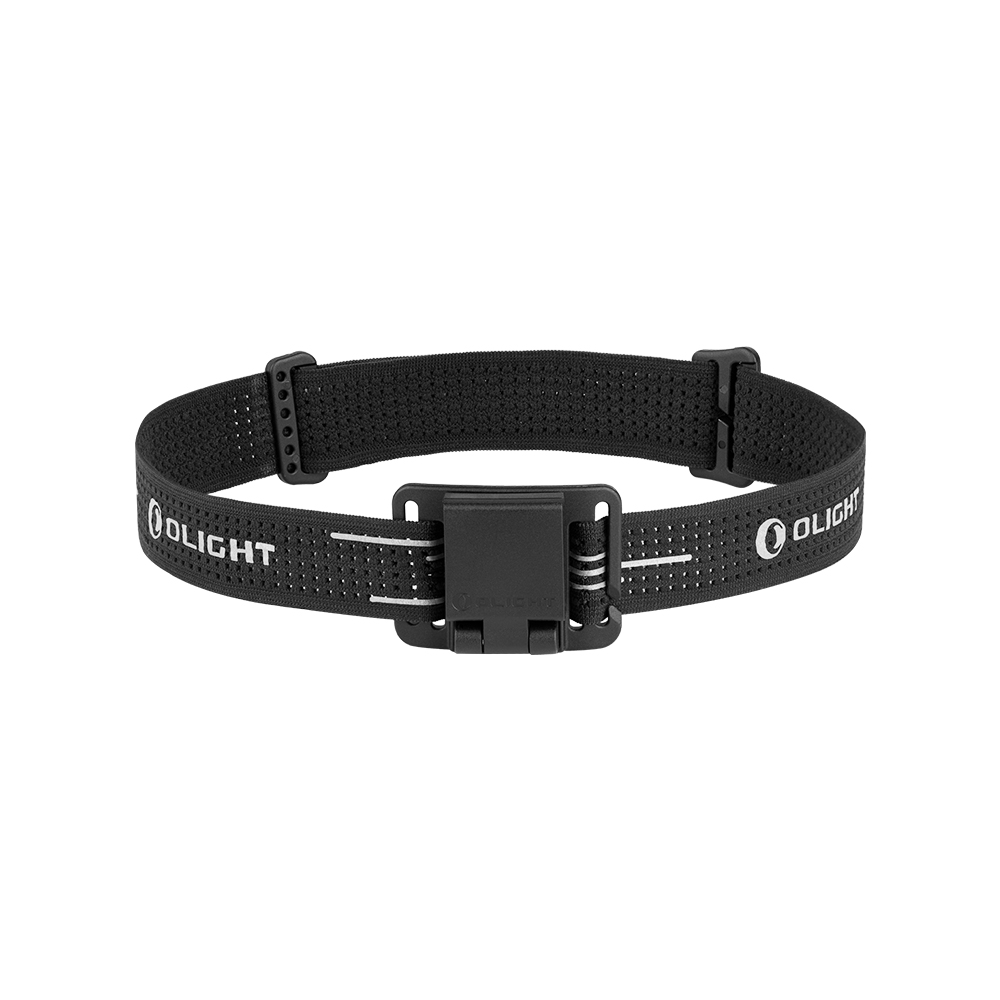
The strap is a separate accessory; the central mount and adjustable band form part of the complete wearing arrangement.
Adding a strap changes how the light is carried, but does not turn every feature of the resulting setup into an equivalent of a dedicated headlamp. Compare the control location, mounting direction, comfort, and ease of removal. Check stability with normal movement according to the instructions. A compatible accessory is a starting point for evaluating fit, not a promise that every wearer will prefer it.
The clip-and-strap route can be particularly sensible when the light already serves another ordinary role and the strap adds occasional hands-free use. It may be less appealing if the primary activity involves frequent long wearing periods and a different dedicated arrangement feels more suitable. Evaluate the actual inconvenience being solved instead of choosing solely from the lower combined price.
A price comparison that identifies what is being priced
The following US product listings were checked on November 17, 2026. The figures identify the selected configurations and separately listed accessory, not a promise of current checkout price, stock, tax, shipping, or an available bundle. Check the selected option before ordering; a price appearing on a page does not by itself establish that the item is currently purchasable.
| Compared configuration | Listed price at the check | What the comparison includes |
|---|---|---|
| Original Oclip Pro Black | $39.99 | Selected original Pro clip light, rather than a Pro S specification |
| Oclip Series Headlamp Strap | $7.99 | Separately listed compatible headband accessory |
| Those two separately listed items | $47.98 combined | Arithmetic before tax and shipping, not a quoted bundle transaction |
| Perun 3 Mini Black CW standalone | $64.99 | The identified standalone option, not a Premium charging-case package |
| Perun 3 Black | $89.99 | The identified full-size configuration |
The difference between the clip-and-strap arithmetic and a dedicated option needs a practical explanation. Ask whether the additional cost changes a recurring task: more convenient head-to-hand handling, a preferred wearing arrangement, a relevant power plan, or controls that suit the actual gloves. If the problem remains unchanged, a higher listed price has not supplied a useful reason to choose the product.
Conversely, the lowest total is not automatically the lowest-friction choice. An accessory that is repeatedly misplaced, a control that is awkward to reach, or a setup that is unpleasant to wear can undermine the expected saving. Those are reasons to compare the arrangement honestly, without inventing a universal cost-per-feature score or assuming everyone values the same function equally.
If a suitable clip light is already owned, calculate only the additional equipment genuinely needed to use the compatible strap. If nothing is owned, compare complete starting arrangements. Mixing the cost of an accessory for an existing light with the cost of a new complete headlamp answers two different purchasing questions and can make a price table misleading.
Put the price difference next to a recurring inconvenience
At the checked prices above, the standalone Mini was $17.01 more than the two separately listed clip-and-strap items, while the full-size option was $42.01 more. Those differences do not purchase an identical bundle of benefits. They are useful only when connected to a feature that changes the buyer's actual routine. Decide what the added cost would accomplish before treating either difference as small or large.
For someone who repeatedly changes from head-worn to handheld lighting, the release arrangement may be the feature worth assessing closely. For someone who rarely removes the light, another consideration may dominate. The same price difference can therefore lead to different reasonable choices. A comparison becomes more useful when the buyer identifies which inconvenience occurs regularly, rather than awarding a point to every feature in a table.
Use a planned-activity calculation carefully if it helps the budget. Divide the additional purchase cost by the number of relevant activities already expected, keeping the result as a planning comparison. That arithmetic does not establish product lifetime, resale value, failure rates, or how much the person will enjoy the setup. It simply places the known price difference beside a concrete intended use instead of an imagined collection of future adventures.
For a light already owned, the calculation changes again. Adding a compatible strap is different from purchasing the light and strap together. Keep the original purchase out of the additional shopping total when it is already a settled cost, while still asking whether the existing light suits the new wearing role. Saving money on an accessory is useful only if the resulting complete arrangement remains appropriate.
Check the retailer's current return conditions before using a purchase to assess ordinary fit. Know what is permitted and keep the packaging and included parts organized. Do not assume that an improvised durability demonstration is covered or that a return period replaces reading the specifications. A fit check should help make a normal purchasing decision while keeping the product within the applicable instructions and sales terms.
A budget can also justify postponing the purchase. If the existing equipment already handles the ordinary task and the new configuration offers no clear improvement, there may be nothing urgent to replace. Put the money toward genuinely required equipment or keep it available for a later need. The useful outcome of a comparison can be a simpler kit, rather than a reason to buy every alternative discussed.
Check controls and fit before the first outing
Begin with the light off and the exact instructions available. Adjust the band for the clothing normally worn and look for pressure points, slipping, or interference with glasses. A comfortable fit should not depend on excessive tightening. If required workplace protective equipment is involved, use the approved arrangement for that equipment instead of improvising a mount.
Then check the lighting direction on an ordinary safe surface. Looking down into a bag is different from looking across a table, and a change of hat can alter where the lamp sits. Make the permitted adjustment that suits the task. If the arrangement requires a strained posture to keep the useful area illuminated, reconsider the setup rather than compensating throughout the activity.
Try the documented controls with the actual gloves in a suitable setting. Notice whether locating the switch or selector dislodges the lamp, and whether the modes remain understandable. These observations can guide the purchase or return decision without becoming a timed comparison or a claim about every glove. An uncomfortable combination deserves a practical change before a trip.
Consider storage as part of the control check. Follow the exact model's off and lockout guidance, protect the controls from pressure, and keep a working light from becoming buried beneath material. A tidy kit should remain straightforward to inspect. If a product or cable is damaged or behaves unexpectedly, resolve the problem through appropriate support before depending on it.
Use red light for the activity, not the label
A red setting can be useful at a shared stargazing activity or while organizing belongings near other people. The National Park Service discusses red flashlights and headlamps in its night-hiking advice. That supports considering the feature for an appropriate ordinary activity; it does not make every red mode the right setting for every task.
Select enough light to see what needs to be seen. White light may be preferable when the color of a label, instruction, or object matters. If the route or object remains unclear, change the arrangement or stop the task. The light's color should not override the actual need for clear visibility or the organizer's requirements at a particular location.
Think about the people nearby when changing direction. A headlamp follows the head during conversation, which can put the beam into another person's face. Adjust thoughtfully or switch off when appropriate. A removable light may suit a stationary table task more conveniently than a head-worn position. Considerate placement is useful regardless of what marketing category the product belongs to.
Plan charging around the way the light is stored
A useful power plan starts with the actual settings and expected activities. Read output levels and durations together, and do not convert a maximum runtime on a low mode into a promise for a brighter mode. Keep a sensible margin for the outing without inventing an extra-hours rule that applies to every person, temperature, or route.
Make sure the correct charging equipment has a defined place. USB-C charging can fit a kit already organized around an appropriate cable and power source, while another model may call for its specified charging equipment. Check the exact instructions and package contents. The general fact that two lights are rechargeable does not establish that the same cable or accessory serves both.
Storage location affects whether that equipment is present when needed. A light that alternates between a home drawer and a camping bag can easily become separated from its cable. Decide what stays with the light and what transfers before departure. An organized routine is a more useful ownership benefit than a collection of accessories that belong to several different charging arrangements.
An independent compact flashlight can provide another ordinary lighting option when the headlamp is unavailable. Keep it maintained and accessible in its own defined location. A second device with an unknown charge state is not the same as a usable alternative. Choose redundancy deliberately instead of adding more products to a list without a plan for keeping them ready.
Which arrangement fits a real evening?
For occasional household sorting during a power outage, start with the visibility needed for an ordinary safe task. A compatible clip-and-strap combination may be worth considering if the clip light already has a useful place in the home. Keep the parts together and understand the controls before an outage. A headlamp does not make an electrical fault or unfamiliar maintenance job safe to investigate.
For repeated campsite setup, think about movement between head, hand, bag, and table. A convenient release and a wearing arrangement suited to the actual person may be worth paying for when the task changes frequently. Include the manufacturer's mounting limitations in the choice. A new light's appearance does not explain how repeated removal affects the body or how easily parts can be misplaced.
For regular ordinary outdoor chores, put the power and comfort questions near the top of the comparison. The selected mode needs to suit the task, while the complete light and band need to remain manageable with the clothing used. Keep the equipment clear of machinery and follow workplace requirements. Personal convenience does not replace the safety rules of the task itself.
For a person mainly attracted by a military-looking product name, pause before paying a premium. Describe what the extra feature will change during a normal evening. If the answer is only appearance, that is a preference rather than evidence of better task performance. If an actual organizational specification applies, establish it before choosing among consumer features or prices.
Frequently Asked Questions
Spend on the problem that remains after a fit check
Before ordering, confirm the exact version, included equipment, compatible accessory, and charging requirements. Decide which ordinary task justifies the arrangement and how it will be stored. If the practical need is met by a compatible clip light already owned, an accessory may be enough. If a dedicated mounting or power arrangement solves a recurring problem, the additional cost has a clear purpose.
Keep the final choice specific. A comfortable band, understandable controls, useful light sources, and a maintained power routine can each earn their place in the purchase. A tactical label does not do that work for them. The better value is the complete arrangement that helps with the actual evening, without adding unnecessary equipment or an ownership routine that is harder to manage than the task itself.
Changelog
- November 18, 2026: Product information and buying guidance reviewed.




