


⚡ TL;DR
A UV flashlight's wavelength label describes only part of its output. To compare lights, separate the stated wavelength from spectral width, UV output, visible light, and the way the beam reaches the material. A number such as 365 nm does not establish the complete spectrum, guarantee a particular fluorescent result, or determine an acceptable exposure time.
📋 Table of Contents
- 1. Begin with the material and the task
- 2. Read a wavelength label as one entry in the specification
- 3. What spectral width adds to the peak number
- 4. Separate visible background from fluorescence
- 5. UV output, white-light lumens, and a surface measurement
- 6. Compare nominal wavelengths without making a universal ranking
- 7. Three portable formats, with different practical benefits
- 8. Make a comparison sheet that exposes missing information
- 9. Observe an ordinary material without turning the result into a laboratory claim
- 10. Put the specifications beside an ordinary decision
- 11. Keep safety separate from a wavelength comparison
- 12. Frequently Asked Questions
- 13. Match the information to the job
Begin with the material and the task
Choose a UV flashlight around the work it needs to do. Looking for a known fluorescent mark, checking a labeled sample, and inspecting an appropriate ordinary object are different tasks. The material's response matters alongside the light's specifications. A wavelength that is useful for one application should not automatically become the preferred choice for every other application.
Establish what the observation is meant to tell you. Some materials fluoresce under suitable illumination, producing visible light that differs from their ordinary appearance. That observation may help locate or distinguish a known mark. It does not, by itself, identify an unknown substance, prove that an object is authentic, or establish that a surface is clean or free of microorganisms.
Start with the item's normal appearance under appropriate white light. Labels, scratches, color, and other ordinary details can provide context for a later fluorescent observation. Keep the task's actual acceptance criteria clear. If a workplace procedure or material supplier specifies a light or method, follow that requirement instead of substituting a popular consumer wavelength because the number appears familiar.
For a broader introduction to combined portable lights, the EDC flashlight with UV guide discusses carrying white and UV functions in one body. This guide addresses a narrower buying question: what the wavelength and related specifications explain, what remains unspecified, and how those distinctions affect an ordinary inspection task.
Read a wavelength label as one entry in the specification
Nanometers are units of length used to describe wavelength. A label such as 365 nm identifies a region of the spectrum; ask whether the manufacturer means a nominal value, a typical peak, or another defined quantity. The label alone does not supply the complete emitted distribution. Keep the exact model and configuration attached to the specification when comparing products.
A spectral distribution describes output across wavelengths. Its peak is the wavelength at the maximum of the plotted distribution. A source can have a stated peak while also emitting over a range around it. Consequently, two products carrying the same nominal number can still require more information before their outputs are meaningfully compared.
Read the axes before interpreting a spectrum. A graph normalized to its own maximum shows the shape relative to that maximum. It does not supply an absolute output comparison with another independently normalized graph. Two curves reaching the top of their respective charts need not represent the same amount of optical output. Look for the units, normalization, and measurement conditions rather than comparing the height of the printed pictures.
The wavelength scale also matters. A chart showing only a narrow region around a peak may leave other wavelengths outside the displayed range. Check the complete range and the stated purpose of the graph before deciding what it establishes. A clean-looking plot is useful only when its scope matches the question being asked.
| Specification entry | Useful question it addresses | Information still needed |
|---|---|---|
| Nominal or peak wavelength | Which wavelength region is being described? | The definition, tolerance, and complete distribution |
| Spectral width | How broad is the stated part of the distribution? | The width convention and measurement conditions |
| UV optical output | How much UV output is described under stated conditions? | The quantity, units, operating mode, and measurement boundary |
| Irradiance at a surface | What radiant power per unit area reaches the surface in a stated setup? | Position, geometry, mode, and the actual application |
| Visible-light behavior | What visible background may affect the observation? | The complete spectrum, surroundings, and material response |
| White-light lumens | What is stated for a visible-light function? | Separate information about the UV function |
What spectral width adds to the peak number
Full width at half maximum, usually abbreviated FWHM, is one way to describe width. It is the difference between the two positions on either side of a peak where the plotted quantity falls to half of its maximum. The federal optical terminology glossary describes this convention for spectral linewidth and notes that complex shapes can make the method difficult to apply.
For a simple single-peaked distribution, the width adds information that the peak location alone does not provide. It still describes a particular part of the curve. The half-maximum points do not mark a boundary beyond which all emission disappears. A width value should therefore be read with the distribution and its definition, rather than treated as a complete account of every wavelength emitted.
Keep spectral width separate from beam width. A wavelength spread is described along the wavelength axis; a beam's angular spread concerns where light travels. Both can matter to a task, but they answer different questions. A narrow beam does not establish a narrow spectrum, and a narrow spectrum does not determine how large an area a handheld light will illuminate.
Also distinguish the source's distribution from the measuring instrument's characteristics. The report should explain the measurement method well enough to understand what was obtained. If precise verification is required for the application, obtain appropriate documented measurements. A consumer label, an attractive spectrum illustration, or a photograph is not interchangeable with that evidence.
Separate visible background from fluorescence
The visible appearance of a UV setup can come from several places. It may include visible emission from the source, reflections, ambient lighting, and fluorescence from the material being viewed. These contributions can overlap in the observation. Seeing a purple-looking scene does not identify which contribution is responsible or quantify how much UV reaches the object.
For this reason, brightness judged by eye is a poor substitute for the relevant specification. A visibly bright background may make a fluorescent feature harder to distinguish, while a less visibly bright source can still produce an observable response from a suitable material. The result depends on the combination of source, surroundings, material, and viewing arrangement, rather than a universal rule that the brightest-looking lamp is best.
A filter or an optical design may change the light reaching the task. Read the exact manufacturer's description of what the component does. Clear glass, a dark-looking front, and a statement about lens hardness do not all describe the same optical property. Keep scratch resistance, transmission, and any claimed filtering function separate when reading the product page.
White and UV functions also need to be distinguished on a multifunction light. Make sure the selected function matches the intended observation, following the exact instructions. An additional visible-light function changes what is present in the scene when used. A combined operating mode should not silently become evidence about the UV channel by itself.
A phone photograph adds another layer of uncertainty. Camera exposure, processing, and white balance affect the displayed appearance. A picture can help document what an ordinary observation looked like under recorded conditions, but it is not a calibrated spectrum or a measurement of UV irradiance. Keep photographs and instrument measurements in their appropriate roles when comparing claims.
UV output, white-light lumens, and a surface measurement
The National Institute of Standards and Technology explains the distinction between photometry and radiometry: photometric measurements concern the visible response of the human eye, while radiometry addresses optical radiation more broadly. This is why a white-light lumen figure should not be used as a measurement of a flashlight's UV output.
Read the quantity next to a watt or milliwatt figure. Electrical input, optical output, and the amount of optical power reaching a particular surface are different statements. A specification needs an identified measurement boundary to support a comparison. An output rating by itself does not describe the illuminated area or the conditions at the actual object.
The distribution of the beam matters to a surface measurement. Mode, geometry, and the position of the object affect the setup being described. Keep any stated irradiance value together with those conditions. A number measured in one arrangement cannot simply be transferred to another arrangement because the products share a nominal wavelength.
For a buyer, the practical question is which information the task requires. A general portable inspection need may be addressed by an appropriate consumer light and the material's instructions. A procedure requiring a specified irradiance or documented spectral characteristics needs evidence that actually addresses those requirements. Avoid filling an empty specification with a guess based on appearance or an unrelated white-light rating.
Compare nominal wavelengths without making a universal ranking
Values such as 365 nm and 395 nm fall within the UVA range described in the CDC's UV categories. That classification identifies a wavelength region. It does not make the two sources identical, establish their complete distributions, or specify how a material will respond. Keep classification, performance information, and exposure requirements as separate parts of the decision.
The useful question is whether the source matches the application's stated requirement. A material or procedure may specify an illumination wavelength or another defined source characteristic. Use that information before comparing convenience features. Choosing the smallest wavelength number simply replaces the actual requirement with a numerical ranking that may have little connection to the observation being attempted.
Consider the visible background as well as the desired response. A feature that is easy to distinguish in one combination of source and material may be harder to interpret in another. The complete optical setup matters. A nominal label cannot predict that relationship for every ink, coating, or other object someone may decide to inspect.
Keep these distinctions when a seller uses a term such as pure. Find out which property is being described and what evidence accompanies it. The word might refer to a stated wavelength, an optical component, or a claimed reduction in unwanted emission. Read the actual explanation before treating the adjective as a measured bandwidth, a complete spectrum, or an assessment of the intended use.
Three portable formats, with different practical benefits
The models below illustrate different ways to carry and control a UV function. Their published product descriptions are useful starting points for selecting an ordinary tool. Keep each exact configuration separate, and read the relevant instructions before use. A form factor or a convenient control does not establish a measured spectrum or make exposure conditions universal.
ArkPro: keep the light sources and controls deliberate
ArkPro combines flood, spot, UV, and a green beam in a flat body. The selected ArkPro Matte Black CW description identifies a circular selector for its lighting modes and a dedicated green-beam control. For a task involving both normal visual inspection and an appropriate UV observation, having the functions in one body can simplify what needs to be carried.
The benefit depends on choosing the relevant function deliberately. Ordinary labels and markings may call for white light, while a suitable fluorescent feature calls for the appropriate UV use. Learn the exact controls before the task and leave an unnecessary function off. The availability of a green beam does not create a reason to use it during a UV material observation.
The current description also identifies USB-C and magnetic-dock charging options, with separate indicators for brightness, battery state, and lockout. These features affect keeping the tool ready and understanding its operating state. Check the equipment supplied with the selected configuration. A second supported charging method is useful when it fits a real routine, rather than becoming another accessory whose location is uncertain.
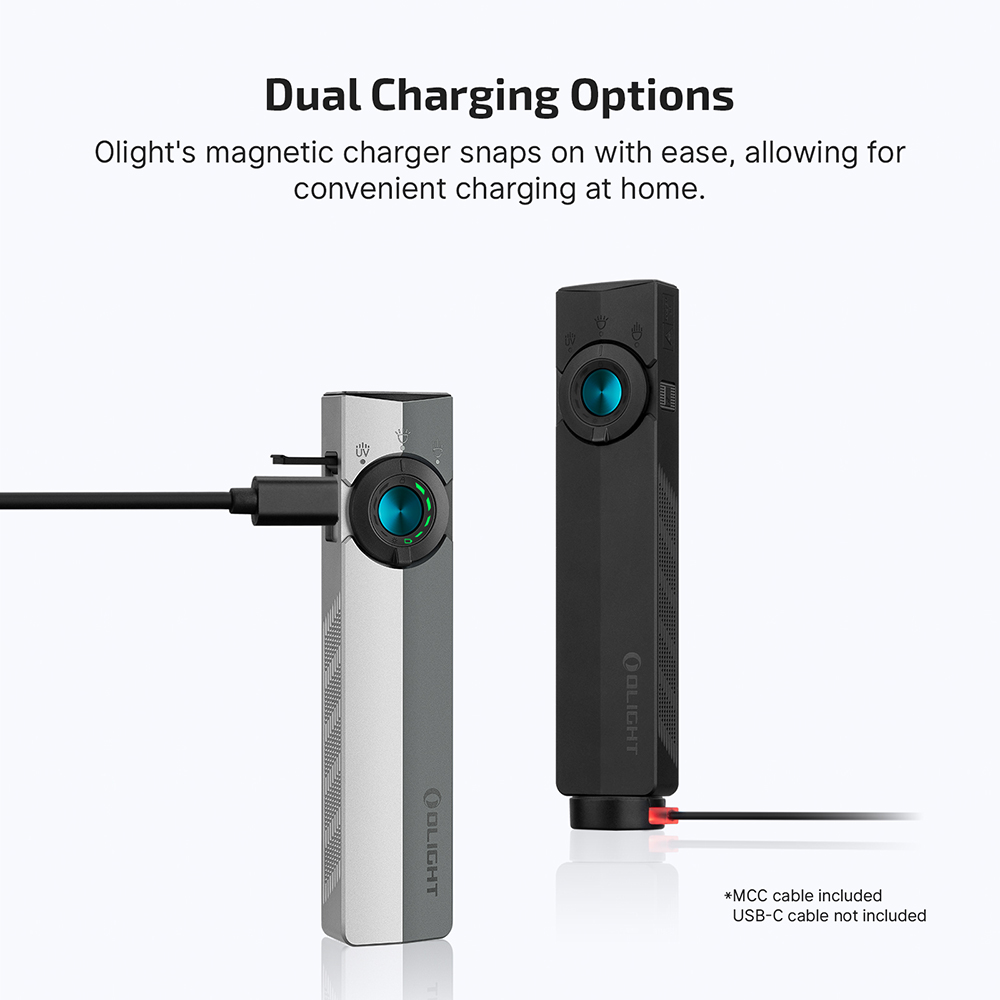
Official ArkPro gallery illustration of USB-C and magnetic charging options. Check the accessories supplied with the selected configuration.
Treat the series name carefully. ArkPro, ArkPro Lite, and other related configurations should retain their own specifications. The exact selected description is the relevant source for its functions. A familiar body shape, a gallery label, or a specification elsewhere on a shared series page should not transfer a wavelength, output, or operating instruction from another version.
Arkfeld Pro: a published wavelength still has a defined scope
Arkfeld Pro combines white light, UV, and a green laser in a flat rechargeable format. Its US description states a 365 nm UV wavelength and a 900 mW UV rating. Keep those published entries with their exact model, and compare them with quantities defined in the same way when assessing another light.
The flat format may suit a person who already needs a handheld everyday light and has an appropriate occasional UV task. That can reduce the need for a separate item, provided the combined device fits the actual routine. Additional functions also require understanding their controls and precautions. Carrying a multifunction device is a choice about the complete object, rather than a reason to use every function it contains.
The circular selector and glass-lens description address aspects of operating and owning the light. A statement about transparency or scratch resistance should be read for what it says. It does not, by itself, supply a complete UV transmission curve, a measurement of visible emission, or the conditions at a material's surface. Ask for the evidence relevant to the application instead of treating unrelated features as substitutes.
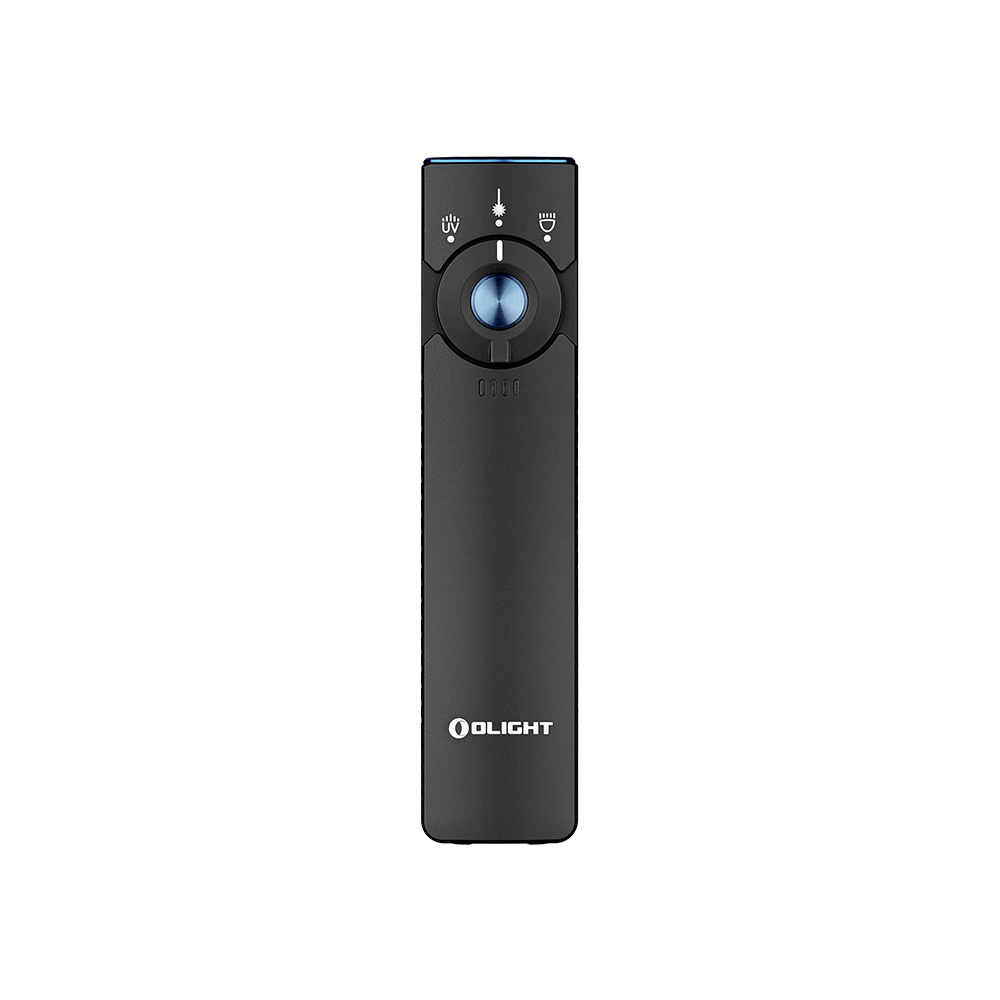
Official Arkfeld Pro front view showing the circular function selector and its marked positions; the photograph does not measure UV output or spectral width.
Oclip Pro S: an attachment option for an appropriate task
Oclip Pro S adds a 365 nm UV function to a clip-light format with white and RGB lighting options. Its current description includes clipping, hanging, magnetic placement, and USB-C charging. These are practical carrying and positioning features when a suitable ordinary task requires the light to be available near the work.
An attachment point and a useful lighting direction remain separate considerations. Check the actual support, stability, surrounding materials, and instructions. When using UV, arrange the task so people are not in the direct beam and follow the manufacturer's precautions. A clip or magnet can help with placement, but its presence does not establish that any improvised arrangement is appropriate.
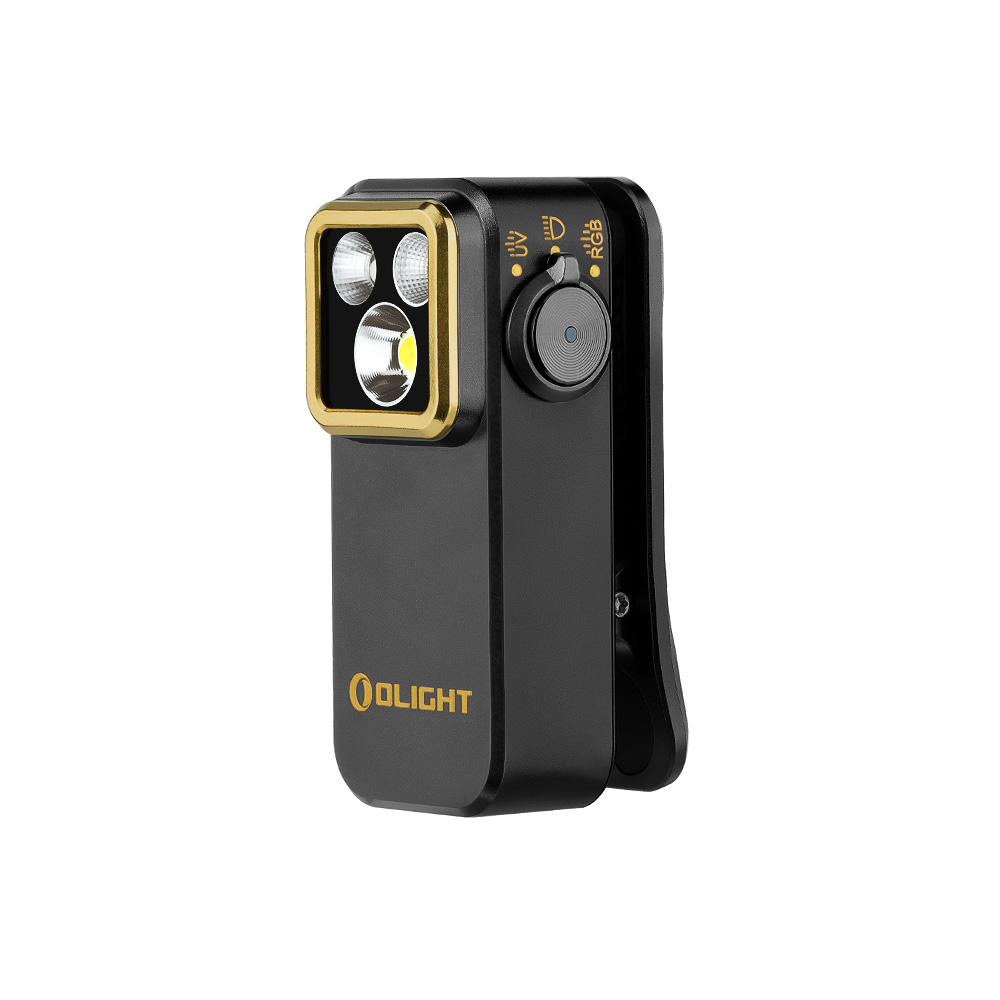
Official Oclip Pro S side view showing the rear clip and marked lighting functions. Choosing a support and directing the light remain separate decisions.
The shared US page also contains original Oclip Pro configurations. Keep Pro S specifications attached to the selected Pro S model. A UV function, an RGB mode, or a white-light output associated with one selection should not be assumed to belong to another. This is especially important when the product-page title groups several models together.
Make a comparison sheet that exposes missing information
Put the exact model and configuration at the top of each comparison column. Record where the specification came from and the date it was checked. Keep the manufacturer's wording and your interpretation separate. A statement that a product has a UV function is useful, but it should not quietly become a more specific claim about peak, width, purity, or output at a surface.
Record each quantity on its own line. Give nominal wavelength, any defined spectral width, UV output, measurement conditions, relevant optical information, controls, and charging equipment separate entries. This makes an incomplete field visible. It also prevents a large white-light lumen figure or a long low-mode runtime from filling a gap in information about the UV function.
Use an explicit unknown when an application needs information that has not been established. That is a reason to seek appropriate documentation before relying on the tool for the requirement. A missing value does not automatically prove poor performance, and it does not justify inventing a favorable value. It identifies the boundary of the comparison you can currently make.
Keep the material's instructions beside the light's specifications. A useful result requires an appropriate relationship between the source and the material or procedure. A broad claim that one wavelength is always best hides this part of the decision. If the application requires a particular source or documented method, use that requirement to narrow the choices before comparing convenience features.
Observe an ordinary material without turning the result into a laboratory claim
Begin with a suitable material whose intended observation is understood. Read the item's instructions and the flashlight's precautions, and use an appropriate working arrangement. Establish what an expected response would mean before drawing a conclusion. A glowing mark can be useful for the specified purpose without establishing the chemical identity or condition of everything around it.
Use ordinary white light to record relevant context, such as a label, marking, or surface condition. Keep any later UV observation tied to the same identified item and circumstances. If photographs are useful for a personal record, note the lighting function and relevant conditions. Avoid presenting automatic phone images as a calibrated comparison of different products' output or spectra.
If a result is unclear, reconsider the task's requirements and obtain the relevant documentation or qualified assistance. Do not compensate by inventing a longer exposure, directing the source toward people, or modifying the light's optics. An unexpected fluorescent appearance is not a reason to treat the material as harmless, contaminated, authentic, or fraudulent without the evidence that conclusion requires.
For a workplace record, use the documented process and acceptance criteria appropriate to the work. A consumer demonstration and a controlled measurement serve different purposes. Keep the report clear about what was observed, which exact equipment was used, and what the observation supports. This makes the information more useful to someone who needs to understand the result later.
Put the specifications beside an ordinary decision
For a known fluorescent label, start with the label supplier's intended observation and acceptance criteria. The question may be whether a particular mark is present in the expected place. Record the exact material and the source requirement, then choose equipment that addresses them. An unrelated object's glow does not substitute for the result the label procedure actually requires.
For a hobby item described as fluorescent, keep the observation separate from a claim about identity or value. The appearance under a suitable source may be interesting and useful to document. It does not establish the composition of an unknown sample or verify a seller's account of its origin. Use the appropriate expertise and other evidence when those conclusions matter.
For an authenticity question, understand the complete verification method before relying on a portable light. A fluorescent feature may be one part of an established process, while the conclusion may require several other checks. A multifunction flashlight makes a tool available; it does not create a valid verification procedure for every document or object that happens to glow.
For a work task requiring a specified optical condition, compare the documentation with that condition directly. The relevant evidence may concern a spectrum, output quantity, or defined arrangement at the material. A product's convenient size or additional white-light mode does not supply a missing measurement. Select the equipment and documented method needed by the work rather than adapting the requirement to a product already in a pocket.
These cases also change which convenience features matter. A handheld light may be straightforward for a brief appropriate observation. An established work arrangement may need a defined equipment location or an approved fixture. Decide how the tool will be used and maintained within that arrangement before paying for extra modes or carrying features. The practical value comes from the task the feature supports.
Keep safety separate from a wavelength comparison
The Centers for Disease Control and Prevention describes ultraviolet radiation and its potential effects on skin and eyes. A nominal wavelength is not an exposure limit. Follow the exact equipment instructions and the requirements of the task, including any specified protective measures. Do not look into the emitter or direct UV toward people or animals.
A product's visible appearance is not a safety assessment. Do not use a dim-looking beam, an ordinary pair of sunglasses, or a photograph as proof of adequate protection. A requirement for evaluated protective equipment or a documented exposure assessment needs the corresponding evidence. Consumer observations about fluorescence do not supply it.
Keep laser-equipped models' functions separate as well. Never direct a laser at people's or animals' eyes, vehicles, or aircraft. It is not a pet toy. Leave it off when the ordinary task does not require it, and follow the exact product's instructions rather than borrowing another model's control sequence.
Frequently Asked Questions
Match the information to the job
An appropriate EDC flashlight can combine normal visibility with an occasional UV function when both belong in the same routine. Keep the purchase grounded in that routine and the documented application. A clear understanding of what each specification establishes is more useful than asking one wavelength number to answer every question about the light.
Changelog
- November 18, 2026: Product information and buying guidance reviewed.




