


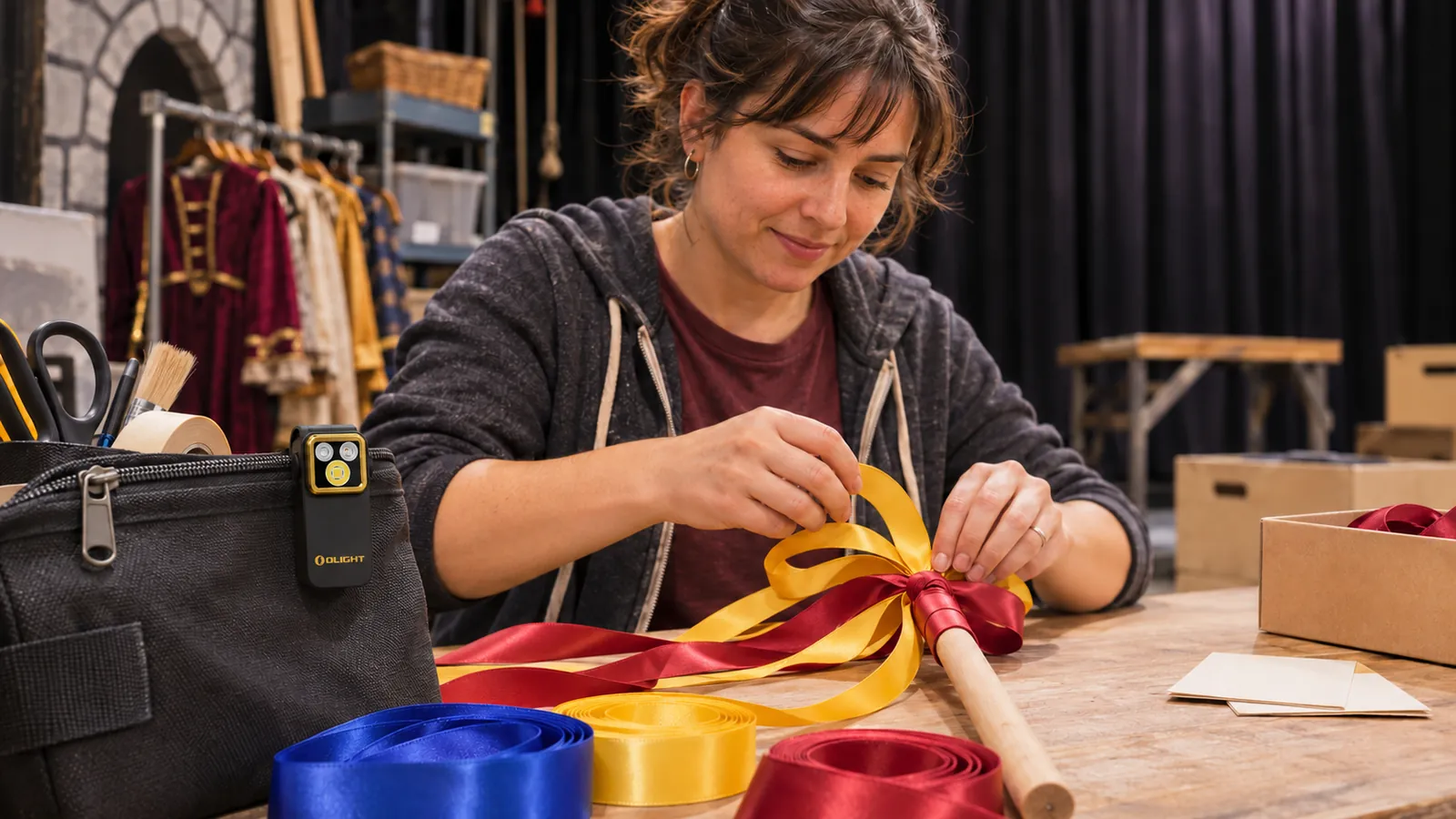
TL;DR: Black light theater uses ultraviolet illumination and fluorescent scenery, costumes, or puppets to emphasize selected objects against a dark background. The effect requires compatible materials and a coordinated lighting design. Choose stage fixtures with the venue's qualified lighting staff; use a portable UV flashlight for appropriate object checks, and treat eye and skin protection as a separate planning requirement.
📋 Table of Contents
- 1. Start with the effect the audience needs to see
- 2. Fluorescence, purple light, and a dark background
- 3. Black light theater and black box theater are different
- 4. Give stage fixtures and portable lights separate jobs
- 5. Read wavelength labels without turning them into guarantees
- 6. Plan eye and skin protection before introducing UV
- 7. Check the complete prop, not just a paint swatch
- 8. Use photographs as production notes
- 9. Two portable tools to consider for appropriate prop checks
- 10. Budget for responsibilities and replacements
- 11. Resolve common production problems at their source
- 12. Ask questions that lead to usable answers
- 13. Frequently asked questions
- 14. Leave the team with a repeatable plan
Start with the effect the audience needs to see
A floating puppet, a moving ribbon, and a painted doorway create different demands on a production. Before buying lights, describe which object should attract attention, where the audience will sit, and what the performer must handle. A shopping list built around those decisions is more useful than a request for the brightest black light available.
| Production need | Useful starting point | Question to settle before buying |
|---|---|---|
| A fluorescent prop | Material information and a representative sample | Is this exact finish intended to respond to the proposed source? |
| A stage effect | Qualified venue lighting staff and purpose-built theatrical equipment | Can the approved design serve the intended playing area and audience layout? |
| A backstage object check | An appropriate portable UV tool and a controlled work procedure | Does the task require UV, ordinary white light, or both? |
| Performer readiness | A complete costume and handling review | Are labels, trim, uncovered surfaces, or accessories unexpectedly noticeable? |
| A safe production | Equipment instructions and the venue's safety process | Who approves exposure controls, access, work lighting, and equipment operation? |
Black clothing and a dark backdrop help direct attention, but they do not make a person physically invisible. A performer can remain visible because of ambient light, reflective surfaces, contrast, movement, or a detail that responds unexpectedly. Build the concept around achievable concealment and clear visual storytelling. Avoid a script that only works if every person and support disappears perfectly.
A small group can begin with one clearly defined visual moment. Concentrating on a single prop and a manageable sequence makes it easier to identify missing information before purchasing more paint, fabric, and equipment. The first decision is whether the effect belongs in the production at all. The lighting staff may suggest a different technique that is easier to operate in the available room.
Fluorescence, purple light, and a dark background
Fluorescence occurs when a suitable material absorbs incoming radiation and emits light. The visible emission is what the audience can see. Arizona State University's explanation of UV fluorescence describes this process using mineral examples. That basic principle explains the attraction of fluorescent stage materials; the mineral examples do not establish how a particular costume paint will perform.
A purple-looking surface can have several explanations. It may be reflecting visible violet light from a source, emitting visible light through fluorescence, or doing both. A photograph of something purple cannot establish the source's ultraviolet wavelength or the amount of UV reaching that surface. Marketing photographs also cannot settle whether a material will read clearly from the back of a particular room.
The background matters because the effect depends on what competes for attention. A fluorescent object can lose visual prominence when neighboring surfaces are brightly lit. Glossy trim, bright seams, and exposed support pieces can also interrupt the intended image. These are reasons to review the whole composition with the venue team, rather than treating the paint color as the entire design.
Ordinary white light remains necessary for many preparation tasks. It lets the props team read a label, identify a damaged edge, distinguish similar containers, and see the physical condition of a costume. UV observation answers a different question. Keeping those roles separate prevents a visually interesting glow from being mistaken for evidence that an object is clean, correctly assembled, or safe to handle.
Black light theater and black box theater are different
Black light theater describes a visual technique. Black box theater usually describes a flexible performance space, often with adaptable seating and staging arrangements. Adelphi University's Black Box Theatre is one concrete example of a room with flexible seating that allows different relationships between actors and the audience. A black box production does not necessarily use ultraviolet effects.
The distinction changes the questions a director should ask. Renting a black box room does not establish that it has appropriate UV fixtures, an approved black light design, or staff available to operate that design. Likewise, a black light sequence can be part of a production in another type of theater. Confirm the actual venue, equipment, staffing, and audience arrangement instead of relying on the room's name.
Flexible seating can create extra visual constraints for a concealment effect. An object that looks convincingly unsupported from one viewing direction may reveal its handling from another. That is a staging issue to discuss before committing to a costume or prop mechanism. It is not something that a more powerful handheld light will automatically solve.
For a school or community group, ask the venue for a written summary of what is available and who can approve its use. Include rehearsal access, technical staffing, storage, accessibility, and the transition back to ordinary lighting. Clear responsibilities reduce the chance that a volunteer arrives with equipment that cannot be used in the room or that a task has no assigned owner.
Give stage fixtures and portable lights separate jobs
Purpose-built theatrical UV fixtures belong in a lighting design planned and approved for the venue. The relevant information includes the equipment's intended use, spectral information, operating instructions, mounting requirements, controls, and applicable safety documentation. The qualified venue team should decide how those requirements fit the performance. A product's wattage or a bright promotional image is not a complete design specification.
A handheld UV flashlight can serve a narrower preparation role, such as examining an appropriate detached prop according to an agreed procedure. Portability is useful when the object is on a workbench or needs to be checked before entering storage. That convenience does not make a consumer flashlight an approved stage fixture or establish suitable coverage for an audience-facing performance.
Buying several portable lights to replace theatrical equipment creates more questions about charging, attachment, controls, ownership, and handling. A collection of nominally similar UV sources also does not prove that every part of a set receives the same illumination. Discuss the required effect with the lighting staff before assigning portable tools a role beyond individual object preparation.
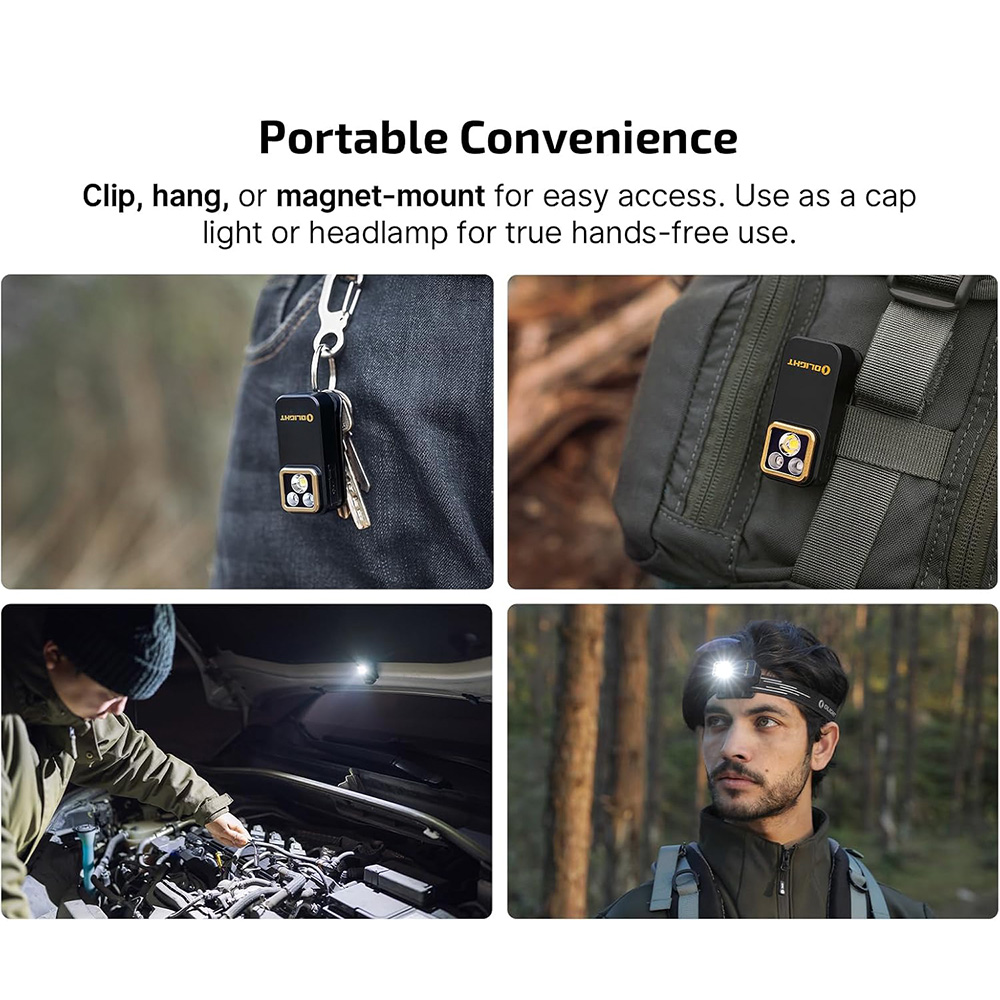
Ordinary attachment examples from the manufacturer's clip-light gallery. Theatrical mounting and UV exposure controls need separate approval.
Ordinary work lights need their own place in the plan. People need to identify tools, move equipment, read instructions, and reset the space. Never cover exit signs, disable emergency lighting, or substitute a dramatic effect for required safety lighting. If necessary illumination interferes with the concept, revise the concept with venue staff. An artistic preference is not a reason to defeat the room's safeguards.
Read wavelength labels without turning them into guarantees
A wavelength label such as 365 nm or 395 nm helps identify a source's nominal spectral region. It does not describe every part of its spectrum, its visible background, or the UV reaching a particular object. A material's response and the source's other characteristics also influence the visible result. A smaller wavelength number is not a universal quality ranking for theatrical use.
Ask the material supplier what excitation information is available for the exact paint or fabric. Then ask the lighting team whether the proposed fixture is suitable for that material and the planned application. A generic statement that something is fluorescent leaves important details unresolved. It may not specify the relevant source, coating thickness, base material, or intended use on a costume.
Avoid comparing UV channels by the white-light lumen figure on a multifunction flashlight. That figure describes a different output. A maximum runtime advertised for a low white-light setting is also not a promise of UV operating time. When information about the required function is missing, keep it marked as missing and seek the manufacturer's answer before relying on it in a production schedule.
A source's visible purple appearance can affect the look of the scene, but it cannot serve as an exposure meter. Neither can a phone camera establish a UV safety limit. Keep aesthetic decisions, equipment specifications, and safety assessment in separate records so that a satisfactory-looking image does not become accidental evidence for a claim the observation cannot support.
Plan eye and skin protection before introducing UV
Yes, black light can pose an eye or skin hazard. The CDC's guidance on ultraviolet radiation identifies health risks associated with UV exposure. The fact that a source is sold for entertainment, emits some visible violet light, or uses a wavelength described as long-wave does not by itself make every exposure arrangement acceptable.
Have the venue's qualified staff assess the actual equipment and intended use before rehearsal. They need the relevant manufacturer information and a clear description of who may be exposed during preparation, operation, and the performance. Do not borrow a universal viewing distance or time limit from an unrelated product. Suitability depends on information about the actual source and conditions.
Do not look into the source or aim a portable UV beam at people or animals. Arrange object checks so that nobody needs to hold a prop in the beam or move through the checking area. Ordinary sunglasses and clear fashion glasses should not be assumed to provide appropriate UV protection for the task. Required protective measures and any suitable equipment need to come from the applicable manufacturer information and qualified assessment.
For school productions, assign the equipment to responsible adults under the school's approved process. A student's role in the performance does not automatically include permission to operate every backstage device. Make it clear who can activate a light, where it is stored, and who receives a report if an instruction is unclear. Pause the task when a necessary control is unresolved instead of improvising around it.
Multifunction lights add another boundary: a green laser is not part of a black light theater effect. Leave an unnecessary laser function off and keep its operation out of casual prop handling. The FAA warns against directing lasers at aircraft. Never direct one toward an aircraft, a person, or an animal's eyes; do not use it to point out a costume detail near a face.
Check the complete prop, not just a paint swatch
Begin with the material's identity and intended use. Record the paint or fabric name, supplier, relevant instructions, and the particular prop to which it belongs. Materials suitable for scenery are not automatically suitable for skin, a face covering, or every costume application. Follow the supplier's requirements for application, drying, handling, and any other relevant limitations before planning an appearance check.
Inspect the complete item under ordinary work lighting first. Look at loose components, sharp or damaged edges, attachment points, and whether labels can be read. This keeps a lighting observation from hiding a basic construction problem. The person responsible for the prop should understand which conditions require a repair, replacement, or referral to the appropriate crew member.
When an approved UV object check is appropriate, assess the assembled item's visual role rather than only the most colorful patch. Seams, packaging residue, trim, printed labels, and repairs may respond differently from the central painted surface. A glove or sleeve that was never part of the original sample can become the most noticeable detail. Keep the observation specific to the object and conditions actually reviewed.
A weak-looking response has more than one possible explanation. The material may be unsuitable, the coating may differ from the supplier's requirements, or other visible light may dominate the impression. More UV output should not be the automatic answer. Bring the material and source information back to the props lead and lighting staff so that they can decide whether to change the material, the design, or the proposed effect.
Use a record that follows the item through repairs and substitutions. A supplier changing a fabric or a crew member adding a new label can alter the appearance of the finished object. Keeping a clear identity for each version makes it easier to notice when an old approval no longer describes the prop that is actually going onstage.
| Record field | What to enter | Why it helps |
|---|---|---|
| Item and version | A descriptive prop ID and revision | Connects observations to the actual finished object |
| Material source | Exact product and supplier information | Keeps replacements from being treated as identical without review |
| Approved observation | Source identity and the procedure used | States the scope without inventing a measured result |
| Visual notes | What was noticeable and from which relevant viewpoint | Gives the designer a specific issue to evaluate |
| Decision and owner | Keep, revise, replace, or refer; responsible person | Turns the observation into an actionable handoff |
Use photographs as production notes
A photograph can help the team recognize a prop version or locate an unexpected bright seam. Keep the original file with a simple description of the item and the purpose of the image. If an edited copy is useful for communication, retain the original separately. Avoid changing an image until it appears to prove that a material performs better than the actual observation suggested.
Camera processing, exposure, white balance, and display settings can change the appearance of a glowing object. Images made under different conditions should not be treated as a controlled brightness comparison. A saturated patch can also conceal distinctions that matter to a designer. A useful production photograph documents an observation; it is not a measurement of wavelength, UV irradiance, or safe exposure.
Do not use a glow observation to identify an unknown substance or declare an item hygienic. Several materials can produce similar visible responses, and a material that does not visibly fluoresce can still be present. For theater preparation, keep the conclusion modest: a particular area was noticeable under the stated conditions, and the appropriate crew member needs to decide what that means for the scene.
The written note is often more useful than another dramatic photograph. State the practical issue, such as an added sleeve label attracting attention or a repaired ribbon looking different from the rest. Then identify who will resolve it. This avoids sending a folder of attractive pictures around the group without a clear decision attached to any of them.
Two portable tools to consider for appropriate prop checks
The Olight Oclip Pro S is a compact option when the preparation task calls for a portable UV function along with ordinary illumination. The current Pro S description specifies a nominal 365 nm UV light, white light, and RGB functions. These belong to the Pro S configuration; the shared product page also includes the original Oclip Pro, so verify the selected model before ordering.
Its clip, hanging option, and magnetic attachment provide different ways to keep the tool accessible. That can help a props worker avoid repeatedly searching through a kit. Each attachment still needs a suitable support and a stability check before use. A clip or magnet is not a theatrical mounting approval, and an attached light should never create an unattended beam across a route used by people.
USB-C charging can simplify a crew member's preparation routine when compatible charging equipment is available. Assign the device, cable, and charging responsibility together so that a charged tool is available for the agreed task. Do not schedule UV work from the product's advertised Moonlight maximum runtime, which describes a different lighting mode. Confirm function-specific endurance when it affects the work plan.
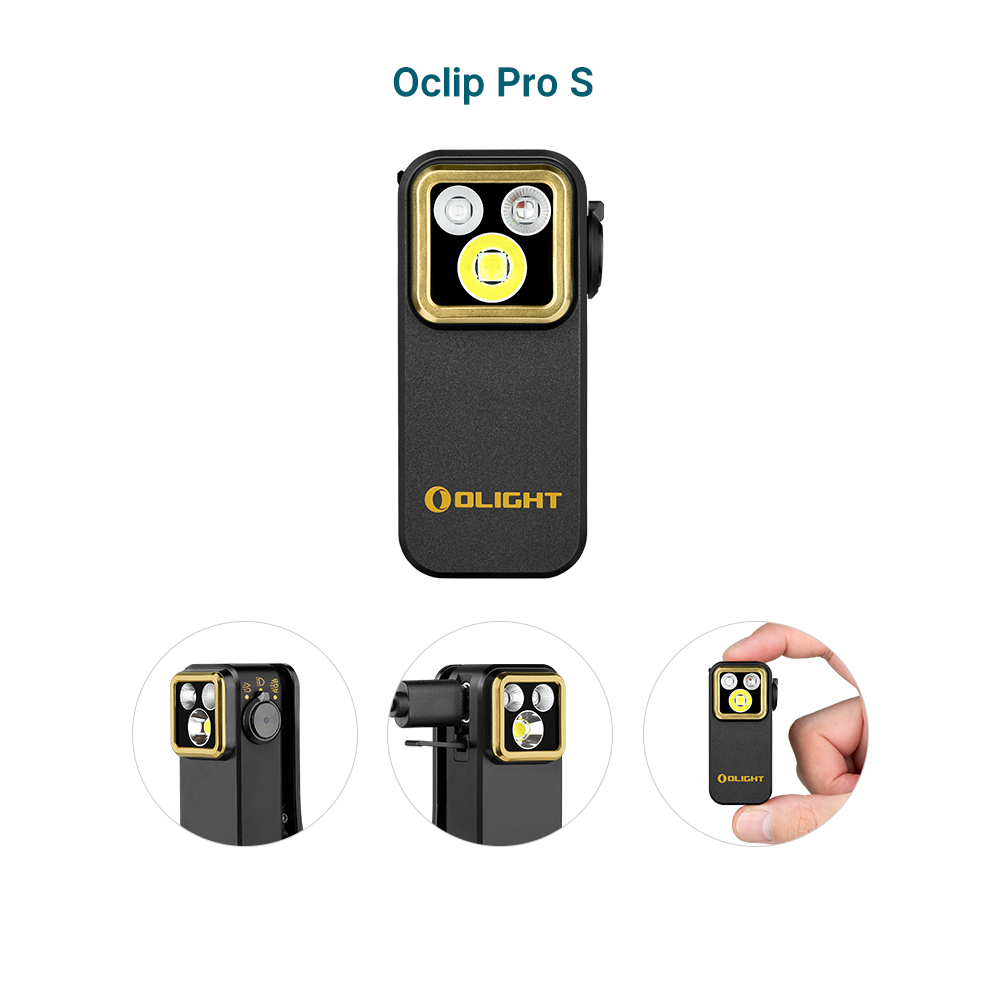
The official image identifies the portable Oclip Pro S and its physical controls; it does not depict an approved stage installation or a measured UV effect.
The Olight Arkfeld Pro offers white light, a UV channel specified as 365 nm and 900 mW, and a green laser in a flat rechargeable body. Its circular selector lets the user choose the relevant function. That combination can suit an adult who needs ordinary illumination and occasional appropriate UV observation in one carried tool, provided the additional controls are understood.
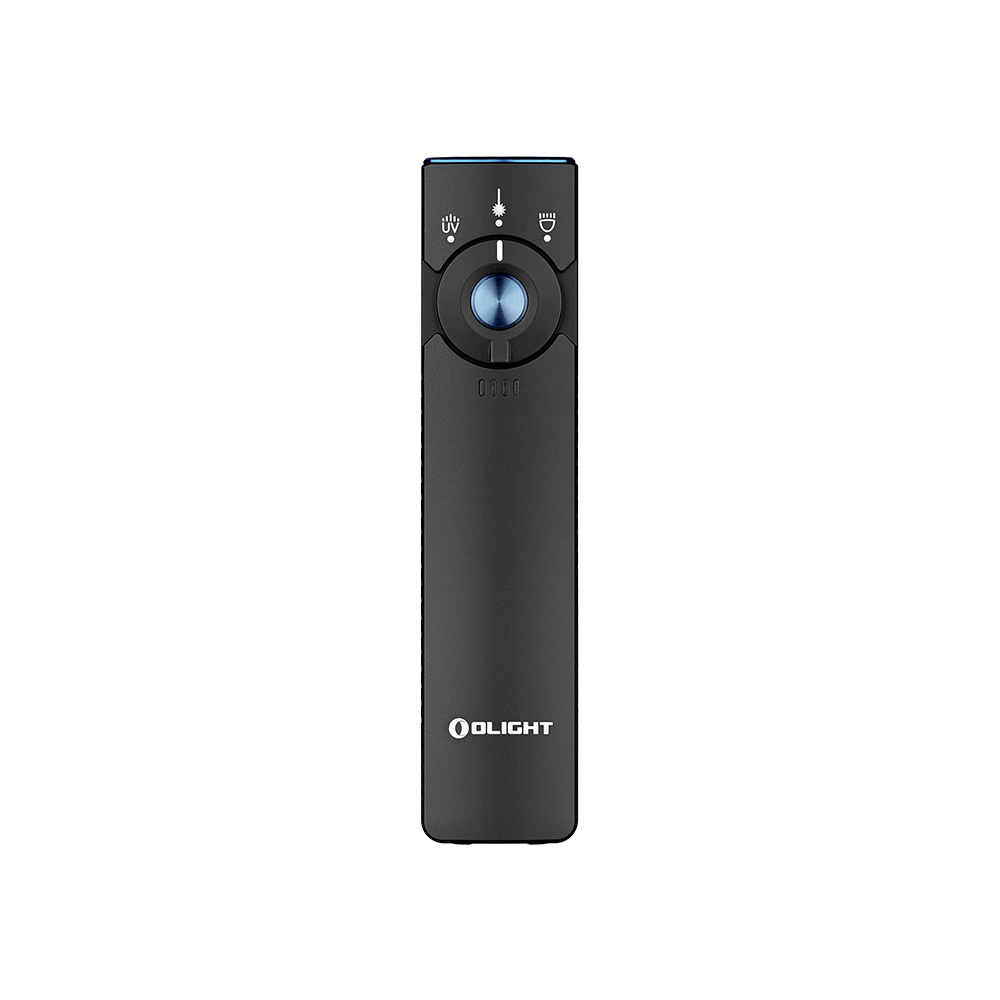
Official Arkfeld Pro front view showing its marked function selector; choose the function needed for the approved object-preparation task.
The flat shape can make it easier to include the tool in an existing carrying arrangement, but check whether it fits securely with the other equipment needed for the job. Bringing a multifunction device also brings responsibility for functions that the task does not require. The laser adds no necessary benefit to a fluorescent-prop inspection, so do not treat it as a reason to choose this model for a student-operated production kit.
The UV rating is useful manufacturer information, not proof of uniform stage illumination or a safe exposure arrangement. Decide between the two tools by the actual portable task, attachment preference, carrying space, and charging routine. If only ordinary backstage illumination is needed, an EDC flashlight without an unnecessary UV role may be the more straightforward choice.
Budget for responsibilities and replacements
A useful starter budget separates venue services, theatrical equipment, materials, portable preparation tools, and storage. Ask what the venue already supplies before buying anything. Money spent on an extra handheld device will not resolve a missing qualified operator, unsuitable paint, or lack of rehearsal access. Those practical constraints can determine whether the effect is feasible long before the final equipment choice.
Allow for the ordinary items that keep a small production organized: legible prop identification, appropriate containers, charging equipment, and replacement material that can be traced to its supplier. Keep materials with their instructions rather than transferring everything into anonymous jars. A low initial purchase price becomes less helpful when the team cannot identify what was used or reproduce a replacement safely.
Make a handoff sheet for the person taking over the kit. It should identify approved equipment, its assigned role, storage location, charging responsibility, and the person to contact about a problem. Separate a prop that needs revision from one ready for use. Clear status labels reduce the temptation to treat everything on the same shelf as equally ready for rehearsal.
Before the performance, confirm who can stop the sequence if equipment or conditions change. The right response to a missing control, unexpected behavior, or damaged component is to pause and involve the responsible staff. A simpler visual effect that the team can operate consistently is often a better production decision than a complicated effect whose essential responsibilities remain unclear.
Resolve common production problems at their source
Suppose a ribbon looks vivid on the props table but becomes difficult to follow in the intended scene. Start by identifying what changed between the two situations. The audience may be farther from a small detail, the background may compete for attention, or the finished ribbon may include a different surface from the sample. Give the designer those specific observations rather than immediately requesting a stronger UV source.
If a black sleeve becomes distracting, review the entire garment with the costume lead. A replacement cuff, stitching, printed mark, or cleaning product may have changed what is visible. Do not apply an unfamiliar chemical to the costume as an improvised fix. Ask the material supplier and costume lead about an appropriate replacement or treatment, including its suitability for the intended wearer's contact with the fabric.
If props that look nearly identical become mixed together, improve identification under ordinary work lighting. Give each version a clear storage location and status record. Do not make the crew depend on recognizing a UV response to distinguish a ready prop from one awaiting repair. That arrangement creates an unnecessary opportunity for the wrong version to reach the stage when the preferred checking equipment is unavailable.
If charging becomes the repeated bottleneck, clarify ownership before buying another device. Identify who has the light, who has the correct charging equipment, and when both return to the kit. A spare tool can be useful when it has an assigned purpose, but it cannot repair a handoff process in which nobody knows which device is ready or whether its configuration has changed.
Ask questions that lead to usable answers
Bring the lighting staff a brief description of the desired scene, the proposed materials, and the intended audience arrangement. Ask what information they need from a fixture supplier to evaluate the idea. Ask who will approve and operate the equipment, and what rehearsals the technical team needs. This makes a conversation about black light fixtures specific enough to produce a decision rather than a list of attractive catalog pages.
Bring the material supplier a different set of questions. Ask whether the exact product is intended for the application, what source information is relevant to its response, and what requirements apply to the substrate and handling. A scenic coating and a wearable item have different practical demands. Keep the answer attached to the exact product and intended use rather than turning it into a general recommendation for everything sold as fluorescent.
For the stage manager, identify transitions and responsibilities. Who confirms that the correct prop is ready? Who controls the move back to ordinary work lighting? Who reports a change in equipment or a damaged costume? These are ordinary production questions with direct consequences for whether the effect can be repeated without confusion. Write down the agreed answer while everyone involved can confirm it.
The purchasing decision should follow these conversations. A group may discover that it needs a different fabric, access to venue equipment, or a simpler scene rather than another portable light. Matching the purchase to the unresolved task protects a small budget and leaves fewer unsupported assumptions for the first technical rehearsal.
Frequently asked questions
Leave the team with a repeatable plan
A successful black light sequence gives the audience a clear visual idea while the crew understands the equipment and its limits. Define the intended effect, select compatible materials, and let qualified venue staff own the theatrical lighting and exposure assessment. Use portable tools for their appropriate preparation role, keep ordinary work and safety lighting available, and document decisions so that the next rehearsal begins with the same understanding.
Changelog
- November 18, 2026: Product information and buying guidance reviewed.




