


TL;DR: Compare handheld flashlight suppliers by the complete documented kit, exact model identity, charging requirements, delivery commitments, and service process. Start with ordinary inspection and maintenance tasks. Request the same information from every supplier, separate product specifications from seller promises, and confirm what the crew can keep ready throughout the working week.
📋 Table of Contents
- 1. Define the work before requesting a quote
- 2. Compare the supplier and the product separately
- 3. Ask every supplier to quote the same complete kit
- 4. Request a document packet that someone can verify
- 5. Resolve an incomplete answer before placing the order
- 6. Use exact handheld examples in the request
- 7. Plan charging around the number of users
- 8. Read warranty and service terms by component
- 9. Compare complete cost and substitution risk
- 10. Receive the shipment against the approved packet
- 11. Keep the comparison useful after the first order
- 12. Frequently Asked Questions
Define the work before requesting a quote
A flashlight purchase for a work crew involves more than choosing a bright handheld light. Someone must identify the work, order the correct package, account for charging equipment, receive the shipment, and keep the tools available afterward. A useful supplier comparison follows that whole sequence. The lowest item price is only one part of the decision when the crew needs a repeatable, supportable arrangement.
Start with two or three actual tasks. A maintenance worker reading labels inside a cabinet needs a suitable nearby working setting. A facilities worker checking a dark outdoor area needs light placed where the inspection occurs. A technician moving between locations needs a package that will actually be carried. Describe the tasks without turning them into a demand for the largest output number on a catalog page.
| Ordinary work situation | Purchase question | Evidence to request |
|---|---|---|
| Repeated nearby label checks | Can the user select a suitable working setting? | Exact manual and brightness-level information |
| Outdoor inspection rounds | Does the documented beam and output behavior suit the route? | Model specifications and staged runtime information |
| Shared charging location | Can every issued light be replenished as planned? | Required cable, power-source conditions, and package contents |
| Several people sharing equipment | Can the everyday controls be taught consistently? | Control instructions for the exact configuration |
| Keeping a spare ready | Can the spare use the approved equipment already planned? | Exact model, battery, and accessory compatibility |
Identify who will use the lights and who will maintain the kit. Those may be different people. The buyer needs the package and service details; the worker needs clear everyday controls; the person managing equipment needs a way to identify the correct replacement part. Naming those responsibilities early makes it easier to ask a supplier focused questions and to recognize when an answer is incomplete.
Decide which requirements are essential and which are preferences. A required charging connection, a carry-size limit, or a documented working mode can remove an unsuitable offer from consideration. A preferred finish may be negotiable. Keeping those categories clear helps prevent a supplier from substituting an attractive extra for something the crew actually needs to perform the planned task.
Compare the supplier and the product separately
The supplier is the party providing a quotation, a shipment, and an agreed commercial arrangement. The product manufacturer provides the model's design and operating information. Those roles may be handled by the same business or by different businesses. Keep the distinction visible in the comparison so that a statement about the product does not silently become a promise about a particular seller's delivery or service.
For each offer, identify the exact model and configuration before assessing the seller's advantages. A familiar brand name can cover lights with different controls, charging arrangements, batteries, and package contents. An offer that names only a product family leaves important questions open. Ask the supplier to identify the model and supplied configuration in a form that can be matched to the manufacturer's documents.
Then examine the seller's own commitments. Ask who will answer an order discrepancy, how a delivery date will be confirmed, and what information is needed to request help. A general statement that support is available does not establish a particular response time or replacement process. Put operational requirements into the request rather than assuming they accompany every purchase from a recognizable brand.
For broader context, the guide to comparing flashlight brands offers a related framework. This crew purchase needs a narrower conclusion: which documented package and supplier arrangement fit the organization's work? A favorable impression of a brand can start a shortlist, but it does not replace the exact information needed to receive, issue, and maintain the equipment.
Ask every supplier to quote the same complete kit
A meaningful comparison needs the same purchase boundary. Decide whether the request covers lights alone or a working kit with specified charging equipment, approved spares, and any required carrying accessories. Describe the quantity of each item. Otherwise, one quotation may appear less expensive because it leaves part of the operating arrangement for someone else to purchase later.
For example, consider a crew planning six issued lights and one shared spare. That is a planning example, not a claim about a particular organization's needs. The request should identify seven complete light packages and explain the intended charging arrangement. Whether additional cables or power sources are needed depends on the exact package contents and the number of lights expected to charge at the same time.
Avoid assuming that the word rechargeable includes every item necessary for that arrangement. A package may include one type of cable while the chosen charging location needs something else. Confirm the actual contents of the exact offer. A photograph showing a cable beside a light does not settle the quantity, compatibility, or power-source requirements of a multi-person kit.
Keep substitutions explicit. If a supplier proposes another configuration, ask for its exact identity and a revised list of included parts. Compare the change against the original requirements before accepting it. Similar output figures do not establish equivalent controls, batteries, charging equipment, or carry fit. A substitute can be workable, but it needs a clear reason and a new document check.
The same discipline applies to accessories. A clip, holster, charging cable, and replacement battery each need a compatibility basis. Use the exact model's approved information rather than the appearance of the connector or the dimensions of a loose cell. A mixed box of nearly compatible items creates work at receiving and can leave the crew with equipment that does not form a usable kit.
The filled example below compares two hypothetical responses to the same crew-kit request. Neither is a quotation from a real supplier. It shows which information a buyer could check immediately and which questions would remain open before comparing complete offers.
| Evidence needed | Illustrative supplier A response | Illustrative supplier B response | Useful purchasing decision |
|---|---|---|---|
| Exact model and complete charging kit | Names Warrior 3S Black and one MCC3 cable per light; a USB power supply is not listed | Describes a rechargeable handheld light without naming the model or cable | A identifies the core kit; ask A about the power supply and B for the exact model and included parts |
| Working-output documentation | Identifies the exact manual with operating modes and staged-runtime conditions | Supplies only a maximum-output figure | Use A's document to check the working setting; request B's manual and conditions before comparing duration |
| Delivery and substitutions | Gives a proposed shipping date in writing and requests buyer agreement before changing the model | Allows an equivalent item without explaining the approval process | Confirm the status of A's date and ask B how any substitution would be identified and approved |
| Complete cost and service path | Itemizes lights and cables and names a support contact; no service-time commitment is offered | Gives a single kit amount without stating shipping charges or a support contact | Align the cost basis and ask for missing service conditions; neither response establishes a promised repair time |
Request a document packet that someone can verify
Ask for the current product page, the exact operating manual, the package list, and the part names needed for replenishment. Keep the documents connected to the quoted model. A collection of general marketing pages is less useful than a short packet that answers the crew's actual questions. The person receiving the shipment should be able to compare its labels with the same information the buyer approved.
Check whether maximum output, working modes, and runtime information belong to the same configuration. Where a manual lists output stages, retain the complete sequence and stated conditions. A quotation that repeats only the highest lumen number omits information relevant to longer tasks. Ask for the appropriate document rather than estimating a sustained-output claim from a headline figure.
Separate a published product specification from a proposed delivery commitment. The manual can describe charging requirements; it cannot confirm when a seller will ship a particular order. Similarly, an email promising a shipment does not establish battery compatibility. Filing each answer with the question it resolves makes the packet more useful to purchasing staff, supervisors, and the people responsible for the equipment later.
Keep a dated copy of the approved packet with the order record. This records the information used for the decision without claiming that the product will remain unchanged indefinitely. If a later shipment has a different model name or configuration, the buyer has something concrete to compare. A date and an exact identity are more useful than a folder named simply flashlight information.
Resolve an incomplete answer before placing the order
Consider a request for a compact light with an appropriate cable at each of two charging locations. A reply that identifies Baton 4 Pro but says only charging included has not settled the arrangement. The model supports two connection options, so ask which equipment is supplied and how the second location will be equipped. This is a specific open question about the proposed kit, not evidence of a fault in the product. Close the question before using the quoted total as the final acquisition cost.
A different offer might identify Warrior 3S correctly while leaving the compatible cable unnamed. Ask for the exact approved charging equipment rather than accepting a general statement about USB power. The buyer needs to connect the product instructions to the items being ordered. If the seller proposes using equipment the organization already owns, identify that equipment and verify its suitability. An answer that cannot be tied to the actual model and parts still leaves work for the receiving team.
Give each unresolved item a person responsible for the answer and a clear point at which the purchase can proceed. Purchasing staff may need a corrected package list, while the equipment supervisor may need to decide which control routine will be taught. Those are different decisions. Keep the approved answer with the order instead of relying on a conversation that a later buyer cannot reconstruct. This simple record also helps when a shipment is split, an accessory is backordered, or a later replenishment offer uses a different configuration.
Use exact handheld examples in the request
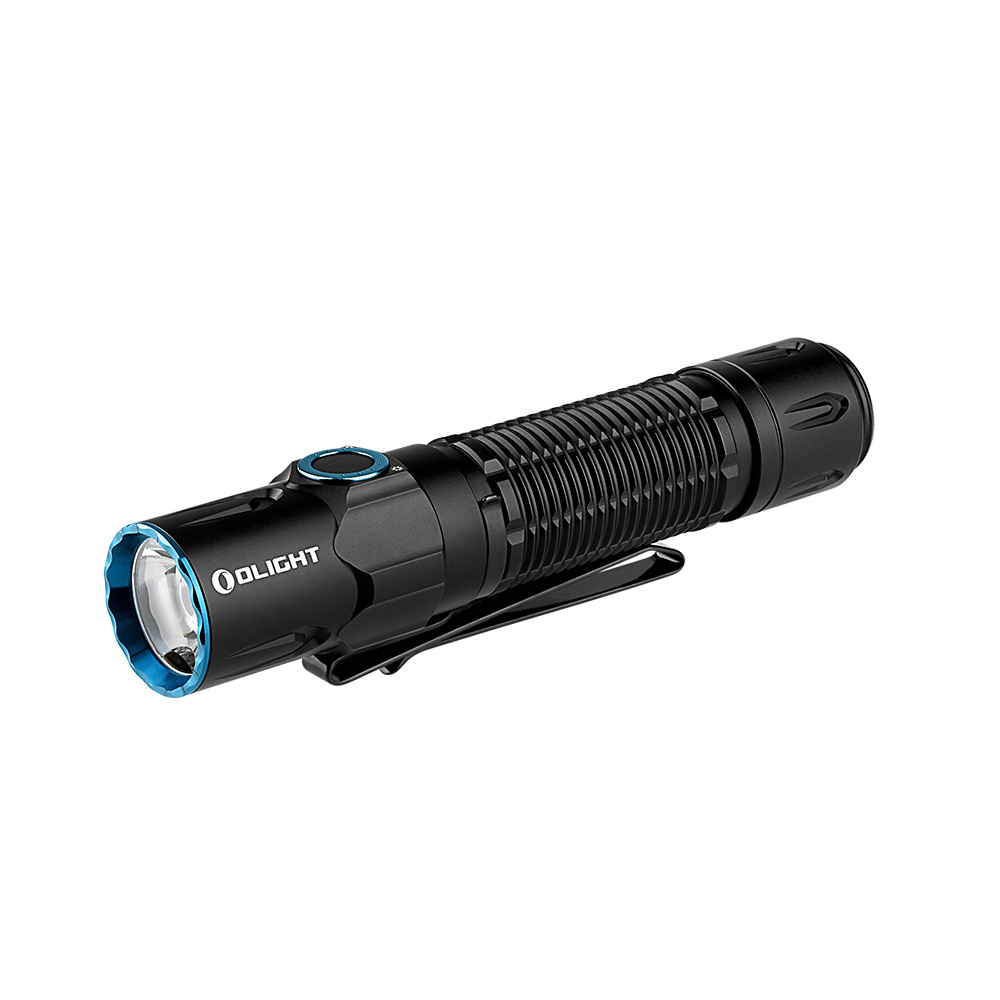
The useful procurement question is how that exact control arrangement will be introduced to the crew. With the flashlight off and the factory-default tail-switch configuration selected, a half press selects Medium and a hard press selects Turbo. The manual distinguishes a quick press and release for on or off from holding the tail switch for momentary light. Keep those conditions with any training note.
A supplier's package description should make it possible to obtain the same manual and approved accessories for every issued unit. If the crew plans to share lights, document the intended configuration and the everyday control used for routine tasks. This is a consistency requirement. It does not establish a measured reliability advantage over another product or a guarantee that every worker will prefer the same switch arrangement.
The model's separate brightness and battery indications also provide a useful handoff question. Can the person managing the kit explain what each indication means and distinguish an operating setting from available charge? The broader duty flashlight feature guide covers carry, controls, runtime, and care. The supplier decision here concerns obtaining the correct information and equipment to support those functions across the crew.
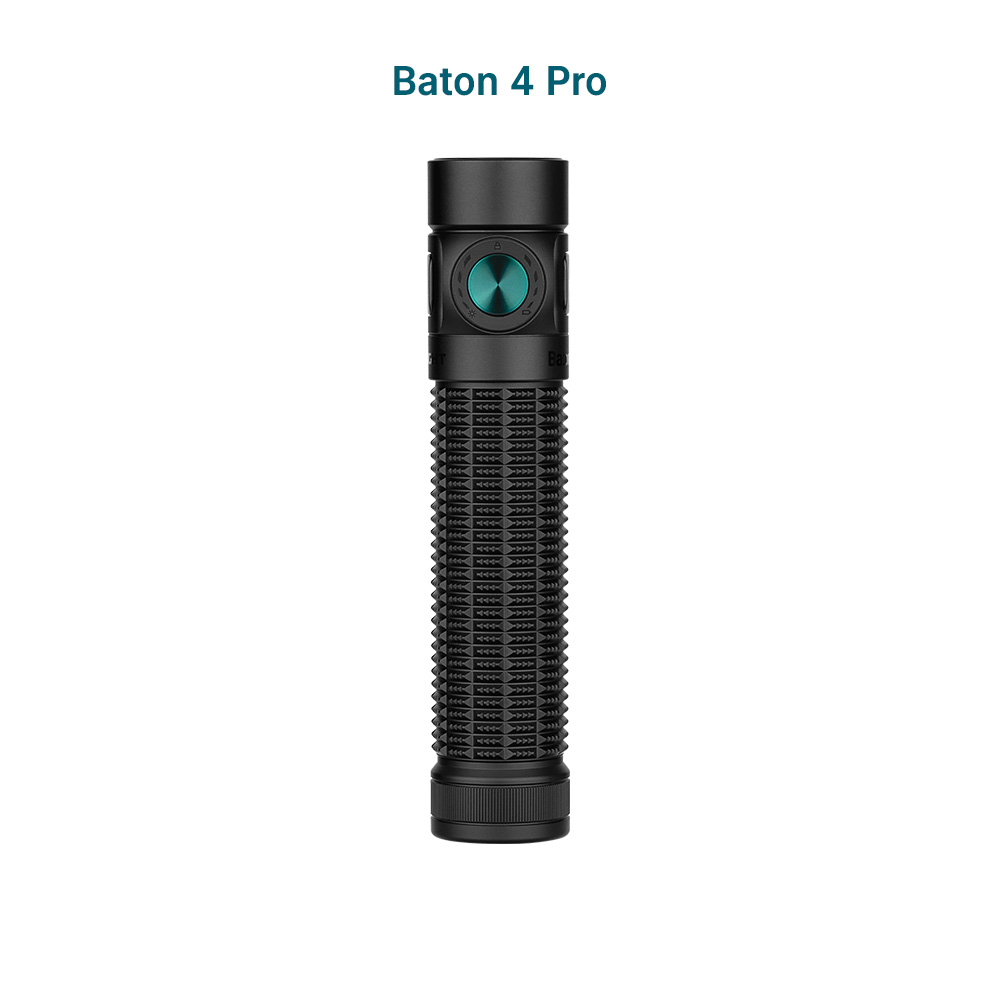
The standard Baton 4 Pro measures 111 millimeters long and 23 millimeters in diameter. Those figures can be compared with the crew's planned pocket or storage space. The task is to determine whether the documented package fits the intended arrangement. A product photograph can illustrate the body, but it should not be used as a scale drawing or evidence of how every worker will carry it.
Its rechargeable power arrangement and charging options create another concrete document request. The model has magnetic charging and a USB-C port concealed beneath a rotating tailcap ring. Ask which appropriate cable is included in the specific offer and which approved power source the crew will provide. The existence of two connections does not mean that any available charger is suitable for either one.
The manual's Turbo entry lists 1,600 lumens followed by 600 lumens, with corresponding stages of two minutes and 198 minutes under the stated conditions. A buyer should keep the sequence intact when comparing working requirements. It would be misleading to assign the complete duration to the initial maximum. Ask whether the later output is suitable for the crew's task, rather than treating maximum output as the purchasing conclusion.
Plan charging around the number of users
A charging plan should describe where lights return after use, what equipment is available there, and who checks that the arrangement remains complete. Buying several compatible lights does not by itself create a charging station. Count the approved connections needed for the intended schedule. A location that works for one person may become inconvenient when several lights arrive together at the end of a working period.
When comparing rechargeable flashlight packages, distinguish an included cable from a supplied power source. Check the exact instructions and package list rather than assuming the same arrangement applies to every model. If the crew intends to use existing equipment, confirm that it meets the relevant requirements before treating it as part of the plan. Familiar connectors alone do not settle the question.
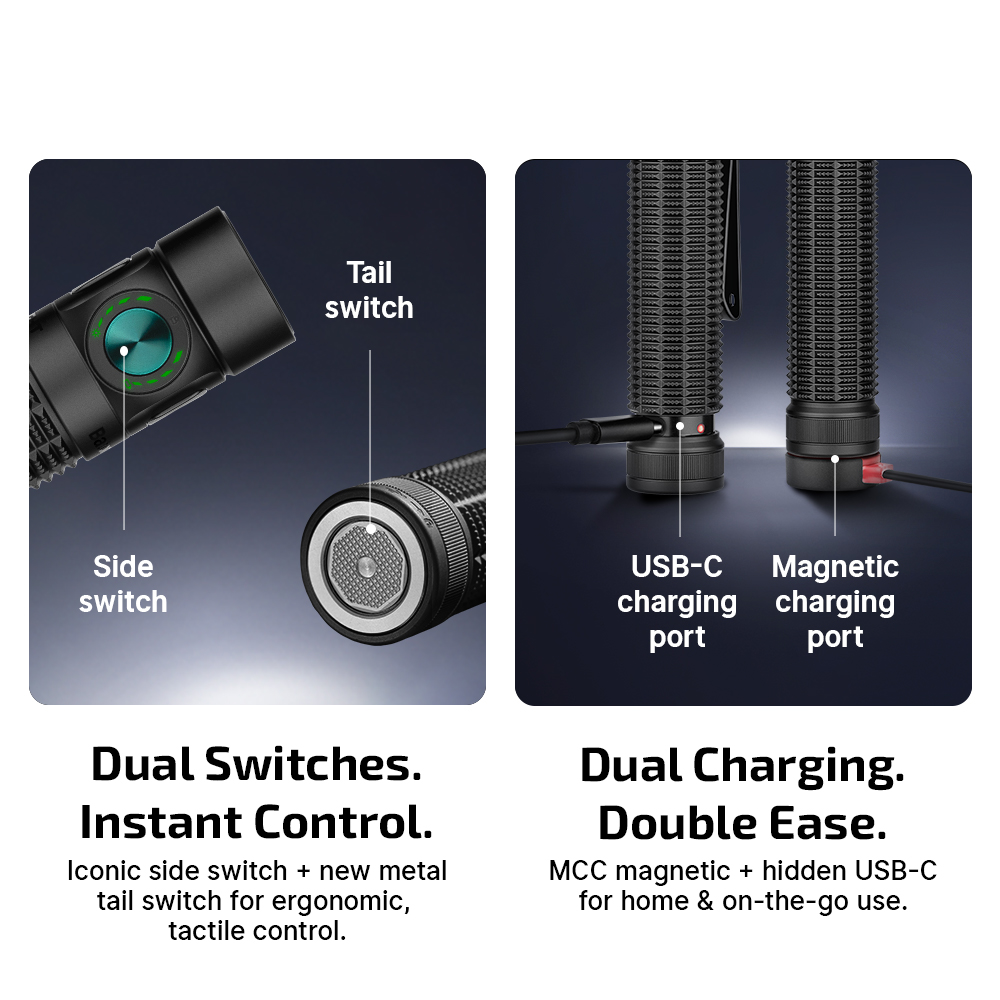
Official Baton 4 Pro detail: a quotation should identify the actual charging connections and the equipment supplied to support them.
Think about equipment movement as well as the charging location. A cable that travels with one worker may no longer be available to the shared spare. A light left in a vehicle may miss the regular return point. Assigning a place and a responsible person can address those ordinary problems without requiring a more complicated product. The supplier needs to understand the arrangement well enough to quote the correct parts.
Decide how the crew will identify a missing or unsuitable component. A small inventory record can connect each light to its approved charging equipment and operating document. This is especially useful when different models are used for different tasks. Keep compatible sets recognizable instead of collecting every cable and battery in one unmarked container and expecting the next user to determine what fits.
Read warranty and service terms by component
Consult the current Olight United States warranty and return policy for the applicable purchase conditions. It distinguishes covered normal-use defects from ordinary battery aging, misuse, loss, and cosmetic wear. Its component table lists MCC charging cables separately and does not provide warranty coverage for several carrying accessories. Confirm how the written terms apply to the exact purchase rather than treating a lifetime label as a promise about every part.
For service planning, identify who will submit a request and what product information that person can obtain. The published request process asks for information such as the model, serial number, issue description, and supporting photos or video. Keep that process separate from any additional seller commitment. A supplier offering its own collection or replacement arrangement should describe that arrangement directly, including its scope and conditions.
Ask about the practical path for a light that needs attention. Who receives the first message? Where should the crew record the affected unit? How will the buyer distinguish a service request from a missing-item report? These questions do not require a promised repair time to be useful. They establish which person can move the issue forward and what information that person will need.
A shared spare can address availability while a service question is being resolved, provided it fits the work and has its own readiness routine. Treat the spare as a planned tool rather than an assumption that the supplier will always have an immediate replacement. If a particular service time is essential to the operation, request a written commitment and assess that commitment on its own terms.
Compare complete cost and substitution risk
Compare the price of the same working arrangement, including the parts needed to receive and issue it. A light-only offer and a kit with additional compatible equipment are different purchases. Ask for enough detail to separate the items without inventing a standardized market price. Current quotations, package contents, and the crew's existing equipment determine the comparison that can actually be made.
Consider the consequence of a configuration change. A different charging connection may require additional equipment. A different battery arrangement may change the approved spare plan. A different control sequence may require new instructions. These are practical questions to investigate, not automatic reasons to reject another model. The point is to recognize the change before its cost and effort appear during receiving or use.
Discounts and promotions also need a clear purchase boundary. Confirm the model, quantities, included items, and offer conditions in the actual quotation or checkout record. Do not assume that an advertised promotion applies to a different configuration, seller, or order size. A complete written offer is easier to compare than a headline percentage whose scope has not been established.
A useful decision record names the requirement that an offer satisfies and the unresolved question that remains. For example, the package may meet the charging plan while leaving the compatible spare item unidentified. Record that gap and request an answer. A weighted score can be helpful within an organization's own process, but it should not hide a missing requirement behind an attractive overall total.
Receive the shipment against the approved packet
At receiving, compare model names, configurations, quantities, and supplied accessories with the approved order information. Keep the packaging and order record available while resolving discrepancies. This is an identity and completeness check. It does not establish laboratory performance or long-term durability, and it should not be expanded into an improvised destructive test of equipment that the crew expects to use.
Separate an order discrepancy from a preference question or a possible functional issue. A missing charging cable calls for a different first explanation than a body that is larger than the buyer expected. A problem report is more useful when it states the exact model, what was expected, and what was observed. Avoid diagnosing an internal fault from a brief description or opening the product to investigate it.
For example, if an offered package was supposed to contain a particular compatible cable, identify the package and missing item before requesting a resolution. If the received model differs from the approved configuration, pause that unit's issue process and ask for clarification. The goal is to prevent an undocumented substitution from becoming the crew's default equipment simply because it has already arrived.
Give each issued light access to the correct instructions. A short handoff can identify the intended everyday setting, the relevant controls, the charging location, and the person responsible for equipment questions. Keep the full manual accessible for details. A summary is most useful when it points back to the correct product rather than attempting to replace its operating information.
Keep the comparison useful after the first order
Record which approved configuration was issued and which document packet supported it. That makes a later replenishment request more precise. If a supplier offers a revised package, compare it with the actual installed arrangement instead of relying on the memory that the crew uses a certain brand. The important question is whether the new offer still fits the established charging, carry, and instruction plan.
When a worker reports a concern, write down the task and the observed behavior before reaching a conclusion about the supplier. An output setting that does not suit a nearby reflective surface is a different issue from a missing accessory or an unanswered service request. Keeping those categories clear helps the buyer identify whether the next action belongs with training, product selection, order correction, or support.
Use the same discipline when expanding the kit. An edc flashlight selected for a supervisor's pocket may serve a different role from a shared inspection light. Identify the role before adding another model. Fewer configurations can simplify documentation, while a genuinely different task may justify another approved arrangement. The decision should explain both the benefit and the added equipment-management work.
A practical supplier comparison ends with a purchase that another person can understand. Name the chosen package, the tasks it supports, the equipment needed to keep it ready, and the service path that has actually been confirmed. Keep unresolved matters visible. That record helps the crew use the tools consistently and gives the next buyer a sound starting point when the order needs to be repeated.
Frequently Asked Questions
Changelog
- November 19, 2026: Product information and buying guidance reviewed.




