


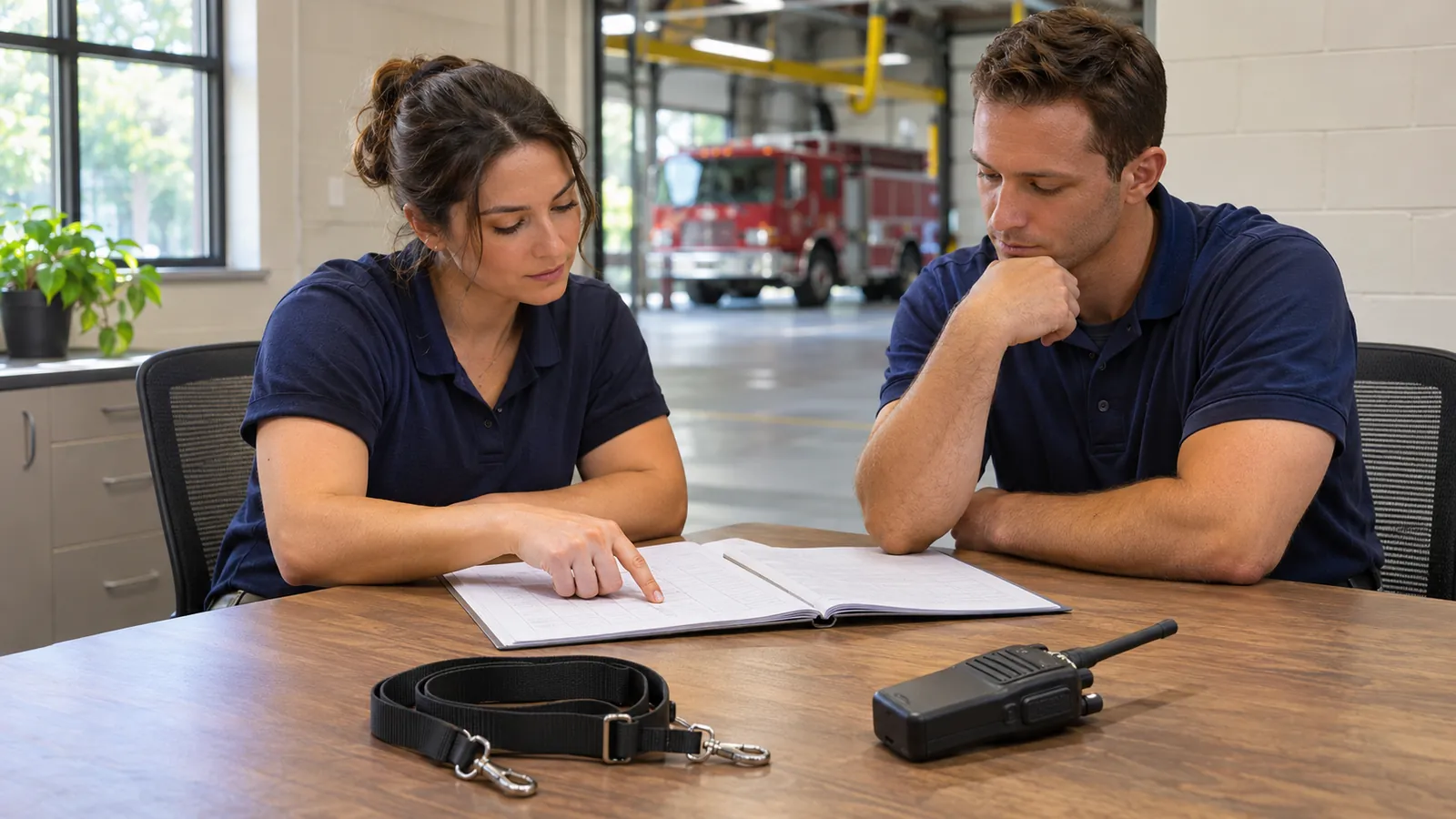
TL;DR: Ask your department whether it approves a light on the radio strap for your assignment and who verifies the exact parts. Keep the issued radio setup in place while you wait. Use the station’s approved light for checks, and reserve ordinary personal flashlights for separate tasks away from response gear.
📋 Table of Contents
- 1. Start with the equipment your department approves
- 2. Can I buy a firefighter radio strap?
- 3. Understand what a right-angle light can and cannot settle
- 4. Is a 200,000 lumen flashlight legal?
- 5. What is the best flashlight for first responders?
- 6. Keep a narrow role for an ordinary personal light
- 7. Report what the next shift needs to know
- 8. Frequently Asked Questions
Start with the equipment your department approves
| What you need to know | Where to check | What to bring to the conversation |
|---|---|---|
| Whether the assignment permits a strap light | The department’s equipment officer or designated supervisor | Your role, location, and the job the light would serve |
| Which radio strap, holder, or accessory can be used | The issued equipment list and department instructions | The exact identification of the issued components |
| Whether any approvals are required for the intended place | The person responsible for equipment approval and site rules | The equipment model and the actual conditions |
| Who can help if an issued part no longer fits or works | The department’s repair or replacement process | The part, what changed, and the equipment needed for the next assignment |
| What light can be used for an ordinary station task | The station’s posted instructions or supervisor | A specific task, such as reading a shelf label at the workbench |
A firefighter clothes locker can hold several things that look interchangeable. Two straps may fit similar radios and still belong to different systems. A light with a right-angle head may look like it can sit close to a strap. Ask whether the department allows that combination and for which assignment. The person responsible for the equipment needs a model or part number, a job to consider, and the actual place it would be used.
Start the question at the station. Ask whether the light is issued, whether personally purchased accessories can be considered, and how the answer is recorded. If your unit uses a model list, check the actual entry rather than a photo from a retailer. A label such as “for firefighters” describes the advertised audience. The department can tell you what it allows and when its rules apply.
The 2025 annual edition of the federal fire brigade standard describes organization, training, and equipment rules for the brigades and departments listed in its scope. It also spells out limits on that scope. Use your own department’s procedures and its applicable requirements for the actual job. 2025 annual CFR fire brigade standard.
Describe what is wrong with the existing setup before suggesting a purchase. “I can’t reach the ordinary task light at the inventory bench” and “the issued component feels loose” are different problems. The first can go to the person who maintains station lighting. The second belongs with the department’s equipment process. Keep the issued setup as directed until the appropriate person handles the issue.
If you are new to a station, learn which equipment comes from an individual locker and which belongs to a shared vehicle or workbench. Find out where an approved replacement lives and who can issue it. A flashlight that is always at the bench may solve an ordinary labeling problem before anyone needs to discuss an added personal item.
Consider a volunteer about to order a strap with a matching light holder. Before placing the order, they can take the exact names of both items to the person who maintains the department’s list. They can show what is already issued and describe the task they want to solve. An answer about one model may leave the other part of the request open. Ask the department to confirm the whole combination.
A complete equipment question fits in a short note. Identify the item already in service. Describe the job you need to get done and the location where it happens. Include a document with the specific model you are considering if your supervisor asks for it. That gives the department enough information to decide whether the question belongs with equipment, station maintenance, or another team.
If your station shares equipment across roles, confirm the setup for the job on the roster. A person helping at a desk may need only the station’s approved light. A person assigned to response follows the department’s issued configuration. It helps to know which tasks you are asking about. In a discussion about equipment, the same word can mean completely different things to two people.
Can I buy a firefighter radio strap?
Ask whether your department issues a strap or allows a personal purchase. If a purchase is allowed, request the approved model and any conditions for using it with your issued equipment. Include the strap and any light or holder in the same question. Wait for the department’s answer before using the combination.
A store photo may show a strap, holder, and radio together, even when the listing sells only the strap. The photo may show a different version of the radio from the one you carry. Send the exact product identifier to the equipment officer and ask which parts are actually approved. Be ready to keep the existing setup if your department has already selected an arrangement for the assignment.
If you are buying for someone else, ask what they have permission to use. A gift card or an item that the person can use independently off duty may be more useful when you do not know their policy. A person responsible for line equipment can tell you whether the proposed gear belongs on the issue list. Save a purchase decision until you have that answer.
File the answer where your department tells you to keep it. An approval for one person or one use may not travel with a part to a different station or assignment. If the approved hardware is replaced, verify the new identification and ask what that change means for the rest of the issue. A matching look is easy to recognize. The exact part tells people what they are actually discussing.
A damaged strap or holder goes through the department’s ordinary reporting process. If a buckle or connection is loose, give the supervisor the facts and let the people assigned to equipment decide what to do. Use their instructions for a replacement or alternate assignment. An accessory purchase cannot settle whether the issued item is working as intended.
Use the department’s purchasing process if the answer includes more than one acceptable item. Check which version it means and whether the accessory is included or purchased separately. Keep the applicable instructions where the department wants them. That saves a second round of questions if the invoice and the name on the shelf describe the same item differently.
A written decision can make life easier when personnel rotate. Find out whether your department records a configuration for an individual, a radio, a station, or an assignment. If someone needs to return an item, the record can tell them who owns the next decision. Saving your own receipt or the original product description can help with identification. The department’s approval follows its own rules.
Understand what a right-angle light can and cannot settle
A right-angle flashlight sends light out to the side of its main body. Some consumer models also come with a headband or a pocket clip for ordinary use. Physical shape explains where a beam can point when a person holds it. Whether the equipment belongs on a department radio strap is a separate decision involving the exact equipment and the assignment.
If a product page calls a clip secure, that word does not describe how the complete issued equipment will behave. A clip may be intended for an ordinary pocket. A radio strap or protective garment is a different part of a working system. Ask about the configuration that the department has already approved. If you need a different setup, provide the exact facts to the person who can assess it.
Think about what still needs to be accessible. In a supervised equipment review, the department can consider whether another item takes up space its users need for radio controls, cables, or protective equipment. The U.S. Fire Administration’s guide describes portable radio communications as an important part of firefighting and emergency response. Let your department set the rules for the equipment people rely on to communicate. U.S. Fire Administration fire service radio guide.
If you hear that a coworker uses a different arrangement, find out whether it belongs to the same assignment. Their department or station may supply different equipment. An item on a desk or in a training photo may have had an ordinary job. Ask for the official reference for your own arrangement. It is easier to confirm a detail before a purchase than after a new item has already been put into service.
Switch access can matter during approved equipment review. Ask the person who trains you to explain which controls you are expected to reach, what inspection applies, and what to do if the fit changes. Keep the approved equipment in its assigned configuration. Judge a consumer light’s own switch in ordinary surroundings if you want one for personal use.
Check the place where a separate ordinary task will happen. Someone sorting inventory under a station desk light may be able to read the needed shelves without another wearable item. A person working in an authorized area can ask about an approved portable work light if the existing fixture is unsuitable. Different questions deserve different answers, and sometimes the right person to help is the one who maintains the room.
If someone suggests borrowing or swapping an issued part, get the approval before treating that as the solution. A replacement can look nearly identical in the locker. The department may account for it through a different inventory record or require its own inspection. Report any immediate issue using the current instructions so the supervisor can decide what is available for that shift.
Is a 200,000 lumen flashlight legal?
A claimed lumen rating alone cannot answer whether carrying or using a flashlight is legal. The answer depends on where it is used and which rules apply. For firefighter duty, verify the department’s equipment requirements and the conditions of the assignment. Ask the appropriate authority about any specific situation you need to resolve.
Lumens describe an amount of light. The figure on a listing says nothing by itself about local restrictions, whether a department approved a model, or the suitability of a device for a classified area. Write down the exact product, the intended place, and the work. Take that question to the organization responsible for it before deciding what to carry.
A large number can also distract from a simple task at a desk. If you need to read a part number, the useful view comes from a light that shows the relevant surface without a reflection covering it. Use the approved task lighting and reposition the ordinary item if necessary. Fix a station lighting issue through the station’s process so the next person has appropriate light too.
When looking at an advertisement, read the manufacturer’s actual manual. Pay attention to its instructions for use, handling, and charging. A photo facing the camera may put much of the light into a direction you would never use for a close task. A personal tool can be useful away from duty. Choose it for the ordinary work you actually need to do.
Check the exact label if the department asks you to identify a candidate. One package may show several outputs for a related model. A screenshot can also leave out the instructions that say how the numbers were obtained. The department can tell you what evidence it needs. At home, focus on whether the light gives a clear view of the small things you use it for.
When a seller uses more than one output figure, check the wording that goes with each number. A peak figure does not tell you how long a useful level lasts. A technical label also has a different purpose from the light’s brightness. For public-safety work, give the department the exact documents it requests. That is more useful for an equipment decision than a comparison of two headlines.
Think about the directions a beam can go even for an everyday task. On a station desk, a reflective label may be easier to see after somebody sets the item down in a better position under the authorized work light. That small change can solve the immediate problem. If several people face the same glare under the fixed lights, report the area for an approved correction.
What is the best flashlight for first responders?
For duty, use the flashlight your organization approves for the assignment and conditions. Ask which specific model, accessory, and configuration it authorizes. Check what to do when an issued light fails. Choose an ordinary off-duty light separately for personal tasks, based on a control you can use and the area you need to see.
| Decision | Useful starting point | If you are uncertain |
|---|---|---|
| Approved response light | Department-issued or explicitly approved equipment | Ask the designated supervisor which equipment applies |
| Classified location or other special condition | Site rules and exact approval for the conditions | Have the responsible person verify the equipment |
| Ordinary station record or shelf check | Existing station fixture or authorized task light | Report inadequate lighting and ask for the approved alternative |
| Personal task away from duty | A light sized for the item and place | Try the control in a well-lit place and follow the manual |
The 2025 annual federal general PPE text addresses employer hazard assessment, equipment selection, and fit where the rule applies. It is a useful example of why suitability belongs to the job and its hazards. The department needs to decide how its approved equipment works together. Ask what it issues and what it expects you to report. 2025 annual CFR general PPE standard.
Equipment approval can be more specific than one word on a package. The 2025 annual federal classified-location text addresses equipment for particular hazardous locations. Let the site and department determine which requirements apply and verify the exact rating of the equipment they authorize. Ordinary flashlights and a published brightness figure cannot establish approval. 2025 annual CFR hazardous-location standard.
Ask what equipment is shared and how it is checked in and out. If an authorized alternate is available, learn where it is and who can issue it. A good handoff tells the next person whether the equipment returned, which item was sent for service, and what the department told staff to use. Follow the station’s process for passing on that information.
A colleague may need an approved light for a different part of the building. If there is a lamp that belongs at the inventory station, ask before moving it. The person who comes after you may use its beam to read a shelf that the room’s overhead light does not reach. When a problem recurs, report the location so the people responsible can consider a permanent correction.
If the department uses an equipment approval checklist, check which parts of it apply to the actual question. A review for a missing station lamp can be shorter than a review for something issued to a crew. Give the reviewer the physical place, shift, and task. A useful decision names who owns the next step and what can be used in the meantime.
Review the applicable documents from time to time. A purchasing reference might still show a previous model, while the shop keeps a newer one in stock. If a part in the locker has changed, ask the person who keeps the register to reconcile the reference. You can describe the change without changing the equipment yourself. The updated information then helps the next crew.
Pay attention to shared charging arrangements during a handoff. If a department light is missing the charger assigned to it, report the exact unit and check the replacement process. A connector that happens to fit gives you little information about which power supply the department allows. Keep personal chargers with personal equipment and leave the station’s supplies in their assigned places.
Keep a narrow role for an ordinary personal light
Think about the place where you will actually use your own light. You might stop at a stable table to look for a zipper pull or a label on a personal bag. A compact flashlight lets you direct light toward the item from one hand. A headlamp leaves both hands available when the personal job needs them, such as sorting your gear at home.
A clip light can sit on a personal bag if it fits the surface securely and the maker allows it. Check where its beam goes as you move the bag to a stable place. Stop if the position allows light to point at another person. Choose a different position or use fixed room lighting when the clip does not give you enough control.
A headlamp makes sense when you already know where you will be working. Use its own supplied band and follow the model’s directions. Adjust it in a well-lit space before the personal task, and direct it at the item rather than at people. Use a separate lamp for shared areas when other people need visibility across a table.

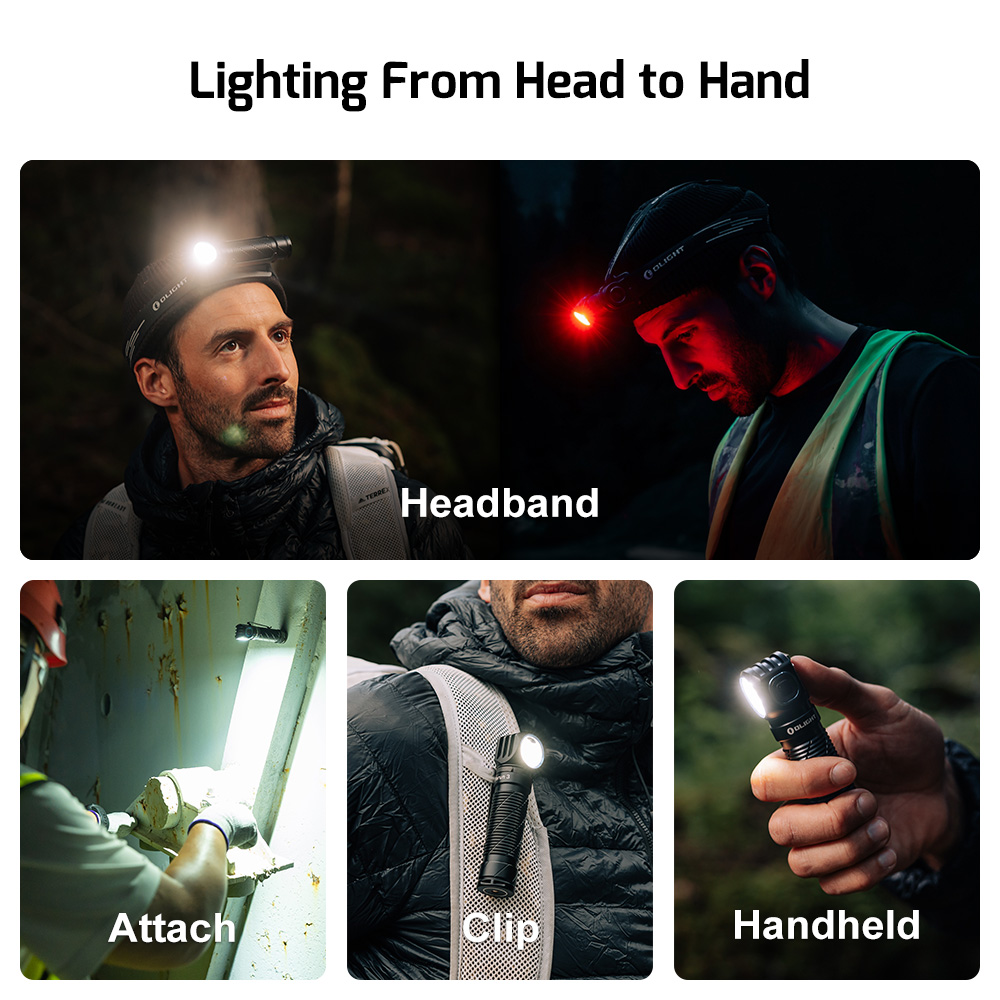
The headband and handheld views show two positions for ordinary personal tasks.
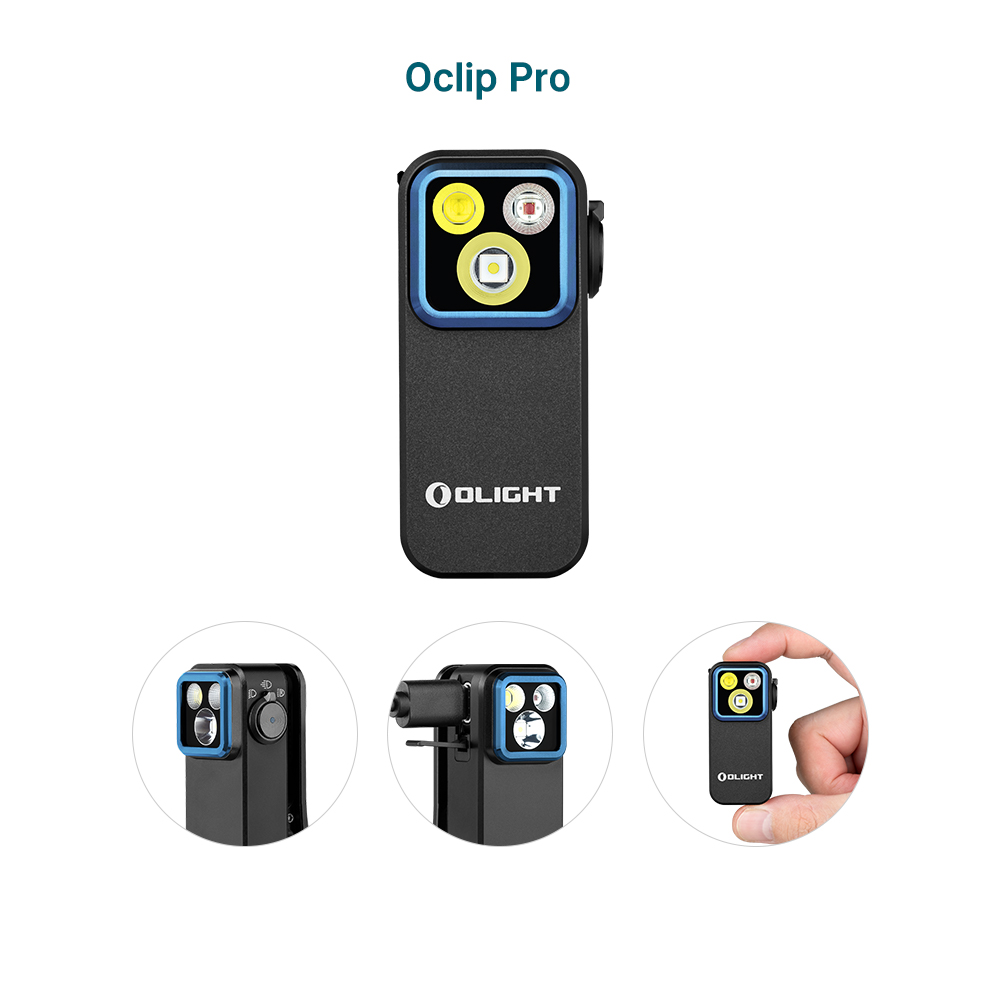
Storage is part of choosing the light. Keep your own small light with the items you use for the personal task. Use the maker’s carrying requirements so that it stays ready without coming on while stored. Charge it where you are allowed to charge personal equipment and set it down only where it can be used as directed.
Keep personal examples out of the equipment decision. You may like how a switch feels on your own light at home. That gives you a useful observation about that item in your hand, under those conditions. The department determines what belongs on its gear and which checks its people should perform. Give the department a clear description of the work issue if you need help with it.
Indoor and outdoor off-duty tasks have different light needs. Finding a zipper near a window may take only a brief look. Packing tools back into a personal bag after dark may be easier under a steady room lamp. Pick the small light for the short job you can describe. Put it away after you finish so its clip or switch does not get caught while stored.
Report what the next shift needs to know
A useful report starts with the exact equipment or location. If you notice an issue with an issued strap or light, name the component and explain what you saw without guessing at the cause. Say whether someone has already sent it for inspection. Find out what equipment is approved for your next assignment and pass that information along through the department’s normal process.
Imagine the station task light is out at the end of the day. Report which bench it serves and what detail is hard to see. Ask whether another approved work area is available until it is fixed. This helps the incoming shift more than an informal cluster of personal flashlights left around the station.
If your request is still being considered, record who owns the decision and what information they need. Check the equipment list with them before you buy or add anything. A note that identifies the exact parts and the intended task is more useful than a general request for a brighter light. Keep the issued configuration as directed while the review is open.
Treat an authorization as something specific you can check again. If a different radio, strap, light, or assignment appears, take the change to the person who handles equipment before assuming the earlier answer still applies. At home, learn the controls of a personal tool when you have time. At the station, leave duty equipment decisions to the people who are responsible for them.
If the same information keeps coming up, ask whether it belongs at the station’s issue point or on its approved written checklist. A single clear list can help someone find the right person before making a purchase. Put corrections through the department’s process, especially if a model number or approved use changes. Leave any old label in place until the person who maintains the inventory can update it.
If a workbench lamp still operates but its location makes it hard to read the shelf next to it, say that when you report the problem. A lamp in the wrong place calls for a different decision from a failed lamp. You can show the equipment lead the exact label and where people stand to read it, without moving any issued gear or making your own permanent change.
Frequently Asked Questions
Changelog
- November 19, 2026. Checked the federal annual provisions on fire brigades, PPE, and classified locations, the U.S. Fire Administration radio guide, and the exact U.S. manuals and original product images.




