


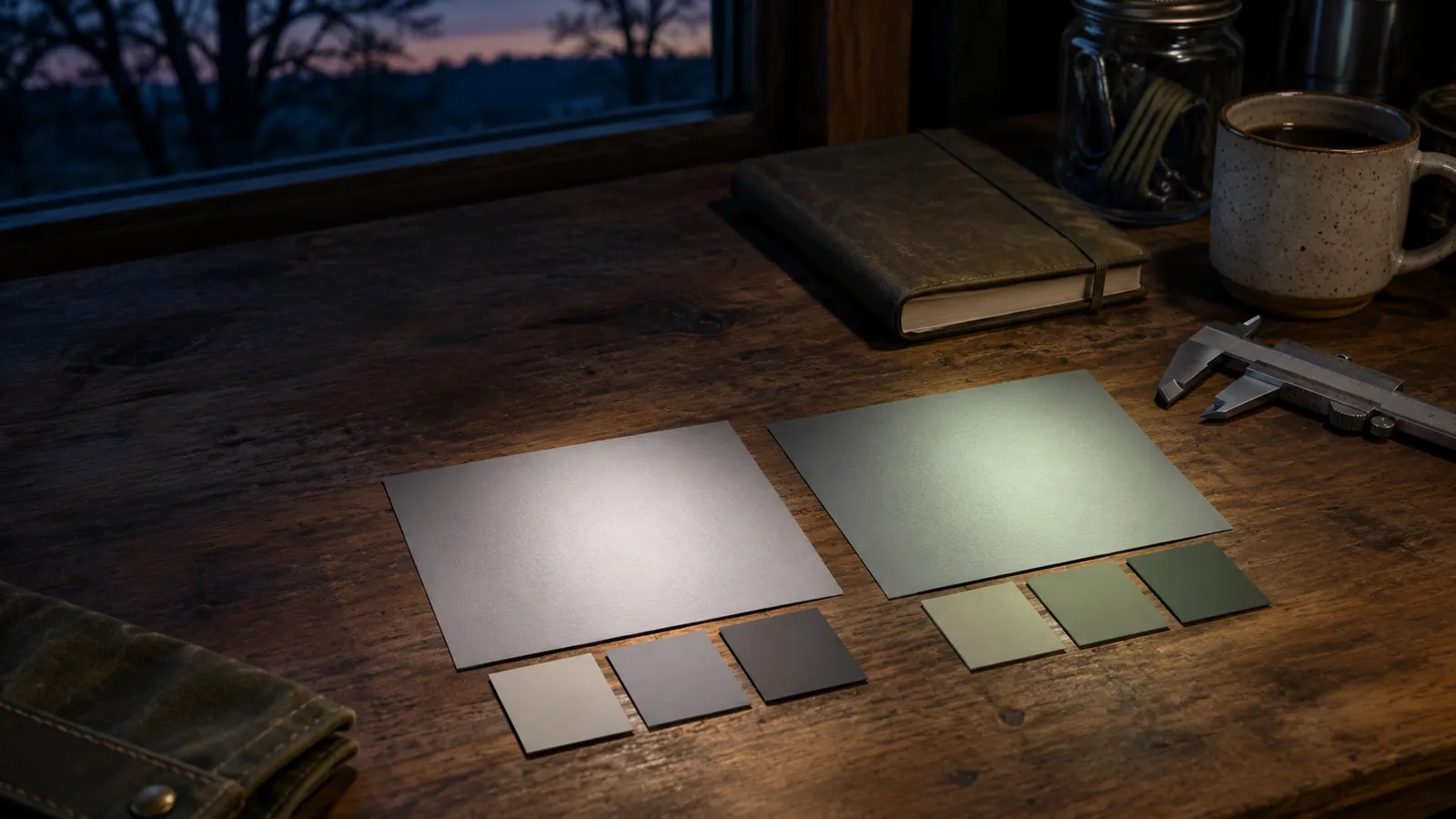
TL;DR: Two LEDs in the same product family can show small color differences because manufacturing tolerances and LED binning affect chromaticity. Compare the exact white-light mode with CRI, CCT, and Duv together. A phone photo is a poor referee because eyes and cameras adapt to their surroundings.
📋 Table of Contents
- 1. Compare the color metrics before comparing two flashlights
- 2. CRI describes color fidelity, not the color of the beam
- 3. CCT and Duv explain why two white beams can look different
- 4. LED binning can explain small differences between units
- 5. Use the same conditions for a side-by-side visual comparison
- 6. Phone photos are useful notes, not color meters
- 7. Published Olight specifications answer different color questions
- 8. Choose color information to match the job
- 9. A practical checklist for comparing published specs
- 10. What changes during use and storage
- 11. What two different-looking units can and cannot tell you
- 12. What type of flashlight has a high CRI?
- 13. Which is better, high CRI or high output?
- 14. What is the most powerful EDC flashlight?
- 15. Frequently Asked Questions
Compare the color metrics before comparing two flashlights
A high CRI EDC flashlight is judged by how it renders objects, not by how many lumens it produces. Two units may look a little different even when they share a model name. The clearest comparison starts with the exact LED channel and mode, then reads CRI, CCT, and Duv as separate pieces of information.
| Question | Metric | What it tells you |
|---|---|---|
| Color fidelity? | CRI (Ra), plus R9 when red matters | How reference colors render |
| Warm or cool? | CCT (K) | Apparent white-point family |
| Green or pink tint? | Duv, sign and value | Offset from the Planckian locus |
| Comparable samples? | Model, white channel, mode, conditions | Whether figures use comparable setups |
The word “high” needs context. A color-sensitive inspection task can call for more color-fidelity information than finding a keyhole or walking from a car to a door. Start with the colors that matter in the task. A red wire label, a ripe fruit, a trail marker, and a neutral wall do not ask the same question of a light source.
For everyday carry, the EDC flashlight category is a starting point for finding a form factor. The ArkPro series page gives the family overview, while each exact U.S. product page is the source for the specifications below. A category page does not establish a model’s CRI. The model page or its exact manual needs to identify the white channel and the published metric. If a listing gives only lumens, that figure describes light output, not color fidelity.
CRI describes color fidelity, not the color of the beam
Color Rendering Index, usually written CRI or Ra, compares the appearance of reference samples under a test source with their appearance under a reference illuminant. It does not tell you whether the white beam looks warm or cool. That is the job of CCT. A 4,000 K source and a 6,000 K source can each have a CRI value, because white-point appearance and color rendition are related but separate properties.
The usual Ra calculation averages the scores for eight standard test colors. That summary is useful, but it can hide how one specific color behaves. The National Institute of Standards and Technology’s overview of color rendering explains the reference-sample method and the limits of using a single average. The U.S. Department of Energy explains that the special indices R9 through R14 are supplemental values and do not enter the usual Ra calculation. R9 covers a saturated red sample, so it can be worth checking when red objects are central to the task. DOE’s LED color characteristics fact sheet also explains why two sources with the same CRI can still render colors differently.
A CRI number is not a complete score for “good-looking light.” A high average can coexist with a weaker result for one saturated color. The number also says nothing about beam shape, distance, glare, battery life, or whether the light is comfortable to use. It answers one part of the question. The rest depends on the job and the exact mode.
This is why product descriptions should be read literally. “High output” and “high CRI” describe different attributes. A bright beam can make an area easier to see while still shifting some colors. A lower-output beam can render colors well and still fail to illuminate a large space. The best choice balances the required view, the amount of light, and the time the light must remain useful.
CCT and Duv explain why two white beams can look different
Correlated Color Temperature, or CCT, describes a white light’s apparent warmth or coolness using kelvin. A lower CCT often looks warmer, while a higher CCT often looks cooler. CCT is not a complete coordinate for white light. The National Institute of Standards and Technology explains that chromaticity is two-dimensional and that Duv describes the distance from the Planckian locus. NIST’s practical guide to CCT and Duv recommends considering both when describing white-light chromaticity.
At the same nominal CCT, one beam can lean slightly green and another slightly pink. DOE’s color fact sheet describes that difference and explains that Duv’s sign indicates which side of the locus the chromaticity falls on. Positive Duv is above the locus and may appear greenish. Negative Duv is below it and may appear pinkish. The size of the value matters too. A sign without magnitude is only half the description.
A stated CCT such as “5,000 K” may also represent a permitted range, not a single identical point for every unit. DOE describes chromaticity bins and explains that manufacturers sort LEDs by properties such as chromaticity and light output to manage production variation. Binning helps create consistency. It does not mean every LED has exactly the same spectrum or appears identical under every viewing condition.
That distinction matters when a beam seems greenish or pinkish despite having a familiar CCT label. Duv is not a warmer-versus-cooler control. It describes the offset from the reference locus. A buyer who cares about both appearance and color accuracy should look for CCT and Duv alongside CRI, then check whether those figures belong to the same exact white-light mode.
LED binning can explain small differences between units
An LED is made through a production process with tolerances. The DOE fact sheet says phosphor-converted LEDs are often sorted after production, or binned, by characteristics such as chromaticity, lumen output, and sometimes forward voltage. The selected bins help manufacturers and lighting specifiers receive more consistent products. That manufacturing explanation is a general lighting principle. It is not evidence that a particular Olight batch has a defect or that every two units will look different.
The distinction matters when a flashlight forum compares photos from different owners. One image may show a slightly warmer beam, another a greener one, and a third may look neutral. That pattern can come from the actual light sources, the selected mode, or the recording conditions. Without matched measurements and documented conditions, the pictures cannot isolate which factor caused the difference.
LED type and configuration matter too. A product with more than one white-light mode may use different emitters, channels, or settings. A product with white light, UV, and a laser has multiple sources that should not be treated as one CRI result. CRI applies to the relevant visible-light source and test mode. UV output and a laser mode are different kinds of output and should be discussed under their own specifications.
Color consistency and color fidelity are also different goals. Consistency asks whether several units or fixtures look alike. Fidelity asks whether objects retain their colors compared with a reference. A group of lights can be consistent while rendering colors less faithfully. A single light can render colors well while differing slightly from another unit’s white point. A useful specification discussion names which goal is being evaluated.
Use the same conditions for a side-by-side visual comparison
A casual comparison can help you decide whether a color difference matters in daily use. It cannot produce a lab-grade CRI, CCT, or Duv value. Keep the comparison simple and repeatable so one light does not get an unfair advantage from a brighter setting or a different surface.
- Confirm the exact model and select the same named white-light mode on both lights.
- Place the lights at the same distance from the same neutral-colored surface. Keep other light sources out of the immediate scene when practical.
- Let your eyes adjust to the viewing area before comparing. Avoid switching rapidly between bright and dim beams.
- Compare both the white point and familiar colors. Include a neutral gray or white surface and a red object if red rendering matters.
- Record the mode, output setting, distance, surface, and ambient conditions. Repeat the comparison after the lights have been off and back on.
In a shop-floor example, imagine comparing two white beams while reading a red warning label beside a neutral gray panel. Use the same exact white-light mode and, where available, the same output level. Keep the label, beam angle, and working distance steady. Note whether the red remains distinct from nearby orange or brown objects, then record that as a visual observation, not a CRI or R9 score. Put published figures in a separate column and identify the exact model and mode they describe. If the beams cannot be matched in brightness, say so in the note rather than deciding that the brighter one renders color better. For a safety-critical label, rely on its printed wording and the approved work procedure.
This routine can answer a practical question: “Does this difference matter for the task?” It cannot replace calibrated measurements. A spectrometer and a documented method are needed to report numeric color metrics. A phone camera can help you remember the scene, but the file is not a measurement of the light.
If the difference is important, request the relevant product data for the exact model and white-light mode. Ask whether CRI means Ra, whether R9 is available, which CCT and Duv values were measured, and what tolerance applies across production. Ask whether the published figures describe one mode or several. Those are specific questions. “Is it high CRI?” may not give enough detail to compare two products.
Phone photos are useful notes, not color meters
Human vision adapts to the surrounding light. DOE describes chromatic adaptation as the eye-brain system’s ability to establish a consistent white point and discount the illuminant when judging objects. The same fact sheet compares this adaptation with camera white balance. A phone can automatically change white balance, exposure, contrast, and tone mapping between frames. That processing can make two beams appear more alike or more different than they looked in person.
A photo also records the surface and surroundings, not only the flashlight. A colored wall can reflect its own tint back into the scene. A white page, a gray card, a painted surface, and a skin tone each reflect light differently. When owners compare images shot in separate rooms, at different times, and on different screens, several variables change together.
For a more useful record, keep the camera position fixed, use the same surface, and lock exposure and white balance when the device allows it. Include a neutral reference card in the frame and note the exact mode. The photo can help document a visual comparison under those conditions. It still does not disclose CRI, R9, CCT, Duv, or a spectral power distribution.
For more rigorous comparisons, look for measured reports that state the instrument, mode, stabilization or warm-up procedure, ambient conditions, sample count, and method. A single number without a method is hard to interpret. A close-up photograph without a reference object is harder still. A credible comparison says what it measured and limits its conclusion to those conditions.
Published Olight specifications answer different color questions
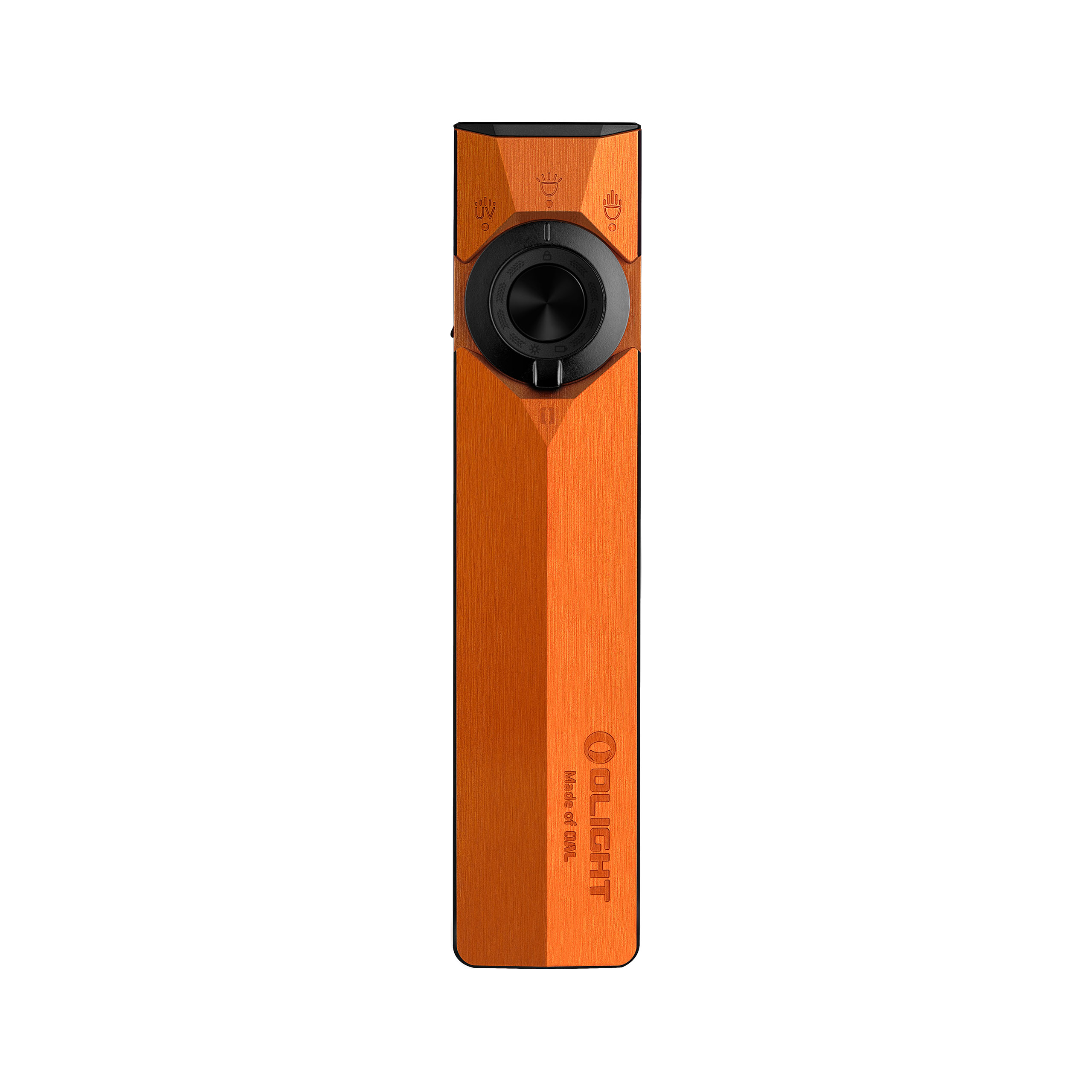
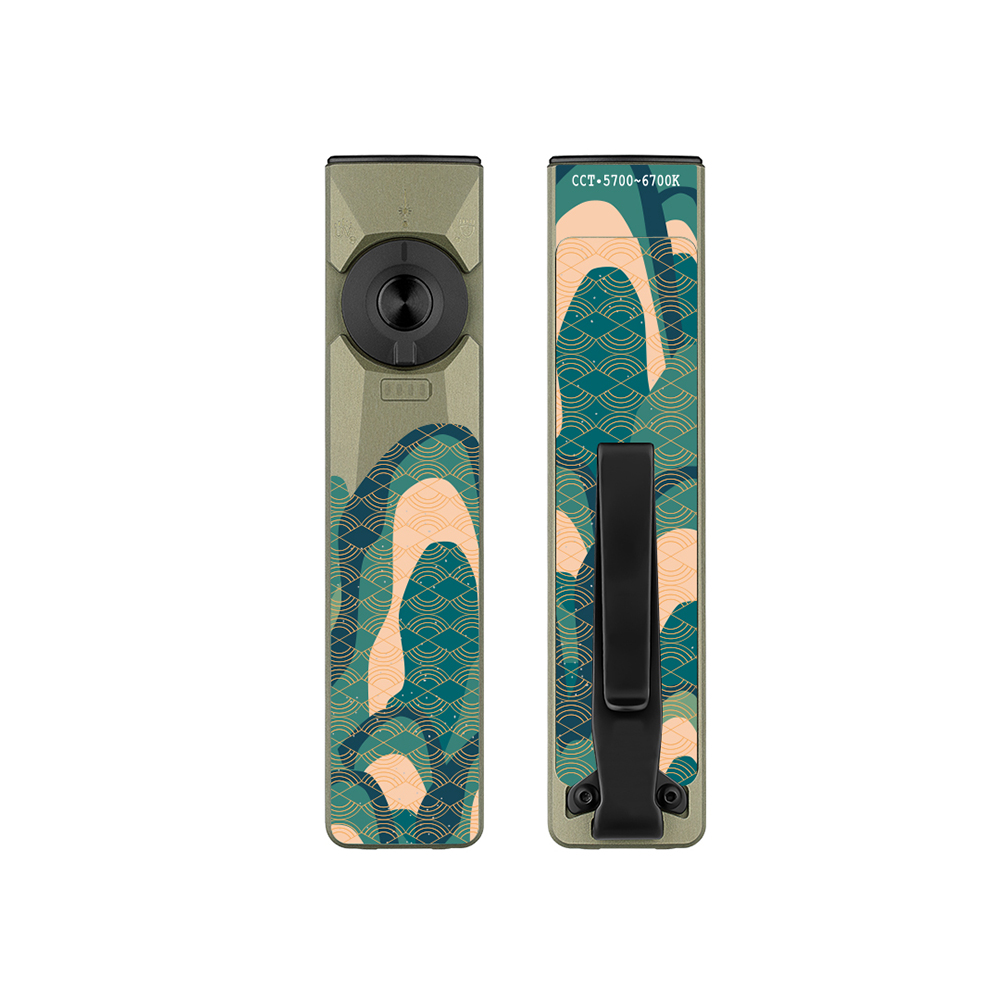
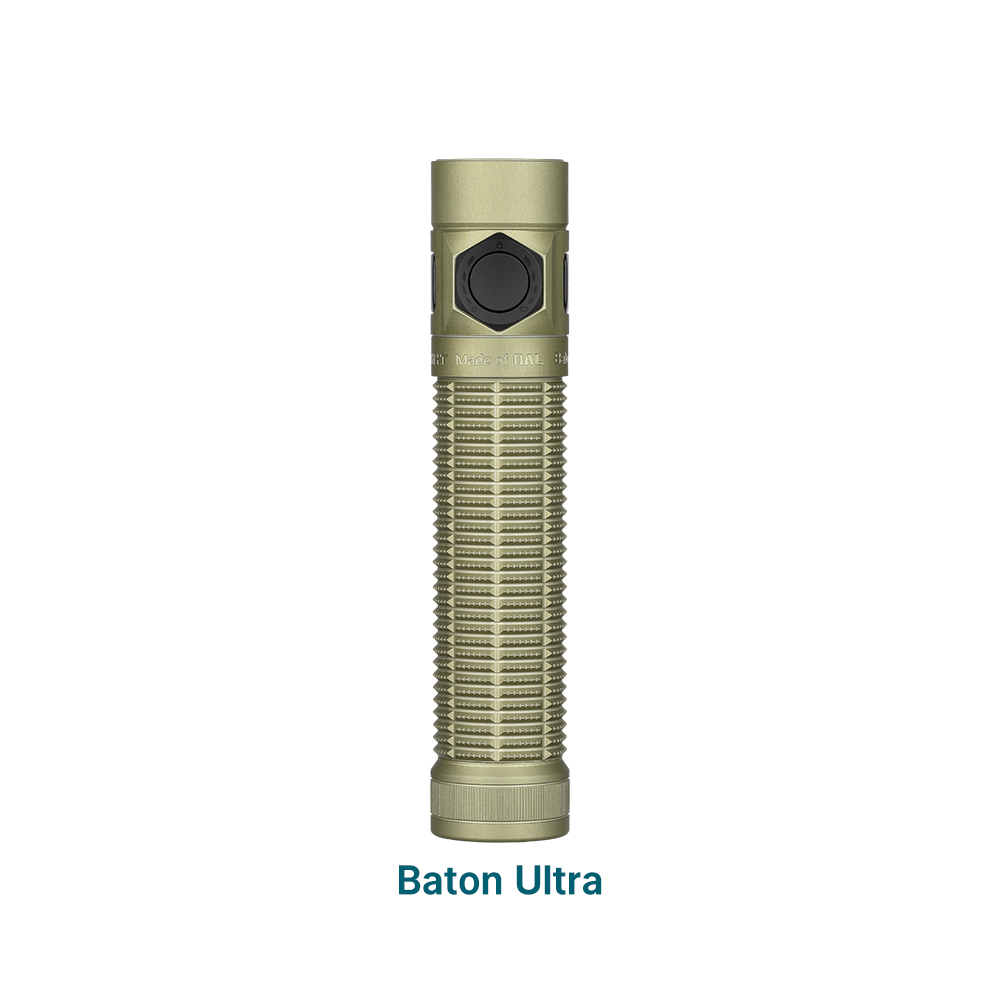
The current U.S. documentation for three Olight EDC models illustrates why one metric should not be substituted for another. Arkfeld Ultra’s manual lists CRI and CCT values for its white-light variants. Baton Ultra’s product page publishes a Duv claim for its EIP 1 LED. ArkPro Ultra’s U.S. page describes its multi-source design and white-light outputs. Those are distinct kinds of information, so the comparison below keeps each one in its own column.
| Model | Published white-light information | How to read it |
|---|---|---|
| Arkfeld Ultra | Manual lists CRI 70 for cool white at 5,700–6,700 K and neutral white at 4,000–5,000 K | The CRI and CCT figures apply to the documented white-light choices |
| Baton Ultra | U.S. product page states Duv below 0.006 for the EIP 1 LED | Duv describes white-point offset. It is not a CRI score |
| ArkPro Ultra | U.S. product page describes an EIP 1 LED and lists flood and spot outputs among four light sources | Output and product features do not, by themselves, state CRI or Duv |
The Arkfeld Ultra manual also lists UV and laser specifications. Those are separate channels, not extra white-light CRI modes. The manual’s CRI figure should not be assigned to UV or laser output. When comparing Arkfeld Ultra with a different Olight model, compare like with like: the same type of white mode and the metric each page actually publishes.
Baton Ultra’s Duv figure is a color-point claim, not a substitute for Ra or R9. A Duv magnitude close to zero describes a white point close to the Planckian locus. It does not establish how accurately the light renders all colors. ArkPro Ultra’s multi-source layout offers different tasks, but a mode count or lumen figure is not a color-rendering measurement. A product’s exact page and manual are the right place to verify its stated details.
Choose color information to match the job
Color metrics are most useful when they answer a real purchasing question. Someone sorting colored connectors needs different evidence from someone looking for a pocket light to walk the dog. Before comparing products, name the objects that must look right and the conditions in which they will be seen.
A collector who distinguishes paint shades may care about saturated colors and would benefit from R9 or a more complete color-rendering report. A homeowner checking a fuse label needs enough light on the label and a beam that can be directed safely. Someone reading a map may care about a comfortable white point and a controlled output level. “High CRI” alone does not specify all of those needs.
Output matters as well. The maximum lumen figure describes the brightest listed mode, not the amount of light a user should choose for every task. At close range, lower settings can make labels and nearby surfaces easier to inspect without overwhelming the view. At a distance, a more focused beam can matter more than a high CRI number. Select the mode that supports the task and keep the beam controlled around other people.
A useful flashlight comparison keeps the details together: the product model, white channel, mode, CRI, CCT, Duv, R9 if available, and the source of each number. If one of those details is missing, leave it blank instead of calculating a value from another model. A number from a different variant, generation, or LED channel may not apply.
Someone comparing a rechargeable flashlight lineup can use the same checklist after narrowing the choices by size, controls, and charging. The color specification still needs to match the exact product and white-light mode. A charging style or a familiar product family does not determine CRI.
| Common shortcut | What the figure actually describes | Better question |
|---|---|---|
| “More lumens means better color” | Lumen output | Is the exact white mode’s CRI or color data published? |
| “Same CCT means identical tint” | Nominal white-point appearance | Is Duv reported, and what is its sign and value? |
| “Low Duv means high CRI” | Distance from the Planckian locus | What CRI, R9, or broader color-rendering data is available? |
| “The photo proves the tint” | One processed image under one scene’s conditions | Were mode, reference surface, camera settings, and viewing conditions controlled? |
A practical checklist for comparing published specs
Use this checklist before treating two online specifications as evidence that one model has more faithful color than another.
| Check | Good comparison practice | Why it matters |
|---|---|---|
| Exact model | Match product name, generation, and variant | Similar names can refer to different emitters or configurations |
| Exact channel | Compare white with white, not UV or laser | Color-rendering metrics apply to visible test light |
| Exact mode | Note the named mode and output | Different modes can use different settings or channels |
| Metric | Separate CRI, R9, CCT, Duv, and lumens | Each describes a different property |
| Evidence | Record page, manual, report, or test method | Readers can verify what a number actually covers |
When data is missing, the clearest answer is a specific question for the seller or manufacturer. Ask whether the figure is a minimum, typical value, or one sample. Ask which mode and color temperature it describes. Ask if R9 is available when saturated red is important. Ask how much variation the published data permits across production. A short, precise request gets a more useful reply than a broad question about whether a light is “true color.”
Avoid turning a forum post into a product specification. A photo can show what one person saw under one set of conditions. It cannot establish the output of another unit. A reading can help if the meter, distance, mode, surface, and method are clear. A number without those details may still be interesting, but it cannot support a precise product comparison.
If a unit’s color looks unusual, first confirm the selected white channel and the exact mode. Compare it with the same model under the same conditions, then check the product’s own published data. If an important task still depends on a color distinction, use a qualified measurement method or contact Olight support with the model, mode, and conditions. Keep the question focused on the observation rather than diagnosing a defect from a photograph.
What changes during use and storage
A flashlight’s beam can also look different across rooms and surfaces. A warm interior bulb, daylight through a window, painted walls, and colored worktops all change the surrounding visual scene. Human vision adapts to the overall illumination. Moving the same flashlight from a dark garage to a bright kitchen can change how the beam seems even though the light itself has not changed.
LED color stability over time is a separate topic from differences between units. DOE describes color shift as a change in spectral power distribution as a product ages, and notes that optical or LED-package materials can change. That general explanation does not predict the behavior of a particular Olight product. It does help explain why an old light and a new light should not automatically be treated as a same-age comparison.
Storage and use conditions should be recorded when comparing a light over time. Note the date, selected mode, approximate battery state, ambient light, and the surface being illuminated. Use the same comparison points on later occasions. If there is a persistent change that affects a task, contact support with the exact model and a clear description of the conditions.
What two different-looking units can and cannot tell you
A visible tint difference is an observation. It does not, by itself, identify the cause. LED production tolerance, bin selection, differences in mode, surrounding light, and camera processing can all influence what a viewer sees. A useful conclusion separates what was observed from what is known about the product.
If the two units have matching model identifiers and use the same mode, compare them on the same neutral surface and note any difference. If the published documents state a tolerance, use that exact tolerance. If the documents do not give one, do not invent an acceptable range. A careful description makes it possible for support to evaluate the case without treating an uncalibrated image as a lab report.
The goal is not to force every beam into the same visual profile. A mode designed for a particular task can have a different CCT or tint from another mode. A product may offer more than one source to cover more than one task. The appropriate comparison asks whether the exact light performs the job the buyer expects and whether the published data supports that expectation.
What type of flashlight has a high CRI?
A flashlight with a published high CRI value for its exact white-light mode is the clearest answer. Check the model’s Ra or CRI specification, the selected color temperature, and whether R9 is available for saturated reds. A high lumen rating does not establish CRI, and a Duv value describes white-point tint rather than color fidelity.
When a listing does not provide the metric, ask for the specification tied to the model and white channel. Do not assume that a related product, different generation, or UV mode has the same value. The Arkfeld Ultra manual, for example, lists CRI 70 for its two white-light configurations. That figure describes the documented variants and does not transfer to its UV or laser modes.
Which is better, high CRI or high output?
Neither is better for every task. CRI describes how a source renders colors compared with a reference. Lumens describe the amount of visible light output. Choose the color information needed for the task, then choose enough output and beam shape to see the target without making the light uncomfortable or difficult to control.
For a color-sensitive inspection, compare CRI and R9 as well as the CCT and Duv of the exact white mode. For identifying a distant object, beam pattern and reach may matter more. A buyer who needs both should compare both sets of specifications rather than treating one as a substitute for the other.
What is the most powerful EDC flashlight?
“Most powerful” depends on the measure. A lumen figure describes total visible output, candela describes intensity in a direction, and beam distance is another listed specification. The maximum mode is not a measure of CRI, color consistency, or how a light performs at a lower setting.
Check the exact current product page for the model and variant. The U.S. Baton Ultra page lists 1,800 lumens and a 300-meter beam distance. Those figures answer output and reach questions. They do not by themselves determine whether its light best suits a color-sensitive task.
Frequently Asked Questions
Changelog
- November 19, 2026: Verified current U.S. product pages and manuals and checked the color-metric explanations against NIST and U.S. Department of Energy guidance.




