


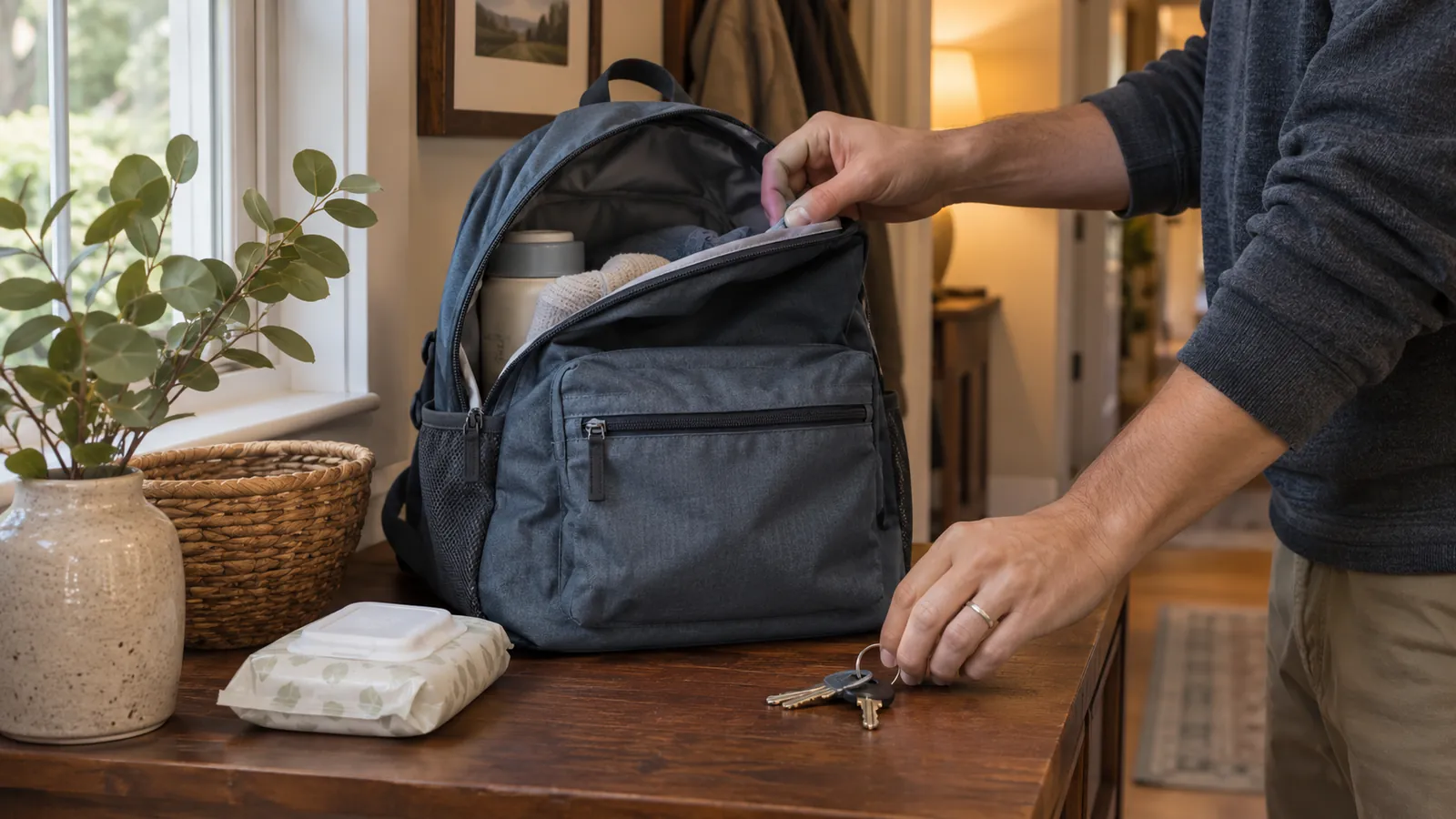
TL;DR: For everyday carry, keep one small white-light flashlight where an adult can reach it without unpacking the family bag. Put wipes, a spare layer, and a charging cable in the bag. Give the vehicle its own emergency supplies. Store spare batteries and adult tools where children cannot reach them.
📋 Table of Contents
- 1. Give your pockets, bag, and car different jobs
- 2. Put retrieval before one-handed operation
- 3. Choose a light for the place you actually stop
- 4. Keep the adult tools and batteries out of the family rummage
- 5. Keep an emergency kit separate from the bag you carry daily
- 6. What is the best backpack for parents?
- 7. What are the 7 types of dads?
- 8. What are some essential things for first-time dads?
- 9. Check your setup over a normal week
- 10. Frequently Asked Questions
Give your pockets, bag, and car different jobs
| Where | Keep here | Light choice |
|---|---|---|
| Adult pocket or keys | Keys and phone | i3E EOS for a lock or a dropped item |
| Family bag | Wipes, spare layer, and cable | Oclip Pro S for close tasks at a table |
| Car kit | Emergency supplies for the trip | A light whose storage limits suit the trip |
| Secure storage at home | Spare batteries and adult tools | A fixed light at the storage or charging spot |
A key ring has one advantage over the family bag. It often stays with the adult who needs to open the door. The reverse can happen at pickup, when one adult takes the car keys and another walks home with the bag. Before deciding what to carry, think about who has the keys, who has the bag, and what happens on the days those are two different people. Keep the light whose job follows the keys with the keys. Give a shared light its own place in the bag if both caregivers use it.
Separate access from abundance. You might carry several spare shirts for a day away, yet still need a light that is easy to find on a quick trip around the block. A phone, a key, and a modest light can be in the pocket that stays with you. Everything you can wait to use can go in the bag. Bulky wipes or a pack of tissues can make the same pocket difficult to reach even if those items are used often.
Use a distinct place for a needs-to-stay-clean item. A clean shirt can go in a closed pouch, while the wipes belong where you can get them without touching the spare clothing. Put a used or damp item into a separate temporary bag when you have a safe moment. That keeps a wet pack of wipes or a leaky bottle from soaking the pocket that holds your charger. Empty the damp items as soon as you get home.
If your usual outing involves a playground, a small outing bag may be enough. A library visit that runs through dinner may need a different load. Set aside what belongs on every outing and put the rest by the door where you can add it when needed. This approach also keeps the same small light from disappearing each time you change bags. A light that moves needs a named place to move to.
Get down to the level at which the work happens when deciding whether to take a light. The entry fixture might be bright enough for the front step and leave the bottom of an open bag in shadow. At home, try looking for a dark zipper on the floor or a key beneath a bench. You can usually tell whether a handheld beam will be useful before comparing output ratings. For ordinary pocket carry, start with a compact flashlight you can locate by touch in an empty pocket.
Put retrieval before one-handed operation
The useful part of one-handed carry is often getting the item out. An adult can reach a phone or light with one hand, pause in a safe spot, and use the other hand if the task calls for it. That can be easier than trying to open the entire bag while it is still hanging off one shoulder. In an entryway or a parking area, stop somewhere clear before opening a pocket. If you are holding a child, get them safely settled first or ask another adult to take over.
Think in terms of one reach. Put the light in the same closed pocket or on the same adult key ring each time. A dark pocket full of coins or loose items makes this harder. Test the idea at home by wearing the jacket you use most often, reaching to the chosen spot, and returning the light there. Try it again with another jacket or the usual bag. If the placement disappears when your clothes change, the key ring or a dedicated bag pocket may be more reliable.
Learn how the light starts before carrying it. A simple twist control may feel natural to some people and awkward while wearing gloves. A switch on a clip light is easier to find only if you remember which side it is on and can reach it in its intended position. Try both in a bright room first. You should be able to get the white beam you want without scrolling through several unfamiliar modes. When the task ends, switch it off before putting it away.
A beam that helps on one job can interfere with another. A bright spot on a shiny floor may hide a small object at its edge. The same object can become easier to see when you move the beam to one side and let the object cast a short shadow. Try that while stationary, for example when looking under a bench for an earbud. Keep the beam away from faces, other families, and anyone who needs an unobstructed view.
For an entry you know will be dark, find out whether an ordinary fixed light can do the work. A lamp at the usual door or a reliable porch fixture matters if several people use the same path. A pocket light still earns a place for the day a package blocks the fixture or a key rolls behind a plant. The difference shows up when you can start from a well-lit spot and use the portable beam only for the missing detail.
Give the handoff the same attention as getting the light out. A grandparent borrowing the day bag should be able to find the shared light without moving food and spare clothes. Before you split up, say where the light is and who has the keys. When you return home, put the light back with the same belongings. A bright pouch can help an adult see the compartment when the bag opens. Keep that adult compartment closed and the bag where children cannot access the gear.
Choose a light for the place you actually stop
| Situation | Beam or placement that helps | Check before you rely on it |
|---|---|---|
| Opening your door after pickup | A small handheld white beam on the lock | The light is with the adult holding the keys |
| Looking inside the bag at a bench | A close white beam aimed into the opening | Pause and choose a spot that leaves the walkway clear |
| Sorting items on a table | White light from the side of the work area | The clip sits securely and the beam stays below faces |
| Looking for an item in a parked vehicle | A beam aimed down across the stationary work area | Leave driving and vehicle safety to the appropriate systems |
| Finding a dropped item after bedtime | A small beam directed just at the floor or shelf | Use a fixed lamp if you need to walk or carry a child |
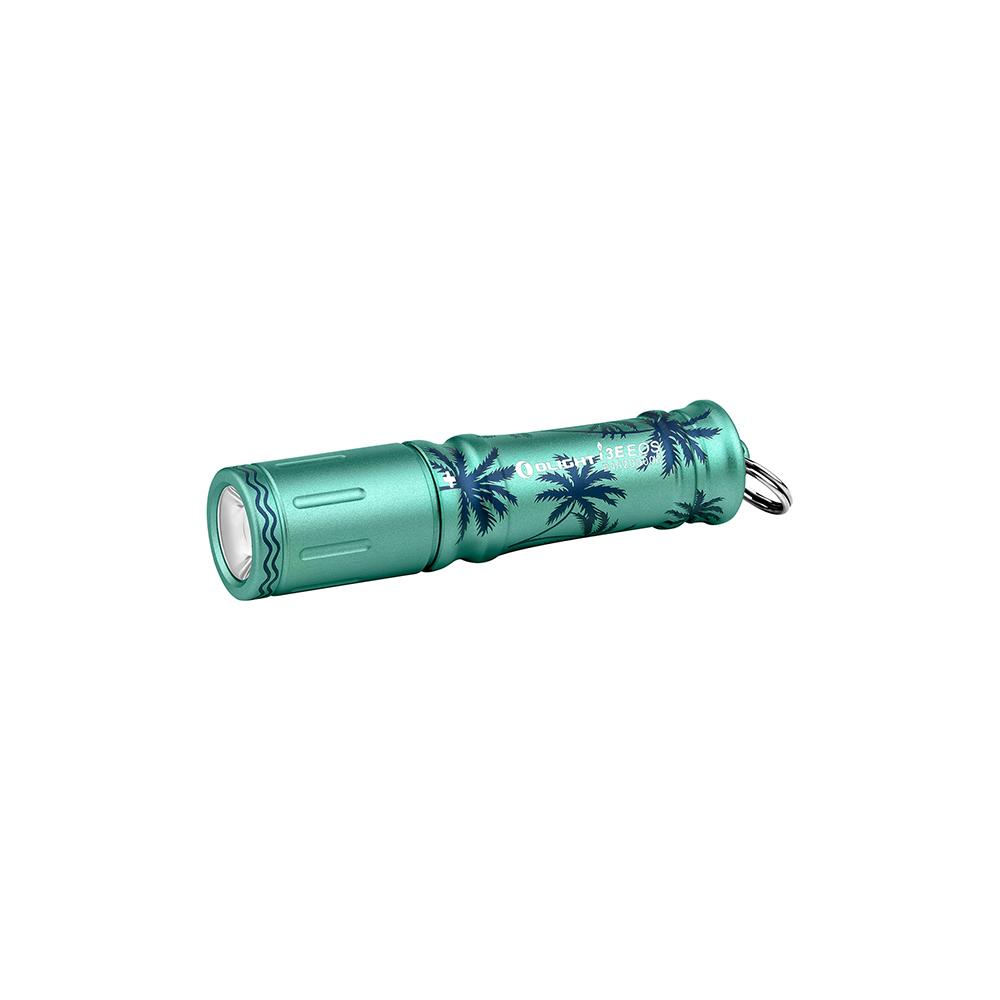
Attach a key-ring light to the adult keys you actually use. A spare set kept for a sitter can go near a fixed light, or it can have its own small light if that is useful. Check the model’s instructions before changing its battery and keep unused and removed batteries out of children’s reach. Olight’s i3E EOS manual tells users to take out the battery before long storage to help prevent leakage. Give the replacement a separate secure spot.
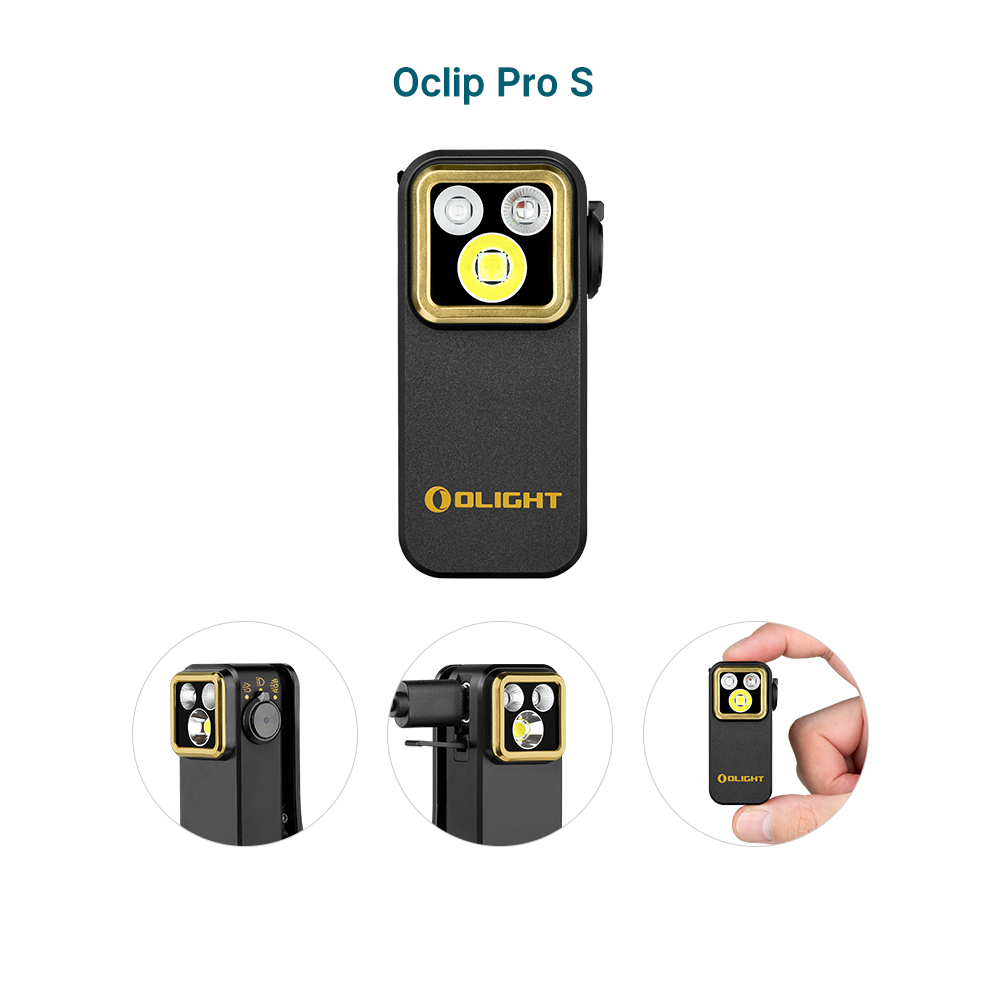
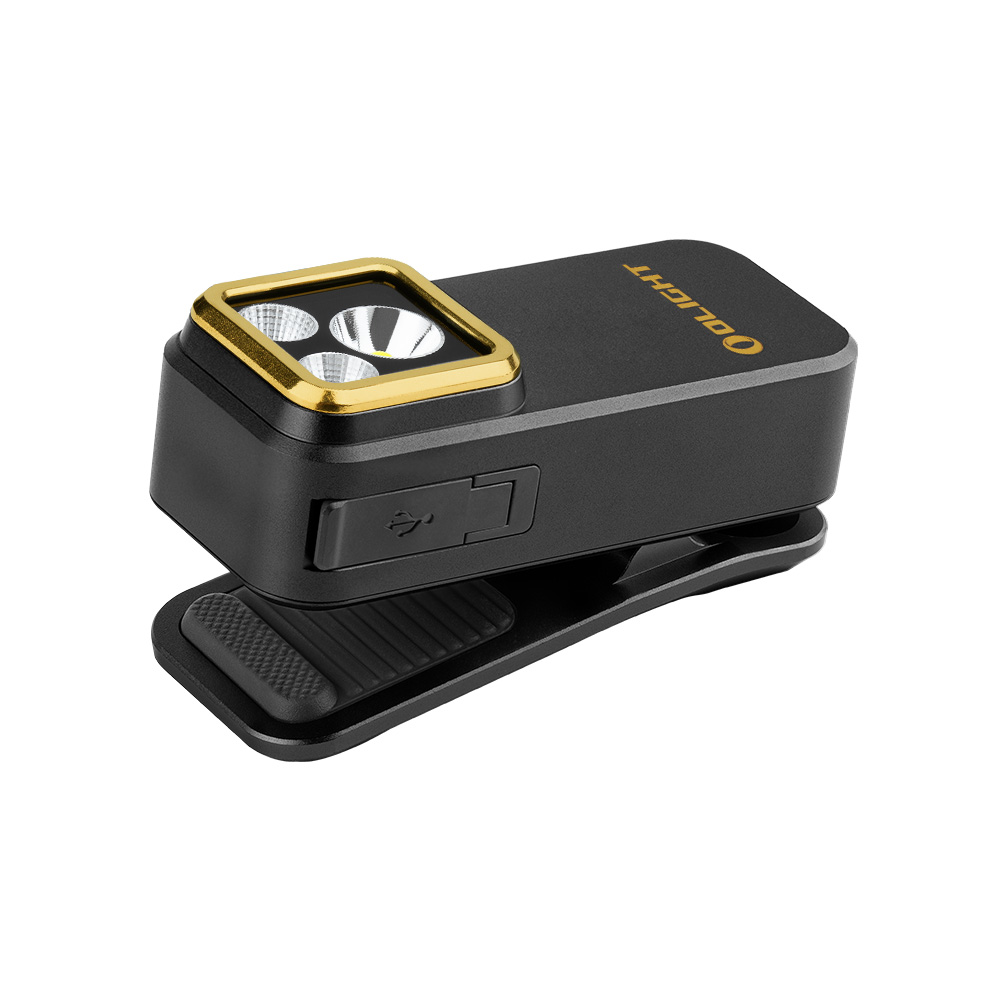
The side view shows the clip and covered charging port on the same Black Oclip Pro S.
Pick a fixed place for charging if you use a rechargeable flashlight. An adult can take the light out of the bag and set it on a dry surface out of children’s reach, then return it to the right pocket once charging is finished. Pick a cord that fits the actual light and follow its own charging instructions. A cable in a day bag can be useful for your phone during an outing. A shared connection type alone cannot tell you whether a charging setup suits every device.
A clip can help when a safe attachment point already exists. Set the bag on a table or bench before you look for one. Give the clip enough material to grip and check that the light stays put. If the bag fabric folds or the beam points up into someone’s face, remove the clip light and move the bag into better room light. The useful comparison is what you can see at the work surface.
Avoid solving a reach problem by adding another light to the same pocket. Decide which person needs it and where they leave their other belongings. A second light may be worthwhile when the empty bag and the key ring often leave in different directions. If both lights would be carried by the same adult on every short trip, ask whether a fixed lamp and one portable light already cover the regular jobs.
Keep the adult tools and batteries out of the family rummage
Scissors can free an item caught on a hangtag or open a package on a table. They belong with the adult supplies. Put the child somewhere safe and set the item down before using them. Pick a stable work surface and turn on its own light if the tag is hard to see. For a short trip, you can often wait until you are home and leave scissors out of the bag entirely. Keep ordinary wipes and spare clothes in a different compartment from the scissors.
Give the child-facing part of the bag a narrow job. If your child can choose a spare hat or grab a snack with you, set up a designated area for that. Some backpacks have a separate adult pocket, but a zipper does not make its contents inaccessible to a child. Store the whole bag out of reach when you are home if that is where your adult gear lives. Use secure storage for batteries and tools, and keep the bag with the responsible adult while away.
The American Academy of Pediatrics advises putting devices that use button or lithium coin batteries out of reach and, when practical, out of sight. That guidance matters for household items such as remotes or other small electronics, even if the two flashlights in this article use different power sources. Include other caregivers when you decide where those devices and spare batteries belong. American Academy of Pediatrics guidance on button and lithium coin batteries.
A consumed battery still needs a deliberate route out of the bag. If you replace one at home, have a place ready for the old battery out of reach and follow local disposal guidance. Keep spare cells securely contained and separate from loose metal items. Use the cell indicated by the light’s instructions. Give the same attention to a charging cable and the small parts of any device you can remove. Those things can turn up in pockets after the usual bag has been emptied.
There is no need to make a flashlight part of a child’s bedtime routine. When a child wakes, switch on the fixed light you need to move safely. Use a small adult light only for an isolated task, such as finding a dropped sock beside a chair. Point it down and away from eyes and keep the device in your own hands. Put it back in its secure spot before leaving the room.
Keep an emergency kit separate from the bag you carry daily
A daily bag gets emptied. A vehicle kit should survive that process. If you use the last pack of wipes at the park, it should have no effect on whether you can find an emergency light on the drive home. Ready.gov puts a flashlight and extra batteries on its general emergency supply list and recommends planning separate supplies for home, work, and the car. Use the checklist to decide which essential items should have a dedicated home. Ready.gov emergency supply checklist and kit storage guidance.
If winter travel is part of the plan, the National Weather Service also has a section for preparing vehicles before a winter storm. It gives suggestions for cold-weather supplies and how to prepare before leaving. Use the applicable local forecast and official travel information when a storm threatens. Take the kit you actually need for that route, with enough storage space to keep it secure. National Weather Service winter preparation guidance.
Read storage instructions before leaving any battery-powered device in a vehicle. A battery or rechargeable light has its own storage and charging conditions, and a car parked in the sun can heat up. The Oclip Pro S manual says to keep the light out of a car or other environment that may exceed 140°F (60°C). The same warning includes charging and using it under those conditions. If you cannot keep a device within the maker’s storage conditions, choose a different approach and bring suitable equipment with you for the trip. Keep everything secured in the way the vehicle instructions allow. Family members should know who brings the kit on days that need one.
Think about where you can open the kit if the cargo area is packed. Keep regular travel things in a known place with other loose gear secured. The adult checking it can use a note to keep track of what was borrowed. If an item was put into another bag for an outing, put it on the replenishment list before you get home. A storage spot and a replacement habit make the kit easier to maintain through season changes.
A flashlight belongs in the kit because some jobs need localized light in a stationary, safe place. It can help you see an item in the vehicle after it is parked, for example. A flashlight does not give a driver permission to stop in a risky place. Follow road rules and official advice in an emergency. Plan your kit before the outing, when you have time to read its instructions and choose a location for it.
What is the best backpack for parents?
A good backpack for parents fits the adult carrying it and opens easily in a safe place. Give it a reachable compartment for wipes and a separate secure location for adult items. Choose enough room for the actual outing, including a spare layer. Check access with the contents you carry instead of buying by capacity alone.
Try the bag at home with your usual load. Put water in its intended pocket, close the spare clothing in a clean pouch, and see whether you can get a wipe without setting every item down. Check whether a wallet or phone comes out cleanly. If the big opening spills when you set it on its side, use it upright or choose a layout that stays stable. A bag can have lots of pockets and still have the wrong one for a job you do often.
Use whichever adult will be carrying it as the fit reference. A shared bag that is comfortable for one caregiver may need its straps adjusted for the next. Have each person find the wipes and spare clothing while the bag is resting on a bench. If one person always keeps their light on the keys, agree on the other adult’s option when they do not have those keys.
What are the 7 types of dads?
There is no standard set of seven dad types for choosing everyday gear. If seven examples help, plan around school pickup, playground trips, public transit, overnight visits, sports sidelines, nighttime care, and longer drives. Any caregiver can move between those routines. Pick the items that solve the jobs on your schedule.
For school pickup, easy access to the handoff instructions and keys may matter more than a big bag. For a sports sideline, a spare layer can matter as much as any item in your pocket. The same adult might do both on one afternoon. Put the common items in familiar places and use a removable pouch for what changes. Another adult can take the sports pouch without carrying the whole school pickup bag.
Public transit and overnight visits often call for different packing decisions. A family using transit may value having a ticket or fare card accessible before reaching the platform. Getting ready for an overnight visit gives you time to set up a landing place for the keys, bag, and an adult light where you are staying. Use the lighting already available in each place. Add a portable beam for the individual detail you would otherwise miss.
What are some essential things for first-time dads?
For a first outing, bring your phone and keys, the supplies you already use for feeding or changing, and a spare layer appropriate to the weather. Agree on where everything goes with the other caregiver. Add a small adult light if your route or bag has a dark spot that needs occasional close-up lighting.
Set up the first short outing with an easy return. Before leaving, make sure you know where to put a used item and how to reach a clean one. If the adult holding the bag is also holding the baby, hand off the bag or stop and set it down where it is safe to use. Doing each job in turn makes it easier to put everything back properly. As your outings change, adjust the packing list from what was hard to find that day.
A note is often enough to keep the next person from starting over. You could leave it by the bags at home with a few useful items written down, such as the wet pouch that needs emptying or the cable that moved to the car. Start with the items that would actually hold up the next outing. Fix the storage of those before buying a second version of something that keeps moving.
Check your setup over a normal week
Pay attention to the point where you first had to stop. Maybe you reached the front door with the groceries and could not tell which lock you were trying to turn. Maybe the bag stood open at a bench but the clean pouch was always underneath. Change one location at a time. If the pocket light stays accessible after switching jackets, you can keep that placement. If opening the bag gets easier after moving the pouch, keep the new arrangement.
Plan for a caregiver who needs a different way to find the right pocket. You might identify the adult compartment by a zipper pull that feels different from the other pulls. Pick something that is built into the bag and easy for everyone who carries it to recognize. If identifying a compartment depends on reading a small label in a dark hall, make the layout simpler or set up better light where you pack.
Ask another caregiver to do the same tasks at home with the equipment they actually use. Have them find the keys, locate a light, and tell you where they would put a used wipe. Wait until they have tried it before telling them which compartment you use. That can show whether the arrangement is easy to understand and whether the shared adult equipment stays separated from the child’s things.
Recheck the first exit after daylight hours change. If an entry step is regularly dark, put a working fixture on the household to-do list. If the bag carries a rechargeable light, look at its charge status before the next longer outing. For replaceable batteries, check the condition of the light in line with the manual. Make sure the light is off before you put it back. A routine you can repeat after packing up is what keeps the kit useful.
Frequently Asked Questions
Changelog
- November 19, 2026. Checked the two exact U.S. product listings, three official original product photos, the product manuals, and preparedness and battery guidance from Ready.gov, the National Weather Service, and the American Academy of Pediatrics.




