Table of Contents
In the world of tactical gear and outdoor adventure, a flashlight is more than just a tool; it is a critical component of your safety and situational awareness. However, when browsing for a new weapon-mounted light or everyday carry (EDC) torch, many users find themselves overwhelmed by technical specifications. You might see a light boasting 1,500 lumens but only 5,000 candela, while another offers 800 lumens but reaches twice as far.
Understanding the relationship between candela vs lumens is essential for any professional or enthusiast. These metrics are not interchangeable; they describe different aspects of how light behaves. This guide will break down the science of beam intensity and total output to help you decide which tactical light performance profile suits your mission.
Common Misconceptions About Flashlight Performance Metrics
The most frequent mistake users make is equating "more lumens" with "better performance." While a high lumen count is impressive on a retail box, it only tells part of the story.
Common myths include:
- Myth 1: Higher lumens always mean a longer reach. In reality, a light with high lumens but low candela will create a wide "flood" of light that illuminates your immediate surroundings but fails to reach distant targets.
- Myth 2: Candela is only for "throwers." While candela determines distance, it also determines a light’s ability to punch through "photonic barriers" like glass, smoke, or opposing high-intensity light sources.
- Myth 3: Throw distance is the distance at which you can clearly see. The industry standard for throw distance is a mathematical calculation, not necessarily a reflection of high-fidelity visibility in the field.
Lumens Explained: Total Light Output
Lumens (Total Light) represents the total quantity or amount of visible light emitted by a source in all directions. Think of lumens as the "volume" of light. If you were to place a light bulb inside a sealed sphere, the total light hitting the interior walls of that sphere would be measured in lumens.
- Best for: Flooding an area with light, close-up work, general area illumination, and navigating tight spaces.
- High Lumens, Low Candela: Creates a wide, flood beam, ideal for close-range tasks where you don't need to see far but need broad visibility.
How Lumens Affect Real-World Illumination
In a tactical or outdoor context, lumens define the "spill" or "flood" of the light. High-lumen lights are excellent for:
- Situational Awareness: Illuminating an entire room or a wide backyard.
- Peripheral Vision: Allowing you to see what is to the left and right of your primary target.
- Close-Quarters Battle (CQB): Overwhelming an interior space with light to disorient an intruder.
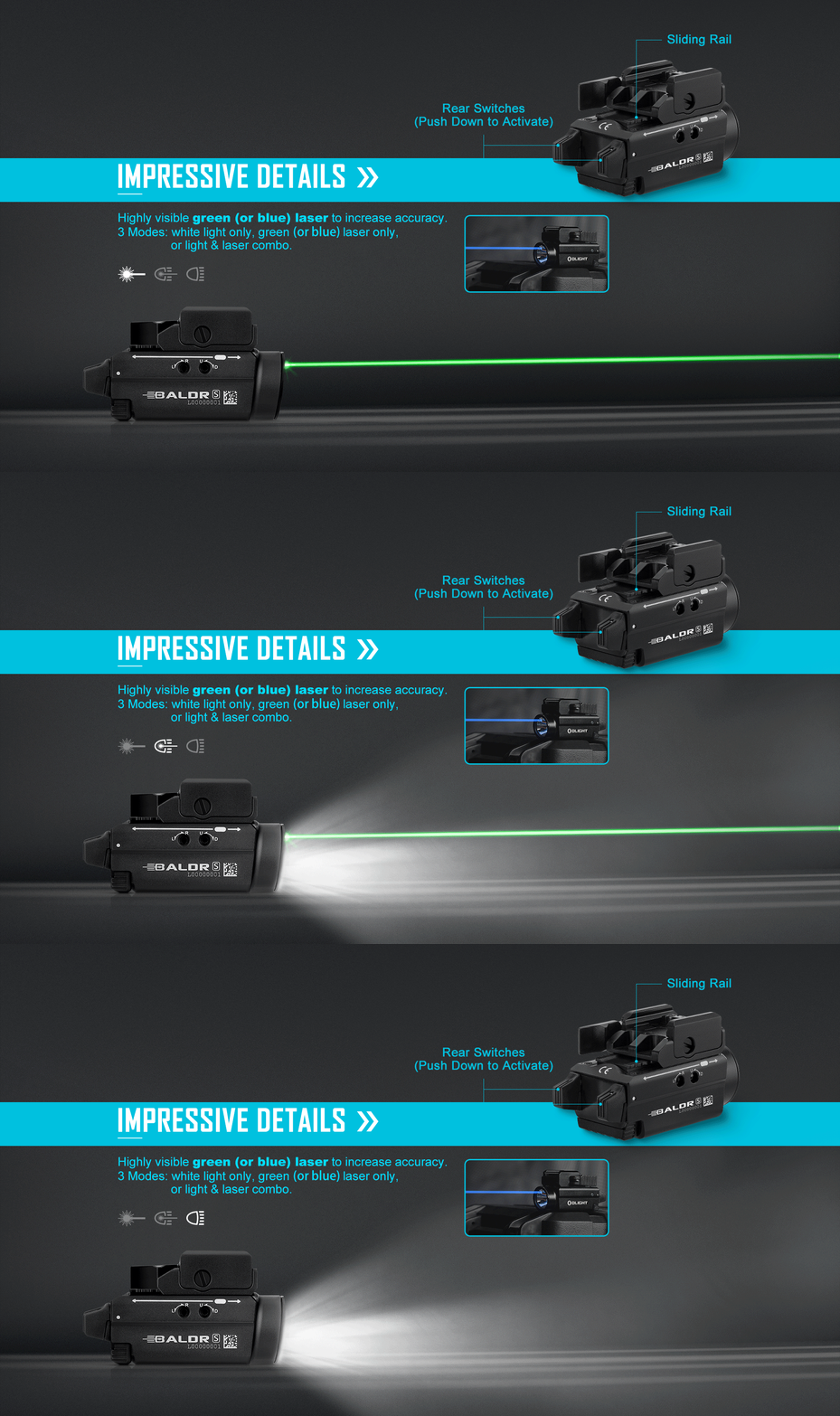
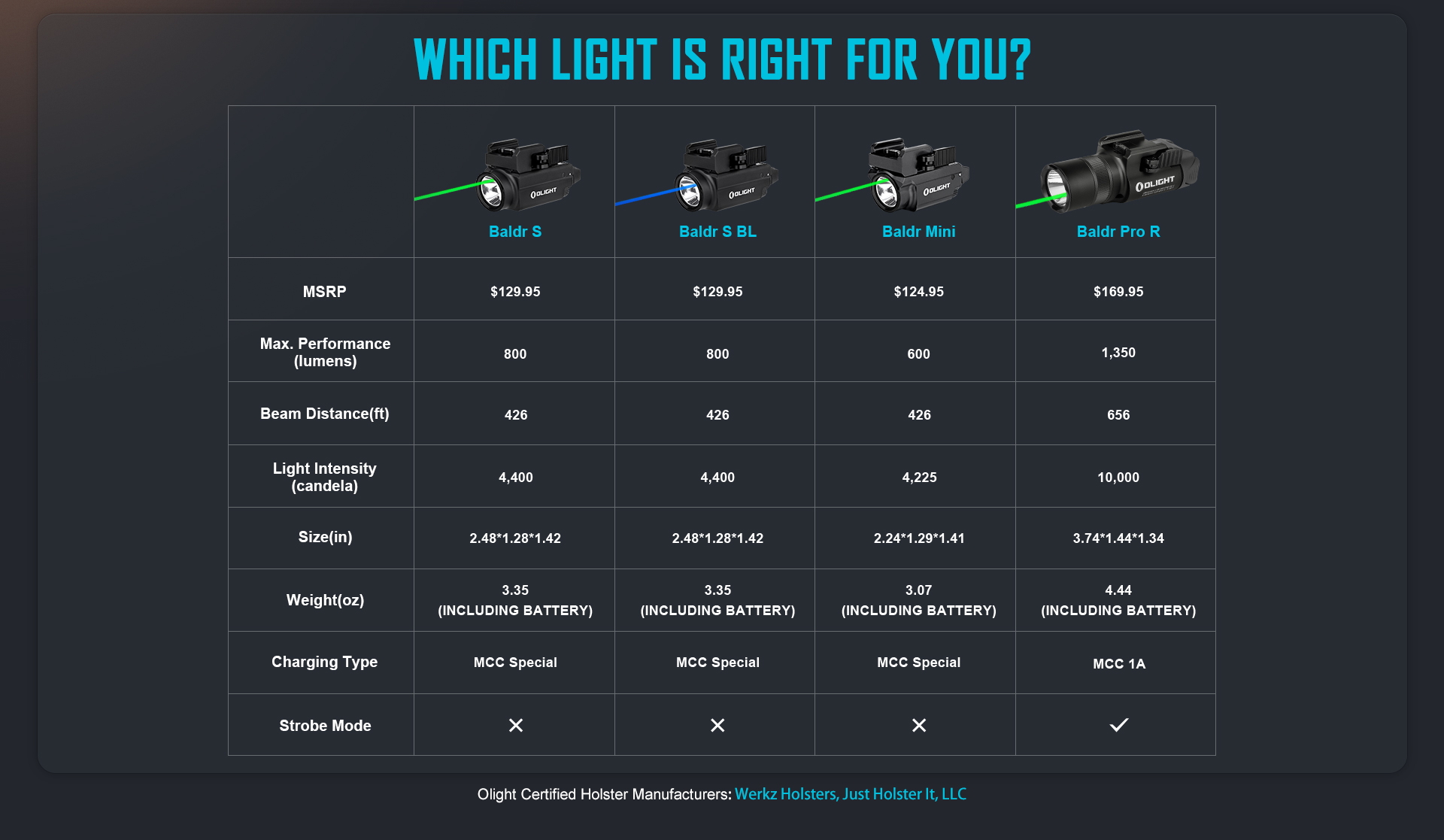
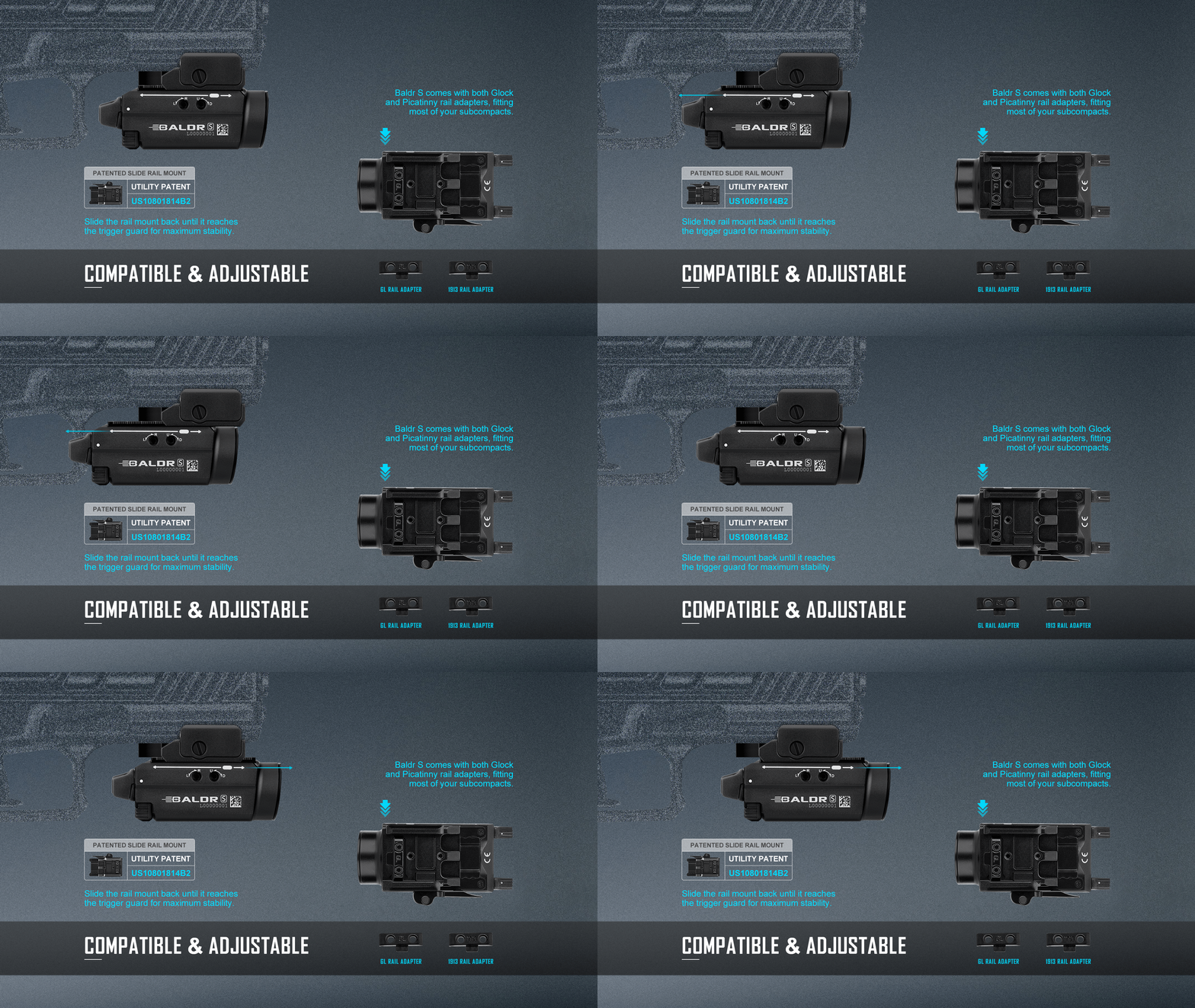
For example, the Olight Baldr S produces 800 lumens. This output provides a generous amount of light for indoor navigation and target identification at typical home-defense distances.
Candela Demystified: Beam Intensity
Candela (Beam Intensity/Focus) is a measure of the light's intensity at its brightest point, indicating how concentrated the beam is. If lumens are the total volume of light, candela is the "pressure" or "density" of that light.
- Best for: Seeing objects at a distance, piercing through fog or smoke, and tactical applications.
- High Candela, Low Lumens: Creates a tight, focused spotlight (a "thrower") that reaches far but illuminates a smaller area.
When Candela Matters More Than Lumens
In tactical scenarios, candela is often the more critical metric. High candela allows you to:
- Punch Through Photonic Barriers: If an adversary is pointing a light at you, a high-candela beam can "cut through" their light to identify the threat.
- Overcome Ambient Light: In urban environments with streetlights, high candela ensures your beam remains visible.
- Long-Range Identification: You need intensity to see detail at 50, 100, or 200 yards.
Throw Distance: Range and Visibility
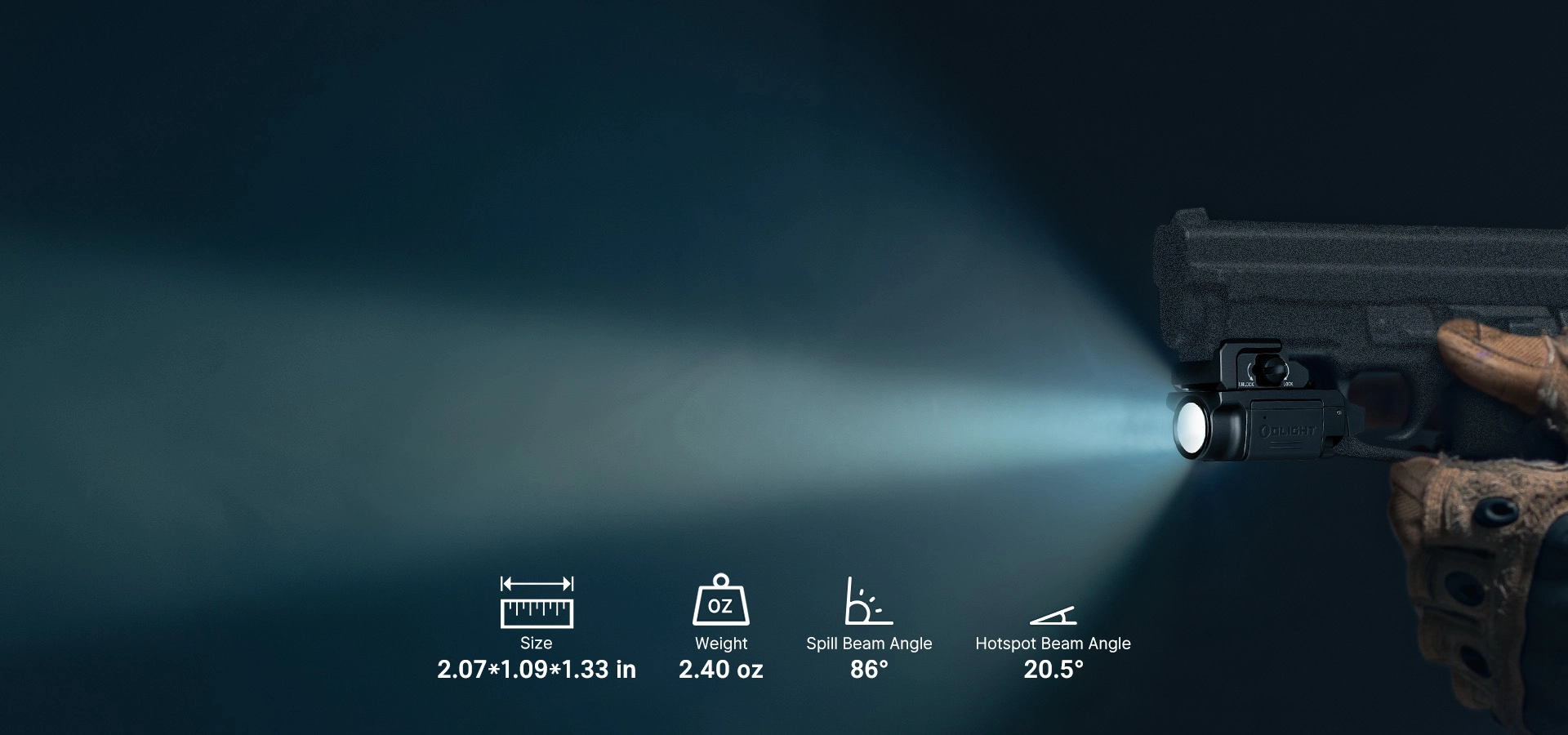
Throw Distance (Beam Distance) is a measure of how far the light beam travels before it drops to 0.25 lux (roughly the light of a full moon). It is measured in meters or feet.
- Relationship: It is directly related to candela; higher candela results in a longer throw distance because the light is more concentrated.
- Formula (Approximate): Throw (meters) ≈ √Candela.
Real-World Factors Affecting Effective Range
Environmental factors play a massive role in how far your light "throws":
- Humidity and Fog: Water particles reflect light, reducing effective range.
- Air Quality: Smoke and dust can absorb light.
- Target Contrast: Identifying a dark target requires more candela than a reflective one.
Choosing the Right Light: Matching Specs to Your Applications
| Metric | Measures... | Best For... | Olight Flashlight Example |
|---|---|---|---|
| Lumens | Total Light Output | Wide area, close range | Seeker 4 Pro (Flood) |
| Candela | Beam Intensity / Focus | Long distance, piercing fog | Javelot Pro 2 (Throw) |
| Throw | Effective Range (meters) | Spotting distant targets | Warrior X 4 (Balance) |
Selecting a light requires balancing candela vs lumens based on your specific needs.
- Home Defense: High lumens for wide spill to see into corners. (e.g., Baldr S).
- Law Enforcement: High candela to see into vehicles or down alleys.
- Search and Rescue: Maximum throw distance and candela for scanning ridgelines.
Olight's Engineering Excellence: How We Optimize All Three Metrics
Olight engineers optical systems to provide the perfect balance of lumen output and candela intensity. By using custom-designed TIR lenses and advanced thermal management, we ensure our lights provide a clean hotspot and stable high-lumen performance.
Frequently Asked Questions
1. Which is more important for a self-defense light, lumens or candela?
It depends on the environment. For indoor home defense, high lumens provide situational awareness. For outdoor or professional use, high candela is vital to identify threats at a distance and punch through light pollution.
2. Can a flashlight have high lumens and low candela?
Yes. These are known as "floodlights." They produce a massive wall of light that illuminates everything nearby but has very little "throw," making them poor for long-range identification.
3. Does higher candela mean the battery will die faster?
Not necessarily. Candela is largely determined by the shape and quality of the reflector or lens. Lumens (total output) are usually the primary driver of power consumption and heat.
4. Why does my flashlight's brightness drop after a few minutes?
High-lumen outputs generate significant heat. Most modern tactical lights use thermal regulation to "step down" the lumen output to protect the internal components and extend battery life.