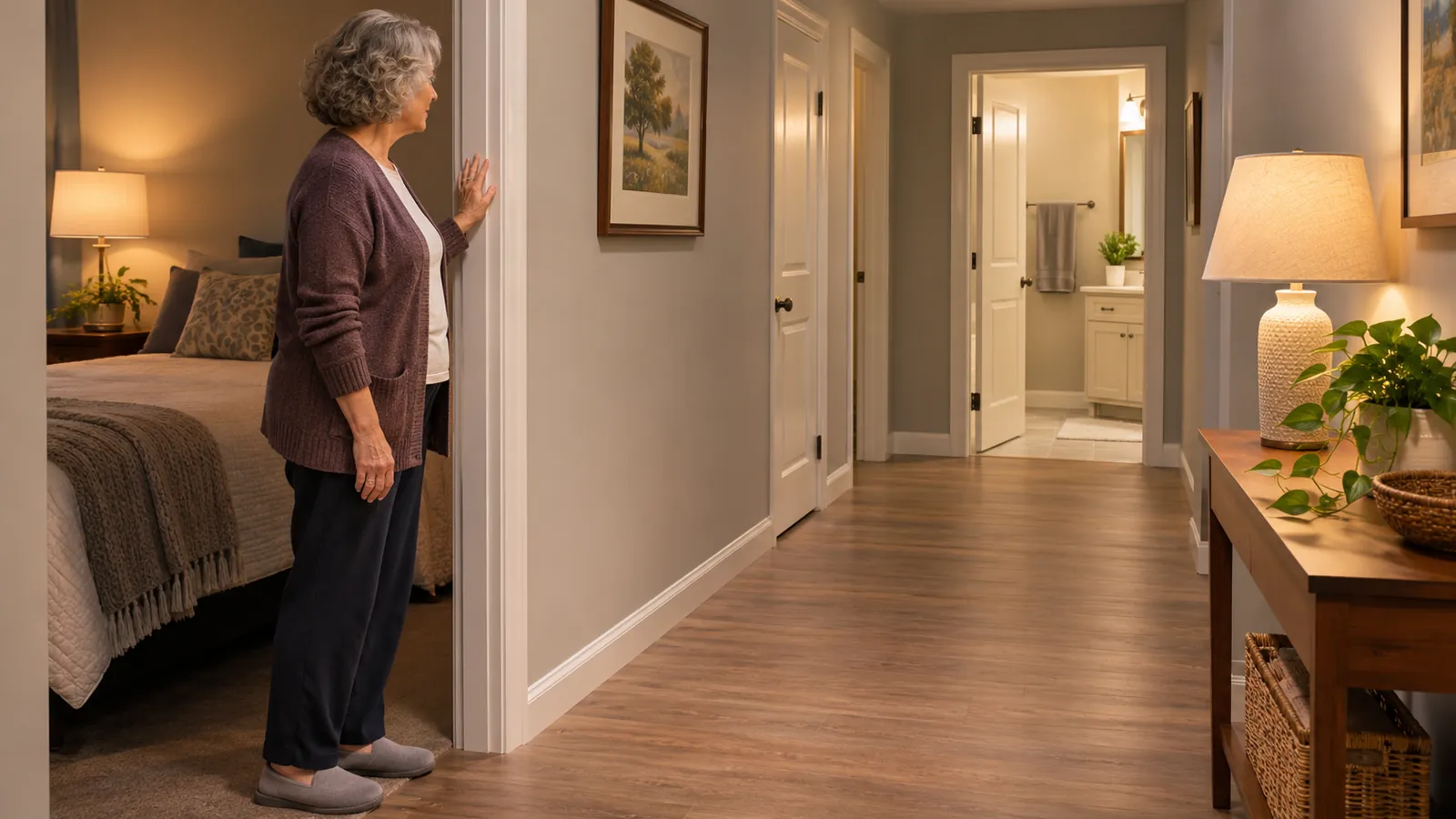
TL;DR: Cataracts can make night scenes look hazy and nearby lights feel too bright. At home, use steady room lighting to reveal the floor, doorways, and step edges before moving. Shade or reposition a distracting light. Talk with an eye doctor about new night vision changes or difficulty seeing well enough to drive.
📋 Table of Contents
- 1. Start by lighting the places you need to see
- 2. Is night vision worse with cataracts?
- 3. What does night vision look like with cataracts?
- 4. Keep lighting usable from the bedroom to the stairs
- 5. Find the source of glare from a steady position
- 6. Compare warm and neutral light at the same spot
- 7. Will removing cataracts improve night vision?
- 8. Consider a separate light for each home task
- 9. Make one change and check it again the next night
- 10. FAQ
Start by lighting the places you need to see
| Where you are | What to change first | What to check before moving |
|---|---|---|
| At the bed | Put a lamp within easy reach | The floor beside the bed is visible |
| In the hallway | Use room lighting that covers turns and thresholds | You can see the next part of the route |
| At the stairs | Use the fixed stairway light | Step edges and the landing are easy to see |
| At a reading chair | Use a shaded lamp directed at the page | The print stays readable without a bright spot in view |
| Near a mirror or shiny floor | Change the position of the light or your view from a stable spot | The reflection no longer hides the surface you need |
Start with a route you already use, such as the walk from the bedroom to the bathroom. From a steady position, look at the floor beside the bed, the doorway, and the nearest turn. Turn on the available room lights before you move. If a lamp makes it harder to see the floor, check what it is lighting and what you can see around it.
A light can look bright from across the room while leaving a relevant area hard to see. Look at the edge of a doorway or the surface where you expect to put your foot. If there is a bright patch in the way, a helper can adjust the lamp while you remain still. If the floor and the next step stay unclear, use a better-lit route or ask for help.
Write down a place where this happens more than once. A note like “bathroom mirror reflects the hall lamp when I stand at the doorway” is easier to act on than “the lights are bad.” A household member can use the note to check the lamp’s direction. You can also describe the same situation to your eye doctor, particularly if the difficulty is new or changing.
Decide how a light will be turned on before you replace it. A bedside lamp can only help if you can reach its switch from the bed or another stable place. Leave the control where you expect it to be. If several people share the room, show them which light makes the next doorway and the floor easier to see.
Is night vision worse with cataracts?
It can be. The clouding affects the lens that helps focus light, and some people find it harder to see at night. Lamps or headlights may seem too bright, and halos can appear around lights. These symptoms also occur with other eye problems, so an eye exam can help identify the cause.
A bright lamp and a dark surrounding area place different demands on your eyes. You might notice the lamp from the other end of the hall and still have trouble making out the doorknob beside it. The National Eye Institute lists light sensitivity, trouble seeing at night, and halos among possible cataract symptoms. It advises talking with an eye doctor about those symptoms. National Eye Institute guidance on cataracts.
Think about the job you were trying to do. At the table, it might be reading a label with a light reflecting in its cover. In a hallway, it might be seeing the floor on both sides of a doorway. The job and the location help explain what changed. You can bring those examples to a medical appointment without having to name the cause yourself.
If a brighter source makes you more uncomfortable, see whether it shines directly toward your normal viewing position or reflects from a glossy surface. When the room is already dim overall, reducing one bright source may also make the room too dark. Try another nearby lamp that helps you see what you need. Leave walking routes fully lit while making adjustments elsewhere.
What does night vision look like with cataracts?
People can experience hazy or blurry details, halos around lamps, or reduced visibility on a dark route when a bright light is nearby. Experiences vary, even among people with cataracts. Describe what you notice and where it interferes with a task. An eye doctor can assess whether cataracts or another condition explains it.
An example is reading the number on a house across from a bright porch light. The light may look distinct while the number is hard to make out. In a bathroom, a reflection may be easier to see than the edge of the counter where you want to set down an item. Those are examples of how the problem can feel during ordinary tasks. They do not reproduce anyone’s exact vision.
Notice the difference between a spot that is barely lit and one where a light appears too prominent. You might need more steady light in the first place. A shade or a new lamp position may help in the second. If both happen on the same route, work on the difficult section first and keep the rest of the route illuminated.
A second person may be able to see an obstacle you have difficulty seeing. Ask them to check the location of the light, move a loose object, or help arrange a stable lamp. Let your own ability to see the route guide whether you use it. Someone else’s view does not establish that your nighttime vision is adequate for the task.
Keep lighting usable from the bedroom to the stairs
The CDC’s home fall prevention checklist for older adults recommends keeping a light within reach of the bed and using a night-light on a dark route to the bathroom. It also addresses working lights and switches at both ends of stairs, as well as keeping objects off the steps. Work from those simple checks before adding portable or decorative lighting. CDC STEADI home fall prevention checklist.
Notice how much lighting you can turn on without stepping into the hall. If a lamp lights only the bedroom, check whether the hall switch is within reach before you set out. A small night-light can help mark a doorway on a level route. Keep a stable room light available when you need more visibility, especially if part of the route remains unclear.
If your night-light has a sensor, watch what it does while you are standing somewhere secure with the regular light on. Ask whether someone can reach the room light when the smaller one has not come on. Keep the normal control available so nobody needs to wait in the doorway to find out whether a sensor works.
Where the hall turns or changes flooring, look from a steady point before moving. Turn on the next light when you can reach it safely. Take a moment to see the surface ahead. If the necessary control is beyond an area you cannot see well, ask someone to switch it on or use a different route. Avoid crossing the dark section just to find out whether it is passable.
At a staircase, use the fixed light and check that it covers the steps and landings from both approaches. If a fixture has failed or the control is difficult to reach, ask for help with the setup. An electrician can address fixed lighting and switch placement. Have a household member check loose carpeting, cords, and obstacles separately from the bulbs.
The trip back matters as much as the trip out. Someone who leaves a lit bathroom may face a dimmer hall on the way to bed. Keep the route lights available until you return. Ask a household member to show you what the route looks like from each direction while you are standing securely. An easily reached second switch can be more useful than increasing the output of the first lamp.
Give the home a predictable layout. Keep shoes, bags, and charging cables clear of the route. Place commonly used items on a shelf or table you can reach safely with the room lights on. Changes to furniture and lamp cords can create problems in a familiar room. Tell everyone who shares the space where the lights, switches, and clear route are.
Find the source of glare from a steady position
| What you notice | A change to try while stationary | What to look for |
|---|---|---|
| A bare bulb dominates the view | Use a suitable shade or change the lamp’s position | The surrounding area is easier to see |
| A bright spot reflects off a mirror or polished counter | Move the lamp, move the item, or view it from a stable position | The reflection clears the detail you need |
| A lamp lights the center of a room but misses a corner | Add steady room light where it is needed | The turn and nearby floor become visible |
| A page reflects a desk lamp | Move the page or point the light away from your eyes | Letters remain readable from your seat |
| A colored strip looks brighter than the room | Lower or turn off the accent and use the room light | The route remains clear without the accent |
Try one change while the other lights stay on. This makes it easier to tell whether the new lamp position helped. Check the result from the spot where you normally sit or stand. If you need to cover two different parts of a room, check each one before deciding you have enough light. Keep a helper in charge of moving a fixture if doing it yourself would require climbing or reaching awkwardly.
Look for light sources that enter your view while you read, get up, or turn toward a doorway. A bulb that is partly hidden when you stand may be fully visible from your chair or bed. Adjust the light for the position that matters. If the shade or light needs a repair, ask someone to handle it while you rely on the other working lights.
Contrast can help you recognize what you are looking at. A light-colored object may be easier to find against a dark tray. A matte surface can be easier to read than clear plastic with a reflection across it. Try it with a familiar object at a table. Leave permanent work on flooring, steps, or handrails to the people who can assess the home setup.
Two people may notice a different problem at the same table. One may get a reflection on a glossy page and the other may sit high enough to see the uncovered bulb. Before moving a shared lamp, check where people usually sit. A shade or a separate task light may help one person without making the rest of the room harder for someone else to use.
If daily tasks remain difficult, ask your eye doctor about support that matches your vision and home. The National Eye Institute describes vision rehabilitation services and gives examples of how people use them to maintain independence. A support professional can help you discuss lighting, contrast, or the tasks that matter to you. National Eye Institute resources on living with low vision.
Compare warm and neutral light at the same spot
Warm white can feel more comfortable to some people. A warmer color alone cannot tell you whether a particular light will make the floor or print easier to see. Start with the position and shade. Then compare a warmer and a more neutral white at similar brightness while sitting or standing securely.
Start with a room light you can reach or a helper can adjust. Keep the same shade and leave the other working lights on. Look at something familiar, such as a written note on the table. Ask whether the whole line is easy to read, whether the edges stay visible, and whether the light makes you want to turn away.
If you prefer the warmer setting, confirm it still gives you enough light for the job. A light you enjoy in a chair may be too dim farther down the hall. Choose a level and color that work in the actual area, and keep a separate room light available. Use fixed lighting for the route and change the desk light for reading.
Check surfaces as part of the comparison. A glossy white countertop can reflect a bulb in a way that a matte wood table does not. Colored accent lights may also change how objects look. Use a steady white room light where seeing the natural appearance of a label or the outline of an object matters. Pick the setting that lets you see the object without a distracting source in view.
Write down the setting you can return to easily. If someone else adjusts the lamp, show them where the control is and when you use it. Make sure the room can still be lit when the phone, app, or voice control is unavailable. A plain reachable lamp switch can be a useful part of the same setup.
Will removing cataracts improve night vision?
It may help if cataracts are causing the nighttime difficulty. The National Eye Institute says most people see better after cataract surgery, but recovery and nighttime results vary by person. Ask your eye doctor what to expect for your eyes and which symptoms to report. Keep following their advice about when you can drive or resume other activities.
Cataract surgery replaces the cloudy natural lens with an artificial lens. Your eye may be sensitive to light, and your vision may be blurry at first as it heals. The timing of recovery should come from your own care team. Follow its instructions, attend checkups, and call your eye doctor right away if you lose vision after surgery or develop severe pain that does not go away. National Eye Institute guidance on cataract surgery and recovery.
Set up the home route before the appointment if you know you will need it soon. Keep the bedside control where you can reach it and arrange help with lights, trips, and other tasks as instructed. Revisit the setup when you have a clearer idea of what you can see comfortably. A change that worked before surgery may feel different during recovery.
Tell the clinician which nighttime tasks matter to you. Reading a menu, seeing a step, and recognizing something across a parking lot call for different kinds of vision. A specific example helps the clinician explain which symptoms could improve and which may need a closer look. Ask what to do if a familiar task remains difficult as recovery progresses.
Driving needs its own decision. If glare or difficulty seeing makes hazards hard to pick out, arrange another ride and talk with your eye doctor. Let them advise you about driving before or after surgery. Changing the light at home is a separate decision that can make an ordinary task more comfortable to do when you are safely stationary.
Consider a separate light for each home task
Start with steady room lighting and reachable controls. Then decide where a smaller light would actually help. A shaded lamp at a reading chair and an accent near a shelf serve different jobs. Neither needs to be the only source you can turn on. Keep a clear way to switch on the main lighting from a stable place.
Use the lighting you already have if it does the job. For example, moving a lamp from behind a glossy page to a spot where the reflection falls elsewhere can improve the view at your seat. If you need a compact flashlight for one nearby object, supplement the room light from a stationary position and keep the beam on the object. Give the light a consistent place to return to afterward.
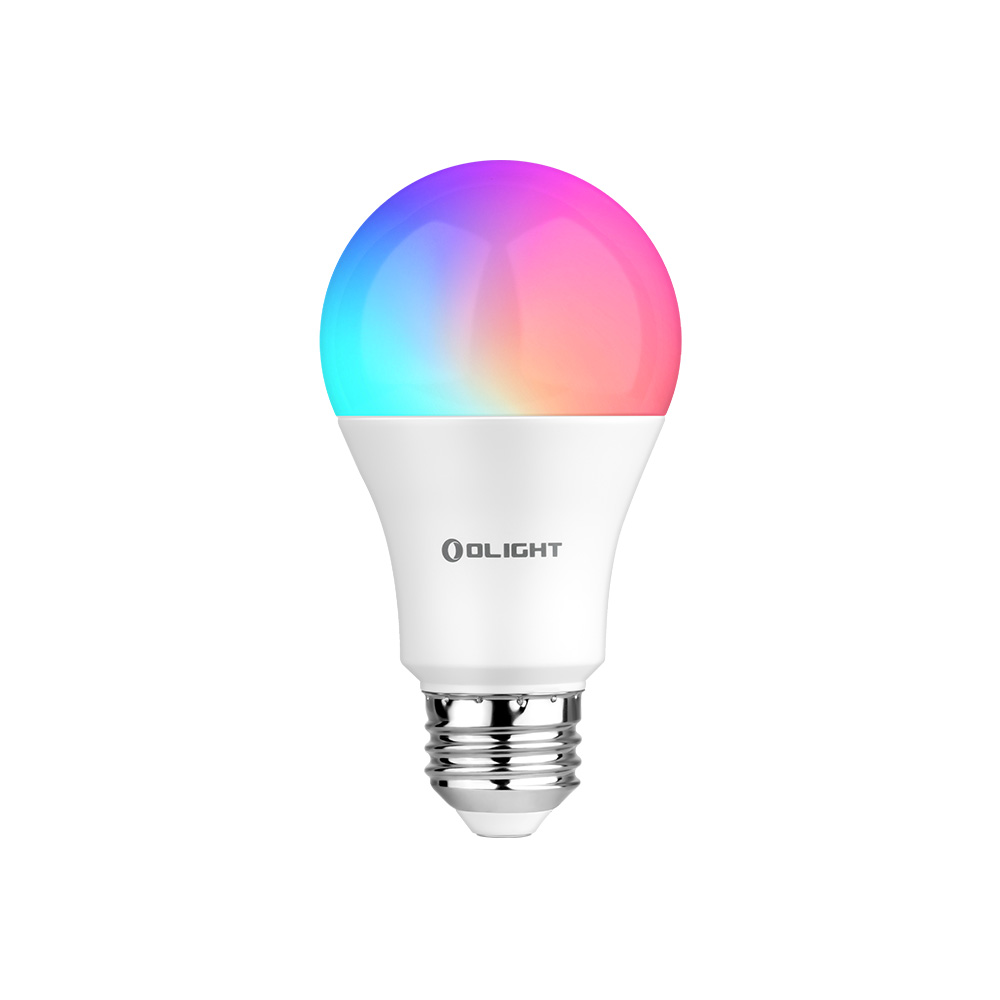
A bulb with an adjustable setting can help you compare two white tones in the same lamp. Keep the comparison at the chair or other stationary position. If the combination creates a distracting reflection, restore the normal lighting and check the placement. A helper can move the lamp or help you choose a simpler control method if the app is inconvenient.

Two light sources can sometimes compete in the same view. For instance, a low accent near a cabinet may reflect from a shiny toe kick. Ask a helper to switch off the accent and compare the view from the same steady spot. If the cabinet and floor are easier to see without it, leave the normal room lights in place and skip the extra source.
Think about whether you need a marker at all. If the doorway is clearly visible under a normal room light, adding a strip may only add another control or reflection. Use the accent for a small background effect when it helps without affecting the usefulness of the main lighting. Keep the equipment out of the way of feet and doors.

The Perun 3 manual describes brightness memory for white mode. Check the chosen level in a controlled place before relying on it. Have another person help if you need to change the angle or the level and cannot do so comfortably. For an existing shadow at a table or in a drawer, it may be easier to use a lamp positioned to cover the area.
Make one change and check it again the next night
Choose the part of the home where light affects an ordinary activity most often. One person might start with reaching the bedside lamp. Someone else might start with a hallway turn that is hard to see on the way back. Keep the existing light on and make a small change to placement, a shade, or access to the control. Ask someone to help if the change requires reaching high or moving furniture.
Try the change from the actual position where you need it. A light that feels comfortable when you look toward the open door may reflect in a mirror when you face the other way. Test both views while still in a stable position. If you need to stand in an unclear part of the route for the comparison, ask someone else to check it first.
Check after a change in furniture or a switch to a different fixture. A side table moved by a few inches can block access to a lamp or put a cord across the walking line. From a secure spot, make sure the control and clear route are still where you expect them to be. Have someone help correct the layout if needed.
Check the entry during the same evening routine if you use it after dusk. From a secure position inside, see whether the porch light shows the threshold and the surface beyond it. A reflection in the door glass may make the lamp more prominent than the floor. Ask for help with the fixed fixture if you cannot comfortably see your way from the door to a clear spot.
Tell other people in the home what works for you. Keep a note for a family member or electrician if a switch or fixture needs attention. If you still struggle to recognize the floor or the next doorway with working lights, bring the example to your eye doctor. A clear account of your experience can be more helpful than trying several bulbs at once.
Put the lighting controls and the objects you use at night in a consistent place. For instance, keep your glasses, if you wear them, and the reachable lamp control on different parts of the bedside table. If another person helps tidy the room, agree where these items should go. A little organization makes it easier to turn on the right light without searching for it.
Keep a fallback for changes you cannot make right away. An accessible lamp in the room, another person’s help, or using a safer route can handle an immediate need while a fixture is repaired. The night plan should work for the people who use the home and remain simple enough to repeat when they are tired.
FAQ
Changelog
- November 19, 2026: Checked the National Eye Institute’s cataract, surgery, and low vision resources, the CDC STEADI home checklist, and the current U.S. product sources and original images.