TL;DR: Ask the venue who controls the lights on public routes, then walk the approved paths before opening and again as daylight fades. Give volunteers separate lights for nearby tasks. If an exit, crossing, or accessible route becomes hard to follow, report the exact location and wait for the organizer’s direction before sending people through.
📋 Table of Contents
- 1. Assign each lighting job before opening
- 2. What kind of lighting does an outdoor event need?
- 3. Walk the same route as daylight fades
- 4. Who should a volunteer call if a route light goes out?
- 5. Can volunteers use headlamps to light a public walkway?
- 6. Choose a task light for the station and the volunteer
- 7. Follow the venue’s plan when weather changes
- 8. Hand over the route at shift change
- 9. FAQ
Assign each lighting job before opening
| Lighting job | Who handles it | What to confirm |
|---|---|---|
| Public routes and exits | Venue or event lead | Approved routes, working lights, signs, and known dark spots |
| Check-in or information table | Station lead | A small pool of light stays on the work surface |
| A volunteer’s close task | Assigned adult volunteer | A light stays pointed at the task and out of people’s eyes |
| A route light stops working | Venue contact or designated lead | Who receives the report and can pause access |
| Last admission and closing | Outgoing and incoming leads | Who keeps route lights on until the venue clears the site |
Put names on the lighting assignments at the briefing. The venue may operate the installed fixtures, while the organizer gives directions to volunteers. One person may know how to report a light that is out without being able to change it. Write down which number or radio channel to use and who can choose an alternate route. Share those details with the people covering entrances and information points.
Use the site map that the organizer approved for the event. Note where people first arrive, where they might ask a question, and how they get from the event back to the approved pickup or parking area. Find the route the venue has assigned for step-free access. A familiar shortcut can be convenient for setup staff and still be inappropriate for directing guests.
Give each staffed point a name everyone can use. “West entrance beside the information desk” is more specific than “the left side.” A picture of a site map on a phone may help, but the people on duty should be able to repeat the location and use it over a radio. If two gates have similar names, get their exact identifiers from the organizer.
Decide where personal lights stay when they are borrowed, returned, or charged. A volunteer with both hands on a stack of programs needs a different light from the person keeping an eye on a public entrance. Prepare the equipment for the separate jobs. Leave the public walking-route lighting and emergency equipment under venue control.
What kind of lighting does an outdoor event need?
An outdoor event needs venue-approved coverage for walking routes and exits, local light for staffed stations, and portable task lights for volunteers who need them. Check the route, signs, and transition to darkness before opening. Ask the organizer who handles failures, who can pause access, and which backup arrangements are already approved.
The public route includes the space between the bright places. An entrance sign and a well-lit tent may be easy to spot while a curb between them fades into shadow. Look for changes in paving, direction, and elevation as you follow the path the venue intends people to use. The organizer needs to know about the whole walk, including the way out.
The difference matters when employment rules apply at a site. The 2025 annual version of the federal workplace exit-route standard includes provisions for keeping employee exit routes unobstructed and adequately lit, and for making exits visible and marked. Consult the venue and organizer about the requirements that apply to the particular event, workers, and public routes. 2025 annual CFR edition of the workplace exit-route standard.
A venue may keep some routes open for the public and reserve other areas for staff. When you are asked to cover a gate, find out which direction its signs are supposed to serve and where people next need a decision. A route can be identifiable from the entrance and confusing to someone leaving in the other direction. Walk the approved route both ways from a safe position.
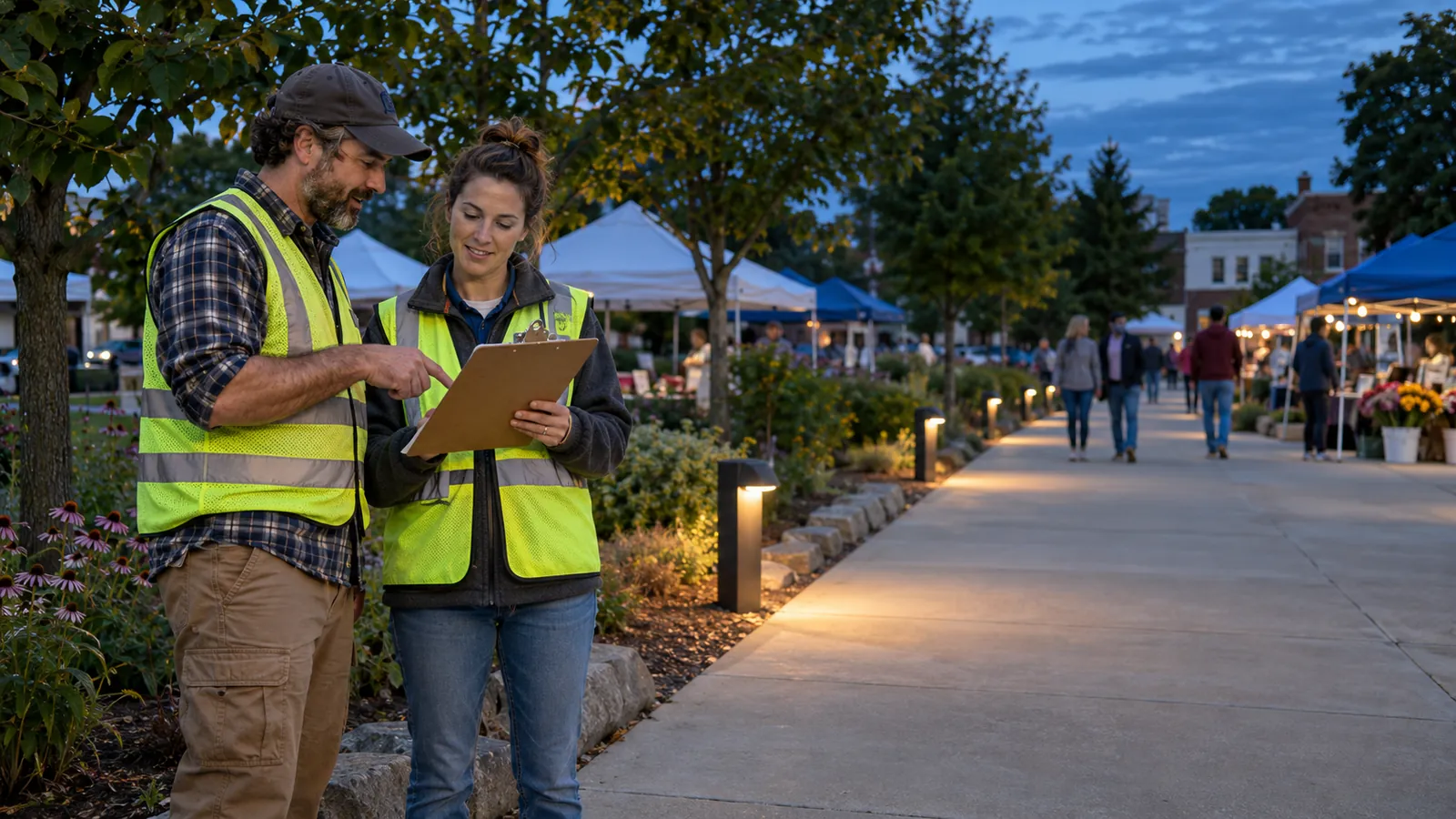
Think of a market with a kiosk near one gate and a row of stalls farther in. The kiosk worker needs light on a stack of schedules. The guest approaching the gate needs to see where the line starts and passes. The person leaving needs to pick out the approved walk back to parking. Each question has a different answer because the light has to help a different person see a different part of the site.
Walk the approved route while it is still light
Start where the organizer expects a newcomer to arrive. Use the approach a guest will actually take, rather than a staff shortcut you know. Look for turns before the next sign, a surface change the eye may miss after dusk, and places where a queue could make the walking line hard to recognize. Ask the organizer what should remain visible when the event is busy.
At the first turn, stop in a position where you are clear of the route. Face both ways and note where you can see the next sign, crossing, or staffed point. Continue along the entire approved route while conditions are suitable. For a parking edge, stay on the designated pedestrian side. Report if a driver-side view needs attention from staff assigned to traffic or parking.
Find the decision points people use after a visit. For example, a guest may leave through the same gate and find two paved paths that looked obvious before sunset. Which one is in the event plan? Where is the first directional sign? Who can answer that question from the gate? Resolve the question during the briefing so volunteers can give the same directions later.
At a venue that uses movable tables or banners, ask where those items belong after people arrive. A table shifted forward to make room behind a stall can create an obstacle near a walking route. Hanging signs and lightweight items can also sit directly in the view of a fixed sign. Route the issue to the organizer if a proposed layout changes what people can see or where they can walk.
Check where guests can ask for assistance or report an accessibility issue. Know the official accessible path and where to meet venue staff if that path has a problem. The team can send useful information without assigning someone to improvise a different route. Include the closest named entrance or destination in the briefing so a guest can describe the same spot.
Walk the same route as daylight fades
Darkness can expose a gap between fixtures that was barely noticeable during setup. Check from the same approved pedestrian route while there is still enough light to do it safely. Look for a sign that disappears behind a crowd, a step with a shadow over its edge, or a window that reflects a bright source instead of revealing the spot in front of it.
Ask what someone sees before the beam hits them. A bright lamp can catch a volunteer’s attention from a distance while making the surface around it hard to read. Observe from both approved directions when conditions permit. A location and a direction help the venue understand the issue. “At the bend leaving the east gate toward the parking walk” tells the lead where to look.
The practical idea behind the DarkSky and Illuminating Engineering Society outdoor lighting principles is to send useful light where it is needed, with shielding and aiming that limit spill. The guidance also recommends keeping output to what the task requires and using warmer light when possible. For a volunteer, check where your small task light lands. Ask the venue about adjustments to fixed fixtures.
A wet patch can hide the boundaries around it by reflecting an overhead light toward the observer. Stand on the approved dry side to report the issue, and tell the lead which direction makes it hard to see. The waterfront walkway lighting guide uses similar viewing checks around water. At an event, give the report to the person who manages access and lighting for that route.
Give the transition check a scheduled handoff rather than waiting for someone to notice it during a rush. The lead can assign one volunteer to handle the check at the time the venue expects to switch on its lights. If the event opens well before sunset, ask who repeats that check when daylight goes away. Outdoor tables and activities can keep volunteers busy enough to miss the change.
An automatic change can matter as much as sunset. If a building light switches off on a timer, ask whether the event schedule will outlast it. A volunteer can report when and where the change occurs. The venue can then review its settings or make another approved arrangement before guests need that part of the route.
Who should a volunteer call if a route light goes out?
Call the designated venue contact or event lead. Name the exact route, nearest marked point, direction of travel, and what you can no longer see from a safe position. Follow the venue’s instructions about pausing access or using an approved alternate route. Keep the public on the routes the organizer has cleared.
A good report gives the lead a place to start. You might say, “East gate, parking side. The light at the second turn is out, and the curb edge is hard to see.” Add whether people are already approaching and where staff can meet someone who comes to assess it. If you can report from a protected location, stay there rather than walking under the failed fixture for more detail.
Ask whether the lead has received the message and who is taking it. Some venues send a facilities team, while others use an event operations contact who works with the property owner. Give the team time to follow that plan. If you are assigned to remain at the nearest staffed point, learn who will tell you that the route is available again.
A working handheld light can read a label at the last clear point or help identify which sign is visible there. Keep it with the person who has that job. If a route needs ongoing attention, the organizer should decide how to keep people away, which approved arrangements are available, and when access can resume. Relaying that decision consistently helps volunteers along the route avoid offering contradictory directions.
If a guest reports something different from what you saw, pass both pieces of information along. A person using the route in the opposite direction may encounter a reflection, shadow, or crowd where your view was clear. Ask for a nearby sign and the direction they were walking. The event lead can send staff to the precise place and assess it under the site’s operations plan.
If the organizer pauses a route, confirm which other staffed points need the update. Someone at the parking edge may still give the usual direction while the volunteer at the gate has already stopped it. Use the approved message and route names so each end gives the same answer. Let the lead know if you cannot reach a staffed point.
Can volunteers use headlamps to light a public walkway?
A headlamp can help an adult volunteer read a checklist or finish a close task. The organizer still needs to provide the approved lighting for the public walkway. Keep the personal beam on the work, aim it away from approaching guests, and report any section of the route that has become hard to follow.
Switch off a task light when you no longer need it. A headlamp that works well at a bin follows your face when you turn to greet a guest. For a conversation at an information station, fixed venue light or a small downward beam on the table may be easier to share. Keep the station visible enough for an unfamiliar visitor to recognize it.
Two people at one desk may need the same surface illuminated. They can use the venue’s existing table light if it covers the papers. Move the work farther back on the surface when the bright zone is too close to the public side. Keep borrowed lights and clip-on equipment inside the staffed station. Ask the organizer before adding anything that overhangs the route.
A volunteer may also need to walk from one staffed point to another. Use the approved lit route. The working light can stay off in a pocket or on the headband unless you need it for a task. If a gap in the route makes that movement questionable, confirm your assignment with the lead before continuing. Clarity between stations belongs in the public lighting plan.
Choose a task light for the station and the volunteer
Begin with the task people already struggle to see. Someone counting named envelopes may need both hands and a light aimed straight down. A person at a staffed desk may only need the corner of a table lit while handing out maps. A small flashlight is easiest to share during a brief check. A wearable option keeps working while the wearer sorts two-handed.
Try the intended task in the light you already have. Set out one schedule or form in a spot the organizer approved. Have another volunteer stand at the place a guest would approach, then check where the light lands. If the light reflects off a plastic cover, move the reading item or change the angle and try again. Keep people off the actual route while evaluating equipment.
For any battery-powered light the crew provides, decide whether people should take one per person or borrow it at a station. Make the arrangement visible in the briefing. Set a place for the spent or faulty lights so a new volunteer does not collect a unit already reported as unreliable. Follow the manufacturer’s charging instructions in the assigned location.

The right-angle form makes the direction of the beam easy to see in the product photos. Decide before your shift whether you need the light to move with you or stay with the work at a table. If the job involves repeated conversations, a separate tabletop light can make it easier for the person working and the person approaching to use the station at the same time.
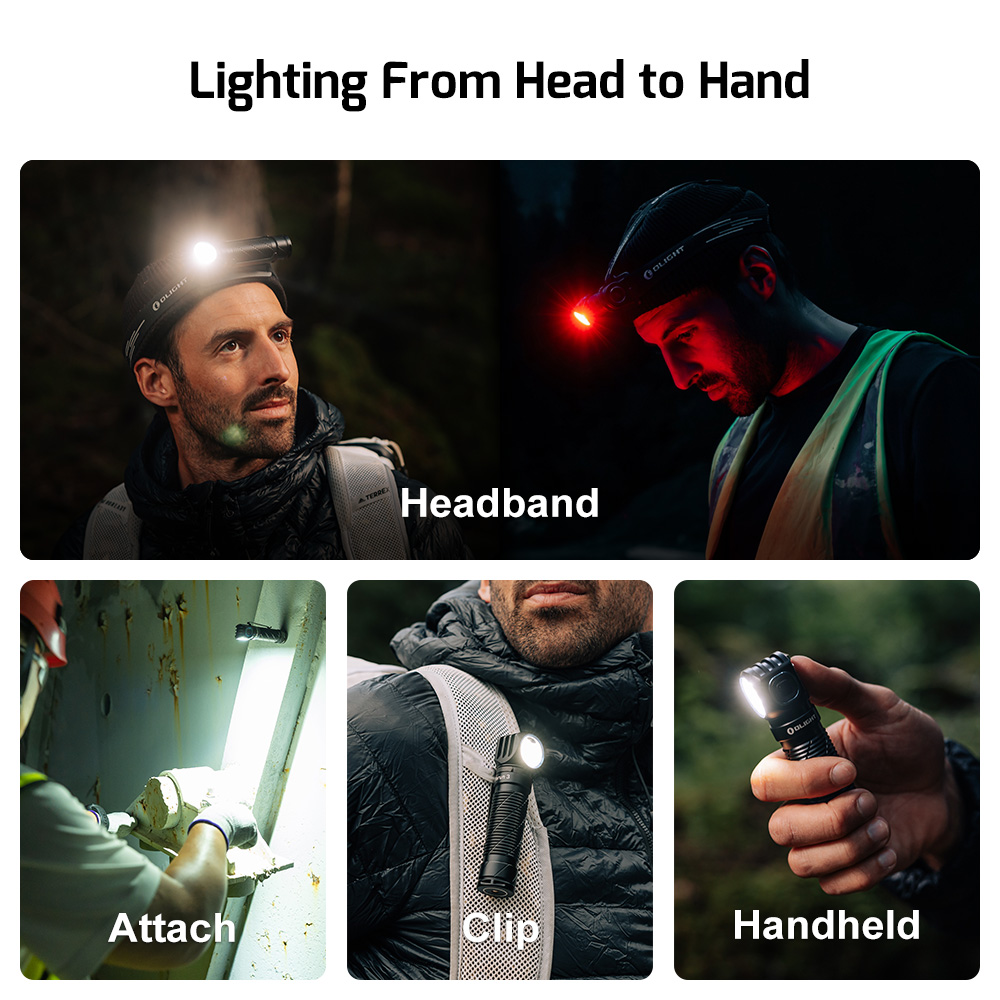
Olight shows the Black Perun 3 in its headband and held by hand, along with other ways to use the light.
Choose the wearable setup when the task needs both hands and the beam must move with the worker. Use it at a stable station until the job is done. If you need to read a label briefly with someone else, take the beam off the work before turning toward them. The same light can be held in the hand for an assigned stationary check.
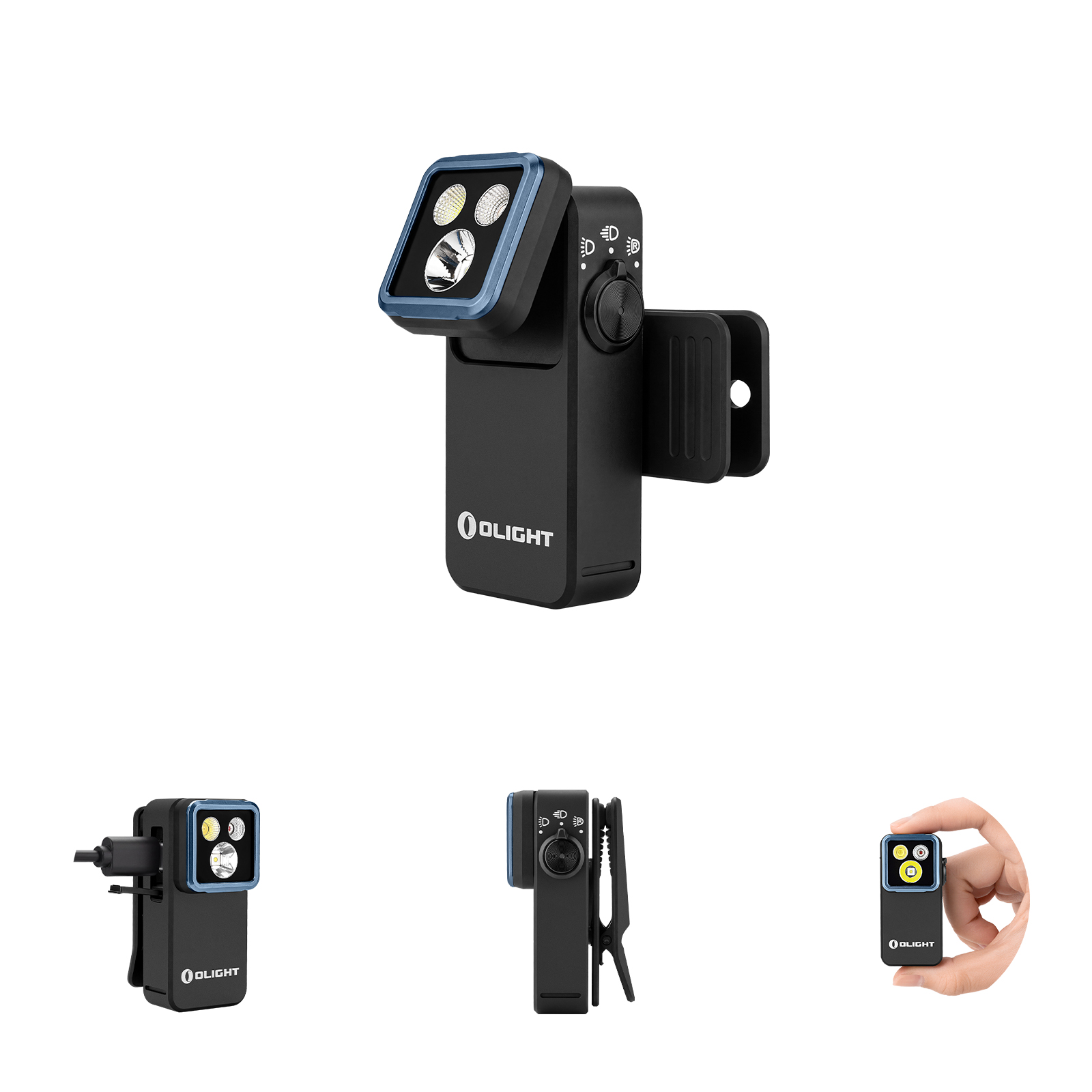
Sit at the station for the first check, then stand where someone would approach. Ask what you can see of the work surface from each side. If the light is distracting in the visitor’s view, take it off the clip before re-aiming it. Keep the table task inside the station and keep cables, charging gear, and light mounts away from moving guests.
Build some flexibility into the station setup. If check-in moves indoors or closer to the venue’s existing lights, the same small light may become unnecessary. Store it where the lead expects to find it. If a job changes from reading a page to helping someone find a destination, use the venue’s approved signs and directions. A portable beam should stop at the task it was selected to do.
For longer shifts, ask whether the same person will need a task light the whole time. A volunteer using it for a minute every so often has a different job from someone working continuously at a dark corner of a table. If the available light cannot cover the task reliably, move the work to a staffed location with dependable lighting or ask the station lead for a replacement.
Follow the venue’s plan when weather changes
A rain shower can change what the route looks like from each direction. Before the event, learn who reassesses slick surfaces, standing water, and dark approaches. The organizer may close the affected area. Keep away from damaged electrical equipment, report it to the venue without handling it, and follow the instructions for the area where you are working.
When organizers prepare for lightning, they need a decision-maker, a way to notify staff and visitors, and identified places for shelter. The National Weather Service lightning toolkit for outdoor venues describes those responsibilities and planned actions for outdoor venues. Ask how your organizer implements its own plan and where to direct people when told to do so.
Find the information the weather lead actually wants. If you are at an entrance, they may need to know whether a normal route remains staffed, a light near it has failed, or the site’s announcement can be heard from that point. Once the lead tells you to shelter or follow another action, follow the plan promptly. A task light is a tool for seeing the work when conditions allow.
Keep the weather plan where the team can reach it before the first shift starts. Give replacements the same briefing as the people who arrived earlier. In a small event, the person checking people in may also relay announcements. Ask whom that volunteer listens to and who covers the station if it must close. Knowing the role ahead of time helps people act without inventing new directions during a change.
Hand over the route at shift change
Tell the incoming lead which routes are still open, what lights are operating, and which problems the venue already knows about. If a route is paused, give the name of the place and say who can reopen it. Make it clear which decisions the incoming volunteer can make and how to reach the official who owns the rest.
Leave three details with a borrower returning a light: where it belongs, what condition it is in, and who needs to know if it is faulty. At a table with several people, put the equipment in the same place each time so someone can see at a glance whether a unit has gone missing. Keep the team’s charging arrangements at the indoor or dry location the organizer and device instructions allow.
Closing comes in stages. The last admission may happen earlier than the last guest leaving. Ask who is responsible for each stage and when the venue clears people from the site. If a table closes before the route closes, its volunteer should know who answers late questions. Keep venue-controlled route lighting in the hands of the venue until the site is cleared under its plan.
After the event, write a short note about any spot that people repeatedly asked about. Include the time, the route, and whether it was difficult to see from one direction or both. Keep guest information out of the note unless you were instructed to record it. The useful part for the next event is the physical location and what the team had to do about it.
A simple closing example is an information tent beside a paved path. The table stops handing out maps and collects loaned task lights. Some visitors still need the gate and marked walk to the parking edge. The lead confirms the path and its lighting will stay in use, tells the closing volunteer where to send questions, and gives venue staff the unresolved fixture report before the shift ends.
FAQ
Changelog
- November 19, 2026: Checked the 2025 annual workplace exit-route text, DarkSky and IES lighting principles, the NWS outdoor venue toolkit, and the two U.S. product pages and their original image records.