


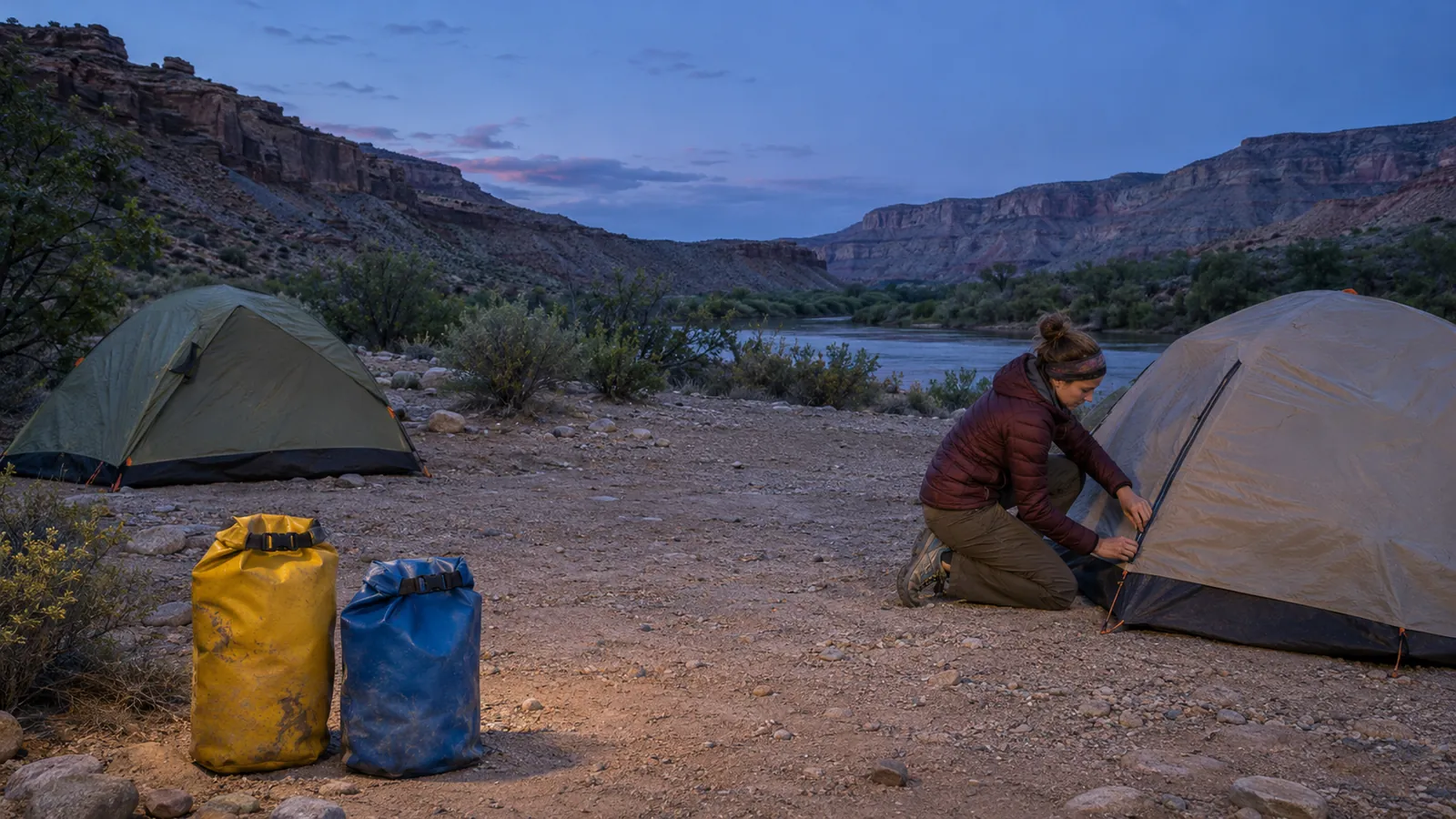
TL;DR: Pack a headlamp and a separate backup for camp, and ask your trip leader which dry bag you can reach as soon as you land. Keep a dry evening layer with that first bag. Walk the permitted camp routes while it’s light, and stay away from the river’s edge after dark.
📋 Table of Contents
- 1. Pack the bag you will open first
- 2. What should I pack for a multi-day rafting trip?
- 3. Do you need a headlamp on a rafting trip?
- 4. How do you keep things dry on a raft?
- 5. Walk the camp before the light goes
- 6. Plan power for the whole trip
- 7. Plan for a late or rainy landing
- 8. Run a dry landing rehearsal at home
- 9. FAQ
Pack the bag you will open first
| Use | Pack or confirm | Where it should be at camp |
|---|---|---|
| First trip ashore | Headlamp and dry evening layer | First personal dry bag to be opened |
| Backup light | Small independent light | A second dry closure someone can locate |
| Sleep setup | Bag, pad, tent, and dry socks as applicable | Main overnight bag or assigned group load |
| Shared camp jobs | Kitchen light, water, and toilet arrangements | Positions agreed on before dark |
| On-water equipment | Flotation and route-specific safety equipment | Where your trip leader directs |
Start with the gear list for your departure. A guided trip may supply the tent, camp kitchen, and one overnight dry bag per guest. A private group may divide the shared equipment among several boats. Confirm what each person brings, what goes into the supplied bags, and which bag will be accessible once you’re on shore. A packing list only helps if it tells you where your headlamp is when the group needs to unload.
Ask for the bag dimensions or capacity before you pack at home. If the group provides a large overnight bag and a smaller day bag, make a short list for each. Keep the items for the first few minutes on land in the small bag if the leader can give you access to it. Reserve space in the large bag for sleeping gear and clothing that can stay packed until your tent is ready.
Different rivers publish different instructions. The National Park Service’s Upper Delaware river trip packing list includes a flashlight among its general items and a waterproof bag in the boating section. The Bighorn Canyon waterway guide includes a dry bag, a headlamp, and spare batteries in an overnight checklist. Use these examples to ask better questions about your trip. The rules and gear list for your own launch govern what you carry and how it is stored.
If another person's bag looks identical to yours, arrange a label on the outside or ask which markings the group uses. Put the light where you can reach it without emptying wet clothes onto dry bedding. Ask where the gear crew puts bags when it unloads. A label visible from above is helpful if several bags are set together on a tarp.
What should I pack for a multi-day rafting trip?
Pack the clothing, sleep gear, personal medication, water supplies, and lighting your operator or group assigns to you. Bring a headlamp and a backup for camp even if the kitchen has its own light. Ask which safety equipment, food, tent, and toilet supplies the group provides. Pack within the assigned bag space and keep the first-use gear together.
Plan for distinct clothing jobs. What you wear on the river depends on the water, weather, and trip requirements. The gear for that part of the day may stay wet after landing. Keep an evening layer and dry socks behind a separate closure, and leave enough room in the bag that you can open it without pulling everything out. Wear the footwear and flotation equipment your route and trip leader require.
Set the sleeping system aside when you size your bags. A sleeping bag and pad can take more space than you expect when the assigned bag has to close correctly. If the group supplies a tent or pad, confirm exactly what they supply before you pack. It helps to know whether wet tent components come back into the group's gear bag or travel alongside your dry clothes the next morning.
Ask the group leader how drinking water and the toilet system will be handled. Carry only the personal items you are responsible for and keep any daily medication you need in the agreed accessible place. For routes with designated or assigned campsites, a campsite number and a plan for nighttime use are more valuable than another accessory. Find out where those instructions will be available once you lose cell service.
Expect a site with fewer conveniences than a developed campground unless the operator says otherwise. Keep your personal light usable when the group lamp is in another part of camp. Pack only the light and power you know how to operate. If you’re selecting a rechargeable flashlight, check how you will keep its light, cable, and charger dry on the specific trip.
Check the shared gear before you leave
A shared kitchen box may hold a battery lantern, cutlery, cleaning supplies, or a water container. One person may be assigned to load it and another to set it up. Learn where the light sits when the box closes. If someone has to rummage through supplies in the dark, there may be an easier accessible place for the lamp that still complies with the group’s transport plan.
Ask what happens if the setup changes after a delay. A landing may take longer than expected, or the first bags unloaded may not contain the group light. Agree that each person brings their own headlamp out of its first-use bag before taking on a camp job. That way the right person can find the shared light without having to fetch or share another camper’s personal headlamp.
Do you need a headlamp on a rafting trip?
Bring a headlamp for campsite tasks after landing. It leaves your hands free for tent setup, finding gear, and carrying a cup or dry bag along a familiar camp path. Keep a backup you can turn on independently, and ask who provides the group’s work light. Follow your route’s requirements for equipment used on the water.
Try the headlamp while wearing the hat you’ll use in camp. Set the strap so it stays put when you look down at a dry bag. Check how you tilt the beam toward the work without shining it across the whole site. If you need a brighter setting to recognize a footing hazard on a known camp path, raise the level only as needed. Reset to a lower level for close tasks.
A headlamp guide can help you compare fit, controls, and useful settings before the trip. Test the controls before leaving home. Find the button without looking, check that you can choose the intended setting, and practice any storage lockout required by the manual. The key question is whether you can set up a lamp for the task even when the first evening feels busy.
Pack the backup as a separate item you can open when you need it. A small light with its own power source gives you time to move to a safe part of camp, locate a battery or charger, or ask for help. Keep it in a different dry closure from the primary headlamp if the bag layout permits. Confirm that another person could tell you where both items are.

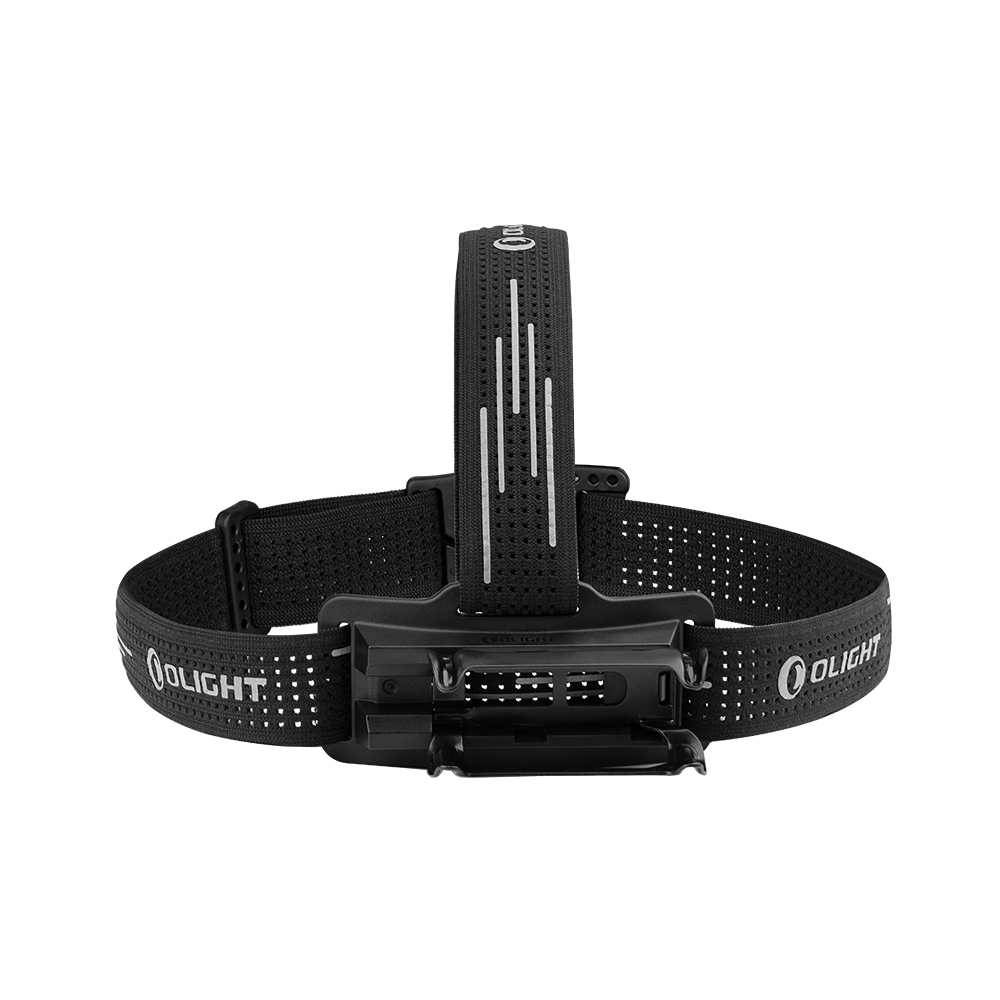
The Perun 3 headband and bracket are shown separately so you can identify and pack both parts.
Keep the headband with the light. A lamp found loose in a bag without its strap may still let you see the tent, but it leaves you with one hand occupied just when you need two. If you detach the light to pack it, put the bracket and lamp into the same small closed pouch. Do the first assembly before it gets dark, then put the pouch back where it will be easy to find.
How do you keep things dry on a raft?
Use the waterproof storage your trip leader approves, open it on stable dry ground, and close it according to the bag's directions. Put your personal lights and dry evening layer where you can reach them without exposing sleeping gear. Give important items their own inner protection if the operator allows it, and store wet clothing separately.
Learn which storage the guide expects you to open during the day. Some groups have a small personal bag that follows you to a lunch or landing and a main bag that stays with the boat crew until camp. Ask before adjusting gear on the raft. Follow the leader’s instructions about where items go, what stays accessible, and when it is safe to open storage. Keep the shore lighting plan within those rules.
On a dry campsite surface, brush grit from the bag opening and check the seal before closing it. Follow the closure instructions and leave the amount of free space the maker specifies. The amount can vary with the design. If jackets or towels keep the top from closing smoothly, repack them instead of forcing the closure. Plan for a place to set down the dry layer while wet items stay apart.
Keep the backup light in a different protected pocket or bag. A wet opening, spilled bottle, or unpacked pouch can affect all the gear inside one compartment. A second closure can make it easier to reach the backup without digging through damp clothes. Balancing that with the operator’s storage rules may mean two separately closed inner pouches in the same permitted bag.
Keep sand and moisture away from charging connections. Use dry hands in a stable sheltered area and follow the model’s instructions. If a light, cable, or connector is damp, put it aside and use the backup until you can check the gear and get it dry. Leave the light off while you inspect it. Keep power banks and spare cables in their designated dry storage between uses.
Walk the camp before the light goes
| Task ashore | Lighting choice | Where to put the light |
|---|---|---|
| Find clothes from the first bag | Personal headlamp | Wear it and aim it at the bag |
| Set up sleeping gear | Headlamp or small task light | Keep the light inside your work area |
| Prepare food at the shared table | Steady shared light | Aim down at the surface |
| Use an approved toilet route | Headlamp and a companion after dark | Follow the route walked in daylight |
| Check a riverbank concern | Ask the trip leader | Stay in the known camp area |
Walk the short routes from tents to the kitchen and the designated toilet area in daylight. Look for loose rocks, dips, tent lines, and the places people will cross while carrying something. Decide which route everyone will use to avoid making new paths through the site. The National Park Service’s campsite setup guidance recommends staying on familiar ground, going with a companion, and using a headlamp when you need to leave after dark.
Keep the area next to the water separate from the night's normal foot traffic. A bright beam can reveal a rock and still leave trouble beyond it. Beyond the area you walked in daylight, a light may show your next step while the route ahead remains unfamiliar. If a bag, boat, or other gear needs attention near the edge, tell the leader from the camp area so the group can decide what to do.
Only camp where your permit, guide, and land manager allow it. A bare sandbar can look suitable from the boat, but its permission or condition may be different from its appearance. For example, the Delaware Water Gap river camping rules identify sites with reservations and separate trip eligibility conditions. Confirm the sites available for your route before you depend on a particular landing or campsite.
River level can change the places available to stop and camp. Canyonlands National Park’s high-water guidance describes fewer available river camps during high flows and more challenging landings. Check current local conditions before leaving and listen to the trip leader when plans change. If the water starts rising or there is a concern at camp, alert the leader immediately and follow the current route’s response plan.
Use a steady light over a camp surface where several people are working. Aim it down and keep the surface clear of loose cables or items that someone might knock onto the ground. Choose a place visible from the approach so a new person can find the lamp without sweeping the whole campsite with a headlamp. Agree on who turns it off and returns it to a dry bag.
Keep one place in camp where a person can ask for help without walking from tent to tent. On a guided trip, find out where the leader wants people to check in if they need the first aid kit or a lighting backup. Learn the meeting place while there is still daylight. If you need to show someone what happened, a pointed headlamp can illuminate the spot while the other person keeps both hands free. Avoid sweeping the light across tents while trying to get the group's attention.
If the site has a divided layout, make sure the far tents have an agreed way to reach the common area. Walk the route together before dinner. Point out the turn and identify a clear landmark you can recognize under a low beam, such as the corner of the equipment tarp. When the group packs up that marker in the morning, confirm what to follow instead.
Plan power for the whole trip
Work backward from the jobs you expect to do. On a short trip there may be one dinner after sunset and one early pack-up. A longer trip can add repeated headlamp use, late arrivals, and more time at the shared table. Use those jobs to decide how much reserve you want. Check the expected runtime at a setting suitable for the work instead of choosing by the brightest number on the box.
Long trips often make ownership more important than a particular battery size. One person may bring the kitchen light and another the camp power bank. Identify which cable or battery works with each light while the whole group is still packing. If a charger requires a particular cable, store the matching parts together and make sure someone knows where they are. Keep your own working backup separate from a group charger.
Ask whether the guides expect you to recharge during the trip. A camp with no electrical service can still support a carefully planned portable charging setup, if you have a dry place and enough capacity. If you can start with a charged primary and a ready backup, you may be able to avoid opening charging gear on the shore. Check your own gear and trip length first. Keep affected equipment aside if a connector or charger has been exposed to moisture.
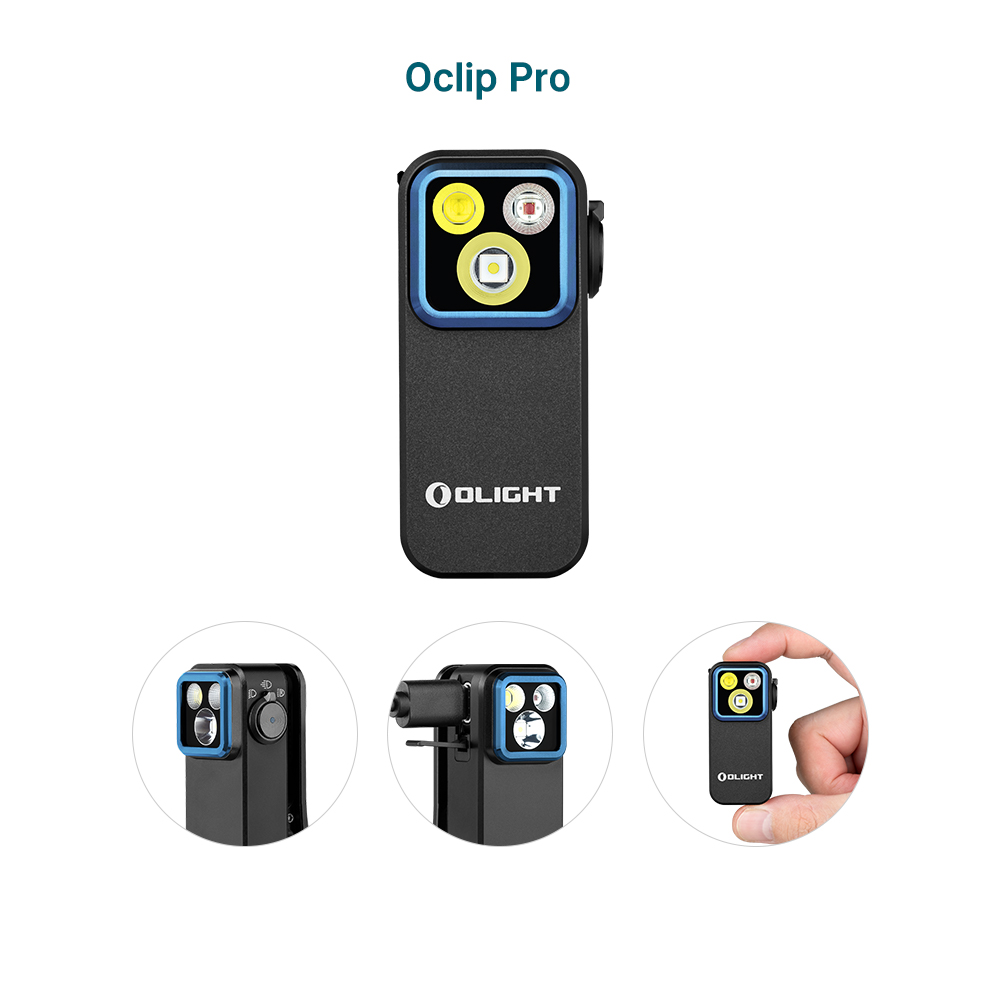
A compact flashlight can be a backup that fits a known spot. Check that you can operate it without searching the large bag or borrowing the shared light. Spare power can help when the first light runs low. A separate working source also gives you a way to see the bag and controls even if the first light stops suddenly.
In the morning, check the lights before they get buried under other equipment. Confirm that the shared light is back with the group supplies. Close the inner light pouch and keep it where you expect to access it at the next stop. On successive nights, one short reset can prevent a light from staying in a packed tent, a borrowed jacket, or a bag assigned to a different boat.
Plan for a late or rainy landing
Choose a simple order for the first minutes ashore. Your guide will decide when people can get out and where they should wait. Once the group is on stable dry ground, identify the area for the first bags. One person can point out the route to the tent area before anyone carries a load. A second person can find the shared work light while the rest keep their own headlamps available. Change the order if the leader gives other instructions.
If rain is moving through camp, use whichever covered dry space the group has designated. Open one container at a time and close it before moving to the next job. Keep sleeping items inside the main bag until their space is ready. If the first thing you need is a headlamp, a small pouch on top of the dry evening layers is easier to open briefly than a loose light below the clothing.
When the bag you planned to open isn't available yet, tell the leader where you packed the first-use items and wait in the agreed area. Grab a backup only if it's accessible there. A delay can change what the group does first. The simplest response may be to share a steady work light while people get their layers out, then let each person set up their own light once the bags are in the right place.
If a bag closure tears or jams, separate the affected items once you're on dry ground and can see what you're doing. Check which equipment stayed dry, and place wet gear where it cannot drain into the sleeping items. Use a working backup in the meantime. Ask the group leader what suitable storage can be used on the following day. Moving the protected essentials to a reliable closure can save time the next evening.
On a trip with different boats carrying personal and shared gear, use two questions before packing up in the morning. Who has the lamp for the next camp task, and can that person find it as soon as they need it? If the personal lights travel together, a single closed outer bag is convenient but can delay everyone when it comes off the raft last. Respect the group's load plan and identify where the first-use lights will be handed out.
The final morning can start before daylight even if previous mornings did not. Ask where the packed bags and people should gather, and keep a light available after the tent comes down. Confirm that the work light is accounted for before the group loads the last kitchen box. Those details may matter more than getting an extra hour from a mode you never use.
Run a dry landing rehearsal at home
Pack the bag you expect to open first and put it on a bench. Find the light, turn it on, and identify the dry layer without unpacking your sleep system. Ask someone else to find the backup if you say where it is. If they check three places before finding it, write a simpler bag label or use an arrangement you can explain in one sentence.
Agree on how an evening transfer works. The bag crew can show where the first bags are set, a personal light can make it easier to get the tent ready, and a shared light can stay at the table. If several people have crowded into one corner, put the bags where the group leader wants them and let people work through the opening sequence. The lighting should support that arrangement.
Take note of what you reached for first on the first night. The answer might be dry socks, an extra layer, or the light you can use while putting them on. Make one small adjustment before repacking if the guide allows it. Keep the rest of the layout consistent so you don't have to remember a new backup location every evening.
FAQ
Changelog
- November 19, 2026. Checked National Park Service river trip and campsite guidance, exact U.S. product options, and photo sources.




