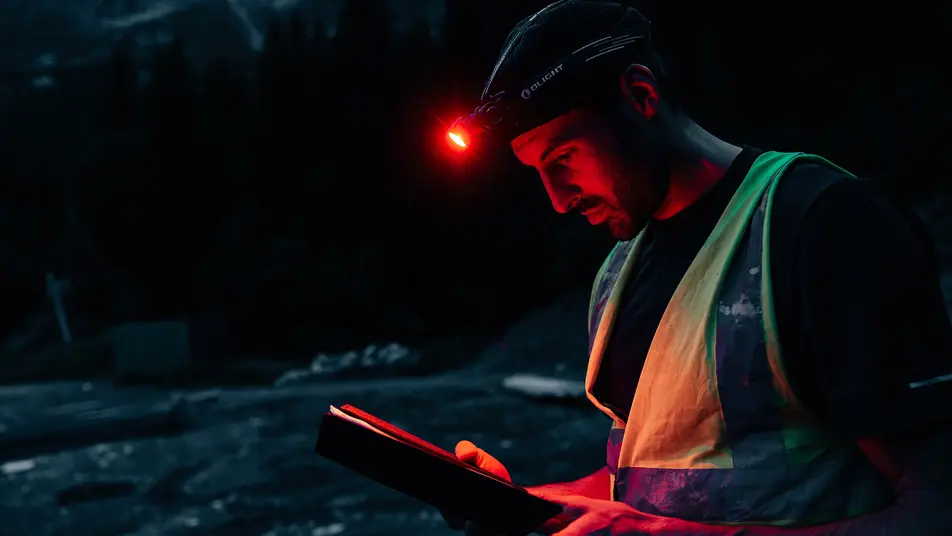
Whether you are navigating a rocky trail at midnight, adjusting a telescope under a cloudless sky, or checking a topographical map in the backcountry, preserving your eyes' adaptation to the dark is crucial. A single flashlight of bright white light can instantly wipe out hours of physiological preparation, leaving you temporarily blinded in the dark.
To prevent this, outdoor adventurers, tactical professionals, and astronomers rely on a specialized tool: a night vision red headlamp. In this guide, we dive deep into the biological mechanics of night vision preservation, explore practical applications, and review the best red light headlamp options to keep your hands free and your eyes adapted to the dark.
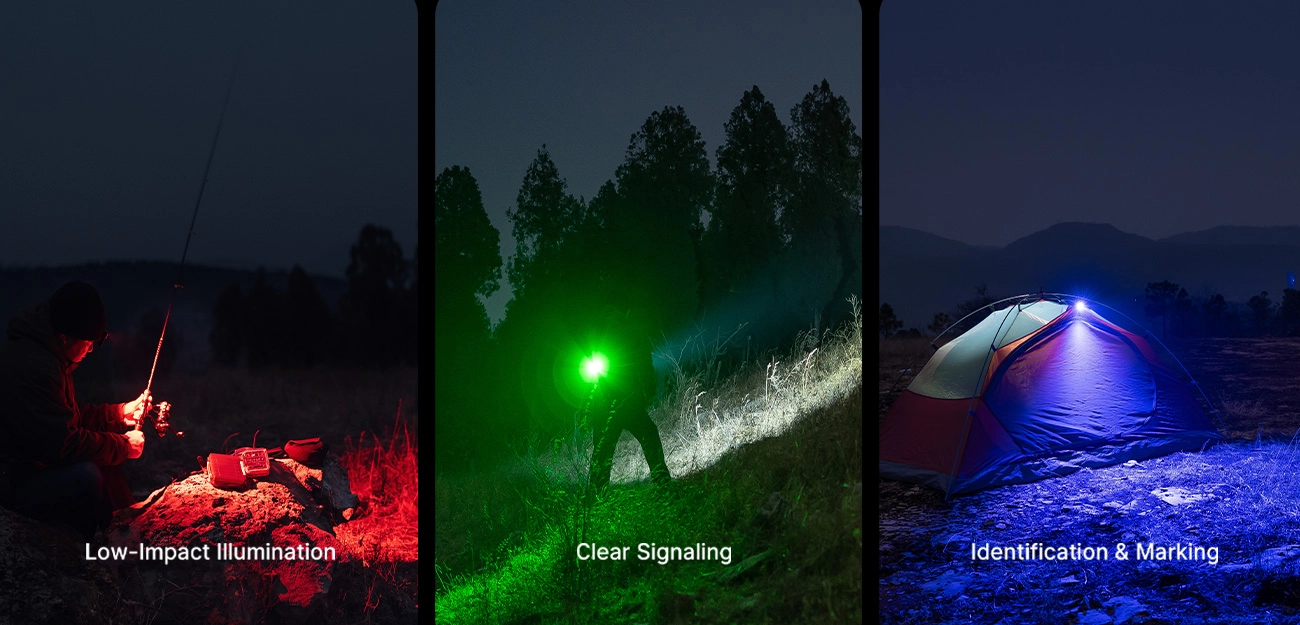
The Science: Why Red Light Preserves Night Vision
Retinal Rods vs. Cones: Wavelengths (>620nm) and Rhodopsin Protection
To understand why a night vision red headlamp is so effective, we must first look at the anatomy of the human eye. The retina contains two primary types of photoreceptor cells: rods and cones.
Cones are concentrated in the center of the retina and are responsible for high-resolution color vision. However, they require relatively bright conditions to function. Rods, on the other hand, are highly sensitive to light but cannot perceive color. They are responsible for peripheral vision and helping you see in low-light environments.
Rods rely on a highly light-sensitive photopigment called rhodopsin. As noted in research on phototransduction mechanics by the National Center for Biotechnology Information (NCBI), when exposed to light, rhodopsin instantly splits and bleaches, temporarily disabling the rod cells. When exposed to light, rhodopsin instantly splits and bleaches, temporarily disabling the rod cells. Rods are incredibly sensitive to shorter wavelengths of light, such as blue, green, and white. However, their sensitivity drop-off is steep when exposed to longer wavelengths above 620 nanometers, which corresponds to deep red light.(Source: phototransduction mechanics by the National Center for Biotechnology Information)
By using a red light for night vision, you illuminate your immediate surroundings using only your cone cells. Because the long wavelengths do not trigger or bleach the rhodopsin in your rod cells, your rods remain fully active and sensitive to the surrounding darkness.
Dark Adaptation Recovery: 20-Minute Delay vs. Instant Transition
When you step from a brightly lit room into pitch darkness, your eyes do not adjust immediately. According to the Wikipedia guide on Dark Adaptation, achieving full dark adaptation is a slow chemical process that takes roughly 20 to 30 minutes as rhodopsin slowly regenerates in your rods. Achieving full dark adaptation is a slow chemical process that takes roughly 20 to 30 minutes as rhodopsin slowly regenerates in your rods. (Source: Wikipedia guide on Dark Adaptation)
If you turn on a standard white flashlight even for a brief second to read a map or find an item in your backpack, that adaptation is lost instantly. You must then wait another 20 minutes in the dark for your eyes to recover.
Utilizing a hands-free red light bypasses this delay entirely. The red light provides just enough illumination for task work without disrupting the chemical state of your rods, ensuring an instant transition back to complete darkness when the light is turned off.
Pupillary Response and Low-Visibility Stealth
Beyond the chemical adaptation of your photoreceptors, light exposure triggers the pupillary light reflex. Bright white light causes the iris sphincter muscle to contract, narrowing the pupil to restrict light entry. This pupillary constriction severely limits your ability to see anything outside the immediate hotspot of your flashlight beam.
Red light induces a much weaker pupillary response. This allows your pupils to remain dilated, maintaining your natural ability to gather ambient starlight and moonlight. Furthermore, because red light does not scatter as easily in the atmosphere as blue or white light, it is far less visible from a distance, making it an excellent choice for tactical operations or low-visibility stealth.
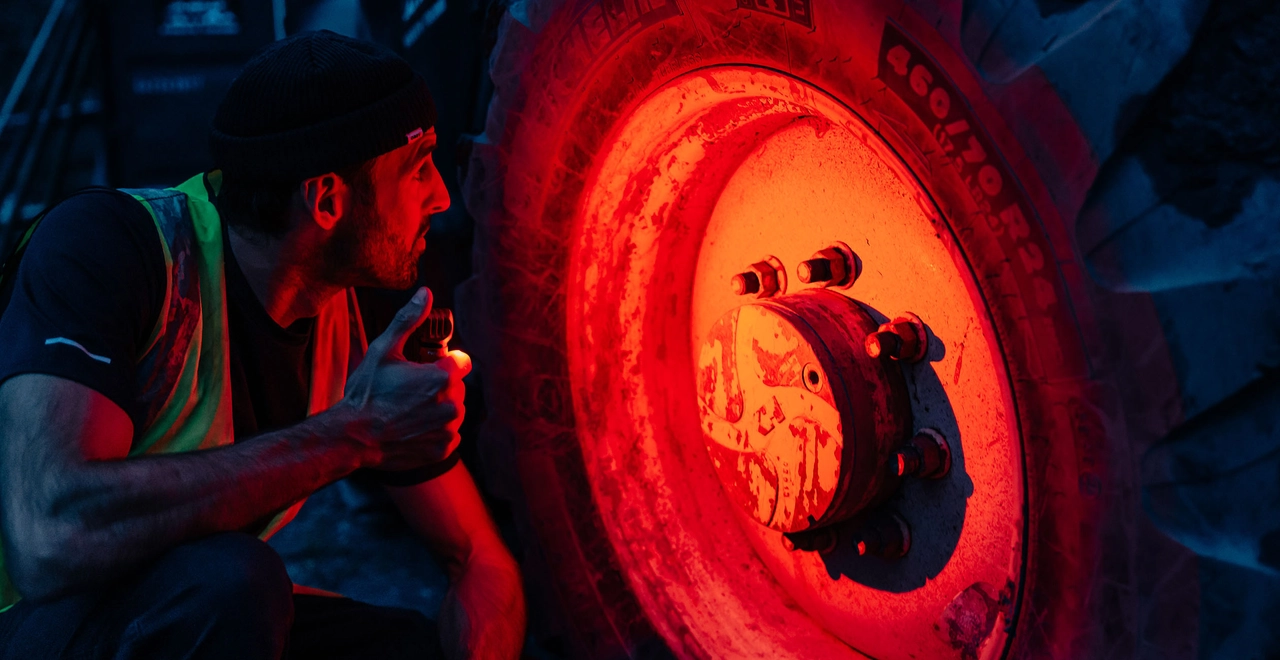
5 Real-World Uses for Red Light Tools
Stargazing & Astronomy: Reading Star Charts Without Ruining Dark Adaptation
In the astronomy community, white light is strictly forbidden at dark-sky sites. It takes hours for astronomers to adapt their eyes to detect faint nebulae and distant galaxies through a telescope. As recommended by the National Park Service Dark Sky Program, visitors and astronomers should use red-filtered light to preserve night vision during stargazing sessions. A night vision red headlamp allows observers to safely navigate telescope setups, swap eyepieces, and read star charts without ruining their hard-earned dark adaptation or disturbing fellow stargazers. (Source: National Park Service Dark Sky Program)
Hunting & Wildlife Stealth: Stalking Game Unnoticed by Mammalian Vision
Most wild mammals, including deer, hogs, and coyotes, are dichromats. Their eyes contain photoreceptors that are highly sensitive to blue and green light, but they lack the red-sensitive cones found in humans. Studies on mammalian vision published by the PLOS ONE Journal confirm that dichromatic mammals lack red-green color discrimination, making them insensitive to long-wavelength red light. This means they cannot easily perceive wavelengths in the red spectrum. Hunters use a red light for night vision to navigate through dense brush and set up their stands without alerting the game. (Source: PLOS ONE Journal)
Night Navigation & Map-Reading: Reading Topographical Lines for Rangers and Hikers
Reading a physical topographical map in the wilderness requires focused light. Using a bright white beam can cause blinding reflections off the paper or laminated surface. A hands-free red light provides soft, glare-free illumination, enabling search-and-rescue teams, rangers, and hikers to identify contour lines and physical features while maintaining peripheral awareness of their natural surroundings.
Baby Care & Nursery Night Use: Low-Disruption Illumination for Infant Sleep
Bright, blue-enriched white light suppresses melatonin production, signaling the brain to wake up. This is highly disruptive during late-night diaper changes or feedings. According to guidelines from the Sleep Foundation on light and sleep, exposure to red light at night does not disrupt circadian rhythms or suppress melatonin production. A low-output red light provides enough visibility to care for an infant without disrupting their circadian rhythm or fully waking them, helping both parent and child fall back asleep quickly. (Source: Sleep Foundation on light and sleep)
Emergency Signaling & Survival: Red SOS Modes for High-Visibility Hazards
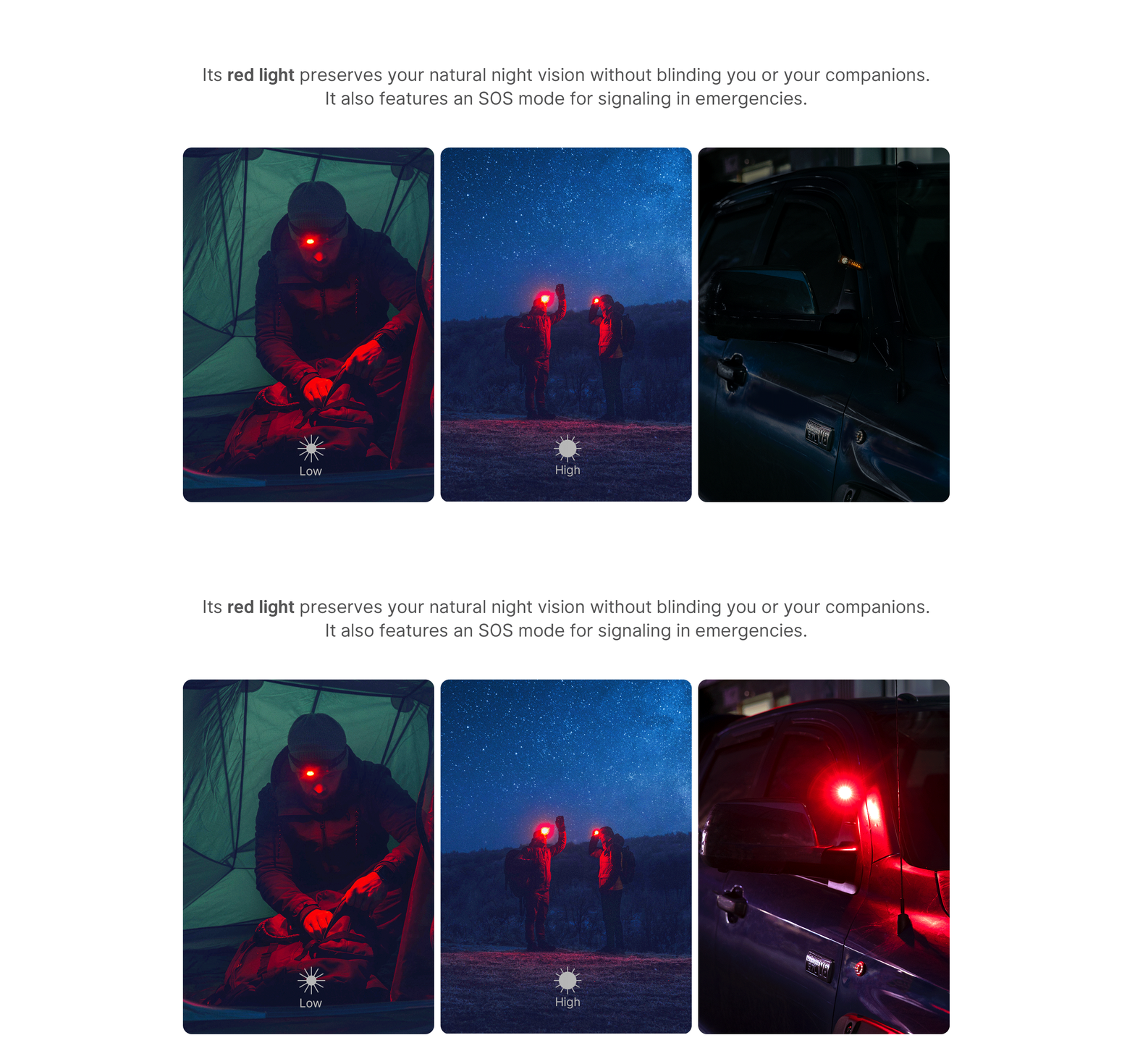
In emergency situations, visibility is life. Red light is universally recognized as a warning or distress signal. Many modern headlamps feature a red flashing or red SOS mode. Because red light penetrates through heavy fog, smoke, and mist better than cool white light, it serves as a highly effective beacon to alert rescue teams to your position.
Top 4 Red Light Tools Reviewed
Selecting the right tool depends entirely on your specific needs, whether you require maximum power for rugged outdoor searching or ultra-lightweight portability for daily tasks. Below are four of the best options available.
#1 Best Flagship Red Headlamp: Olight Perun 3
For demanding outdoor adventures, heavy-duty utility work, or search-and-rescue operations, the Perun 3 Headlamp stands out as an incredibly capable tool. This multi-functional, right-angle light provides the ultimate balance between brute white-light power and tactical red-light functionality.
Dual Light Sources
- Offers a massive 3,000-lumen white light with a 160-meter throw for wide-area searches, alongside highly efficient red light modes designed to preserve your night vision. Whether you are searching a tree line or reading a map inside your tent, you can seamlessly switch between high-output white light and stealthy red illumination without carrying multiple tools.
Hands-Free Adaptability
- The headlamp comes with an upgraded, comfortable headband, a magnetic tail cap for steel surfaces, and a pocket clip, allowing you to quickly transition from a headlamp to a handheld flashlight. This versatile mounting capability means you can instantly snap it onto a vehicle hood for emergency roadside repairs or clip it to your jacket strap during late-night patrols.
Massive Battery Life
- Driven by a high-capacity 5000mAh rechargeable battery, the Perun 3 can run for up to 20 days in Moonlight mode. Its red light low mode runs for an impressive 70 hours continuously, making it the brightest red light headlamp system for long-term deployments. You get total peace of mind on multi-day backcountry trips without worrying about constant recharging.
Glove-Friendly Control
- Features a large, concave metal side button that is easy to locate and operate even when wearing thick winter gloves. This tactile design ensures zero fumbling in freezing weather or high-stress tactical situations.
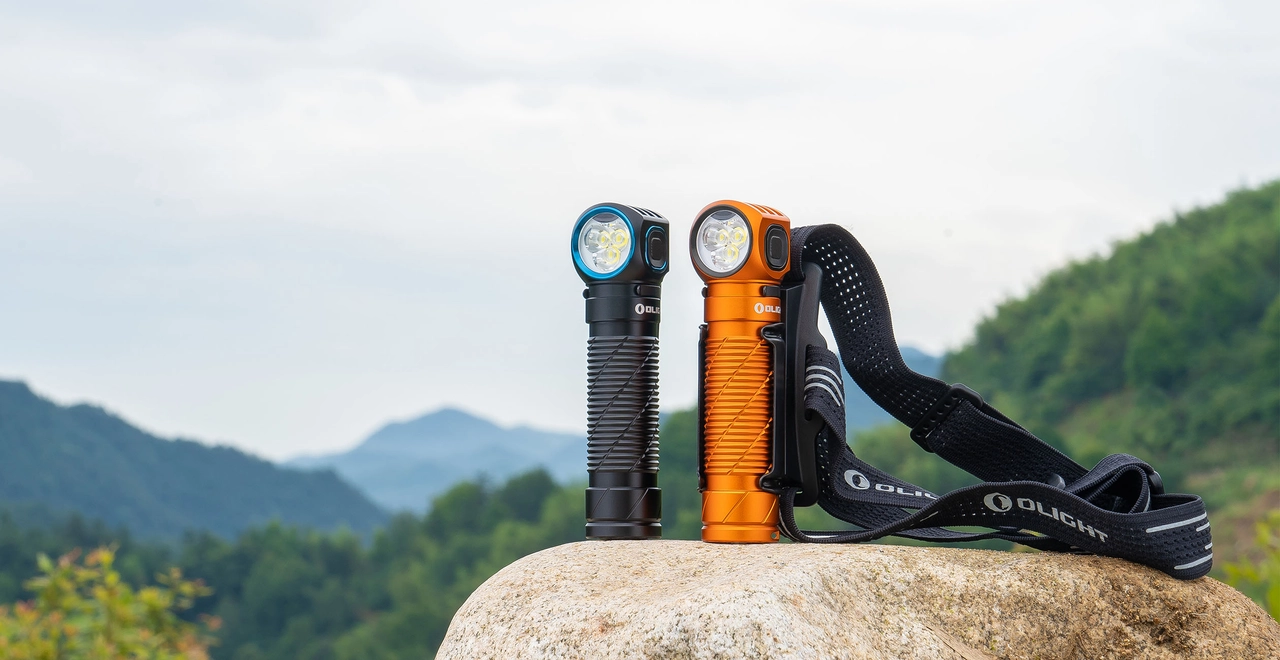
Olight Perun 3 Headlamp
Key Specs: Max 3,000 lumens output, dual white & red light sources, proximity sensor, and magnetic MCC3 charging.
Shop Perun 3 →#2 Best Ultralight EDC Headlamp: Olight Perun 3 Mini (Cool White & High-CRI Options)
If you prefer a smaller footprint without sacrificing durability, the Perun 3 Mini Headlamp Flashlight is an exceptional ultralight choice. Weighing significantly less than full-sized headlamps, it is ideal for night runners, backpackers, and everyday carry enthusiasts who need a reliable, weight-saving companion.
Quick-Release Design
- The innovative bracket allows you to detach the light from the headband in a split second, transforming it from a headlamp into a pocket-sized angled flashlight. This effortless modular design gives you total lighting flexibility whether on the trail or around the campsite.
Performance
- Delivers a bright 1,250-lumen white beam alongside dedicated red light modes optimized for night vision preservation.
Upgraded Comfort
- The headband is 25% lighter than previous models, constructed with 3D-breathable mesh, an integrated anti-sweat strip, and 360-degree reflectivity for added safety on dark roads. It feels practically weightless on your forehead, eliminating pressure points during long night runs or multi-hour stargazing sessions.
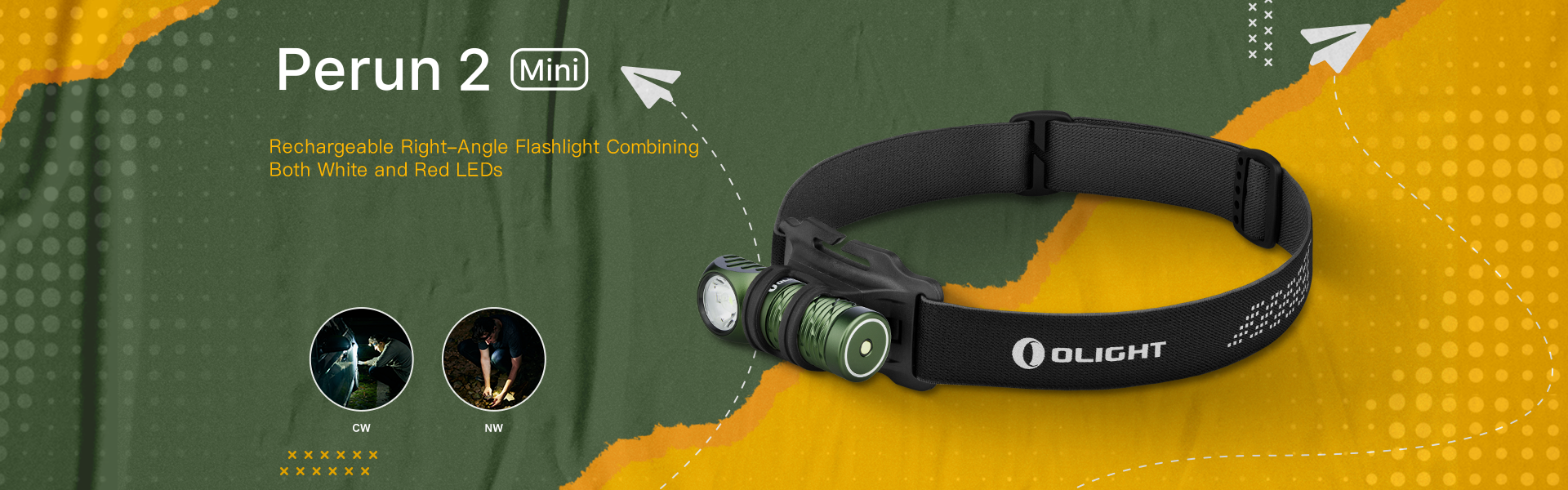
Olight Perun 3 Mini
Key Specs: Ultra-compact form factor with white and red light options, lightweight body, and 180° rotation.
Shop Perun 3 Mini →#3 Best Versatile Clip-On & Cap Light: Olight Oclip Pro
For tasks that don't require a full headband, the Oclip Pro Series offers a highly versatile alternative. This compact device can be clipped directly onto a baseball cap brim, a backpack strap, or magnetically attached to a car hood, making it a stellar option for hands-free red light use.
Three-in-One Lens Design
- Integrates a 500-lumen floodlight, a focused 120-meter spotlight, and a dual-output red light (40 lumens and 4 lumens). You can easily cycle through these options using the intuitive rotating side selector. This all-in-one optical setup eliminates gear clutter, allowing you to tackle broad illumination, long-range spotting, and night-vision preservation with a single device.
Durable & Portable
- Measuring only 2.24 x 1.1 inches, this compact unit features a heavy-duty spring-loaded clip, a lanyard loop, and a powerful magnetic base.
Long Endurance
- Offers up to 144 hours of runtime in moonlight mode and charges quickly via a hidden, waterproof USB-C port. You can quickly top off the battery anywhere using a standard power bank or car charger.
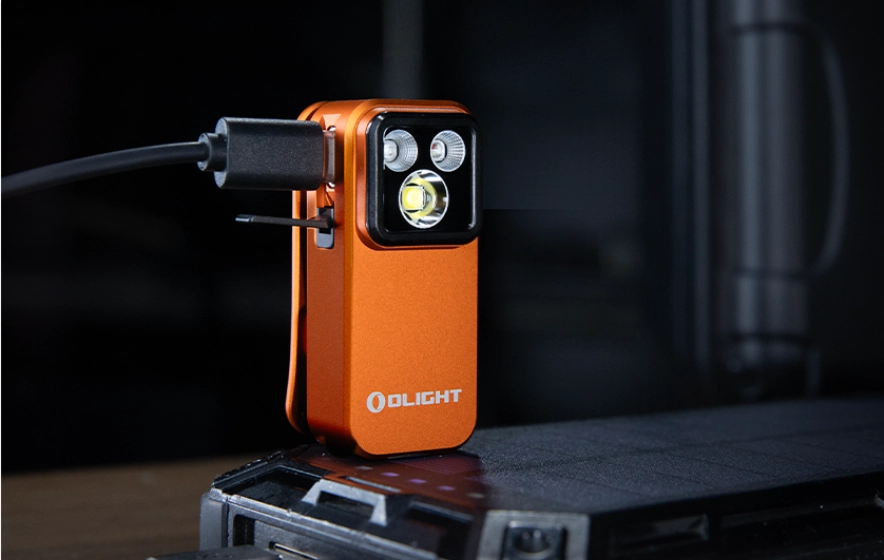
Olight Oclip Pro Series
Key Specs: Features floodlight, spotlight, and red light modes in a convenient hands-free clip-on design.
Shop Oclip Pro Series →#4 Best Micro Emergency Clip Light: Olight Oclip
When size and weight are your absolute top priorities, the Oclip Clip Light is the perfect micro-sized companion. Designed to be attached to your gear and forgotten until needed, this tiny light provides excellent close-up illumination.
Dual Light Output
- Delivers up to 300 lumens of white light for general illumination and a steady 4-lumen red light to maintain your night vision. It provides just the right amount of soft red light for checking gear, reading, or navigating a pitch-black bedroom without waking others.
Ultra-Compact Footprint
- Weighing just 1.06 ounces and measuring under two inches in length, it can be clipped to collars, pockets, or keys effortlessly. It serves as the ultimate grab-and-go emergency backup light that you can carry every single day without feeling weighed down.
Robust Clip
- The durable clip is engineered to clamp onto materials up to 14mm thick and has been tested to withstand over 10,000 cycles without losing tension.
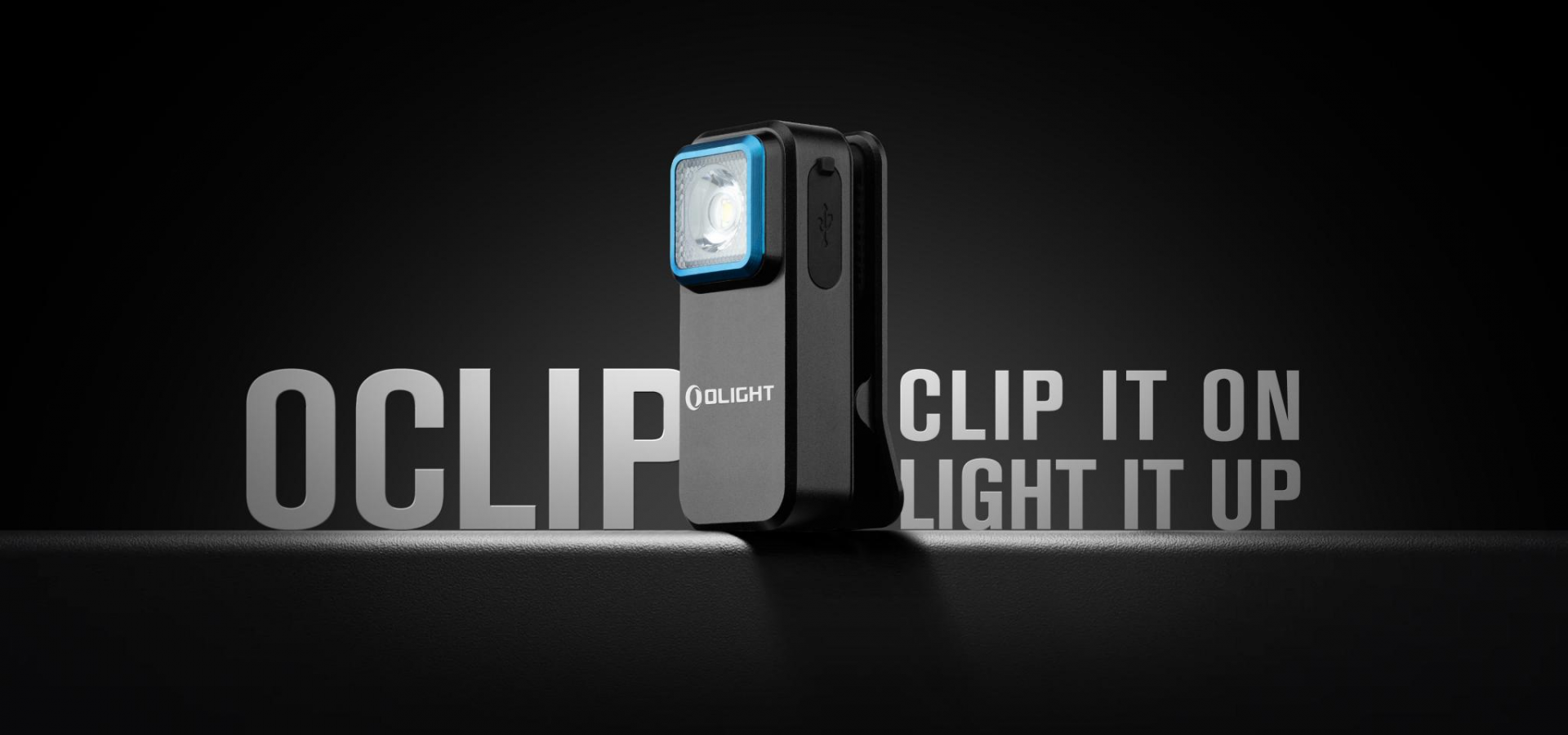
Olight Oclip Clip Light
Key Specs: Portable clip-on EDC flashlight featuring high output, secure clamping, and convenient USB-C recharging.
Shop Oclip →Red vs. Green Light: Which Preserves Night Vision Better?
Night Vision Retention: Why Red Light Wins for Rod Cell Protection
When it comes to pure night vision preservation, red light remains the undisputed champion. Because the human eye's rod cells are almost completely insensitive to wavelengths longer than 620nm, red light allows you to complete close-up tasks without bleaching rhodopsin. Green light, which falls around the 500-550nm range, directly stimulates rod cells, meaning it will degrade your dark adaptation much faster than red light at equivalent lumen levels.
Detail Clarity & Contrast: Why Green Light Excels for Complex Map Reading
While red light is superior for protecting your night adaptation, it does have a major limitation: visual acuity. Official flight safety guidelines from the FAA Pilot’s Handbook of Aeronautical Knowledge show that because human eyes have fewer red-sensitive cones, resolving fine details under red light is more difficult, whereas green light aligns with peak human visual acuity (Source: FAA Pilot’s Handbook of Aeronautical Knowledge)
.
Additionally, red lines on topographical maps disappear completely under red light. Green light falls directly in the peak sensitivity range of human vision, allowing you to see fine details, text, and contrasting lines with significantly lower lumen outputs.
Target Audience Recommendation: Red for Astronomers/Tactical vs. Green for Night Runners/Rangers
- Choose Red Light if: You are an astronomer, star-gazer, military operator, hunter, or wildlife photographer. In these roles, maintaining absolute dark adaptation and low-visibility stealth is critical.
- Choose Green Light if: You are a trail runner, park ranger, or navigator who needs to read highly detailed maps or walk along treacherous terrain where spotting fine trail details is vital for physical safety.
No matter your outdoor passion, adding a dedicated night vision red headlamp or a versatile hands-free red light to your gear kit ensures you can always navigate the darkness safely, efficiently, and without losing your natural night vision.