


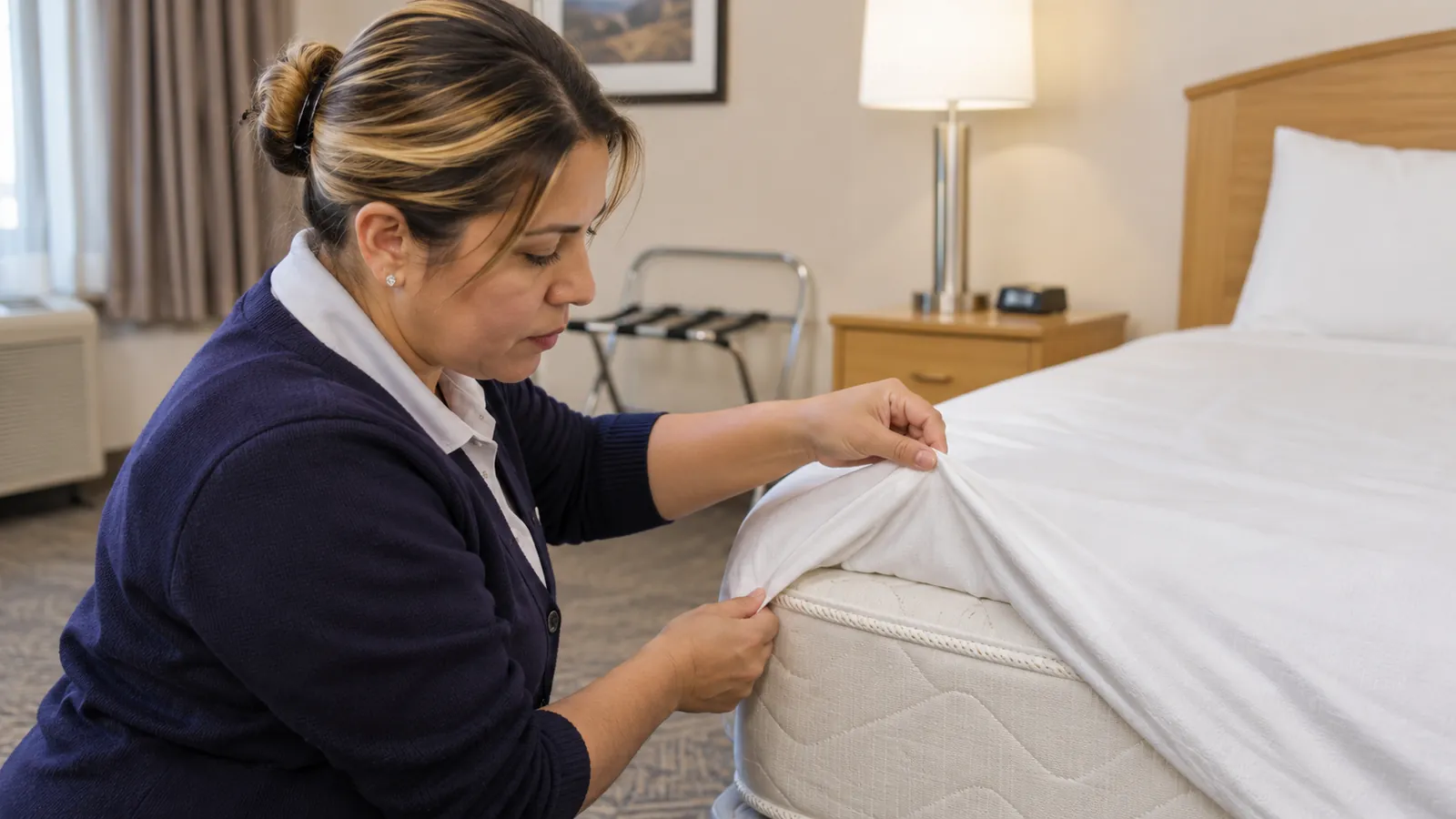
TL;DR: A black light alone cannot confirm or rule out bed bugs. For a room check, leave the room lights on and use a white flashlight and a magnifier to inspect accessible seams and joints. Record the exact location of any physical signs, then report them through the property’s procedure so a qualified person can assess the room.
📋 Table of Contents
- 1. Start with visible signs and an exact location
- 2. Will a black light help you see bed bugs?
- 3. Check the accessible seams and joints
- 4. Choose a white light and look at the shape
- 5. What draws bed bugs out of hiding?
- 6. What kills bedbugs immediately?
- 7. Two white-light options for different room checks
- 8. Make the report useful to the next person
- 9. Frequently Asked Questions
Start with visible signs and an exact location
| What you notice | What it can tell you | What to record |
|---|---|---|
| Small dark spots near a seam | Possible fecal spotting among other causes | The surface, extent, and nearby detail |
| Rusty or reddish marks | A sign worth checking alongside other evidence | Where the marks appear on the linen or mattress |
| Pale skins or tiny pale objects | Possible shed skins, eggs, or other material | The shape and whether the item sits in a crevice |
| A small flat insect | A specimen may help an expert identify it | The exact place and a photograph if allowed |
| Glowing mark or a report of bites | A reason to ask for a closer check | The location or complaint, with uncertainty stated |
Picture a room after checkout. The sheet covers the top of the mattress, but its piping remains tucked into shadow. Something dark near one corner could be lint, a mark on the fabric, or a clue worth reporting. A room check starts by making that small area visible, then noting where it is and what you can see. A bright patch from a lamp is useful only if it helps you examine the detail.
The U.S. Environmental Protection Agency's guide to finding bed bugs describes dark spotting, rusty or reddish fabric stains, tiny eggs and eggshells, shed skins, and live insects as physical signs to look for. It also identifies mattress piping, seams and tags, and cracks around a headboard or bed frame as possible hiding places. A single mark may have a different cause, so write down the observation and let a trained person make the identification.
A routine room check has a different job from a pest inspection. A housekeeper can note an unexpected mark at a particular seam. A pest management professional can assess its identity, inspect inaccessible parts, and decide what else needs to be checked. Know which role you have before you start. Stop at the limits of your assignment so the next person can inspect the room without rebuilding the original scene.
Start on an unoccupied room you're authorized to check. Turn on the overhead and bedside lights and make sure you can move safely around the bed. Check where you would set your work phone or flashlight when it isn't in your hand. A clear hard surface designated by the property is easier to manage than using the mattress or an upholstered chair for equipment.
Keep the room record open while you check so you can distinguish an observation made now from one reported earlier. The same corner can be described differently by a person standing at the doorway and a person looking at the wall from the head of the bed. Use fixed landmarks, such as the end nearest the mounted headboard, and include the side nearest the window or door if those features make the location easier to find.
When the room has two beds, identify the bed before mentioning the seam. A report that simply says “right corner” leaves room for interpretation as soon as someone enters from the other side. A clear note such as “window-side bed, corner nearest the headboard” gives the next inspector a useful starting point. Pair that location with a brief description of what you could see so they know whether they are looking for spots, a loose object, or a moving insect.
Will a black light help you see bed bugs?
A black light can make some materials stand out, but a glowing mark cannot tell you what made it. A surface that shows no glow has not been cleared. Start with a visible white flashlight and a magnifier, look for physical signs in accessible hiding places, and report observations that need identification.
Think of a spot as a place to look again under ordinary light. Its relation to a seam, fold, or joint can matter more than how it first caught your eye. A glow cannot give you the shape of an insect or tell you whether a room has current activity. When a coworker says something glows near the head of the bed, ask which seam and what can be seen with the room lights on.
Surfaces in a room change the view. A patterned mattress can hide a tiny pale object. Glossy trim can give you a bright reflection that hides the actual edge. If the view is unclear, try white light from another angle or look through a magnifier while keeping the surrounding room lit. Look for shape, color, and location together before recording the detail.
The Cornell Integrated Pest Management bed bug FAQ recommends using a flashlight and a magnifier for visual inspection. It also explains that blood spots, shed skins, and already hatched eggs can remain after an infestation has been dealt with. A past record can give a reporter useful context, but any new observation needs its own date and location.
If your property has a separate inspection procedure, follow it and leave the findings in its reporting system. Avoid treating a quick light check as a room clearance decision. Even accessible surfaces can contain areas you cannot see from your position. Note those limits plainly, especially when the complaint is specific and the area the guest indicated is hidden by furniture or bedding.
It helps to separate two decisions. First decide whether a feature is worth documenting, and then leave its identity open until a qualified person can see it. A raised edge and a flat mark on fabric may call for different close views. Neither requires you to label a room during a quick check. The same approach works for a shape that catches the eye under a room lamp or a bright point someone first noticed under a black light.
A property that has recently replaced a bed or changed bedding may have a record that matters later. Do not try to tell how long a stain or pale object has been in place from its appearance alone. Record the date of the current observation and ask management to attach relevant room history if the specialist needs it. That preserves the evidence without making the freshly made bed or a recent cleaning date do more work than it can.
Check the accessible seams and joints
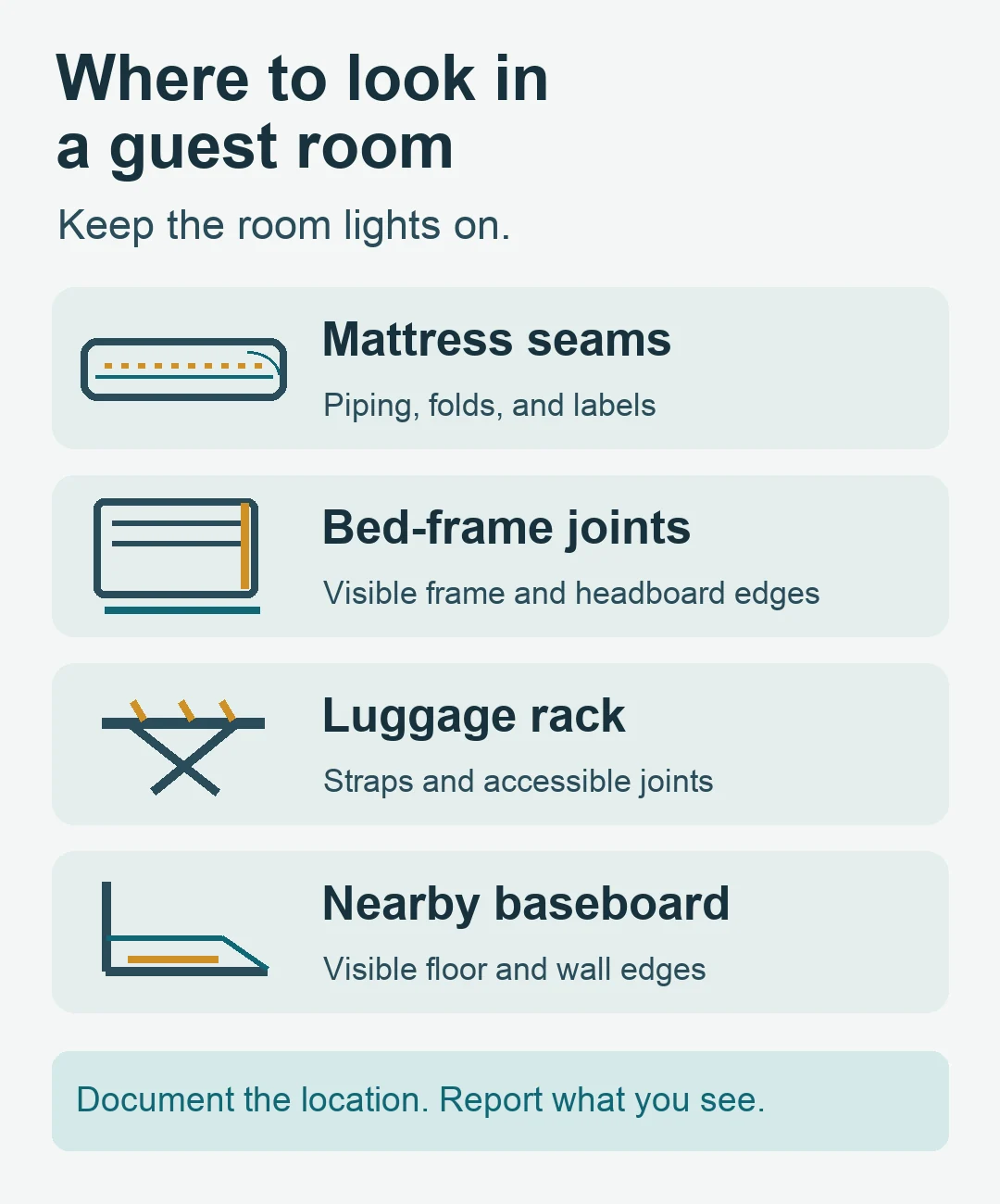
Check accessible seams and edges, then document the exact location of anything unusual.
Start with the edge of the mattress that you can see during the usual work. Check any exposed piping, folds, corners, and accessible labels. Bring the beam close enough to see the stitching without touching the fabric with the lens. Aim from the side if a shallow fold hides the seam. Keep your work phone and other equipment off the surface you are checking.
Next look at the visible headboard and bed-frame edges around the sleeping area. A snug wood joint can hide in the shadow left by a lamp above it. Point white light along the gap and view it from a stable position. A mounted headboard, heavy bed, or part that needs tools belongs with an authorized specialist. Report the location and access limit to the person managing the inspection.
Check a luggage rack from the same kind of accessible position. Look at the straps, their joins, and any joints you can see without turning the rack over or moving belongings. The EPA's prevention guidance advises checking hotel luggage racks and warns that bed bugs can travel with luggage, furniture, bedding, and other items. Keep bags and supplies where the property's procedure directs. Avoid putting them on the bed while you check it.
Finally, look at the nearby baseboard and the edges of accessible furniture around the sleeping area. A check from the doorway might miss the low side of a baseboard by the headboard. Shine along the edge from a position where you can stand safely. If the room is cluttered or the view is blocked, record what you couldn't see. Leave outlets, fixtures, and heavy furniture in place.
Choose an order you can remember as you move. Starting from the same side of the mattress lets you be clear about which corners you covered, and room landmarks are more useful than a general note saying you looked near the bed. If you're interrupted, write down the last location you checked before you step away.
A check may stop and start during a busy shift. If routine work is interrupted or furniture blocks the view, write down what remained visible. “Piping and frame edge seen on the window side, rear joint unavailable” gives the next person two precise details. If a guest or another employee enters while you're looking closely, set the light down switched off, keep the space accessible, and follow the property's procedure for continuing an inspection.
If the room has a mattress cover or encasement, check the visible surface and any accessible seam that the property wants checked. Leave the cover installed and report tears or gaps if you can see them. If a visible label points to a part you cannot reach, identify it in your note so the person assigned to a fuller inspection can decide how to deal with it. A routine check benefits from knowing where to stop.
Choose a white light and look at the shape
A handheld white light gives you control of the angle. Hold it at one side of an exposed seam and see whether the fabric detail becomes clearer. If the center is uncomfortably bright, turn it down or move it slightly farther away. Use the room's overhead lighting to keep the surroundings visible while the handheld fills in the shadow. Avoid pressing the light against fabric.
A headlamp leaves both hands free, which can help when a trained housekeeper is already managing a lightweight sheet during an authorized check. Adjust the beam to the target surface before you bend toward it. Bright light will follow your head as you turn, so direct it away from coworkers or occupants and lower or switch it off at the end of the check. Keep enough room light to see the floor.
A simple magnifier can help separate a loose fiber from a shape with a distinct edge. Use it with white light coming from the side so the lens reflection does not cover the mark. It can magnify what you see but does not settle insect identity. If an item needs expert review, report where it was found rather than rubbing a mark between your fingers or trying to pick it out of an inaccessible crack.
| Tool | Best role during a room check |
|---|---|
| Room fixtures | Keep the room, work surface, and route visible |
| Handheld white light | Change the angle at a visible seam or edge |
| Headlamp | Keep hands available during authorized light work |
| Magnifier | See fine shape or texture in an accessible spot |
| Work camera or phone | Record location and visible detail if approved |
If the light comes from behind your hand, your own shadow may hide what you are trying to see. Shift the beam slightly to one side or orient the item visually without pulling it apart. For unusually reflective material, let the room lights provide most of the illumination and supplement from an angle. The goal is to make the detail easier to describe under conditions you can explain.
A rechargeable flashlight can fit this work if its lowest usable setting is easy to reach and the device is ready at the start of the shift. Check it before entering the room. If you rely on a headlamp, check that the band holds its aim without having to keep adjusting it. Light that wanders out of position can make a small clue appear and disappear as you move.
For an image, make the first view wide enough to locate the object. Then make a second closer view so someone can see the part you described. Use the same white light and keep the phone stable. Keep guest information and belongings out of the frame and follow the property's record and photography rules. An image of a blurred dot without a room location is hard for a second inspector to act on.
Decide what the magnifier will add before you pick it up. A photograph of an object beside a recognizable seam helps the person receiving the report orient themselves. If the object is too small for the camera to focus, describe its visible outline and where it sits. Keep your light and camera separate if you can, so moving the lens does not keep changing the direction of the light and hiding the mark in your own shadow.
The routine may work differently on night and day shifts. A window can supply useful light during the day, while the same corner may rely entirely on fixtures later. Leave the general lighting on so the next few steps from the bed to the door stay visible. At the target, use a level that shows the surface without washing out the detail. Record if the room's lighting or the available access prevented a good view.
What draws bed bugs out of hiding?
Bed bugs use cues associated with a host, including exhaled carbon dioxide and body heat. That behavior helps explain why areas near sleeping places deserve attention. For a routine room check, look at the known hiding spots and report what you see. Leave the choice of any monitor or additional detection method to the pest professional.
Virginia Cooperative Extension's account of bed bug behavior explains how host cues help bed bugs find a meal and why the insects are often close to places where people sleep. It also describes how they spend time in hiding places. A quick visual check gives you a view of the areas you can reach, so an absence of movement during the check only describes that moment.
If a guest mentions a particular side of the bed, start by documenting the information and passing it to the person who runs the response. You can check the visible seam at that side if authorized. A live suspect insect, dark spotting, or a pale skin are different observations. Record each separately so the next person can decide how the clues relate and if another area needs attention.
Leave attempts to attract insects to a professional. An improvised lure can distract from the new report, and a quiet room gives no reliable answer on its own. If management has set out a monitoring device, follow the established instructions for checking and documenting it. Let the supervisor or specialist handle placement changes or decide whether a device is appropriate.
If a room has upholstery near a bed, write down whether it was visible during the first check. The first observations may cluster near the mattress because those surfaces are easiest to see, while a chair seam stays tucked under a cushion or blocking furniture. Share that gap before someone assumes the entire room was covered. Leave the decision to open furniture or inspect a neighboring room to the people authorized to plan the follow-up.
What kills bedbugs immediately?
There is no single quick action that reliably clears a room and its hiding places. Follow the property’s response procedure and have an experienced pest management professional identify the problem and choose a treatment. Keep room checks separate from treatment. Use the flashlight to see the area and leave infestation treatment to the specialist.
The EPA's bed bug control guidance begins with identifying the problem and describes management as a process that can take time. A housing or lodging operation should follow its own authorized response. Staff doing an initial check can preserve information and keep belongings and equipment from being moved around before management gives direction.
Let the person responsible for the incident tell you what to do with linens, furniture, and supplies. Carrying them to another room may spread the problem, and routine cleaning can also change the location of visible evidence. Step aside and report before continuing in a suspected area. This lets the person assessing it compare what you observed with what they can inspect directly.
Avoid changing the room status on the basis of one stain or an apparently clean seam. Let management or the designated specialist decide whether the room should be used, what areas need follow-up, and what records must be kept. For a private home or rental, contact an experienced pest professional and keep your notes where you can refer to them during the visit.
The fastest useful action after a suspicious finding may be a clear report sent through the agreed channel. If a supervisor calls back, be ready to say whether the image shows the original position or a wider view of the room around it. Do not direct a coworker to handle the material by text or message. Once the assigned person is notified, wait for the property's instructions about access, cleaning, or moving items.
Keep inspection materials separate from ordinary clean supplies. Put the flashlight where your work procedure says it belongs, and note if it touched a surface that needs follow-up. Follow the site and manufacturer directions for cleaning tools before using them elsewhere. The better time to assign those places is before the inspection, when you can still choose a hard, clear location and keep clean items available for the rest of the shift.
Two white-light options for different room checks
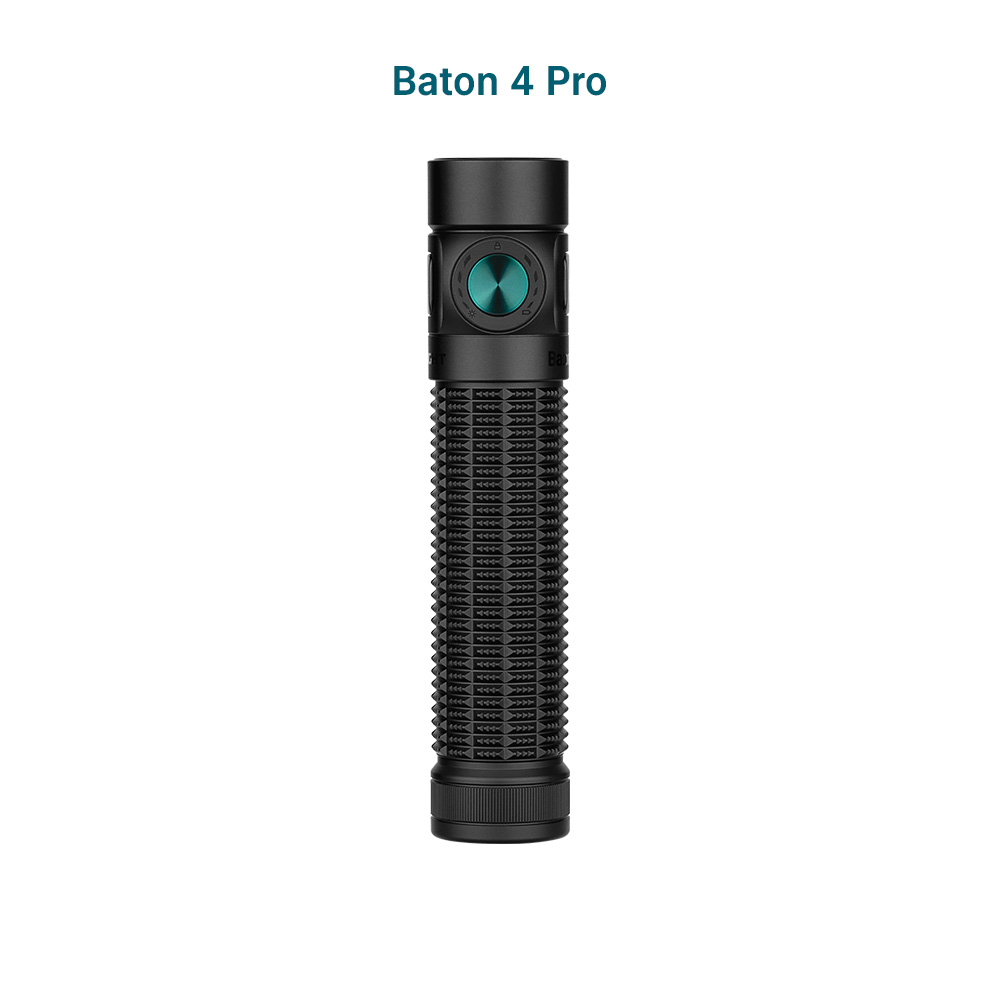
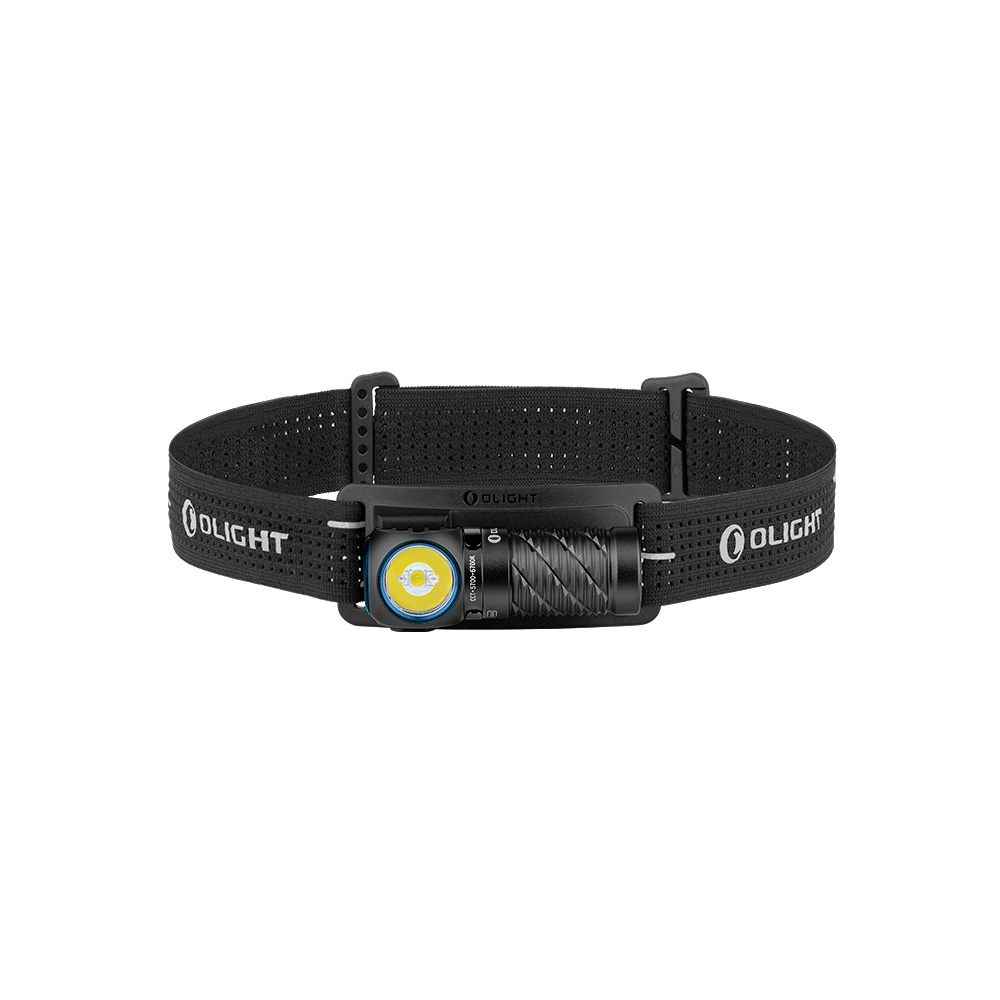
Either light can help you see more clearly where the existing room lights leave a shadow. The choice comes down to whether you need changes in beam angle or both hands free. Turn off the light when its job is finished and keep the lens and controls clean according to the manufacturer and property procedures. A good layout keeps tools from being set on an area you still need to check.
The useful difference between these lights is where the beam follows you. With the handheld, you can turn your head toward a coworker while keeping the beam aimed at the seam. With a headlamp, direct the light away from the coworker or pause it first. The open room fixtures let you talk and move without depending on the bright spot. Put either light down on the designated hard surface only after switching it off.
Make the report useful to the next person
Write down the room identifier, date and time, and exact place. Include whether the mark was on a sheet, in the stitching, under an accessible label, or at a nearby joint. Describe shape, color, whether it moved, and any areas you did not reach. Tell the supervisor if you have a wide photograph for context and a clear close view, and use the approved channel to send them.
A handoff could say, “I saw several dark pinpoints on the mattress piping at the headboard end. I left the bedding in place and did not check behind the mounted headboard.” That gives the next person a location and a limit. If you find something that appears to be a live insect or other material the property wants preserved, follow the incident procedure on how to handle the area.
When someone reports that an earlier light check didn't show anything, record which areas were actually seen and the conditions of the check. A flashlight inspection of an exposed edge cannot settle what is behind a fixture. If someone reports bites, record it as a report and follow the property's guidance without trying to identify an insect from a guest's skin. Use observable details and clear uncertainty.
Keep the record as practical as the check. The point is to help a qualified person find the same seam, look at the relevant locations, and decide what to do. The lighting improves the view you have. The exact description and handoff make that view useful after you've left the room.
Use language people can act on even if they weren't there. “One small pale object at the top of the piping” describes more than “possible infestation.” A separate line can say that it is an unverified concern and that a further check is requested. If someone later confirms an identification, record who made it and when using the existing procedure. Keep that decision separate from the first observer's description.
Short-term rental hosts can use the same idea even when there's no dedicated shift supervisor. Choose a single contact responsible for the next call, and make sure that person gets the room identifier and location instead of a forwarded photograph by itself. Give guests the relevant contact route through the property and keep private guest details out of the record or photos when they are unnecessary. A concise report lets the specialist concentrate on the part of the room that needs attention.
Frequently Asked Questions
Changelog
- November 19, 2026. Checked the EPA inspection, prevention and response pages, Cornell IPM and Virginia Cooperative Extension guidance, Olight white-light manuals and exact photos, and the original room check diagram.




