


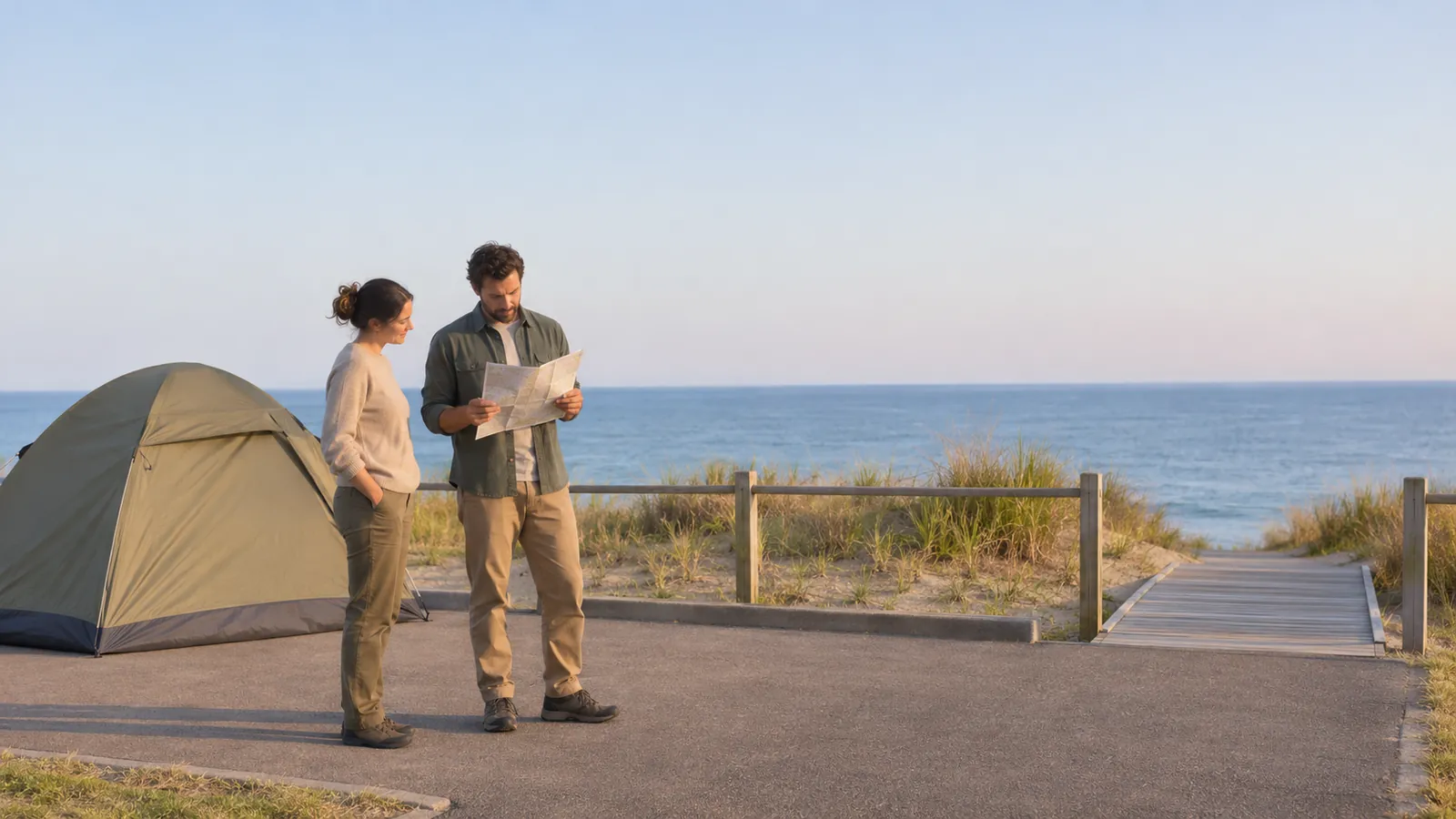
TL;DR: Camp only at a designated coastal campground or on a beach segment where the land manager allows overnight stays. Confirm the permit or reservation, check tides and weather for the whole stay, and verify which routes and lights are allowed after dark. Bring a small task light for permitted areas away from the nesting beach.
📋 Table of Contents
- 1. Check access before you pack the car
- 2. Four places that illustrate different overnight rules
- 3. Make a plan for a specific trip date
- 4. Confirm camping, parking, and the route as separate decisions
- 5. Make the vehicle and facility plan before unloading
- 6. Read tide times with weather and the shape of the coast
- 7. Use the forecast to make a decision before sunset
- 8. Check wildlife and lighting rules for the exact beach
- 9. Set up a vehicle or tent so the beach stays dark
- 10. Keep setup and nighttime movement on established surfaces
- 11. Choose a light for a permitted task away from the beach
- 12. Hands-free light for an approved landward path
- 13. A small light for gear on a permitted sheltered surface
- 14. Clear the site before leaving
- 15. Can you legally camp on the beach?
- 16. How far from the water should you camp on the beach?
- 17. Can you use lights on the beach during sea turtle season?
- 18. Frequently Asked Questions
- 19. Start with the place you are allowed to stay
Check access before you pack the car
| Check before departure | What to have ready | What would change the plan |
|---|---|---|
| Overnight permission | A site reservation or clear instructions for the exact section where camping is allowed | Day-use access only, no available sites, or permission that does not cover your setup |
| Tide, surf, and weather | Local predictions and alerts for arrival through departure, plus a higher authorized backup site | Flooding, a closed route, or a campsite the manager advises against using |
| After-dark access | The approved route to facilities, the gate schedule, and local light restrictions | A route that requires crossing closed beach or using light where it is prohibited |
| Gear and cleanup | Suitable shelter, a way to pack out waste, and a small light for allowed tasks | Equipment you cannot secure or an essential task the site cannot accommodate |
Start with the exact place you expect to spend the night. A road sign can direct you to a beach without saying who manages the sand, parking lot, and campground. Search the official park or land manager's website for overnight use. Check the map boundaries, then make sure the instructions apply to the place and date in your plan.
Use the wording on the site to distinguish camping near the beach from a tent on open sand. A campground can advertise convenient swimming or a boardwalk to the ocean while confining overnight stays to numbered sites. That is often a better fit for a first coastal trip. It gives you a known site and a shorter list of decisions to make after dark.
Check the details for your actual setup. A tent, truck bed camper, trailer, and motorhome can fall under different rules. If you plan to sleep in the vehicle, confirm that the manager allows that form of overnight use. A day parking pass or vehicle access permit may cover a different activity.
Four places that illustrate different overnight rules
| Coastal area | What the manager describes | What to verify for your trip |
|---|---|---|
| Florida, Fort Pickens | Reserved overnight camping at the developed campground with beach access nearby | The reservation, your campsite dimensions, the access gate, and whether the route is open |
| North Carolina, Cape Lookout | Primitive camping on permitted sections, with different tent and vehicle rules by island | The island, permit needs, ferry or access conditions, and any wildlife closure |
| Texas, Padre Island National Seashore | Developed campgrounds and some primitive beach camping areas | The exact beach segment, registration and pass requirements, and temporary flooding closures |
| California, San Elijo State Beach | Camping at the state beach campground on coastal bluffs | The assigned site, check-in, parking, and the condition of the approved beach access route |
Fort Pickens Campground is a Florida example of a developed campground in a coastal park. The National Park Service directs visitors to reserve a campsite and check the site's size requirements. Save the location and check the gate rules for a late arrival. Make sure your setup fits the actual reservation.
At Cape Lookout National Seashore, the National Park Service describes primitive camping and different rules by island. Shackleford Banks permits tent camping without vehicles. For the Core Banks, read the separate vehicle and tent instructions and check current access and wildlife protection zones. A trip with a ferry also needs a return plan that fits the operator's current schedule.
Padre Island National Seashore in Texas has developed campgrounds as well as areas with primitive beach camping. The park distinguishes the camping areas from Malaquite Beach, where it says camping is prohibited. It also warns that primitive camping can close due to conditions such as coastal flooding. Read the current instructions for registration, passes, and camping for the exact area you choose.
San Elijo State Beach illustrates the difference between camping near the Pacific and putting a tent in the surf zone. California State Parks describes a campground on bluffs and access to the beach. Search the reservation information for the actual campground. Check whether the stairs or other beach access will suit everyone in your group.
Use the four places to understand how permission works, then look up the manager of the coast you want to visit. Two nearby beaches can have different boundaries and rules. Keep the campsite confirmation and current conditions together so you can see precisely what you booked and which part of the shore you can use.
Make a plan for a specific trip date
Open the campground map and check what the manager calls your site. A waterfront loop can mix tent pads, vehicle spaces, and areas open only during the day. Depending on the park, the listing might describe a picnic area with no accommodation at all. Look for the actual overnight label in the booking system or on the manager's camping instructions.
Read the description of the site with the people who will use it. A coastal walk-in site can be close to the beach and still require carrying gear from a separate lot. Ask about the walking distance and surface, available water, and how far it is to the restroom. If a site does not suit your group's needs, check another campground before you pay for parking or a ferry.
Save the confirmation, map, and alert page on paper or for offline access. In your notes include the legal campsite location and an alternative you are allowed to use. A camera screenshot of a third-party pin will not show whether an access road closes during high water. Look at the official alert again just before you leave.
Decide what would make you shorten or cancel the trip. A map with one road, one ferry, or one route out leaves little flexibility. If the manager warns that the site may become inaccessible, make the backup decision before bringing equipment to the shore. Use the time on the coast to enjoy the open areas that remain available.
Confirm camping, parking, and the route as separate decisions
A campground reservation normally gives you a specific place to stay for the nights listed. Read the arrival and after-hours instructions and note whether you need a separate park pass. A reservation made for one site does little good if a road closure prevents access or the group brings a vehicle that does not fit.
For first-come, first-served camping, decide in advance where you would stay if space runs out. Check how the manager assigns sites, whether there is a registration stop, and how availability changes after the office closes. Arrive while you can still see the layout. A familiar backup away from the exposed beach leaves fewer decisions for a late arrival.
Read all rules for beach driving, including whether vehicles are allowed on the chosen segment. Confirm the required permit and how long vehicle access is open. Ask about road conditions before unloading a trailer or assuming a vehicle can leave the same way in the morning. Heed barriers and turn around when the legal route stops.
Keep your camping area separated from any lane used by vehicles or staff. When the space between the tide and the dunes gets narrow, a permit does not make a tight campsite suitable. Ask the site manager about an approved backup while you still have time to change plans. Never move onto dunes, behind fencing, or into a closure to find extra room.
Make the vehicle and facility plan before unloading
Check the vehicle length, height, and access requirements against your assigned site and approach route. A reservation for a tent pad may have parking space for just one vehicle. Trailers can need more space at a bend or when turning around. Ask the campground whether your actual combination of vehicle and equipment fits, especially if you need to arrive near closing.
At a beach with authorized vehicle access, the conditions on the way in may differ from the drive out. Use the park’s current advisories and rules when deciding whether to proceed. Make a plan for where to turn around while you are still on a suitable route. If you only want to spend time by the water, consider leaving the vehicle at the campground and using a designated pedestrian path when open.
Check which facilities will actually be open when you arrive and in the morning. A freshwater supply, dump station, or restroom listed on a map might operate seasonally. Carry sufficient water and take only the equipment you can handle on that surface. Use the waste instructions for the site and leave the vehicle where the manager requires.
Read tide times with weather and the shape of the coast
Start with the station the park recommends or the closest suitable station for its shoreline. Write down the high-water times that occur during arrival, the overnight stay, and departure. Confirm that both the date and time convention match where you will be. An evening trip can cross midnight, and the next morning's high tide can affect the way out.
NOAA's guide to forecasts and predictions explains the difference between predicted tides and separate weather and water-level forecasts. A tide table gives a predicted time and level for a reference station. It does not measure the path between your tent and the road or account for every wave. Use local surf, wind, flood alerts, and the park's advice alongside the table.
Think about the whole route, including the lowest point between the campsite and a place the manager identifies as safe. A site can look dry while its only exit becomes unsuitable. Learn the way out in daylight and have another place to stay if an alert or closure changes the plan. Avoid waiting for water to reach the tent before making a move.
Along a beach, look from an allowed location at wet sand, debris, and where waves are running. These are useful observations, but recent water marks do not establish how high the next waves or water level will reach. A long, gentle slope and a steep shoreline can react differently to a change of the same predicted height. Avoid turning a tide height into a fixed distance across the sand.
If wind, surf, or a coastal flood alert makes the exposed area questionable, choose an authorized landward site or change the trip. Avoid setting up below cliffs, on protected dunes, or where high water could cut off the exit. Follow the local closure and evacuation instructions. The decision is easier while the group still has daylight and a clear route.
Use the forecast to make a decision before sunset
Imagine arriving while the water is low and finding a strip of dry-looking sand near a vehicle route. Check whether camping is allowed there first. Look at the high-water times for the full stay and whether officials expect surf or flooding to affect the route. If any part of that plan is uncertain, choose a designated campground away from the exposed section.
For a developed site, check whether the route to the restroom, parking place, or way out remains available during the expected conditions. A reservation can specify the pad and still leave you with a closed boardwalk or a wet path. Ask about alternate established routes when you check in. A second route should be one the land manager actually allows.
If conditions deteriorate overnight, act on staff instructions and official alerts. Keep enough essentials together to leave an exposed location promptly when advised. Do not drive into floodwater or attempt to cross an inundated access route. If flooding has cut off the route, contact staff or emergency services as appropriate and follow their guidance.
Before stepping onto an unfamiliar beach, use an approved lookout or path to take in the general layout. Identify where you would return to the campground and which areas are marked off. Ask the host where to go if an access point closes. Keep the departure route available while you set up, especially when temporary barriers or a change in wind shifts the options.
Make the tide information readable for another person in the group. Write down the place to which the predictions apply, the times that matter, and the backup location. Put those notes in the same pocket as the site information. If you leave in a hurry, take the route already agreed with staff and avoid spending time looking for a better view of the water.
Check wildlife and lighting rules for the exact beach
Ask the manager what is permitted at the campsite, on the access path, and on the beach itself. Nesting-season rules and posted closures can apply to different areas and kinds of lighting. Find out whether personal flashlights, phone lights, flash photography, vehicle lighting, or campsite fixtures are covered. Camp on the site and use only the routes and lights the manager allows.
Florida's wildlife lighting guidance for fixed beachfront fixtures emphasizes mounting lights low, using appropriate long-wavelength sources, and shielding the source. Those criteria describe fixture design. For a camper on a particular beach, the posted rules determine whether a handheld light can be used. A color or mode printed on the package does not grant permission.
If a beach section requires darkness, plan to complete the waterfront part of the visit before that restriction takes effect. Keep screens and lights off where the rules require it. Use the campground's allowed route for an essential task later. Check the guide to beach flashlight rules during sea turtle season when planning the nighttime part of the trip.
If you encounter a turtle or hatchling, switch off flashlights and camera flash, give it room, and keep out of its path. Stay outside marked nest and wildlife protection areas. Follow the local authority's instructions for reporting a concern and leave wildlife and barriers as you found them. Ask staff where to go if the usual route is blocked.
Set up a vehicle or tent so the beach stays dark
At a developed campground, check which way the door or windows face before you unpack. Interior light can be visible outside when a door opens or a window is uncovered. Use the permitted pad orientation and keep the light inside the space you need. If the manager requires shades or other controls, follow those instructions before the group gets ready for the night.
Put a note about after-dark access where everybody can see it at supper. The plan may be a familiar inland route to the restroom and no return to the beach until morning. Decide which adult will go with a child and where the rest of the group will wait. There is time to learn that route while the signs and path are easy to see.
Switch off ornamental campsite lighting when the rules or circumstances call for it. An illuminated awning, white vehicle light, or a phone pointed outward can send glow farther than you expect. Ask staff how to handle any required vehicle or safety light if the campground has local restrictions. Keep the permitted route and the manager's advice ahead of what the equipment can do.
If the visit runs through sunset, plan a simple handoff between shore activities and the evening in camp. Return from the beach while the established route is still open. Count packs, towels, and other gear before anyone leaves the access point. A finished beach visit leaves less reason to return after dark to look for a missing item.
Keep setup and nighttime movement on established surfaces
Bring the gear you can secure in the allowed space before dark. Select stakes and tie-downs that match the campsite surface and your shelter instructions, without digging into protected areas. Keep small pieces together so they cannot blow toward the water. Use a closed bag for wrappers and other light waste.
Keep quiet items and frequently used gear near the tent opening or assigned table. In wind, an open map can be hard to handle, so keep the campground sketch where you can look at it while sheltered. Save a copy of the site number, facility route, and staff instructions. A phone may not be useful on a dark beach where screens are restricted, or where signal is limited.
Walk the path to the restroom, water, or vehicle with your group before daylight ends. Check whether there are gates, steps, changing surfaces, and a route that works for someone using a mobility aid. If the beach access becomes closed, return by a permitted inland route. Avoid choosing a new shortcut through dunes or beach vegetation after dark.
For an allowed task away from the nesting beach, use a downward beam as close to the work as practical. Set up the light so it reaches your hands or footing while staying off the shore, neighboring campsites, and wildlife. A beach campsite lighting guide can help you plan separately for wind, sand, and salt air.
Choose a light for a permitted task away from the beach
| Allowed task away from the nesting area | Useful light setup | What to check first |
|---|---|---|
| Find a strap or zipper inside a sheltered campsite | A low level aimed at hands or gear | The camp's light rules and whether any light spills onto the beach |
| Move along an authorized campground route | A directed light adjusted for nearby footing | Local conditions, authorized route, and how to avoid shining into other campsites |
| Check a latch or sort gear at a fixed surface | A small light held or clipped in a stable orientation | The beam angle, heat clearance, and whether the mount stays put |
Keep weather protection, attachment, and charging practical. Bring a light you can control with the gloves or layers you expect to wear. When everything is dry, check that you can select the needed level and turn it off promptly. Follow the manufacturer’s care instructions if sand or salt gets near the light or its charging contacts. Avoid opening covers in a sandy place.
A headlamp can be useful when both hands are needed at a campsite. Check how it sits on a hood and where the beam lands when you look up to speak. If you are choosing one for this kind of trip, Olight’s comparison of rechargeable and AAA headlamps explains different power arrangements. Local lighting restrictions still determine when that gear can be used.
A camping lantern is useful only where you can keep the light within an allowed area and below the surrounding sightlines. Shared area lights often send illumination farther than a single task requires. If you cannot keep a lantern's beam or glow away from the beach or other campers, leave it off.
Hands-free light for an approved landward path

Use these settings only where white light is allowed. Leave the headlamp off in restricted areas and near nesting wildlife. Keep the light in the same place after a task, where a camper can find it without disturbing the people around them.
A small light for gear on a permitted sheltered surface
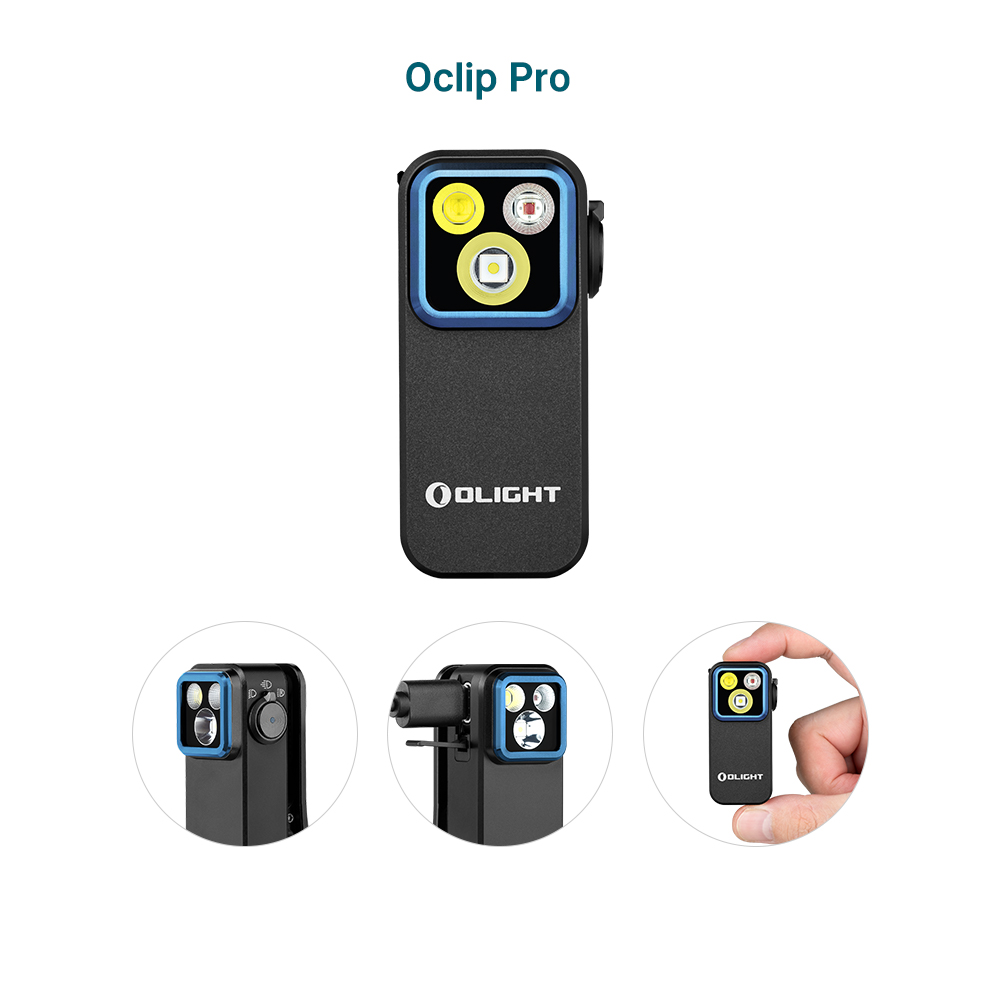
If the clip can turn when you open a bag or bump the table, change its position before turning on the light. Check where the glow reaches, then switch it off as soon as you have finished. A nearby light should make the next small action easier without creating a bright point visible from the beach.

The official Black Oclip Pro detail shows the clip opening. Check the fit on the surface you will use before switching on the light.
Clear the site before leaving
Finish the evening cleanup before dark where possible. Hold on to bags and loose wrappers in wind and use the designated bins when the manager supplies them. Some primitive beaches have no trash collection. Pack out everything those sites require and follow the park's rules about human and pet waste. Do not bury ordinary trash in sand.
When taking down a campsite, count stakes and fasteners and check the established surface for cord, packaging, and other loose items. Follow the manager's instructions for restoring any permitted impressions or holes away from protected areas. Avoid disturbing marked nests or areas cordoned off for wildlife. Tell staff if a barrier has fallen or needs attention.
Check the departure route and its access hours again before moving the vehicle. Your way out can change with the tide, weather, a temporary wildlife closure, or a site operation. Pack the map and the relevant contact information where you can still reach them. Leave enough time to change plans instead of relying on a narrow travel window.
Can you legally camp on the beach?
You can camp where the agency or land manager permits overnight use for your exact beach segment and setup. Confirm current rules, closures, and any reservation, registration, or permits. Parking or beach-driving permission can apply to a different activity. If overnight permission is unclear, use a designated coastal campground.
How far from the water should you camp on the beach?
There is no single setback that fits every beach. Follow the manager’s approved camping area, choose ground away from reach of tides and surf, and check the entire exit route. Use the local tide times together with weather and flood alerts. Choose another authorized site if either the camp or the exit is in doubt.
Can you use lights on the beach during sea turtle season?
Use a light only when the rules for that exact beach and time allow it. Check the manager’s instructions on handheld lights, screens, and flash photography. Follow closures, give turtles and marked nests space, and keep unnecessary light off. The color of a device does not replace a local rule.
Frequently Asked Questions
Start with the place you are allowed to stay
Confirm the exact camping location, how to enter and leave, the local forecast, and the rules after dark. Put the shelter and ordinary task lights where those rules allow them, and keep light away from the beach and wildlife. A clear campsite choice leaves fewer decisions to make once the sky is dark.
Changelog
- November 19, 2026: Product information and buying guidance reviewed.




