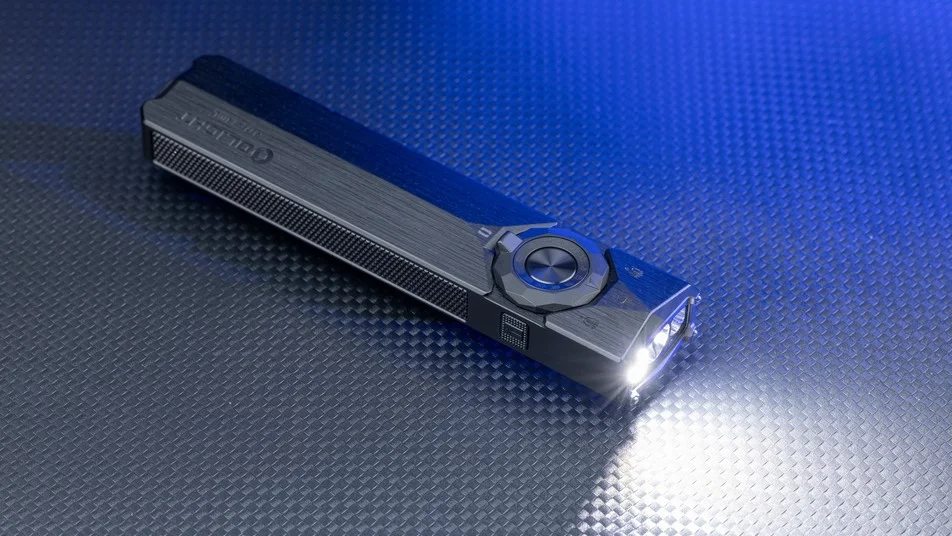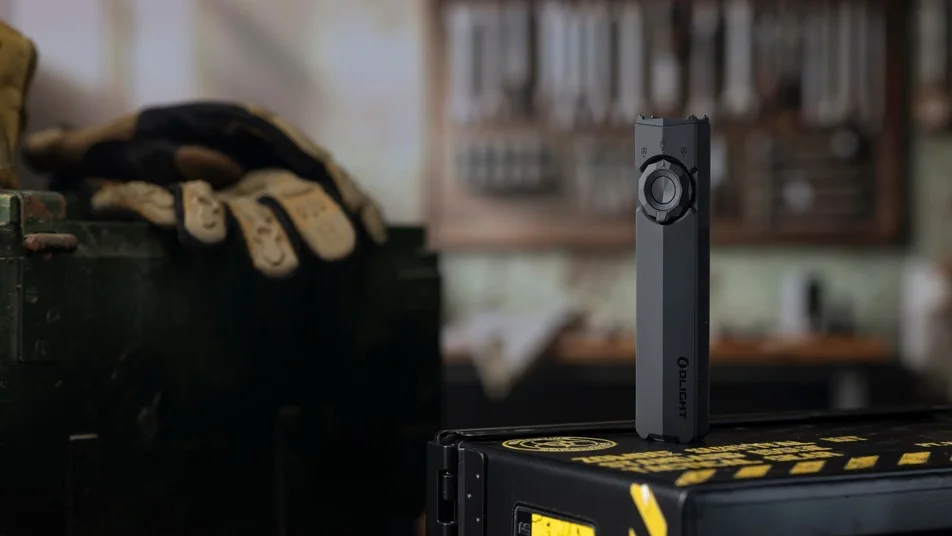
TL;DR: Compare an 18650 and an AA battery by watt-hours when both labels provide enough information. Milliamp-hours measure charge, while watt-hours account for voltage. For flashlight runtime, check the exact mode and its output over time. For replacements, use the battery part and charging method specified for your light.
📋 Table of Contents
- 1. 18650 battery vs. AA: Read the whole label
- 2. AA battery chemistries and charging requirements
- 3. Is an 18650 battery the same size as an AA battery?
- 4. Can I use double AA batteries instead of 18650?
- 5. What battery can I use instead of 18650?
- 6. Flashlight runtime, load, and cutoff
- 7. Three Olight battery examples from the US store
- 8. Choose a power source around the way you use the light
- 9. Frequently asked questions
18650 battery vs. AA: Read the whole label
Two battery packages advertise a big number followed by “mAh.” One is an 18650 for a handheld flashlight, and the other is a four-pack of AAs for devices around the house. Put the numbers side by side and the comparison seems finished. There is still a voltage line to read. Then there are two more questions the packages alone cannot answer. Which battery does the light accept, and how long will that light give you the beam you need?
Start by reading the markings for format, chemistry, voltage, and capacity. Format describes the kind of battery you are looking at. Chemistry tells you something about how the battery discharges and, when it is rechargeable, what type of charge system it needs. Capacity describes a quantity measured or rated under some conditions. The flashlight manual ties those facts to a specific device. A charger has its own list of supported batteries.
A milliamp-hour is a unit of electrical charge. Divide the printed mAh number by one thousand to express it in amp-hours. The FAA's watt-hour calculation multiplies the stated voltage by that amp-hour figure. In a consumer comparison, use the stated voltage that belongs with that capacity rating. Where the manufacturer prints watt-hours directly, start with that figure and read the surrounding notes.
Olight's Warrior Mini 3 manual lists its specified rechargeable lithium-ion battery as 3,500 mAh at 3.6 volts, with a rating of 12.6 watt-hours. Olight's Ecolast AA listing gives a 2,100 mAh rating and a stated 1.5-volt output, alongside a published rating of 3,150 milliwatt-hours for the AA. That is 3.15 watt-hours. The first figure describes the specified 18650. The second describes the output-side energy rating of the specific rechargeable AA. The Ostation NiMH AA label lists 1.2 volts and 2,100 mAh. That gives a nominal estimate of 2.52 watt-hours, a calculation made from its label rather than a separately published discharge result.
| Published example | What the manufacturer lists | What you may compare |
|---|---|---|
| Olight customized 18650 specified in the Warrior Mini 3 manual | 3.6 V, 3,500 mAh, 12.6 Wh | Published energy rating for the specified battery |
| Ostation Ecolast rechargeable AA | 1.5 V output, 2,100 mAh, 3.15 Wh | Published energy rating for the specified regulated AA |
| Ostation 2,100 mAh NiMH AA | 1.2 V, 2,100 mAh | 2.52 Wh nominal estimate from the label |
Treat the table as a comparison of label data and a clearly marked estimate. It describes products with different intended devices and charging arrangements. The numbers come without a shared test current, temperature, or end voltage. The comparison can tell a shopper which label reports more energy. The device manual and a useful runtime curve answer the questions that come after that.
If the label shows only a large capacity number, see whether the full maker datasheet states the missing voltage and explains the measurement. A product photo can help you spot the exact designation. Save the manual for the device as well, especially if a product page groups several variants under one heading. Those two minutes spent checking the small print can save you from buying a battery you cannot use.
AA battery chemistries and charging requirements
AA tells you the physical battery family. At the store, that family includes single-use alkaline, single-use lithium, rechargeable nickel-metal hydride, and regulated rechargeable lithium-ion products. The packaging should tell you which one you are looking at. A household device may specify one chemistry or list more than one. Follow that device's instructions and treat the chemistry line as part of the model information you need to shop.
An alkaline battery is a common choice for a device that specifically calls for it. Some manufacturers provide a table or a graph for a particular alkaline product instead of an all-purpose mAh rating. A low-drain result has a specific meaning. To use it well, match the labeled test conditions to the kind of load the maker describes. If an older flashlight manual names alkaline AA, read that wording before picking any rechargeable AA for the same device.
A single-use lithium AA is also sold in an AA body. The word “lithium” on its label describes its chemistry. Check whether it is single-use or rechargeable before putting it near the charging station. The EPA's household battery guide explains how much household battery types can vary and why the label, rather than the cylinder's appearance, identifies the chemistry. The guide also gives separate disposal advice by type.
A rechargeable NiMH AA may make sense when your device specifies it and you already have a charger that supports the battery. One capacity figure gives you a useful way to identify the exact package you are considering. The flashlight still decides what happens as voltage changes during use. For a desk flashlight, that might mean the light dims before you finish a task. For a device that remains unused most of the month, you may care more about being able to check it and keep a ready spare than about the printed number.
A regulated lithium-ion AA is a separate rechargeable product. Its electronics produce a stated output voltage while the internal cell has its own operating and charging requirements. Read the output rating for the comparison and the named charging system for charging decisions. The Ostation Ecolast example uses an advertised 1.5-volt output. Plenty of devices carry an AA marking. Consult the exact device maker about which battery types it supports.
What if a listing gives a capacity for the whole package? Look for language such as “per battery,” an individual battery label, or a manufacturer datasheet tied to an exact item. A four-pack tells you how many batteries arrive. It can also make a headline ambiguous. If you cannot verify what the number is attached to, leave it out of a numerical comparison and use the manual to make your immediate replacement choice.
Is an 18650 battery the same size as an AA battery?
No. An 18650 is a different cylindrical format and is generally wider and longer than an AA. Even batteries described as 18650 can vary in their finished length and terminal design. Use the exact battery identified by the flashlight maker. A shared cylindrical shape gives you very little information about electrical or charging compatibility.
The dimension that matters for a replacement is the complete battery the manual specifies. A product sold as a finished, model-specific battery can have a different terminal profile or outer construction from a bare industrial cell of the same format. Ask for the replacement part by name or number, then verify the exact flashlight version on the official support page.
One practical way to avoid confusing the packages is to write the light's full model name on its storage spot. Keep the documented battery and charging cable in their own labeled place. A flashlight owner can then check the model at the device and the battery at its package. For equipment shared at a workshop or by several members of a household, write the version as well when the manufacturer's battery list distinguishes versions.
Can I use double AA batteries instead of 18650?
Use only the battery type and part specified for the flashlight. AA and 18650 describe different battery formats with different electrical behavior. A watt-hour comparison describes rated energy on paper. Check the light's exact manual for its approved battery and charging method, and contact the manufacturer if you cannot verify the replacement part.
That includes a flashlight that appears to work for a moment with an unapproved cell. The fact that the LED came on says little about how the device and battery will behave through use or charging. Look up the correct part rather than relying on a fit check or a report about somebody's similar-looking model. Model suffixes matter when the manufacturer uses them to mark a different power arrangement.
Avoid buying bare industrial cells that have been separated from battery packs and resold individually. Unprotected batteries can be hazardous if they short or are charged in unsuitable equipment. For a serviceable flashlight, use the manufacturer's documented consumer replacement from a traceable source. Protection on a battery is one design feature. The light's approved part and its charging instructions still apply.
Think about the next person who will use the light. A houseguest may find a drawer with several similar packages and very little time to read. Put the correct spare where it can be identified in daylight. Keep each labeled battery in an appropriate nonconductive holder or original packaging, away from tools, keys, and coins. If you cannot read the label, check with the maker before using or charging that battery.
What battery can I use instead of 18650?
If the flashlight calls for a specific 18650, buy the manufacturer's approved replacement for the exact model. Use an alternate battery only when the official instructions explicitly list it and explain any charging difference. If the light has a built-in battery, consult service support. The label or manual provides a better starting point than a marketplace compatibility list.
When the part looks unavailable, look up the flashlight's model and generation together. Keep the old packaging or a photo of the printed label if you have it. The model number is particularly helpful for older lights with several editions. Send it to support and ask for a confirmed replacement and the charging equipment it requires. If the light is needed immediately, use a working reserve with its own documented power source.
Replace a missing charger using the same process. A charger with an opening that looks right may be intended for a different chemistry. For magnetic charging, check the named connector and device even when the two magnets look similar. Find the named charging cable, cradle, or station in the manual. If a manufacturer lists several choices, read the limitations for the one you plan to use.
For a model-specific battery and an AA option, look up the chargers on their own terms. The charging station collection can help you find a model by name. Follow the exact product instructions when you get there. A brand name shared by two charger generations is a good reason to read both manuals before reusing an older charger.
A household that wants to use AA batteries across several devices can shop for a flashlight designed for the relevant AA chemistry. If your current rechargeable flashlight uses an approved dedicated battery, decide separately whether your next light will share the household supply or serve as an independent reserve. You can make an informed purchase choice without changing the power source of the light you already own.
Flashlight runtime, load, and cutoff
Runtime describes what happens in the entire flashlight, beginning at a specified operating mode. The battery, driver, LED, regulation, and any protective steps all matter. The rated energy helps describe what goes into the system. The beam and its duration tell you what comes out. A flashlight stepping down from a brighter setting is still operating, even though its useful range for your task may have changed.
Imagine checking slow drips beneath a kitchen sink. A low or medium beam at close range may let you distinguish a wet fitting from a shadow without reflecting much light into your face. For an after-dark walk on a familiar path, wider coverage and the ability to see farther ahead may matter more. Read the runtime row for the mode you would actually choose in each situation.
Read the small print on a published test as carefully as the largest number. Olight's guide to published flashlight tests explains why output, runtime, and durability figures need their conditions. Find the stated mode, battery, whether that mode steps down, and how runtime ends in the report. If a graph gives the output at different points, it can show you how long a useful portion of the beam lasts.
Battery discharge data answers a slightly different question. A note may state the load, the temperature, and the end voltage at which the measurement stopped. The load is what the test asked the battery to deliver, and the end voltage is the point where it stopped counting. Change either condition and the reported result can change. The National Bureau of Standards guide to dry-cell testing describes how the electrical test conditions affect the discharge result. Its historical capacity tables have little bearing on today's retail cells.
One common reading mistake is to equate a cell's discharge endpoint with the point where the flashlight stops giving a useful beam. The device may reduce output while the battery still has energy, and a particular beam can become too dim for your work before it turns off. For instance, a faint beam may still let you find the light switch across the hall. It may be too faint to distinguish wire labels under a desk. Choose a useful threshold for your job when reading a graph.
You might also see a lumen figure next to a runtime in an online store and assume the figure stays steady. Open the exact manual and check the sequence printed below the mode. Label the duration of any initial bright interval and the later lower stage in your notes. If the document only supplies an endpoint and you need hours at a particular output, ask the manufacturer about the sustained setting or compare products that publish a clearer graph.
Cold conditions, battery age, and the use of a different approved mode can change how a device performs. Its documentation may give an operating temperature range or list a specific lab condition. Read storage, use, and charging limits independently. When the actual conditions fall outside the specified range, use a light or an arrangement the manufacturer rates for those conditions.
For two candidate models, put the same job at the top of your notes. Under each product, write its relevant mode and whatever the manufacturer publishes about the duration of that mode. Keep both sets of test assumptions in view. If the beam shape, operating mode, or endpoint is different, say so when making your decision. At the end of the comparison, circle the information you actually have, and treat any missing duration as a question for support.
Three Olight battery examples from the US store
These photographs are from the official U.S. product galleries. The three examples show how a model-specific replacement differs from two rechargeable AA products. They are separate purchases for different documented needs. Check the approved battery for your device and the documented charger before ordering.
Olight customized 18650 3,500 mAh battery
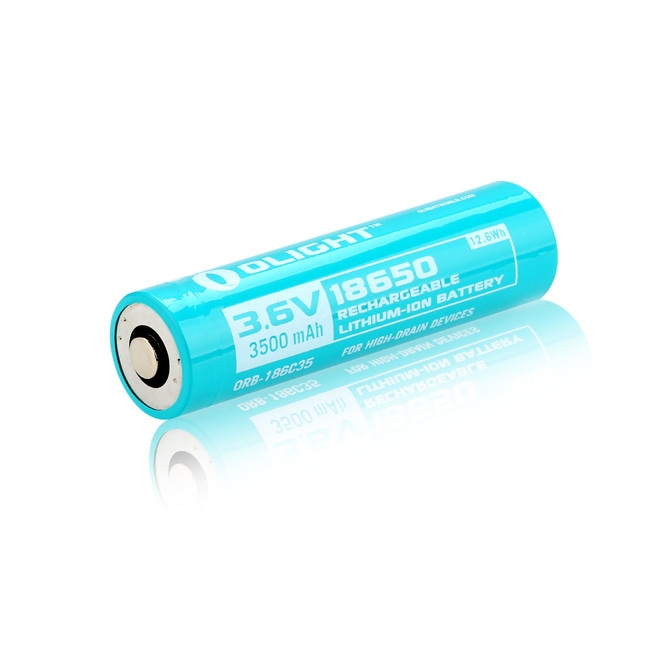
The official replacement gallery shows the body markings and terminal on the single listed battery.
The Olight 18650 replacement compatibility listing names the Warrior Mini 3 among its compatible flashlights. The model's official Warrior Mini 3 manual identifies the rechargeable lithium-ion battery at 3.6 volts, 3,500 mAh, and 12.6 Wh. It also identifies a magnetic charging cable supplied for that model. If you own an older listed flashlight, follow that flashlight's own instructions for its charging method.
Use this listing when you are identifying a replacement for a flashlight it actually names, then match the information to your model's current directions. If you still have the battery the flashlight originally came with, its label can help you confirm which question to bring to support. The approved part information belongs with the light, even if the light changes hands later.
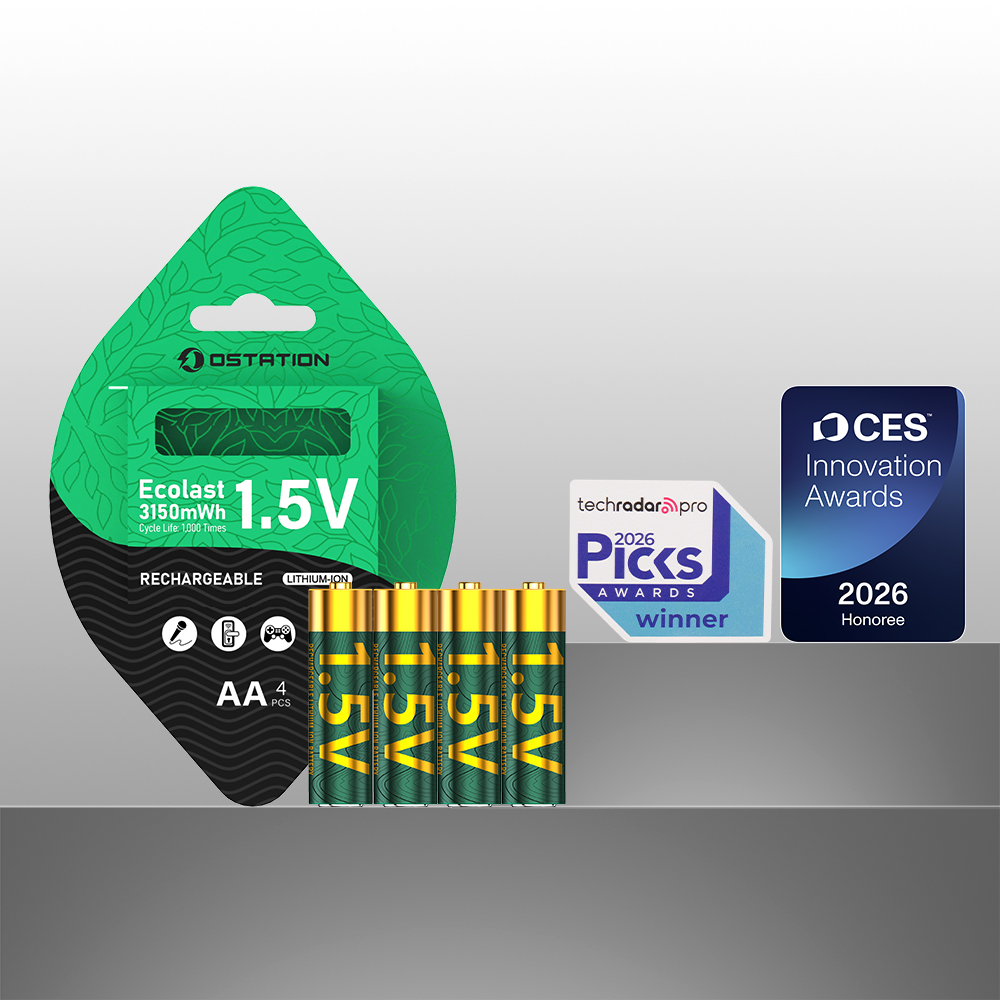
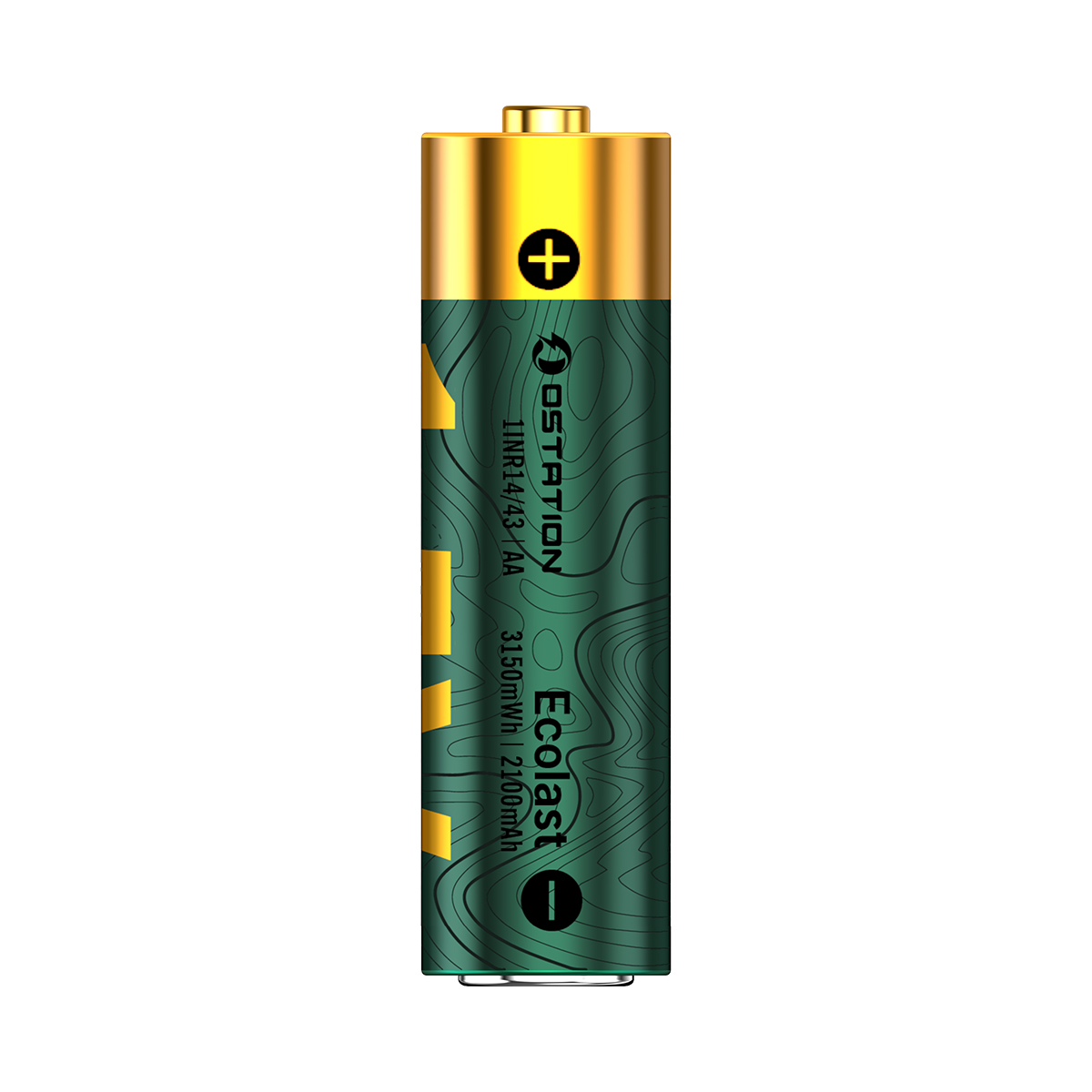
The printed capacity and energy markings appear together on the Ecolast wrapper.
For a household that uses both NiMH cells and this regulated AA, store the two packages by their full names. It makes it easier to find the right batteries and put them where they belong after a weekend away. Confirm that the device maker supports the cell you choose and reread the charging instructions before adding a new battery family to the drawer.
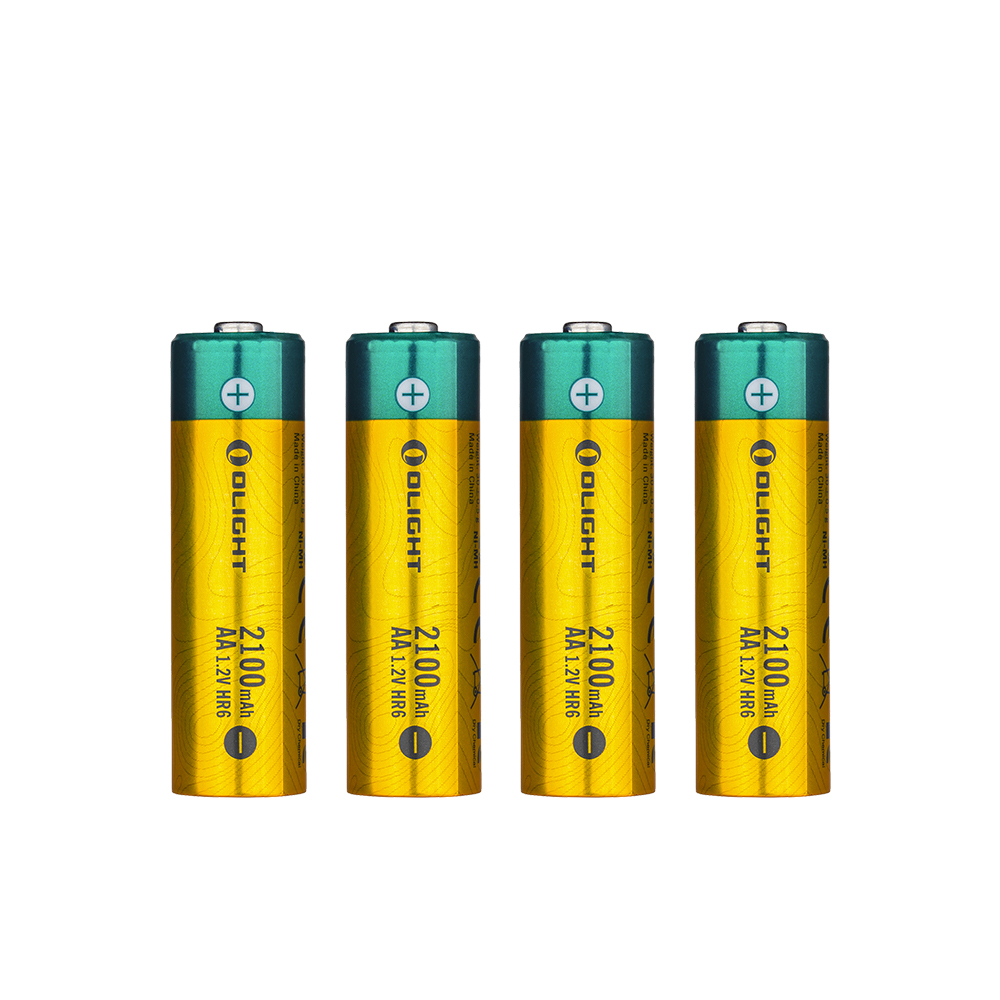
Both rechargeable AA examples say 2,100 mAh. The chemistry and charger instructions still differ. This is where that voltage line becomes useful, along with manufacturer test conditions for anyone comparing discharge data. If a specific light accepts one of the two chemistries, choose the version it supports. Use the listing's selected variant details to avoid picking an AAA or a different count.
Choose a power source around the way you use the light
| How you use the flashlight | What to look for first | Planning question |
|---|---|---|
| Frequent use at home or work | Convenient supported charging and a published working mode | Does the light return to the charging spot? |
| Backup that several people share | Approved battery type a second user can identify | Can someone find the light and its spare in the dark? |
| Overnight outdoor trip | Documented output at the mode you will use | Is there a separate ready light if the first one runs low? |
For a frequently used work light, keep the charging method available where the light returns after each shift. If several workers share it, put the operating mode and charger type on a card by the storage spot. A short, consistent return routine helps the next person start with a working light. Where long jobs are common, compare the manufacturer's published duration for the working mode before buying another battery or changing the light.
For a hallway backup that spends weeks on the shelf, make a short readiness check part of your usual routine. Look for a clear label, make sure the packaged spare is in its proper place, and briefly check the ordinary beam using the installed approved battery. If a light reliably goes home in a backpack after a weekend trip, consider a separate backup for the hallway. A battery comparison won't account for the times the whole flashlight is somewhere else.
For a EDC flashlight, write down when you can actually recharge or retrieve a spare. A working flashlight you can recharge conveniently may suit someone who returns to a desk each day. A correctly specified replaceable-battery light may be easier for someone who rotates between several rooms and rarely has time to charge. Plan for what happens if the ordinary charging spot is busy.
For a campground trip, take a look at the mode you will spend the most time using. Reading a campsite sign, tidying the tent, and finding a path need different amounts and patterns of light. A published medium or low setting is more relevant here than the first few minutes of a bright beam. Keep a secondary light with its own approved power source as a reserve, and keep charging and storage within the conditions in the instructions.
For a drawer that already contains a mix of cells, organize by exact type and purpose. Keep new batteries in identified packaging. Put the approved charger near the batteries it is for. If a jacket pocket regularly collects keys and screws, give a spare battery its own appropriate holder in a different place. A little organization makes the equipment easier to share and the right replacement easier to find.
When a battery is finished, check its chemistry label and follow the applicable local collection instructions. EPA advises keeping lithium-ion batteries out of household trash and municipal recycling. If the battery is swollen, leaking, or otherwise damaged, stop using it and ask the manufacturer or local waste program how it should be handled. Keep the battery out of the charging routine while you obtain that advice.
Frequently asked questions
Changelog
- November 20, 2026: Initial publication.