Table of Contents
- Why a High-Quality Flashlight is a Home Inspector’s Most Critical Tool
- Crucial Features to Look For in a Professional Inspection Light
- Top Recommendations: The Olight ArkPro Series
- Real-World Scenarios: How to Use the ArkPro Series During an Inspection
- Maintenance Tips: Keeping Your Inspection Light in Top Shape
- Summary and Buyer's Recommendation
- FAQ
In the world of professional home inspection, what you can’t see can hurt you—and your reputation. A home inspector’s day is a gauntlet of challenging environments: navigating the pitch-black corners of a 1920s crawl space, squinting at the complex wiring of a service panel, or hunting for the faint, telltale signs of a slow plumbing leak behind a vanity.
In these high-stakes scenarios, a standard hardware-store flashlight isn't just insufficient; it's a liability. Professional home inspection requires a tool that offers more than just raw lumens. It demands color accuracy to distinguish wire types, integrated tools to point out structural defects safely, and the specialized light spectrums needed to uncover hidden moisture or mold. This guide explores why the transition from "standard flashlights" to "integrated inspection systems" like the Olight ArkPro Series is the most significant efficiency upgrade a modern inspector can make.
Why a High-Quality Flashlight is a Home Inspector’s Most Critical Tool
For a home inspector, a flashlight is not an accessory; it is the primary lens through which they view the property. Reliability and light quality directly correlate to the accuracy of the final report.

Navigating the Darkest Corners: Crawl Spaces and Attics
Crawl spaces and attics are the "truth zones" of a house. They hide structural issues, pest infestations, and insulation failures. These environments are often fraught with dust, cobwebs, and low-reflectivity surfaces (like dark wood or dirt). A high-performance rechargeable inspection light must provide enough intensity to penetrate dark spaces while maintaining a beam wide enough to ensure the inspector doesn't miss a cracked joist or a disconnected vent pipe just outside their peripheral vision.
Crucial Features to Look For in a Professional Inspection Light
Not all light is created equal. To be the best flashlight for home inspectors, a device must balance several technical optical requirements.
Flood vs. Spot Beam: Close-up Details vs. Distant Coverage
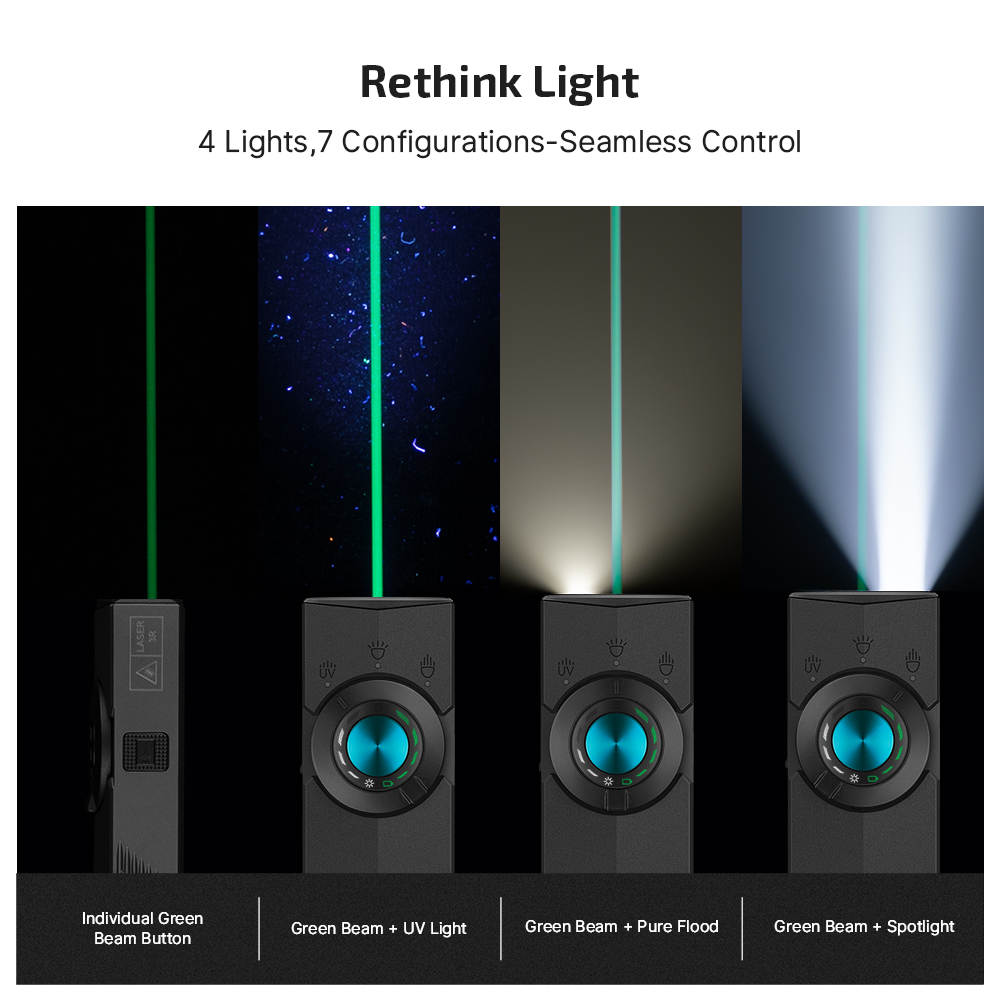
- Pure Flood: When you are looking at a furnace nameplate or a water heater three feet away, a concentrated "hot spot" causes glare that washes out details in photos. You need a smooth, seamless floodlight that mimics natural daylight.
- Spotlight: Conversely, when you are standing on the ground trying to inspect a chimney flashing or a high roof truss, you need a focused beam with high "throw" (reach) to see distant defects clearly.
Tool Integration: Combining White Light, Laser, and UV
Traditionally, an inspector would carry a flashlight, a laser pointer, and a separate UV lamp. Integrated tools like the ArkPro Series eliminate this "tool belt clutter."
- Green Laser: Essential for pointing out defects to clients or real estate agents from a safe distance, and for marking locations in inspection photos without physically touching potentially hazardous areas.
- UV Light (365nm): A game-changer for detecting moisture stains, urine, mold, and even certain types of refrigerant leaks that are invisible to the naked eye.
Top Recommendations: The Olight ArkPro Series
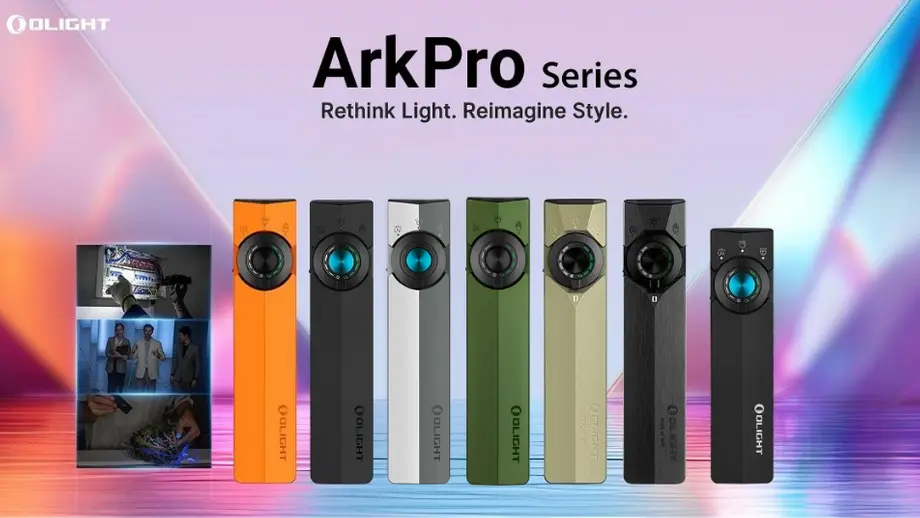
Before diving into the individual models, every light in the ArkPro lineup is built with core features that make them ideal for on-the-go professionals:
- Dual-Source Charging (All Models): No more worrying about proprietary charging cables. Every ArkPro model supports both Olight’s signature magnetic MCC charging (perfect for desk dock-and-go) and a built-in USB-C port (perfect for quick top-offs in your truck between job sites).
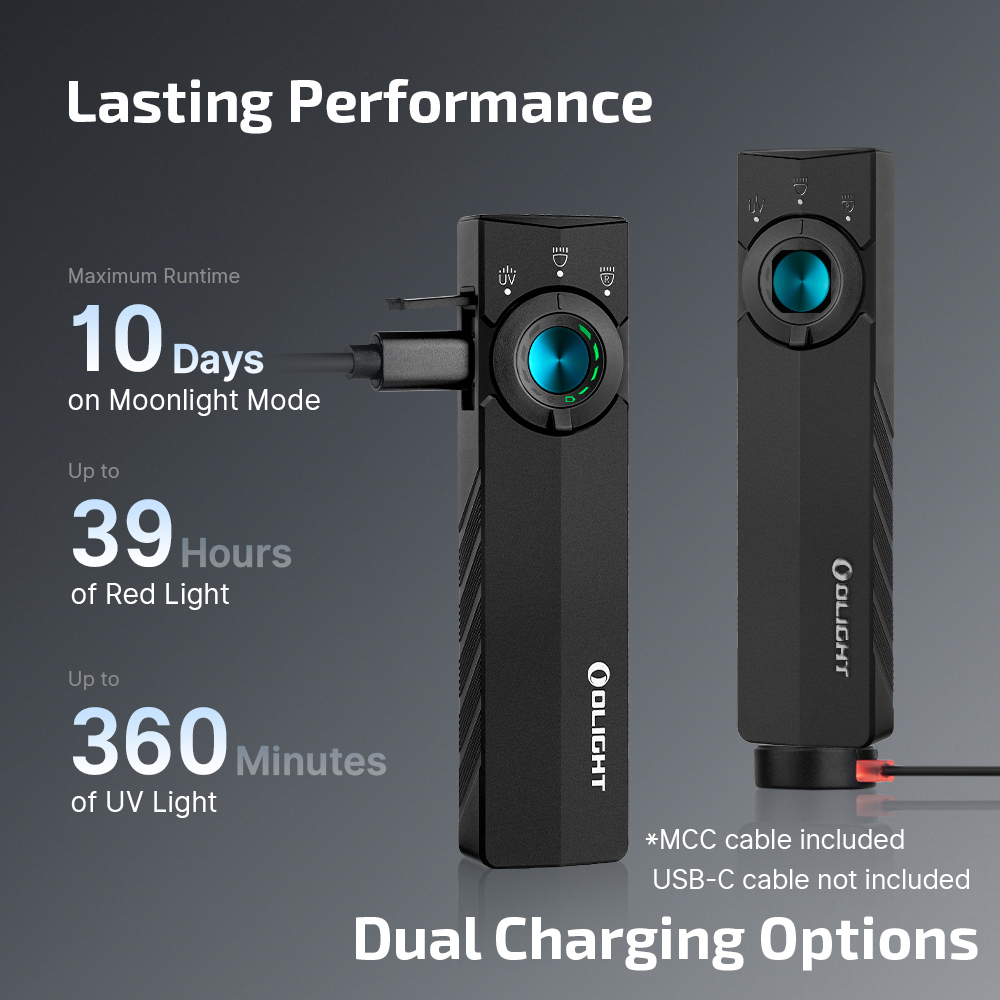
- Ultra-Slim Flat Profile: Unlike bulky round tactical flashlights that roll off sloped surfaces and clutter your tool belt, the ArkPro series slides flat into a shirt pocket and stays put.
Olight ArkPro Ultra
Olight ArkPro Ultra
The absolute flagship for inspection veterans who refuse to compromise on build quality and visual purity.
Check Price & DetailsThe absolute flagship. It is designed for inspection veterans who refuse to compromise on build quality, visual purity, and advanced features.
- Extreme Color Accuracy (Ultra-Exclusive EIP 1 LED): Standard LEDs often suffer from yellow or green color tints that can wash out wire coatings or lead to misdiagnosed water damage. The Ultra features Olight’s self-developed EIP 1 LED, delivering a clean, Pure Flood beam with a near-zero tint deviation (DUV < 0.006). It offers high-fidelity color rendition, allowing you to see electrical wiring and material deterioration exactly as they are.
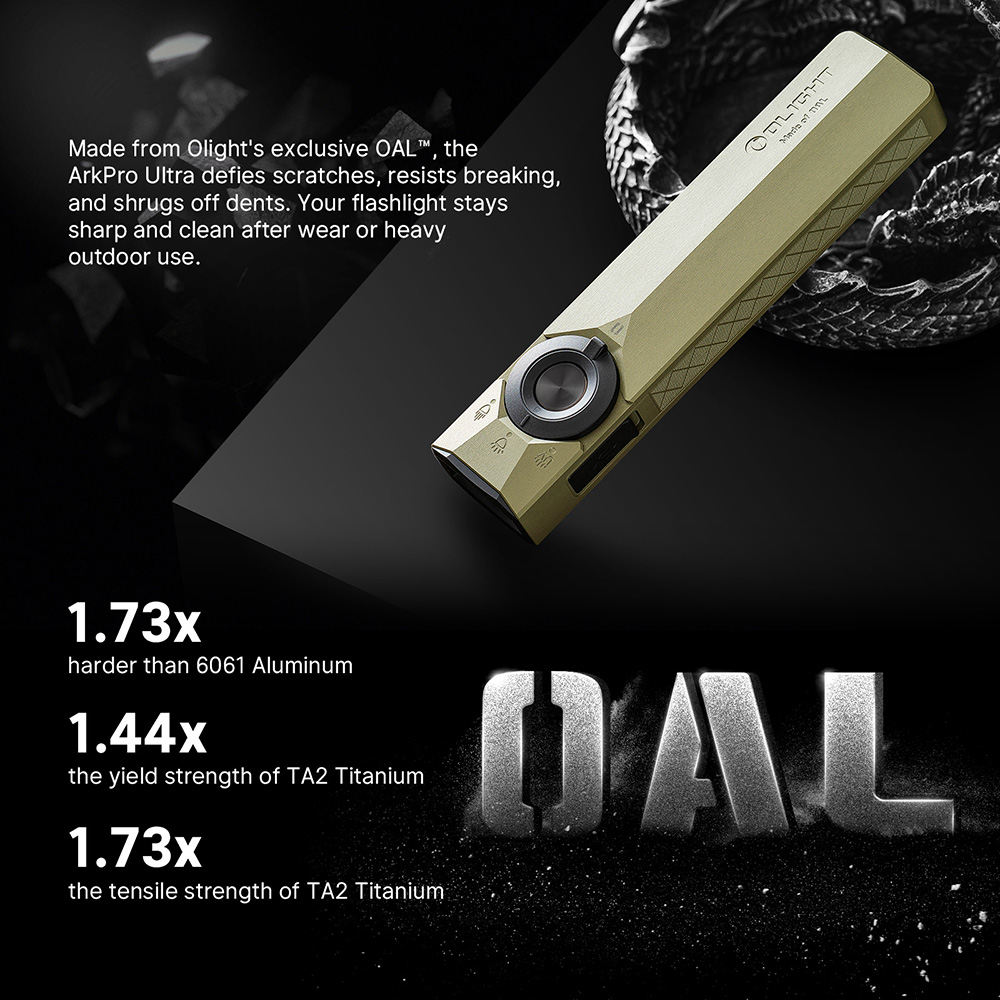
- Job Site Resilience (OAL Superalloy Body): Concrete basement floors and tight attic joists can easily destroy lesser flashlights. The ArkPro Ultra is encased in Olight’s proprietary OAL (O-aluminum) superalloy, which is significantly harder than standard aluminum to shrug off drops, scrapes, and heavy wear.
- The Premium Experience (Exclusive ArkBeat Indicator): Alongside a max 1,700-lumen flood, spotlight, UV, and green laser, the Ultra exclusively features the ArkBeat pulsing status indicator—offering a sleek, real-time visual cue of your battery and status in dark spaces.
Olight ArkPro
Olight ArkPro
The versatile workhorse. 4-in-1 multi-light capability in a rugged aerospace-grade aluminum housing.
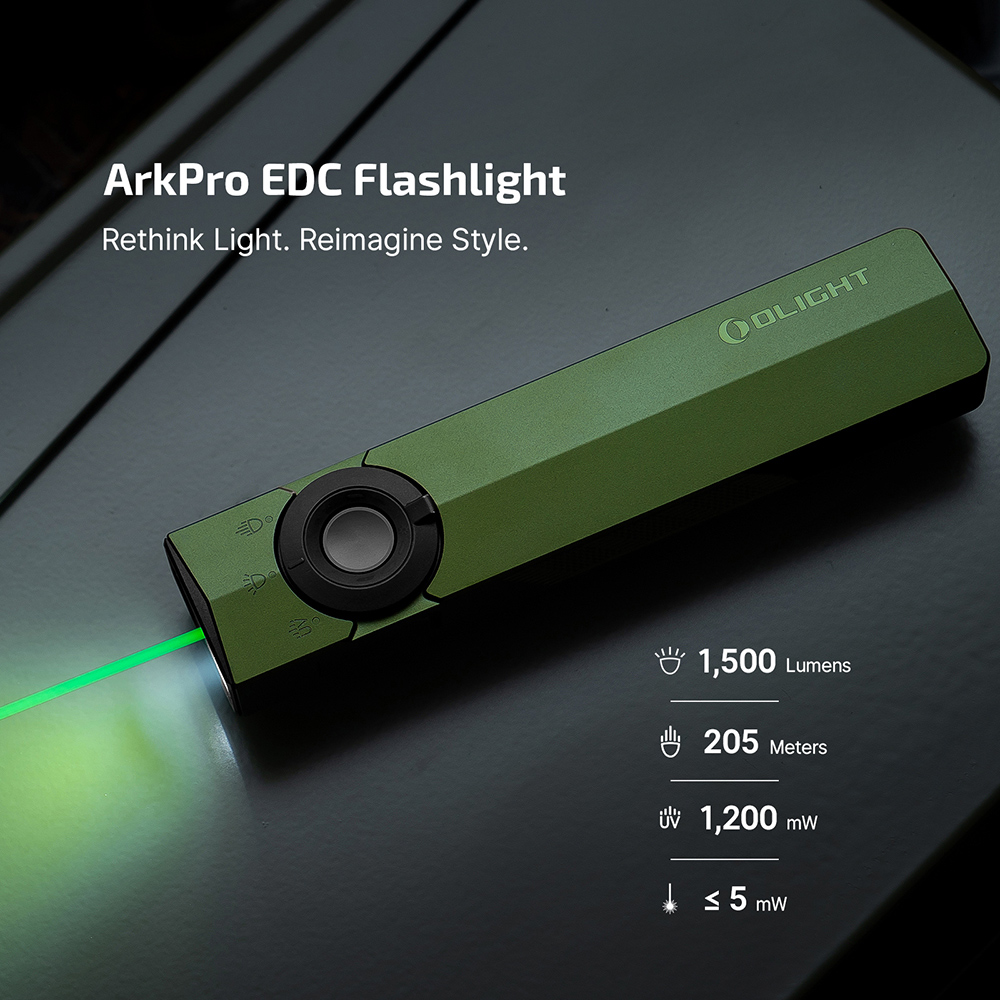
Check Price & DetailsThe sweet spot of the lineup. It delivers the exact same 4-in-1 multi-light capability as the Ultra, but in Olight’s classic aerospace-grade aluminum housing.
- Same 4-in-1 Power, Classic Build: Get the full suite of tools—including an 800-lumen spotlight, 365nm UV, green laser, and a powerful 1,500-lumen flood—housed in rugged, aerospace-grade 6061 aluminum. It provides maximum versatility for daily structural walkthroughs without the added cost of the superalloy body.
- Tactile, Glove-Friendly Interface: The ArkPro features Olight’s tactile rotary dial selector and a dedicated green laser button. With distinct physical detents, you can easily toggle between flood, spot, and UV modes by touch alone, even while wearing heavy work gloves.
Olight ArkPro Lite
Olight ArkPro Lite
Extreme portability with a specialized red mode and UV for close-up diagnostics.
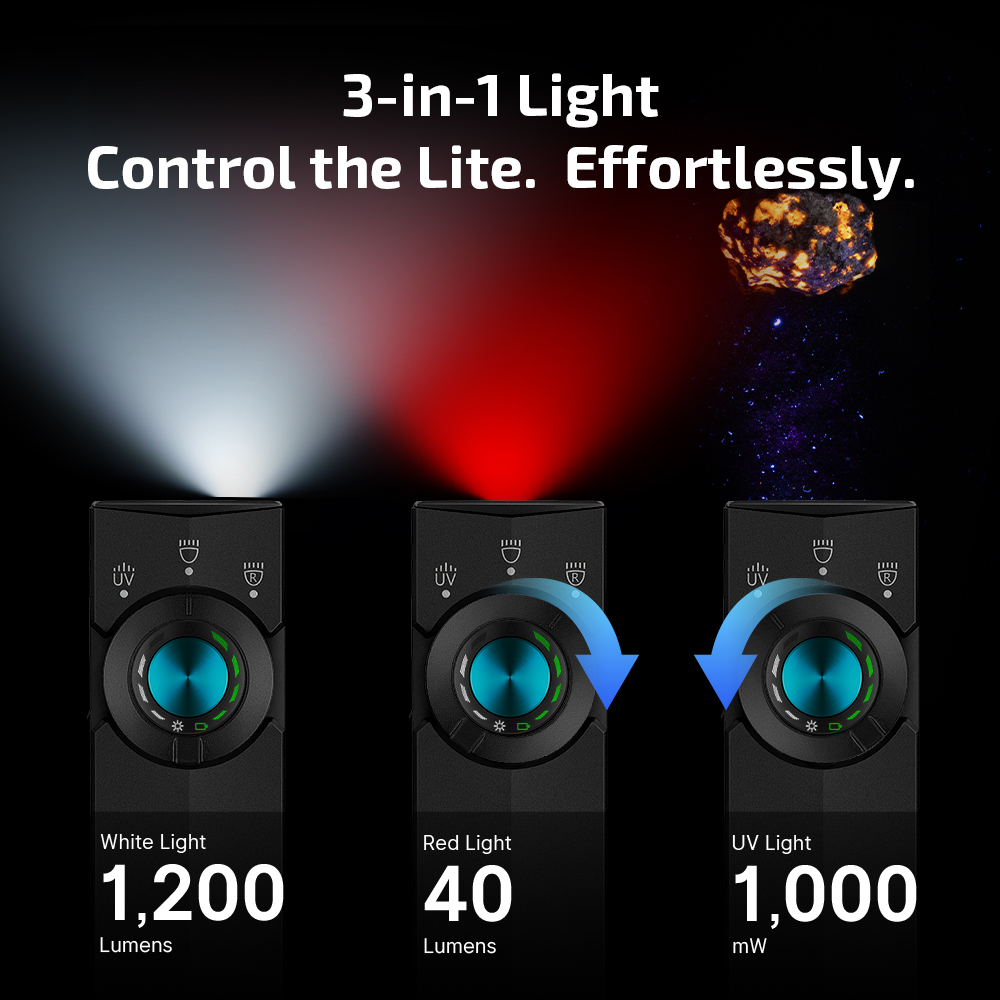
Check Price & DetailsOptimized for extreme portability, night adaptation, and close-up diagnostics. It drops the laser to achieve a slimmer, lighter, and more specialized EDC frame.
- 3-in-1 Multi-Light with Bug-Deterrent Red Mode: While the Lite trades the laser for simplicity, it adds a dedicated 40-lumen red light. This is a game-changer for night walk-throughs to protect your natural night vision, and it helps prevent attracting swarms of mosquitoes and insects in humid crawl spaces.
- Streamlined for Hands-Free Tasks: Shorter and lighter than its siblings, the Lite features a high-output white light and a 365nm UV emitter. Paired with a sturdy pocket clip, it easily mounts to your cap brim, acting as a lightweight, hands-free headlight while you inspect breaker boxes or copper water lines.
Real-World Scenarios: How to Use the ArkPro Series During an Inspection
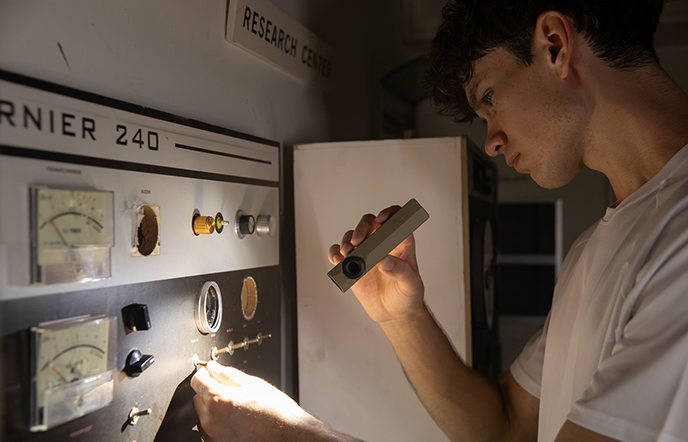
Scenario A: Under the Sink & Plumbing Fixtures (Pure Flood & UV Mode)
When checking a P-trap, the Pure Flood mode provides a wide, soft light that prevents glare on wet surfaces, allowing for clear documentation photos. By switching to the UV light, the inspector can quickly spot dried mineral deposits or active moisture trails that suggest a slow, intermittent leak.
Scenario B: Attic Trusses & High Ceilings (Spotlight & Green Laser)
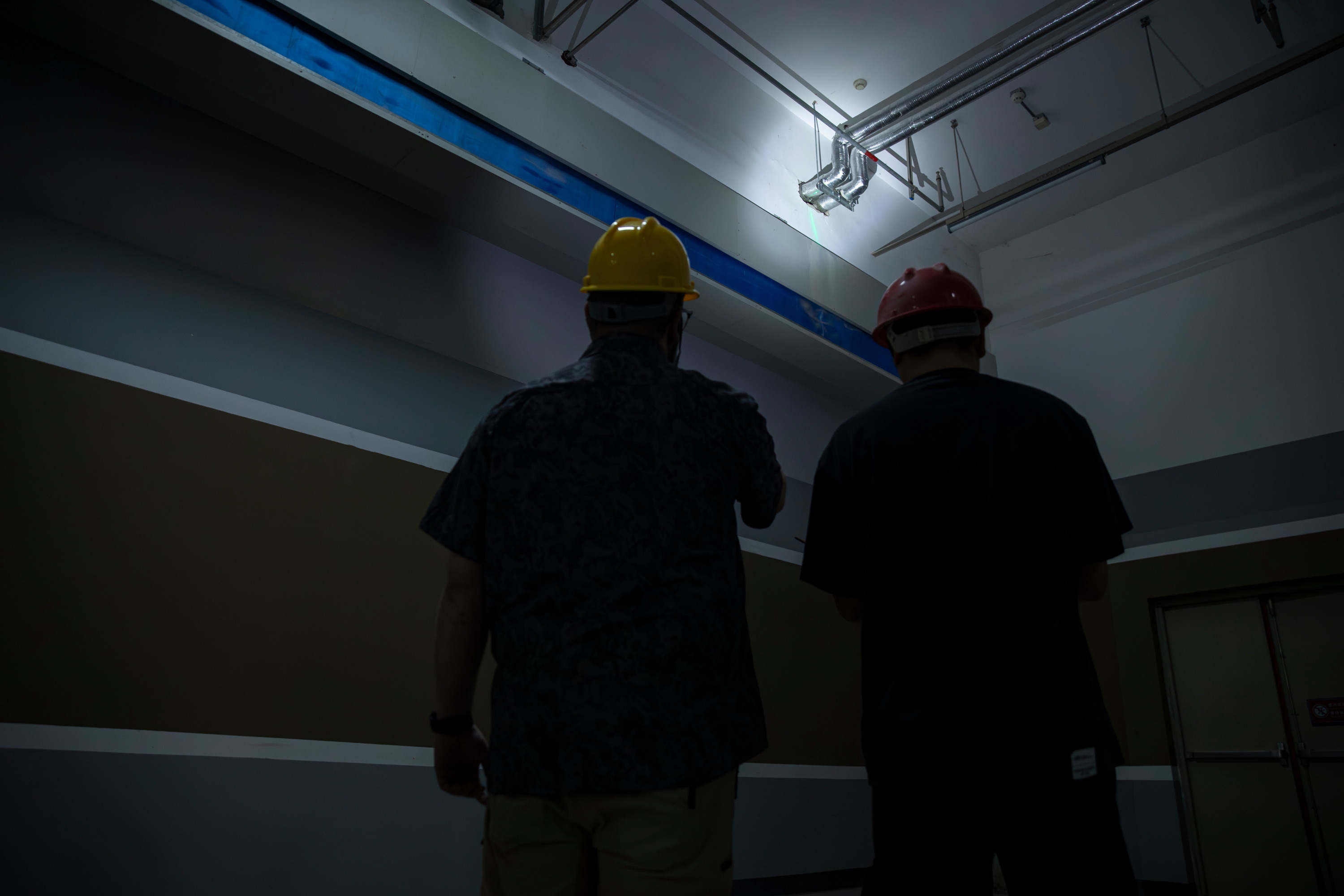
In a large attic, the 800-lumen spotlight (with a 205m reach) illuminates the far corners of the roof deck. Once a crack or water stain is found, the Green Laser can be activated simultaneously to point out the exact location to a client standing safely by the access hatch.
Scenario C: Electrical Panel Inspections (High-Fidelity Tint-Free Lighting)
In a dark basement, identifying wire colors is safety-critical. The EIP 1 LED in the ArkPro Ultra ensures that a red wire looks red and a black wire looks black. Cheaper lights with poor color rendering (low CRI) or distracting color tints (high DUV) can make these colors appear muddy or distorted, leading to potential misidentification of circuit types.
Maintenance Tips: Keeping Your Inspection Light in Top Shape
- Clean the Magnetic Ports: Home inspections are dusty. Periodically use a cotton swab to clean the magnetic charging base to remove iron filings or grit that could interfere with the connection.
- Lens Protection: While the lenses are toughened, avoid storing the light in a pocket with loose screws or nails. Use the included clip to keep it isolated.
- Battery Health: Lithium-ion batteries last longer when not kept at 0% for long periods. Utilize the color-coded battery indicators to ensure you top off the charge after a long day of field use.
Summary and Buyer's Recommendation
Choosing a flashlight with laser and UV integration is no longer a luxury—it is a requirement for the modern professional.
- For the Veteran Inspector: Choose the ArkPro Ultra. Its OAL alloy body and EIP 1 "Tint-Free" LED provide the highest level of professional reliability and visual clarity available.
- For the Daily Professional: The ArkPro offers the perfect balance of performance and price, maintaining all four light sources for maximum versatility.
- For the Entry-Level or Backup: The ArkPro Lite provides the essential UV and white light capabilities in a slimmer, budget-friendly package.
By investing in a high-performance home inspector light, you aren't just buying a flashlight—you're buying the ability to see the details that others miss, ensuring a safer home for your clients and a stronger reputation for your business.