For long-distance thru-hikers on the Appalachian Trail (AT) or Pacific Crest Trail (PCT), every gram matters. When your pack contains everything required for days or weeks on the trail, small equipment choices can make a meaningful difference to your overall base weight.
Lighting is one piece of gear that is easy to overlook until daylight disappears. A late finish, unexpected delay, difficult navigation section, or nighttime camp setup can quickly turn a compact flashlight into essential equipment.
The National Park Service includes illumination among its Ten Essentials and recommends carrying a flashlight or headlamp, with headlamps offering the advantage of hands-free operation.(Source: National Park Service)
For AT and PCT hikers, that raises a more useful question than simply asking how many lumens a light produces:
How much useful lighting performance are you carrying for every gram?
Grams-per-Lumen: A Useful Starting Point, Not the Whole Story
A simple way to compare lightweight lighting equipment is the grams-per-lumen calculation:
Weight ÷ Maximum Lumens = Grams per Lumen
For example, a 54g light rated at 1,250 lumens would calculate to approximately:
54 ÷ 1,250 = 0.043g per lumen
A lower number indicates that a light delivers more rated maximum output for its weight. However, grams-per-lumen should be treated as a comparison tool, not an industry standard.
When comparing an ultralight backpacking headlamp, grams per lumen can provide a quick way to evaluate output relative to weight, but it should never be the only measurement. Maximum lumen output is only one part of trail performance. A thru-hiker also needs to consider runtime, beam pattern, output levels, controls, weather resistance, comfort, and battery strategy.
Peak Lumens vs. Usable Trail Lighting
Maximum output can be useful when you need additional illumination, but you are unlikely to use the highest setting for every minute of a multi-hour hike.
For a lightweight headlamp used on the trail, practical performance depends on more than maximum lumens. A useful comparison should also consider runtime, beam pattern, battery efficiency, and how comfortably the light can be used throughout a hike.
For practical trail use, consider:
Key Trail Factors
- Weight: How much does the complete lighting setup add?
- Maximum output: How much light is available when you need more illumination?
- Lower output modes: Can you conserve battery around camp?
- Runtime: How long can the light provide useful illumination?
- Beam pattern: Is it suited to close-range tasks, trail movement, or distance?
- Weather resistance: Can it handle rain and changing trail conditions?
- Hands-free use: Can you keep both hands available?
- Backup capability: What happens if the primary light is unavailable?
This broader evaluation is more useful than chasing a single lumen-to-weight number.
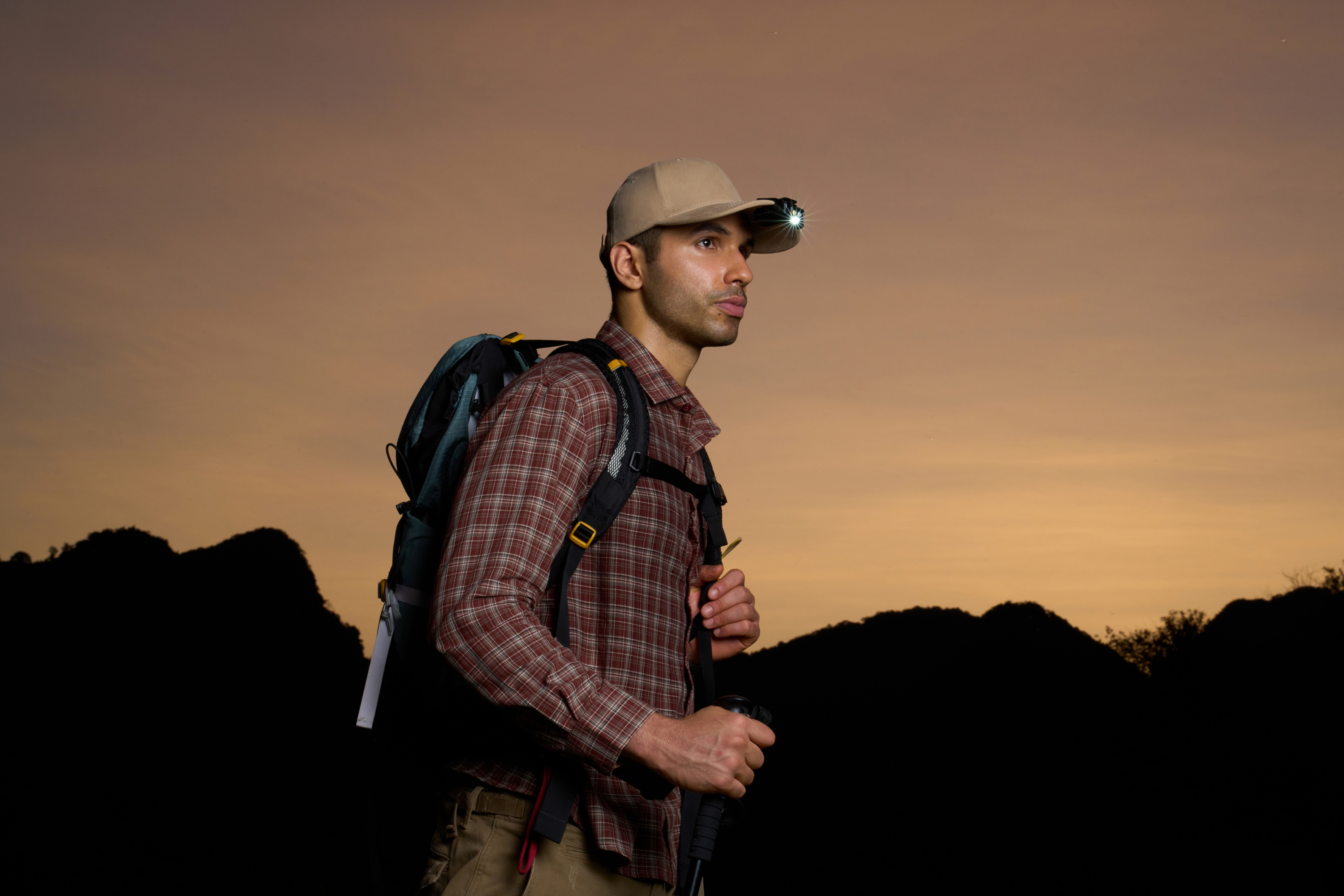
5 Lightweight Lighting Options for Thru-Hikers
Not every lightweight light serves the same role. A dedicated headlamp, compact EDC flashlight, and clip light can each fit into an ultralight lighting strategy differently.
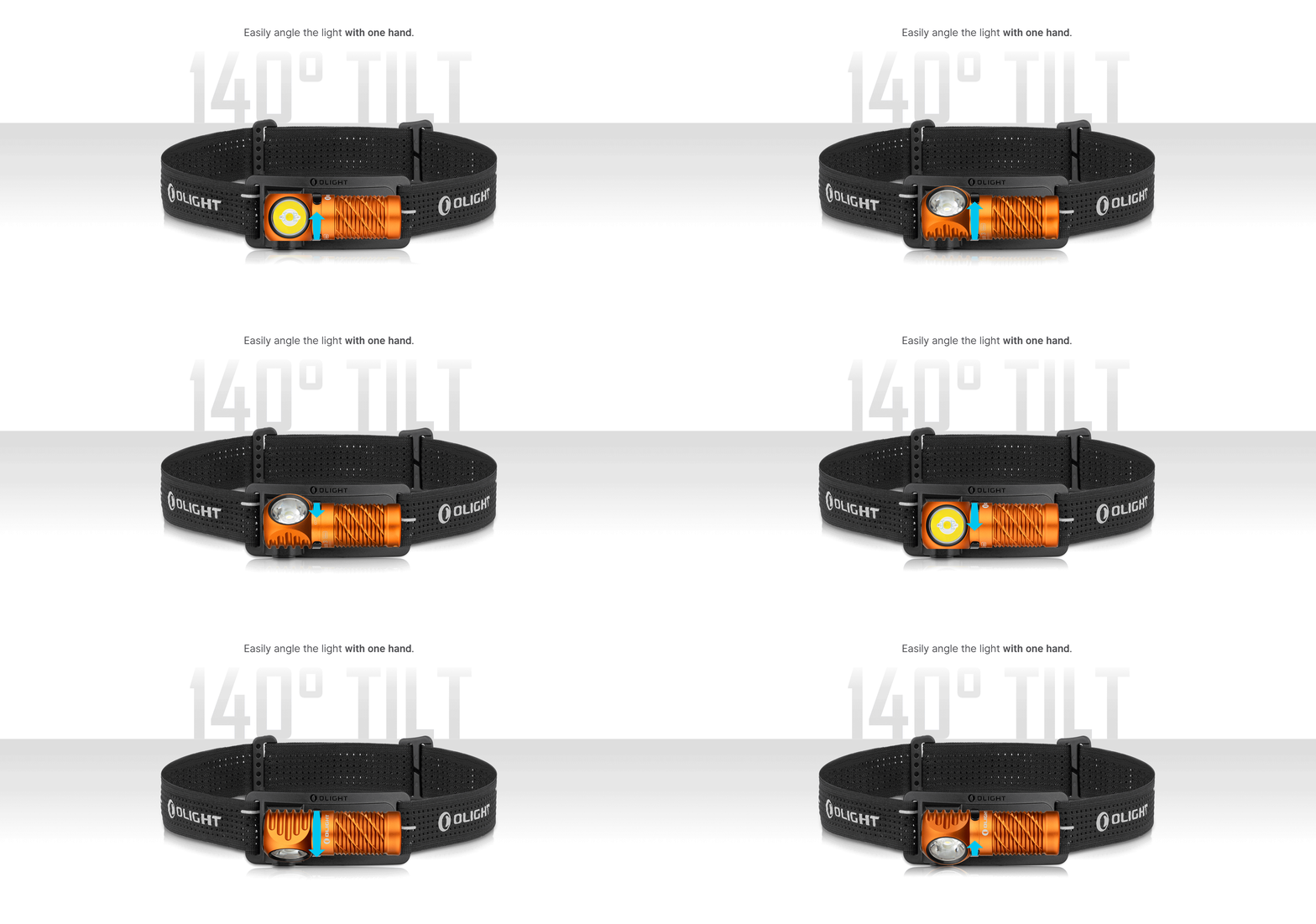
Olight Perun 3 Mini Headlamp
Key Specs: 1,250 lumens, 155m throw, 54g / 1.9oz with battery, red light, quick-release bracket, IPX8 water resistance.
Shop Perun 3 Mini →For thru-hikers, its biggest advantage is that it is designed as a dedicated headlamp rather than requiring an improvised mounting solution. At approximately 54g and 1,250 lumens, its theoretical grams-per-lumen figure is about 0.043g/lm.
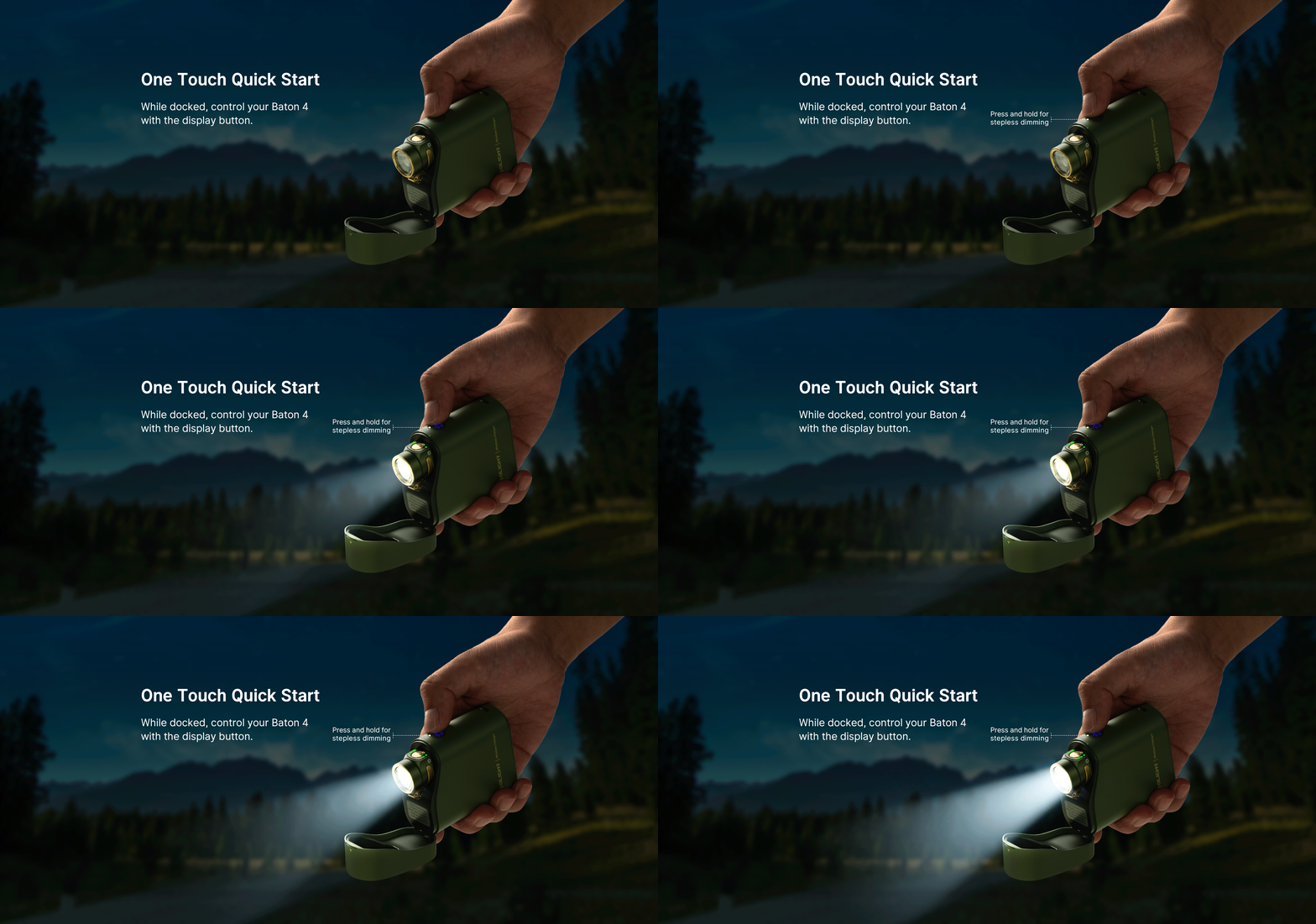
Olight Baton 4 Flashlight
Key Specs: 1,300 lumens, 170m throw, 52.5g / 1.85oz, two-way clip, multi-purpose carry.
Shop Baton 4 →Its compact body and two-way clip make it useful beyond traditional flashlight carry. However, the Baton 4 is not a traditional headlamp. Its advantage for an ultralight hiker is versatility: one small light can serve as an EDC flashlight, camp light, or backup light.
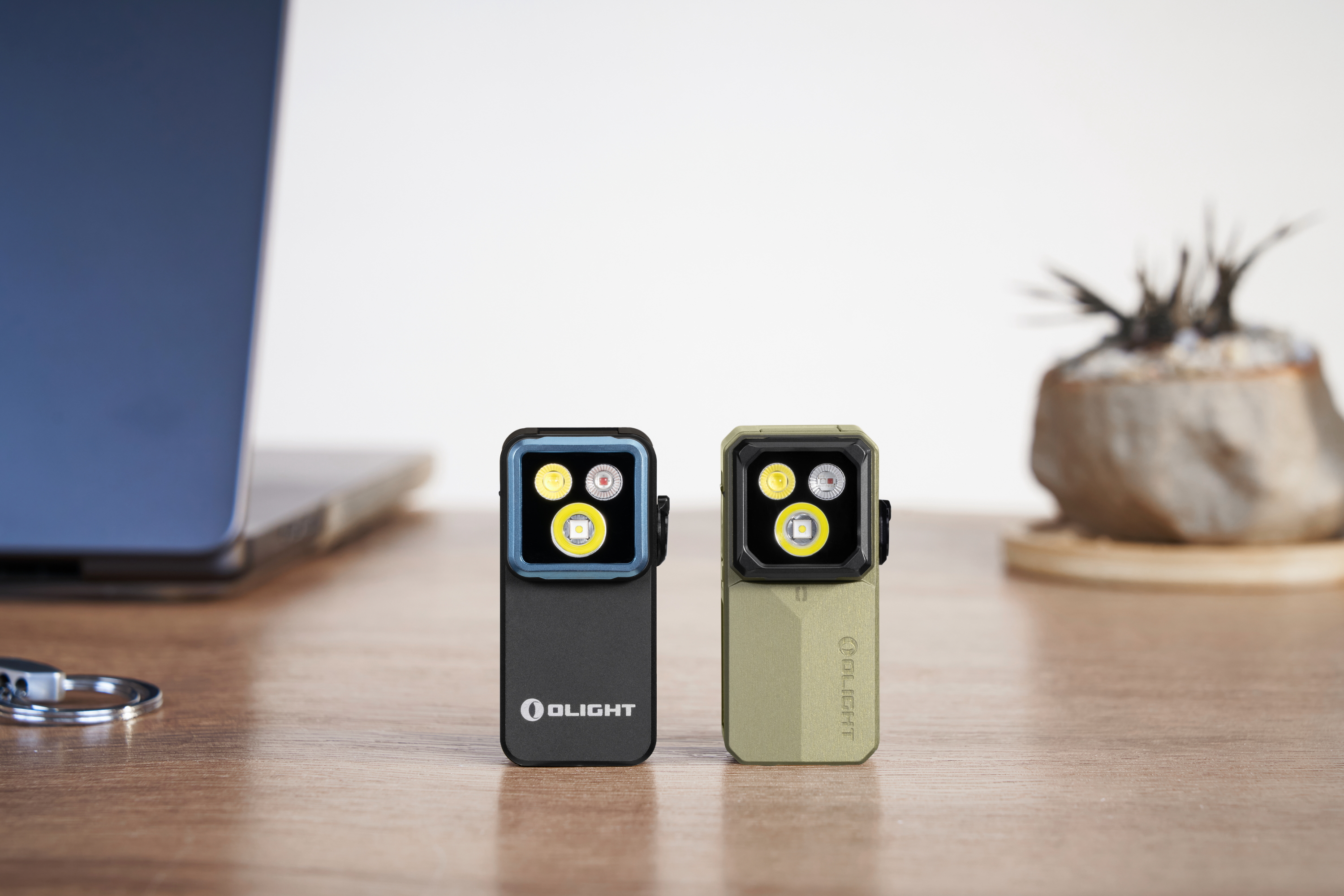
Olight Oclip 2 Pro
Key Specs: 530 lumens flood output, approx. 75.5g / 2.66oz, dual-axis adjustment, up to 115° head tilt, 360° rotating clip, red light.
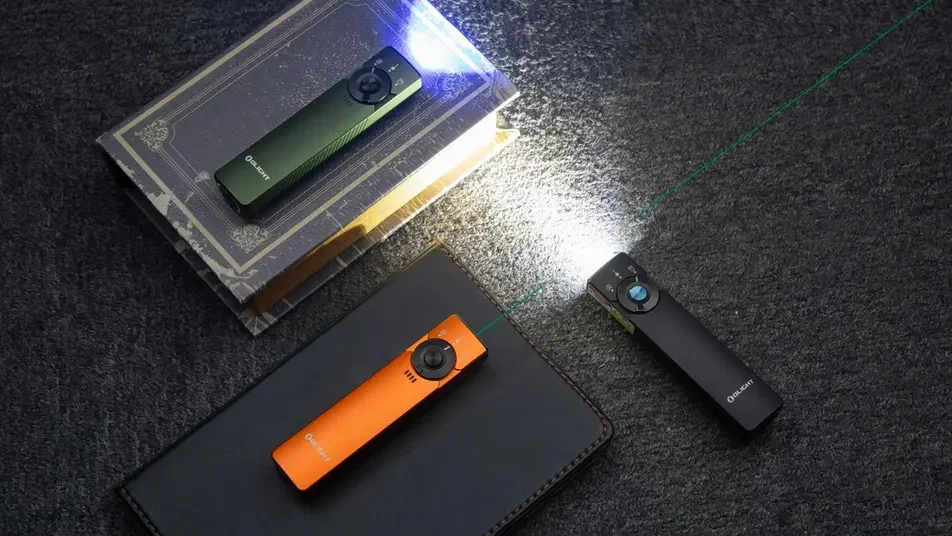
Shop Oclip 2 Pro →For thru-hikers, this type of design can work well as camp or backup lighting, especially when flexible positioning matters more than maximum throw.
Olight Oclip 2 Ultra
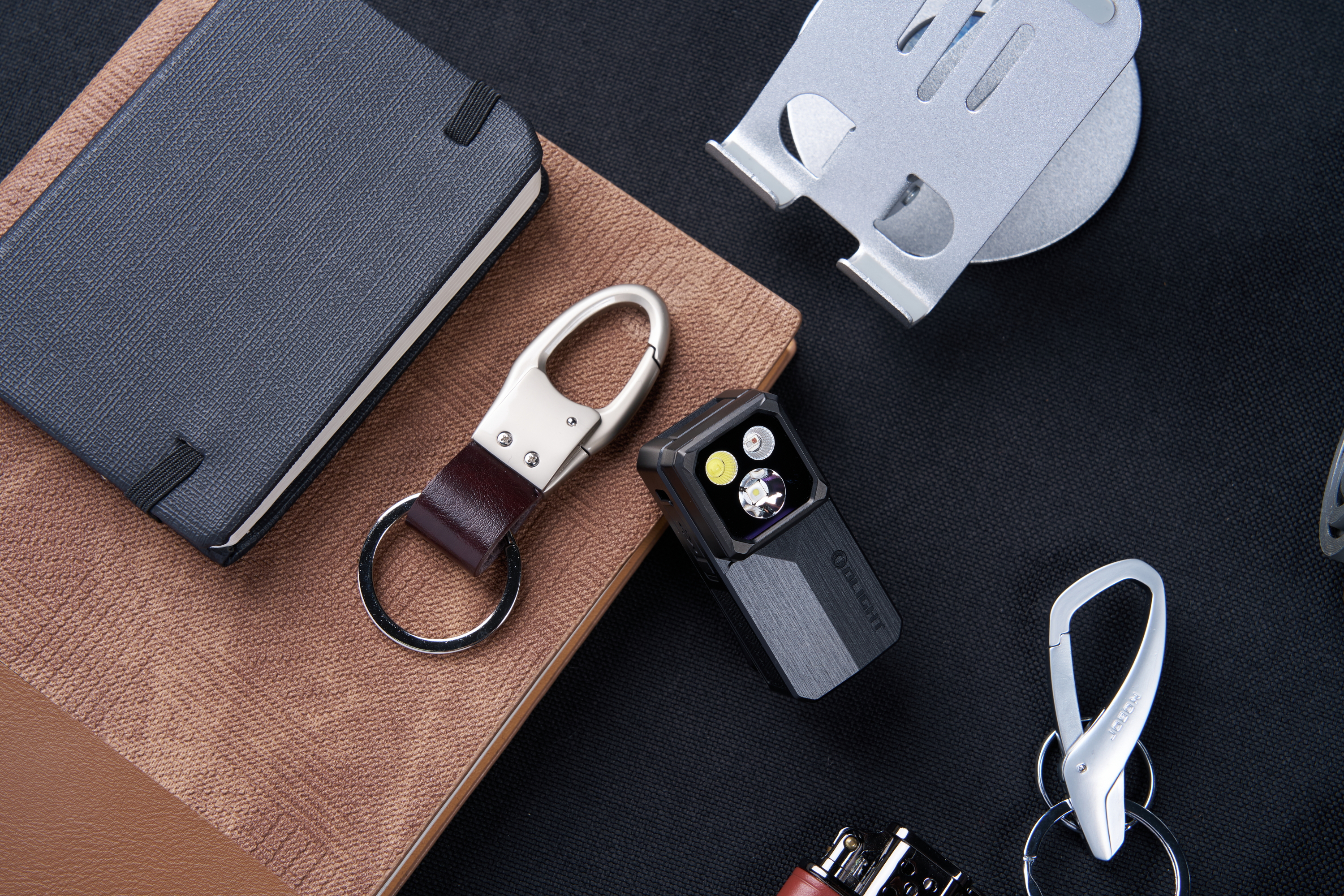
Key Specs: 580 lumens, approx. 79.5g / 2.80oz, red light, UV output, magnetic attachment, clip-based mounting.
Shop Oclip 2 Ultra →Rather than competing purely on weight-to-lumen efficiency, this type of light focuses on versatility.
Minimalist and Conventional Battery Headlamps
Minimalist strip-style headlamps can reduce device weight, but the lightest option is not automatically the best option for every thru-hiker.
When choosing an ultralight backpacking headlamp, the complete design matters as much as the number on the scale. Different models make different trade-offs between size, battery capacity, beam control, durability, mounting stability, and weather resistance.
Instead of assuming that all minimalist headlamps perform the same way, compare the specifications and complete system weight of the individual model.
Conventional AA/AAA-powered headlamps also remain relevant. Their advantages can include familiar battery availability and straightforward battery replacement, while the trade-off may be additional system weight.
For ultralight backpacking gear, the more useful comparison is therefore the total lighting system rather than the light alone.
The key is to compare:
Light + battery + mounting system + backup power
rather than looking only at the weight printed on the product page.
Building a Minimalist Trail Lighting Kit
Choosing a lightweight primary light is only one part of a practical thru-hiking lighting strategy.
A practical backcountry lighting system should balance primary illumination, backup capability, battery management, and total pack weight. Instead of carrying multiple lights that perform the same function, thru-hikers can build a more efficient setup by assigning each light a specific role.
1. Primary Light: Prioritize Hands-Free Use
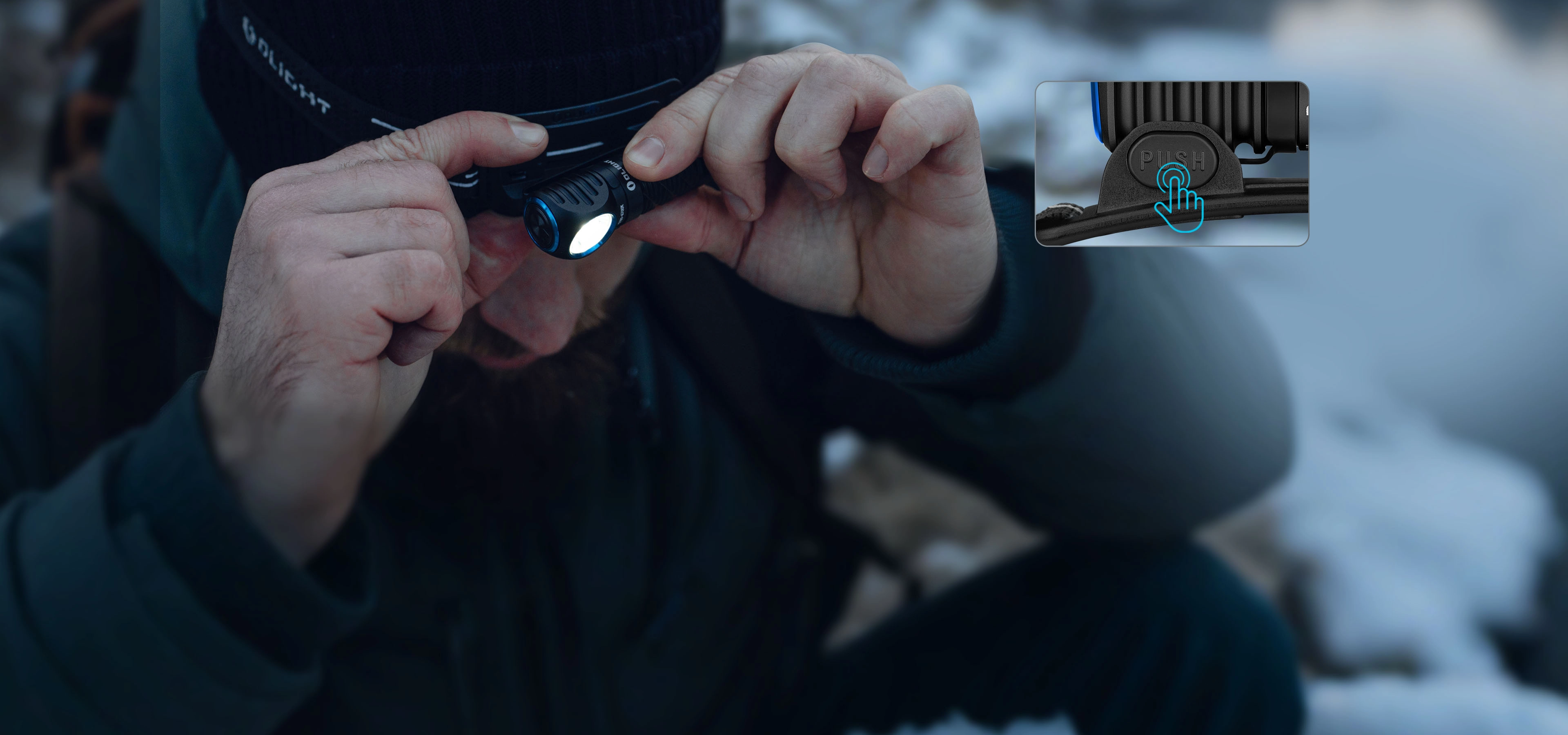
For night hiking, a dedicated headlamp has a major practical advantage: it leaves both hands available. A lightweight dedicated headlamp such as the Perun 3 Mini can work well as the primary light in an ultralight setup.
2. Backup Light: Keep the Failure Scenario Small
A backup light does not necessarily need to duplicate your primary headlamp. A compact flashlight can provide redundancy while also serving other purposes around camp, such as the Baton 4. The Appalachian Trail Conservancy recommends carrying a headlamp and extra batteries in case a hike lasts longer than expected.
3. Camp Lighting: Don't Overpack Lumens
High-output lighting is useful when you need additional illumination, but most camp tasks require considerably less light.
4. Red Light: Useful for Nighttime Tasks
The National Park Service notes that dark adaptation takes time and that red light can help preserve night vision compared with white light.
5. Battery Strategy Is Part of the Weight Calculation
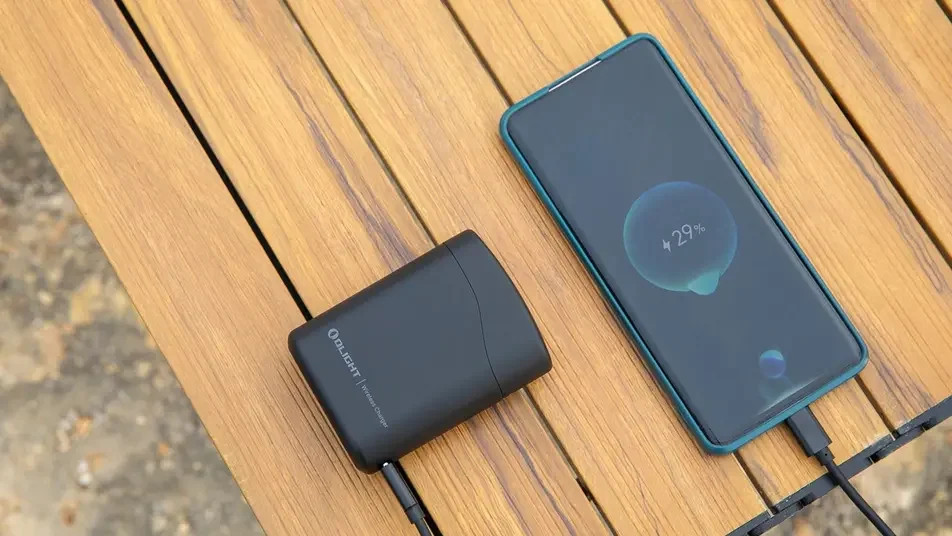
When calculating your real lighting weight, include total system weight rather than device weight alone.
FAQ: Ultralight Headlamps for Thru-Hiking
Conclusion: Optimize the Whole Lighting System
For AT and PCT thru-hikers, choosing the right lighting system is less about finding the smallest possible headlamp and more about finding the right balance between weight, usable brightness, runtime, hands-free operation, and reliability.
The best ultralight headlamp for one hiker may not be the best choice for another. Route conditions, hiking schedule, weather, battery strategy, and overall pack weight all affect what makes a lighting setup practical.
The grams-per-lumen metric provides a useful starting point, but it should not become the only measurement. A lightweight light with impressive maximum output may not be the right choice if its runtime, beam pattern, controls, or mounting system do not match your needs.
A practical ultralight lighting strategy can be simple:
Primary headlamp → lightweight backup → appropriate battery strategy
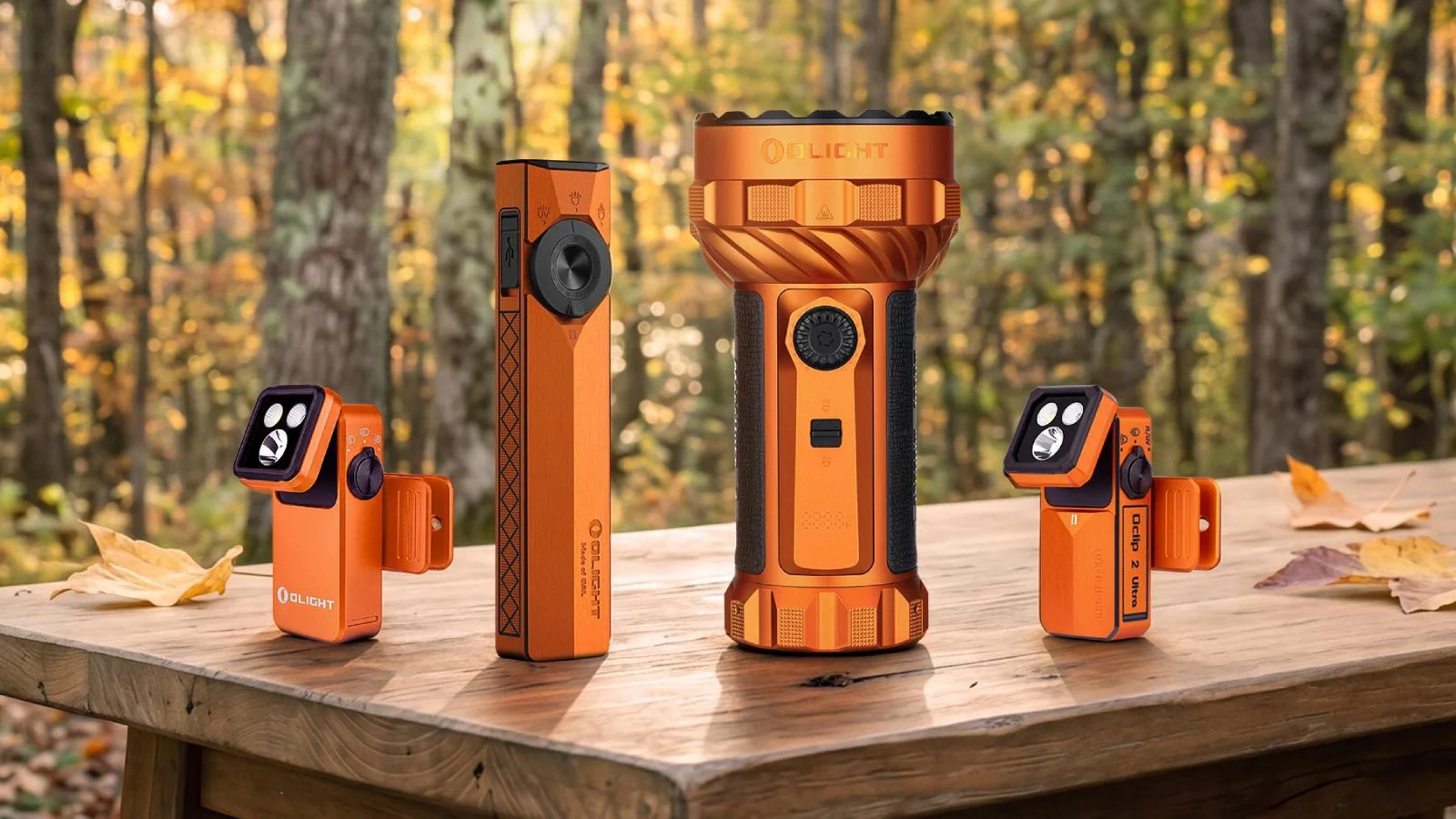
For hikers who want a dedicated lightweight headlamp, the Perun 3 Miniprovides a compact headlamp-oriented option. For hikers who prefer maximum versatility from a small secondary light, the Baton 4 offers a very low-weight multi-use format. Clip-based options such as the Oclip 2 Pro and Oclip 2 Ultra provide another approach for flexible positioning and multifunction lighting.
The goal is not to carry the fewest grams at any cost.
It is to make sure every gram you carry contributes to a useful function on the trail.
Make sure every gram you carry contributes to a useful function on the trail.