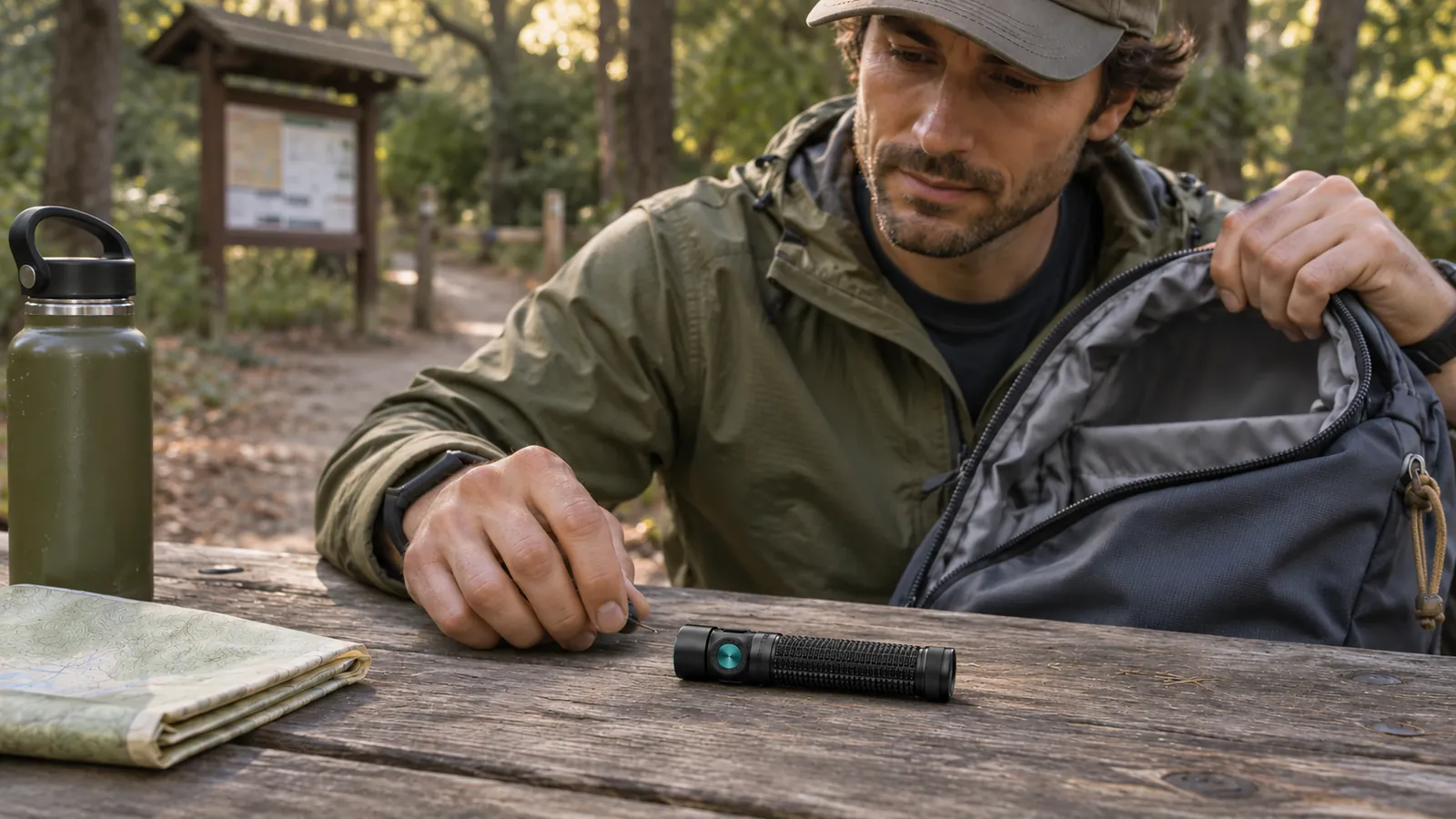
TL;DR: Choose your main hiking light for the route, usable settings, and how you need your hands. Add an independently powered spare you can reach easily. A low-cost keychain light can fill that second role. Compare the exact configuration, charging equipment, and regular listed price before deciding where the remaining budget belongs.
📋 Table of Contents
- 1. Put the main light and spare on separate budget lines
- 2. How many lumens are best for hiking?
- 3. Choose the format before spending more on output
- 4. Compare three exact handheld options
- 5. What is the best inexpensive flashlight?
- 6. What is the best flashlight for trekking?
- 7. Check the purchase without destructive home tests
- 8. Spend the remaining budget on the actual gap
- 9. Work through a first-hike purchase before ordering
- 10. Frequently Asked Questions
Put the main light and spare on separate budget lines
The best budget flashlight for hiking is a flashlight purchase that fits the outing you can realistically complete. Start with an appropriate main light, then decide how you will manage a failure or an unexpectedly late return. A tiny light you carry every day may be useful as a second source. Its low purchase price does not establish that it can handle the whole walk home.
| Budget decision | Useful purchase question | Example in this guide |
|---|---|---|
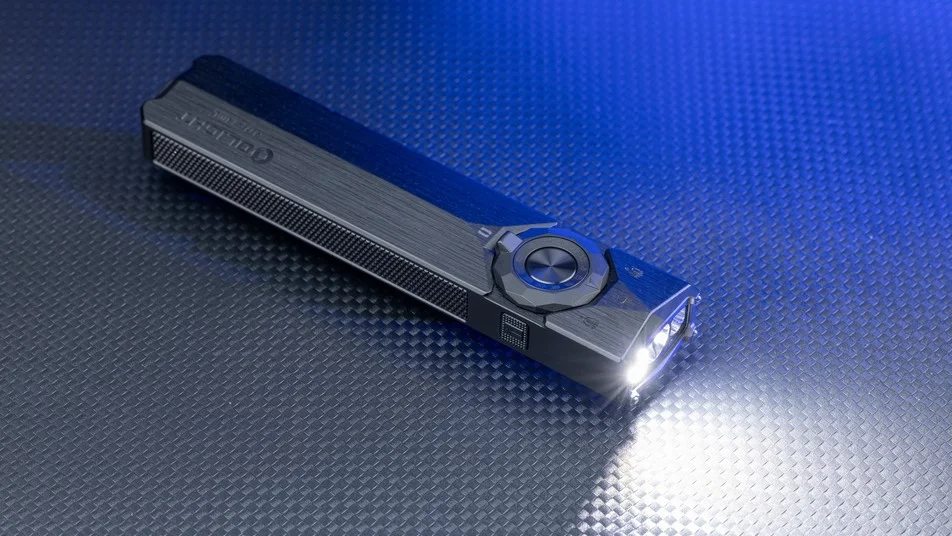
| Add an inexpensive spare | Can you operate it and keep its battery ready? | i3E EOS Summer Palm, $12.99 regular reference price |
| Prefer a rechargeable pocket spare | Will its charging arrangement fit your routine? | iUltra Olive Green, $29.99 regular reference price |
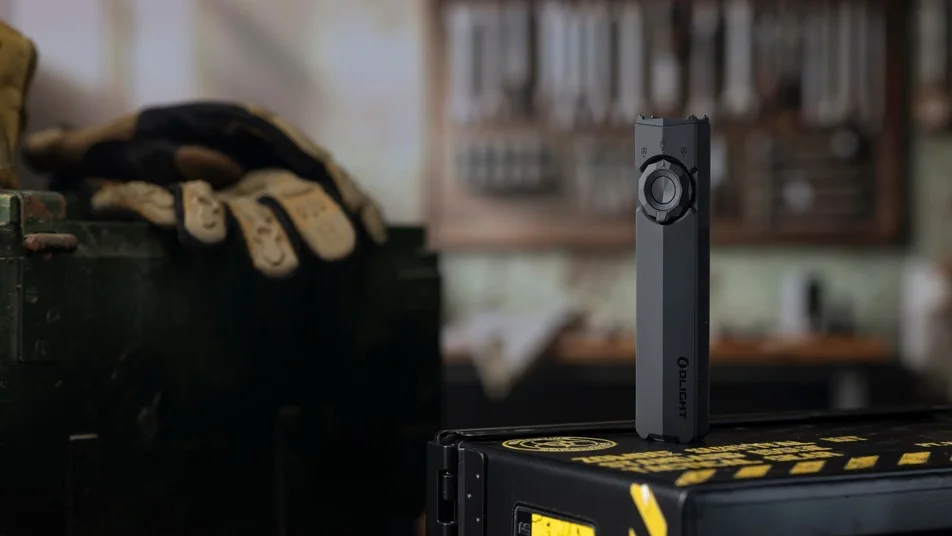
| Choose a larger handheld | Does the route allow a hand to hold and aim it? | Baton 4 Pro Matte Black Cool White, $69.99 regular reference price |
These are the selected U.S. configurations' regular reference prices observed on November 19, 2026. They exclude tax, shipping, extra batteries, and any additional charging equipment. Prices and availability can change. A temporary discount can change what you pay, so confirm the actual configuration and final total before ordering. The examples are manufacturer-documented options, with no claimed side-by-side field test or universal winner.
A new hiker may already own a serviceable main light. In that case, a spare and a fresh compatible power supply may solve the immediate gap. Someone starting with no suitable main light has a different purchase to make. Keep those two situations separate when reading an under-$25 recommendation. An affordable addition to an existing kit is a smaller commitment than buying an entire lighting setup.
Write down what you have before opening a store page. Include the main light's model, the power source it needs, and where it will ride in the pack. Then name the missing function. It may be independent backup illumination, a hands-free format, or a setting you can use comfortably while walking. That short inventory prevents an appealing small light from becoming an unplanned substitute for the item you actually need.
How many lumens are best for hiking?
There is no single lumen figure that establishes suitability for every hike. Consider the path, weather, pace, usable lower settings, and the time you may need illumination. Look for a beam that lets you see footing comfortably. Check the manufacturer's output and runtime information together, and keep enough reserve to respond when the outing takes longer than expected.
Lumens describe total light output. They do not tell you how the light is distributed across the ground or how comfortable the reflected light will feel nearby. A high maximum can attract attention on a product page while the setting you actually select does most of the work. Examine the available modes and the controls that reach them. You should understand that sequence before relying on the light away from home.
Read any stepped-output or runtime table in full. A listed maximum and a listed duration may belong to different modes, or the light may reduce output during a stated runtime. Treat the manufacturer's conditions as part of the specification. A lab figure supplies a reference for comparing documented modes. It cannot promise a personal walking duration in cold weather, with an older battery, or after repeated use earlier in the day.
Try the ordinary controls in a familiar, permitted setting before the trip. Check whether the selected setting illuminates nearby steps and whether you can hold the beam steady while standing still. This is a functional familiarization check. It supplies no measured beam-distance ranking, drop rating, or independent runtime result. If you cannot use the light comfortably, resolve that problem before making a longer or more demanding plan.
Choose the format before spending more on output
The National Park Service Ten Essentials guidance recommends headlamps because they leave hands free and tells visitors to pack extra batteries. Take that format question seriously. If you use trekking poles, need both hands for ordinary tasks, or cannot hold a handheld comfortably, budget for an appropriate headlamp first. A larger handheld purchase does not resolve the need to keep your hands available.
A handheld can make sense for a permitted, straightforward outing when you can hold it securely and direct it toward the path without compromising your movement. Consider what else occupies that hand. A person carrying a water bottle, adjusting a jacket, and checking a map should stop in a safe place before sorting those tasks. Choose equipment around the actual movement the route requires.
Fit and retention deserve a place on the shopping list. A clip, pouch, strap, or pocket should keep the equipment secure while allowing access. Confirm that any accessory belongs to the model you selected. A product photo can show a useful arrangement, but the contents of the exact package determine what you receive. Include missing compatible accessories in your budget before comparing two apparent prices.
Avoid building a hiking purchase around an improvised attachment. If your route needs a headlamp, choose a documented headlamp arrangement that fits you and the trip. Keep a keychain handheld as a separate portable source. The three examples below illustrate price and power decisions within their documented formats. They do not represent a complete selection of headlamps or a recommendation to change the requirements of a difficult route.
Compare three exact handheld options
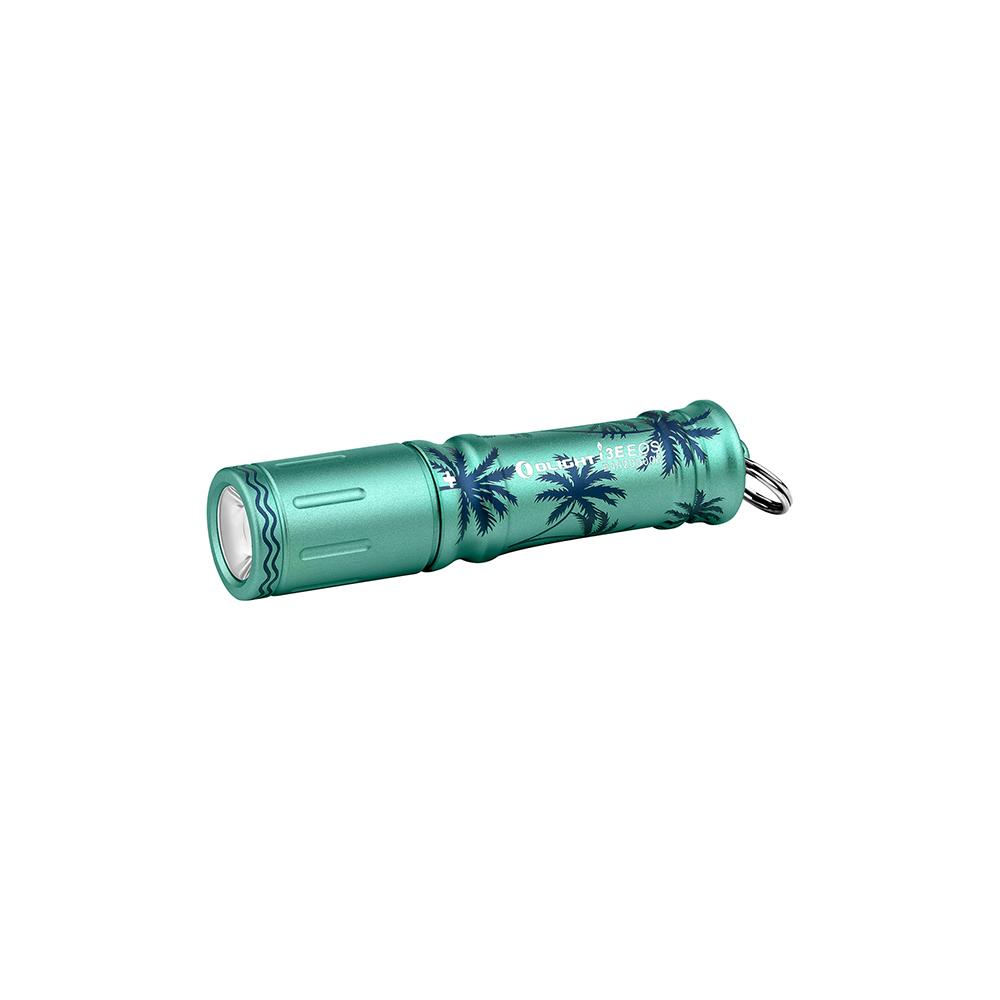
A single-output light gives you one output to evaluate for your intended backup task. You cannot choose a lower built-in setting to suit a close map-reading task or stretch a particular outing. Plan around that limitation. Use it where the beam is comfortable, and keep the main light and other navigation equipment ready. An under-$25 price is a useful budget fact, not a reason to extend the route after your original plan changes.
Pack replacement batteries so their terminals are protected from loose metal. Check the exact manual for supported battery types rather than substituting a similar-sized rechargeable cell. For long-term storage, the i3E instructions say to remove the battery to help prevent leakage. A light left in a pack for months needs another check before the next hike, even if it worked during the previous season.
If you can spend only a little on an addition to an existing kit, this is a concrete place to compare the need against the cost. The listed price leaves $12.01 from a $25 item budget before tax, shipping, or extras. Two at the same reference price total $25.98 before those costs. Buying several small lights can use up a budget quickly while leaving the original main-light question unanswered.
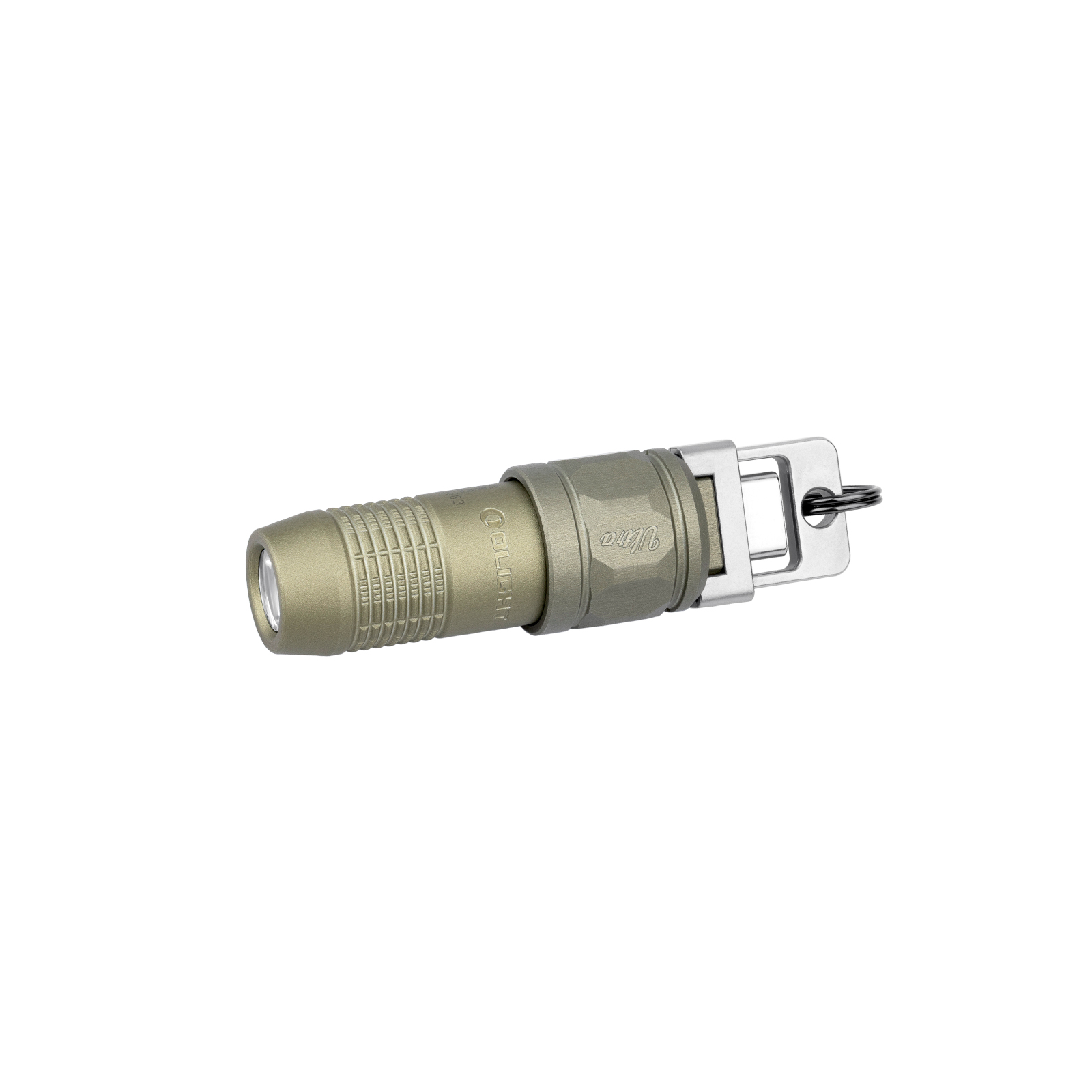
A rechargeable flashlight can suit an adult who reliably charges small daily-carry equipment and wants a familiar pocket spare. It also introduces a task before departure. Check the connection at home with the equipment you intend to use, then verify the light itself. A connector that looks right does not establish that every adapter will charge the product. Its manual notes that charging may not work with some high-power adapters.
The iUltra instructions also warn against leaving the body and charging tail cap separated for a long time. Keep the complete item together in its intended off arrangement during storage. Avoid turning its pull-to-light design into a loose collection of parts at the bottom of a pack. Decide where the item belongs and make sure you can retrieve it without emptying other equipment onto the ground.
Allow the small battery's role to guide your expectations. The product's manufacturer-stated output is useful information for choosing a short backup task. It is not a claim that this small light supplies the reserve needed for every route. If your main concern is a long return after dark, first review the main light, the planned duration, and the power reserve for that situation. A rechargeable keychain spare solves a narrower problem.
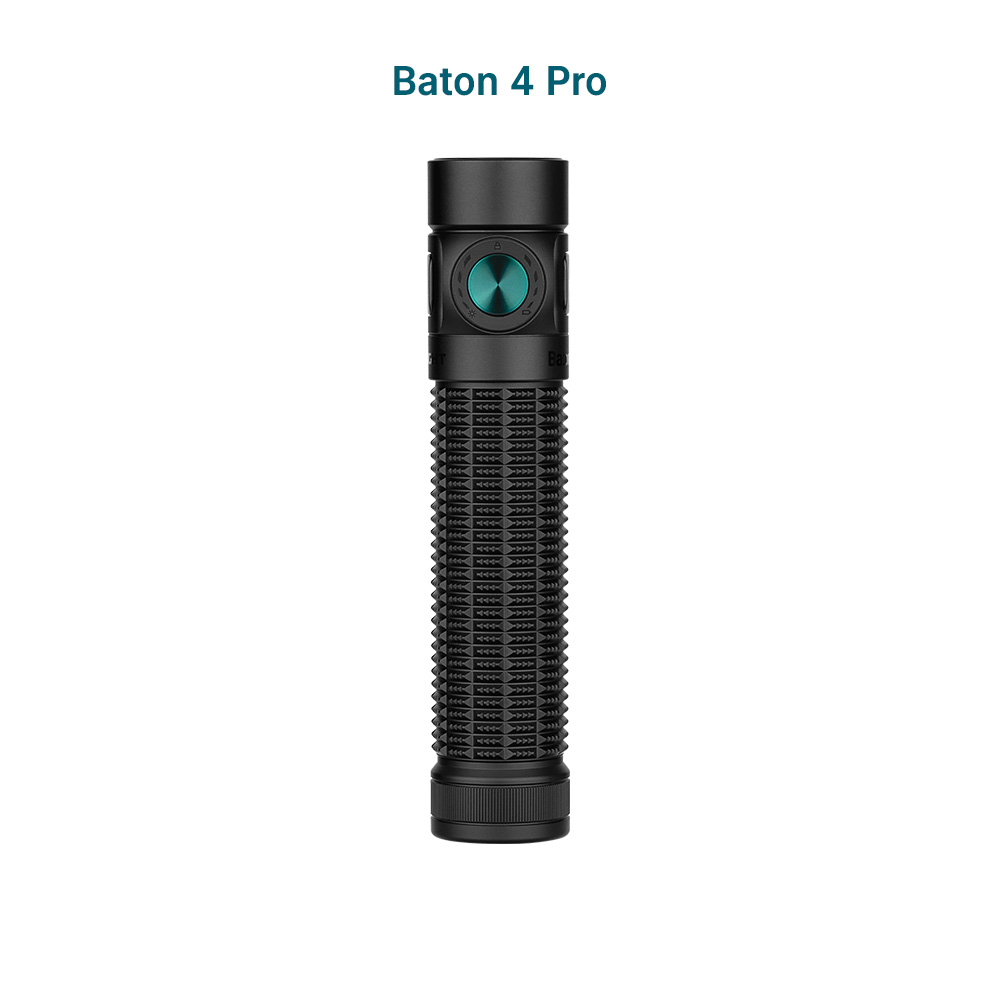
This example gives a buyer a larger handheld with selectable output rather than a single-output keychain format. Whether it fits as your main light still depends on the route and your ability to hold it. Check the grip and the reach to the control while stopped. Make sure you can find the setting you intend to use and switch the light off without confusing that action with another mode.
Read the heat warnings before placing it near pack fabric. The manual warns against obstructing the light outlet and putting a hot light into a fabric bag or fusible plastic container. It also says to lock the flashlight for carrying or transport to prevent accidental activation. Follow the exact instructions and let the light cool when necessary before packing. Keep this preparation separate from any question of maximum brightness.
The manual's hot-car warning applies before and after the hike too. Do not store, charge, or use the Baton 4 Pro in a car where the temperature inside may exceed 140°F (60°C), or in similar environments. For the iUltra, the manual likewise prohibits storage in a car that may exceed that temperature. A trunk is not automatically an appropriate permanent home for either light. Take the equipment with you when the storage conditions would be unsuitable.
What is the best inexpensive flashlight?
Choose an inexpensive light by the job it can actually fill. For an adult adding a small AAA-powered spare to an existing hiking kit, the selected i3E EOS is a low-cost example. A hiker who needs a main light must also assess format, useful settings, runtime conditions, and reserve power. Purchase price alone cannot settle that choice.
Compare the total of the items you still need. At the regular reference prices here, the Baton 4 Pro and one Summer Palm i3E EOS total $82.98 before tax, shipping, or additional equipment. Pairing that handheld with the iUltra totals $99.98 on the same basis. The $17 difference is the difference between these two selected spare prices. It is not a performance score or a claim that either pairing is sufficient for your route.
You can also avoid an unnecessary purchase. If you own a suitable main light and can maintain it with the approved power source, replacing the entire light may add little to your next straightforward day hike. Inspect the existing equipment and resolve actual faults first. If it is damaged or cannot serve the planned task, choose a different suitable arrangement or change the outing before relying on it.
Borrowed equipment needs the same preparation as owned equipment. Identify the model, read its instructions, and check its ordinary operation with the owner. Make sure the intended power accessories come with it. A borrowed main light with an unknown charging history leaves a gap that an unopened small spare does not automatically close. Confirm both items while there is still time to select another plan.
What is the best flashlight for trekking?
For a trekking trip, match the complete lighting arrangement to the route, duration, conditions, and use of your hands. A headlamp can be the more useful main format when both hands are occupied. Carry a suitable separate backup and understand the power plan. The best choice is the equipment you can use and maintain for that specific trip.
A multi-day outing raises different questions from a short walk near the trailhead. Think about where you can recharge, how many days the plan covers, and which power items remain independent of each other. Verify any charging opportunity instead of assuming that a building, vehicle, or campsite has a compatible outlet. If the plan depends on one shared power source, describe what happens when that source cannot be used.
Be realistic about experience as well as equipment. A new hiker can choose a shorter, familiar route, start early, and leave time to turn back. A light is one item in a broader preparation plan. At Great Smoky Mountains National Park, the official hiking guidance tells visitors to set a turnaround time and turn back if they feel uncertain or the hike is harder than expected. Read the rules and conditions for the place you will actually visit.
Keep the main light available before the last convenient stop. If you decide to use it, stop in a safe position and adjust it while standing still. Check where the spare sits too. An item inside a tightly packed bag may exist on your equipment list while remaining difficult to reach when something stops working. Pack so you can recognize each item without scattering gear or blocking other visitors.
Check the purchase without destructive home tests
Open the exact package at home and compare the model and finish with the order. Locate the supplied equipment and the current manual. Check for shipping damage, a loose part, or a damaged battery before proceeding. Follow the first-use steps, including any insulating film the instructions tell you to remove. If something appears wrong, contact the seller through the ordinary support route before relying on the item.
Try turning the light on and off, choosing the intended setting, and returning it to the instructed carry arrangement. With a rechargeable model, check the supported charger connection in the permitted conditions. With the AAA model, identify the correct battery type and orientation. Practice while you have good lighting and a stable surface. Familiarity with a control is useful even when you have made no measurement of output.
Skip deliberate drops, improvised immersion, and attempts to prove a water-resistance rating in a sink. Published protection information belongs with its manufacturer's conditions. Damage from a home experiment can leave you with less reliable equipment and an unresolved support question. An ordinary visual and functional check is enough to identify many purchase problems that deserve the seller's attention.
Before departure, repeat the practical check using the equipment you will carry. Confirm that the main light and spare are ready, their storage follows the manuals, and any extra power is protected and identifiable. Keep the instructions available for later reference. Do the check early enough to leave a damaged or unsuitable item at home and choose an appropriate alternative.
Spend the remaining budget on the actual gap
Consider an adult who owns a suitable headlamp and plans a permitted daylight loop with an early return. The specific missing item is a small independent spare. That person can evaluate the $12.99 AAA option, compatible spare power, and an accessible pocket. There is no reason to replace the existing main light merely to make the two items match.
Now consider someone with only a phone and a small daily-carry keychain light. Buying another keychain item leaves the main-light decision open. Great Smoky Mountains' hiking list specifically says a phone does not count as the illumination item. Review the route and choose a proper main format before spending the remaining money on matching accessories. If that purchase exceeds the available budget, shorten or postpone the outing instead of planning around an unverified substitute.
A useful shopping note names the model, exact selection, power arrangement, and intended role. Add the regular price reference and the date you checked it, then write the amount left for tax, shipping, and missing equipment. Bring that note back to the trip plan. The final decision should leave you able to prepare the main light, find the spare, and follow the route and turnaround limits you chose.
Work through a first-hike purchase before ordering
Imagine two adults arranging a familiar, permitted day walk. One owns a headlamp that fits and has its supported charging equipment. The other has only a phone and a light attached to house keys. They plan to return well before dark, but each still needs suitable illumination. Their equipment lists should show what each person can use independently rather than treating the first person's headlamp as a shared solution for every problem.
The first hiker writes down the headlamp model and confirms its condition and preparation instructions. The immediate shopping question is a reachable spare, compatible power, and somewhere to carry both. The second hiker starts with the main format. If holding a handheld would interfere with the planned movement, the Baton example does not become the right purchase simply because the larger light has selectable modes. The task determines that decision before the two people compare prices.
Suppose the first hiker chooses to investigate the Summer Palm spare. The reference item cost is $12.99. Before ordering, that person checks the delivery total and the approved replacement battery type, then decides where the light will ride. They leave space in the budget for the actual missing items. They also keep the existing headlamp's supported charging equipment on the preparation list, even though buying the spare does not change that equipment.
The other hiker can write a separate complete-kit estimate. At the regular reference prices already given, the example handheld and AAA spare add to $82.98. The written estimate still needs any shipping, applicable tax, and equipment not supplied in the selected boxes. If the resulting cost is too high, they can look for an appropriate loan with known instructions or change the outing. Buying two inexpensive spares does not complete the main-light part of the list.
Check the delivery date against the time available to read the manuals and become familiar with the lights. A parcel arriving just before departure leaves little opportunity to address a wrong model, damaged item, or charging problem. Use the seller's stated delivery information for the actual order. Keep the purchase confirmation and the model details together so a support question can identify exactly what arrived.
After the equipment arrives, the hikers check it at home while there is time to change plans. They identify the normal controls, the intended off or locked carry arrangement, and the actual supported power source. A rechargeable item gets its own charging check. The AAA item gets an ordinary function check with its specified battery. Neither hiker needs to manufacture a drop or water test to decide whether an obvious delivery problem needs attention.
On the evening before departure, they review the route information and transport arrangements. They check the park's current conditions, opening rules, and their intended turnaround point. A later bus, an unexpectedly slow section, or a delayed start can reduce the margin they planned. If the schedule no longer works, they shorten or postpone the walk. Extra light is useful preparation while the route and timing still need their own decision.
Finally, each person packs the main light where it is available and the spare where it can be recognized. They check that carry arrangements follow the manuals and that a hot or damaged item has not gone into the bag. The two people tell each other which equipment they have and what the return plan is. That conversation turns a set of purchases into a specific outing they can assess before leaving the trailhead.
Frequently Asked Questions
Changelog
- November 19, 2026: Checked the selected U.S. configurations, regular price references, official product photographs, manual precautions, and National Park Service hiking guidance. No field comparison, drop test, or immersion test was performed.