


TL;DR: Choose a detachable-light lantern only if the base still lights the table and the small light can handle the walk on its own. Check both at once before the trip. A separate table lantern and personal light are the simpler choice when anyone needs a different beam, battery, or backup.
📋 Table of Contents
- 1. Decide what needs to stay lit when someone leaves
- 2. Check what the product actually calls detachable
- 3. What is the best portable light for camping?
- 4. What is the best camping lantern?
- 5. How many lumens should a camping lantern be?
- 6. Decide who keeps a light when several people move
- 7. Count the things you have to charge, carry, and replace
- 8. Frequently Asked Questions
Decide what needs to stay lit when someone leaves
| Camp job | What the light needs to do |
|---|---|
| Keep dinner or cleanup visible | The shared table light stays useful when someone leaves |
| Walk to a restroom or other approved stop | The departing adult carries enough light for the actual route |
| Use both hands for a short task | A fitted headlamp or other suitable hands-free option leaves both hands available |
| Use a single lantern with a removable part | Verify the part gives useful light away from the base and the base still works |
| Prepare for someone coming back | Leave a fixed place to put the personal light and a backup the group can reach |
The simplest question is what happens at the table as soon as one person takes the small light away. If the remaining people can finish their task under the base light and the departing person can see the route, the arrangement does two jobs. A handy attachment can make a light easier to store. It tells you little about what stays lit when the pieces are separated.
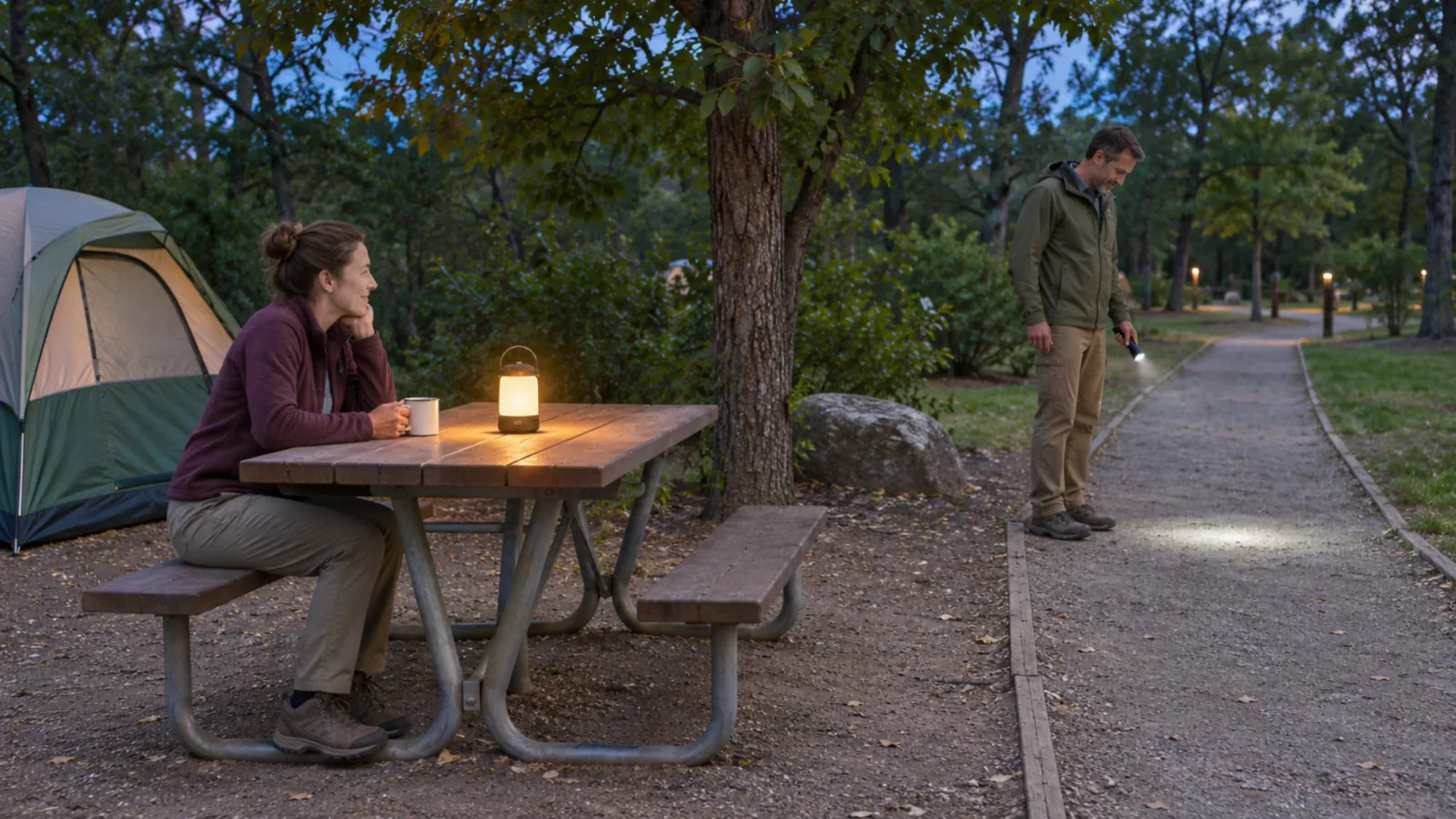
Consider a familiar front-country campsite, with one adult staying at the picnic table and another walking along the campground's designated path. They need different light at the same time. A broad pool can let the people at the table see several place settings and find a bag beside them. The walker needs a beam that shows the actual ground ahead, including bends and changes in surface.
Choose the route in daylight. Look at where the path begins, whether the campground permits it at that hour, and how you will recognize the return. The National Park Service's before-trip camping guidance includes a flashlight or headlamp on its list of equipment to consider. Pack enough light for that actual route, even when the lantern can spare a small light.
Think about who holds or wears the lights. Adults can keep responsibility for their own routes and for children who come with them. A detachable piece small enough to put in a pocket still needs to work for the adult carrying it. Keep any loose parts and spare batteries where adults can manage them, and use a suitable light already available if the small module is unavailable.
The table will have its own tasks as people move around. Ask what should still be easy to see while the adult is away. A game card, a plate, and a checklist all ask for a little different light. Leave the table lamp where it can illuminate the shared task, with the controls reachable from a normal position. Use the camp setup you already trust for a walk rather than assuming the table light will do it.
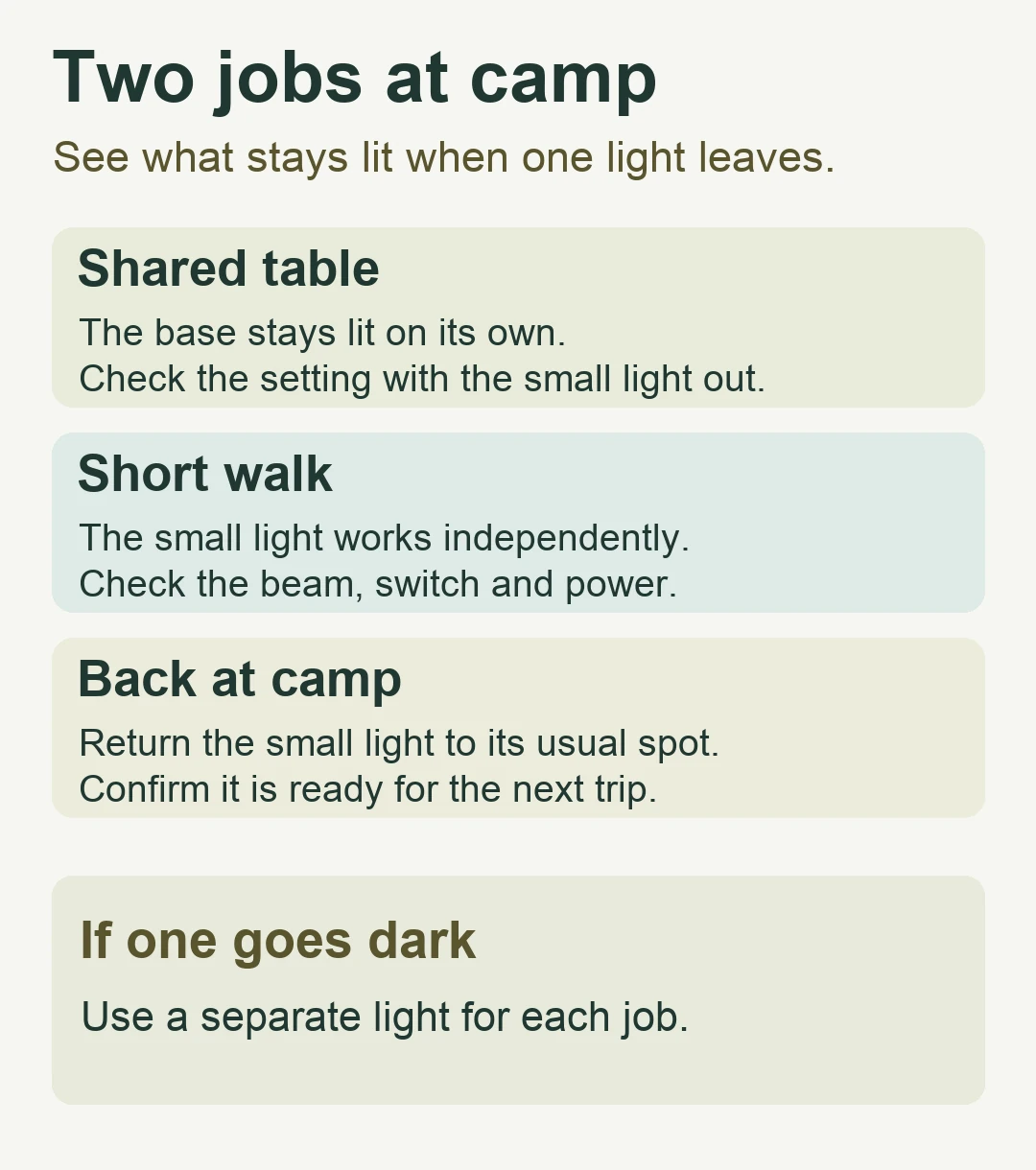
Check both jobs at the same time before relying on a removable light.
You can check what the table needs without waiting for the campsite to go dark. Put the usual objects in their places and have the person who would stay at the table do one task. If the little light will leave with someone, remove it as the maker directs and see which areas stay lit. The other adult can check the separate lamp under ordinary visibility at the same time.
Keep this first check simple. If there is a hook or a bracket near the table, the assembled lantern may look as though it lights the entire area. Put the base where you normally use it and read one label or make room to move a plate. Look at what you can actually see after the portable lamp is out of the holder. A stable spot closer to the task may be enough for what the group needs.
Check what the product actually calls detachable
Read the product manual and check what is in the box. A removable light should make useful light away from the host. Look for its switch, which power source it uses after removal, and how you return or charge it. Find what the maker says about the light remaining at the table. A photograph of the parts assembled may not explain how they operate together.
A removable shade changes how a light spreads. It can make a handheld light useful as a table source when the manufacturer offers a compatible setup. The shade itself may have no light source. The Olight Marauder Mini series lampshade listing identifies the package as the shade only, with the flashlight sold separately. Carrying away the one flashlight leaves the shade without that light source.
A light that lifts out of a storage dock can still be useful even if the dock gives off no light. If the dock is intended only for storage or charging, you need another source at the table while the light is away. A headlamp that can be separated from its band is another useful example. You're changing the way that one light is carried. It does not give the person at the table another source.
Check whether the table keeps its intended output when you remove a part. If a design uses the small lights to fill out the table light, taking one away may change the shape or usefulness of the light left behind. The package may publish a combined output rather than a separate number for each light. Confirm the conditions of any claim before assuming what your table or path receives.
Charging details matter too. A product may store a light, charge it only when connected to an outside source, or charge it under other specified conditions. Look at the exact instructions. Designate a return spot that works even when nobody is charging anything. Decide whether the small light can be readied separately and whether the two parts can be used together at the settings you need.
A product can have a detachable battery, lens cover, diffuser, hook, or headband. Those are common ways to change how a light is carried or used. None of those words answers the two-light question by itself. If the manual does not tell you that two light sources operate apart, plan to keep a separate table light when someone takes the personal light.
Check which parts and controls are sold together. A photo that shows a small piece beside a base might include a version or accessory that you have to buy separately. The box list is a better starting point. If the package can accept additional modules, verify which ones physically fit and which ones have their own switches and power. A second empty space on a dock does not provide a second personal light.
A combination may seem attractive because it takes up less room on the table. That advantage matters if the parts can return to the same place easily. If you regularly grab one light from a jacket pocket and leave the lantern where it is, a shared dock may add a step without simplifying the actual outing. Compare how the gear will be handled after sunset, when a person needs to find and return a light.
What is the best portable light for camping?
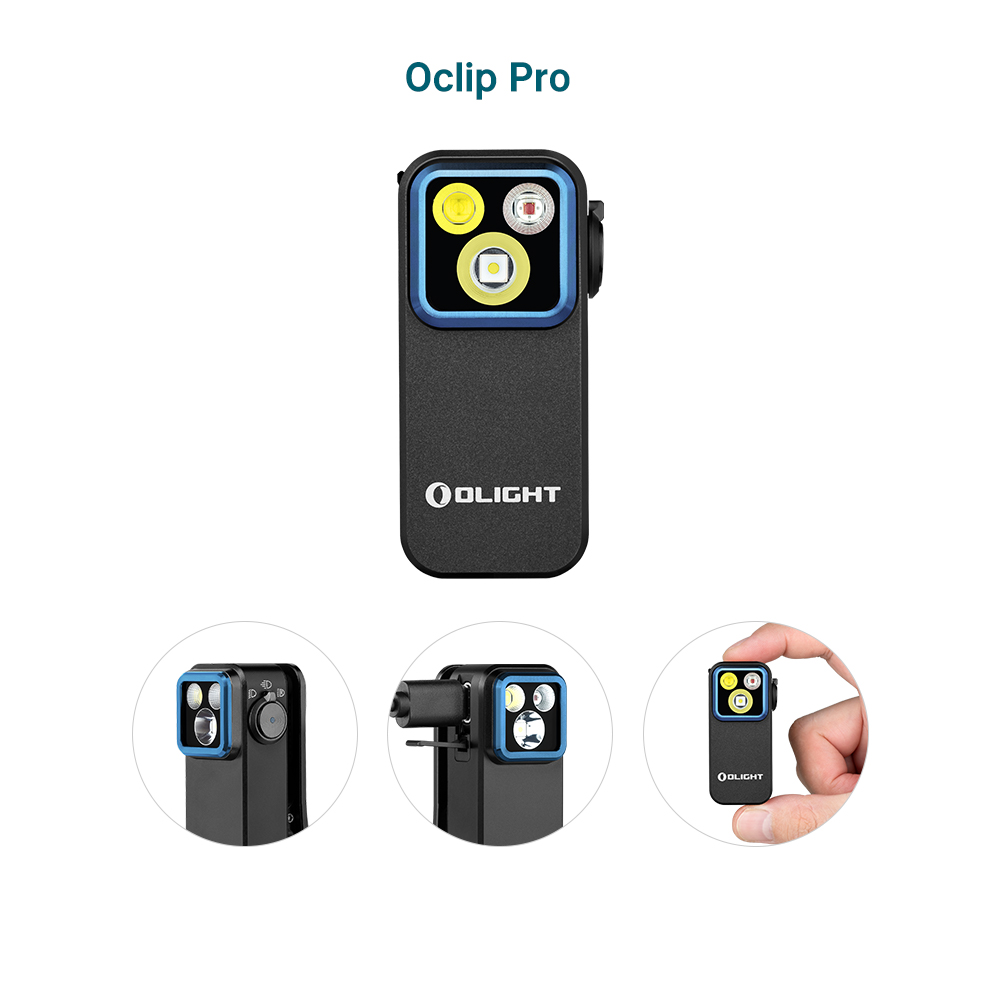
Carry a light you can aim at the actual route, operate easily, and use long enough for the return. A headlamp is useful when you need both hands. A handheld or clip light can work for a short task if its beam and carry position suit it. Keep a separate light at the table.
The National Park Service's Ten Essentials notes that headlamps leave your hands free and recommends carrying spare batteries. For a rechargeable setup, check the actual manual and arrange a suitable way to keep it ready. Where the campground already lights the approach, carry an appropriate personal light anyway so you can see the areas the fixtures do not cover.
Try a headlamp with the ordinary clothes you plan to wear. It should stay steady and keep the beam on what you need to see. A compact flashlight can make a quick stopped check easier when you have a hand free. Compare how you will carry each one once you leave the picnic table.
A clip light keeps the device available in a place you can reach. Where you can attach it, and where it points when clipped there, varies with the light and clothing. Check the combination in daylight. If you cannot see the walking surface using the setup you planned, use a suitable headlamp or hand light before you leave. Pack it away when you need to avoid disturbing nearby campers.

What is the best camping lantern?
Choose a lantern that still lights your main shared task while the personal light is away. Look for steady placement, a useful low setting, and enough operating time at the level you'll use. A detachable set works when both parts meet those needs separately. Two independent lights give you more choice over each job.
Set out what you expect to use at the table. Plates, food containers, and the people sitting nearby may block part of a beam. On a clear evening you can see whether the table light reaches the things the group needs even after one person takes another light away. Do the check while the campsite and route still have enough ordinary visibility.
Look at the light from the place where people will sit. A bright point visible at eye level can be distracting even if the tabletop is adequately lit. Put a lantern on a stable permitted surface out of the way or use the maker's intended placement. Keep it away from places where people will brush against it or knock it over. Follow the product instructions for how the device may be set down or mounted.
Think about the group rather than a fixed number of people. Four people who need to walk in different directions at the same time can have more independent lighting jobs than a larger group sitting together. Count how many people need portable lights at once and where they'll go. If you're unsure, make a plan that lets each adult responsible for a walk check their light before leaving.
The earlier guide to lighting a group campsite discusses spread, brightness over time, and glare. Those considerations still apply to what stays at the table. The extra question here is whether it continues to work after the removable piece is gone. Choose the shared light for the job it has to cover on its own.
Look for controls that let anyone staying back use the lantern without help. If the small part includes the only easy-to-reach control, check what happens when it is away. A person left at the table should know how to adjust or turn off the base under the product instructions. Confirm this on the exact device before relying on the arrangement.
| Setup | What to verify before choosing |
|---|---|
| Lantern with a separate working module | The base stays useful with the module out, and the module works for the walk on its own |
| One flashlight with a removable shade | The shade changes the spread while fitted, and another light covers the table when the flashlight leaves |
| Independent lantern and clip light | The lantern stays ready and the clip light can be carried and aimed for its actual job |
| Independent lantern and headlamp | Each person who needs to walk can fit and use an appropriate headlamp while the table stays lit |
How many lumens should a camping lantern be?
Look for enough light at the table after someone takes the small light. There is no one lumen target for every campsite. A broad light can cover the table at a lower setting, depending on placement and the work. Check the portable beam separately and keep enough light to see the route.
Lumens describe the light source's output. They do not tell you how much light reaches a plate, a face, or the ground. A fixture close to the useful part of the table may do the job at a lower setting than it would from far away. A small beam pointed down at a path can help with another job without using the same output as the table lantern.
Check available operating modes one at a time. If the specification gives a maximum output and a maximum runtime, read the conditions for each figure. They may describe different settings. Look at the runtime for the setting you intend to use, including separate information for the removable light if the manufacturer supplies it. Use the manual to see which modes are available away from the base.
The National Park Service's outdoor lighting principles emphasize keeping light where it is needed and using the lowest adequate level for the task. Apply that idea to one part of the camp at a time. Keep enough light to see the walking surface, and use the table setting that supports the work people are actually doing.
Ask what people need to see on the way out and on the way back. A light may help you read a label beside the table yet do little for a bend in the path. Try the known route with the equipment and support you will actually have. If a route needs more visibility than the removable light provides, bring an appropriate independent source or reconsider the walk.
Check shared and personal settings as separate decisions. You might need more light while people finish a task on the table, then less for talking. A personal lamp can be aimed down for a short check without turning the table up. Adjust from a stable place. If another group is nearby, keep the beam on your own task and follow the campground's lighting guidance.
Choose the lighting based on the surface, too. Dry pavement in a part of the campground with established lighting can be easier to see than an uneven connector in shadow. Finish the walk where the venue's route is visible and permitted. If the beam only reaches a small patch directly at your feet, pause under adequate light and choose a suitable light for the route before going any farther.
Decide who keeps a light when several people move
Imagine that someone needs the restroom while another adult is still putting food away at the table. The first adult checks their own light and takes the established route. The person at the table keeps the main light where it can be reached. If a second person needs to leave before the first returns, they may need another personal light.
Find out which route is appropriate for the group before anyone splits up. One adult can go with a child in the part of camp the site permits. The people who stay may need to see the edge of a mat, close a bag, or put something away. Make sure both sides can still do those tasks after a small light is removed.
If the group disperses, decide whether one area should remain in use at all. If everyone has finished at the table, turn off the light when the site allows it and leave the area in good order. If people will keep using the table, leave them enough light while the others walk. A sensible setup follows the actual work rather than keeping everything on all evening.
One nearby site can have substantially different rules from another. The City of Rocks National Reserve's camping page asks visitors to limit lighting, especially light that shines upward or bothers others. That's a specific example of why the venue matters. Check current campground guidance before deciding where you will walk or point a light.
Keep the person leaving from having to make a new lighting choice once they have already left. They should know which setting shows the route, how to use the controls, and where to store the light when they arrive. If taking the light leaves a bag or jacket in the walking space, put it somewhere safe first. Let the people at the table know where the adult will return.
The return can feel different from the outward walk. You are looking at the table from another direction and may see lights from neighboring sites. A familiar approved landmark can help the group recognize the place to stop. Aiming at the walking surface gives you better information about the next step than comparing the brightness of several sites from a distance.
Count the things you have to charge, carry, and replace
Compare the whole kit with what you already own. A lantern with a removable light may reduce the number of loose bags if the small light always goes back to its dock. A separate kit can reuse a lantern and personal light you know. Add the parts each one needs to run, including compatible charging gear, and check what the package actually includes.
Look at the charging workflow at home before choosing a set for camp. If each part charges separately, make sure you have the right accessories for both. If one part charges from the other, check the manual for what that does to the power available to each device. A docking position can be useful for storage even when charging is done somewhere else.
Ask whether a portable light can be replaced individually if it gets lost or stops working. If the base will still be useful, you may be able to use a separate light while you sort out parts. Keep any manuals with your packing list or save them for offline use. A separate personal light gives you an alternative when a detachable piece is unavailable.
Pick a return spot the group will remember. At a picnic table, that might be one designated pocket in a gear bag, well clear of the seating and walk. Put the light there as soon as you finish using it. Check that it is ready before the next adult leaves. Keep loose charging equipment dry and use it only as the instructions allow, away from walking areas.
Make the packing decision around the evening you expect. A few people at one table may already have two independent lights. A group with several tents or frequent trips away may need a more flexible choice. Use the number of simultaneous jobs and the equipment you have, rather than the number of lights pictured on a package.
Think about replacement and compatibility when you expect to use the kit for more than one trip. If your existing lantern already covers the table and an ordinary headlamp fits the adult who walks, the removable feature may not change either task. Write down the one job you want the new set to make easier. Check whether it actually does that while both parts are working.
A separate setup can also make it easier to change one part of your plan. You might decide that the table needs a different light after moving to another site, while keeping the same personal light for the short established walk. A combination can still be suitable if it works apart and the two parts are easy to ready again. The useful comparison is the work you do each evening.
When you pack up at the end of the trip, count the separate lights and anything needed to charge them. Put the manuals where they will be easy to find. If a small light was harder to use after dark, note which part of the job it missed. You may keep it for a nearby task and use a more suitable personal light for the walk next time.
Frequently Asked Questions
Changelog
- November 19, 2026. Checked current National Park Service camping and lighting guidance, the actual group lantern article, the official shade listing, exact U.S. personal lights and manuals, and the original two-light diagram.




