Table of Contents
When you’re shopping for lighting, whether it’s high performance gear for a hunting trip in the Maine wilderness or energy efficient LEDs for a backyard patio in California, the terminology can quickly feel overwhelming. One of the most common points of confusion for buyers comes down to Candela vs. Lumen. While both are critical measurements of light, they describe very different characteristics and are often misunderstood. Choosing the wrong metric can mean ending up with a flashlight that barely reaches the trail ahead instead of one that truly cuts through the dark. Understanding how candela and lumens differ is the foundation for choosing lighting that actually works in real world conditions.
What is Candela?
Candela (cd) is the standard unit used to measure luminous intensity, or how strong a light beam is in a single, specific direction. Put simply, it tells you how “focused” a light source is. Think of a laser pointer: it won’t brighten an entire room, but the spot it hits appears extremely bright. That pinpoint intensity is exactly what Candela describes. Historically, one Candela was defined as roughly the light output of a single common candle, which is how the term earned its name and remains a helpful reference point today.
What is Lumens?
Lumens (lm) measure luminous flux, which is the total amount of visible light a source emits in all directions combined. Rather than focusing on how far light travels, lumens tell you how much light is produced overall. A simple way to picture this is to think of a light bulb as a faucet: lumens represent the total volume of water flowing out, whether it’s spread wide or directed through a narrow stream. In the United States, the FTC requires lumen ratings on light bulb packaging so consumers can easily compare real world brightness, making lumens the most practical metric for everyday lighting decisions.
Key Differences Between Lumens and Candela
To choose the right lighting gear, it’s important to understand how lumens and candela work together in real world use. One isn’t inherently “better” than the other, the right choice depends entirely on where and how you plan to use the light.
Measurement Focus
The core distinction is quantity versus intensity. Lumens describe the total amount of visible light a source produces overall. Candela, by contrast, measures how intense that light is in a single direction. In practical terms, lumens tell you how much light you have to work with, while candela tells you how focused and forceful that light is at a specific point.
Beam Angle and Light Distribution
Flashlight beam explained often comes down to understanding how beam shape affects performance. A light with a wide beam angle, such as a floodlight, can produce very high lumens but relatively low candela because the light is spread over a large area. By contrast, a narrow-beam spotlight concentrates the same—or even fewer—lumens into a tighter space, resulting in much higher candela and a noticeably longer visible reach.
Numerical Relationship Between Lumens and Candela
The mathematical link between lumens and candela is defined by the solid angle, measured in steradians. When the same number of lumens is concentrated into a smaller beam angle, candela increases. Simply put, tighter focus equals higher candela.
|
Feature |
Lumens (lm) |
Candela (cd) |
|
Measurement Focus |
Total light output in all directions |
Light intensity in a specific direction |
|
Beam Angle |
Independent of beam angle |
Highly dependent (narrower = higher cd) |
|
Numerical Relationship |
1lm = 1cd × steradian |
Candela= lumens ÷ solid angle |
Applications of Candela and Lumen in Lighting
Choosing between candela and lumen comes down to how you actually use light in real life. Lighting a backyard cookout in Texas calls for a very different setup than spotting a trail marker half a mile away in open terrain. Each metric serves a clear, practical role depending on distance, coverage, and environment.
Candela Practical Applications: The Power of “Throw”
Candela matters most when light needs to travel far without losing intensity. A tightly focused beam concentrates light into a small area, allowing it to cut through darkness, fog, dust, or open space with precision.
-
Spotlights and stage lighting: High candela keeps performers sharply lit without spilling light into unwanted areas.
-
Automotive and aviation lighting: Headlights and landing lights rely on candela to identify obstacles far ahead at speed.
-
Flashlights and torches: In hunting, search and rescue, or rural property use, candela determines how far you can actually see.
When distance matters, Olight focuses heavily on beam engineering, ensuring that available lumens are pushed as far downrange as possible rather than wasted in excess spill.
1. The Specialist for Maximum Throw: Olight Javelot Turbo 2
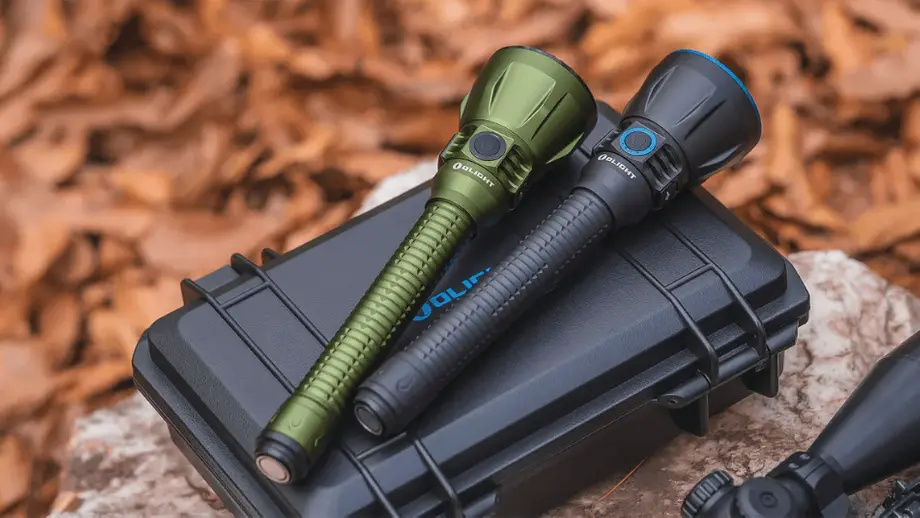
When candela is the deciding factor, the Olight Javelot Turbo 2 remains a benchmark for long distance illumination and beam control. While its 1,800-lumen output delivers strong usable brightness, the defining feature is its exceptional 576,715 candela peak intensity, pushing the beam out to an impressive 1,500 meters (over 3,400 feet). This level of reach is critical for real world tasks like monitoring large properties, tracking wildlife on open land, or supporting search and rescue efforts in the Rocky Mountains. By concentrating light into a tightly focused beam rather than dispersing it, the Olight Javelot Turbo 2 provides precise, reliable visibility at extreme distances, making it a trusted tool for serious long-range identification.
2. The Balanced High-Performer: Olight Seeker 4 Pro
For users who need strong overall brightness without losing useful reach, the Olight Seeker 4 Pro strikes an ideal balance between lumens and candela. Its 4,600-lumen output floods the area with clear, daylight-like light that fills your peripheral vision, which is essential for maintaining awareness in low-visibility environments. At the same time, the beam retains enough candela to project light out to roughly 260 meters, so distance isn’t sacrificed for coverage. This combination makes it a practical choice for American campers, hikers, and homeowners alike. Whether you’re moving through a wooded trail in the Appalachians or checking a large suburban yard after dark, the Olight Seeker 4 Pro delivers even, dependable illumination that helps you spot obstacles nearby while still seeing clearly ahead.
3. Mini Performance Monster: Marauder Mini 2
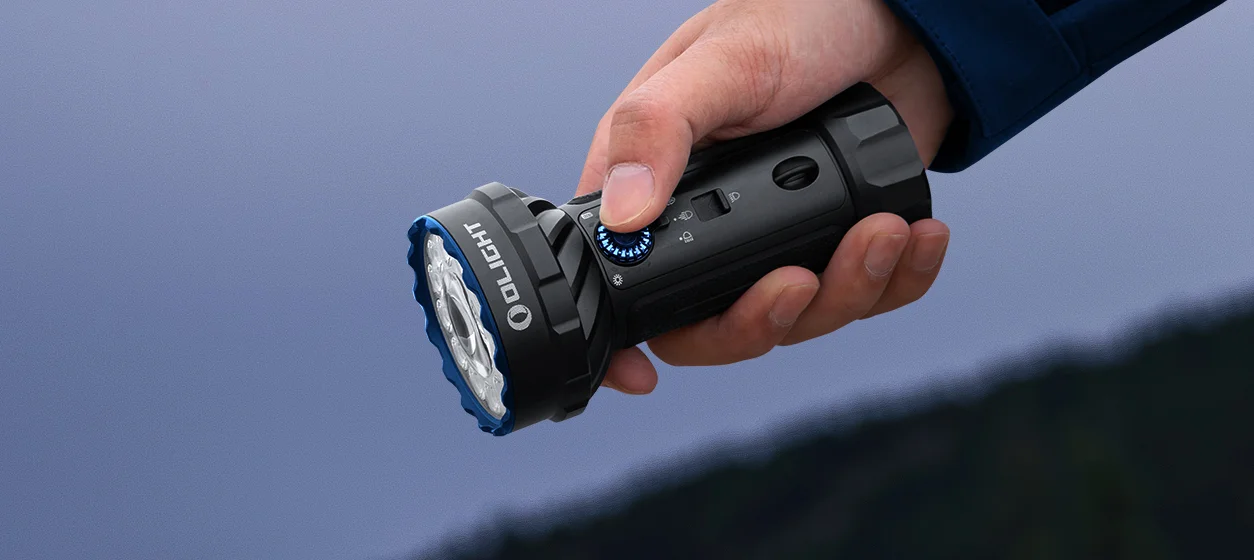
If you’re stuck choosing between wide area brightness and long distance reach, the Marauder Mini 2 solves that dilemma with a smart dual-beam design packed into a surprisingly compact body. This palm sized powerhouse lets you switch instantly between a powerful 10,000-lumen flood mode that lights up an entire campsite or work area and a focused, high candela spotlight capable of reaching distances of up to 750 meters. In practical terms, it functions like two specialized lights in one rugged unit. That versatility makes it especially appealing to overlanders, off road drivers, and emergency preppers throughout the US. Whether you’re illuminating a roadside recovery at midnight or scanning a distant ridgeline for landmarks, the Marauder Mini 2 gives you the right beam pattern exactly when you need it.
Lumen Practical Applications: Ambient Glow
Lumens matter most when your goal is to evenly illuminate a space and reduce harsh shadows. High lumen lighting spreads brightness across a wide area, creating a comfortable, usable environment where visibility feels natural rather than intense or focused.
-
Household LED Bulbs: High lumen bulbs keep kitchens, living rooms, and home offices evenly lit. Instead of sharp hotspots, you get smooth, consistent illumination that makes cooking, reading, or working for long periods easier on the eyes.
-
Outdoor and Street Lighting: Driveways, sidewalks, and shared outdoor spaces rely on lumens for safety. Bright flood style lighting helps pedestrians and drivers see clearly, reducing blind spots and improving nighttime visibility around homes and public areas.
-
Office and Commercial Lighting: Uniform, high lumen lighting supports productivity by minimizing eye strain. Well lit workspaces make it easier to read documents, view screens, and perform detailed tasks without glare or uneven lighting.
-
Camping and Outdoor Activities: At campsites or picnic areas, lumens provide broad coverage so everyone can move around comfortably. Wide-area lighting helps reveal obstacles, gear, and pathways that could otherwise be hidden in the dark.
Key Takeaway: When your priority is wide, even illumination rather than long-distance reach, lumens are the most important metric to focus on.
How to Choose the Right Light for Your Needs
Making the right lighting choice comes down to matching technical specs with real-world use. Whether you’re hiking a shadowy trail in the Appalachian Mountains or trying to locate a breaker panel during a Florida thunderstorm, the EDC flashlight depends on which performance metric matters most for your situation. Candela and lumens solve different problems, and understanding that difference helps you buy with confidence instead of guesswork. Below is a practical way to decide whether candela or lumens should be your priority based on how and where you actually use your light.
Candela for Focused and Long-Range Lighting
If your activities require identifying objects well before you reach them, candela should be at the top of your checklist. This is the classic “searchlight” effect, tight, concentrated output that stays effective over long distances without diffusing into the surrounding air.
-
Who benefits most? Hunters tracking movement at dusk, boaters navigating poorly lit docks on the Great Lakes, landowners checking fence lines, or search and rescue teams scanning open terrain all rely on high candela for visibility at range.
-
The technical advantage: High candela provides true beam penetration. In fog, dust, rain, or humidity, a high lumen but low candela light often creates a blinding wall of reflected light. A high candela beam avoids this problem by cutting through airborne particles and staying focused on the target. This is exactly where lights like the Olight Javelot Turbo 2 excel, delivering the punch needed to clearly identify distant objects without visual clutter.
Lumens for Brightness and Area Coverage
If your main goal is to light up everything around you, lumens matter more than distance. High lumen lights are built to flood an area with even illumination, similar to a powerful overhead bulb rather than a narrow beam.
-
Who benefits most? Homeowners dealing with power outages, campers setting up tents after sunset, technicians working in garages or crawlspaces, and anyone needing broad visibility at close range.
-
The practical benefit: For everyday carry and general use, wide spill improves situational awareness. You can see steps, obstacles, tools, and surroundings all at once instead of tunneling your vision into a single spot. A light like the Olight Seeker 4 Pro delivers a strong wall of lumens that fills your field of view, making routine tasks safer and easier within a typical 30-50 foot working radius.
Common Misconceptions About Candela and Lumen
When shopping for a flashlight or lighting tool, it’s easy to fixate on a single headline number. In reality, neither high lumens nor high candela tells the full performance story on its own. Understanding how these measurements work together helps you avoid buying a light that looks impressive on paper but falls short in real-world use.
1. High Lumens Doesn’t Always Mean Long-Range
A high lumen rating simply means a light produces a lot of total output, not that it can project that light far. Many lanterns or flood-style models in the best high lumen flashlights category are designed to spread brightness evenly across a wide area. A 4,000-lumen campsite light can make everything around you visible, yet it may barely reach down a trail because the beam lacks focus and intensity.
2. High Candela Doesn’t Equal Overall Brightness
Candela measures intensity in one direction, not total illumination. A light with very high candela can punch a narrow beam far into the distance, but if its lumen output is low, the surrounding area stays dark. This can create blind spots close to your feet, which isn’t ideal for walking, working, or everyday tasks.
3. Both Measurements Affect Perceived Brightness
Human vision responds differently to concentrated light versus spread out light. A focused spotlight and a wide floodlight with the same lumen rating can feel dramatically different. The spotlight often appears brighter at its center, while the floodlight feels more comfortable and usable because it lights the entire environment evenly.
4. Candela Alone Doesn’t Guarantee Useful Coverage
Extremely high candela can create a tunnel vision effect, illuminating only a narrow slice of what’s ahead. While this is excellent for long-range spotting, it can leave nearby obstacles, steps, or terrain features hidden in darkness. For most real-world scenarios, especially outdoor and everyday use, a balanced mix of lumens and candela provides the safest and most practical lighting experience.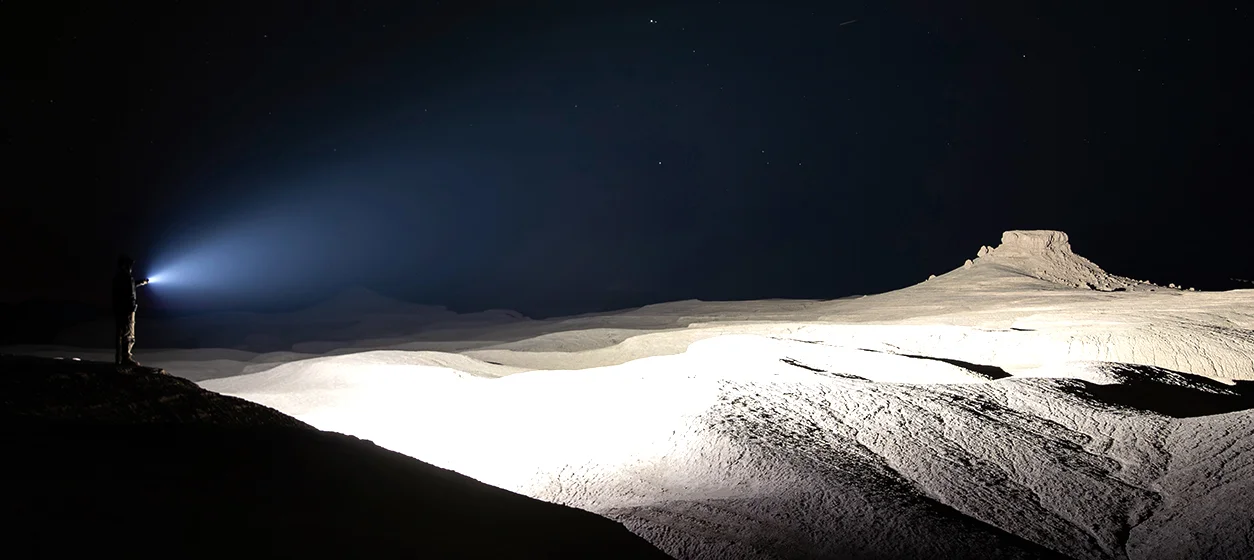
Frequently Asked Questions (FAQ)
1. Is Candlepower the Same as Candela?
For practical purposes, yes. Candlepower is an older, non-SI term that was widely used before modern lighting standards were established. Today, Candela is the official scientific unit of luminous intensity. Numerically, they are very close, 1 candlepower equals approximately 0.981 candela, so in everyday use, the terms are often treated as interchangeable.
2. How Do You Convert Lumens to Candelas?
There is no simple 1:1 conversion because lumens measure total light output, while candela depends on how tightly that light is focused. To calculate candela, you need to know the beam angle. The relationship is expressed as:
I = Φ ÷ Ω,
where I is luminous intensity in candela, Φ is luminous flux in lumens, and Ω is the solid angle in steradians. Narrower beams concentrate the same lumens into higher candela values.
3. What does "Throw" mean in flashlights?
Throw refers to the distance a light beam travels. It is directly determined by the Candela rating. High candela means more throw.
4. Can a High-Lumen Light Have Poor Visibility in Fog or Rain?
Yes, and this surprises many people. High lumen lights with wide beams often create backscatter in fog, rain, or snow, where light reflects off airborne moisture and bounces back toward your eyes. This reduces visibility. A high candela beam, which is more focused, penetrates these conditions more effectively and provides clearer long range vision.
5. How Far Can a Light with 1000 Lumens Reach?
Distance depends far more on beam design than on lumen count alone. A 1,000-lumen floodlight may only reach about 40-50 meters because the light is spread widely. In contrast, a well designed thrower, such as an Olight model optimized for high candela, can push the same 1,000 lumens beyond 400-500 meters by concentrating the beam.
6. Why Do Two Flashlights with the Same Lumens Perform So Differently?
The difference comes down to optics and reflector design. One flashlight may use a shallow or textured reflector to create a soft, wide flood. Another may use a deep, smooth reflector or precision lens to focus light tightly and boost candela. Even with identical lumen ratings, these design choices dramatically change how the light performs in real-world situations.
Conclusion
In the debate of Candela vs. Lumen, there isn’t a winner or a loser, only the right choice for the task at hand. Lumens flood a space with usable light, making them ideal for rooms, campsites, and everyday visibility. Candela, by contrast, defines how far and how sharply light can travel, turning a focused beam into a tool that cuts through darkness, fog, or distance. In real-world use, the best lighting setups balance both metrics, or rely on a purpose-built Olight flashlight such as the Javelot Turbo 2 when long-range identification is the priority. Understanding how these two values work together helps ensure your lighting performs exactly as expected, wherever it is used.