Olight sells the NexTool, HX Outdoors and Aulumu tools discussed here. Specs and regular prices come from Olight's US product pages and the NexTool user manuals as of September 2026. The per-gram, per-task and fit figures below are calculations from those published numbers, not measurements.
⚡ TL;DR
An EDC multi tool is a folding pocket toolkit, and its form factor (belt plier, pocket plier, keyring scissors or phone-back card) decides where it rides and which jobs it can reach. Check carry weight first, then whether it has pliers, scissors or a blade. Tool count comes last: on Olight's specs, 8 to 13 listed tools cover the same three of four daily jobs.
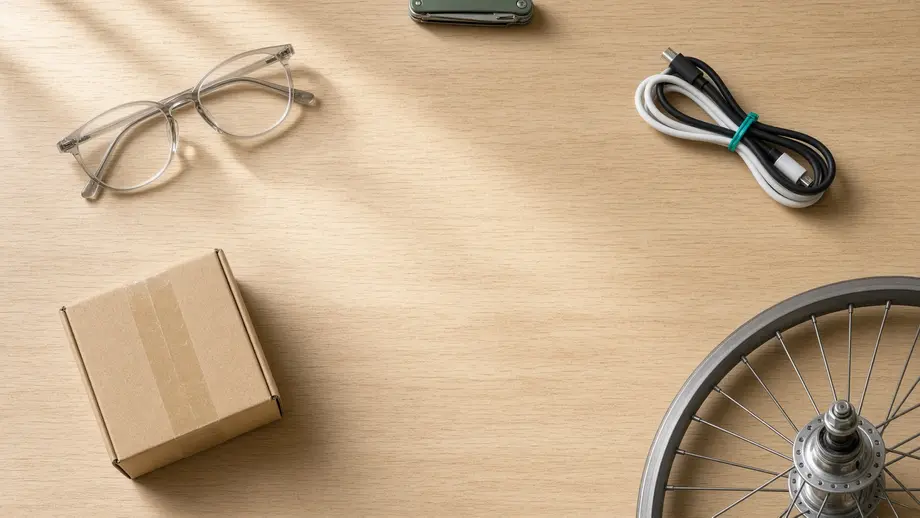
You want one tool for a loose eyeglass screw, a zip tie on a new cable, a taped box and a wobbly bike nut. Store pages sell tool counts: 8-in-1, 9-in-1, 13-in-1. Those numbers say little about weight, which runs from 35 g to 313 g across the six Olight tools here, or about whether the tool will live on your belt, your keys or your phone. This guide sorts the forms by carry spot, maps four everyday tasks to each one, and shows where a blade limits where you can go.
This table matches each carry spot to an EDC multi tool form and an Olight example, with Olight's listed weight and regular price as of September 2026.
| Carry spot | Form factor | Olight example | Weight (Olight) | Regular price | Main tools |
|---|---|---|---|---|---|
| Belt or bag | Full-size plier or wrench | NexTool W40 | 313 g | $59.98 | Ratcheting adjustable wrench, pliers, knife, saw |
| Front pocket | Compact plier with clip | NexTool F12 | 79 g | $34.98 | Pliers, scissors, locking blade, drivers |
| Key ring | Mini plier | NexTool S11 Pro | 80 g, 67 mm long | $29.98 | Pliers, scissors, knife, PH2 driver |
| Key ring, no blade | Scissors tool | NexTool S0 | 35 g | $16.98 | Serrated scissors, eyeglass screwdriver, tweezers |
| Back of your phone | Magnetic card | Aulumu G05 Pro | 38 g, 95 x 57 x 6.5 mm | $35.98 | Screwdriver, file, saw blade, SIM ejector, utility knife |
📋 Table of Contents
- 1. What Is the Best Multitool for EDC? Start With Where It Rides
- 2. EDC Multi Tool Form Factors Compared: Weight, Size, Main Tool, Carry Spot
- 3. What Does a Phone-Back Multitool Add to Your Phone?
- 4. One Task List, Five Forms: Glasses Screw, Zip Tie, Parcel, Nut
- 5. Pliers, Scissors or a Blade: Which EDC Tool Gets Used Most?
- 6. Can You Carry or Fly With a Multitool That Has a Blade?
- 7. NexTool and Aulumu Specs: How to Read a Multitool Spec Sheet
- 8. Common Mistake: Choosing an EDC Multitool by Tool Count
- 9. What Multitool Do Navy SEALs Use?
- 10. What Is the Best EDC Multitool in 2026?
- 11. Your EDC Multi Tool Checklist
- 12. FAQ
What Is the Best Multitool for EDC? Start With Where It Rides
The best multitool for EDC is the one that fits the place you will carry it every day. Pick a belt or bag plier when you need a real wrench, a compact plier near 80 g for a front pocket, a scissors tool near 35 g for your keys, and a phone-back card when your phone is the only thing you never leave behind.
Olight's pocket tools and multitools page carries NexTool models such as the S0, S11 Pro and W40. Across the six tools here, weights fall into three clear bands, which this guide uses as carry rules:
- Under 40 g (S0, G05 Pro): light enough for a key ring or the back of a phone, at less than half the weight of the pocket pliers.
- About 80 g (F12, S11 Pro): a front-pocket or key-ring tool. The F12 has a pocket clip; the S11 Pro has a hidden hanging hole for a ring.
- Over 250 g (GQ-20B, W40): a belt, glove box or bag tool. At 313 g, the W40 is about four times the F12 (313 / 79 = 3.96).
These bands are a sorting rule drawn from six listed weights, not an industry standard. They stop you buying a 313 g wrench tool for a jeans pocket, or a 35 g scissors tool for bike repairs. To pair these tools with a light on a budget, see our best EDC under 100 kits.
EDC Multi Tool Form Factors Compared: Weight, Size, Main Tool, Carry Spot
EDC multi tool form factors differ most in weight and in the one tool that defines them: a wrench or full-size plier on belt tools, a compact plier on pocket tools, scissors on keyring tools, and a flat driver on phone-back cards. Across Olight's six examples, carry weight spans 35 g to 313 g, a ninefold range, while listed tool counts only span 5 to 13.
This table puts the five forms side by side, using Olight's published numbers and the tool lists in the NexTool user manuals.
| Form factor | Olight example | Weight | Size Olight lists | Listed tools | Grams per listed tool | Defining tool |
|---|---|---|---|---|---|---|
| Belt wrench plier | NexTool W40 | 313 g | 153 mm closed | 9 | 313 / 9 = 34.8 | Ratcheting adjustable wrench |
| Belt plier | HX Outdoors GQ-20B | 260 g | 160 mm full length | Not listed | Not calculable | Pliers and 7CR17 blade |
| Pocket plier | NexTool F12 | 79 g | Not listed | 13 | 79 / 13 = 6.1 | Reinforced plier head |
| Keyring mini plier | NexTool S11 Pro | 80 g | 67 mm long | 12 | 80 / 12 = 6.7 | Pliers |
| Keyring scissors | NexTool S0 | 35 g | Not listed | 8 | 35 / 8 = 4.4 | Serrated scissors |
| Phone-back card | Aulumu G05 Pro | 38 g | 95 x 57 x 6.5 mm | 5 | 38 / 5 = 7.6 | Flat driver and file |
A low grams-per-tool figure means a tool packs functions tightly, not that it does each one well. The W40 scores 34.8 g because its main tool is a heavy wrench, which is the reason to buy it.
Belt pliers and wrench tools
Belt tools carry the only wrench among these six and the longest bodies, at 153 mm and 160 mm. The NexTool W40 adjustable wrench multitool ($59.98, regular price, September 2026) weighs 313 g (11 oz.) with a 153 mm closed length. Olight's W40 page says: "Effortlessly switch between standard and ratcheting modes with a simple push-button." The HX Outdoors GQ-20B ($59.00, regular price) is a plain plier alternative at 260 g and 160 mm. Olight calls the W40 "ideal for pocket or bag storage," but at 313 g a bag or glove box suits either tool better.
Compact pocket pliers
The NexTool F12 pocket multitool ($34.98, regular price, September 2026) is the middle ground. Olight lists 79 g, a locking 8Cr14MoV main blade, a pocket clip and a glow-in-the-dark insert, and says: "The thickened plier head provides a stable grip for everyday fixes and light-duty repairs." Light-duty is the honest limit: it has no wrench, so a seized bolt still needs a real tool.
Keyring pliers and scissors
Two keyring forms split on one question: do you want a blade? The NexTool S11 Pro keychain multitool ($29.98, regular price) fits pliers, scissors and a knife into 67 mm and 80 g. The NexTool S0 scissors multitool ($16.98, regular price) drops the blade and the pliers to reach 35 g. Olight says its serrated scissors handle "paracord, fabric, tape, and plastic packaging with ease."
Phone-back cards
The Aulumu G05 Pro phone-back multitool ($35.98, regular price, September 2026) is a MagSafe kickstand first and a toolkit second. Olight lists a screwdriver, steel file, saw blade, SIM ejector and utility knife in a 38 g aluminum card. With no pliers or scissors, it covers the fewest daily jobs of the six.
What Does a Phone-Back Multitool Add to Your Phone?
A phone-back multitool adds its full weight and thickness to the phone you already carry. On an iPhone 17, the 38 g Aulumu G05 Pro raises carry weight by about 21% and nearly doubles thickness at the card, based on Olight's and Apple's published dimensions, not measured.
This table applies Olight's G05 Pro dimensions to the size and weight Apple lists on its iPhone 17 tech specs page.
| Measure | iPhone 17 (Apple) | Aulumu G05 Pro (Olight) | Combined or compared |
|---|---|---|---|
| Weight | 177 g | 38 g | 215 g; 38 / 177 = 21% heavier |
| Thickness | 7.95 mm | 6.5 mm | 14.45 mm at the card; 14.45 / 7.95 = 1.8 times |
| Width | 71.5 mm | 57 mm | Card is 14.5 mm narrower |
| Height | 149.6 mm | 95 mm | Card covers 95 / 149.6 = 64% of the height |
Olight's G05 Pro page says: "Works flawlessly with iPhone 12-17 (Plus/Air/Pro/Max) Samsung and Android (via adapter ring)." The tradeoff is pocket bulk. A phone that is 1.8 times thicker at the card may not slide into a slim front pocket or a tight case.
Safety note: Phone-back tools hold on with magnets. Apple's medical device guidance says, "Most medical device manufacturers recommend keeping a source of potential interference a safe distance away from your medical device (at least 6 inches / 15 cm apart or at least 12 inches / 30 cm apart when using a wireless charger)." If you have a pacemaker or defibrillator, keep a phone with a magnetic card at least that far away and ask your physician for specific guidance.
One Task List, Five Forms: Glasses Screw, Zip Tie, Parcel, Nut
Four common jobs show what each EDC multi tool form can and cannot do: tightening an eyeglass hinge screw, snipping a zip tie, opening a taped parcel and holding a nut. Using the tool lists in Olight's pages and manuals, every form covers three of the four except the phone-back card, which covers two. No single tool here covers all four.
This table marks a task as covered only when the manual or product page names a tool for it.
| Task | W40 (313 g) | F12 (79 g) | S11 Pro (80 g) | S0 (35 g) | G05 Pro (38 g) |
|---|---|---|---|---|---|
| Eyeglass hinge screw | Not listed | Not listed | Not listed | Yes, eyeglass screwdriver | Not listed |
| Snip a zip tie | Yes, wire cutters or knife | Yes, scissors or wire cutters | Yes, scissors or wire cutters | Yes, scissors | Yes, utility knife |
| Open a taped parcel | Yes, knife | Yes, knife or scissors | Yes, knife or scissors | Yes, scissors | Yes, utility knife |
| Hold or turn a nut | Yes, adjustable wrench | Yes, pliers | Yes, pliers | No | No |
| Tasks covered (of 4) | 3 | 3 | 3 | 3 | 2 |
| Grams per task covered | 313 / 3 = 104.3 | 79 / 3 = 26.3 | 80 / 3 = 26.7 | 35 / 3 = 11.7 | 38 / 2 = 19.0 |
The 8-tool S0 covers as many of these jobs as the 13-tool F12, at less than half the weight. What changes between them is which job is missing: the S0 has no pliers, and the plier tools have no named eyeglass driver. If you need all four, carry two small tools. The S0 plus the F12 comes to 114 g and $51.96 at regular prices, still about a third of the W40's weight.
The manuals add detail. The S0 user manual has a panel titled "Using the eyeglass screwdriver." On the plier tools, the smallest drivers are the F12's SL4 and the S11 Pro's SL3, so check that the tip fits before you turn. Near a cable, cut zip ties with scissors or wire cutters rather than a blade. The G05 Pro's utility knife means taking the card off the phone first. For nuts, the F12 user manual starts with "Opening the pliers," and only the W40 has a wrench that sets to the nut size.
Tip: Close every tool the way the manual shows. The F12 and W40 manuals both print the step "Unlock before closing the blades," so release the lock before you fold a locking blade back into the handle.
Pliers, Scissors or a Blade: Which EDC Tool Gets Used Most?
Which tool gets used most depends on your week. For packaging, tags and tape, scissors or a blade do the work. For bikes, hose clamps and hardware, pliers do. The fastest way to decide is to log every tool job for seven days, then buy the form that covers most entries.
The National Park Service's Ten Essentials guidance gives a useful baseline: "Carry a basic repair kit with you to help repair equipment." It adds, "Pack a multi-tool, a small tool that includes a knife, screwdriver, can opener, etc." That list leans toward cutting and driving, not gripping.
This table links each tool type to the everyday jobs it handles and the Olight forms that include it.
| Tool type | Everyday jobs it handles | Olight forms that include it |
|---|---|---|
| Pliers | Hold a nut, bend wire, pull a staple | W40, GQ-20B, F12, S11 Pro |
| Scissors | Zip ties, tape, tags, paracord, blister packs | F12, S11 Pro, S0 |
| Blade | Boxes, rope, food packaging | W40, GQ-20B, F12, S11 Pro, G05 Pro |
| Small drivers | Eyeglasses, battery doors, toy screws | S0 (eyeglass driver), F12, S11 Pro, W40, G05 Pro |
| Adjustable wrench | Bike nuts, faucet fittings, hose couplings | W40 only |
| Saw | Small branches, plastic pipe | W40, G05 Pro |
To run the seven-day log, note every job where you reached for a tool or wished you had one, and tag it with a tool type from the table. If scissors and drivers lead, a keyring scissors tool is enough. If pliers show up more than twice, move up to a pocket plier. If a wrench appears at all, keep a belt tool in the car or bag.
Can You Carry or Fly With a Multitool That Has a Blade?
You can carry a bladed multitool in many places, but state knife laws and TSA rules both turn on the blade, not the pliers. TSA bars multi-tools with knives of any length from carry-on bags. State laws differ on blade length, opening mechanism and places such as schools. Read your state's current statute before you carry, and treat this section as general information, not legal advice.
State law. Two state statutes show how differently the text can work. Virginia sets a length line on school property. Under Virginia Code § 18.2-308.1, subsection A, knowingly possessing any "knife, except a pocket knife having a folding metal blade of less than three inches" upon "the property of any child day center or public, private, or religious preschool, elementary, middle, or high school, including buildings and grounds" is a Class 1 misdemeanor. It also covers school-sponsored events and school buses. Subsection E exempts, among others, "any person who possesses a knife or blade which he uses customarily in his trade."
Washington draws its line at how a blade opens. RCW 9.41.250 makes possessing a "spring blade knife" a gross misdemeanor under subsection (1)(a). Subsection (2) defines that term, then says: "A knife that contains a spring, detent, or other mechanism designed to create a bias toward closure of the blade and that requires physical exertion applied to the blade by hand, wrist, or arm to overcome the bias toward closure to assist in opening the knife is not a spring blade knife."
A published closed length can help you apply a length rule. A folding blade that closes inside the handle cannot be longer than the closed tool. Three inches is 76.2 mm, and Olight lists the S11 Pro at 67 mm long, so its folding knife must be under three inches on length alone. The W40 (153 mm) and GQ-20B (160 mm) are longer than 76.2 mm, so this check cannot clear them; measure the blade itself. Length is only one test: place matters too, and a school or employer can ban tools the statute allows. Our guide to the best EDC for work covers workplace rules.
Air travel. TSA's multi-tools page says, "Multi-tools (multipurpose tools) with knives of any length are prohibited." It also says, "Multi-tools (multipurpose tools) with scissors less than 4 inches may be placed in carry-on bags." TSA's tools page says, "Tools 7 inches or shorter may be allowed in carry-on baggage." Its saws page lists "Carry On Bags: No." On every page, "The final decision rests with the TSA officer on whether an item is allowed through the checkpoint."
This table applies those TSA pages to each tool's blade and published length, converting millimeters at 25.4 mm per inch.
| Tool | Blade or saw (Olight or manual) | Published length | Carry-on under TSA pages | Checked bag |
|---|---|---|---|---|
| NexTool W40 | Knife and saw | 153 mm = 6.0 in (under the 7 in tool limit) | No, knife and saw | Yes, sheathed or wrapped |
| HX Outdoors GQ-20B | 7CR17 blade | 160 mm = 6.3 in | No, knife | Yes, sheathed or wrapped |
| NexTool F12 | Locking main blade | Not listed | No, knife | Yes, sheathed or wrapped |
| NexTool S11 Pro | Knife | 67 mm = 2.6 in | No, knife | Yes, sheathed or wrapped |
| Aulumu G05 Pro | Utility knife and saw blade | 95 mm = 3.7 in | No, knife and saw | Yes, sheathed or wrapped |
| NexTool S0 | None; scissors only | Not listed | Allowed if the scissors are under 4 in; officer decides | Yes |
The W40 shows why length alone does not settle it: at 6.0 in it is under the 7-inch tool limit, but its knife and saw still send it to checked baggage. TSA's scissors page words the limit as "less than 4 inches from the pivot point," so measure the S0's scissor blades from the pivot. Olight's S0 page says: "Blade-free structure makes it suitable for air travel." For checked bags, TSA says, "Any sharp objects in checked bags should be sheathed or securely wrapped to prevent injury to baggage handlers and inspectors."
Warning: Every NexTool manual in this guide carries the same line: "Caution: This product contains one or more sharp blades or pinch points." That includes the blade-free S0. For children or students, choose only the blade-free S0, used under adult supervision.
NexTool and Aulumu Specs: How to Read a Multitool Spec Sheet
A multitool spec sheet tells you four useful things: weight, closed size, steel, and the tool list. Weight and size decide the carry spot, and a named steel is a checkable fact. The tool list matters only once you strip out items that are carry features, such as clips, hanging holes and glow inserts.
This table explains each spec, its unit, the range across Olight's six tools, and how to judge whether it is enough.
| Spec | Unit | Range across the six tools (Olight) | How to judge it |
|---|---|---|---|
| Weight | g | 35 (S0) to 313 (W40) | Under 40 g for keys; about 80 g for a pocket; over 250 g for a belt or bag |
| Closed or overall length | mm | 67 (S11 Pro) to 160 (GQ-20B); F12 and S0 not listed | Compare with your pocket depth; convert to inches for TSA's 7 in tool limit |
| Blade steel | Grade | 8Cr14MoV (F12, W40), 7CR17 (GQ-20B); S11 Pro lists 8Cr14MoV and 5Cr15MoV for its blades and tools | A named steel is a checkable fact; no grade listed means less to compare |
| Tool steel or body | Grade or alloy | 5Cr15MoV and 420J1 (S0), 420 (GQ-20B), 5052 aluminum handle (W40), aluminum (G05 Pro) | Aluminum saves weight; stainless resists rust |
| Listed tool count | Tools | 5 (G05 Pro) to 13 (F12) | Count working tools; skip clips, holes and glow inserts |
| Lock | Yes or no | Locking main blade (F12); "tools lock securely into place" (W40) | Check the page or manual for a lock before buying a bladed tool |
Product pages and manuals count tools differently, as this table shows.
| Tool | Count on Olight's product page | Items numbered in the NexTool manual | Manual items that are carry features |
|---|---|---|---|
| NexTool F12 | 13-in-1 | 15 (SL5.5 and pry bar share one piece) | Glow block, hanging hole, clip |
| NexTool S11 Pro | 12 tools | 13 | Hanging hole, glow block |
| NexTool W40 | 9-in-1 | 13 | Bit holder and bit socket hold the driver bits |
| NexTool S0 | 8-in-1, "2 screwdrivers" | 8, with an eyeglass screwdriver, PH3 and SL4.5 | Hanging hole |
The S0 is the clearest example of a page and a manual disagreeing: the product page lists "2 screwdrivers," while the manual labels three driver tips. The W40 manual also labels the tool "Walker W40," while the store page calls it the NexTool W40.
The W40's ratchet is the most distinctive feature in the range. Its user manual says: "While tightening screws clockwise, it allows you to repeat the tightening action without lifting the wrench." It adds: "While loosening screws counterclockwise, you can also use the ratchet mode by reversing the wrench."
Common Mistake: Choosing an EDC Multitool by Tool Count
Choosing an EDC multitool by tool count is a mistake because the count mixes real tools with clips, holes and glow inserts, and it ignores weight and task coverage. On Olight's specs, the 8-tool S0 and the 13-tool F12 cover the same three of four daily tasks, while the F12 weighs more than twice as much.
This table lists the common misconceptions, the facts, and where each fact comes from.
| Misconception | Fact | Source |
|---|---|---|
| More tools means more jobs done | The 8-tool S0 and the 13-tool F12 each cover 3 of the 4 tasks in this guide | Task table above; NexTool manuals |
| Tool count is a fixed number | The F12 page says 13-in-1 while its manual numbers 15 items, 3 of them carry features | F12 product page and manual |
| A short tool can go in a carry-on | The W40 is 6.0 in, under the 7 in limit, but its knife and saw keep it out | TSA multi-tools, tools and saws pages |
The fix is a two-number check: the carry weight you will accept, and the one tool you cannot do without. Tool count only breaks a tie between two tools that pass both.
What Multitool Do Navy SEALs Use?
No official public source that we could find names a standard multitool for Navy SEALs. The brand lists that show up in search results come from retailers, forums and AI summaries, not from U.S. Navy documents. What a civilian can copy is the logic behind any duty tool: pick the form by where it rides, and pick the tools by the jobs you actually do.
For gear repair on a belt or in a pack, that logic points to a full-size plier or wrench tool, the form the W40 and GQ-20B represent. Treat "military" or "tactical" on a multitool listing as marketing unless the maker names the program, the test or the contract behind it.
What Is the Best EDC Multitool in 2026?
The best EDC multitool in 2026 for most people is the NexTool F12 at $34.98: a 79 g pocket plier with scissors, a locking 8Cr14MoV blade, drivers and a clip. Choose the 35 g NexTool S0 instead if you fly carry-on or work where blades are banned, and the 313 g NexTool W40 if you turn nuts often enough to justify belt or bag carry.
This table sums up the picks by situation, with regular prices from September 2026.
| Situation | Pick | Why | Honest limit |
|---|---|---|---|
| Most people, one pocket tool | NexTool F12, $34.98 | Pliers, scissors and a locking blade at 79 g | No wrench; no named eyeglass driver |
| Carry-on travel, offices, students | NexTool S0, $16.98 | Blade-free, 35 g, eyeglass screwdriver | No pliers; still sharp |
| Keys only, with a blade | NexTool S11 Pro, $29.98 | Pliers and knife in 67 mm | 80 g, more than twice the S0 |
| Bike, car and home repairs | NexTool W40, $59.98 | Ratcheting adjustable wrench | 313 g is a belt or bag tool |
| Phone is your only EDC | Aulumu G05 Pro, $35.98 | Kickstand plus five small tools | No pliers or scissors; magnets |
If you want a light that pairs with it, our best EDC flashlights ranking names the Baton 4 as its top pocket light, and Olight's EDC flashlights page lists the full range. If you would rather have the light built into the blade, see our guide to the knife with flashlight combo and when it beats a separate multitool.
Your EDC Multi Tool Checklist
Use this checklist to choose an EDC multi tool from any brand's spec sheet. Each step uses a number or rule from the tables above: carry spot, weight band, most-used tool type, the four-task check, blade rules and the manual's cautions.
- Name the carry spot: key ring, front pocket, phone back, or belt and bag.
- Set a weight limit for that spot: under 40 g, about 80 g, or over 250 g.
- Run the seven-day log and find the one tool type you use most.
- Check the four tasks: eyeglass screw, zip tie, parcel, nut. If no single tool covers your top three, carry two small ones, such as the S0 and F12 at 114 g.
- Decide on a blade. If you fly carry-on or work in a school or blade-free office, choose the blade-free S0.
- Read your state's current knife statute and any school or employer rule before you carry a bladed tool.
- Read the manual's caution and closing steps before first use.
FAQ
Changelog
- September 26, 2026: First published.