⚡ TL;DR
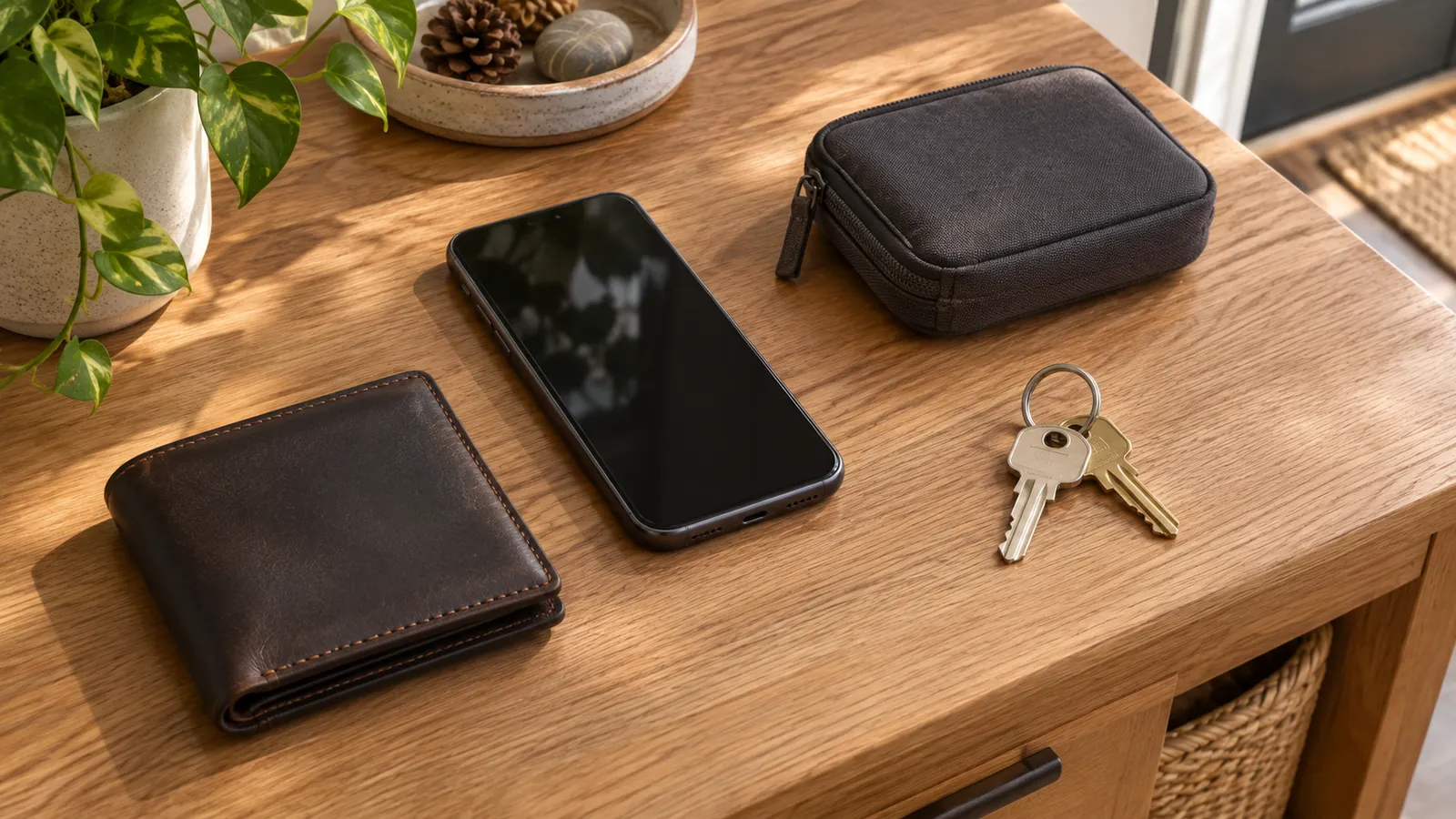
EDC pocket planning gives the things you carry a specific job and a workable place. We recommend starting with the order in which you use your keys, phone, wallet, light and everyday tools. Our Arkfeld Ultra and OKNIFE LK illustrate different equipment choices, but the useful result is an arrangement that lets you collect one item without unnecessarily disturbing another.
A good plan also accounts for the things carried only occasionally. A tool useful for preparing a parcel at work need not occupy the same location as a wallet needed throughout the day. Decide what travels with you, what can stay at the task location and what belongs in a bag before buying more carrying accessories. Our everyday lights are a starting point for choosing the lighting role within that plan.
| Ordinary situation | Access question | Planning decision |
|---|---|---|
| Opening a door while carrying a bag | Which item must come out first? | Give keys and the light distinct, reachable positions |
| Reading an equipment label | Where will the object and light remain? | Allow a place for the object or choose separately positioned lighting |
| Collecting a phone or wallet frequently | What else moves when you retrieve it? | Separate frequently handled items from equipment that can remain stored |
| Changing from a work bag to a smaller bag | Which tasks and items still belong in the plan? | Transfer the necessary complete items instead of copying the old bag's contents |
📋 Table of Contents
- 1. What Does EDC Mean for Your Pocket Plan?
- 2. Assign Everyday Items to Personal, Shared and Task-Based Roles
- 3. Give Arkfeld Ultra a Defined Lighting Role
- 4. Treat OKNIFE LK as a Complete Everyday Tool
- 5. Check Whether Retrieving One Item Moves Another
- 6. Count the Full Carry Load, Including Combined Functions
- 7. Replan Access When Clothing or Bags Change
- 8. Keep Temporary Task Items Separate From Everyday Equipment
- 9. Choose a Light Position for the Task, Beyond Its Carrying Place
- 10. Include Charging and Longer Storage in the EDC Plan
- 11. Use a Short EDC Record When Several Items Change Hands
- 12. FAQ
What Does EDC Mean for Your Pocket Plan?
EDC means everyday carry. Build the pocket plan around the items that actually leave with you and their order of use. You might collect keys, carry a bag to the car, put the bag down and later retrieve a work pass. Write that sequence in plain language. It reveals whether several items are competing for the same hand or whether one required object sits beneath something you must move first.
Include the point at which the light becomes useful. Finding a lock opening may require a light before the key can do its job. Reading a connector label may happen after you have already taken a device out of its pouch. Those sequences create different requirements. The light's most convenient place depends on when you need it relative to the other objects.
Separate a recurring task from an occasional possibility. A wallet used several times during a day deserves a different access priority from a tool kept for an infrequent equipment adjustment. Frequency does not make the occasional tool unnecessary. It helps determine which item should occupy the easier opening and which can remain in a less frequently accessed compartment.
Check where an activity ends as well as where it begins. A phone might return to a pocket while an equipment part must stay on the table. A bag may be closed before the keys are needed again. Recording those transitions prevents a plan that works only when every belonging is spread out in front of you.
Assign Everyday Items to Personal, Shared and Task-Based Roles
Some objects must remain with their owner. Others belong to a shared desk, vehicle or equipment kit. Make that distinction before allocating pocket space. A shared pair of scissors can serve a packaging station without becoming another object every person carries. A personal light can remain available after someone else takes the shared bag to another room.
Consider what happens when two people separate. If a household's only light is in the bag that one person takes, the other person's pocket arrangement does not include that device. Count the physical items that will actually travel with each person. A list of features in a product description cannot establish that two people will have the equipment at the same time.
Items needed for a particular activity can form a small task group. A charging cable may stay with the work bag, while keys stay with the person leaving it behind. Keep the group narrow enough that its purpose is clear. Moving an entire collection for one small task creates more objects to manage than moving the items that task requires.
This role assignment can also reduce purchases. Before adding another pouch, identify what it would contain and when the owner would reach for it. If the contents normally stay at a fixed desk, the useful change might be a desk location rather than a new item on the belt. Buy around a named access problem instead of around empty attachment points.
Give Arkfeld Ultra a Defined Lighting Role
Our Arkfeld Ultra Wild Contours product description lists white light with a maximum output of 1,400 lumens. It also identifies anti-slip strips, an O-aluminum body material and a glass lens. Use those as specific product features when considering the light. A maximum-output figure and material description answer different questions from where the device will fit among your belongings.
For ordinary pocket planning, begin with the white-light task. Decide what you need to see, when you will need the light and whether the object can be placed on a surface. A nearby equipment label and a broader view around a work area call for different arrangements. Assign the intended role without treating the highest advertised output as the required setting for every check.
The Wild Contours page includes distinct versions of the product. Keep the selected version's name with your order or equipment record, particularly if several people own similar lights. A recognizable finish can help identify an item, but the plan should still specify its owner and carrying place. The surface pattern alone does not explain who has the light after a shared bag changes hands.
A description of anti-slip strips should remain a description of the product. Consider your actual access to the light and the surrounding objects without converting that feature into a guarantee about every fabric or handling situation. Likewise, a glass lens and named body material do not settle the question of whether the chosen pocket opening is convenient for the whole item.
Treat OKNIFE LK as a Complete Everyday Tool
Our OKNIFE LK combines a folding knife and rechargeable lighting. The US description lists a weight of 86 grams and a deep-carry pocket clip. Its manual separately lists folded dimensions of 97 by 25 by 16.6mm. Those details describe a complete object to accommodate, including its lighting component, instead of an abstract cutting function on a checklist.
Use the folded dimensions when considering the space where the stored tool will sit. Its 159.9mm overall-length specification belongs to a different measurement from the closed outline. Do not estimate storage space by subtracting a blade figure from the overall length. Compare the published closed dimensions with the compartment you intend to use and the other belongings that share it.
A combined tool also changes how equipment can be distributed. If the light and cutting tool must remain with different people or at different task locations, one housing cannot occupy both places. If both functions normally serve the same preparation area, the combination may be convenient. Make that decision from the locations of the jobs before treating fewer housings as automatically preferable.
Keep ordinary tool selection separate from pocket retrieval. Choose the appropriate tool for the packaging, craft material or equipment task, then prepare a suitable work area and follow its operating instructions. A plan for carrying a closed tool does not need to become a practice routine for opening it quickly. The access question is whether you can identify and retrieve the correct item deliberately.
Check Whether Retrieving One Item Moves Another
An opening can contain all the intended items while still being awkward to use. A phone may lift a key ring with it, or a wallet may catch on an unrelated accessory. Examine the entire group as you normally carry it. The relevant observation is what moves together when you collect one object, rather than whether every object fits when arranged separately on a table.
Change one part of the arrangement at a time. Move the less frequently used object, choose another compartment or reduce the contents of that opening. Then consider the original task again. This gives each change a clear reason. Adding a second organizer before identifying the obstruction can conceal the same access problem inside a different container.
Different retrieval actions deserve separate consideration. Collecting keys by their ring is different from taking hold of a light's body or opening a wallet. Place each item where you can identify the part you intend to hold. For shared equipment, a simple description such as the light in the outer compartment is clearer than assuming the next person recognizes your arrangement by touch.
Count the Full Carry Load, Including Combined Functions
List physical devices and supporting items separately from the functions they provide. An LK supplies a folding blade and lighting in one housing. That remains one physical item to carry and one place from which both functions will leave. A separate edc flashlight adds another device, even if it performs a lighting role already present in the combined tool.
A transparent example makes the distinction easier to see. A person choosing a phone, wallet, keys, Arkfeld Ultra and LK has five main carried items before counting a bag or other accessories. The two lighting sources do not reduce that count to four. Conversely, listing cutting and lighting separately does not turn LK into two physical devices when assessing available pocket space.
Now identify the reason for each overlapping function. The separate light might be needed in a position where LK will not remain, or it might travel with someone using the shared task kit. If the reason is unclear, review that item before adding a smaller accessory to make room for it. Keep a useful second function when it has a defined job, with its own location and owner.
Compare published weights only when they describe comparable contents. LK's listed 86 grams is useful information about that product. It does not establish the total weight of every object in your plan or the load that a particular pocket will hold comfortably. Record the items actually included in your arrangement and avoid presenting an incomplete sum as the weight of the entire everyday kit.
Replan Access When Clothing or Bags Change
A workday arrangement can depend on the openings and compartments of a particular jacket or bag. If you leave that layer behind, its contents need a new destination. Identify those transfers before the activity begins. Keep items needed away from the bag with the person who needs them, instead of assuming the previous pocket will remain available throughout the day.
A smaller bag creates a selection decision. Start with the tasks planned for that outing and name the objects required for them. Some equipment may remain at its usual fixed location, while a personal light still has a clear short-task role. This is an opportunity to change the carried set, rather than compressing every object from a larger work bag into fewer compartments.
A borrowed bag introduces a different issue. Its familiar-looking pocket may contain the owner's belongings, or its organization may be unfamiliar to the borrower. Agree which compartment holds shared equipment and which items should remain untouched. Identify what returns with the bag and what returns to the individual user at the end of the loan.
Clothing changes can also alter which opening you use most often. A phone that was easy to retrieve from one jacket may need another location when that jacket is removed. Consider the frequently handled items first, then place the less frequently used equipment around those decisions. The aim is a coherent arrangement for the current outfit and activity, without a claim that one layout works for every garment.
Keep Temporary Task Items Separate From Everyday Equipment
Objects picked up during the day can occupy space that was free at departure. A receipt, a borrowed adapter or a small packaged replacement part has a different destination from the phone and light you carry regularly. Give the temporary object an explicit next stop. That might be a document compartment, the equipment pouch it belongs with or the desk where the job will continue.
An object being carried for someone else also needs a clear identity. Keep it associated with the task or recipient instead of mixing it with your own small accessories. If a colleague gives you a connector to check later, the useful record is which device it belongs to and where it should go afterward. The carrying plan should preserve that information along with the object.
Consider what becomes temporarily displaced when an item leaves its usual place. A wallet taken out for a transaction may be set beside a receipt, while a light placed on the table during an inspection may remain with a tool pouch. Finish the activity by accounting for the items you brought and the items you are taking away. These are two separate sets, especially when equipment has been borrowed.
For a parcel task, keep packaging waste separate from the equipment needed for the next job. Choose where the opened carton, loose wrapping and paperwork will go before collecting the light and tool again. That gives the temporary material a destination without making an everyday pocket its default storage space. The result is a specific end to the task, with the next person's preparation surface available.
Choose a Light Position for the Task, Beyond Its Carrying Place
The carrying place and the working position are separate decisions. A light stored conveniently in a bag may need to move to a different position when you inspect an item. Before retrieving several objects, decide where the item under inspection will remain and where the light needs to point. That can make the sequence clearer even when the equipment itself does not change.
For a label on a loose object, a stable preparation surface can free the hand holding that object. For work that keeps both hands engaged, consider an appropriate separately positioned lighting format. A pocket light can still have a useful role for the initial check. It does not have to become the only source assigned to every stage of the activity.
LK's manual specifically warns against putting a hot light into a fabric bag or fusible plastic container. Include that condition in the move from a lighting task back to a carrying place.
A fabric pouch chosen for ordinary organization still needs to be assessed against the product's state after use. Keep an appropriate place for the light at the task location while following that instruction. This applies to LK's lighting component even when the blade was never used during the task.
Include Charging and Longer Storage in the EDC Plan
A rechargeable flashlight needs charging equipment in the preparation plan. For LK, the manual lists USB-C charging, a 5V 1A input and a charging time of about 60 minutes. The package lists a USB C-to-C cable. Assign the cable and a suitable power source to the preparation location, then distinguish that equipment from what you need to carry during the ordinary outing.
The LK manual lists a white High setting of 100 lumens for 1.5 hours and a Low setting of 10 lumens for 13 hours. Keep those as the documented mode references for LK when assigning its lighting role.
A short label check and a longer series of equipment checks create different preparation questions. Neither the mode table nor Arkfeld Ultra's 1,400-lumen maximum supplies a shared continuous-output comparison between the two products. Our EDC flashlight comparison considers other selection dimensions when a separate light is the item you need.
Read the charging indicator as part of that specific task. The manual describes blinking red during charging and green when charging is complete. If someone else collects the tool afterward, agree how they will know the preparation is finished and where the item goes next. A cable left attached is not a useful inventory record for the person who must account for the tool before leaving.
LK's charging page also states that only the High brightness level is supported during charging. This matters when a preparation desk is also the place where you inspect equipment. If your plan calls for the documented Low setting, account for when charging finishes before assigning LK that job.
A light can be present on the desk while its connected operating choices differ from the choices listed for ordinary use. Keep that state with the task assignment when another person collects the equipment.
The same manual excludes charging below 0°C or above 40°C and warns against placing, charging or using the light in a car where the interior may exceed 60°C, or in similar environments. Those conditions affect the choice of preparation location. For a long period of storage, it calls for charging the product completely first. Keep these LK-specific instructions with LK instead of applying them automatically to every device on the table.
For a fuller explanation of connectors and supporting equipment, use our flashlight charging and care guide. Keep the specific charging instructions with the model to which they apply.
Use a Short EDC Record When Several Items Change Hands
A useful equipment note can be brief. Record the physical item, its assigned task, its owner, where it travels and which supporting item stays elsewhere. For example, a household light might travel in a shared bag while its charging equipment stays at the preparation desk. The note distinguishes possession of the light from possession of everything used to prepare it.
Use the record when the arrangement changes, such as moving to another bag or lending a tool for an activity. Record the exception that matters. If a light has left with a borrowed bag, the person staying home should be able to identify which other prepared light remains available. The note should explain that change rather than reproduce a long product specification list.
FAQ
Changelog
- November 7, 2026: Product information and buying guidance reviewed.