⚡ TL;DR
Flashlight games for kids work best with an adult-chosen light, a clear play area and one simple rule: keep the beam on the wall or ground, away from faces. Start with a gentle setting that lets everyone see the activity, then choose a seated shadow story or a slow, stationary signaling game.
| What you need | A practical choice | Adult check before play |
|---|---|---|
| Light | A handheld light with an easy-to-find lower setting | Check controls, battery compartment and temperature |
| Surface | A plain wall, sheet secured by an adult, or a clear patch of ground | Keep the beam away from faces, windows and other people |
| Play space | A familiar room or level campsite area | Remove obstacles; keep away from steps, roads, water and vehicles |
| Game supplies | Paper, pencil and simple picture cards if useful | Choose pieces too large for a young child to put in their mouth |
| Supervision | An adult who can stop or adjust the activity | Keep batteries and charging equipment under adult control |
These are family activities, not tests of vision, reaction speed or how much light a child can tolerate. Children differ in age, comfort and ability. Adapt the game to the children present, leave ordinary room or campsite lighting on when needed, and stop if anyone is uncomfortable.
📋 Table of Contents
- 1. Flashlight Games for Kids: Shadow-Puppet Stories
- 2. Indoor Flashlight Games: Find and Tell
- 3. A Safer Flashlight Tag Setup
- 4. Adapting Flashlight Games for Different Ages
- 5. Choosing a Flashlight Setting for Games
- 6. Adult-Controlled Olight Flashlights for Games
- 7. Outdoor Flashlight Games: Route and Supervision
- 8. Battery and Charging Safety for Flashlight Games
- 9. A Five-Minute Setup Checklist
- 10. FAQ
Flashlight Games for Kids: Shadow-Puppet Stories
Try a shadow-puppet story on a wall, a short-and-long flash relay while seated, or a slow red-light-green-light game using a beam on the ground. Each needs little equipment and can be adapted for different ages. An adult sets the boundary, handles the light if needed and keeps the beam away from faces.
Before the first round, show the group where the light may go. A plain wall or a marked patch of ground is easier to supervise than a wide area. Let everyone practice pointing at that surface while the adult watches. If the beam moves toward a person, pause, reset and try again without turning the correction into a competition.
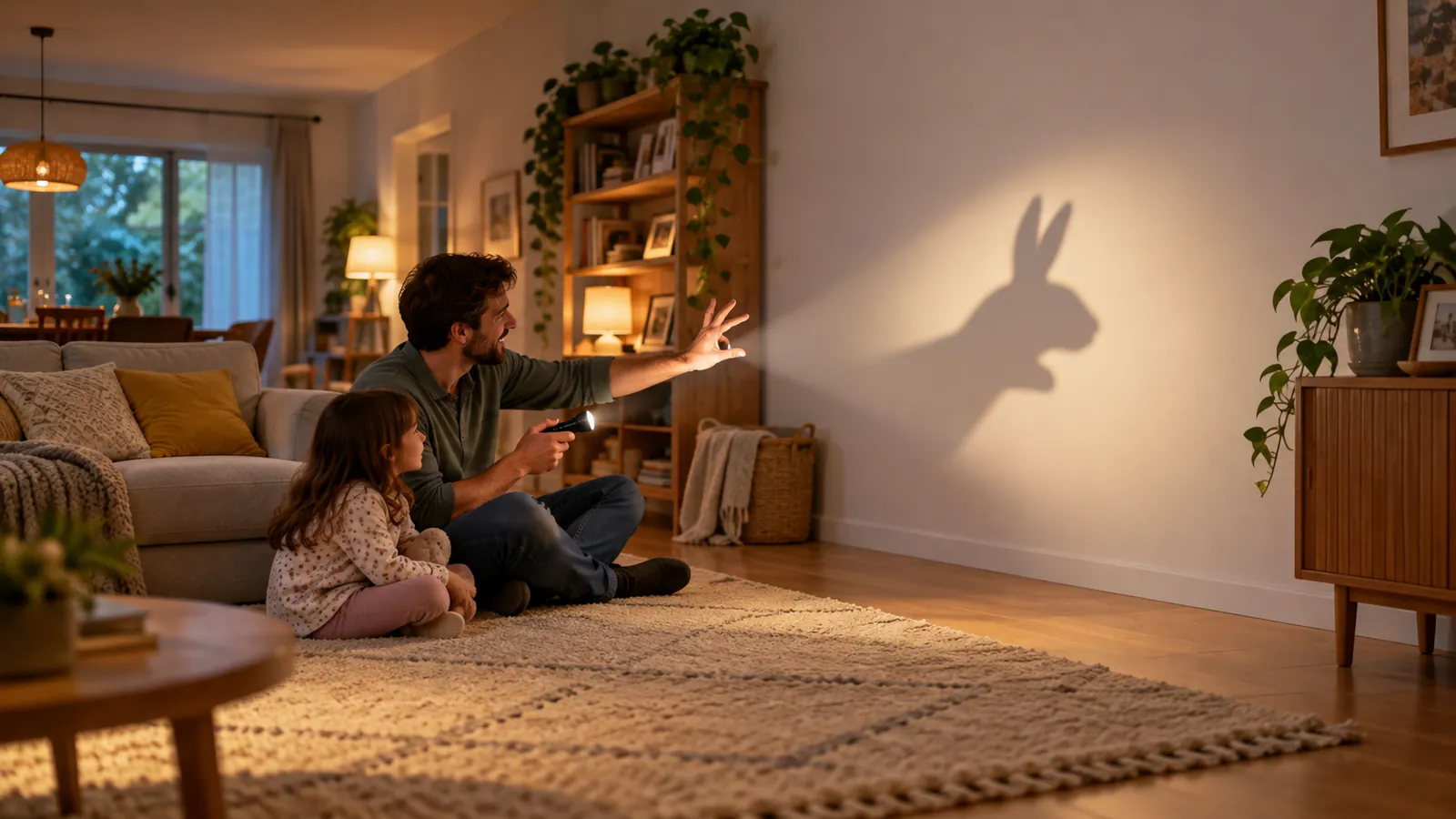
Game 1: Make a Shadow-Puppet Story
You need: one light, a plain wall and a comfortable place to sit. An adult can hold the light for younger participants. If using a sheet, the adult secures it away from heat sources and checks that it cannot fall or tangle around a child.
- Aim the light at the wall and leave enough room for children to sit away from the beam.
- Place a hand between the light and the wall to make a shadow. Move the hand slowly and notice how the shape changes.
- Invite a child to choose a character, such as a rabbit, bird or imaginary creature. Another person can give the character a name.
- Take turns adding one sentence to the story. The adult can move the light or help form the shapes when needed.
- Finish by letting each participant choose an ending, then switch the light off and put it away.
For a quieter version, one person creates a shape and the others guess what it might be. There is no need to decide whether an answer is correct: the same silhouette can inspire several stories. Keep the light at a comfortable level for the room and avoid looking into it.
Game 2: Send a Seated Morse Relay
You need: one light, a wall or ground target, paper and an adult leader. Everyone stays seated or stands in one safe place. The adult demonstrates a short flash and a longer flash aimed at the surface, not at a person.
Start with a pretend code: one short flash could mean “cat,” two short flashes could mean “tree,” and one long flash could mean “tent.” Agree on the meanings first. The leader sends a pattern, and the group points to or says the matching word. Switch roles if each child can use the light without aiming it toward others.
For an optional introduction to Morse code, explain that SOS is three short, three long and three short signals: ... --- .... Practice it only as part of a clearly supervised lesson on an indoor wall or another private surface where it cannot be mistaken for a real distress signal. Explain that real emergencies call for getting an adult and contacting emergency services, and that a practice game must not prompt an actual emergency response.
Use a large printed card with the pattern if that makes the sequence easier. Younger participants can make the short and long sounds by tapping their knees while an adult controls the light. The goal is taking turns and noticing a pattern, not sending a signal over a measured distance or proving that someone can see it.
Game 3: Play a Slow Light-and-Stop Game
You need: a clear, level patch of floor or ground and one adult-controlled light. Agree on a small play area away from stairs, campfires, roads, vehicles and water. In a room, move furniture and loose objects before starting; outside, inspect the ground in ordinary light first.
The adult points the beam at the ground inside the play area. When the light is on the ground, participants may take one slow step; when the light is switched off, everyone stops. Keep the room or campsite otherwise bright enough for the adult and children to see the area. This is a walking game, not a race, and nobody follows the beam into another person's space.
Try a seated version by having everyone move one hand when the light is on and hold it still when the light is off. A child who prefers not to move can be the caller, choosing “step” or “stop” while an adult operates the flashlight. The activity remains inclusive without requiring a particular reaction time, speed or balance.
Indoor Flashlight Games: Find and Tell
Use a familiar room for a shadow story, a picture-finding game or a quiet pattern relay. Clear the floor first and leave enough normal lighting to move safely. An adult can hold the flashlight while children point to shapes or choose story prompts, so the activity does not depend on every child handling a light.
For a picture-finding game, put a few large paper pictures on a wall at a height the adult can easily reach. Briefly illuminate one picture and ask the group to describe it. The adult moves the light, while the children remain seated. For a storytelling round, let each child choose the next picture and add one sentence. Keep the picture cards large, simple and appropriate for the children who will be present.
Another variation is “follow the shape.” An adult slowly draws a circle or a square with the beam on a wall, and a child traces the same shape in the air with a finger. Stop before anyone becomes tired or frustrated. If the activity is not enjoyable, turn on the room lights and move to a different game.
A Safer Flashlight Tag Setup
Replace chasing and shining at players with a stationary target game. An adult moves a light across a wall or a clear patch of ground, and children point to a picture or name a shape while remaining in place. Keep faces, windows, roads and moving vehicles outside the game area.
Traditional flashlight tag can involve running in dim light or aiming at another person. Those rules are a poor fit for a crowded room, an unfamiliar campsite or a group with different mobility needs. The stationary version keeps the turn-taking and discovery while making it easier for an adult to supervise where the beam goes.
Adapting Flashlight Games for Different Ages
Assign roles according to a child's abilities and the group's comfort rather than assuming every child of the same age is ready for the same equipment. An adult can hold the light while a younger child chooses a picture, makes a sound or invents a story. Older children can take turns with controls after the adult demonstrates the rules.
| Participant | A possible role | What the adult does |
|---|---|---|
| Child who prefers watching | Choose a character or name a shape | Keep the beam on the wall and invite participation without pressure |
| Child ready to take turns | Call a pattern or hold a large picture card | Manage the light and keep the activity unhurried |
| Child ready to handle a light | Aim at an agreed wall or ground target | Demonstrate the switch, supervise closely and take back the light if needed |
| Mixed-age group | Use a seated version with different roles | Adjust the game so no one needs to run, compete or handle batteries |
These are options, not developmental guarantees. A child may enjoy a role one day and choose to watch the next. If a light is heavy, difficult to control or has a battery compartment a child can open, keep it with the adult and choose a different role for the child.
Choosing a Flashlight Setting for Games
Use a setting that provides enough light for the activity without making the room uncomfortable. A lower available mode and a broad wall area can make a game easier to manage. There is no universal lumen number or distance in this guide that makes shining a light into someone's eyes safe: keep every beam away from faces.
The adult should inspect the actual controls before handing over any light. If the model offers a flashing or strobe mode, select a steady mode and make sure the group can use the controls without unintentionally entering a flashing mode. Some lights offer settings or lockouts; others do not. Read the exact manual rather than assuming the same button sequence applies to every product.
A child's size and hand control also matter. A compact light may be easier for an adult to hold during a wall game, but a small product or detachable accessory can create a separate handling concern for a young child. Check the manufacturer's instructions and keep the adult in charge of the equipment. Never leave a high-output light running against fabric or unattended.
Adult-Controlled Olight Flashlights for Games
The three lights below are our products. They are ordinary lighting products, not toys or products represented here as child-safe. An adult should choose the equipment, control charging and batteries, and decide whether to operate it throughout the game. The right option also depends on whether its controls and output are comfortable in the chosen room.
- Oclip 2 Pro: The Oclip 2 Pro clip light offers a 10-lumen floodlight low mode and a 1-lumen floodlight moon mode, according to our published specifications. That gives an adult more than one steady setting to consider for a wall game. It also has other modes and magnets, so learn the controls, secure it away from young children, and follow the manual's warning to avoid close or prolonged contact with a pacemaker or implanted cardiac device. No mode should be aimed into anyone's eyes.
- i3E EOS: The i3E EOS keychain flashlight uses one AAA battery and turns on by twisting its head; we list a 90-lumen output. Its single listed output does not provide a lower setting. The adult should keep the small light, ring and removable battery under their control and choose a different light if the output is uncomfortable or if secure handling is a concern.
- iUltra: The iUltra rechargeable keychain flashlight has an integrated USB-C charging plug and we list 80 lumens. It turns on when separated from its magnetic base, so it is not a good choice to hand to a young child who might pull apart or mouth small parts. An adult can choose another light with an adjustable lower setting when needed, and should keep the light and base away from young children.
Product output is a published specification, not an eye-safety threshold or a measure of comfort for every room. An adult browsing keychain flashlights should also check small detachable parts and whether the selected light offers an appropriate steady mode. Check each product's exact manual and current configuration. For a broader equipment decision, see our best flashlights by use guide; for the rest of the family's supplies, use the printable camping checklist.
Outdoor Flashlight Games: Route and Supervision
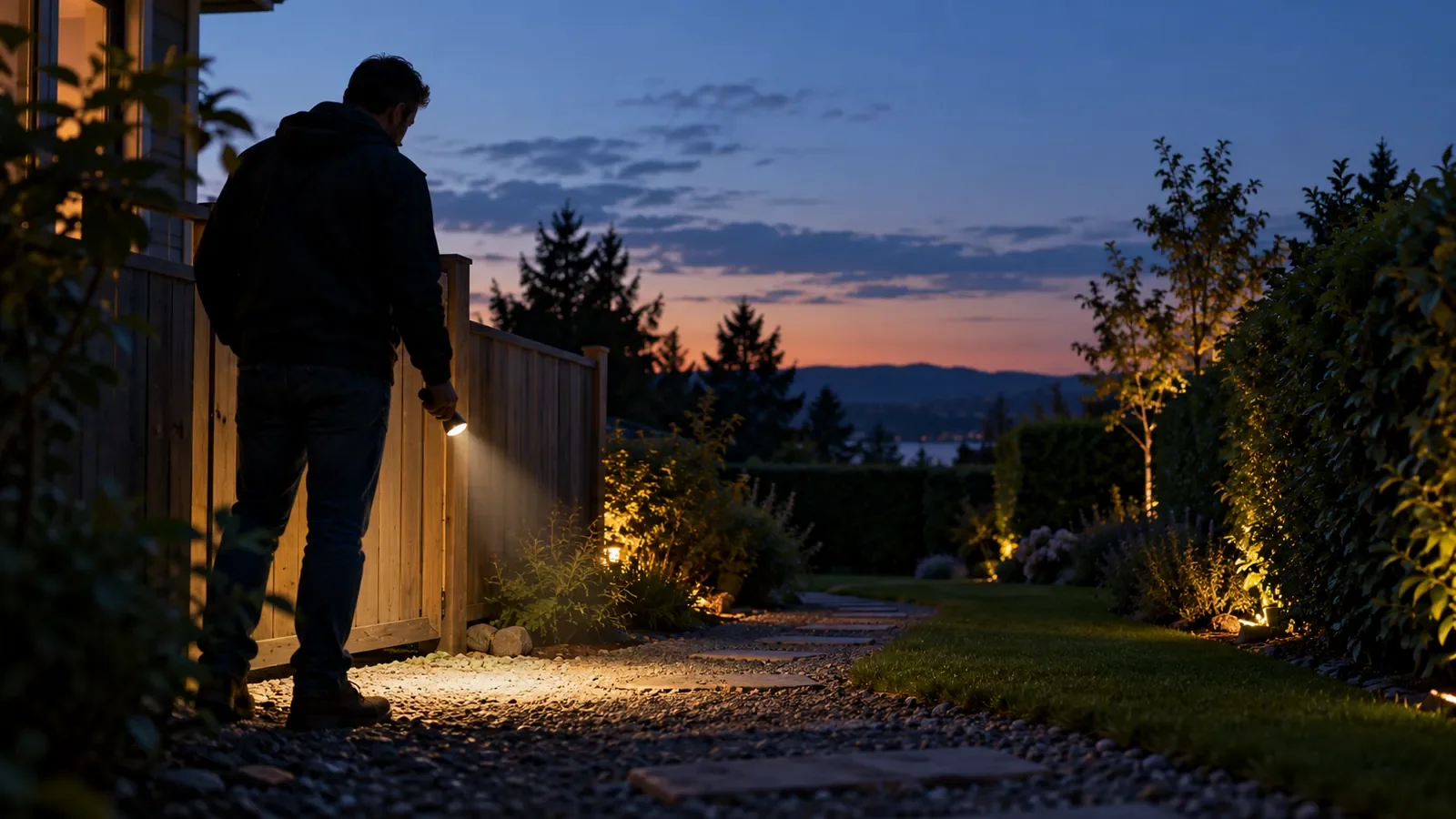
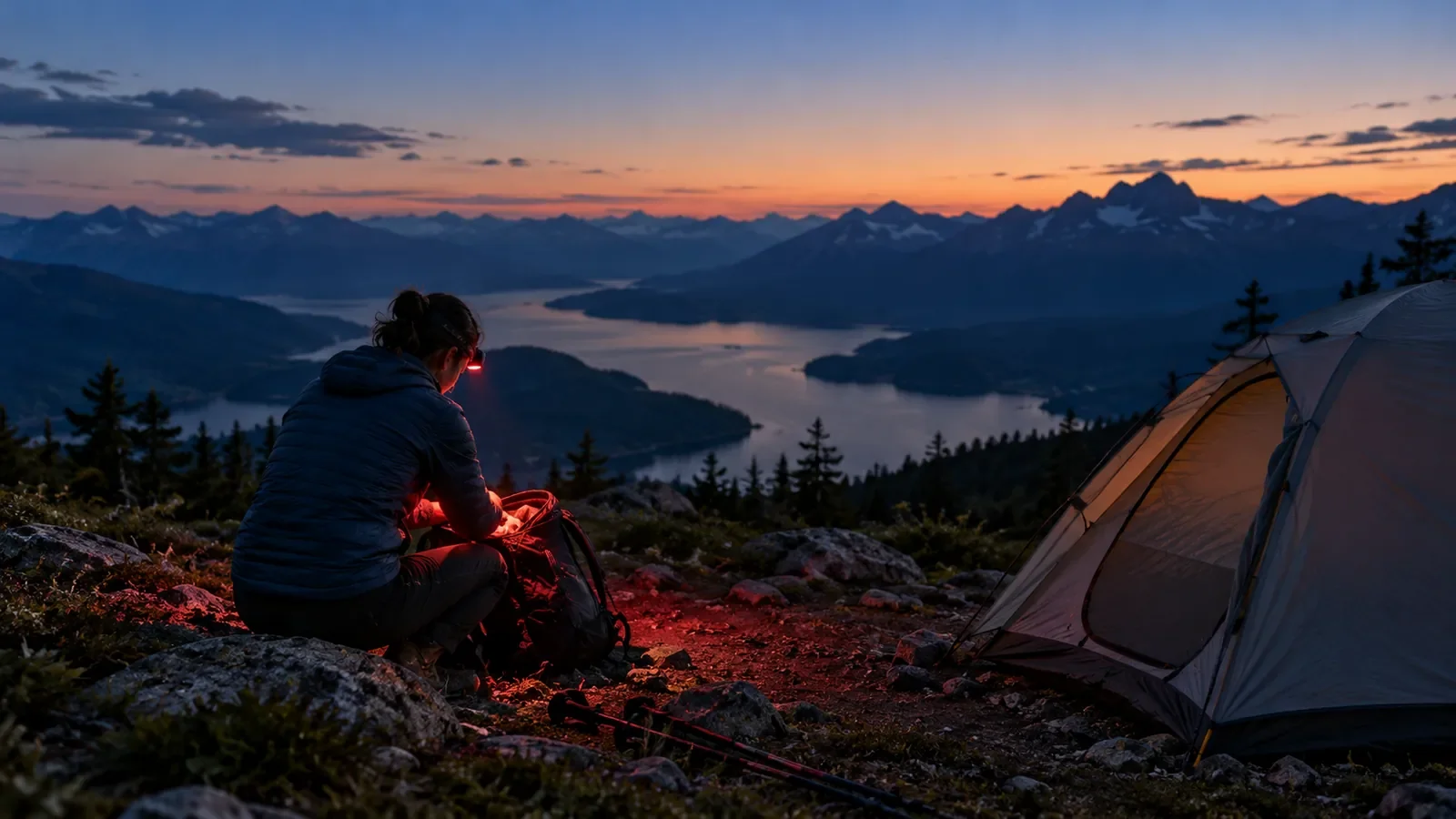
Choose a level, familiar area in daylight, remove obstacles and set a boundary everyone can understand. Stay away from roads, parking areas, open water, campfires, stairs and other campers. Keep enough ambient light to see the area, and point the game beam at the agreed surface rather than toward people, animals, tents or vehicles.
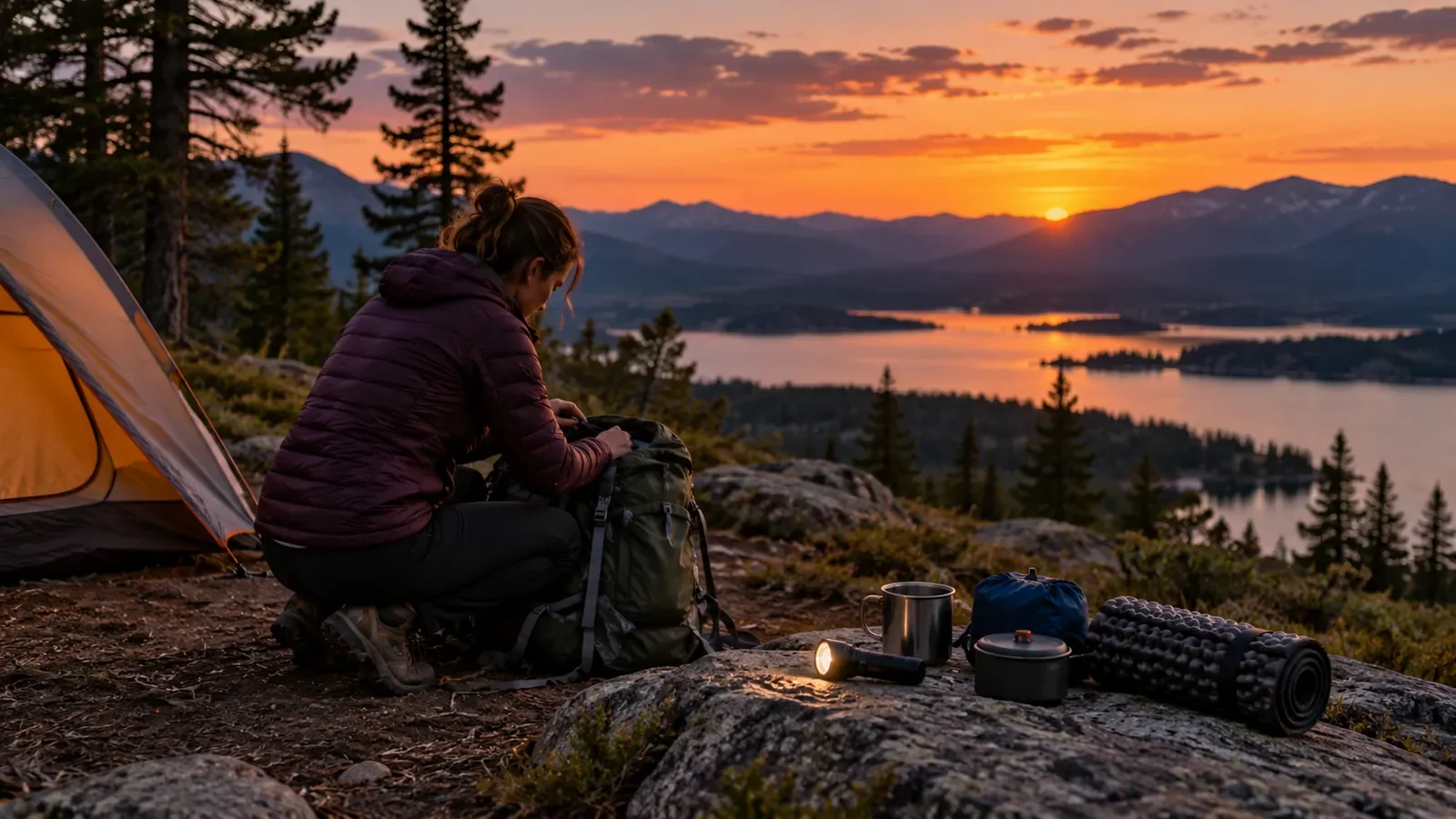
The National Park Service camping checklist includes illumination as part of preparing to see after dark. A game light does not replace the adult's own navigation light, campsite rules or supervision. If the ground, weather or group makes the activity difficult to supervise, move indoors or choose a seated story instead.
Agree on a stop word before play. When anyone says “stop,” the adult switches off the game light or redirects it to a safe surface, checks that everyone is comfortable and decides whether to continue. This also gives a child a simple way to pause without needing to explain why in front of the group.
Battery and Charging Safety for Flashlight Games
An adult should install or charge batteries, inspect the compartment and store loose cells and charging equipment where children cannot reach them. Do not give children loose batteries to sort or play with. Stop using a light if its battery compartment or charging parts are damaged, and follow the manufacturer's instructions for that specific model.
Button and coin batteries need particular attention because swallowing one can cause serious injury. The U.S. Consumer Product Safety Commission recommends keeping loose batteries and products with unsecured compartments away from children. Do not assume that a device is suitable for a child simply because the light itself is small.
If a child may have swallowed or inserted a button or coin battery, seek urgent medical help immediately; symptoms can be absent at first. In the United States, call the National Battery Ingestion Hotline at 800-498-8666 or Poison Help at 800-222-1222 promptly and follow the expert's instructions. Do not wait for symptoms. These numbers and the immediate-action advice are from the CPSC resource above.
A Five-Minute Setup Checklist
Before the group starts, an adult can use these six checks to set a clear boundary, choose the wall or ground target and make sure the light and batteries are under adult control. Adjust the plan to the space and the children present.
- Inspect the space: choose a level area, clear obstacles and identify stairs, roads, water, vehicles and heat sources to avoid.
- Inspect the light: the adult checks the compartment, selects a steady setting and confirms that the light is comfortable to hold.
- Choose the target: use a wall or clear ground, never a face, another camper, an animal or a vehicle.
- Explain the stop rule: demonstrate where the beam goes and how anyone can ask the adult to pause.
- Choose roles: an adult can operate the light while a child tells the story, calls the pattern or names a shape.
- Put equipment away: switch off the light and store it, loose batteries and charging gear out of young children's reach.
FAQ
Changelog
- September 27, 2026: First published.