Our flashlight examples use published output and runtime ratings.
⚡ TL;DR
One thousand lumens describes the total visible light a source emits, not how bright every surface will look. For a rough household reference, it sits between the Department of Energy's approximately 800-lumen and 1,100-lumen examples for traditional 60-watt and 75-watt bulbs. A flashlight directs that light differently, so beam shape and distance matter.
| Question | Practical answer |
|---|---|
| Is 1,000 lumens the brightness at the target? | No. It is the source's total visible light output; the surface depends on distribution and distance. |
| Is it like a household bulb? | It is in the same general output range as familiar bulbs, but the distribution can be very different. |
| Can it light a whole yard? | The answer depends on the beam, yard, background light and what you need to identify. |
| Will it stay at 1,000 lumens? | Check the manufacturer's runtime table and any step-downs for the selected mode. |
The flashlights collection includes different shapes and outputs. Before comparing a particular model, define the work it needs to do; the flashlight selection framework walks through distance, hands-free needs and power in more detail.
📋 Table of Contents
- 1. 1000 Lumens Compared With Household Bulbs
- 2. 1000 Lumens Compared With a Phone, Headlight and Streetlight
- 3. 1000 Lumens and Flashlight Viewing Distance
- 4. Using a 1000-Lumen Flashlight Indoors
- 5. Lumens, Candela and Lux: Understanding 1000 Lumens
- 6. 1000 Lumens in Everyday Situations
- 7. How Distance Changes 1000-Lumen Illumination
- 8. Estimating Lux From Candela and Distance
- 9. Why 1000 Lumens Can Look Different to Your Eyes
- 10. 1000-Lumen Beams for a Garage and Yard
- 11. Choose a Flashlight Level for the Job
- 12. Common Misunderstandings About 1000 Lumens
- 13. Flashlight Runtime and Output Step-Down
- 14. Four Olight Flashlights and Their Useful Modes
- 15. Checking the Flashlight Kit and Its Specifications
- 16. A 1000-Lumen Flashlight Decision Checklist
- 17. FAQ
1000 Lumens Compared With Household Bulbs
One thousand lumens is a little above the Department of Energy's roughly 800-lumen reference for a traditional 60-watt incandescent bulb and below its roughly 1,100-lumen reference for a 75-watt bulb. This is a comparison of total light output, not a statement that a flashlight illuminates a room the same way as either bulb.
The Department of Energy's bulb comparison lists approximately 800 lumens for a traditional 60-watt bulb and 1,100 lumens for a 75-watt bulb. A household bulb generally spreads light around a room; a flashlight optic can direct a large share of its output into a narrower area. The surface in the beam may therefore look much brighter, while parts of the room outside the beam remain dark.
1000 Lumens Compared With a Phone, Headlight and Streetlight
A candle, a phone flashlight, a car headlight and a streetlight are familiar reference points, but none is a single standardized lumen value. Candles vary by their size and construction, so a candle is not a fixed universal lumen reference. Phones differ in LED hardware and software settings; vehicle headlamps vary by model and beam setting; streetlights vary by fixture, mounting height and road design. Comparing a random figure for any one of them with a flashlight's total output would imply a precision that the category does not have.
Their jobs also determine where light goes. A phone light is often used close to a subject, a vehicle's beam is shaped for travel on a road, and a streetlight is mounted above an area to distribute light across it. Even if two specific sources had the same measured lumen output, a person standing on the ground would not necessarily receive the same illuminance from both. Check the exact device's published output and compare the distribution and distance for the task, rather than ranking entire product categories by a single number.
1000 Lumens and Flashlight Viewing Distance
There is no single viewing distance for 1,000 lumens. A flashlight with a focused hotspot can deliver more light in its strongest direction than another light with the same output spread across a wider area. Compare the manufacturer's candela and beam-distance ratings, then consider target size, contrast, weather and surrounding light.
Rated beam distance is a comparison point rather than a guarantee of recognition. Seeing that light has reached a distant tree is different from identifying a small sign beside it. A good shortlist starts with the actual distance and object: reading a trail marker calls for different performance from lighting the ground in front of your feet.
Using a 1000-Lumen Flashlight Indoors
One thousand lumens can be uncomfortable when a concentrated flashlight beam hits a nearby wall or a reflective object, even though a room bulb with a similar total output may be comfortable. Start with a lower flashlight setting when working indoors and point the beam away from people's eyes. Increase output only if the task requires it.
A room's surfaces, existing light and beam angle all affect the result. For a power outage, use the lowest setting that lets you move and read safely, and keep a second light available if the task is important. Do not cover the flashlight head or place it against combustible material; follow the model's instructions for heat and placement.
Lumens, Candela and Lux: Understanding 1000 Lumens
Lumens describe total visible light emitted. Candela describes intensity in a particular direction. Lux describes light arriving on a surface. Together, they answer different questions: how much light leaves the source, how concentrated the brightest part of its beam is, and how much light reaches the work surface. The candela vs lumens vs lux guide covers the three measures in more detail.
| Measure | Unit | What it helps answer | What it cannot tell you alone |
|---|---|---|---|
| Luminous output | lumen | How much visible light the source emits | How the beam distributes it |
| Peak intensity | candela | How concentrated the beam is in its strongest direction | The full pattern or useful spill |
| Illuminance | lux | How much light reaches a surface | Whether a target is identifiable in every condition |
Imagine two lights with the same stated 1,000-lumen output. One uses a wide beam for work nearby; the other concentrates more light into a smaller hotspot. The second may illuminate a distant object more strongly, while the first may show more of the immediate surroundings. The actual difference cannot be calculated from lumen output alone.
1000 Lumens in Everyday Situations
Think of 1,000 lumens as an available output rather than a required setting. A garage inspection, a walk to the mailbox and a search across a yard involve different distances and surfaces. Start with the light low enough to see comfortably, and use more output only where it improves the task.
| Situation | Main need | A sensible starting decision |
|---|---|---|
| Reading a breaker label | Close detail without glare | Start low and angle the beam away from reflective covers. |
| Walking a short path | See the ground and obstacles | Choose useful spill as well as a hotspot. |
| Searching a garage | Inspect near and farther shelves | Use multiple settings and check shadows behind objects. |
| Checking a yard | Locate objects beyond the doorstep | Compare beam intensity and useful spill, not lumens alone. |
| Camp chores | Keep hands free and see nearby gear | Consider a headlamp or stable work light with lower modes. |
| A power outage | Navigate and find supplies | Choose accessible controls, usable runtime and backup power. |
| Reading a campsite map | Identify fine print without washing out the page | Use a low mode and reposition the beam if the paper reflects it. |
| Repairing a bicycle | See the chain and fasteners while keeping both hands available | Use a stable or wearable light and keep the beam clear of moving parts. |
| Checking a car tire | Inspect the sidewall and ground beside the wheel | Move the beam across the surface to reveal detail and avoid traffic. |
| Finding a dropped item indoors | Distinguish the object from the floor | Sweep the light at a shallow angle so shadows help reveal its shape. |
These task-based suggestions do not establish a universally safe or sufficient output. Reflective white walls, dark foliage, weather and the user's vision can change what is useful. Keep the beam away from other people's eyes and reduce glare before increasing output.
How Distance Changes 1000-Lumen Illumination
Distance changes the size and intensity of the patch of light on a surface. Moving a light farther away generally spreads a given beam across a larger area, so an object can become harder to see even when the flashlight remains at the same output. The beam's design, angle and surrounding surfaces also affect the result.
To compare two candidates, write down the task first: “read a sign across the yard” is more useful than “maximum distance.” Look at the manufacturer's beam intensity and distance figures, then examine whether the light provides enough surrounding spill for the ground you need to cross. A concentrated hotspot can help locate a distant object while leaving the nearby path less evenly lit.
If you already own a flashlight, try its ordinary settings in the intended environment without looking into the light or pointing it at other people. Observe what you can identify at your actual working distance. Use this practical check to judge your own visibility at the working distance.
Estimating Lux From Candela and Distance
The relationship between intensity and illuminance can be illustrated without assigning a distance to every 1,000-lumen light. For a point-source approximation, light traveling directly toward a surface perpendicular to the beam, and negligible absorption or reflected light, E ≈ I / r², where E is illuminance in lux, I is the intensity in candela in that direction, and r is distance in meters. The National Institute of Standards and Technology describes the inverse-square relationship in its photometry work.
Suppose a hypothetical beam has 10,000 cd in the direction of a target. At 10 m, the calculation gives 10,000 / 10² ≈ 100 lux; at 20 m, it gives 10,000 / 20² ≈ 25 lux. Doubling distance therefore gives one quarter of the calculated direct illuminance under these assumptions. These are examples of the calculation, not measurements, minimum safe light levels or a promise that a product marked 1,000 lumens has 10,000 cd.
The calculation concerns a particular direction and a surface facing the source. Tilting the surface reduces direct illuminance; the beam may also be uneven, while reflections and other lights add to the result. At close range, a real light may not behave like a point source. A lux meter at the actual surface gives information that this simplified calculation cannot supply. Neither number alone determines whether a person can recognize a detail.
Why 1000 Lumens Can Look Different to Your Eyes
Perceived brightness does not rise in a simple one-for-one proportion with lumens. The eye adapts to the light already present: stepping from a lit room into a dark yard and waiting there can change how the same beam appears. The Department of Energy's discussion of visual adaptation describes light and dark adaptation as part of visual response to changing conditions.
Contrast matters too. A pale object against a dark background may be easier to distinguish than a similarly lit dark object against dark foliage. A shiny surface can send a strong reflection toward the eye while obscuring markings nearby; a matte surface may reveal the same markings more clearly. Ambient street or room lighting can change both the background and the eye's adaptation, so the same flashlight and setting can feel different in each place.
For a useful comparison, keep the task and distance fixed, allow the observer time to adjust to the surroundings and change one setting at a time. Pay attention to the detail you need to identify, not simply which hotspot looks most dramatic. Individual vision, age and other conditions differ; the example does not establish a universal brightness threshold or an exact perception multiplier.
1000-Lumen Beams for a Garage and Yard
A garage places walls, tools and reflective surfaces close to the light. A broad beam and a useful low setting can help you inspect a shelf without a harsh hotspot bouncing off painted or polished surfaces. Angle the light from the side when a straight-on reflection hides a label, and secure it so it cannot roll into a work area.
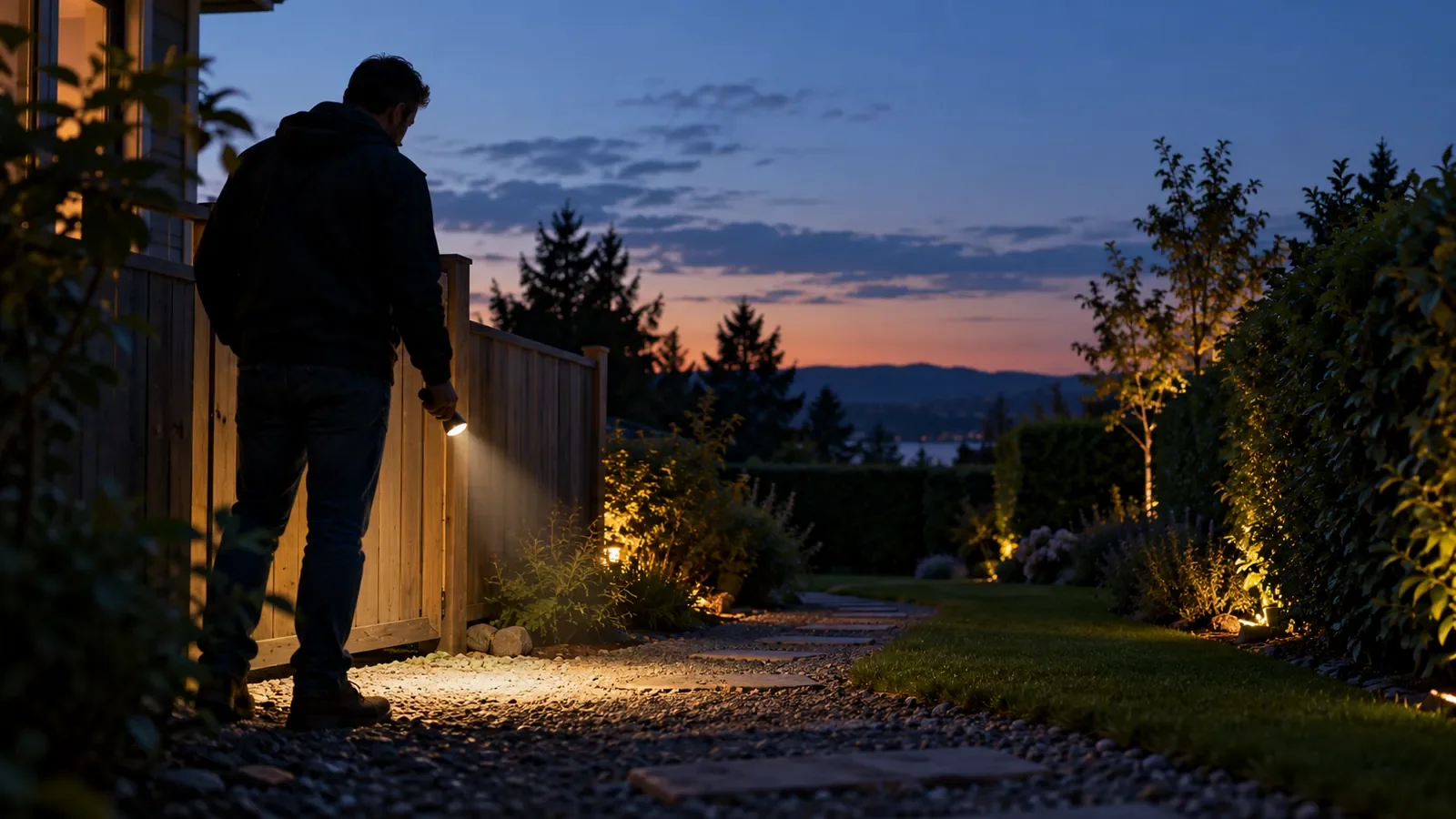
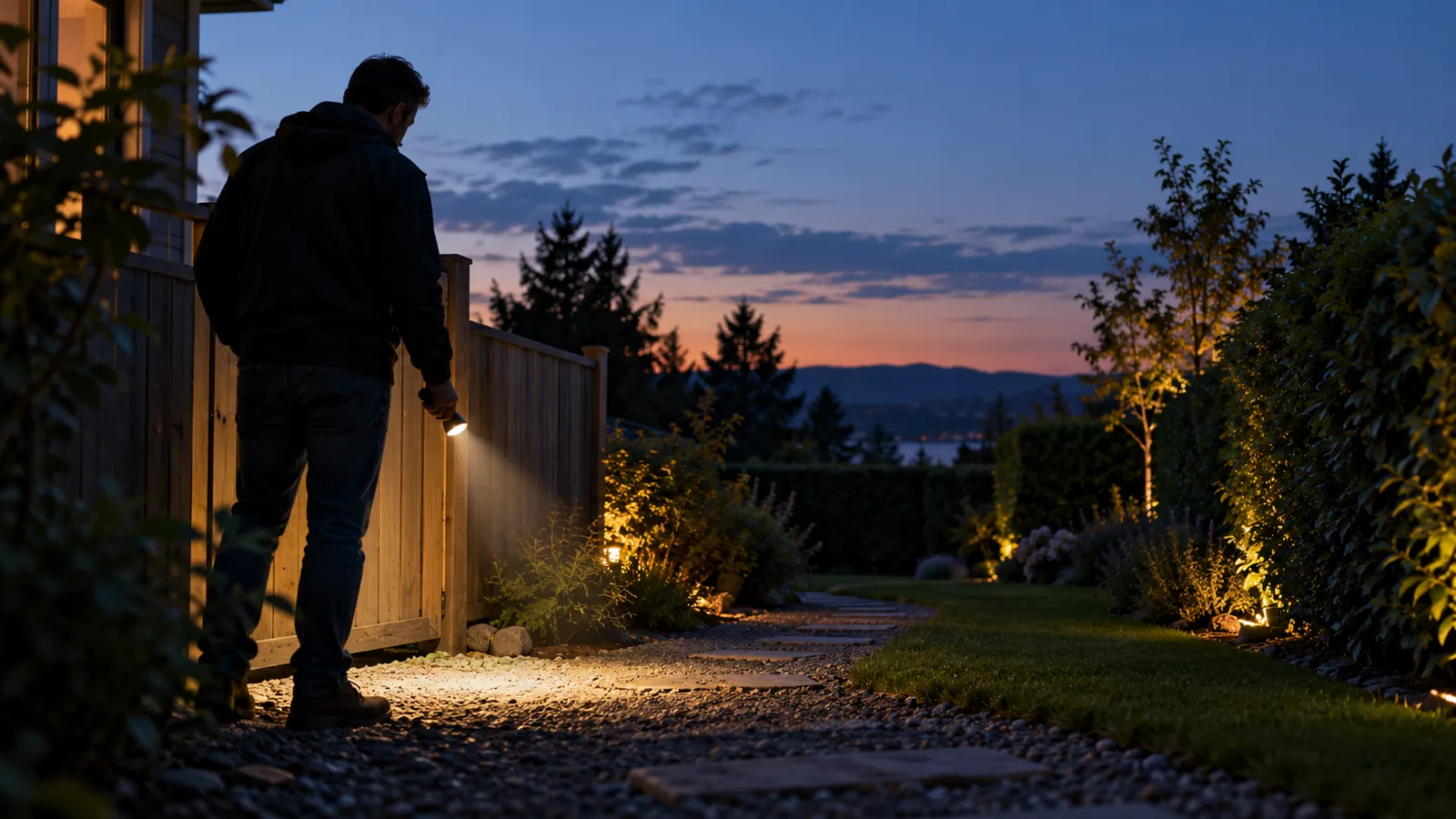
A yard introduces a longer distance and fewer nearby surfaces to reflect light back. A stronger central beam can help you look toward a fence, but you may still need spill to see steps, pets or garden tools close by. If a narrow beam makes you lose sight of your footing, use another mode or a second light rather than aiming continuously at the farthest point.
The same number of lumens does not make these settings interchangeable. When buying, check the stated output and beam pattern for the exact model. When using a light, start with the distance and visibility you need, then choose an appropriate setting.
Choose a Flashlight Level for the Job
Look for a flashlight with a range of useful settings. A low setting can be practical for a nearby task; a higher setting can provide more output for a brief search. The levels that actually help depend on the beam and the user, so avoid treating one lumen value as a universal requirement for every garage, campsite or path.
| Job constraint | Product-page detail to compare | Why it matters |
|---|---|---|
| Short indoor checks | Lowest usable white-light level and controls | Helps reduce glare and makes routine operation simple. |
| Longer route | Runtime at the selected level | A high output is of limited use if it does not last for the task. |
| Distant object | Candela and beam pattern | Concentration and spill determine where the light goes. |
| Shared emergency kit | Switch operation and battery system | Each user needs to turn it on and restore power. |
| Wet conditions | Rating and manufacturer instructions | Rain and immersion are different exposures. |
Compare the exact battery and product configuration used for the ratings. If a manufacturer lists a sequence such as high output followed by lower levels, do not treat the whole sequence as continuous operation at its initial output. Use the full table when planning a task.
Common Misunderstandings About 1000 Lumens
The most common misunderstanding is treating total output as a complete description of what someone will see. The following corrections help keep the comparison useful. They are general explanations; a specific model still requires its own published specifications and operating instructions.
| Claim | Correction | How to apply it |
|---|---|---|
| “Every 1,000-lumen beam reaches equally far.” | Beam intensity and distribution can differ. | Compare candela, beam pattern and the actual task distance. |
| “A 1,000-lumen flashlight lights a room like a 1,000-lumen bulb.” | Their light distribution can be different. | Consider whether you need a wide area or a directed beam. |
| “The longest runtime belongs to maximum output.” | Runtime depends on the mode and any step-down. | Read the complete runtime row for the chosen setting. |
| “Twice the lumens guarantees twice the useful visibility.” | Visibility also depends on the beam, contrast and conditions. | Compare the actual scene rather than scaling the number alone. |
| “A water rating covers every exposure.” | Ratings have specific conditions and limits. | Read the rating together with the manual. |
Flashlight Runtime and Output Step-Down
The 1,000-lumen number is incomplete without a setting and duration. Some lights reduce output after an initial high mode, while another setting may provide less light for longer. A maximum runtime can be measured on a lower setting, so do not combine it with maximum lumens as though both figures apply simultaneously.
Read the manufacturer's table for the exact product and battery. If the table shows a sequence of output levels, include each step when deciding whether it covers your task. For a long walk or extended outage, select the setting you can use for the required time and bring appropriate backup power or a second light.
The ANSI FL1 standard guide explains the common specification labels in more detail. When you compare lights, check that the data is for the same operating mode and battery, and avoid treating a standardized beam-distance figure as a guarantee of recognition in every environment.
Four Olight Flashlights and Their Useful Modes
Our Olight Marauder Mini 2 offers separate flood and spot beams as well as a combined mode. Our published table lists its combined level 2-2 as 1,000 then 300 lumens, with the corresponding durations listed as 3 hours plus 2.5 hours. That is a useful example of why the full sequence matters: the light does not remain at 1,000 lumens throughout the combined runtime.
That combination can be worth considering when you need a choice of beam patterns for work around a large area. Its listed weight is 465 g including the battery, so a compact pocket light may be more convenient if low carry weight is your priority. Our published ratings depend on the stated mode; operating conditions can change the result.
A compact everyday light makes a different trade-off. Our Olight Baton 4 Pro lists 120 lumens for 18 hours 30 minutes on Medium, and a 1,600-to-600-lumen Turbo sequence lasting 2 plus 198 minutes. Its higher opening figure is useful when a brief brighter view matters, while the Medium setting provides a longer rated option. Its beam and the task still decide whether either mode is appropriate; Turbo is not 1,600 lumens for the full 200 minutes.
For a light that stays with a keyring, the Olight iUltra lists 80 lumens and a 50-minute cool-white runtime. That is far below 1,000 lumens, but its 20 g weight including the battery makes it an option for finding a keyhole or checking something close by. Its output and runtime are a limitation when you need a larger area or longer illumination; carry another light for those tasks.
For a different trade-off, the Olight Seeker 4 Pro offers a published 300-lumen medium mode with an 11-hour runtime. That mode is below 1,000 lumens, but it may be more relevant to a longer task than a higher maximum output. Its published 4,600-lumen maximum does not describe the brightness available for all 11 hours. Compare its beam and size with the actual task before choosing.
Checking the Flashlight Kit and Its Specifications
Before buying, check the exact package rather than assuming that every battery, charging cable, headband or holster shown in a photograph is included. Match the listed battery and charging method to the places where you expect to use the light. Similarly shaped cells are not automatically interchangeable. For a shared household kit, try the controls with each intended user and choose a storage location that remains easy to find in the dark.
Beam photographs are useful for understanding the pattern, but compare them only when the scene, distance and camera exposure are known to be comparable. A photograph that looks brighter can reflect a different camera setting. Use the model's documented mode table for output and duration, and leave an unspecified figure open instead of deriving it from the maximum lumens.
A 1000-Lumen Flashlight Decision Checklist
Use these five steps to connect the output figure to the work you need to do. They help you compare light distribution, duration and practical handling together, and they remain useful whether the model's maximum output is 1,000 lumens or a different value.
- Write down what you need to see and the approximate working distance.
- Decide whether you need a broad beam, a concentrated hotspot or both.
- Compare the manufacturer's intensity and runtime figures at the intended setting.
- Check whether the controls, battery and weather rating suit the situation.
- Use the lowest comfortable setting and keep the beam away from eyes.
FAQ
Changelog
- October 30, 2026: First published.