⚡ TL;DR
To choose a flashlight, match its beam and runtime to the job before comparing peak output. Start with working distance, hands-free needs and the brightness level you expect to use. Then check weather resistance, power, controls and total cost so the light is practical to carry and operate.
| Your first decision | Look for | Common mistake |
|---|---|---|
| Close work or distance? | A beam suited to the actual task | Buying on peak lumens alone |
| One hand or neither? | A handheld light or headlamp | Forgetting where the light will point while you work |
| Short check or long shift? | Runtime at a useful output level | Treating the longest runtime as the brightest setting |
| Rain or immersion? | A rating and manufacturer instructions for the exposure | Assuming every water rating covers every kind of exposure |
| Recharge or replace? | A power system you can support away from home | Leaving without the right charger or spare cell |
Browse the flashlights collection as you work through the questions. For model-by-model options after you have made these choices, see the best flashlight guide. This article provides the decision process; the comparison guide covers individual picks.
📋 Table of Contents
- 1. Choosing a Flashlight for the Task
- 2. Flashlight Buying Criteria
- 3. Matching Flashlight Specifications to Your Needs
- 4. Question 1: Flashlight Beam Distance and Intensity
- 5. Question 2: Headlamp or Handheld Flashlight
- 6. Question 3: Flashlight Runtime and Useful Output
- 7. Question 4: Flashlight Water Resistance
- 8. Question 5: Flashlight Batteries and Charging
- 9. Question 6: Flashlight Modes and Controls
- 10. Question 7: Flashlight Budget and Accessories
- 11. Question 8: Flashlight Users and Handling
- 12. Six Paths From Answers to a Shortlist
- 13. Two Olight Examples and Their Trade-Offs
- 14. Turn Your Answers Into a Purchase Decision
- 15. Compare Specifications Without Mixing Up the Numbers
- 16. Common Flashlight Buying Mistakes
- 17. Your Flashlight Selection Checklist
- 18. FAQ
Choosing a Flashlight for the Task
Choose the right flashlight by defining the job before comparing products. Decide how far away the target is, whether both hands must stay free and how many hours you need usable light. Check a candidate's output and runtime together, then eliminate designs whose weather rating, power supply or controls do not fit the person using it.
Flashlight Buying Criteria
Look for an appropriate beam, a useful runtime, a suitable water-resistance rating and controls you can operate reliably. Check the battery and charging method, size, total cost and any replacement parts. A high maximum output can be helpful for a brief search, but it does not describe the light available throughout a long task.
Matching Flashlight Specifications to Your Needs
The most important specification is the one tied to your job: intensity and beam shape for a distant target, useful output and runtime for a long walk, or size and controls for a pocket light. Compare several specifications together. A maximum lumen figure alone cannot tell you how far a beam reaches or how long that brightness lasts.
Question 1: Flashlight Beam Distance and Intensity
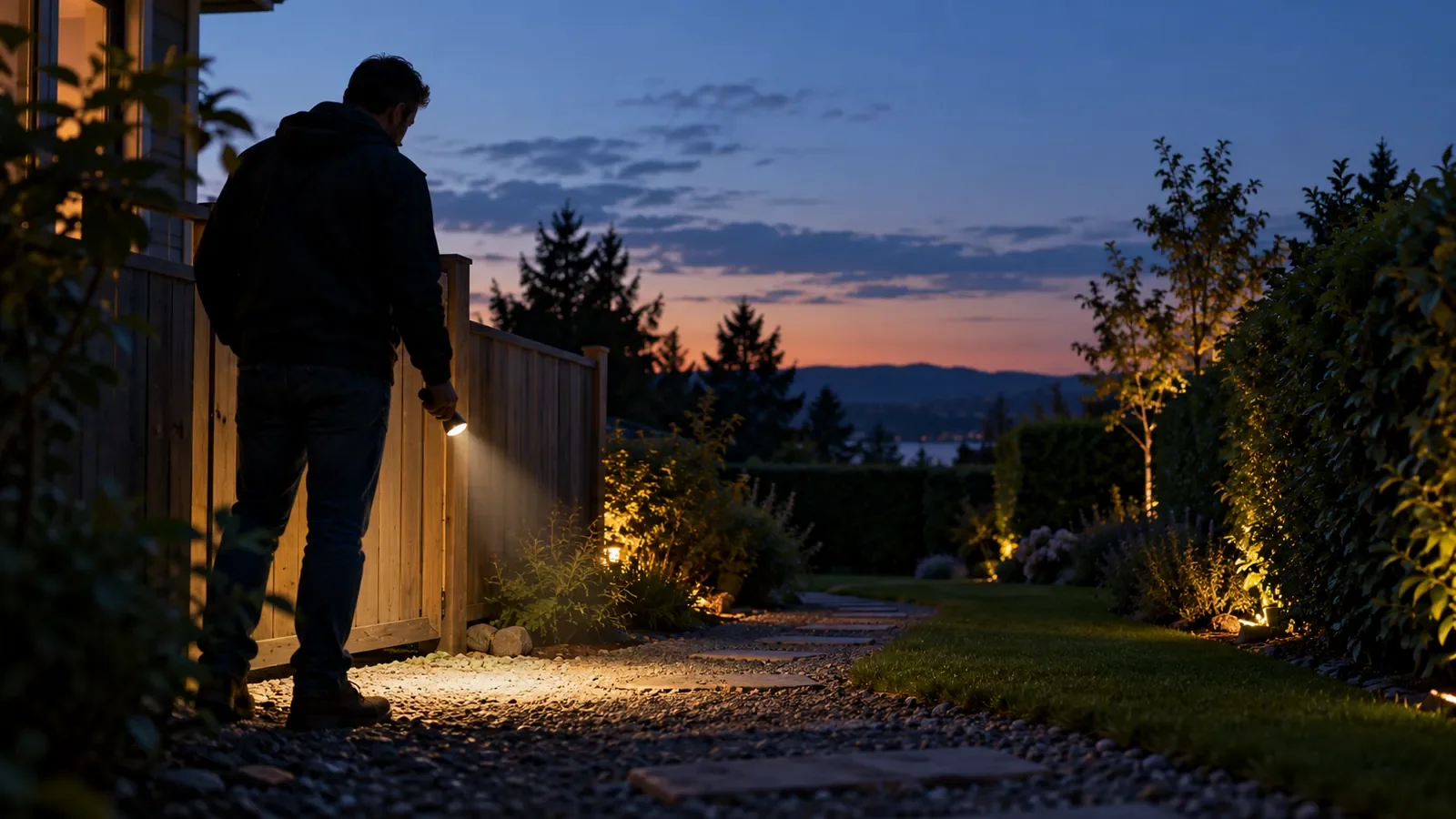
Start by naming the thing you need to see: a keyhole, a campsite path, a breaker label or an object across a field. Close tasks usually benefit from a broad, even beam that makes the surrounding area visible. A distant target may call for a more concentrated beam, but a narrow hotspot can make it harder to see the ground immediately around you.
Lumens describe total visible light output; candela describes intensity in a particular direction, with peak candela indicating the strongest direction. The U.S. Department of Energy's lighting metrics review distinguishes luminous flux from intensity. Neither number describes the entire beam pattern. Compare beam photographs taken under comparable conditions when available, and consider the spill around the hotspot as well as its reach. A manufacturer’s rated distance is a standardized comparison figure, not a promise that every object will be identifiable at that distance.
For example, if you need to read a map and check a trail marker, list both tasks before shopping. A highly concentrated beam may help with the marker while making the map uncomfortably bright. A light with several levels or a second light can make the combination easier to manage.
Question 2: Headlamp or Handheld Flashlight
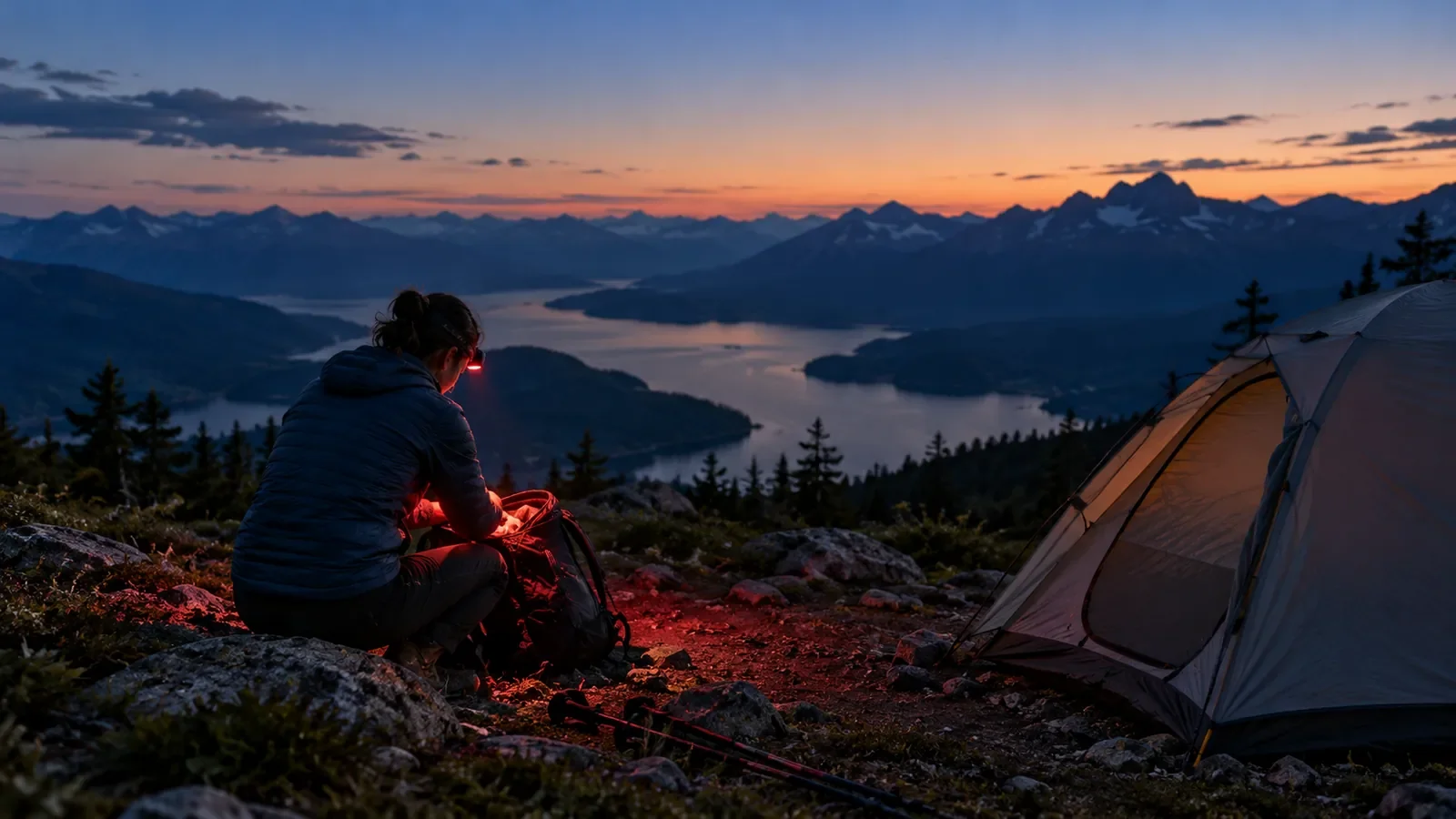
Choose a headlamp when you need light to follow your gaze while both hands work. Packing a tent, repairing a bicycle and opening a storage box are different tasks, but each can be awkward if one hand must hold a flashlight. A right-angle light with a suitable headband can also be removed for handheld use.
A handheld light gives you more freedom to aim away from your face and inspect an object from the side. It is also easier to pass to someone else. If the job involves leaning into an engine bay or looking at reflective surfaces, test whether the beam position causes glare. A clip, stand or work light may be more useful than a headband for a fixed work area.
Do not assume that a clip or magnet will attach safely to every surface. Check the manufacturer’s instructions and choose a stable position that cannot obstruct moving parts or expose the light to excessive heat.
Question 3: Flashlight Runtime and Useful Output
Write down the duration of the task and the brightness you need to do it. Then find the manufacturer’s runtime information for that output, including any step-downs. A maximum runtime at a low setting and a maximum output are often measured in different modes; combining them as if the light maintained maximum output for the entire period is misleading.
If a table lists several output levels, compare the level you would actually use. For a long walk, ask whether the middle setting provides enough visibility and whether its listed runtime covers the route with a margin. For a quick check around the house, a short burst of high output may matter more than all-night operation.
Temperature, battery condition and the selected setting can affect actual performance. Keep a backup light or compatible power source when loss of light would leave you unable to continue safely. Check the manufacturer’s battery and charging instructions before choosing spare power.
Question 4: Flashlight Water Resistance
Match the published water-resistance rating to the exposure you expect. Rain on a walk, a splash while washing a car and accidental immersion are different conditions. Check the manufacturer's rating and its test details, then read the instructions for any limits on immersion, charging or maintenance.
The letters and digits in an IP rating describe specific kinds of protection. An X in place of a digit means that protection for that category is not specified by that marking; it is not a dust rating of zero or a guarantee of dust protection. A product’s immersion rating also does not automatically establish that it is suitable for a powerful water jet, salt water or diving.
After wet use, follow the product’s cleaning and drying instructions before charging. If a seal, cover or housing is damaged, do not assume the original rating still applies.
Question 5: Flashlight Batteries and Charging
A rechargeable light can make sense when the light returns to a reliable power source between uses. Check whether the charging cable or dock is included, what input it needs and whether a compatible replacement is easy to obtain. A spare charging cable at your normal charging location can be more useful than a larger peak-output number.
Replaceable batteries are attractive when you can carry compatible spares and need to restore power away from an outlet. The trade-off is that battery type, compatibility and safe storage matter. Some rechargeable lights use proprietary cells, and similar-looking batteries are not necessarily interchangeable. Use only the cells and charging method specified for the model.
For an emergency kit, write the battery type and charging method on a card next to the light. Add a calendar reminder to check the charge according to the manufacturer's guidance. A light stored with a depleted battery is less useful than a modest light that is ready when needed.
Question 6: Flashlight Modes and Controls
Choose the modes that solve a real problem, not the longest feature list. A low white-light setting can help with nearby tasks without flooding a small space. Higher white-light settings can be useful when more output is needed. A red-light option may suit a particular low-light task, but it should not replace white light when color identification or safe navigation requires it.
UV and strobe are specialized features. UV is not a substitute for ordinary illumination; avoid looking into the emitter and avoid exposing eyes or skin. Strobe can be distracting and is unnecessary for many daily tasks. If you need either feature, check how to enter and exit the mode before relying on it.
Also check whether the light remembers its last setting, has a lockout and can start at a low level. For a bedside light, accidentally starting at a high setting may be more inconvenient than having fewer modes. For a bag or pocket, lockout can help reduce accidental activation; follow the specific instructions for the model.
Question 7: Flashlight Budget and Accessories
Set a budget for the complete setup, not just the advertised light. Include the correct battery, charger, headband or mount if those items are not included in the version you are considering. If you expect to leave one light at home and carry another, compare the cost of two suitable lights with one light that must be moved between locations.
Prioritize the features you will use weekly. A practical light with a comfortable switch, a useful beam and a supported battery may serve you better than a more expensive model with modes you never select. If you need a long runtime or a specific mounting system, price those requirements before comparing cosmetic options.
Check the exact configuration on the product page. Different colors, bundles and accessories may have different prices or contents, and a temporary promotion should not be treated as the regular price.
Question 8: Flashlight Users and Handling
The best controls are the ones the intended user can operate under the conditions of the job. Consider hand size, grip strength, gloves, vision and familiarity with the interface. A switch that feels obvious at a desk may be hard to find in a dark bag or while wearing gloves.
Ask the user to try the essential sequence: turn the light on, change to the needed brightness, turn it off and activate any lockout. If the light has multiple modes, check that the user can reach the normal mode without accidentally entering a special mode. Keep the instructions with the emergency kit if the light will be used infrequently.
For children, select a light appropriate to their age and follow the manufacturer’s warnings. Adult supervision, safe battery storage and a rule against shining the beam into anyone’s eyes matter more than an impressive output figure.
Six Paths From Answers to a Shortlist
These six paths translate the answers into a first shortlist. Each one identifies the job, a suitable form of light and the product detail to check. Use them as a starting point, then compare the actual manufacturer's specifications and instructions for the candidate you choose.
| Task | Answers that drive the choice | Starting point | Check before buying |
|---|---|---|---|
| Pocket carry | Close work, short checks, small size | Compact handheld light | Pocket fit, lockout and charging method |
| Home outage | Indoor and nearby outdoor tasks, easy controls | Handheld light with useful low and middle settings | Runtime at the intended setting and stored charge |
| Camp chores | Hands-free work near the tent | Headlamp or right-angle light with headband | Comfort, beam direction and weather rating |
| Distant inspection | Target beyond the immediate work area | Light with a more concentrated beam | Candela, usable spill and runtime |
| Long shift | Several hours away from a charger | Light with a documented usable-output runtime | Battery support, step-down and backup power |
| Shared household kit | Several users and infrequent operation | Simple controls and accessible charging | Whether each user can operate it in the dark |
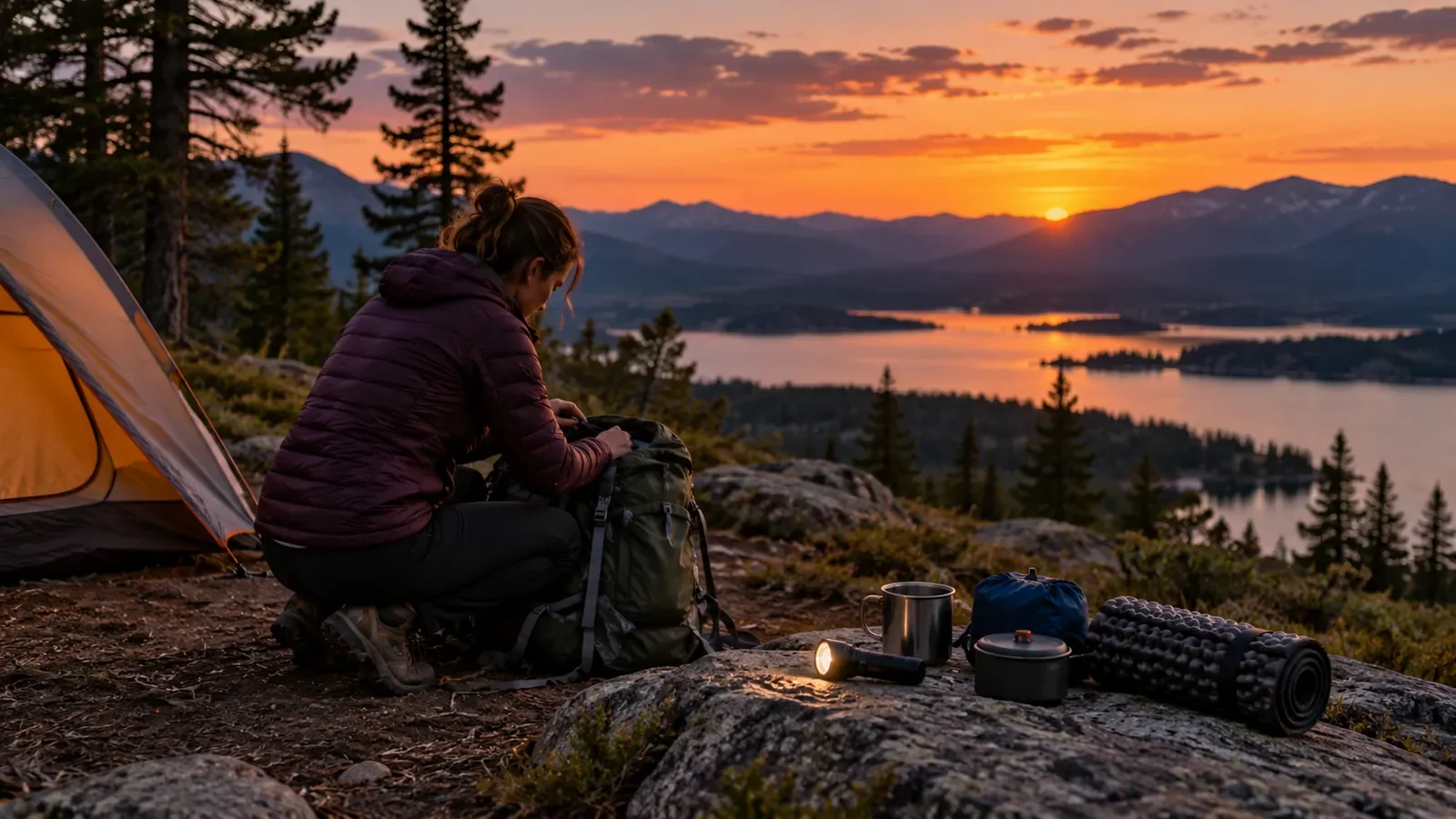
For example, a person setting up a tent after dusk may need hands-free light for several hours, expect rain, and have a place to recharge afterward. Write those as requirements, then compare headband comfort, a useful medium setting's full runtime row, the model's water instructions and its included charger. A red mode is optional unless the person has a particular use for it. If a candidate lacks enough published information to judge one requirement, leave it off the shortlist until that detail is resolved.
These are starting points, not claims that one model fits every situation. A distant-inspection light may also need a broad beam for walking; a shared kit may need two lights if one person prefers a headlamp and another cannot comfortably wear one.
Two Olight Examples and Their Trade-Offs
The Olight Baton 4 is a compact rechargeable option for short pocket-carry tasks. We list a maximum output of 1,300 lumens for the Baton 4. Check the current product listing for the output and runtime of the mode you plan to use; a peak-output figure alone does not establish how long that output lasts. Its small size is convenient to carry, but it does not supply hands-free headband use by itself.
The Olight Perun 3 is a right-angle light supplied with a headband, so it addresses the need for both hands to remain free during camp chores. We list 120 lumens for 25 hours in its Medium white-light mode. That published rating can help you compare a multi-hour task, but you still need to decide whether the beam and output are useful for the work. Check the included battery and headband in the configuration you choose. Its larger form may be less convenient for pocket carry; compare the listed weight and headband fit if comfort is your priority.
For a narrower discussion of a different use case, the tactical flashlight selection guide covers tactical considerations. This guide focuses on the decisions shared across everyday, outdoor and home use.
Turn Your Answers Into a Purchase Decision
Create two columns on a sheet of paper: required and optional. Put the working distance, operating time, weather exposure and power source in the required column. Add pocket size, a red mode or a preferred switch only if those features matter for the actual task. Remove any candidate that misses a required condition before comparing optional features.
Next, inspect the complete product listing. Confirm the included battery and charging equipment, the output level paired with its runtime, and the rating for the conditions you expect. If the page leaves a condition unclear, do not assume that a bigger number on the headline resolves it. Check the manufacturer’s manual or choose a candidate with sufficient published information.
Finally, make a plan for use. Charge the light as instructed, learn how to find its normal setting and place it where the intended user can reach it. For a long outing, decide what backup light or power you will take before leaving. For a shared home kit, have everyone practice the switch sequence so the first attempt does not happen during an outage.
Compare Specifications Without Mixing Up the Numbers
The following table separates the measurements on a product page by what each one tells you. Keep the battery, output setting and test conditions together when making comparisons; otherwise a large number can distract you from a feature that matters more to the intended task.
| Specification | Unit or marking | What it helps you judge | What to check alongside it |
|---|---|---|---|
| Output | Lumens | Total visible light emitted | Setting, duration and beam shape |
| Peak intensity | Candela | Concentration in the strongest direction | Spill, task distance and output level |
| Beam distance | Meters | A standardized distance comparison | Whether the target is identifiable at your working distance |
| Runtime | Hours or minutes | Duration under a stated test condition | Brightness level and step-downs |
| Water resistance | IP marking | Protection for specified test conditions | Manufacturer’s limits and condition of seals |
| Weight | Grams or ounces | Carry or headband load | Whether the listed weight includes the battery and accessories |
Specifications should come from the same version and configuration you intend to buy. A different battery, headband or material can change the weight or performance. If a page does not explain a figure, do not fill in the missing condition by assuming it matches another manufacturer’s test.
Common Flashlight Buying Mistakes
Most buying mistakes come from comparing a headline number without its conditions. The table below pairs five common mistakes with a practical correction. Use it while reading a product page, especially when comparing lights with different batteries, beam shapes or operating controls.
| Mistake | Better approach | Why it matters |
|---|---|---|
| Comparing maximum lumens to maximum runtime | Pair each runtime with its stated output | The two maximums can describe different modes |
| Treating beam distance as recognition distance | Compare the beam at the actual task distance | Seeing light on an object is not the same as identifying it |
| Assuming any rechargeable cell will fit | Use the manufacturer’s approved battery | Dimensions and electrical requirements can differ |
| Buying for rain without checking the instructions | Match the rating to the intended exposure | Water resistance has defined test conditions and limits |
| Choosing for one user without testing controls | Have the intended user try the basic sequence | Gloves, grip and familiarity change usability |
Your Flashlight Selection Checklist
Use this checklist after you have answered the eight questions. It turns the comparison into a repeatable sequence: define the job, eliminate unsuitable candidates, check the full setup and make sure the person who needs the light can actually operate it.
- Write down the main task, distance and time away from power.
- Choose handheld, headlamp or another form that keeps the beam where the work is.
- Compare output and runtime as a pair; read the step-down details.
- Match the water rating and battery system to your conditions.
- Include the required accessories in the budget.
- Check that the intended user can operate the light and store it ready for use.
FAQ
Changelog
- October 29, 2026: First published.