⚡ TL;DR
A headlamp with a red light option gives you a separate mode without an additional filter to carry; a compatible red filter can add a red option to an existing white headlamp. Choose by checking how each switches on, fits, and performs for your task. Neither design guarantees a particular runtime or brightness.
| Decision | Separate red LED | Red filter on white light |
|---|---|---|
| Existing equipment | Requires a light with the mode | Can be an option if a compatible filter is available |
| Starting red | Depends on the model's controls | Depends on the cap's fit and the light's controls |
| Runtime | Check the manufacturer's red-mode rating | Check the underlying light's selected white-mode rating; filtered output is a separate question |
| Before a trip | Practice the off-to-red sequence | Install and check the filter securely, following its instructions |
For a trip, build the rest of your kit with the printable camping checklist. If you are shopping for a new headlamp, the headlamps collection gives you a starting point; check each model's actual modes and controls. The best headlamps guide covers a wider range of choices.
📋 Table of Contents
- 1. Olight Headlamps With Red Light Modes
- 2. Why Headlamps Offer Red Light
- 3. Red-Only Headlamps and White-Light Alternatives
- 4. Headlamp Red Light Mode Versus a Red Filter
- 5. Starting Perun Red Light From Off
- 6. Rechargeable Headlamp Red-Light Runtime
- 7. Choosing Red Light for a Tent, Stargazing or Emergencies
- 8. Oclip Clip Lights as Headlamp Alternatives
- 9. Common Red-Light Buying Mistakes
- 10. A Headlamp With Red Light Option: Selection Checklist
- 11. FAQ
Olight Headlamps With Red Light Modes
The Olight Perun 3 and Olight Perun 3 Mini are examples with white and red modes in our product information. Their controls and red-mode ratings are not identical. Verify the specific version and manual instead of assuming every headlamp has a red light.
The Perun 3 product information lists a headband and magnetic charging cable. The Perun 3 Mini standard configuration also lists a headband, base and charging cable; a premium configuration has different accessories. For a person working with both hands near a tent, either is a head-worn starting point, but the best choice depends on fit, output, runtime and the package you choose.
Why Headlamps Offer Red Light
A red light option gives the user a different color of illumination for a task or environment where red is preferred. For example, the U.S. National Park Service recommends red lighting for stargazing. Use the setting and intensity that let you work safely; color alone does not guarantee that a light is appropriate for every person or situation.
Point the beam away from another person's face and use only the light you need. In a shared tent, direct the beam at your bag rather than across a sleeping companion. If red light makes it difficult to identify an item or see a hazard, change to suitable white light and alert companions before doing so.
Red-Only Headlamps and White-Light Alternatives
A red-light-only headlamp provides red illumination without a white-light mode; a headlamp with a red option has another available light mode as well. Check the actual product description and controls before buying. Perun 3 and Perun 3 Mini are not red-only lights: their listed functions include both white and red light.
For a shared campsite, carrying one light with both colors can simplify the kit, but only if the user knows how to select the intended mode. Practice the switch sequence in a lit room before an outing, and bring a backup when you depend on a light to move safely.
Headlamp Red Light Mode Versus a Red Filter
A separate red LED produces red light in its own mode; a filter covers a white light and changes the light that passes through it. A filter can make sense for a compatible headlamp you already own. The separate mode avoids attaching an extra cap, but it still depends on the light's controls and the condition of its battery.
The practical differences are not uniform across products. Filters vary in fit, construction and transmission, and dedicated red modes vary in output and runtime. The comparison below identifies what to check rather than promising that one approach is always brighter, more efficient or less expensive.
| Question | Dedicated red LED | Compatible filter | Check before choosing |
|---|---|---|---|
| How does it start? | Follow the particular headlamp's red-mode sequence | Secure the filter and operate the underlying light | Whether the sequence can be done reliably |
| What can come loose? | No separate filter cap in this setup | The accessory must fit and remain in place | Manufacturer's compatibility and attachment instructions |
| What output will you get? | Read the red-mode rating for the specific light | Depends on the light, setting and filter | Actual specifications for that combination |
| How long will it run? | Read the red-mode runtime and battery conditions | The underlying mode draws power; filtered output requires its own evidence | The stated runtime and any limits |
| What is the cost? | Price of the chosen light or package | Price of a compatible accessory and the light you own | Current price of the exact configuration |
Starting Perun Red Light From Off
Start by reading the manual for the exact model and practicing the sequence before entering a dark tent. Our Perun 3 manual says that, when the light is off, a double press enters the low red mode. Our Perun 3 Mini manual also describes a double press from off for red mode, but the Mini remembers the previous red mode except SOS. Do not assume it always starts at the lowest output.
The controls also differ after red starts: the Perun 3 manual uses a double press to change between low and high red; the Mini manual uses a press and hold to cycle low, high and SOS.
These instructions are not universal and do not remove the need to practice: an unfamiliar switch, lockout setting or worn glove can change how easily a person operates a light. Point the light away from faces during practice. If another model uses a selector or a different button sequence, follow that model's instructions instead.
With a filter, check its fit while the light is off and confirm the filter stays in the intended position before turning the light on. Follow the accessory and headlamp instructions, including any limits on heat or compatible output levels. Do not cover a light with material that the manufacturer does not approve; a makeshift covering can interfere with heat management.
Rechargeable Headlamp Red-Light Runtime
Red-mode runtime is a manufacturer rating for a particular product, battery and mode, not a property of red light in general. Our published specifications list Perun 3 red low at 15 lumens for 70 hours and red high at 60 lumens for 14 hours. Check the current page and manual for the specific version.
We list Perun 3 Mini red low at 5 lumens for 19 hours and red high at 45 lumens for 150 minutes. These figures are not a matched-brightness comparison with Perun 3: both the stated output and battery differ. Actual runtime can change with temperature, battery state and other conditions.
| Model and red mode | Published output | Published runtime | Comparison boundary |
|---|---|---|---|
| Perun 3 low | 15 lm | 70 h | Different output and battery from Mini low |
| Perun 3 high | 60 lm | 14 h | Different output and battery from Mini high |
| Perun 3 Mini low | 5 lm | 19 h | Different output from Perun 3 |
| Perun 3 Mini high | 45 lm | 150 min | Different output from Perun 3 |
For a white LED behind a red filter, do not assume the filter creates a new battery runtime rating. The underlying headlamp's selected mode determines the published power-use conditions; the light reaching the scene additionally depends on the specific filter. Without measurements for that combination, an output or efficiency comparison would be a guess.
Choosing Red Light for a Tent, Stargazing or Emergencies
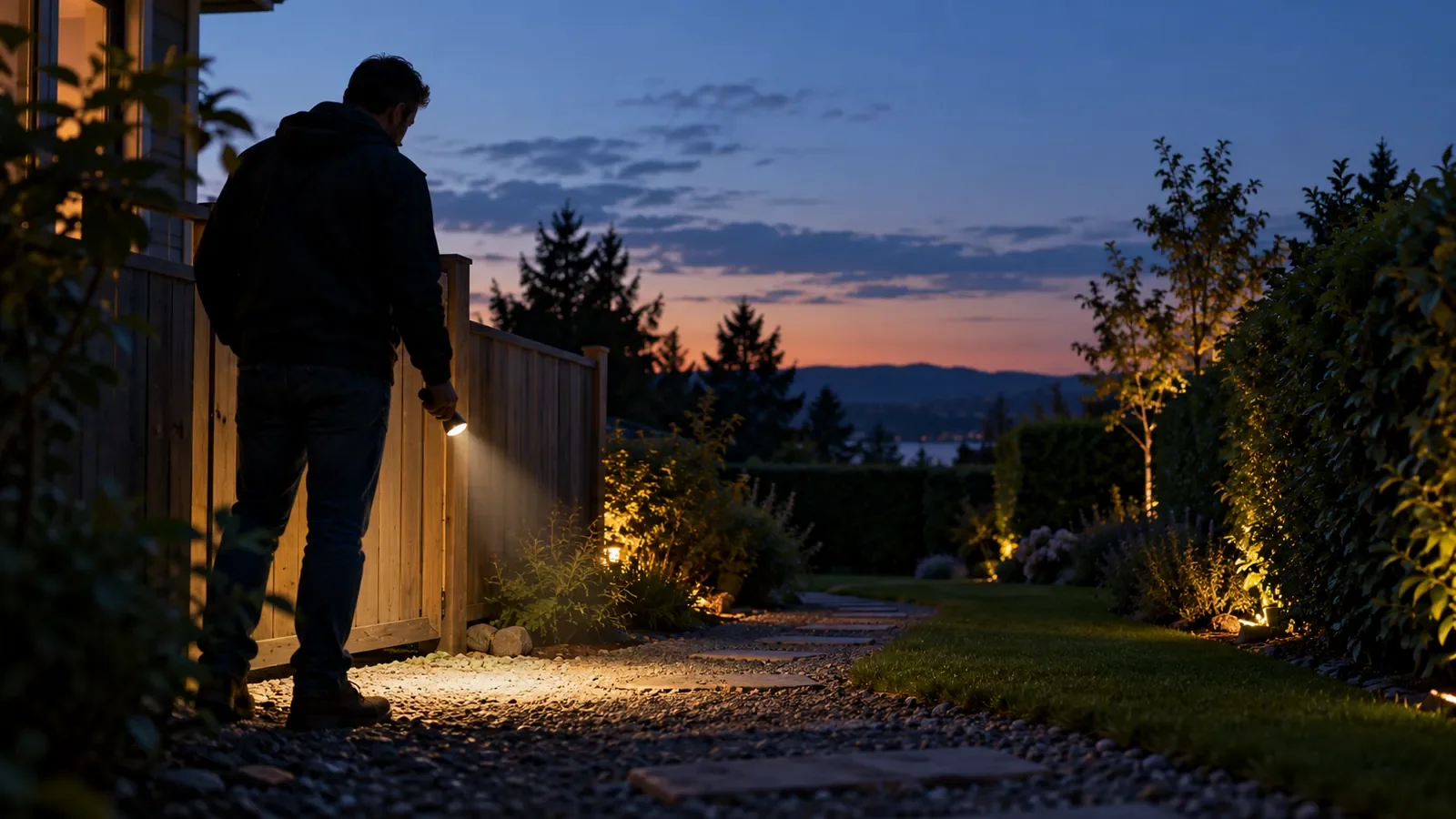
In a tent, pick a setting that lets you find what you need without directing light into another person's eyes. Put the switch or filter where you can find it and rehearse the sequence before others are asleep. Keep the headlamp accessible rather than searching through a bag after dark.
At a stargazing event, follow the location's lighting rules. The National Park Service recommends red light for stargazing; that advice is specific to the activity and does not mean any red beam is suitable at any intensity. Keep light directed toward the task, respect other observers and use enough suitable light for safe movement.
During an emergency or first-aid task, seeing hazards and identifying relevant items takes priority over preserving a red-only setup. Use white light whenever it is needed to see clearly, identify colors or follow instructions. A headlamp is a lighting tool, not a substitute for training, medical care or an emergency plan.
Oclip Clip Lights as Headlamp Alternatives
The Olight Oclip 2 series includes clip lights that provide another way to place illumination. Our Oclip 2 Pro has white and red modes, a clip and magnetic attachment. It is a separate form factor from a headband-mounted headlamp: check the mounting point, beam direction and the exact package before relying on it.
A clip light may suit a person who wants to attach a light to gear rather than wear a headband. It may be less suitable when the available attachment does not keep the beam on the work. Follow the model's manual and implant-related magnet warnings before placing a magnetic light close to the body; do not assume all clip-light versions share the same controls.
Safety note: The Oclip 2 manual advises people with an ICD or pacemaker to avoid close or prolonged contact with the product because of possible interference. For any wearer, keep the light directed away from eyes and secure it where it cannot fall into moving equipment.
Common Red-Light Buying Mistakes
The best red-light option is the one you can operate and that is suitable for your task. Avoid drawing a conclusion from color alone. The table below keeps the control sequence, practical fit and limits of published figures separate.
| Mistake | Better check | Why it matters |
|---|---|---|
| Assuming every headlamp has red | Read the model's mode list | White-only lights do not gain a red mode without a compatible accessory. |
| Assuming red starts the same way everywhere | Read the specific manual and practice | Switch sequences differ. |
| Equating all red output | Compare the actual mode and source | Output and runtime vary by product and setting. |
| Using a loose or incompatible filter | Check fit and instructions | A filter must remain correctly attached during use. |
| Using red when colors must be identified | Switch to appropriate white light | Color appearance depends on the illumination. |
A Headlamp With Red Light Option: Selection Checklist
Start with the task and the equipment you already own. Then compare a compatible accessory with a headlamp that has a dedicated mode. The following checklist keeps the purchase tied to controls, fit and evidence instead of an unsupported claim about which design always performs better.
- Write down whether you need hands-free light for a tent, trail or another task.
- Check whether your current light has a red mode or a manufacturer-compatible filter.
- Practice the exact off-to-red sequence before entering the dark space.
- Pair each published red output with its stated runtime; do not compare unlike settings as a matched test.
- Keep an appropriate white-light option and a backup for situations where safety or color identification requires it.
FAQ
Changelog
- October 30, 2026: First published.