TL;DR
How Flashlight Brightness Is Measured follows ANSI FL1 standard lumens, but real-world flashlight brightness vs advertised lumens often differs due to thermal step-down, battery voltage, and optical losses. This guide explains how flashlight brightness is measured, why specs vary in practice, how to spot fake lumen claims flashlight brands use, and how to verify flashlight lumens accuracy. Trust reputable brands that provide transparent runtime data and standards compliance.
1. How Flashlight Brightness Is Measured
2. Why Advertised vs Real-World Brightness Differs
3. How to Spot Exaggerated Brightness Claims
4. Which Brands Are Most Transparent About Brightness?
5. How to Verify Brightness Claims Yourself
6. Conclusion: Trust Reputable Brands and Standards
Have you ever purchased a flashlight that promised to turn night into day, only to find it barely outshines your smartphone? In the world of outdoor gear, "lumen wars" are a real thing. Manufacturers often engage in a race to claim the highest numbers, but unfortunately, not all those numbers are honest. Understanding flashlight brightness measurement is the first step to becoming a savvy consumer.
This guide helps you navigate the technical jargon of the lighting world. We will look at how professionals measure light, why a 2,500-lumen light might not stay at that brightness for long, and how to spot the red flags of fake lumen claims. Whether you are an outdoor adventurer, a search-and-rescue professional, or just someone who wants a reliable tool for the garage, knowing the truth about lumens will save you money and frustration.

How Flashlight Brightness Is Measured
Measuring the light coming out of a handheld device is more complex than just looking at it. Scientists and engineers use specific equipment and protocols to ensure that when one brand says "1,000 lumens," it aligns with industry-recognized accuracy.
Understanding ANSI FL1 Standards
In 2009, the American National Standards Institute (ANSI) and the National Electrical Manufacturers Association (NEMA) introduced the FL1 Flashlight Strategy. This was created because, before 2009, every company had its own way of measuring light. One brand might measure the light right at the LED, while another might measure it 10 feet away.
According to the ANSI/NEMA FL1 flashlight performance standard, the goal of the specification is to create “apples-to-apples” comparisons between brands by standardizing how flashlight output, runtime, beam distance, and impact resistance are measured (source:US Made Supply — ANSI FL1 Flashlight Standards).
The ANSI FL1 standard lumens are measured in a very specific way:
- Light Output (Lumens): This is the total quantity of light energy emitted by the device. It is measured between 30 and 120 seconds after the light is turned on.
- Runtime: This is measured from the initial light output value (30 seconds after turning it on) until the light output drops to 10% of the initial value.
- Peak Beam Intensity (Candela): This measures the brightest part of the beam, usually at the center. It tells you how "intense" the light is, rather than just how much total light there is.
- Beam Distance: Calculated using the candela value, this tells you how many meters away the light will still provide the equivalent of the light from a full moon (0.25 lux).
The Difference Between LED Lumens and Out-the-Front Lumens
One of the biggest tricks in the industry is the confusion between LED lumens and out-the-front lumens (OTF lumens).
| Type | Definition | Accuracy for User |
|---|---|---|
| LED Lumens | The theoretical maximum light the LED chip can produce according to the manufacturer's spec sheet under ideal lab conditions. | Low. It ignores losses from heat and optics. |
| OTF Lumens | The actual light that leaves the flashlight lens and reaches the environment. | High. This is what you actually see and use. |
When a manufacturer uses an LED rated for 1,000 lumens, the actual light leaving the device is usually 20% to 30% lower. This loss occurs because the reflector absorbs some light, the glass lens reflects some light back inside, and the internal heat of the flashlight reduces the LED's efficiency. Reputable brands always report OTF lumens.
Industry flashlight testing references note that “emitter lumens” are always higher than “out-the-front lumens” because light is lost through reflectors, optics, lenses, and heat-related inefficiencies before it exits the flashlight (source: Flashlight Wiki — Light Output Measurements).
Why Advertised vs Real-World Brightness Differs
Advertised flashlight brightness often reflects ideal laboratory conditions, while real-world brightness is affected by physical and thermal limits. High-output modes usually trigger thermal step-down, reducing brightness to prevent overheating. Battery voltage also declines during use, lowering output in many designs. In addition, reflector and lens inefficiencies cause light loss before it exits the device. As a result, a flashlight rated at peak lumens may only sustain that level briefly, making real-world brightness lower than advertised specifications over time.
Popular Mechanics notes that many flashlight manufacturers advertise peak lumen values achieved only briefly after activation, while actual brightness decreases over time due to heat buildup and efficiency loss in LEDs (source: Popular Mechanics — Lux vs. Lumens Explained).
Warrior Ultra Tactical Flashlight
Experience the pinnacle of tactical lighting with 2,500 lumens of peak output. Features a durable unibody design and advanced thermal management.
View DetailsFlashlight Thermal Step-Down Explained
LEDs generate a significant amount of heat. If a compact flashlight stayed at 2,500 lumens for a long period, the internal components would melt, or the exterior would become too hot to hold. To prevent this, modern flashlights use "thermal step-down."
A thermal sensor inside the light monitors the temperature. Once the light reaches a certain heat threshold, the driver automatically reduces the power to the LED. This lowers the brightness to a sustainable level (often 500 to 800 lumens) where the heat can be dissipated safely. When you see real-world flashlight brightness vs advertised lumens, remember that the "Turbo" or "High" mode is often a burst mode, not a continuous run mode.
The updated ANSI/PLATO FL 1-2025 standard now includes standardized testing for “Short-Duration Elevated Brightness” modes (commonly called Turbo or Boost modes), reflecting how modern flashlights temporarily achieve peak brightness before stepping down thermally (source: ANSI Webstore — ANSI/PLATO FL 1-2025 Flashlight Standard).
Battery Voltage Impact on Output
The battery inside your light is not a constant power source. As a lithium-ion battery drains, its voltage drops. In many "unregulated" or cheaply made flashlights, the brightness drops steadily as the battery dies.
High-quality lights use constant-current drivers to keep the output as flat as possible. However, even with great drivers, once the battery voltage hits a certain low point, the light must drop to a lower brightness level to prevent the battery from over-discharging and becoming damaged.
Reflector and Lens Efficiency
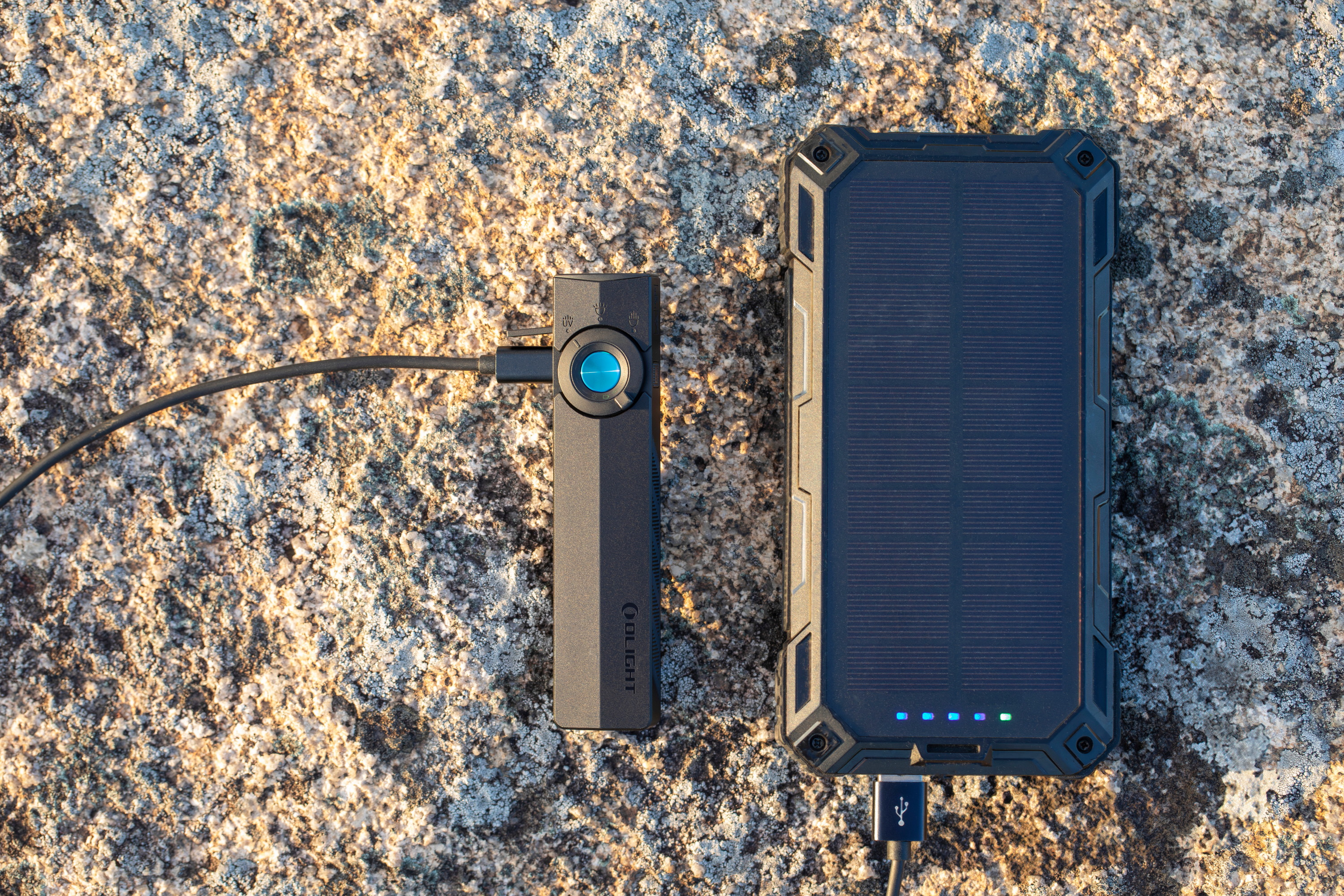
The physical design of the light also dictates real-world performance. A flashlight with a "Pure Flood" beam, like some models in the ArkPro Series, spreads light over a huge area. This might look "dimmer" to the eye than a tightly focused spotlight of the same lumen count because the light is less concentrated.
The quality of the glass lens matters too. Cheap plastic lenses can block up to 10% of the light, whereas high-transparency glass lenses with anti-reflective coatings allow almost all the light to pass through.Optical efficiency plays a major role in usable brightness. Industry testing resources explain that reflector geometry, lens coatings, and beam focus significantly affect how much usable light reaches the target area, even between flashlights with identical lumen ratings (source: Popular Mechanics — Lux vs. Lumens Explained).
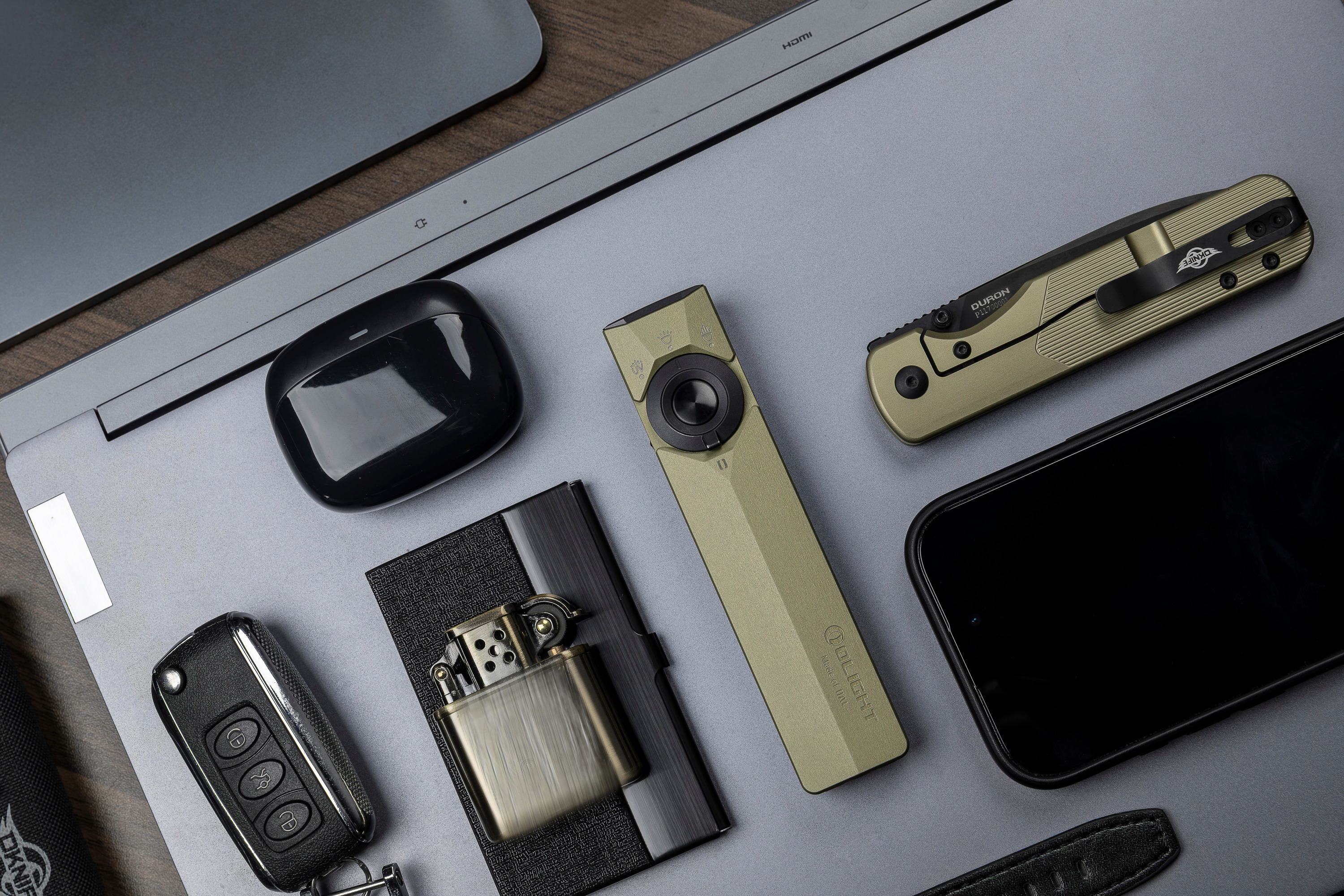
ArkPro Series Flat EDC Flashlight
The ultimate flat EDC tool combining a powerful white light, UV, and green laser. Slim profile with high-transparency glass lenses.
Shop ArkProHow to Spot Exaggerated Brightness Claims
The internet is flooded with "tactical" flashlights claiming 100,000 or even 200,000 lumens for $20. These are almost always fake lumen claims flashlight brands use to trick consumers.
No-Name Brands vs Established Manufacturers
If you find a flashlight on a generic marketplace that looks like a generic black tube and claims incredible power, look for a brand name. Established manufacturers have reputations to uphold and often have their lights tested by third-party labs. No-name brands have no accountability. If the light fails or doesn't meet its specs, the "brand" simply disappears and re-emerges under a different name.
Impossible Lumen Numbers (e.g., 200,000 Lumens)
To put things into perspective, a high-end car headlight (HID) produces about 3,000 lumens. A 100,000-lumen flashlight would require a massive battery pack, huge cooling fans, and would likely cost over $600. If a pocket-sized light claims anything over 4,000 lumens for a price under $50, it is scientifically impossible with current LED technology.
Common red flags:
- Claims of "Military Grade" without a specific model number
- Use of outdated LEDs like "Cree T6" (which max out around 1,000 lumens) claiming 10,000+ lumens
- Photoshops of the beam making it look like a lightsaber hitting the moon
Which Brands Are Most Transparent About Brightness?
Transparency comes from providing data, not just marketing slogans. When looking at professional tools like the Arkfeld Pro, you will notice that the manufacturer provides a detailed breakdown of the output.
Reputable brands provide:
- Runtime Graphs: These show exactly when the light steps down and how long it stays at each level.
- Detailed Specs: They list the candela, beam distance, and impact resistance.
- Standards Compliance: They clearly state they follow ANSI/NEMA FL1 protocols.
Olight, for example, develops its own LED chips (like the EIP 1 LED) to maximize efficiency and provide a "Pure Flood" beam that is crystal clear. By controlling the manufacturing from the LED level up to the final unibody design, they can guarantee that the 1,300 lumens promised on the Arkfeld Pro is exactly what you get at the 30-second mark.
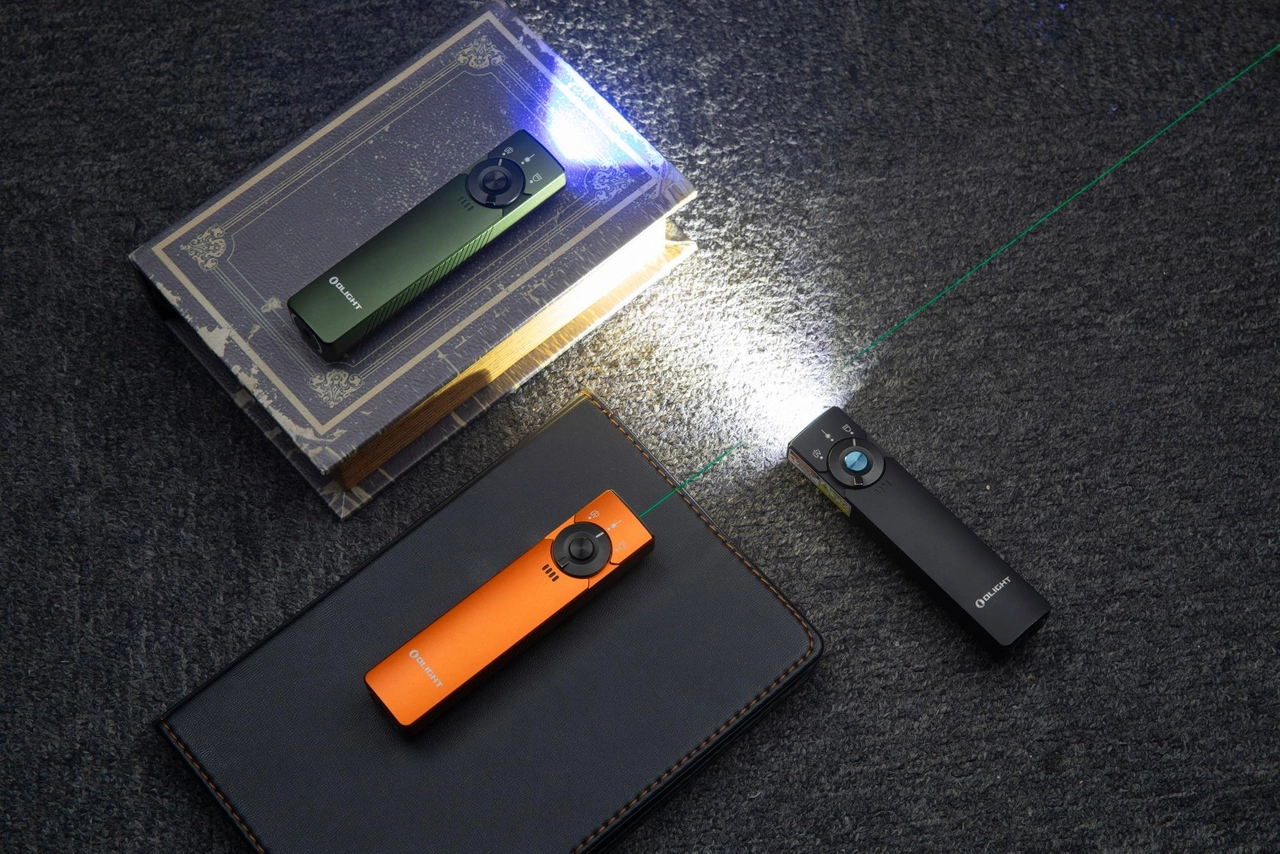
Arkfeld Pro Flat EDC Flashlight
A triple-light source EDC masterpiece. Delivers a guaranteed 1,300 lumens with precise optical control and runtime transparency.
Learn MoreHow to Verify Flashlight Lumens Accuracy Yourself
You don't need a $10,000 integrating sphere to get a rough idea of your flashlight's accuracy. Here are a few ways to verify flashlight lumens accuracy at home:
The Ceiling Bounce Test: In a small, dark room (like a bathroom), point your flashlight at the ceiling. Use a light meter app on your smartphone to measure the "Lux" hitting a surface (like a counter). Compare this to a light from a known, reputable brand. If a "1,000 lumen" light gives a lower Lux reading than a trusted "500 lumen" light, the 1,000-lumen claim is false.
The "Shoebox" Method: You can build a DIY integrating sphere using a white Styrofoam cooler or a white box. By placing the light in one hole and a light meter in another, you can compare different lights in a controlled environment.
Comparing Beam Distance: Use a map to find a landmark exactly 200 meters away. If your light claims a 300-meter beam distance but cannot illuminate that landmark, the candela or lumen rating is likely exaggerated.
Many flashlight hobbyists and independent reviewers use DIY integrating spheres, ceiling bounce tests, and lux meter comparisons as affordable methods to estimate relative lumen performance outside of laboratory conditions (source: Flashlight Wiki — DIY and Comparative Lumen Testing Methods).

Conclusion: Trust Reputable Brands and Standards
In the world of EDC (Every Day Carry) and outdoor exploration, your flashlight is a piece of safety equipment. Relying on fake claims can be dangerous if you find yourself in a situation where you need consistent, high-output light for a long duration.
Always look for the ANSI FL1 logo on the packaging. Remember that heat and battery life will always cause a light to step down eventually, so look for brands that are honest about their runtime graphs. By choosing well-engineered products like the ArkPro Series or the Warrior Ultra, you ensure that the lumens you pay for are the lumens you actually receive when the sun goes down. Don't be fooled by impossible numbers; stick to physics and proven standards.