


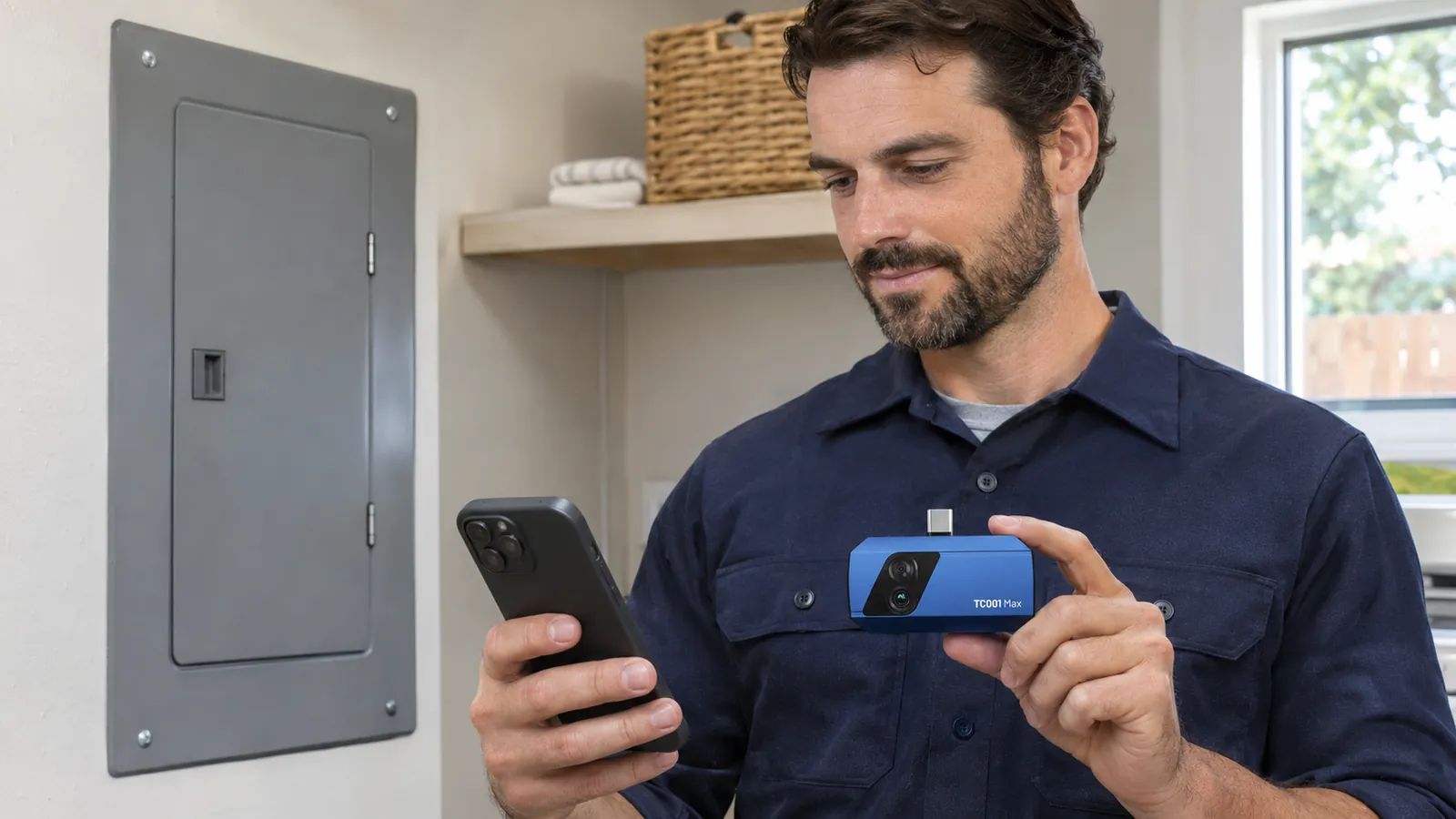
⚡ TL;DR
A thermal camera can show apparent surface-temperature patterns, but it cannot certify that a breaker, connection, or electrical panel is safe. Leave covers and guards in place, avoid touching equipment to check its heat, and have electrical warning signs assessed by a licensed electrician. Use images as supporting observations, not permission to investigate energized parts or delay help.
📋 Table of Contents
- 1. Decide whether this is a camera question at all
- 2. Understand what an outside image can show
- 3. A color palette is not a safety rating
- 4. Leave access, operating conditions, and diagnosis to the electrician
- 5. Choose a camera for the information you need to record
- 6. Keep the camera's limits in the buying comparison
- 7. Prepare information that helps a professional visit
- 8. Read a report for scope, evidence, and next steps
- 9. Make a saved record understandable without a diagnosis
- 10. Agree on who will arrange the next step
- 11. Separate ordinary lighting preparation from measurement
- 12. Frequently asked questions
- 13. Keep the observation smaller than the conclusion
Decide whether this is a camera question at all
A burning smell, smoke, sparking, unusual buzzing, repeated breaker trips, or visible heat damage deserves attention without waiting for a thermal image. If there is smoke or fire, leave the home and call emergency services from a safe location. Do not approach the panel to obtain a better picture or try to locate the hottest component before leaving.
The Consumer Product Safety Commission's home wiring hazard guide identifies warning signs and directs homeowners to qualified electrical professionals for diagnosis and repairs. It also cautions against removing the service-panel cover. A camera purchase does not change that division of responsibility. The person evaluating an electrical fault needs more than a view of its outer appearance.
A quiet thermal picture should not override a warning you already noticed. A problem may be hidden behind an enclosure, absent at the moment of observation, or unrelated to a visible temperature pattern. Tell the electrician about intermittent flickering, unusual sounds, odors, and previous work even if a saved image looks ordinary. The history belongs alongside the image rather than beneath it.
If the concern is routine planning rather than an active warning, start with records: the last professional inspection, previous repairs, known equipment changes, and any recurring symptoms. This helps you explain why you are seeking service. It also prevents a shopping decision from taking the place of an inspection that the home already needs.
Keep emergency preparations separate from electrical troubleshooting. The published Gulf Coast hurricane lighting and storage guide addresses ordinary household lighting readiness. Having another light available can support moving away or communicating with a contractor. It does not make an electrical enclosure safe to open, and a flashlight cannot verify that conductors are deenergized.
Understand what an outside image can show
A thermal imager detects infrared radiation reaching its sensor and displays a temperature-related picture of visible surfaces. It does not produce an X-ray view of wiring. With a closed metal enclosure, the camera sees the enclosure's exterior. A warmer area on that exterior does not identify a particular internal connection, while an even-looking exterior does not establish that everything behind it is satisfactory.
The distinction matters when an online example shows an exposed component that you cannot see safely at home. The example may have been captured by a qualified professional under a specific inspection procedure. Recreating its view by removing a cover changes the hazard, not merely the photographic composition. Leave access decisions and the necessary electrical precautions to the professional.
Surface material also affects interpretation. A reflective surface can show infrared energy from its surroundings rather than behaving like a straightforward temperature display. A bright patch can therefore require investigation into the measurement conditions. Do not touch it to confirm its temperature, attach material to electrical equipment to improve a reading, or move closer to resolve an uncertain pattern.
Glass and other barriers are another source of confusion. The TC001 Max manual states that the device measures surface temperatures and cannot detect heat through glass, acrylic, water, or opaque objects. Looking through a window or a panel enclosure therefore cannot reveal an internal component's temperature as if the barrier were absent. The visible-light picture and thermal picture serve different purposes.
| Observation | Useful question | Conclusion it does not support |
|---|---|---|
| One exterior area appears warmer | What surface was visible, and under what conditions? | A particular terminal is loose |
| The enclosure looks uniform | What parts remained hidden or outside the view? | The panel has no electrical defects |
| A reflective area looks unusually bright | Could surroundings or surface properties affect the image? | The displayed spot is certainly the hottest component |
| An image changes on another day | What changed in conditions and the measurement setup? | A repair succeeded or a fault disappeared |
| The app displays a precise number | What are the instrument's specifications and measurement limits? | The number is an electrical pass-or-fail threshold |
A color palette is not a safety rating
Thermal colors represent a chosen display scale. Red, yellow, or white can help a viewer notice differences, but those colors are not standardized labels for “dangerous,” “acceptable,” and “repaired.” A palette that makes a small difference look dramatic can be useful for observation while still being unsuitable as evidence for a homeowner's diagnosis.
Compare the context before comparing the colors. Two screenshots can have different temperature scales, palettes, selected regions, or viewing conditions. A patch that appears brighter in one image does not necessarily represent a higher absolute temperature than a darker patch in another. Preserve the scale and original file rather than sharing a tightly cropped color patch with its context removed.
A displayed temperature also depends on the instrument and how the measurement is made. Manufacturer accuracy, sensitivity, resolution, and measurement range describe different properties. Sensitivity to a small temperature difference does not mean the same numerical accuracy, and a wide measurement range does not mean a phone can be exposed to that entire range. Read each specification for the question it actually answers.
An isolated number is especially weak evidence when the equipment's material, operating conditions, and expected behavior are unknown. There is no universal homeowner rule that a particular difference between neighboring breakers proves a loose connection or clears another breaker. The electrician must relate observations to the equipment, the electrical assessment, and the conditions of inspection.
The Department of Energy's operations and maintenance guidance describes thermography as a way to locate problems for further diagnosis using other methods and professional experience. That is a more useful model than expecting one picture to provide the whole answer. A thermal observation can guide a qualified assessment without becoming the assessment itself.
Leave access, operating conditions, and diagnosis to the electrician
A professional may need information about how equipment was operating when an image was captured. That does not mean a homeowner should turn on additional appliances, create a heavier load, or repeat a suspected fault to make a warmer picture. Tell the electrician what was happening during ordinary use and let that professional decide how to investigate safely.
Do not reset a repeatedly tripping breaker to produce another image. Repetition can conceal the practical warning by making the next reset seem like part of a test. Record that the event occurred and seek appropriate service. Likewise, do not unplug or manipulate a hot, damaged, sparking, or otherwise questionable connection merely to improve a photograph or create a before-and-after comparison.
The distinction between moving a normal door and removing an electrical guard can be easy to misunderstand in a video. If you are uncertain what a cover protects, leave it in place. Do not remove screws, insert a phone or camera into an opening, or reach around a barrier. An infrared instrument being noncontact does not make every position needed for an image safe to occupy.
OSHA's workplace standard on electrical work practices reserves work on exposed energized parts for qualified persons and describes safeguards for electrical work. It is a workplace standard, not a homeowner inspection procedure. Its requirements illustrate why opening equipment and verifying its electrical condition require training and precautions that owning a consumer camera does not provide.
Do not interpret an off-position switch as proof that every part of an enclosure is safe to approach. Establishing an electrically safe condition involves more than the visible position of a control. The qualified professional determines the appropriate procedure. The homeowner's useful contribution is access information, equipment history, and a clear description of the concern without preparing or modifying the electrical equipment.
Choose a camera for the information you need to record
Before buying, decide whether the camera has a useful role outside an urgent electrical concern. A person interested in learning about accessible surface-temperature patterns may value a small phone-connected device. A person whose immediate need is an electrical diagnosis may get more value from booking an appropriate inspection first. The price of a camera and the price of professional service buy different things.
The TOPDON TC001 Max thermal imager, offered through Olight's OSelect range, combines an infrared camera with a visible-light camera. The visible reference can help identify the surface represented in a thermal picture. Added outlines and a recognizable photograph can make a record easier to understand, but they do not improve temperature accuracy by themselves or reveal components behind a cover.
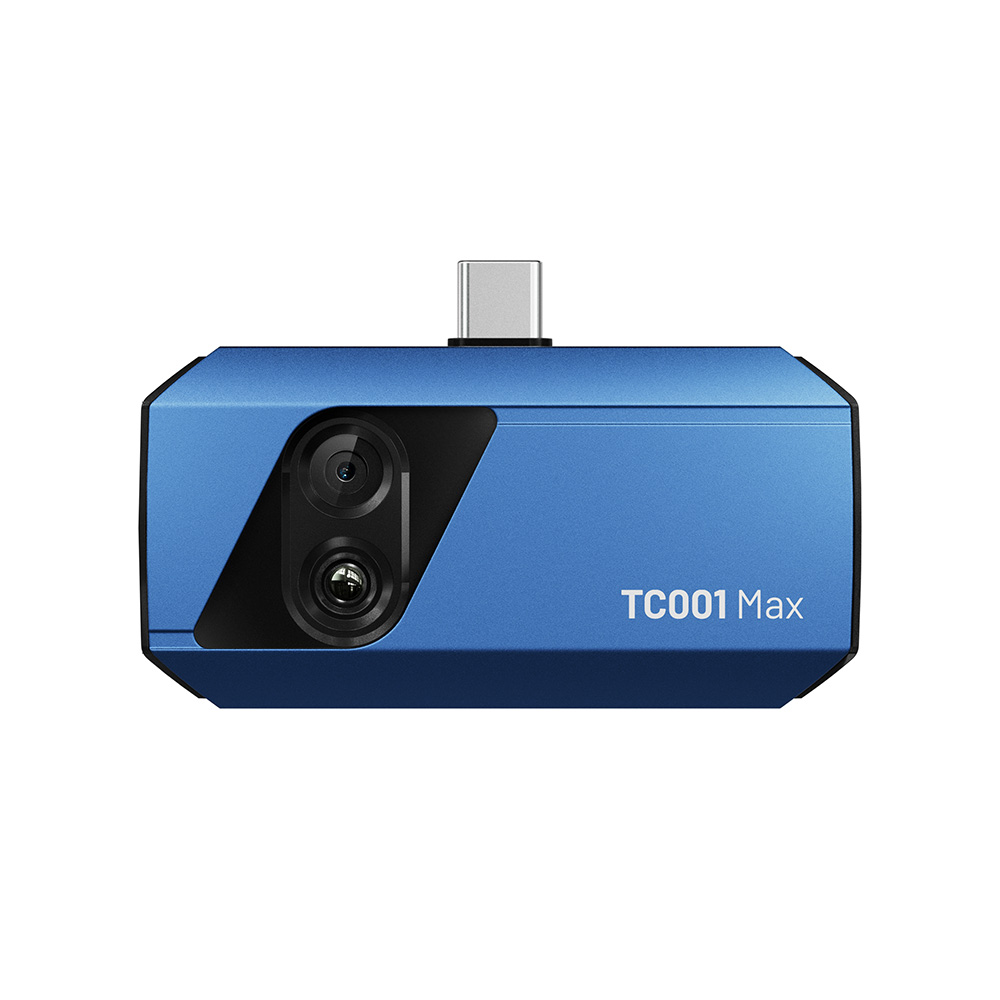
Official TC001 Max hardware view. The visible reference helps identify a surface; neither lens sees through a closed metal enclosure.
Olight lists a native infrared resolution of two hundred fifty-six by one hundred ninety-two pixels, with TISR enhancement to five hundred twelve by three hundred eighty-four. These are different descriptions of image information. Enhanced presentation does not create a second set of physical detector pixels. For a homeowner keeping records, a clearer display can assist orientation without making a tiny or partly hidden component a reliable measurement target.
The listed refresh rate is twenty-five hertz, and the manufacturer specifies thermal sensitivity of forty millikelvin or better. Those features concern how the image updates and distinguishes small temperature differences under relevant conditions. They should not be turned into claims that the device can identify every electrical fault, determine its cause, or replace the electrician's other equipment and judgment.
The TC001 Max is described as supporting iOS, Android, and Windows, with USB-C and Lightning adapter arrangements. Confirm the exact device, connector, app, and adapter before purchase. A phone having the right-looking socket does not settle every compatibility question, and a thick case can affect physical fit. Prepare the connection away from electrical equipment rather than troubleshooting it beside a suspected hazard.
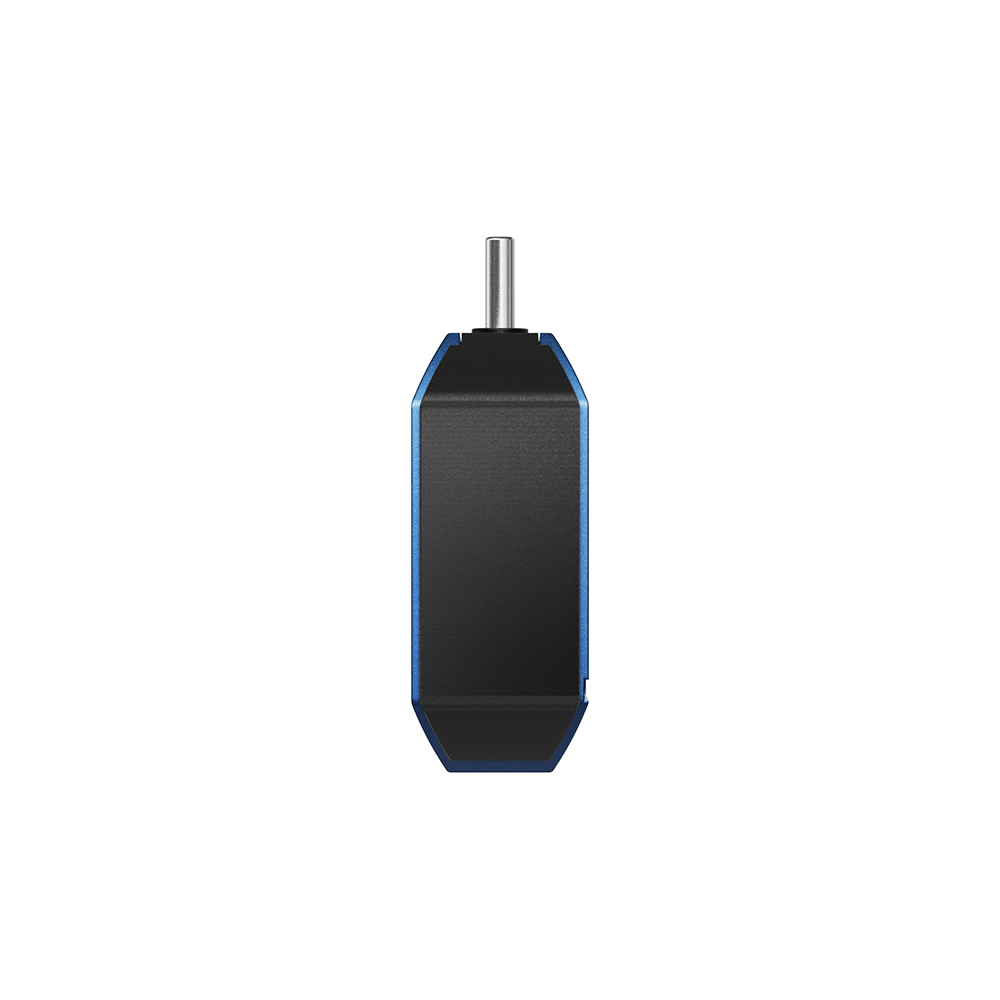
Official TC001 Max side profile. Confirm the exact host, adapter, and case clearance while preparing the connection away from electrical equipment.
Because the module draws power from its connected device, the phone or computer becomes part of the practical setup. A charged phone, enough storage, and a working application matter if you want to save a useful record. The absence of a separate camera battery does not mean the system has unlimited runtime, and the camera's target-temperature range does not override the host device's environmental limits.
Olight describes photo and video capture, palettes, rotation, graphs, and other analysis functions in the relevant apps. For homeowner documentation, the useful feature is often a saved image that retains enough context to identify the location and conditions. A graph can organize observations, but it cannot decide whether a circuit is safe. Confirm which software features are available for the exact platform before relying on them.
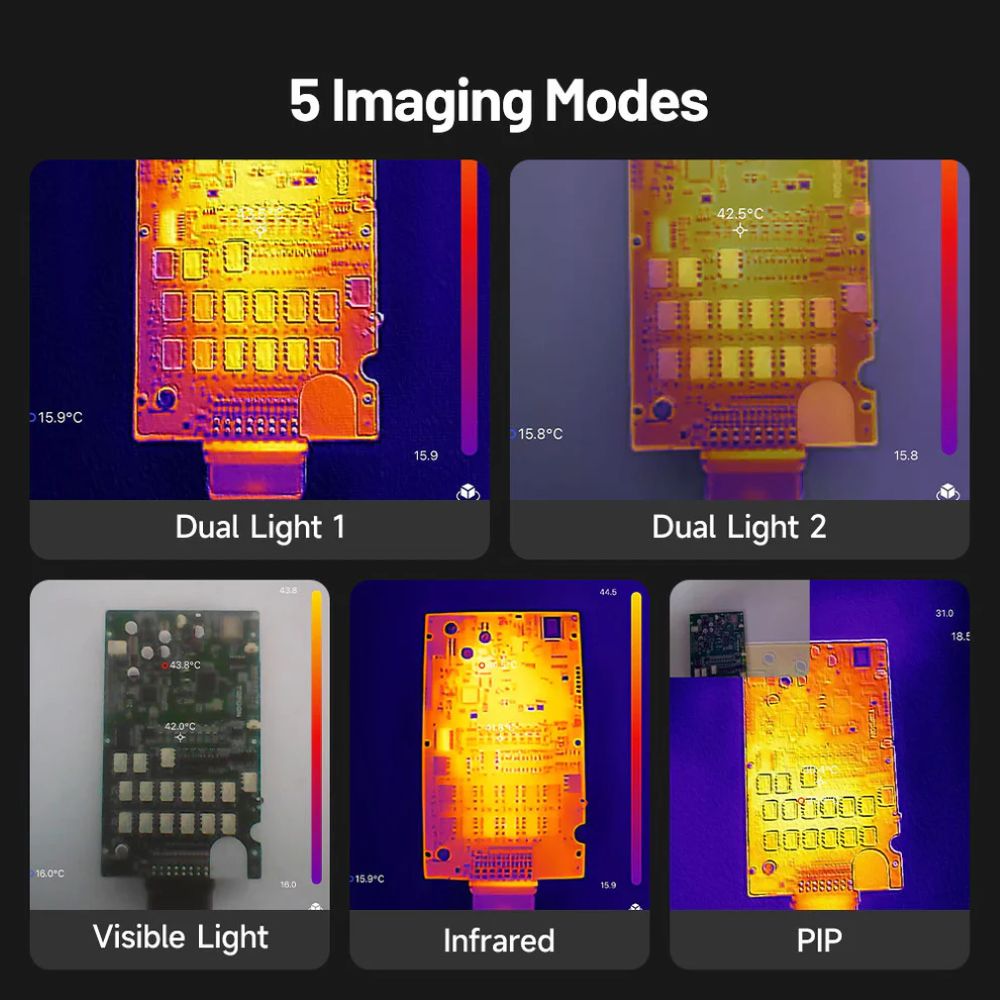
Manufacturer display-mode examples, not images from this article or an electrical inspection. The displayed temperatures are illustrative, not safety thresholds.
Keep the camera's limits in the buying comparison
The manufacturer lists a broad target measurement range and an accuracy specification. Neither is an electrical inspection approval. The range describes what the instrument is specified to measure, while accuracy has stated conditions and limitations. Do not buy solely because the highest temperature number is larger; a serious household electrical concern should prompt appropriate help long before someone tries to explore an instrument's upper limit.
Consider how files will be shared. A contractor may prefer a full original image, a visible reference photograph, and a written location description instead of an edited screenshot. Ask what would actually be useful before building an elaborate personal report. Keep the original file and avoid adding labels that name an unconfirmed cause, such as “loose neutral,” when the observation only shows an exterior pattern.
Handle and store the module according to its instructions. Its manual cautions against water, touching or damaging the lens, disassembly, and prolonged aiming at strong energy sources. These are care requirements, not a prescription for using the camera around damaged electrical equipment. If the unit or host device is compromised, stop relying on it rather than making a safety decision from an unreliable display.
The existing budget thermal imager guide discusses broader purchasing considerations. For this specific use, ask a narrower question: can the chosen device preserve understandable, appropriately limited observations from locations that are already safe to access? A camera that fits that role can be useful without being presented as a home electrical certification tool.
| Buying question | Practical reason to ask |
|---|---|
| Which exact phone, operating system, and connector are supported? | Compatibility includes software and physical connection |
| What is native resolution, and what is enhanced presentation? | Display processing and detector information are different |
| Can the original image and context be retained? | A useful record needs more than an isolated color patch |
| What do accuracy and sensitivity each mean? | Small visible differences are not automatic diagnostic certainty |
| Who will interpret an electrical concern? | Documentation and electrical diagnosis are separate responsibilities |
Prepare information that helps a professional visit
Describe the event in ordinary language before suggesting a cause. “The kitchen lights flickered during normal evening use” is a different report from “this breaker has a loose terminal.” The first describes something you observed. The second names a diagnosis that may not be established. Include when it happened, which rooms or equipment were affected, and whether it has happened before.
Note relevant changes without recreating them. Recent electrical work, a newly installed appliance, earlier water damage, or an existing repair record may help the electrician plan the visit. Do not turn on equipment to show that the problem can still be produced. If the concern has stopped, explain that it was intermittent and retain any observations already made safely.
Ask about the scope of the proposed service. Does it include a general electrical assessment, a thermal survey where appropriate, identification of limitations, and a written explanation of findings? Who is responsible for repairs or follow-up? A thermal-image package may be an additional service rather than a complete assessment of the home's electrical system, so clarify what the quotation actually covers.
Provide reasonable access information without altering the installation. Tell the contractor where the panel is located, whether access is restricted, and whether there are site or household arrangements to coordinate. Keep people and pets away from an area of concern. Do not remove guards, open equipment, rearrange electrical connections, or prepare a homemade demonstration for the appointment.
If ordinary room lighting is poor, mention that when booking. A flashlight can help you read paperwork in a separate safe area or navigate away from a problem, but it is not electrical protective equipment. Keep handheld lights, phones, jewelry, and other objects out of openings and away from exposed parts. Let the professional determine the lighting and precautions needed for the actual work.
Read a report for scope, evidence, and next steps
A useful report should make clear which equipment was assessed and which areas were inaccessible or outside the service. Ask about any limitations before interpreting a lack of findings as a clean bill of health. An exterior-only observation and an appropriately conducted professional inspection are different scopes, even if both include thermal pictures on the page.
Look for location information that lets you identify the equipment without removing anything yourself. A room description, equipment label documented by the professional, and visible reference image can be more useful than a colorful thermal image alone. If you cannot tell what a picture represents, ask for clarification rather than trying to match it by opening the panel afterward.
Ask the professional to explain what is observed, what is suspected, and what has been confirmed through the appropriate assessment. Those levels of certainty should not be collapsed into one label. If additional evaluation is recommended, get a clear explanation of the next step and any restrictions on using affected equipment. Follow that advice rather than substituting a later camera image.
Cost comparisons should use the same scope. A visit charge, a thermal survey, diagnostic work, a written report, and repairs may be priced separately. There is no useful universal price that covers every house and concern. Obtain a current local quotation, describe the symptoms honestly, and ask what is included before comparing it with another service's advertised starting price.
Keep the report with repair documentation and follow-up instructions. A photograph after work does not by itself verify electrical quality or prove that a defect has been corrected. Ask how the professional will confirm completion and what, if anything, the household should monitor afterward. Do not invent a personal temperature threshold to replace that explanation.
Make a saved record understandable without a diagnosis
If you already have an image made from a safe, accessible location, keep the original rather than replacing it with an edited version. Add the date, the room, and a description of the surface that was actually visible. An exterior metal cover should be described as an exterior metal cover. Naming the hidden component that you think lies behind it turns an observation into an unsupported conclusion.
Record whether the image is thermal, visible light, or a combined display. The distinction helps someone understand what the outlines represent. Keep the temperature scale and relevant display information with the image when possible, and tell the recipient if those details are missing. A visible reference can help identify the location, but neither a combined image nor a carefully written label makes the electrical diagnosis certain.
Separate facts from questions in the accompanying note. You might record that a sound occurred during ordinary use and ask whether a professional visit is needed. You do not need to propose a faulty component to make that request worthwhile. If a concern is urgent, communicate it directly instead of waiting to assemble a polished file or expecting an image attachment to explain the urgency by itself.
When sharing records, send them through the contractor's agreed channel and retain your own copy. Ask whether additional information is useful before taking more pictures. An electrician may find the existing symptom history more valuable than another exterior image. A request for a clearer description should never be interpreted as a request to move closer to questionable equipment, remove a cover, or reproduce the event.
Agree on who will arrange the next step
In a rental home or a building with shared services, report the concern to the responsible property contact as well as obtaining emergency help when necessary. Describe where it occurred and what was observed without making access or repair arrangements that are not yours to authorize. Building responsibility and access arrangements can differ, so clarify them rather than assuming a camera lets an occupant inspect shared equipment.
For an owner-occupied home, choose one adult to keep the appointment, report, and follow-up information together. Multiple people separately calling, resetting equipment, or assuming somebody else booked service can leave a concern unresolved. A short written record of who was contacted and what advice was given is more useful than a household debate about which thermal palette looked more alarming.
After the professional assessment, distinguish an immediate restriction from a future improvement recommendation. Ask for an explanation if the difference is unclear. Keep the stated limits with the repair record so they are not lost when another household member sees only a photograph. If symptoms recur, report the recurrence and the earlier work rather than assuming that a previous visit permanently resolved every possible problem.
Separate ordinary lighting preparation from measurement
A simple record area away from electrical equipment can keep paperwork, a charged phone, and contact details accessible during a service interruption. A rechargeable flashlight belongs in that ordinary lighting plan when its correct charging equipment is available. Choose a reading level that makes the instructions clear without glare, and keep the light off when stored according to its model's directions.
Do not equate a visible-light beam with a thermal measurement, or either one with an electrical test. A flashlight shows what the eye can see; a thermal camera represents infrared information from visible surfaces; electrical assessment requires the appropriate professional methods. Understanding those different jobs prevents an appealing image, a bright work area, or a convenient phone accessory from being mistaken for proof that a risky task has become safe.
Frequently asked questions
Keep the observation smaller than the conclusion
An image can help explain where a concern was noticed, but the conclusion must fit the evidence and the observer's qualifications. Keep electrical covers in place, avoid deliberate heating or repeated fault demonstrations, and take warning signs seriously even without a dramatic picture. The useful outcome is a clear handoff to appropriate professional help, supported by honest records rather than a do-it-yourself safety verdict.
Changelog
- November 18, 2026: Product information and buying guidance reviewed.




