TL;DR: Compare a headlamp’s usable modes, controls, battery and charging details, fit, weight basis, and stated water rating before comparing price. Olight’s Perun 3 and Perun 3 Mini illustrate two documented form factors. Their published figures are not a substitute for checking the exact model, manual, local rules, or the conditions of your trip.
📋 Table of Contents
- 1. Start with the listing details that change the decision
- 2. Compare a light by the job it will do
- 3. Read the Perun 3 numbers as separate claims
- 4. Read the Perun 3 Mini as a different size choice
- 5. Use a comparison table without inventing a winner
- 6. Treat red light as a feature, not a guarantee
- 7. Compare runtime charts by conditions and phases
- 8. Check the controls before choosing a headlamp
- 9. Compare weight on the same basis
- 10. Verify water and weather language precisely
- 11. Compare dated prices with the complete package
- 12. Read return terms before checkout
- 13. Use customer service to fill a specific information gap
- 14. Avoid the maximum-lumen trap
- 15. Prepare the light before leaving home
- 16. Plan for the walk, camp, and return
- 17. What is the best-rated hunting headlamp?
- 18. How many lumens are good for a hunting headlamp?
- 19. Which color headlamp is best for hunting?
- 20. Frequently Asked Questions
- 21. Choose from the source you can verify
Start with the listing details that change the decision
A useful hunting headlamps for sale comparison starts with the exact product version, not the largest lumen number or the most dramatic discount. Identify the selected model and color, then compare the light modes, how you reach them, the included battery, the way it charges, the stated weight basis, the water rating, and what the seller actually promises about returns. Those details tell you whether a listing answers your questions. They do not establish how a light performs in every place or for every person.
| Shopping question | What to verify | Why it matters |
|---|---|---|
| Which exact light is listed? | Model, color, SKU, and included parts | Similar names can refer to different products or kits |
| What settings are documented? | Mode names, outputs, and runtime conditions | A maximum output alone does not describe ordinary use |
| What will it weigh? | Light-only or with battery, strap, and accessories | Compare like with like |
| How does it charge? | Connector, supplied cable, and charging instructions | A familiar connector is not the same as a confirmed cable in the box |
| What protection is stated? | Exact water or dust rating on the page or manual | Do not infer a rating from a photograph or vague wording |
| What happens if it is not right? | Current written return terms for the exact purchase | Terms can depend on sale type, condition, and timing |
Treat the table as a reading order, not a performance grade. Open the current U.S. product detail page and the matching manual together. Confirm that the page title and selected option identify the same model you intend to buy. If the manual belongs to a different generation or colorway, do not quietly transfer its numbers or controls. Save the exact model name and the date you checked it. That small record makes a later comparison much easier to reproduce without claiming that a price, inventory status, or policy will stay the same.
Compare a light by the job it will do
The right headlamp depends on the ordinary tasks you expect to do while outdoors. Someone sorting items at a permitted campsite may care about a lower setting, a button they can find by touch, and a strap that stays comfortable during a short setup. A person walking on an established path may care more about seeing nearby footing, reading signs, and keeping the beam directed where it belongs. These are different needs, and the product page may answer some but not all of them.
Write down the task before browsing. “I need to read a map at camp” is more useful than “I need the brightest headlamp.” “I want to check a zipper with both hands available” points toward a head-mounted light, but still leaves fit and weight to compare. If your planned activity involves special land rules, wildlife protections, restricted areas, or equipment restrictions, check the responsible authority’s current instructions. A product description cannot grant permission or determine what is appropriate on a particular property.
Avoid building a decision around one imagined ideal use. Trips vary. A light that looks attractive for a short gear check may not be the only light you want for a longer outing. Think about the full setup, including a dependable backup, the way you will carry it, and whether you can reach the controls without taking off layers or gloves. The goal is to understand the choices you are making, not to infer a result that the published specifications do not promise.
Read the Perun 3 numbers as separate claims
Olight lists the Perun 3 as a rechargeable headlamp and the current U.S. listing identifies the product by its own model page. The U.S. page and product manual are the sources for its specifications.

The manual reports a maximum output of 3,000 lumens, a 5,000 mAh, 3.6 V rechargeable lithium-ion battery, dimensions of 116.8 by 28 millimeters, and a weight of 150 grams including the battery. Those figures are product-specific. Do not describe 150 grams as the weight of the light alone or assume the strap is included in that figure.
The manual’s runtime chart also needs careful reading. In Turbo, it reports an initial 3,000-lumen period of 2 minutes, then a 27% phase lasting 180 minutes, followed by a 20% phase lasting 30 minutes. The manual’s High mode lists 600 lumens for 300 minutes, then 20% for another 30 minutes. The chart uses percentages for later phases. Because those percentages are rounded product figures, do not convert them into exact lumen values or treat every phase as steady output. A single maximum number hides the behavior that matters when planning.
The manufacturer states that its runtime tests follow ANSI/PLATO FL 1-2019 and are performed indoors at 25°C in windless conditions. It also notes that runtime varies with external temperature and ventilation. That is a defined reference condition, not a promise for a cold, warm, windy, or otherwise different outing. Read the chart’s footnotes with the same attention as the large numbers. If you need a guarantee about operating conditions or a detail the chart does not show, ask Olight before ordering instead of filling the gap with a guess.
Read the Perun 3 Mini as a different size choice
The Perun 3 Mini is a separate model, not simply a smaller Perun 3 with every control and specification carried over. Its U.S. product page and matching manual should be checked independently.
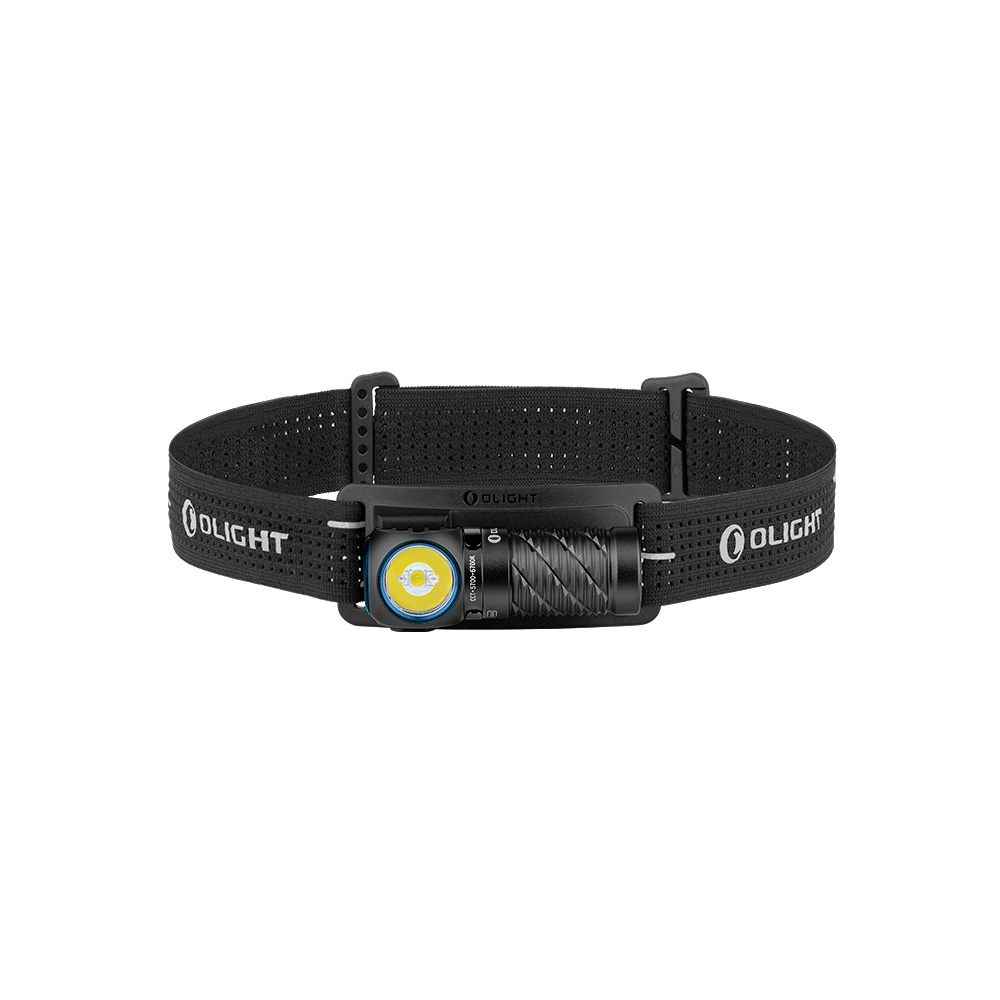
The Mini manual documents white-light and red-light modes, a battery indicator, lockout, and a supplied headband. It describes a white-light sequence in which Low, Medium, and High cycle by holding the button, while Moonlight and Turbo are outside that cycle. In red-light mode, the manual describes access from off and switching among the documented red settings.
Those controls matter more than an unverified claim that one model is universally easier. A buyer who wants a white-light selection with a separate red-light option may value the Mini’s documented mode structure. Another buyer may prefer the Perun 3’s documented side-switch layout, higher listed maximum, larger battery specification, or its own runtime chart. Compare the task you named with the exact mode and control evidence. Do not assume that a control sequence on the Perun 3 works identically on the Mini.
The Mini’s headband photo shows the actual Black Cool White model in its supplied headband. Use the selected SKU, rather than a generic product name, when checking the listing. Confirm whether the page’s selected color is Black Cool White and whether any kit includes additional accessories before deciding the displayed package matches your needs. Product pages can change, so a saved note should identify the variant and the date observed. A different variant’s specifications should not be silently substituted.
Use a comparison table without inventing a winner
The table below puts documented details beside the question they can answer. It deliberately leaves unsupported fields open. A blank is not a defect in the comparison; it is a prompt to consult the current product page or ask a specific question. For example, if you need an exact water rating, find the rating on the exact U.S. listing or manual. Do not convert general marketing language into an IP rating.
The table below compares the same fields for the exact variants: Black PERUN3BK and Black Cool White PERUN3MINICW. The selected Mini was sold out in the latest captured U.S. listing, so its column is useful for specification comparison and current-availability checking, not an assertion that it can be ordered now.
| Check | Perun 3 | Perun 3 Mini |
|---|---|---|
| Battery | 5,000 mAh, 3.6 V | Standard: 650 mAh, 3.6 V |
| Weight | 150 g / 5.29 oz | 54 g / 1.9 oz |
| Turbo listing | 3,000 lm; 2-minute first phase | 1,250 lm max; 2 + 60 min listed |
| High listing | 600 lm; later phase uses 20% | 500 lm max; 2 + 75 min listed |
| U.S. price | $89.99 | $64.99 |
Both weights include the battery. The matching source does not say that either headband is included in those weight figures. U.S. regular reference prices captured November 19, 2026, before tax, shipping, and optional equipment. The Mini page showed the captured variants sold out on November 19; confirm current availability and checkout terms on the live listing.
These numbers make two useful distinctions visible. The Perun 3 lists a 5,000 mAh battery and a 150 g battery-included weight, while the Mini lists 650 mAh and 54 g with battery. The Perun 3’s manual gives later Turbo and High phases as percentages; the Mini’s U.S. technical table gives its own mode-runtime entries. Compare each model on its own stated terms rather than assuming that a smaller battery or shorter high-output phase decides every use.
Treat red light as a feature, not a guarantee
A red-light mode is a mode listed for these products, but its presence does not prove a specific hunting benefit. The product manual documents how to enter and change the mode. It does not establish that red light improves a person’s ability to see wildlife, avoids detection, or is permitted everywhere. Do not infer animal behavior or make a promise about what another person or animal will perceive from color alone.
When comparing a red-light option, look for the mode name, how it is selected, whether the manual describes separate levels, and how you return to the white-light mode. Confirm these details for the exact model. If the published page does not list red-light output, do not invent a lumen figure. Ask Olight for the precise specification or leave the comparison as qualitative. The color label itself cannot answer a question about output, beam pattern, or suitability for a particular site.
The appropriate setting and permitted light use may depend on local rules, land manager instructions, season, property boundaries, and the task. Read applicable rules directly from the responsible agency or landowner. Do not use light to pursue, harass, or disturb wildlife. Keep any beam directed at the task and away from people’s eyes. If a location has restrictions on artificial light, follow them even if a product has a dedicated mode. This article is a product-page comparison, not a determination of hunting legality or field technique.
Compare runtime charts by conditions and phases
Use each model’s own output and runtime entries to decide which setting deserves a closer look. The Perun 3 manual lists Turbo at 3,000 lumens for the first 2 minutes, then 27% for 180 minutes and 20% for 30 minutes. High is listed at 600 lumens for 300 minutes, followed by 20% for another 30 minutes. Because the later output levels are printed as percentages, leave them as percentages rather than converting rounded figures into exact lumens.
The Mini’s U.S. product specification lists Turbo as 2 + 60 minutes and High as 2 + 75 minutes, alongside its own output entries. Those are model-page reference values, not a promise that both phases hold the initial output. For either model, read the separate mode chart and test-condition notes together. If your plan depends on a sustained setting, compare the lower modes and plan a backup instead of relying on the peak figure.
Check the controls before choosing a headlamp
A control is useful only if you can understand and operate it in the situation where you need it. The Perun 3 manual describes a side switch, memorized brightness behavior, a long-press brightness cycle, a double-press Turbo action, red-light access, and lockout. It also includes a proximity-sensor behavior associated with Turbo. Read the current manual before use, especially if an unexpected button press or mode change would matter to your task.
The Mini’s manual describes its own operation. Its white-light and red-light sequences differ from the Perun 3. Before buying, locate the relevant diagram in each manual and ask yourself whether you can remember the path from off to the mode you expect. If you often wear gloves, test your understanding of the diagram while the light is off at home. This is a familiarization exercise, not a claim that one switch is easier for everyone.
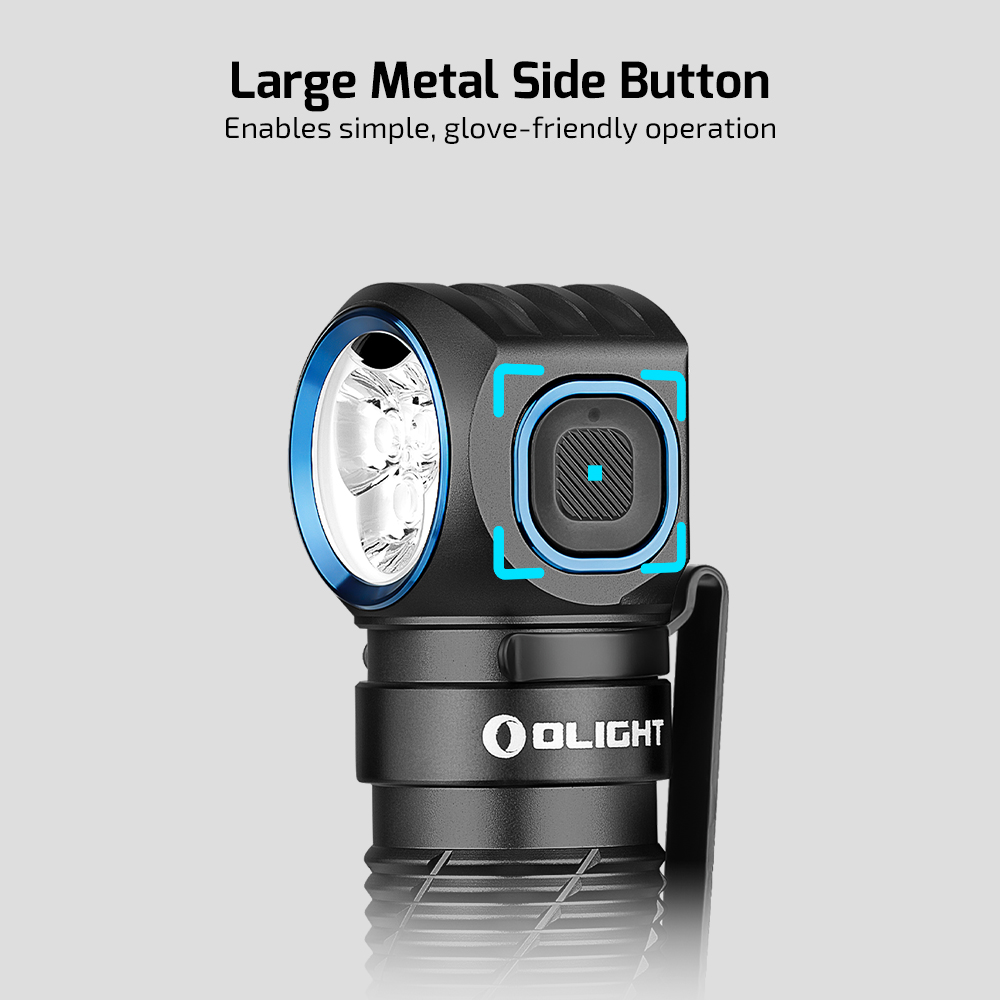
The official Black Perun 3 gallery isolates the side button for a closer look.
If there are several people sharing equipment, show each person the exact model and its own controls. Do not assume that having the same brand makes instruction interchangeable. Keep the manual or a concise reference with the correct item. Before a trip, check the light’s lockout and storage instructions so it is not accidentally activated in a bag. Use manufacturer directions for sensor settings, charging, and storage.
Compare weight on the same basis
The Perun 3 manual lists 150 grams (5.29 ounces), including its battery. The Mini manual lists 54 grams (1.9 ounces), also including its battery. Neither weight line includes the headband in its stated basis. That gives a shopper a fair comparison of the two lights as documented, but not a total worn weight.
If weight matters, consider it alongside headband fit and the task duration. A lighter body may be easier to pack, but comfort still depends on how the band fits the wearer and what clothing is underneath. Read the supplied-band instructions and check the exact package contents. Do not treat the battery-included figure as a full setup weight unless the manufacturer includes the band and any mount in the published number.
Verify water and weather language precisely
A listing may use phrases such as “waterproof,” “weather resistant,” or “ready for outdoor use.” Those words are not a substitute for an exact rating and its conditions. Find the model-specific IP code, if one is provided, and read the accompanying explanation. Confirm what the number covers and whether the manual limits use after impact, opening, charging, or exposure to water. If the exact model page does not give a rating, the safe comparison is “not confirmed in the checked source.”
Do not compare a product’s water rating with a broad statement from a retailer or a review. Ratings describe defined test conditions, not every possible wet environment. They also do not answer whether you should charge a damp light or open a battery compartment in the field. Follow the manufacturer’s instructions for drying, cleaning, charging, and storage. If a seal or lens is damaged, stop relying on the product and contact the manufacturer about the appropriate next step.
A forecast is also not a specification. Rainfall, temperature, wind, clothing, and storage all affect the outing. A product page cannot promise that a lamp will remain comfortable or deliver a particular runtime in every condition. Make a plan for keeping equipment dry and accessible, and use the exact instructions for the selected model. If an activity has its own lighting restrictions, those rules still apply regardless of the product rating.
Compare dated prices with the complete package
The exact U.S. listings showed regular reference prices of $89.99 for Black Perun 3 PERUN3BK and $64.99 for Black Cool White Perun 3 Mini PERUN3MINICW in captures dated November 19, 2026. These dated reference amounts exclude tax, shipping, and optional equipment. They are not current checkout quotes. A later Mini page capture showed the selected option and the other captured Mini variants sold out, so check today’s availability before making a purchase plan.
For a buyer comparing these two exact options, the dated reference-price difference is $25. That arithmetic says nothing about personal value. The Perun 3 listing’s larger battery and its own runtime chart may matter to someone who prioritizes those documented details. The lighter Mini’s 650 mAh battery, 54 g battery-included weight, and distinct controls may suit a different carrying preference, but the captured stock status means the buyer should not treat its reference price as an orderable offer.
Before checkout, confirm the selected model and color, what the package includes, the live price, delivery charges, and current written return terms. If the Mini remains unavailable, compare the Perun 3 with a currently available option only after confirming that option’s exact U.S. specifications. Do not treat a dated reference amount, a family-page price, or an out-of-stock selection as a price guarantee.
Read return terms before checkout
Return and warranty language can vary, and it may be updated after this article is written. Read the current terms on the official U.S. purchase page and at checkout. Look for the time window, condition requirements, exclusions, who pays return shipping, and how a refund or replacement is requested. Check whether a promotion or bundle has a separate rule. Do not rely on an old screenshot, a forum comment, or the wording attached to a different product.
Keep the order confirmation, SKU, and packaging until you have checked that the received model matches the order. If something arrives damaged or differs from the listing, photograph the packaging and contact the seller through its stated support channel. Ask whether the issue should be handled as a return, warranty claim, or shipping problem. Those paths can have different requirements. Avoid altering or opening a product in a way that conflicts with its manual or the published terms before you contact support.
A warranty and a return policy are different. A warranty describes coverage for qualifying defects under its written conditions; a return policy describes when a purchase may be sent back. Neither should be summarized as “risk free” without exact terms. If you cannot find a rule, ask for a link to the current written policy and save the answer. A clear question is more useful than a broad assumption: “Does this window apply to this SKU, in this condition, after this kind of purchase?”
Use customer service to fill a specific information gap
A useful question gives support staff the exact product and the field you cannot resolve. Include the model or SKU and the page you are reading. Then ask for one concrete detail: whether a stated weight includes the strap, which runtime chart matches the selected version, how a mode is entered, or what exact water rating applies. Avoid sending a vague request such as “Is this good for hunting?” That invites a subjective answer and may not address the requirement you actually have.
If the answer cites a different product page or a manual for a prior generation, follow up with the exact URL or model name. Ask support to confirm whether the answer applies to the current U.S. product. Keep a copy with your comparison notes. If no written answer is available, mark the question unresolved. Do not promote a guess into a specification simply because a salesperson or a search snippet sounded confident.
A product detail page is strongest when it identifies the selected SKU and links to the correct documentation. When it does not, use the model-specific manual and keep the boundary clear. If the manual’s figure conflicts with the current page, stop and ask Olight which source applies to the exact product being sold. A responsible comparison records the conflict instead of choosing whichever number makes the product appear more favorable.
Avoid the maximum-lumen trap
Maximum lumens describe one mode under the manufacturer’s test method. They do not, by themselves, say how broad the beam is, how long that level lasts, what the lower modes look like, how the lamp is aimed, or what a user can see on a particular surface. Two lights with similar maximum values can still have different mode structures and controls. Compare the useful parts of the specification table rather than assigning a winner based on the largest headline number.
For the Perun 3, the Turbo chart’s early transition is a clear reason to keep initial output and later phases separate. If your task is ordinary close-up gear organization, a mode you can select and maintain comfortably may matter more than the maximum. If you need to walk on an established path, consider beam control, a conservative plan, and whether the light remains available as intended. Those are decision questions; they are not claims about a measured beam or a prescribed hunting method.
“More lumens” also does not automatically mean a safer or more suitable product. Avoid aiming a beam at people, drivers, or animals. Use only enough light for the lawful task at hand and follow location rules. If the activity requires a specialized light or a particular color, verify that requirement with the responsible authority. The seller’s mode list cannot substitute for a legal rule or prove a particular field outcome.
Prepare the light before leaving home
Read the manual for the exact version you bought. Identify how to turn it on, enter the modes you may use, check the battery indicator, engage lockout, and charge it. Confirm which cable or charging accessory the package actually includes. Look for any instruction that changes how you should store or transport the lamp. A few minutes with the manual can answer practical questions that a product photo cannot.
Inspect the light in a well-lit place. Check that the lens, switch, body, strap, and charging connection appear intact and that the headband is correctly assembled according to the instructions. Do not disassemble the product to investigate an unfamiliar feature. If a part seems damaged or missing, contact Olight before relying on it outdoors. Keep the packaging and order details nearby while you resolve a purchase issue.
Before leaving, confirm you can turn the exact light on, reach the intended setting, read its battery indicator, and understand where the beam points when worn. Practice the documented switch sequence at home. Keep a separate backup light where it can be reached easily, and charge and maintain each device according to its own manual.
Plan for the walk, camp, and return
Before a trip, identify where you may walk, where you are allowed to stop, and what the land manager permits after dark. A camp, established path, parking area, and private property can have different restrictions. Keep the headlamp aimed at nearby ground or gear rather than scanning people or wildlife. If an area closes at a certain time or limits artificial light, follow that rule. A product purchase does not change site access.
Consider what you would do if the primary light becomes unavailable. Keep a separate backup where it can be reached without unpacking everything. Know how to end the outing or return by an allowed route. Tell a companion the plan if you are traveling together. Do not let a headlamp’s claimed maximum runtime substitute for a conservative decision about when to turn back or stop.
For a short campsite task, place small items in a predictable spot before dusk. Learn how your light’s strap sits and where its switch is while you can see comfortably. If you will switch from headlamp to handheld use, follow the manual’s instructions. Check whether the ground is stable and whether other people are nearby before turning on a bright mode. Small choices like these keep the equipment useful without implying that a lamp provides permission, expertise, or protection beyond its design.
What is the best-rated hunting headlamp?
There is no universal “best-rated” hunting headlamp established by the two official product pages discussed here. A manufacturer specification is not an independent rating. Compare the exact SKU, documented modes, controls, battery, runtime conditions, weight basis, water rating, and current terms. If you mean an independent test rating, check who performed it, which sample and method were used, and whether the results are available.
Ask what “rated” means before relying on the claim. It might refer to a star score, a lab standard, an ingress-protection code, or a person’s opinion. Those are different things. A verified IP rating is a product classification under a defined test; a customer review is a report of one person’s experience; a runtime chart is manufacturer-published reference information. Do not combine them into a single score without a transparent method.
When comparing the Perun 3 with the Perun 3 Mini, use the official page and exact manual for each. The Perun 3 manual supplies a detailed staged runtime chart and weight including battery. The Mini has its own mode and control documentation. If a source does not document a particular rating or characteristic, keep it out of the conclusion. A practical match to your planned, permitted task is more defensible than an unsupported universal winner.
How many lumens are good for a hunting headlamp?
There is no single lumen threshold that fits every lawful outdoor task. The needed setting depends on the task, beam pattern, distance, surroundings, and the light’s runtime behavior. Start with the lowest documented setting that lets you do the ordinary job safely, then compare the next modes and their stated durations. A maximum-lumen number alone cannot determine suitability.
Compare output and duration together. The Perun 3 manual, for example, lists 3,000 lumens at the start of Turbo for 2 minutes and then reports later phases as percentages. That does not mean the same output lasts for the entire chart. It also does not establish how much light reaches a particular path or object. Preserve the manufacturer’s units and conditions when citing the numbers.
If the exact manual or page does not provide the figure you need, ask the manufacturer or choose a product with a clear specification. Do not estimate lumen output from a photograph or from a light’s apparent brightness on a screen. Choose a setting appropriate to the task, preserve battery for the planned outing, and follow local rules about outdoor lighting.
Which color headlamp is best for hunting?
No one headlamp color is best for every person, location, or permitted outdoor task. Compare the modes the exact product actually documents and learn how to select them. A red-light mode is a feature, not proof of a hunting advantage, a wildlife effect, or permission to use that color on a particular property. Check current site and agency rules before using artificial light.
The Perun 3 and Perun 3 Mini manuals document white and red-light operation, but that alone does not determine which color you should use. Consider whether you need to read a label, organize gear, walk an allowed path, or complete another ordinary task. Keep the beam controlled and away from people’s eyes. Do not shine light at wildlife or use it to pursue or disturb animals.
If a local rule, land manager, or organized activity specifies a color or prohibits artificial light, follow that instruction. If you cannot confirm what is allowed, ask the authority responsible for the site before the outing. Do not interpret a product page, a color label, or a general online claim as legal advice or a guarantee about how animals will respond.
Frequently Asked Questions
Choose from the source you can verify
A useful hunting headlamps for sale comparison begins with a specific permitted task: setting up at camp, checking nearby equipment, or walking an established route. Match that task to the exact model’s controls, published modes, battery and weight basis, then confirm the live product page and package contents before ordering.
The Perun 3 and Perun 3 Mini have separate manuals and different listed batteries, weights, controls, and runtime entries. The dated Mini price is only a reference because the captured U.S. listing showed its variants sold out. Check current stock and checkout terms, follow site rules, and carry a separate backup appropriate to the trip.
If you need a broader selection, browse Olight’s headlamps and the Perun series. For the related price discussion, read Olight’s rechargeable spotlight price comparison. Then check the current product terms, obey site restrictions, and bring a separate backup light appropriate to the outing.
Changelog
- November 20, 2026: Added model-specific battery, weight, runtime, reference-price, and availability details for the Perun 3 and Perun 3 Mini.