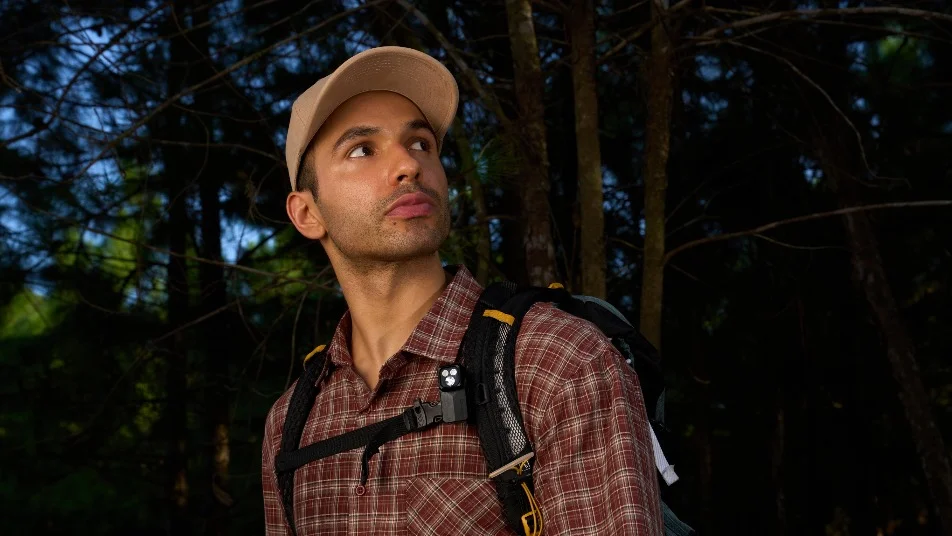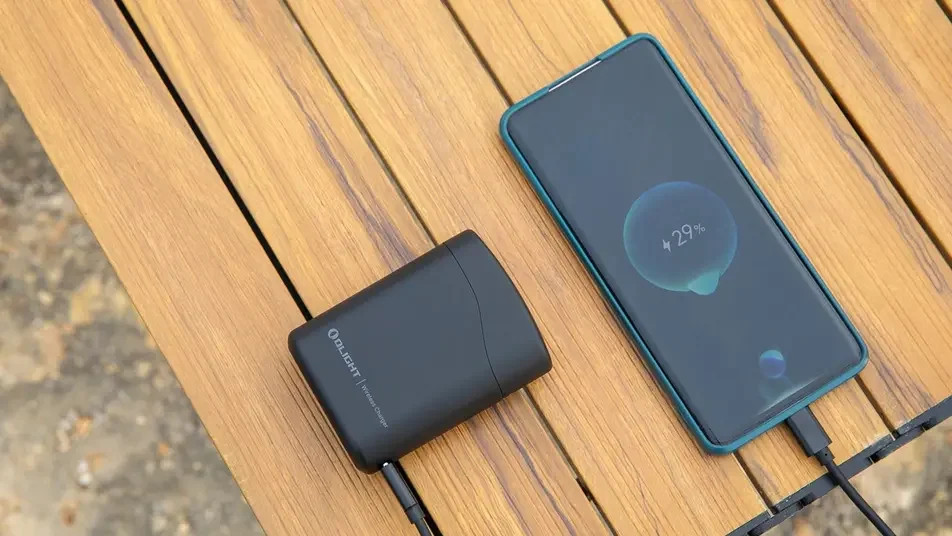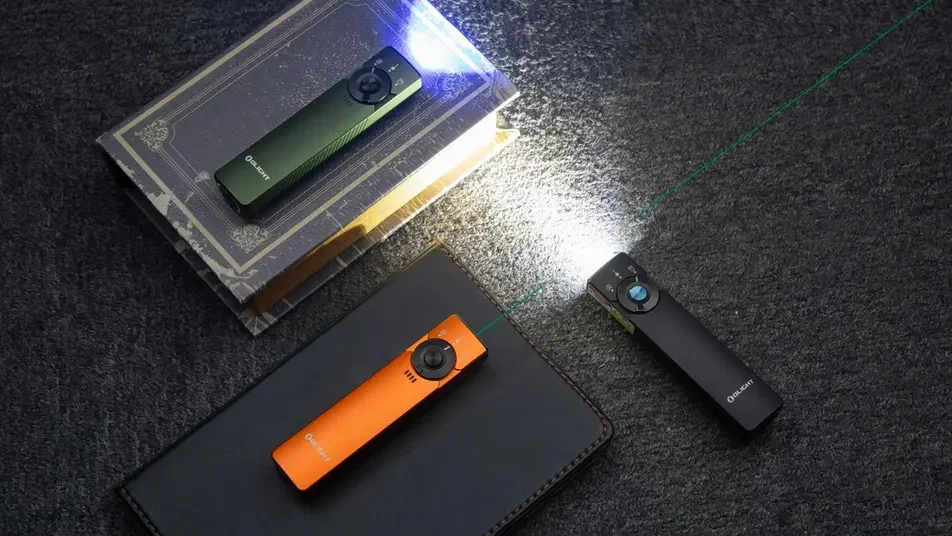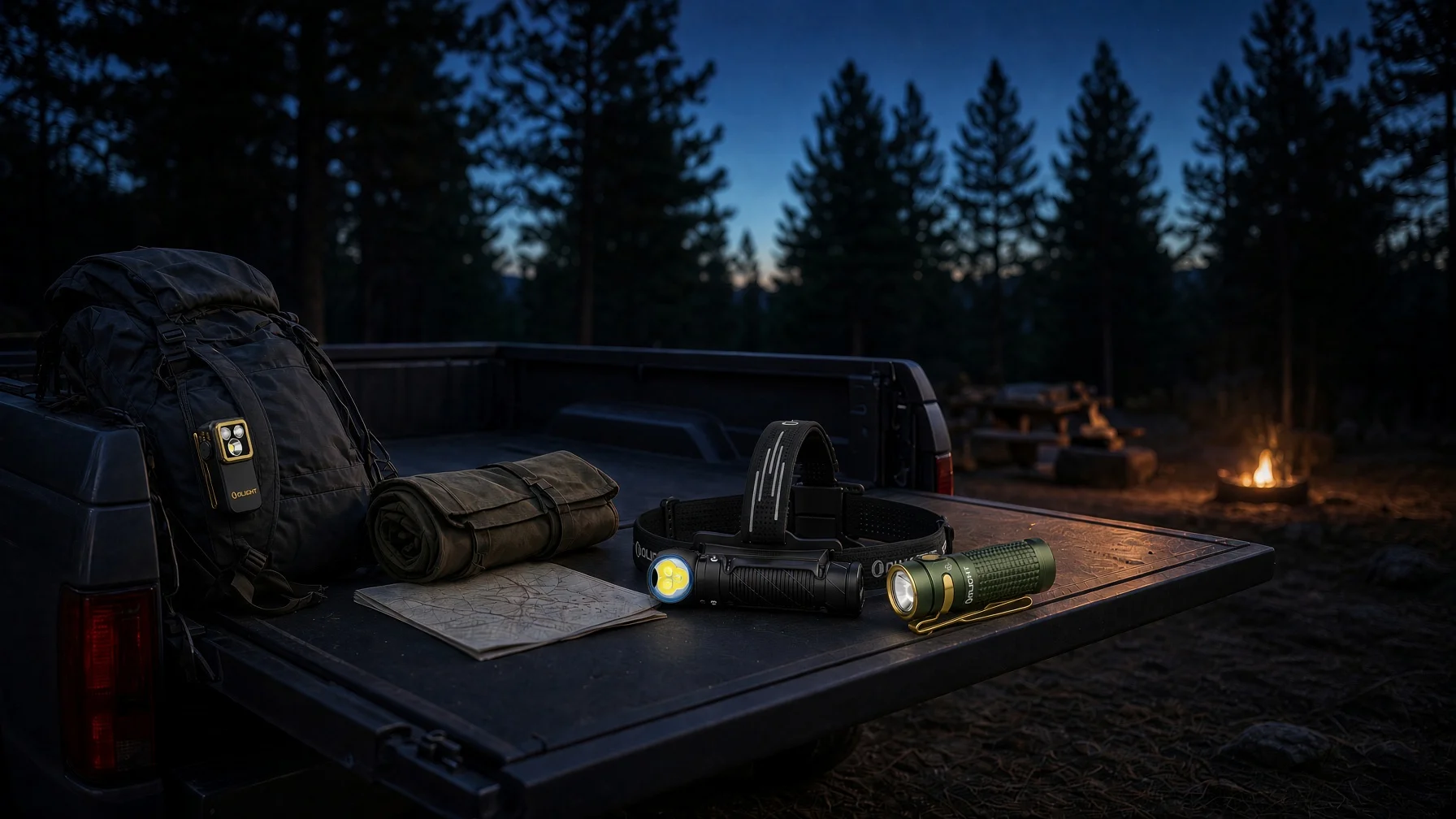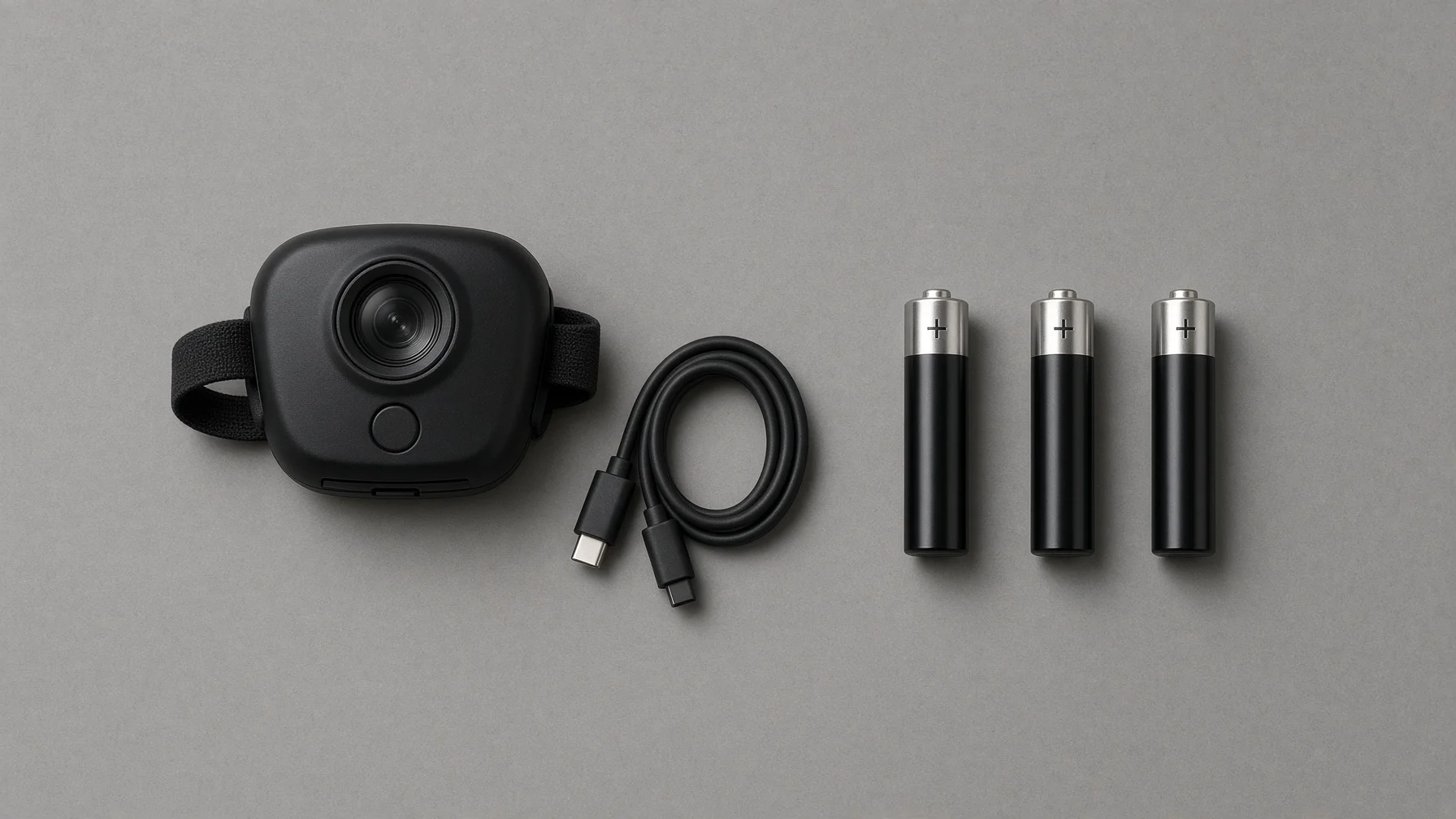
Olight makes the lights compared here. Olight specs and regular prices come from its US product pages as of September 2026; reach, lux and per-dollar figures are calculated from those ratings, not measured in the field.
⚡ TL;DR
Rechargeable spotlight price tracks beam reach only loosely. Between $130 and $220, a $129.99 Olight Warrior X 4 is rated for 630 m while a $169.99 Seeker Ultra is rated for 265 m. Extra dollars often buy floodlight, runtime, holsters or tougher bodies instead of reach. Decide how far you must see first, then pay for that distance.
Here is the short version of the rechargeable spotlight price question for the two lights most buyers compare at the $170 and $200 marks, the Seeker Ultra and the Marauder Mini.
| Dimension | Seeker Ultra ($169.99) | Marauder Mini ($199.99) | Who wins | By how much |
|---|---|---|---|---|
| Rated beam distance | 265 m | 600 m | Marauder Mini | 335 m farther, about 2.3 times |
| Peak intensity | 17,600 cd | 90,000 cd | Marauder Mini | About 5.1 times the candela |
| Max output | 4,800 lm | 7,000 lm (floodlight) | Marauder Mini | 2,200 lm more |
| Beams | One white beam | Separate spot and flood, plus red, green and blue | Marauder Mini | Two white beams vs one |
| Weight with battery | 220 g (7.76 oz) | 462 g (16.3 oz) | Seeker Ultra | 242 g lighter, less than half the weight |
| Reach after the first step-down (calculated) | About 121 m | About 447 m (spotlight) | Marauder Mini | About 3.7 times |
| Charging | USB-C in holster or MCC3 magnetic | MCC3 magnetic cable | Seeker Ultra | Two charging options vs one |
| Rated beam distance per dollar | 1.56 m/$ | 3.00 m/$ | Marauder Mini | About 1.9 times |
If you scan past 200 m from a boat, a pasture gate or a field edge, the Marauder Mini's extra $30 buys real reach. If most of your targets sit inside 100 m and you carry the light all night, the Seeker Ultra's lighter body is the better use of money.
📋 Table of Contents
- 1. How Much Does a Rechargeable Spotlight Cost?
- 2. How Far Do You Really Need to Light? Distance Checklists for Boat, Farm and Field
- 3. Beam Reach Comparison: Rated Reach, Calculated Lux and Reach per Dollar
- 4. Runtime Comparison: Does Reach Hold After Turbo?
- 5. Is a Dual-Beam Spotlight Worth the Extra Money?
- 6. Weight Comparison: What a Longer Scan Costs Your Wrist
- 7. Common Myths About Spotlight Price and Beam Reach
- 8. Where the Rules Draw the Line: Boats and Night Hunting
- 9. What's the Best Rechargeable Spotlight?
- 10. What Is the Best Rechargeable Hunting Spotlight?
- 11. What Is the Best Battery-Powered Spotlight?
- 12. Rechargeable Spotlight Price vs Use: Who Should Buy Which
- 13. FAQ
How Much Does a Rechargeable Spotlight Cost?
A handheld rechargeable spotlight from Olight costs $129.99 to $369.99 at regular price in September 2026, and the rechargeable spotlight price you pay rises with total output, battery size and features faster than it rises with reach. Candela sets reach, and some cheaper lights carry more of it than pricier ones built for wide light.
The ladder below lists six in-stock Olight lights that people use as handheld spotlights, from the tactical Warrior X 4 up to the 25,000-lumen Marauder 3. You can browse the rest of Olight's flashlights by category, but these six cover the $130 to $370 band where the reach question comes up most.
This table shows handheld spotlight price against the ratings that decide reach, using Olight's official figures.
| Light | Handheld spotlight price (regular, Sept 2026) | Max output | Peak intensity | Rated beam distance | Weight with battery | Beam distance per dollar |
|---|---|---|---|---|---|---|
| Warrior X 4 | $129.99 | 2,600 lm | 99,310 cd | 630 m | 249 g | 4.85 m/$ |
| Seeker 4 Pro | $139.99 | 4,600 lm | 16,895 cd | 260 m | 205 g | 1.86 m/$ |
| Seeker Ultra | $169.99 | 4,800 lm | 17,600 cd | 265 m | 220 g | 1.56 m/$ |
| Marauder Mini | $199.99 | 7,000 lm | 90,000 cd | 600 m | 462 g | 3.00 m/$ |
| Marauder Mini 2 | $219.99 | 10,000 lm | 140,000 cd | 750 m | 465 g | 3.41 m/$ |
| Marauder 3 | $369.99 | 25,000 lm | 250,000 cd | 1,000 m | 840 g | 2.70 m/$ |
Two patterns stand out. First, reach per dollar is not a straight line: the cheapest light on the list carries more candela than the $199.99 Marauder Mini, and the $169.99 Seeker Ultra has the lowest reach per dollar. Second, the two Seeker models put out more lumens than the Warrior X 4 but under a fifth of its candela, because they spend that output on a wide, even beam rather than a long one.
Note: Every rated beam distance above matches the square root of candela divided by 0.25, the ANSI beam distance definition. For example, 17,600 ÷ 0.25 = 70,400, and its square root is 265.3 m. That check tells you the reach numbers are consistent with the candela numbers, so candela is the figure to compare.
How Far Do You Really Need to Light? Distance Checklists for Boat, Farm and Field
Most handheld spotlight jobs happen inside 150 m. Work out the farthest thing you actually need to identify, then buy candela for that distance with some margin. At 150 m, a light needs about 5,625 cd to reach the ANSI edge of 0.25 lux and 22,500 cd to put 1 lux there. Paying for 600 m of reach you never use buys weight, not visibility.
The ANSI/PLATO FL1 standard defines beam distance as "the distance from the device at which the light beam is 0.25 lux," as summarized in Streamlight's ANSI FL1 explainer. That is the dim edge of the beam, not a comfortable working level. Light from a small source falls off with the square of distance, the inverse square law, so you can work backward: required candela = target lux × distance².
This table shows the candela you need at common distances, at the ANSI edge and at a working level of 1 lux. The 1 lux column is a rule of thumb used in this guide, four times the ANSI threshold, to leave room for haze, dark targets and aging batteries.
| Distance | Candela for 0.25 lux (ANSI edge) | Candela for 1 lux (4x margin) | Olight lights that clear the 1 lux line |
|---|---|---|---|
| 50 m (164 ft) | 625 cd | 2,500 cd | All six |
| 100 m (328 ft) | 2,500 cd | 10,000 cd | All six |
| 150 m (492 ft) | 5,625 cd | 22,500 cd | Warrior X 4, Marauder Mini, Marauder Mini 2, Marauder 3 |
| 200 m (656 ft) | 10,000 cd | 40,000 cd | Warrior X 4, Marauder Mini, Marauder Mini 2, Marauder 3 |
| 300 m (984 ft) | 22,500 cd | 90,000 cd | Warrior X 4, Marauder Mini, Marauder Mini 2, Marauder 3 |
Use these checklists to pick your distance before you look at price.
On a boat:
- Find your look-ahead distance: boat speed × the seconds you want to see, decide and slow down. At 10 mph (4.47 m/s) with 30 seconds of warning, that is about 134 m. At 20 mph, it is about 268 m.
- Add the distance to the nearest marker, dock or channel edge you usually search for at night.
- Plan for a pitching deck. A beam you can hold steady at 150 m is worth more than one rated for 600 m that wobbles off target.
On a farm or ranch:
- Pace off the far fence line or pasture corner you check from the gate or truck.
- Most barnyard, calving pen and gate work sits inside 50 m, where every light here gives at least 6.7 lux.
- If you count animals across a big pasture, use the longest sight line you have, then add the 1 lux margin.
In the field, where lights are legal:
- Measure the distance to the tree line or crop edge you scan.
- Blood trailing and field walking happen inside 30 m, where wide light helps more than reach.
- Check your state rules before you carry a light with a firearm or bow (see the rules section below).
Beam Reach Comparison: Rated Reach, Calculated Lux and Reach per Dollar
The Warrior X 4 and the Marauder models put the most light on a distant target for the money. At 150 m, the Warrior X 4 delivers about 4.4 lux and the Marauder Mini about 4.0 lux, while the Seeker Ultra delivers about 0.8 lux. That gap is the real payoff behind rated beam distance, because it decides whether a far object looks like a shape or a guess.
The figures below are calculated from each light's rated peak intensity with lux = candela ÷ distance². They describe the center of the beam on a clear night. Rain, fog, spray and dust scatter light and cut these numbers, which is one more reason to keep a margin.
This table shows calculated center-beam lux at three distances, plus candela per dollar, from Olight's official ratings.
| Light | Price | Lux at 50 m | Lux at 150 m | Lux at 300 m | Candela per dollar |
|---|---|---|---|---|---|
| Warrior X 4 | $129.99 | 39.7 | 4.41 | 1.10 | 764 |
| Seeker 4 Pro | $139.99 | 6.76 | 0.75 | 0.19 | 121 |
| Seeker Ultra | $169.99 | 7.04 | 0.78 | 0.20 | 104 |
| Marauder Mini | $199.99 | 36.0 | 4.00 | 1.00 | 450 |
| Marauder Mini 2 | $219.99 | 56.0 | 6.22 | 1.56 | 636 |
| Marauder 3 | $369.99 | 100 | 11.1 | 2.78 | 676 |
Read the table this way. Moving from the Seeker Ultra to the Marauder Mini costs $30 and multiplies center-beam light at every distance by about 5.1. Moving from the Marauder Mini to the Marauder Mini 2 costs another $20 and adds about 56 percent more candela, which works out to 150 m more rated reach. Moving from the Mini 2 to the Marauder 3 costs $150 and adds 250 m of rated reach, but it also adds 375 g.
The Olight Seeker Ultra flashlight spends its price elsewhere. Olight describes its OAL body as "nearly twice as hard as standard 6061 aluminum," and it pairs a 5,800 mAh 21700 battery with a rotary dial, a display for brightness and battery, and a holster that locks the light when you slide it in switched off. That is money well spent for daily carry and wide work light, but not for reach. For more on how candela turns into beam distance, see our explainer on the three units.
Runtime Comparison: Does Reach Hold After Turbo?
Reach does not hold after turbo on any of these lights. Every light here steps down from its top level within 2 to 10 minutes, and reach falls with it. Because peak intensity scales with output through the same optic, reach scales with the square root of the lumen ratio. The Seeker Ultra drops from 4,800 to 1,000 lumens after 2.5 minutes, which cuts its effective reach from 265 m to about 121 m.
Olight lists each top mode as a sequence, such as 4,800~1,000~600 lumens over 2.5 + 150 + 70 minutes for the Seeker Ultra. The second stage is the level you actually live with during a long search. Heat drives the drop; our guide to thermal step-down in a flashlight explains why a small body cannot hold its peak.
This table converts each light's first step-down into a sustained reach estimate. It assumes candela falls in proportion to lumens within the same beam, and it uses the spotlight channel for the Marauder models, whose top spotlight setting is where their rated peak intensity comes from.
| Light | Top level (lumens) | Minutes before first drop | Sustained level (lumens) and minutes | Estimated sustained reach | Sustained reach per dollar |
|---|---|---|---|---|---|
| Warrior X 4 | 2,600 | 3 | 1,000 for 140 | About 391 m | 3.01 m/$ |
| Seeker 4 Pro | 4,600 | 2.5 | 1,200 for 122 | About 133 m | 0.95 m/$ |
| Seeker Ultra | 4,800 | 2.5 | 1,000 for 150 | About 121 m | 0.71 m/$ |
| Marauder Mini (spotlight) | 900 | 10 | 500 for 200 | About 447 m | 2.24 m/$ |
| Marauder Mini 2 (spotlight) | 1,350 | 4 | 600 for 170 | About 500 m | 2.27 m/$ |
| Marauder 3 (spotlight) | 1,500 | 3 | 750 for 700 | About 707 m | 1.91 m/$ |
Two things change once you look at sustained numbers. The Marauder Mini's spotlight holds its top level for 10 minutes, the longest in this group, which matters when you sweep a shoreline or a pasture. And the Marauder 3's advantage is endurance more than peak: its spotlight holds 750 lumens for 700 minutes, far past any single night of scanning.
Tip: Scan in bursts. Find the area with a short press at the top level, then drop one step to work it. You get peak reach when it matters and a cooler, longer-running light the rest of the time.
Is a Dual-Beam Spotlight Worth the Extra Money?
A dual-beam spotlight is worth the extra money when you switch between far searching and close work in the same outing, as on a boat deck or a night check of livestock. The Marauder Mini pairs a spotlight rated for 600 m with a floodlight rated up to 7,000 lumens, so one light covers both jobs. If you only search far, a single-beam light is cheaper per meter.
Olight describes the Olight Marauder Mini flashlight as offering "a 600-meter max throw from the central LED's spotlight beam or a 7,000-lumen max output floodlight beam from the 9 surrounding LEDs." A toggle switch picks spot or flood, and a rotary knob selects from seven brightness levels. It also has three RGB LEDs for red, green and blue light.
Here is where each beam earns its keep:
- Spotlight: reading a channel marker, finding a cow at the far corner, checking a tree line. It holds 900 lumens for 10 minutes, then 500 lumens for 200 minutes.
- Floodlight: deck work, loading a trailer, walking a rough bank. It starts at 7,000 lumens for 2 minutes, then holds 1,600 lumens for 160 minutes.
- Low levels: Level 1 runs 35.5 hours on the floodlight and 43.5 hours on the spotlight, which covers a power outage at the barn or dock.
The Olight Marauder Mini 2 flashlight adds a combined floodlight plus spotlight setting, rated up to 8,000 lumens, and a spotlight that starts at 1,350 lumens. For $20 more than the Marauder Mini, it also adds USB-C charging alongside MCC. That makes it the better buy if you charge from a boat's or truck's USB-C port.
Where a dual beam does not pay: if you only ever look past 200 m, the Warrior X 4 reaches farther than the Marauder Mini for $70 less and weighs about half as much. Olight says it "balances the spot and spill well," but it has only one beam, so close work gets a bright center with dimmer spill instead of the even wash of a dedicated floodlight.
Weight Comparison: What a Longer Scan Costs Your Wrist
Weight roughly doubles when you step from the compact lights to the Marauder Mini models, from 205 to 249 g up to 462 to 465 g, and the Marauder 3 nearly doubles it again at 840 g. The extra 242 g between the Seeker Ultra and the Marauder Mini is about the weight of a cup of water. You hold that load at arm's length for every minute of a scan, so it matters more than the spec sheet suggests.
A simple way to price weight is grams carried per 100 m of rated reach. Lower is better: it tells you how much light you get for each gram in your hand.
This table compares weight, grams per 100 m of rated reach, and the grip and carry features Olight lists for each light.
| Light | Weight with battery | Grams per 100 m of reach | Grip and carry features Olight lists |
|---|---|---|---|
| Warrior X 4 | 249 g (8.78 oz) | 40 g | Tail switch, holster included |
| Seeker 4 Pro | 205 g (7.23 oz) | 79 g | Rotary knob, vertical holster with fixing bracket |
| Seeker Ultra | 220 g (7.76 oz) | 83 g | Crocodile-textured silicone grip, locking holster |
| Marauder Mini | 462 g (16.3 oz) | 77 g | Silicone-coated grip, hidden lanyard hole, holster |
| Marauder Mini 2 | 465 g (16.38 oz) | 62 g | Wrist strap cable, protective case |
| Marauder 3 | 840 g (29.63 oz) | 84 g | Holster, charging lanyard |
The Warrior X 4 carries the least weight per meter of reach by a wide margin, at 40 g per 100 m. The Marauder Mini 2 is the most efficient of the dual-beam lights. The Marauder 3 costs the most weight per meter, which fits its role as a base-camp or truck light rather than a walking light.
Five habits make a long scan easier on your wrist and shoulder:
- Brace the elbow against your ribs, a rail or a truck door instead of holding the light at full reach.
- Use a lanyard or wrist strap on a boat, so a slip does not end with the light overboard.
- Swap hands every few minutes during a long sweep.
- Sweep slowly in overlapping arcs. Fast sweeps make you hold the light up longer to cover the same ground.
- Drop to a lower level once you find what you are looking for. Less heat also means a cooler body in your hand.
Warning: Olight's Marauder Mini warning manual says not to "block the light outlet at close range, the energy emitted from the light may cause the object to burn," and to "keep the light locked out when carrying or transporting." Never set a high-output spotlight face down on a seat, a tarp or a bag while it is on.
Common Myths About Spotlight Price and Beam Reach
Four myths push buyers into the wrong price tier: that more lumens mean more reach, that the farthest-reaching light is the most useful, that turbo lasts as long as the box implies, and that the priciest light reaches farthest. Each one falls apart when you compare candela, the sustained level and your real working distance.
Myth 1: More lumens means more reach. The Seeker 4 Pro puts out 4,600 lumens and reaches 260 m. The Warrior X 4 puts out 2,600 lumens and reaches 630 m. Lumens measure total light; candela measures how tightly it is packed into the beam.
Myth 2: The longest beam is the most practical. Past about 300 m, a handheld beam is hard to hold on a target from a moving boat or a truck bed, and you often cannot act on what you see at that range. Buy for your checklist distance plus margin.
Myth 3: Turbo holds for the listed runtime. ANSI runtime runs from the reading 30 seconds after switch-on until output falls to 10 percent of that value, as the Streamlight summary explains. So a long runtime can include long stretches at a much lower level. The ANSI/PLATO FL 1-2025 revision added what PLATO calls "a standardized test method for Short-Duration Elevated Brightness," according to PLATO's announcement of the revised standard, because turbo claims had been hard to compare.
Myth 4: The highest price buys the most reach per dollar. The Marauder 3 has the most reach in absolute terms, but it ranks behind the Warrior X 4, the Marauder Mini and the Marauder Mini 2 on rated beam distance per dollar. Price climbs with battery size and flood output as well as throw.
Where the Rules Draw the Line: Boats and Night Hunting
On U.S. inland waters, a handheld spotlight may be used to point out danger, but not in a way that blinds other boaters or hides your navigation lights. For hunting, many states restrict shining wild animals at night, especially while carrying a firearm or bow. Check your state wildlife agency's current rules before you buy a spotlight for hunting.
On the water, the federal Inland Navigation Rules allow a vessel to "direct the beam of her searchlight in the direction of the danger, in such a way as not to embarrass any vessel," under Rule 36 in 33 CFR 83.36. From sunset to sunrise, Rule 20 in 33 CFR 83.20 says no other lights may be shown that impair the visibility of navigation lights "or interfere with the keeping of a proper lookout." In practice, keep the beam off other helms, off your own bow and windshield, and turn it off once you have your bearing.
Safety note: A spotlight supports your lookout; it does not replace it. Rule 5 in 33 CFR 83.05 requires every vessel to keep "a proper look-out by sight and hearing as well as by all available means." Glare bouncing back off a wet deck or windshield makes it harder to see past it, so aim low and forward, clear of your own boat.
On land, hunting rules vary widely. Texas, for example, makes it unlawful to "hunt with the aid of artificial light of any form that casts or reflects a beam of light onto or otherwise illuminates a game animal or bird," with narrow exceptions, according to the Texas Parks and Wildlife means and methods rules. Wisconsin bans shining any wild animal between 10 p.m. and 7 a.m. from Sept. 15 to Dec. 31, whether or not you carry a weapon, per the Wisconsin DNR shining rules. Our state-by-state overview of hunting with a light laws covers more states.
What's the Best Rechargeable Spotlight?
The best rechargeable spotlight is the cheapest one that puts about 1 lux on your farthest real target after its first step-down. For most boat, farm and property use inside about 200 m, that is the Marauder Mini at $199.99: its spotlight still puts about 1 lux at 220 m after the first step-down, and it adds a floodlight for close work. If you only need peak reach and want less weight, the Warrior X 4 at $129.99 reaches farther for less.
A good rechargeable spotlight also needs a sensible charging path, water resistance for spray and rain, and a low mode that lasts through a long night. All six lights in this guide are rated IPX8. The Marauder Mini charges only through its MCC3 magnetic cable, so keep that cable in the boat bag or glove box. Olight's pages don't say that any of these lights float, so use the lanyard on the water.
For a broader view beyond spotlights, our roundup of the best flashlights compares lights by use case, from pocket lights to the brightest models. You can also compare the full Marauder series side by side.
What Is the Best Rechargeable Hunting Spotlight?
For legal night uses such as blood trailing, predator or hog control where your state allows it, and walking to and from a stand, a rechargeable hunting spotlight needs a steady, controllable beam more than extreme reach. The Marauder Mini fits most of these jobs with separate spot and flood beams. The Warrior X 4 suits hunters who mainly need a long, narrow beam at the lowest price.
Match the light to the task:
- Blood trailing inside 30 m: wide, even light helps you see drops on leaves. Use the Marauder Mini's floodlight on a low level, which runs for hours.
- Scanning a field edge where night hunting is legal: you need 1 lux at the tree line. At 200 m, that means about 40,000 cd, which the Warrior X 4 and the Marauder models clear and the Seeker models do not.
- Walking in and out: a lighter light wins. The Olight Seeker 4 Pro flashlight weighs 205 g and runs 11 hours at 300 lumens, which covers several walks on one charge.
The Olight Warrior X 4 flashlight is honest about its purpose: Olight lists hunting, search and rescue and night patrol among its uses. Its Regular Mode Low runs 300 lumens for 8 hours. Its limit for hunters is the single beam: there is no separate floodlight for close tracking, and its tactical mode includes a strobe you may want to avoid in the field.
Warning: In some states, a light plus a gun can count as evidence of night hunting. South Carolina's code says using a light "in a manner capable of disclosing the presence of deer, bear, or turkey," together with access to a centerfire rifle or a shotgun with shot larger than No. 4, "shall constitute prima facie evidence of night hunting" under S.C. Code Section 50-11-705. Confirm your state's current rules each season.
What Is the Best Battery-Powered Spotlight?
The best battery-powered spotlight for most buyers is a rechargeable lithium-ion model with a battery sized for how long you scan. Olight's spotlights use custom cells: the Marauder Mini's 32650 battery holds 24 Wh, and the Marauder 3's 46950 battery holds 118 Wh. Bigger batteries buy longer sustained output, not a longer beam.
Battery energy explains much of the price ladder. This table shows how battery capacity and the longest low-mode runtime of each light's main white beam line up with regular price.
| Light | Price | Battery Olight lists | Longest white main-beam runtime Olight lists |
|---|---|---|---|
| Warrior X 4 | $129.99 | 5000mAh 3.6V 21700 | 8 hours at 300 lumens |
| Seeker Ultra | $169.99 | 3.59V 5,800 mAh 21700 | 17 days at 5 lumens |
| Marauder Mini | $199.99 | 6500mAh 3.7V 24Wh 32650 | 43.5 hours at 50 lumens (spotlight) |
| Marauder Mini 2 | $219.99 | 3.7 V, 7,500 mAh, 27.75 Wh, 32650 | 95 days at 0.5 lumens (spotlight moonlight) |
| Marauder 3 | $369.99 | 3.7 V, 31,900 mAh, 118 Wh, 46950 | 14 months at 0.5 lumens (spotlight moonlight) |
The Marauder 3's bigger battery is what the extra $150 over the Marauder Mini 2 mostly buys. Its spotlight holds 750 lumens for 700 minutes, which suits search teams and base camps. For one person scanning for an hour or two, the Marauder Mini or Mini 2 covers the night at a little over half the weight.
Rechargeable Spotlight Price vs Use: Who Should Buy Which
Choose by distance first, then by how long you hold the light, then by price. Buyers who search past 200 m should pay for candela; buyers who work inside 100 m should pay for weight, runtime and a wide beam. The rechargeable spotlight price that makes sense is the one where every extra dollar maps to a job you actually do.
This table matches each buyer to the light that fits and the reason the extra dollars are, or are not, worth it.
| Who you are | Better pick | Why | When to choose the other |
|---|---|---|---|
| Boater running channels at night | Marauder Mini ($199.99) | 600 m spotlight for markers, 7,000 lm flood for docking | Pick the Mini 2 if you charge from USB-C on board |
| Rancher checking pastures from a truck | Marauder Mini 2 ($219.99) | 750 m reach and about 500 m after step-down | Pick the Warrior X 4 if you never need flood light |
| Hunter who tracks and walks more than scans | Seeker 4 Pro ($139.99) | 205 g, 300 lumens for 11 hours | Pick the Marauder Mini if you also scan past 150 m |
| Buyer who wants maximum reach per dollar | Warrior X 4 ($129.99) | 630 m and 99,310 cd for the lowest price here | Pick a dual-beam light for close work |
| Daily carrier who also wants a big light | Seeker Ultra ($169.99) | OAL body, locking holster, 12.5 hours at 300 lumens | Skip it if reach past 150 m is the goal |
| Search team or base camp | Marauder 3 ($369.99) | 1,000 m and 750 lumens for 700 minutes | Too heavy at 840 g for walking all night |
If you want to know how these trade-offs look across the whole brand, our guide to is Olight worth it covers price and trade-offs by product line.
Your action list before you spend:
- Pace or map the farthest target you must identify at night.
- Multiply that distance squared by 1 to get the candela you need, and add margin for rain or spray.
- Check each candidate's second-stage output, not only its turbo figure.
- Weigh it against how long you hold the light in one session.
- Confirm charging, a lanyard point and your state or boating rules.
- Only then compare rechargeable spotlight price, and pay for the reach you will use.
FAQ
Changelog
- September 22, 2026: First published. Olight specs and regular prices reflect Olight's US product pages in September 2026.