Olight makes some of the lights discussed here. Olight specs and prices come from its product pages and user manuals as of September 2026. State rules are quoted from state wildlife agencies and state codes, checked September 24, 2026. This guide is general information, not legal advice.
⚡ TL;DR
Hunting with a light laws come down to three things: the species, the land, and how the light is carried. Most states ban shining deer and other big game at night. Many allow a light for coyotes, feral hogs, or raccoons, often only on private land, on foot, and away from vehicles. Carry a handheld scanning light, and mount a weapon light only where your state allows it.
Use this gear table as a starting point for gear that fits most hunting with a light laws, then check your own state's rule before you add anything to the truck.
| Job at night | Light type | Minimum spec worth having | Example model |
|---|---|---|---|
| Walking to and from a stand or tree | Headlamp or small handheld with a low mode | 100 to 300 lumens, a red mode helps | Any headlamp with red; Marauder Mini 2 red light |
| Scanning a field for eye shine, where scanning is legal | Handheld thrower | 500 m or more ANSI beam distance | Olight Warrior X 4 (630 m) |
| Holding light on a coyote or hog at the shot, where legal | Weapon-mounted light | 150 m or more beam distance, remote switch | Odin GL (215 m), laser off where lasers are banned |
| Wide view of a food plot or hog field | Flood plus spot combo | Separate flood and spot modes | Marauder Mini 2 (10,000 lumens flood, 750 m spot) |
| Tracking a wounded animal after hours | Handheld or headlamp with a steady low mode | 300 to 1,000 lumens with long runtime | Warrior X 4 low mode (300 lumens, 8 hours; cool white) |
The pain point is simple. You own a good light, you want to use it after dark, and every state writes the rule differently. One state bans shining after 10 p.m. in fall. Another bans it after 11 p.m. all year. A third lets you shoot hogs all night with any light, as long as the land is registered first. Rules also split by species, season, weapon in hand, and whether the light sits on the gun.
This guide quotes the actual wording from 12 states, shows where each rule lives in the state's regulations, and turns it into a checklist you can run before you leave the house. It does not cover every state, and every rule here can change with the next digest, so treat it as a map to your own state's current text.
📋 Table of Contents
- 1. Hunting With a Light Laws: The Three Questions That Decide It
- 2. Why Is Spotlighting Deer Illegal in Most States?
- 3. Coyotes, Feral Hogs and Raccoons: The Usual Exceptions
- 4. State-by-State Spotlighting Laws: 12 States Compared
- 5. Can You Hunt After Dark in Texas?
- 6. Can You Legally Hunt at Night?
- 7. Does Light Color Matter to Spotlighting Law? Red, Green and Lasers
- 8. What Color Can Coyotes Not See?
- 9. Weapon-Mounted Lights vs Handheld Lights: How the Law Treats Each
- 10. How to Check Your State's Night Hunting Regulations
- 11. Choosing a Light for Legal Night Hunting
- 12. Five Checks Before You Hunt With a Light
- 13. FAQ
Hunting With a Light Laws: The Three Questions That Decide It
Whether you can hunt with a light depends on three questions. What species are you after: big game, a furbearer, or a nongame or nuisance animal? Whose land is it: public, private, or private and registered with the state? And how is the light used: handheld, worn, weapon-mounted, or fixed to a vehicle? Answer all three from your state's current rules before you go.
Here is how the three questions play out in the states covered below:
- Species. Deer, elk, and other big game are almost always off limits under a light. Coyotes, feral hogs, raccoons, and other nongame or furbearing animals are where the exceptions live.
- Land. Many exceptions apply only on private land. South Carolina goes further and requires the property to be registered. North Carolina opens coyotes day or night on private land but requires a permit to hunt them at night on public land.
- Carry method. Several states require the light to be carried by the hunter and ban lights attached to or powered by a vehicle. Others allow a vehicle spotlight for a landowner doing damage control.
A fourth question sits behind all three: do you have a weapon with you? Pennsylvania, Wisconsin, Michigan, and Utah all treat shining very differently when a firearm, bow, or crossbow is in your possession.
Your answers also decide the gear. A state that allows only a handheld light on foot calls for a different kit than one that allows a weapon light or a vehicle spotlight. Olight's range of hunting flashlights runs from compact handhelds to long-throw spotlights, so settle the legal answers first and pick the light second.
Note: The word "hunt" in most wildlife codes covers searching for, pursuing, and attempting to take an animal, not just the shot. Sweeping a field with a light while armed can count as hunting even if you never fire.
Why Is Spotlighting Deer Illegal in Most States?
Spotlighting deer is illegal in most states because a bright light at night lets a hunter locate deer easily, and a shooter cannot always see what is behind the target in the dark. States handle this by limiting big game to daylight shooting hours and by banning shining while armed. Texas, for example, sets game animal hours at one-half hour before sunrise to one-half hour after sunset.
The legal wording shows what regulators are guarding against. Texas Parks and Wildlife lists it as unlawful to "hunt with the aid of artificial light of any form that casts or reflects a beam of light onto or otherwise illuminates a game animal or bird," in its 2026-27 hunting means and methods rules. Utah's rule adds that using a light "in a field, woodland, or forest where protected wildlife are generally found is probable cause of attempting to locate protected wildlife," per Utah Admin. Code R657-11-13.
Washington shows how seriously some states take it. Under RCW 77.15.450, a person who "hunts big game with the aid of a spotlight, other artificial light, or night vision equipment while in possession or control of a firearm, bow and arrow, or cross bow" commits spotlighting big game in the second degree. That is a gross misdemeanor with a two-year hunting suspension. Doing it again within ten years of a prior gross misdemeanor or felony conviction involving big game is spotlighting in the first degree, a class C felony with a ten-year suspension.
Casual spotlighting to count deer, with no weapon, is a separate question. Pennsylvania calls it "recreational spotlighting" and allows it between sunrise and 11 p.m., except during the regular firearms deer season. Michigan and Wisconsin set their own hours. Those rules still apply to you even if you never intend to shoot.
Coyotes, Feral Hogs and Raccoons: The Usual Exceptions
Coyotes, feral hogs, and raccoons are the species most states open to night hunting with a light. The exceptions usually come with conditions: private land, landowner permission, hunting on foot, no vehicle-mounted lights, no shooting from roads, and sometimes a registration or permit. Some states apply them only at certain times of year, and some close them during deer gun seasons.
Here are the most common patterns, with a state that uses each:
- Year-round, private land, registration required. South Carolina lets hunters take feral hogs, coyotes, and armadillos at night "with artificial lights and nightvision devices using any legal firearm, bow, or crossbow," but only on properties registered with SCDNR, per its night hunting registration page.
- Private land open, public land by permit. North Carolina's coyote rule, 15A NCAC 10B .0219, says coyotes "may be taken on private lands anytime during the day or night," allows night hunting on public lands only with a permit, and says "Hunters may use electronic calls and artificial lights to take coyotes." The NCWRC night hunting FAQ adds that "Feral swine may be hunted at night with lights" and "All artificial lights and night vision equipment is legal." In Beaufort, Dare, Hyde, Tyrrell, and Washington counties, coyote hunting is daylight only and by permit.
- A set night season. North Dakota's 2026 hunting season outlook lets hunters take red fox, gray fox, and coyote at any hour from Nov. 23 through May 31, 2027, on foot only after dark, with "night vision, artificial light, thermal vision, and infrared light equipment."
- Landowner damage control. Oklahoma lets a landowner, agricultural lessee, or designated agent control nuisance coyotes and feral swine day or night, except during deer gun seasons. The landowner or lessee needs a current agricultural exemption permit from the Oklahoma Tax Commission, and an agent needs written permission. They may use "a headlight, thermal, or light enhancement device carried on the person, a vehicle with or without a mounted spotlight," per the ODWC general hunting regulations.
- County opt-in. In Utah, spotlighting coyote, red fox, striped skunk, or raccoon is allowed only "where allowed by a county ordinance," and the light "must be carried by the hunter." The ordinance requirement does not apply to a person lawfully protecting crops or domestic animals from those predators.
Feral hogs are a special case because states classify them differently. Oklahoma's rules say plainly that "Hogs are not considered wildlife." Texas Parks and Wildlife's wild pig management page lists night shooting as a common control method and calls it "highly effective in agricultural fields." Neither of those makes hogs fair game on every property or with every tool, so read the hog section of your own state's rules.
Warning: A night exception for coyotes or hogs is not a license to shine deer. North Carolina's FAQ points out that local light laws still forbid intentionally shining a light on a deer or sweeping a light in search of deer. Keep the beam on the species you are allowed to hunt.
State-by-State Spotlighting Laws: 12 States Compared
The 12 states below show the main types of spotlighting law in the U.S.: time windows (Michigan, Wisconsin, Pennsylvania), a big game ban with criminal penalties (Washington), predator-only or county-opt-in rules (Utah, Arizona, California), and hog and coyote programs (Texas, South Carolina, North Carolina, Oklahoma, North Dakota). Each row cites the version checked on September 24, 2026.
Read each row as a summary of the quoted source, then open the source before you rely on it.
| State | Type | What the rule says (summary of source) | Source and version checked |
|---|---|---|---|
| Texas | Game banned; nongame open on private land | No artificial light on game animals or birds; nongame such as coyotes and bobcats "may be hunted at any time by any lawful means or methods on private property" | TPWD Outdoor Annual, valid Sep. 1, 2026 to Aug. 31, 2027 |
| Michigan | Time window | No light to locate wild animals any time in November, or 11 p.m. to 6 a.m. the rest of the year; no light in the field while carrying a bow, crossbow, or firearm | Michigan DNR 2026 Deer Hunting Regulations Summary |
| Wisconsin | Time window plus weapon ban | No shining while hunting or armed; no shining 10 p.m. to 7 a.m., Sept. 15 to Dec. 31, armed or not; light at point of kill allowed on foot for coyote, raccoon, fox, unprotected species | Wisconsin DNR, Shining and Night Hunting page |
| Pennsylvania | Time window plus weapon ban | Recreational spotlighting sunrise to 11 p.m., closed through regular firearms deer season; no spotlighting while armed; handheld or gun-mounted light allowed on foot for listed furbearers and coyotes; no laser beam | PGC Hunting and Trapping Digest 2026-27 |
| Washington | Big game ban with criminal penalty | Hunting big game with a spotlight, light, or night vision while armed is a gross misdemeanor; repeat within 10 years is a class C felony | RCW 77.15.450 (current code) |
| Utah | County opt-in for predators | No light to locate protected wildlife while armed; coyote, red fox, striped skunk, raccoon only where a county ordinance allows; light carried by the hunter, no vehicle | Utah Admin. Code R657-11-13 (current rule) |
| Arizona | Predators and furbearers by species | Artificial light allowed for raccoon, and for coyote during seasons with day-long hours, if not attached to or operated from a motor vehicle or boat | Ariz. Admin. Code R12-4-304 (current rule) |
| California | Zone-limited | Lights allowed for furbearing and nongame mammals only in two described zones; banned wherever general deer season is open; from a vehicle only if stopped, motor off, off public roads | 14 CCR § 264 (current rule) |
| South Carolina | Registration program | Feral hogs, coyotes, armadillos at night with lights on registered property only; 300-yard residence buffer; no shooting from or across paved public roads; anyone convicted of night hunting deer, bear, or turkey in the past five years is ineligible | SCDNR night hunting page; season Jan. 1 to Dec. 31 each year |
| North Carolina | Private land open; public land by permit | Coyotes day or night on private land with artificial lights; at night on public land only with a permit; feral swine at night with lights on private land; feral swine on public land: See current regulations; five northeastern counties: coyotes daylight only, by permit | 15A NCAC 10B .0219 (readopted Feb. 1, 2022); NCWRC Night Hunting FAQ |
| Oklahoma | Landowner damage control | Landowners, ag lessees, or agents with written permission may control nuisance coyotes and feral swine at night with lights or vehicle spotlights, not from public roads, not during deer gun seasons; agricultural exemption permit required | ODWC General Hunting Regulations |
| North Dakota | Set night season | Fox and coyote at any hour Nov. 23 to May 31, 2027; on foot after dark; lights, thermal, night vision allowed; no archery at night until archery deer season closes | NDGF 2026 Hunting Season Outlook |
A few details that trip people up:
- Michigan's summary says "It is a violation of federal law to shine at any time on any national wildlife refuge," which applies no matter what your state allows.
- Michigan lets deer hunters use a light "one hour before and one hour after shooting hours while carrying an unloaded bow, crossbow or firearm when traveling on foot to or from their hunting location," per the Michigan DNR 2026 deer regulations summary.
- Wisconsin's shining and night hunting rules say the armed shining ban "includes laser sights on firearms, bows and crossbows."
- California's 14 CCR § 264 opens lights only in Zone 1 (parts of nine Sacramento Valley counties) and Zone 2 (parts of five counties plus all of Imperial, Orange, Riverside, and San Diego counties).
Safety note: Every state above keeps its normal firearm rules at night: no shooting from or across public roads, and safety zones around homes. South Carolina bars night hunting for these species "within 300 yards of a residence without the permission of the occupant." Know what is behind your target before the light goes on.
Can You Hunt After Dark in Texas?
Yes, you can hunt after dark in Texas, but not for game animals. Texas Parks and Wildlife says nongame animals, which include coyotes and bobcats, may be hunted "at any time by any lawful means or methods on private property." Game animals such as deer are limited to legal shooting hours, and shining a light on any game animal or bird is unlawful.
The Texas rules, from the Outdoor Annual valid September 1, 2026, through August 31, 2027, break down like this:
- Game animals and upland birds. Legal shooting hours are "one-half hour before official sunrise to one-half hour after official sunset," per TPWD's hunting definitions. No artificial light on a game animal or bird.
- Nongame animals. TPWD's nongame and exotic species rules list armadillos, bobcats, coyotes, and others, with "no closed seasons, bag limits or possession limits" on private property. A hunting license is required for nongame, though TPWD says none is needed to hunt feral hogs on private property with landowner authorization.
- Exotics and non-protected species. On private property, TPWD says there are "no required means and methods of take, state bag or possession limits, or closed seasons (hunting hours)."
- Public land. The nongame page warns that "public hunting lands may also have additional restrictions."
- Roads. It is unlawful to "discharge a firearm on or across a public road or hunt from public roads."
TPWD also asks night hunters for one courtesy: "If hunting at night, as a courtesy please contact your local game warden." A short call before a hog or coyote night can save a long conversation later if a neighbor reports lights in the field.
The two scoped-sight exceptions matter for gear choices. Texas lets all hunters use "battery-powered scoping devices that project a light or dot only inside the scope," and it allows laser sighting devices only for hunters with legal blindness or a documented permanent disability. Lighted optics are fine; a beam cast on a deer is not.
Can You Legally Hunt at Night?
Yes, you can legally hunt at night in many states, but usually only for nongame, furbearing, or nuisance species such as coyotes, raccoons, foxes, and feral hogs. Deer, elk, bear, and turkey are daylight species almost everywhere. Night hunting is often limited to private land, to hunters on foot, or to set seasons, and some states require registration or a permit first.
This decision table sorts the question by species and land, using the patterns in the states above.
| Your situation | Typical answer | Where the rule usually sits |
|---|---|---|
| Deer, elk, bear, turkey, any land | No night hunting, no shining while armed | Big game shooting hours; spotlighting section |
| Coyote or fox, private land | Often yes, sometimes with season or county limits | Furbearer or predator section; night hunting section |
| Feral hog, private land | Often yes; some states require registration or landowner status | Feral hog or nuisance species section |
| Coyote or hog, public land | Often no, or permit only | Public land or wildlife management area rules |
| Raccoon with hounds | Often yes during the furbearer season | Furbearer season and hound rules |
| Tracking a lawfully shot deer after dark | Often allowed with conditions; some states ask you to call first | Tracking or recovery section |
Wildlife codes use "shining," "spotlighting," "headlighting," and "artificial light" for the same idea, so search your digest for all four words. Pennsylvania's digest, for instance, puts its rule under "Spotlighting Wildlife." Wisconsin uses "Shining," and Oklahoma files it as "Headlighting / Spotlighting."
Tracking deserves its own mention because it is the most common legal reason a deer hunter carries a light at night. Pennsylvania's 2026-27 general hunting regulations say hunters tracking wounded game after hours "should call the Game Commission's Centralized Dispatch Center (1-833-PGC-HUNT)." Michigan says that when a dog is used to track a wounded deer at night, "artificial lights ordinarily carried in the hand or on the person may be used."
Does Light Color Matter to Spotlighting Law? Red, Green and Lasers
In the 12 states covered here, no rule makes a red or green light legal when a white light would be illegal. The laws turn on species, hours, land, weapon possession, and vehicles. What some states do single out is lasers. Pennsylvania bans any sight that projects a light beam onto the target, and Wisconsin counts laser sights as shining.
Here is how color and lasers show up in the sources checked:
- Any color counts as artificial light. Texas bans "artificial light of any form" on game animals. Oklahoma's rule covers "a vehicle-mounted spotlight or other powerful light." A red filter does not take a light outside those definitions.
- Some states say any light is fine for legal species. North Carolina's night hunting FAQ says "There are no light restrictions" for coyotes and feral swine on private land.
- Lasers are treated separately. Pennsylvania's digest says "Any device used as a sight or scope on any firearm, bow or crossbow that projects a light beam of any kind onto the target is unlawful," and "Furbearer hunters may not use a flashlight or spotlight that projects a laser light beam." Wisconsin's armed-shining ban "includes laser sights on firearms, bows and crossbows." Texas allows laser sights only for hunters with legal blindness or a documented disability.
So pick a color for the animal, not for the warden. Red and green change how visible the beam is to game, which the next section covers. They do not change which species, hours, or places are legal. If your weapon light has a built-in laser, find out whether your state restricts lasers before you use it on a hunt.
Tip: A green or red filter cuts total output, so a light that reached 600 m in white will reach less in color. Check the filter maker's data before you count on the same range.
What Color Can Coyotes Not See?
Coyotes most likely cannot tell red from green, and deep red probably looks dim to them. That is an inference: no study checked for this guide measured coyote cones, so it rests on research in dogs, a fellow canid, and for feral hogs on research in domestic pigs. Both species have two cone types, near 429 to 439 nm and 555 nm.
The dog research is a 1989 paper in Visual Neuroscience. Neitz, Geist, and Jacobs found the dog retina "contains two classes of cone photopigment" with "spectral peaks of about 429 nm and 555 nm," and concluded that "dogs have dichromatic color vision," per the PubMed abstract of Color vision in the dog. Pigs look similar. A study of the domestic pig found two cone classes peaking "at 439 nm and 556 nm," which gives pigs "the requisite retinal basis for dichromatic color vision," per Spectral sensitivity of cones in an ungulate.
What that means in the field, as a working rule inferred from dog and pig studies rather than a measured coyote result:
| Light color | Rough wavelength | How a dichromat likely sees it | Field use |
|---|---|---|---|
| Deep red | About 620 to 660 nm | Dim, far from the 555 nm peak | Scanning without much alarm; shorter reach for your eyes |
| Green | About 520 to 540 nm | Near the 555 nm peak, so bright | Longer reach for human eyes; more visible to the animal |
| White | Full spectrum | Bright, includes blue near the 429 nm peak | Best color detail for identifying the target |
| Blue | About 450 to 470 nm | Close to the 429 to 439 nm peak | Rarely a good hunting choice |
Two caveats matter. Color is only part of what spooks an animal: a sudden bright beam, a sweep that stops on the eyes, and noise all count. And "cannot see" oversimplifies. A dim red is still light. The practical choice is to scan with red or a low white mode at the edge of the beam, then bring up full white only to identify the animal before any shot.
For more on how red, green, and white trade off for hunting, see Olight's guide to red, green, and white light for hunting.
Weapon-Mounted Lights vs Handheld Lights: How the Law Treats Each
The law often treats weapon-mounted lights and handheld lights differently. Pennsylvania lets furbearer and coyote hunters on foot use "a handheld light, including a gun-mounted light," and Wisconsin allows "a flashlight or firearm-mounted light" at the point of kill. But a gun-mounted light is also a light in possession of a firearm, so it can break armed-shining rules.
The reason is simple: when the light is on the gun, you are always armed while shining. Under Michigan's rule, you "cannot use an artificial light on a highway or in a field, wetland, woodland or forest while having a bow, crossbow, firearm or other device capable of shooting a projectile in your possession." A weapon light used to search fields for eyes during a closed window is exactly that.
This comparison sorts the common setups by how they tend to be treated.
| Setup | Where it tends to be allowed | Where it tends to be a problem |
|---|---|---|
| Handheld light, no weapon | Recreational spotlighting in allowed hours (Pennsylvania: sunrise to 11 p.m.) | Closed windows (Michigan: all of November; Wisconsin: 10 p.m. to 7 a.m., Sept. 15 to Dec. 31) |
| Handheld light, weapon in hand, legal night species | States with night seasons for coyote, fox, raccoon, hogs | Armed shining bans outside those exceptions |
| Weapon-mounted light, on foot, legal species | Pennsylvania furbearers and coyotes; Wisconsin at point of kill | Any state where armed shining is banned for that species or time |
| Weapon light with built-in laser | Where lasers are not restricted | Pennsylvania (no sight may project a beam onto the target); Wisconsin armed shining; Texas unless disabled |
| Vehicle spotlight | Oklahoma landowner damage control; California only stopped, motor off, off public roads | Utah, Arizona, and many other states ban vehicle lights for this |
A practical rule: use the handheld light to scan and the weapon light only to confirm and shoot. That keeps the muzzle from sweeping across everything you look at, which is a safety habit as much as a legal one. Always identify the animal and what lies beyond it with the light before your finger goes to the trigger.
For the gear side of this choice, Olight's guide to the best rifle light for hog hunting covers spill, mounting, and switch placement.
How to Check Your State's Night Hunting Regulations
To find your state's actual hunting with a light laws, go to the state wildlife agency's current hunting digest, search for "light," "shining," "spotlight," and "night," and read the section for your species. Then check the state code or administrative rule the digest cites, note the version or season year, and set a date to recheck. Digests change every year; code sections change less often.
This lookup table shows where each rule in this guide lives and how often it tends to change.
| State | Agency document | Section to search | Version on Sept. 24, 2026 | Recheck |
|---|---|---|---|---|
| Texas | TPWD Outdoor Annual | Hunting Means and Methods; Nongame, Exotic species | Valid Sep. 1, 2026 to Aug. 31, 2027 | Each Sept. 1 |
| Michigan | DNR Deer Hunting Regulations Summary | Artificial lights | 2026 summary | Each new season summary |
| Wisconsin | DNR hunting regulations | Shining and Night Hunting | Page current on check date | Each season |
| Pennsylvania | PGC Hunting and Trapping Digest | General Hunting Regulations, Spotlighting Wildlife | 2026-27 digest | Each new digest |
| Washington | Revised Code of Washington | RCW 77.15.450 | Current code | After each legislative session |
| Utah | Utah Administrative Code | R657-11-13 Spotlighting | Current rule | Each season; ask your county about ordinances |
| Arizona | Arizona Administrative Code | R12-4-304 Lawful Methods | Current rule | Each season, with Commission Orders |
| California | California Code of Regulations, Title 14 | Section 264 | Current rule | Each season |
| South Carolina | SCDNR | Night hunting registration | Season Jan. 1 to Dec. 31 | Each January, with property registration |
| North Carolina | NCWRC; N.C. Administrative Code | Coyote rule 15A NCAC 10B .0219; Night Hunting FAQ; Regulations Digest | 2026-27 digest, effective Aug. 1, 2026 | Each Aug. 1 |
| Oklahoma | ODWC | General Hunting Regulations, Headlighting / Spotlighting | Page current on check date | Each season |
| North Dakota | NDGF | Hunting season outlook and furbearer proclamation | 2026 outlook | Each fall |
Use the same five steps in any state:
- Open the state wildlife agency site, not a forum or a store blog.
- Find the current year's hunting digest and note the "valid from" dates.
- Search the digest for light, shining, spotlight, headlight, night, and laser.
- Read the species section, the public land section, and any county or zone notes.
- If a sentence is unclear, call the agency or a local game warden and write down who you spoke with and when.
Note: Digests are summaries. Michigan's summary says so directly, calling itself a condensed summary of the full regulations in the Wildlife Conservation Order. If the digest and the code seem to disagree, ask the agency which controls.
Choosing a Light for Legal Night Hunting
For legal night hunting, most hunters need two lights: a handheld with long reach to scan and identify, and either a headlamp or a weapon light depending on the species and state. Pick reach from the distance you actually shoot, use a red or low mode for moving, and skip a built-in laser if your state restricts lasers.
A useful way to size a light is to work out how much light lands on the animal. Illuminance in lux equals candela divided by distance in meters squared. The ANSI beam distance on a spec sheet is the distance where that figure drops to 0.25 lux, about full moonlight. Here is that math for three Olight models, using the candela figures Olight publishes.
| Model (Olight candela) | At 50 m | At 100 m | At 200 m | Listed beam distance |
|---|---|---|---|---|
| Odin GL (11,556 cd) | 4.6 lux | 1.2 lux | 0.3 lux | 215 m |
| Warrior X 4 (99,310 cd) | 39.7 lux | 9.9 lux | 2.5 lux | 630 m |
| Marauder Mini 2 spotlight (140,000 cd) | 56 lux | 14 lux | 3.5 lux | 750 m |
The table checks out against Olight's own numbers: the square root of candela divided by 0.25 gives 215 m, 630 m, and 748 m. For identification, you want many times more than moonlight on the animal, so the real working range is well short of the listed distance.
This scene table matches common night situations to the light specs that matter.
| Scene | What matters most | Output | Runtime need | Water resistance |
|---|---|---|---|---|
| Coyote stand, calling on foot | Quick reach at 50 to 150 m, quiet switch | 1,000+ lumens at the shot | Short bursts across several stands | Rain resistance |
| Hog field on registered or private land | Wide flood plus a spot to confirm | Flood for the field, spot to 200 m | Hours of intermittent use | Wet grass and mud |
| Raccoon with hounds | Head-worn or handheld, long runtime | 300 to 1,000 lumens | All night | Creek crossings |
| Tracking a lawfully shot deer | Color rendering, steady low beam | 300 to 1,000 lumens | 2 to 4 hours | Wet brush |
| Walking to a stand before light | Low output that does not blind others | 30 to 300 lumens, red helps | 30 to 60 minutes | Rain |
Olight Warrior X 4 for handheld scanning where scanning is legal. Finding eye shine at 200 m takes a tight beam. The Olight Warrior X 4 tactical flashlight lists 2,600 lumens, 99,310 candela, and a 630 m beam distance, with a Regular High output of 2,600~1,000~300 lumens for 3 + 140 + 20 minutes and 300 lumens Low for 8 hours. It is IPX8 rated and weighs 8.78 oz. Its limits: it uses a cool white LED (5700-6700k) with no red mode, and it is a handheld, not a weapon light. It costs $129.99 (regular price, September 2026).
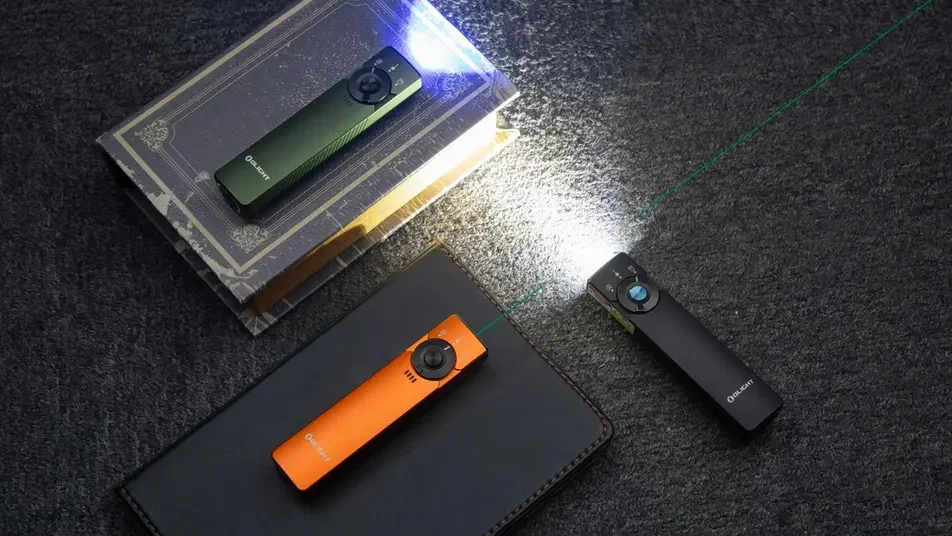
Olight Marauder Mini 2 for red light and a flood-plus-spot field view. Hog fields call for a wide view and a long confirming beam. The Olight Marauder Mini 2 compact flashlight lists up to 10,000 lumens of flood, a 750 m spotlight at 140,000 candela, and a red light at 400~120~40 lumens for 2 + 5 + 10 hours. Its limits: it weighs 16.38 oz, has no weapon mount, and Olight lists a working temperature of 0~40 ℃ (32 to 104 °F), so cold winter coyote nights sit below that range. It costs $219.99 (regular price, September 2026).
Olight Odin GL where a weapon light is legal, laser off where lasers are not. On a legal hog or coyote hunt, the Olight Odin GL tactical light puts white light on the target from the rail, with a remote pressure switch. Olight lists 1,500 lumens and 215 m for the white light, with High at 1,500~550~300 lumens for 2.5 + 168 + 20 minutes with the green beam off. Its limits matter here. The Odin GL user manual says the white light holds 1,500 lumens for 60 seconds before stepping down to 550 lumens. Its green laser is Class 3R, so it falls under Pennsylvania's ban on sights that project a beam onto the target and Wisconsin's laser-sight shining rule. It is rated IPX4, and Olight lists its use as self-defense, law enforcement, and tactical rather than hunting. The Picatinny version was sold out on September 24, 2026; the M-LOK version was available at $209.95 (regular price, September 2026).
If your state bans weapon lights for your species, carry a handheld and a headlamp instead. Olight's hunting category, linked above, lists other handhelds and headlamps. For hound hunters, Olight's article on choosing a coon hunting headlamp covers all-night runtime.
Five Checks Before You Hunt With a Light
Before any night hunt, run five checks against your state's hunting with a light laws: confirm the species is open at night, confirm the land allows it, confirm how your light may be carried, confirm your weapon and any laser are legal for the hunt, and confirm you have written permission and any registration or permit. Write down the source and date for each check.
- Species and season. Find the species in your state's current digest and confirm night hours apply today. Watch for closures during deer gun seasons, as in Oklahoma and Pennsylvania.
- Land. Private, public, or registered? South Carolina requires registered property. North Carolina requires a permit to hunt coyotes at night on public land. Oklahoma's damage-control rule requires an agricultural exemption permit. Get written landowner permission and carry it.
- Light and vehicle. Handheld, worn, weapon-mounted, or vehicle? Utah and Arizona ban lights attached to or operated from a motor vehicle for these hunts. Check whether hunting must be on foot, as in North Dakota after dark.
- Weapon and laser. Confirm the weapon type is legal at night. North Dakota bars archery at night until archery deer season closes. Turn off or leave behind any laser in Pennsylvania, where no sight may project a beam onto the target, or wherever your state restricts lasers.
- People and roads. Know the safety zones and road rules: 300 yards from a residence in South Carolina without permission, 150 yards in Pennsylvania. Never shoot from or across a public road. Consider calling the local warden, as TPWD suggests.
Warning: If you are unsure whether a night hunt is legal, do not go until the agency confirms it. Washington's spotlighting law shows how fast a lighting mistake can cost your hunting privileges.
FAQ
Changelog
- September 22, 2026: First published. State rules checked September 24, 2026; Olight specs and prices checked September 24, 2026.