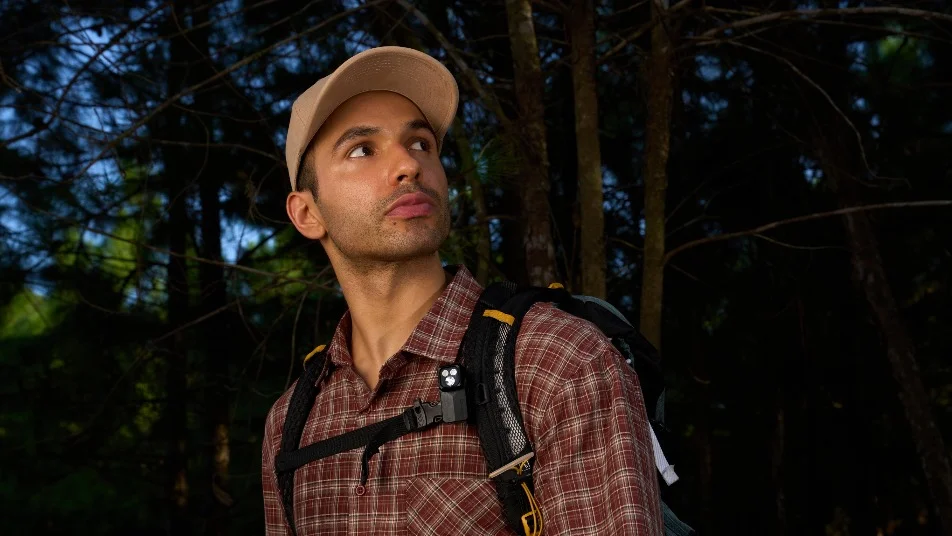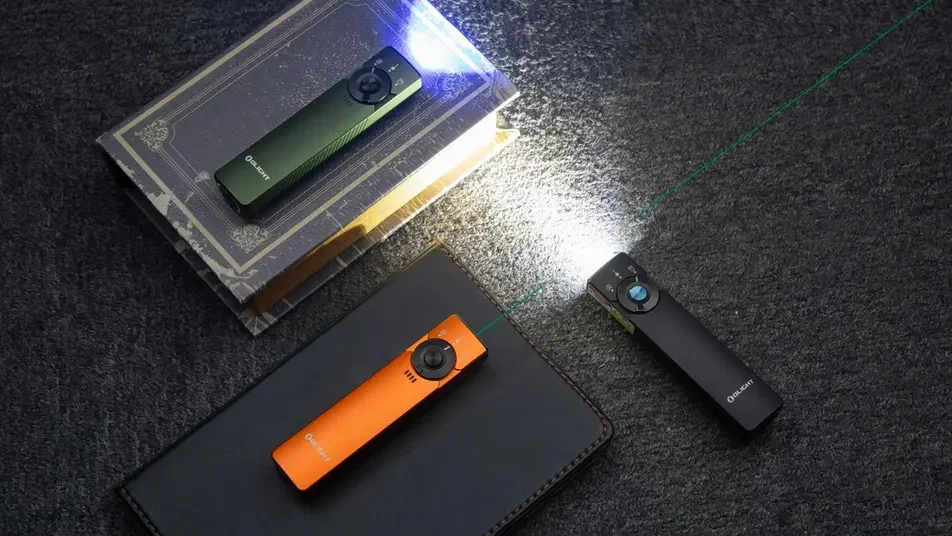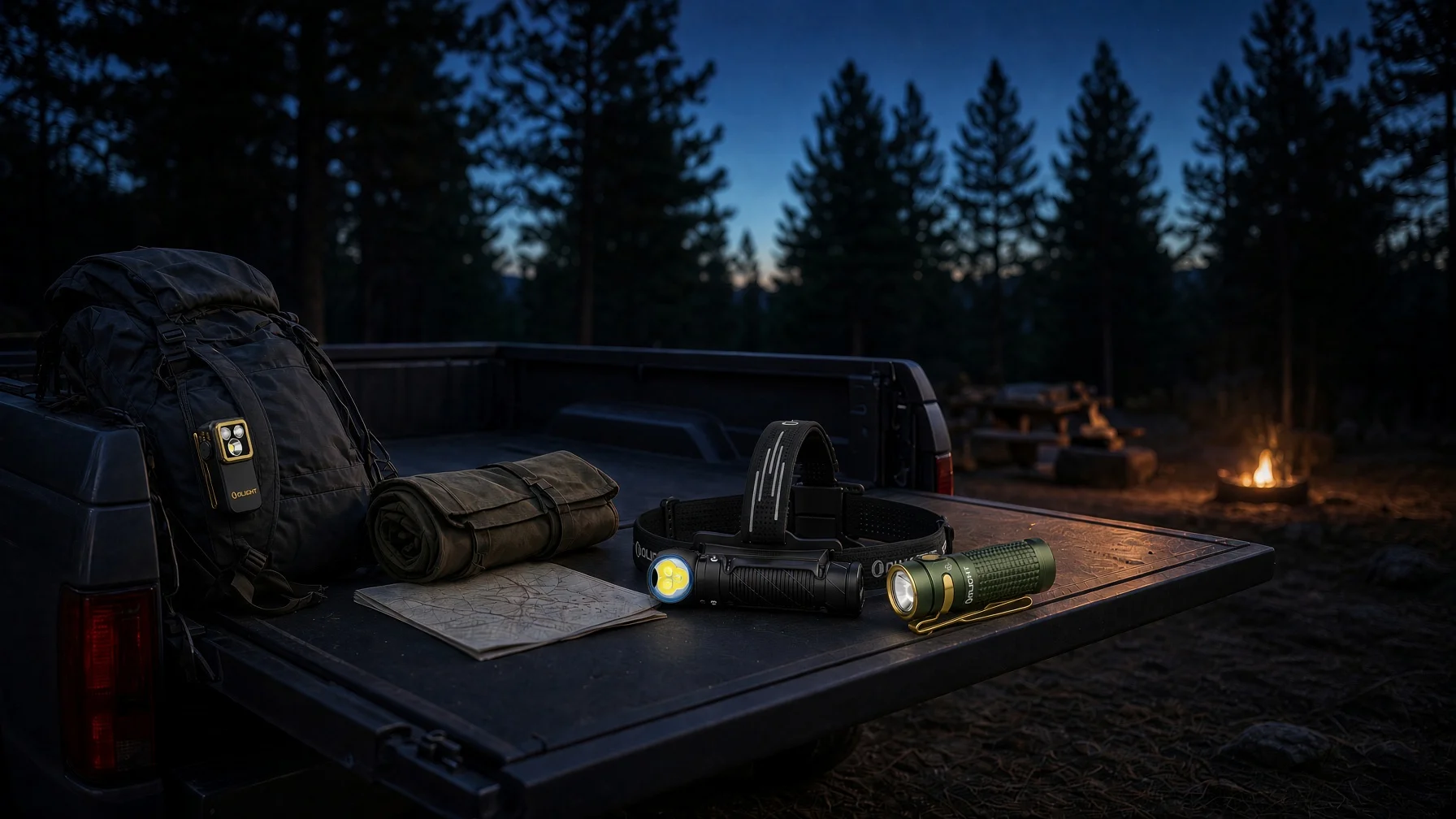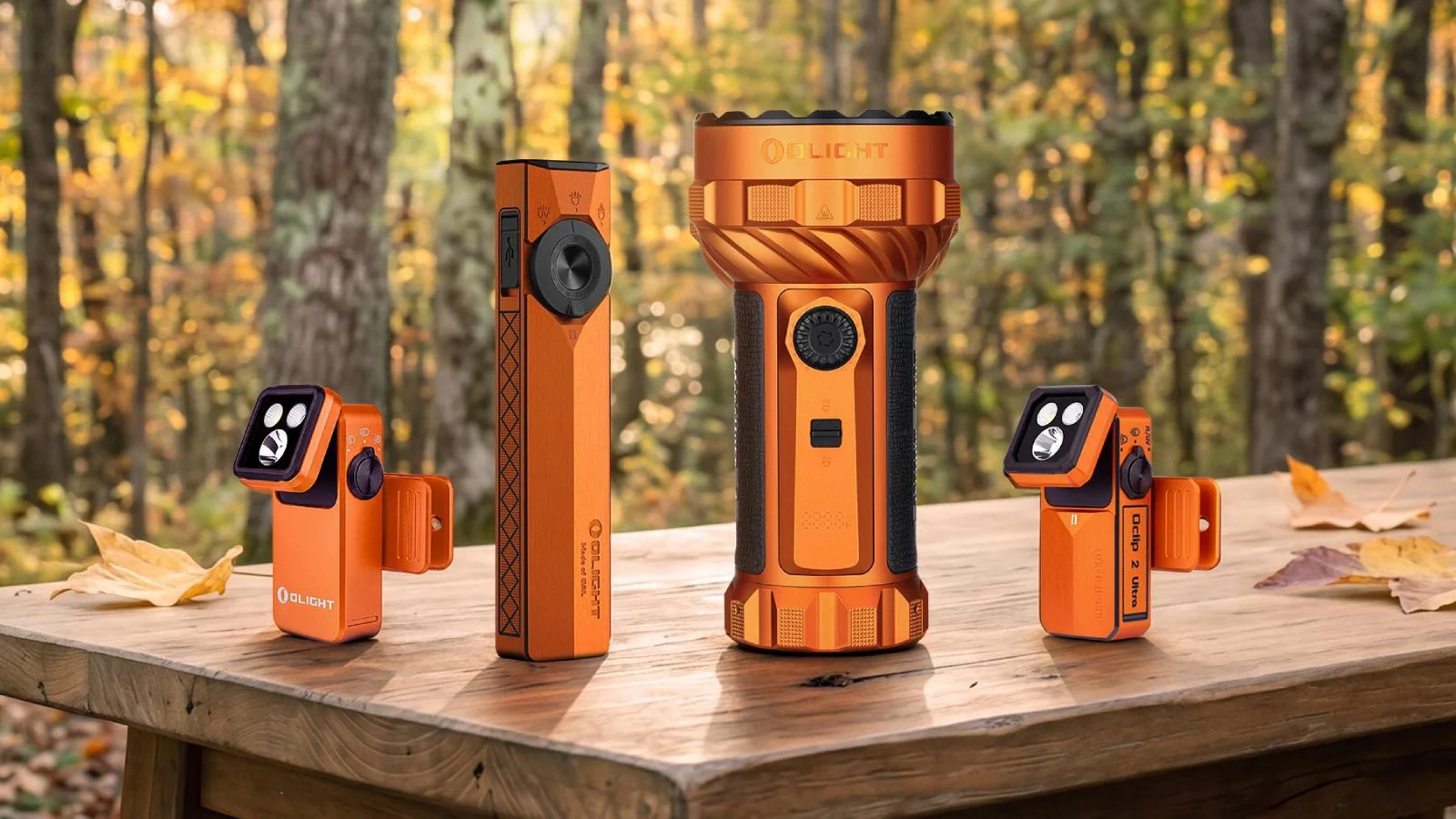
Olight makes some of the lights discussed here. Olight specs and prices come from its product pages as of September 2026; regulations and competition rules come from the state agencies and clubs linked in each section.
⚡ TL;DR
A coon hunting headlamp has two jobs: put enough light into a tree crown 50 to 80 feet up to pick out raccoon eye shine, and last from turn-out until you walk back to the truck. Wear a headlamp of about 6,000 candela, walk on a low mode, carry a handheld thrower for tall timber, and pack a spare battery.
This gear list sums up what a night behind the hounds calls for. The minimum specs are the working targets this guide uses, derived from the candela and runtime math below.
| Job on the hunt | Recommended light type | Minimum spec to look for | Olight example |
|---|---|---|---|
| Walking, creek crossings, following the dogs | Headlamp on a wide, low mode | 100 to 150 lumens with 20+ hours at that level; IP68 or IPX8 | Perun 3 on Med (120 lumens, 25 hours) |
| Shining trees up to about 80 ft | Headlamp on its highest mode | About 6,000 candela | Perun 3 (6,400 candela) |
| Shining very tall or distant trees | Handheld thrower | About 15,000 candela | Seeker 4 Pro (16,895 candela) |
| Spare power | Second cell of the same type | Swaps in under a minute, no tools | Olight 21700 battery (5000 mAh) |
| Dim light at the tree, reading a GPS handheld | Red mode | 15 to 60 lumens of red | Perun 3 red modes; Oclip 2 Pro red (40 lumens) |
| Backup light | Clip light on a pack strap or vest | Red and white modes, magnet or clip | Oclip 2 Pro |
A camping headlamp taken on a coon hunt tends to fail in three ways. The dogs tree in a big sycamore and the light dies out before it reaches the top branches. The headlamp that was bright at 9 p.m. is flickering on its last bar by 1 a.m. And every stride through the briars makes the beam jump, so you cannot see the ground or the dogs. The sections below solve each problem with published specs, simple math and the rules you hunt under.
📋 Table of Contents
- 1. What Makes a Good Coon Hunting Headlamp?
- 2. A Night of Coon Hunting, From Turn-Out to Treed
- 3. How Many Candela Do You Need to Find Eye Shine in a Tree?
- 4. How Many Lumens Do You Need for Coon Hunting?
- 5. Why Do Coon Hunters Use a Battery Pack Headlamp?
- 6. How Long Will a Headlamp Last on an All-Night Coon Hunt?
- 7. What Color Light Is Best for Coon Hunting?
- 8. How Do You Stop a Headlamp From Bouncing When You Run Through Brush?
- 9. Common Mistakes When Choosing a Coon Hunting Light
- 10. Coon Hunting Season and Night Light Rules by State
- 11. UKC and PKC Nite Hunts: What the Rules Mean for Your Light
- 12. Perun 3, Seeker 4 Pro or Oclip 2 Pro: Which Olight Fits Your Coon Hunt?
- 13. Coon Hunting Headlamp Checklist Before You Turn Out
- 14. FAQ
What Makes a Good Coon Hunting Headlamp?
A good coon hunting headlamp does three things: it throws a tight, bright spot high into trees, it runs on a low mode for five or six hours without dying, and it stays put on your head while you move through brush. Peak lumens matter less than candela, mode spacing and a spare battery. Waterproofing to IP68 or IPX8 covers creek crossings and rain.
A raccoon hunt is not one lighting job but several, and each has a different target. The table below splits a typical night into its sub-scenes and gives the light level, runtime and water protection each one needs.
| Sub-scene | What you need to see | Light level | Time spent per night | Water exposure |
|---|---|---|---|---|
| Casting the dogs at the truck | Collars, leads, tailgate | Low, 15 to 30 lumens, or red | 5 to 10 minutes | Low |
| Following the dogs through timber | Footing, logs, briars, 20 to 60 ft ahead | 100 to 150 lumens, wide beam | 4 to 5 hours | Rain, wet brush |
| Creek and ditch crossings | Bank edges, water depth | 120 to 600 lumens | A few minutes at a time | Splash or brief dunking |
| Running to a treed dog | Ground and the dog at the trunk | 120 to 600 lumens | 5 to 15 minutes per tree | Sweat, rain |
| Shining the tree | Eye shine 50 to 80 ft up | Highest mode, high candela | 2 to 8 minutes per tree | Low |
| Leashing dogs at the trunk | Snaps, collars, GPS screen | Red or 15 to 30 lumens | A few minutes | Low |
| Walking out | Trail, fences, the truck | 30 to 120 lumens | 30 to 60 minutes | Rain |
Read the table as a time budget. You spend most of the night on the walking modes and only minutes on the bright one, so the walking mode decides whether the battery lasts. The shining mode decides whether you see the coon at all.
A Night of Coon Hunting, From Turn-Out to Treed
A typical coon hunt starts after dark when you turn the hounds loose near timber and water, follow their voices until they tree, walk in to the tree, and shine the crown for the raccoon's reflective eyes. The Missouri Department of Conservation describes the same pattern and notes that the raccoon is usually located among the branches by its reflective eyes.
The Missouri Department of Conservation's guide to getting started raccoon hunting explains that hounds bark once they find the scent, which tells you they have found a trail and which direction the animal is heading. In most cases the dogs trail the raccoon to a tree where it is feeding. The agency's basic gear list is short: a good dog, a spotlight, a .22 caliber rifle and good footwear, plus hip waders if streams are present. It also suggests a GPS tracking device and notes that many hunters now put GPS tracking collars on their dogs.
Here is how the light plan works through that night, phase by phase.
- Turn-out (headlamp on red or Low). Cast the dogs on a dim setting so your eyes start adjusting to the dark. Keep the bright modes off while you check collars.
- Listening and following (Med, about 120 lumens). A wide beam at this level lights the ground a few strides ahead. It is the mode you will use most of the night.
- The dogs locate (still Med). When the chop turns to a steady tree bark, you walk in. Resist the urge to run on the highest mode. You will need that battery at the tree.
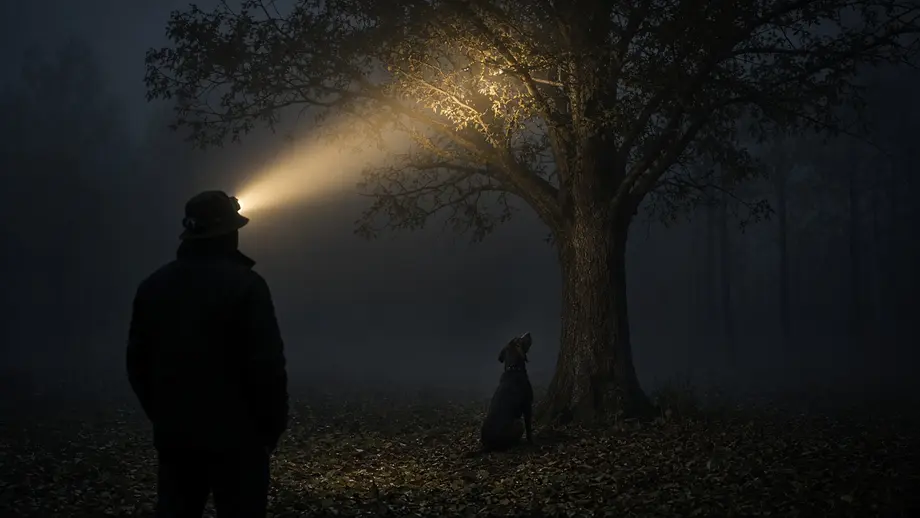
- At the trunk (Turbo on the headlamp, or the handheld). Stand back from the trunk so you can see into the crown, then work the beam limb by limb. Watch for a pair of eyes looking back.
- Leashing up (red or Low). Drop to a dim mode to snap leads so you do not blind your partners, the dogs or yourself.
- Recast or walk out (Med or Low). Check your battery indicator before the next cast, and swap cells before you hit the last bar, not after.
Tip: Stand 15 to 25 feet out from the trunk rather than right at its base. From there the beam reaches into the crown at an angle, and you can see around lower limbs instead of looking straight up the bark.
How Many Candela Do You Need to Find Eye Shine in a Tree?
About 6,000 candela is a practical floor for a coon hunting headlamp if the trees you hunt are 50 to 80 feet tall. At that intensity the beam puts roughly 10 lux on a crown 25 meters (82 feet) overhead, well above the 0.25 lux beam distance cutoff. For taller timber or long shots across a slough, a handheld of about 15,000 candela doubles or triples the light.
Candela is the right spec for this job because it measures how intense the beam is along its center, and the center is what you point into the tree. Illuminance on the target is candela divided by the distance squared. Olight's guide to candela vs lumens vs lux walks through the formula. The ANSI FL1 standard, as summarized in Streamlight's ANSI standards sheet, defines beam distance as the distance at which the light beam is 0.25 lux.
The table below applies that formula to two tree heights, with you standing 6 meters (about 20 feet) from the trunk. That puts the crown about 16.2 m (53 ft) away for a 15 m tree and about 25.7 m (84 ft) away for a 25 m tree. Olight lists candela for the highest mode only, so the lower rows scale candela in proportion to lumens. That is an estimate that assumes the same beam shape across modes.
| Light and mode (Olight lumens) | Candela (Olight spec or scaled) | Lux in the crown of a 15 m (49 ft) tree | Lux in the crown of a 25 m (82 ft) tree | Distance to 0.25 lux |
|---|---|---|---|---|
| Perun 3, Turbo 3,000 lumens | 6,400 (spec) | 24.5 | 9.7 | 160 m (524 ft) |
| Perun 3, Turbo after step-down, 800 lumens | About 1,700 | 6.5 | 2.6 | About 83 m (271 ft) |
| Perun 3, High 600 lumens | About 1,280 | 4.9 | 1.9 | About 72 m (235 ft) |
| Perun 3, Med 120 lumens | About 256 | 1.0 | 0.4 | About 32 m (105 ft) |
| Seeker 4 Pro, Turbo 4,600 lumens | 16,895 (spec) | 64.7 | 25.6 | 260 m (853 ft) |
| Seeker 4 Pro, 1,200 lumens | About 4,400 | 16.9 | 6.7 | About 133 m (436 ft) |
| Oclip 2 Pro, spotlight 400 lumens | 3,906 (spec) | 15.0 | 5.9 | 125 m (410 ft) |
Three things stand out. First, the Perun 3's walking mode barely reaches the top of a big tree, which is why you need Turbo at the trunk. Second, the Perun 3 steps down from 3,000 to 800 lumens after 2 minutes, so its crown illuminance drops to about a quarter. Shine the likeliest limbs first. Third, the Seeker 4 Pro puts about 2.6 times as much light on the same crown as the Perun 3, which is the gap you notice in tall bottomland timber.
The good news for headlamp users is that eye shine returns toward the light. The Texas Parks and Wildlife Department's young naturalist article on eyeshine explains that light passes through the retina, strikes a mirror-like membrane called the tapetum, and "is reflected back through the eye to the light source." It adds that "you must be in the right spot to be able to see it, usually directly behind the light." A headlamp sits a few inches from your eyes, so you are always in that spot. A handheld held at your waist is not, which is why many hunters raise a handheld to eye level or rest it against the cheek when shining.
What color should you look for? The Indiana Department of Natural Resources raccoon profile says raccoon eye shine "is typically bright yellow," and notes that eye shine can vary by individual animal, distance and light source. Leaves and limbs block the reflection, so move a few steps and shine again before you call a tree empty.
How Many Lumens Do You Need for Coon Hunting?
For walking behind the dogs, 100 to 150 lumens is enough, and a headlamp should hold that level for 20 hours or more. For shining the tree, lumens matter less than candela: a 3,000-lumen headlamp with a focused beam finds eyes that a wider 3,000-lumen floodlight cannot. Look for a high mode above 1,000 lumens backed by at least 6,000 candela.
The reason is beam shape. Lumens count all the light that leaves the lamp. A wide flood spreads those lumens across the whole woods, so little of it reaches the crown. A focused beam packs more of them into the center, and candela measures that center. Compare the lights in this guide: the Seeker 4 Pro produces 1.5 times the lumens of the Perun 3 (4,600 vs 3,000) but 2.6 times the candela (16,895 vs 6,400).
Lumens do matter on the ground. A mode around 120 lumens lights your footing without washing out your night vision, and it runs for a long time. Anything brighter on the walk costs battery you will want at 2 a.m. For a closer look at how these specs fit different lights, see Olight's 18650 vs 21700 vs CR123A battery comparison, which covers why most high-output lights now run on 21700 cells.
Note: Beam distance on a spec sheet is measured to 0.25 lux, a very dim level. Treat it as the farthest point where the beam still registers, not the distance at which you can pick out a raccoon behind leaves.
Why Do Coon Hunters Use a Battery Pack Headlamp?
Coon hunters use battery pack headlamps because a large battery on the belt or in a pocket holds far more energy than a cell in the headlamp shell, and it keeps that weight off the forehead. The trade is a cord that snags in brush. A self-contained headlamp with a spare cell in your pocket gets you most of the runtime without the cord.
Traditional cap lights mount a lamp on a hard hat or cap and run a cord to a belt pack. They are built for all-night hunting, and many carry large packs. A self-contained headlamp such as the Perun 3 puts its single 5000 mAh 21700 cell right behind the lamp, weighing 5.29 oz (150 g) by Olight's spec. You get less capacity per battery, so you carry a second one.
This table compares the three common coon hunting setups.
| Factor | Self-contained headlamp | Cap light with belt battery pack | Handheld thrower plus headlamp |
|---|---|---|---|
| Weight on your head | Lamp and cell together | Lamp only | Lamp and cell together |
| Cord to snag in brush | None | Yes, from cap to belt | None |
| Capacity per charge | One cell (5000 mAh on the Perun 3) | Usually larger packs | Two cells, one in each light |
| Extending the night | Swap in a spare cell | Larger pack or second pack | Spare cells for either light |
| Beam at the tree | One beam, limited by headlamp candela | Often a focused spot built for coon hunting | Handheld adds a far stronger spot |
| Hands free while walking | Yes | Yes | Yes, handheld holstered |
| Hands free while shining | Yes | Yes | One hand on the handheld |
| Charging | Magnetic USB cable (MCC3 on the Perun 3) | Depends on the pack | Two lights to charge |
The takeaway is that a self-contained headlamp plus one spare cell covers a normal hunt, and a handheld thrower covers tall trees. A dedicated cap light makes sense if you hunt several nights in a row or want one beam for everything. Olight's 21700 battery is a customized 5000 mAh, 3.6V cell that Olight lists as compatible with both the Perun 3 and the Seeker 4 Pro, so one spare cell fits either light. It costs $26.95 (regular price, September 2026).
Warning: Use only the cell your light's maker lists for it. Olight describes this battery as customized for specific models, so a generic 21700 may not fit or may not work in these lights.
How Long Will a Headlamp Last on an All-Night Coon Hunt?
A headlamp lasts all night on a coon hunt only if you walk on a middle or low mode. By Olight's rated runtimes, a Perun 3 that walks five hours on its 120-lumen Med mode and shines eight trees for three minutes each on Turbo uses about half of one battery. Walk on its 600-lumen High mode instead, and the same night drains the cell before you finish.
The method has two parts. For a steady mode, divide the minutes you plan to use it by its rated runtime. For a mode that steps down, count lumen-minutes (lumens × minutes) and divide by the lumen-minutes in the whole rated chain, because the bright first minutes cost far more than the dim tail. The Perun 3's Turbo chain holds 3,000 × 2 + 800 × 180 + 600 × 30 = 168,000 lumen-minutes, close to the 180,000 of its Med mode (120 lumens × 1,500 minutes), so lumen-minutes track the battery well. Treat the result as an estimate and keep at least a quarter of the battery in reserve.
The plans below assume a six-hour hunt with five hours of walking, eight trees shined for three minutes each, and about 36 minutes on dim settings. Each shine restarts Turbo, so every tree costs 2 minutes at 3,000 lumens plus 1 minute at 800 lumens: 6,800 lumen-minutes, or about 4% of the chain.
| Six-hour plan (Perun 3) | Walking mode and rated runtime | Share for 5 hours of walking | Shining: 8 trees × 3 minutes, Turbo restarted each time | Dim tasks: 36 minutes of Red Low (70 hours) | Estimated share of one battery |
|---|---|---|---|---|---|
| Walk on Low | 30 lumens, 89 hours | 5.6% | 32.4% | 0.9% | About 39% |
| Walk on Med | 120 lumens, 25 hours | 20.0% | 32.4% | 0.9% | About 53% |
| Walk on High | 600~120 lumens, 300 + 30 minutes | 98.0% | 32.4% | 0.9% | About 131%, out before dawn |
Two things stand out. Walking on High is the most common reason a headlamp "doesn't make it to the back half of the night." It is a mode problem, not a battery problem. And the few minutes of Turbo at each tree cost more than five hours of walking on Med. On Med, one cell finishes a six-hour hunt with nearly half left, and a spare 21700 in your pocket covers a long chase or a second night. If you tree more than eight coons, shine the first minute on Turbo and drop to High for the rest.
A handheld used only at the tree still needs charging after every hunt. On the Seeker 4 Pro, the Turbo chain is 4,600 × 2.5 + 1,200 × 122 + 600 × 35 = 178,900 lumen-minutes. Each three-minute shine with a fresh Turbo start (2.5 minutes at 4,600 lumens, then 30 seconds at 1,200) costs 12,100 lumen-minutes, so eight trees use about 54% of a charge. Because both lights take the same 21700 cell, one charged spare backs up either of them.
For competition, the budget is smaller. In the UKC World Coonhound Nite Hunt Championship rules, first-night and second-night casts hunt two hours, and the general nite hunt rules allow eight minutes of hunting time to shine each tree. By the same math, two hours on Med (8%) plus four trees shined for the full eight minutes (2 minutes at 3,000 lumens and 6 at 800, about 6.4% each) come to about a third of one Perun 3 cell.
Tip: These estimates assume Turbo restarts at 3,000 lumens every time. A warm light may step down sooner, which uses less battery but also puts less light in the crown. The ANSI FL1 standard measures runtime from 30 seconds after turn-on until output falls to 10% of that starting value, so rated runtimes are a lab figure, and cold nights shorten them. Keep the 25% reserve.
What Color Light Is Best for Coon Hunting?
White light is best for finding raccoon eyes in the tree, because it gives the most light for the battery and shows eye shine clearly. Red is best for work at the tree and for walking once your eyes adjust, because it protects your night vision. Many hunters add green or amber for shining wary coons. That preference comes from field experience, not controlled research.
The science on the raccoon side is thin but useful. A 1992 study by Jacobs and Deegan, Cone photopigments in nocturnal and diurnal procyonids, measured the cone pigments of raccoons and found that the raccoon is monochromatic. That means a raccoon has one class of cone, so it likely sees your light as brighter or dimmer rather than as a distinct color. The study did not test how raccoons react to hunting lights, so treat any color claims as field lore.
On your side, red light has a clearer benefit. The National Park Service article on dark adaptation and the value of red flashlights explains that night vision depends on rhodopsin, which takes "from 20 to 40 minutes" to build up and a few seconds of bright light to break down. It says deep red light does not have that effect and that "a dim red light is best." Olight's red light and night vision guide covers the same effect for stargazers.
This table matches each color to the jobs it does best on a coon hunt.
| Light color | Best use on the hunt | Strength | Limitation |
|---|---|---|---|
| White | Shining the crown, crossing water, running to the tree | Most output and candela per battery | Resets your night vision; lights up the whole hillside |
| Red | Leashing dogs, reading a GPS handheld, walking on a dark night | Keeps your eyes adapted; low glare on partners | Low output; little reach into a tree |
| Green or amber | Shining coons that look away from white | Hunters report some coons hold better | Not offered on the Olight lights in this guide |
Note: None of the Olight lights in this guide has a green mode. If you want green for shining, pair a green hunting light with the Perun 3 and use the Perun 3's white and red modes for everything else.
How Do You Stop a Headlamp From Bouncing When You Run Through Brush?
To stop headlamp bounce, wear the lamp low on your forehead, cinch the strap snug over a knit or ball cap, and keep the lamp tilted so the beam lands a few strides ahead. Heavier lamps bounce more, so carry any extra light in your hand or on your chest, not on the strap.
Bounce comes from mass sitting in front of your head with nothing to stop it rocking. A few adjustments cut it down.
- Seat the lamp low. Put it just above your eyebrows, where the forehead is flat. High on the forehead, the lamp levers against the strap on every step.
- Snug, not tight. Tighten until the lamp does not move when you shake your head, then back off one notch if it presses.
- Wear a cap underneath. A knit cap or ball cap gives the strap something to grip. A cap brim also shades your eyes from branches and the lamp's spill.
- Tilt down for running. Aim the beam at the ground 10 to 15 feet ahead. The spot moves less on the ground than it does at eye level.
- Carry, don't stack. Keep a handheld on your belt or in your hand rather than adding a second light to the strap.
- Replace a stretched band. Olight sells a replacement Headband for Perun Series with a Perun 3 version.
Note: The Perun 3 slides out of its headband mount to work as a handheld light. Olight notes that the headlamp mounting bracket is metal and "is expected to scratch the body" if the light goes in and out repeatedly.
Common Mistakes When Choosing a Coon Hunting Light
The most common mistake when choosing a coon hunting light is buying on the highest lumen number. Peak lumens usually last a minute or two before the light steps down, and they say little about how far the beam reaches into a tree. Candela, the walking-mode runtime and a spare battery decide how the light performs on a real hunt.
This list pairs the mistakes with a fix for each.
- Shopping on max lumens. Fix: compare candela for the tree and the runtime of a 100 to 150 lumen mode for the walk.
- Walking on High. Fix: walk on Med and save Turbo for the trunk. The runtime table above shows the difference.
- Ignoring step-down. Fix: read the lumen chain (for example, 3,000~800~600 lumens on the Perun 3) and shine the likeliest limbs first.
- Leaving the spare at the truck. Fix: carry a charged spare cell in an inside pocket, in a case.
- One light, no backup. Fix: clip a small second light to your pack strap or vest.
- Sweeping fields on the way in. Fix: keep the beam on the ground until the dogs are treed, because several states restrict lights used to search for other wildlife.
- Soaking a splash-rated light. Fix: check the rating. IP68 and IPX8 lights handle submersion; an IP66 clip light should not go under the creek.
Coon Hunting Season and Night Light Rules by State
Raccoon seasons, night light rules and dog rules are set by each state, and they differ enough to change how you hunt. Missouri allows artificial lights for raccoons treed with the aid of dogs, Virginia bars lights cast from a vehicle, and both publish separate dates for hunting and chasing. Always read your state wildlife agency's current regulations before you turn out.
The table below summarizes three state agencies' published rules as of September 2026. It is a starting point, not legal advice, and rules change every year.
| State agency | Raccoon season (as published) | Night light rule | Dog rules |
|---|---|---|---|
| Missouri Department of Conservation | Hunting and trapping: August 1 to October 15, 2026, and November 15, 2026, to February 28, 2027 | Artificial lights may be used to hunt raccoons "when treed with the aid of dogs"; lights may not be used to search for, spot or illuminate other wildlife | Dogs may not be used to hunt furbearers during daylight hours in parts of firearms deer season; dogs must wear a collar with owner ID |
| Virginia Department of Wildlife Resources | Firearms season October 15 to March 10, statewide | Lights may be used as long as the light is not attached to or cast from a vehicle | Chase-only season is a continuous open season statewide, with listed exceptions; no raccoon may be taken outside the firearms season |
| North Carolina Wildlife Resources Commission | Raccoon and opossum: October 12, 2026, to February 28, 2027 | Raccoon and opossum have long been legal to take at night; local light laws bar shining a light on deer or sweeping a light in search of deer | Not covered on the pages cited here; read the dog-hunting rules in the current Regulations Digest |
Here is what each rule means for your light, with the agency's page for the full text.
- Missouri. The Missouri raccoon regulations list lights as legal for "raccoons and other furbearing animals when treed with the aid of dogs" and say artificial lights "may not be used to search for, spot, illuminate, harass, or disturb other wildlife." Keep your beam off deer in fields. During training, the same page says dogs may chase but not take wildlife, and you need the appropriate permit. While hunting, dogs must wear a collar with the owner's full name and address, Conservation Number or complete telephone number.
- Virginia. The Virginia furbearer hunting regulations set a bag limit of two raccoons per hunter east of the Blue Ridge and two per hunting party west of it, each taken between noon one day and noon the next. During chase-only seasons, the page makes it unlawful to carry a firearm, bow or crossbow, or to have an axe, saw or tree climbing device.
- North Carolina. The Wildlife Resources Commission's 2026-2027 season dates list raccoon and opossum from October 12, 2026, to February 28, 2027. Its night hunting FAQ notes that hunters have long been able to take raccoon and opossum at night, and it quotes local light laws that bar anyone from intentionally shining a light on a deer or sweeping a light in search of deer. Keep the beam on the ground until the dogs tree.
Safety note: Confirm your target before you shoot into a tree, and know what is beyond it. The Texas Parks and Wildlife hunter education safety chapter says to "Be sure of your target and what is in front of and beyond your target" and to know how far bullets can travel. A round fired upward can come down far from the tree, so check where your partners and dogs are first.
UKC and PKC Nite Hunts: What the Rules Mean for Your Light
In a UKC nite hunt, light is part of scoring: plus points for a treed coon count only when the coon is seen during shining time, and the rulebook allows eight minutes of hunting time to shine each tree. Lights, lasers and thermal imagers are allowed scoring aids. PKC hunts follow PKC's own rulebook, so check its current edition before you enter.
The 2023 UKC Coonhound Rulebook, listed as effective January 1, 2023, sets out the Official Nite Hunt Honor Rules. These are the lighting-related points, with what they mean in the woods.
| UKC rule (2023 rulebook) | What it says | What it means for your light |
|---|---|---|
| Points will be plus, rule 3(a) | Dogs strike and tree "and coon is seen, during shining time only" | If the cast cannot see the coon, the dog does not get plus tree points. Throw matters. |
| Scoring dogs, rule 11(b) | "Eight minutes of hunting time may be used to shine trees"; the first-tree handler may shine alone for the first two minutes, if requested | Your light needs to reach the crown on its first two minutes of Turbo, before step-down. |
| Scratching offenses, rule 6(t) | Scoring aids other than "light, mechanical squaller, or thermal imaging device" bring a scratch; "Laser pointer light is permitted" | A handheld thrower and a thermal imager are both allowed. Other devices are not. |
| Scratching offenses, rules 6(o) and 6(p) | Scratch for climbing or cutting trees, disturbing a place of refuge, or intentionally killing coon or other game | Competition hunts are no-kill. Your light's job ends when the coon is seen. |
| Scratching offenses, rule 6(q) | Scratch "for searching tree before the start of shining time" | Keep the bright beam off the crown until the cast starts shining time. Light your footing only. |
| Spectators, rule 10(b) | Spectators may not shine the tree unless all handlers agree at the start of the hunt | Bring enough light for yourself, not a backup from the gallery. |
The Professional Kennel Club (PKC) runs its hunts under its own Nite Hunt Rules, published for the 2024 to 2027 cycle, and PKC can amend them between editions. Shining time and scoring aids are defined in that rulebook, not in UKC's, and they are not the same across clubs. Get the current PKC rules and any posted amendments from PKC or your hunt director before an event, and read the shining and scoring sections.
Tip: In a two-minute first shine, start with the headlamp on Turbo, since the Perun 3 holds 3,000 lumens for 2 minutes. Then switch to the handheld if the crown is tall or full of leaves.
Perun 3, Seeker 4 Pro or Oclip 2 Pro: Which Olight Fits Your Coon Hunt?
For most coon hunters, the Perun 3 is the headlamp to start with: 6,400 candela for the tree, a 120-lumen mode that runs 25 hours for the walk, and red light for the leash-up. Add the Seeker 4 Pro if you hunt tall bottomland timber, and clip an Oclip 2 Pro to your pack strap as a backup and red work light.
This table collects Olight's official specs and prices, checked on September 24, 2026.
| Spec (Olight) | Perun 3 | Seeker 4 Pro | Oclip 2 Pro |
|---|---|---|---|
| Type | Headlamp and flashlight | Handheld flashlight | Clip light |
| Max output | 3,000 lumens | 4,600 lumens | 530 lumens (flood) |
| Max intensity | 6,400 candela | 16,895 candela | 3,906 candela |
| Beam distance | 160 m (524 ft) | 260 m (853 ft) | 125 m |
| Turbo chain | 3,000~800~600 lumens, 2 + 180 + 30 minutes | 4600~1200~600 lumens, 2.5 + 122 + 35 minutes | Flood 530~300~100 lumens, 1 + 58 + 5 minutes |
| Walking mode | Med 120 lumens, 25 hours | Low 50 lumens, 60 hours | Medium flood 100 lumens, 3 hours 45 minutes |
| Red light | 60 lumens (14 hours), 15 lumens (70 hours) | None | 40 lumens (4 hours), 4 lumens (27 hours) |
| Battery | 5000 mAh 21700 | 5000 mAh 21700 | 600 mAh built in |
| Water rating | IP68 | IPX8 | IP66 |
| Weight | 5.29 oz (150 g) | 7.23 oz (205 g), battery included | 2.66 oz (75.5 g), battery included |
| Price | $89.99 (regular price, September 2026) | $139.99 (regular price, September 2026) | $54.99 (regular price, September 2026) |
Perun 3 for most hunters. The hard part of coon hunting is lighting the walk and the tree with one light that lasts. The Olight Perun 3 headlamp covers both, with 6,400 candela for the crown and a Med mode of 120 lumens rated at 25 hours for the walk. Its red modes (60 and 15 lumens) handle leash-ups, and its large metal side button is designed for gloved hands. The limits: the 3,000-lumen peak lasts 2 minutes before stepping to 800, it has one cell, not a belt pack, and it has no green mode. At 25 m its Turbo puts about 9.7 lux on the crown, which is a working level but not much margin in the tallest trees.
Seeker 4 Pro for tall timber. If your dogs tree in 80-foot sycamores and cottonwoods, the headlamp runs short. The Olight Seeker 4 Pro flashlight has 16,895 candela, about 2.6 times the Perun 3's intensity, and a rotary knob that Olight says allows step-less dimming and easy operation with heavy gloves. It uses the same 21700 cell family, so one spare fits both lights. The limits: it has no red light, it weighs 7.23 oz, and it takes a hand while you shine. Olight lists its uses as everyday carry, outdoors and law enforcement, so it is a general high-power light rather than a dedicated hunting spotlight.
Oclip 2 Pro as backup and work light. A dead headlamp in the middle of a bottom is a real problem. The Olight Oclip 2 Pro clip light clips to objects up to 14 mm thick, including straps and MOLLE webbing, and a 115° head tilt lets you aim it at your hands or the ground. It has a flood, a 125 m spotlight and red light. The limits: its 600 mAh battery runs the 100-lumen flood for 3 hours 45 minutes, so it is a backup rather than an all-night light, and its IP66 rating means you should keep it out of the creek. If you want a UV mode as well, the Oclip 2 Ultra adds one; never look into a UV emitter or shine it on skin.
Olight's hunting lights page collects the brand's lights for other kinds of hunts, and its headlamps page lists the rest of the headlamp range. If you also hunt hogs at night, Olight's guide to the best rifle light for hog hunting covers weapon-mounted setups.
Coon Hunting Headlamp Checklist Before You Turn Out
Before you turn out, charge both the headlamp and a spare cell, set the lamp to its walking mode, confirm Turbo and red work with gloves on, and read your state's current raccoon rules. The five minutes you spend at the tailgate decide whether your light lasts to the last tree.
Run through this list at the truck.
- Charge the headlamp and the spare 21700 cell, and put the spare in an inside pocket.
- Check the headband: snug on your cap, lamp low on your forehead, beam aimed at the ground a few strides ahead.
- Practice the switch sequence with gloves: walking mode, Turbo, red, off.
- Pack a second light, either a handheld thrower for tall trees or a clip light as a backup.
- Confirm your dogs' collars carry the ID your state requires and that GPS collars are charged.
- Read your state wildlife agency's current raccoon season, light and dog rules, including any chase-only dates.
- For a UKC or PKC hunt, reread the current rulebook's shining and scoring sections.
- Plan the night's battery: walk on Med or Low, save Turbo for the trunk, and swap cells at one bar.
FAQ
Changelog
- September 21, 2026: First published. Olight specs and prices checked September 24, 2026.