TL;DR
This flashlight battery comparison guide explains the key differences between 18650, 21700, CR123A, and AA batteries, including voltage, capacity, runtime, safety, and real-world applications. Whether you're choosing the best battery for flashlight performance, everyday carry, emergency preparedness, or professional use, understanding battery chemistry and compatibility helps maximize brightness, runtime, reliability, and long-term value while ensuring safe operation.
Contents
1. Understanding the Four Most Common Flashlight Battery Types 2. 18650 vs 21700 vs CR123A vs AA: Key Differences 3. Which Flashlight Battery Is Best for Your Needs? 4. Flashlight Battery Safety and Charging Best Practices 5. Frequently Asked Questions About Flashlight Batteries 6. Conclusion: Match Battery to Your Usage Pattern
Modern lighting technology depends heavily on the power source behind the LED. Choosing the right battery determines how long your light lasts, how bright it gets, and how it performs in extreme temperatures. For beginners, the variety of numbers and letters like 18650, 21700, and CR123A can be confusing.
Understanding the Four Most Common Flashlight Battery Types
When looking for the best battery for flashlight use, you generally encounter four main categories. Each serves a specific purpose ranging from household utility to high-stakes tactical operations.
AA Batteries (The Universal Standard)
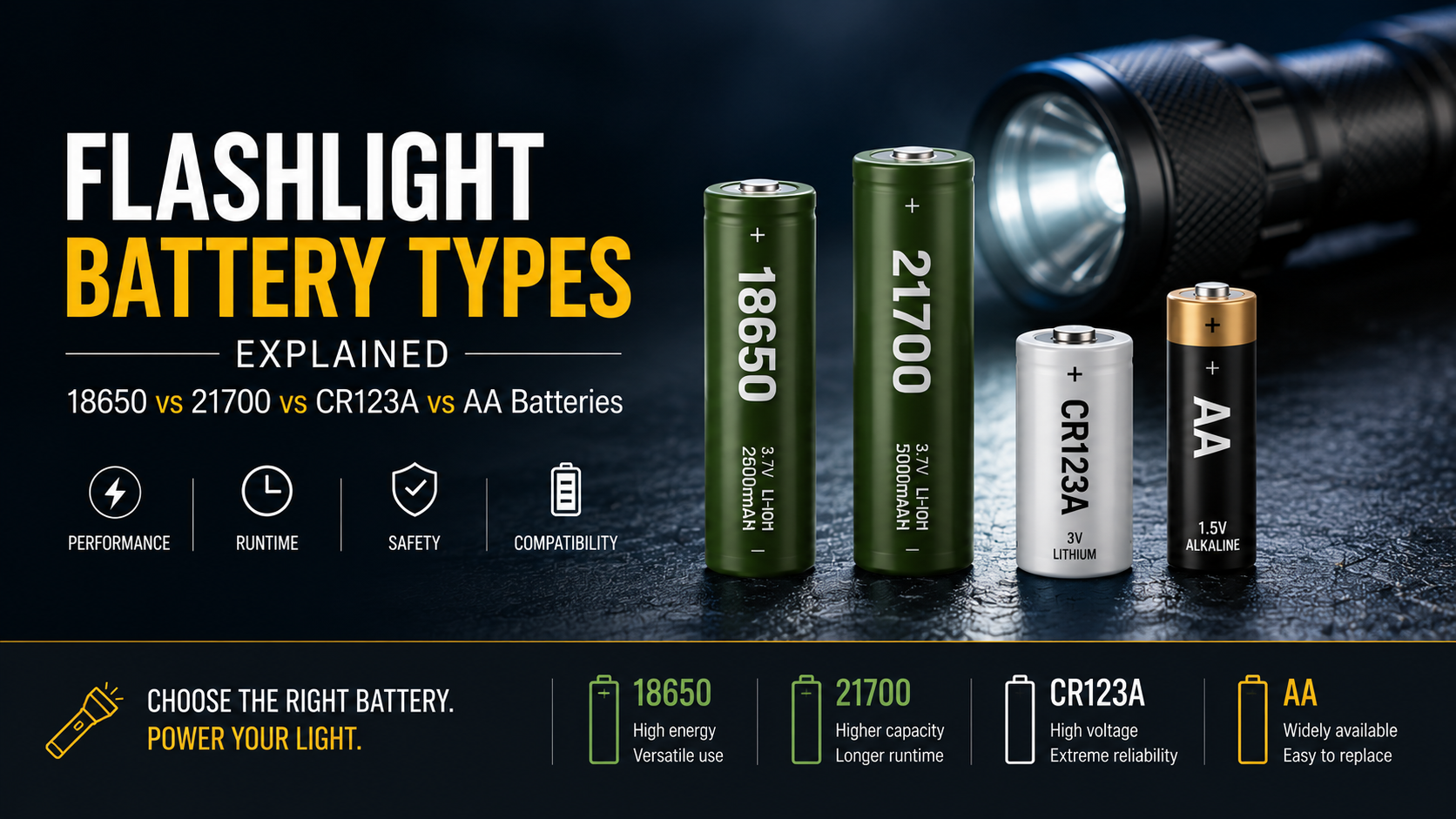
The AA battery is the most recognized power source globally. You can find them in any grocery store or gas station. They come in several chemistries, including Alkaline (disposable), NiMH (rechargeable), and Lithium primary (disposable, high-performance). While convenient, they have lower energy density compared to lithium-ion alternatives, making them better suited for low-to-mid power lights.
CR123A Batteries (The Tactical Specialist)
CR123A batteries are 3-volt lithium primary cells. They are shorter and wider than AA batteries. Professionals favor them for their long shelf life (up to 10 years) and excellent performance in freezing temperatures. They do not leak like alkaline batteries, making them ideal for emergency kits. However, they are typically more expensive and disposable, which leads many high-volume users toward rechargeable options.
18650 Batteries (The Modern Workhorse)
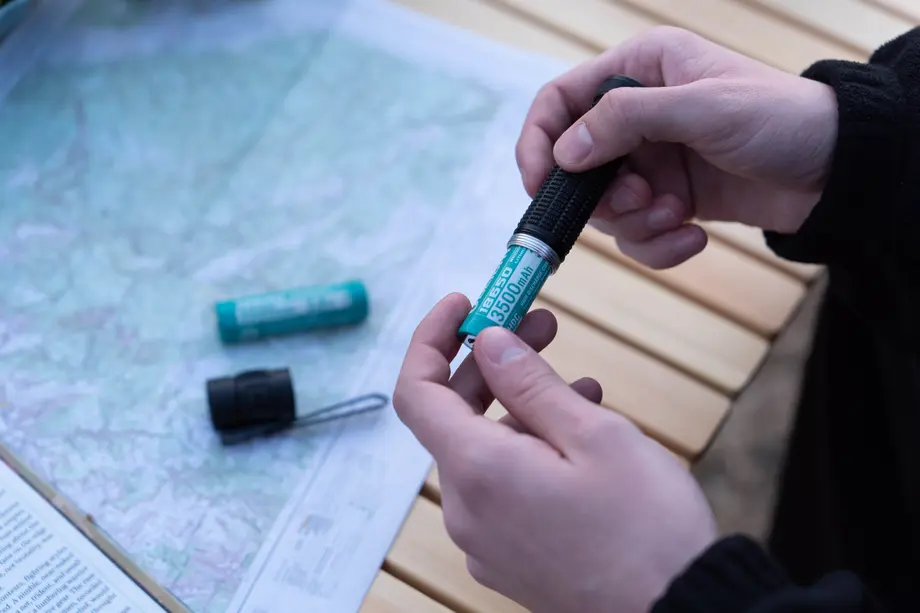
The 18650 is a rechargeable lithium-ion cell. The name refers to its dimensions: 18mm in diameter and 65mm in length. These batteries revolutionized the industry by providing much higher voltage (3.6V to 3.7V) and capacity than traditional cells. A single 18650 can often replace two CR123A batteries in compatible lights, offering a more sustainable and cost-effective solution for frequent users.
Lithium-ion batteries such as 18650 cells became widely adopted because they offer substantially higher energy density than traditional alkaline batteries, enabling longer runtimes and higher-output LED flashlights while remaining rechargeable for hundreds of charge cycles (Source: Battery University-How to Store Batteries).
21700 Batteries (The High-Performance Powerhouse)
As LEDs become more efficient and powerful, the demand for energy increases. The 21700 battery (21mm by 70mm) is the current industry leader for high-output All Products. It offers significantly more capacity and discharge current than the 18650.The growing adoption of 21700 cells across the portable electronics and lighting industries is largely driven by their ability to store more energy and deliver higher continuous discharge currents than comparable 18650 cells, making them particularly suitable for modern high-output LED systems (Source: Battery University-How to Store Batteries).
18650 vs 21700 vs CR123A vs AA: Key Differences
Understanding the technical nuances is essential for flashlight battery compatibility. A battery that fits physically might not provide the correct voltage, which can damage the internal circuitry of your device.
Size, Voltage, and Capacity Comparison
The following table outlines the physical and electrical properties of these four common types:
| Battery Type | Dimensions (Approx.) | Nominal Voltage | Average Capacity | Chemistry Type |
|---|---|---|---|---|
| AA (Alkaline) | 14mm x 50mm | 1.5V | 2000-2500 mAh | Disposable |
| CR123A | 17mm x 34mm | 3.0V | 1500 mAh | Disposable Lithium |
| 18650 | 18mm x 65mm | 3.6V/3.7V | 2500-3500 mAh | Rechargeable Li-ion |
| 21700 | 21mm x 70mm | 3.6V/3.7V | 4000-5000 mAh | Rechargeable Li-ion |
Voltage is a critical factor. High-output LEDs require higher voltage to reach their maximum brightness. While an AA battery provides 1.5V, a lithium-ion cell provides nearly 3.7V, allowing the flashlight to drive the LED much harder.Industry testing standards recognize voltage, runtime, and output as closely interconnected factors. Higher-voltage lithium-ion batteries can drive LEDs more efficiently at high output levels, while battery capacity and discharge characteristics significantly influence sustained brightness and runtime performance (Source: ANSI/PLATO FL 1 Standard).
Runtime and Performance Comparison
Capacity, measured in milliamp-hours (mAh), indicates how much "fuel" the battery holds. However, runtime is not just about capacity; it is also about the discharge rate.
- 21700 cells can handle high-drain tasks without overheating, maintaining brightness for longer periods.
- 18650 cells offer a balance of size and power, making them the standard for most handheld professional lights.
- CR123A cells provide consistent voltage throughout their life but drain quickly when used on "Turbo" modes.
- AA cells often suffer from voltage sag under heavy loads, meaning the light will dim significantly as the battery drains.
Rechargeable vs Disposable Batteries
Flashlight battery types explained for beginners must highlight the cost-benefit analysis of rechargeables.
- Rechargeable (Li-ion/NiMH): Higher initial cost but pays for itself after 10-20 charges. They provide better performance for high-lumen lights.
- Disposable (Alkaline/Lithium Primary): Best for low-usage backup lights or extreme cold where rechargeables might struggle. Alkalines are prone to leaking and can ruin expensive flashlights if left inside for too long.
Which Flashlight Battery Is Best for Your Needs?
No single battery is perfect for every situation. You must match the power source to your specific activity.
Everyday Carry (EDC)
For EDC, size and weight are the primary concerns. The ideal everyday carry flashlight should be small enough to fit comfortably in a pocket, bag, or organizer while still delivering dependable illumination when needed.Most users prefer 18650-powered lights because they offer a slim profile while still providing over 1,000 lumens of light. If you prefer a very small light, AA or even AAA options are available, though you sacrifice brightness and runtime. Many modern EDC lights now feature built-in rechargeable batteries for convenience, but removable 18650s remain popular for those who want to swap spares during long shifts.

Outdoor, Tactical, and Professional Use
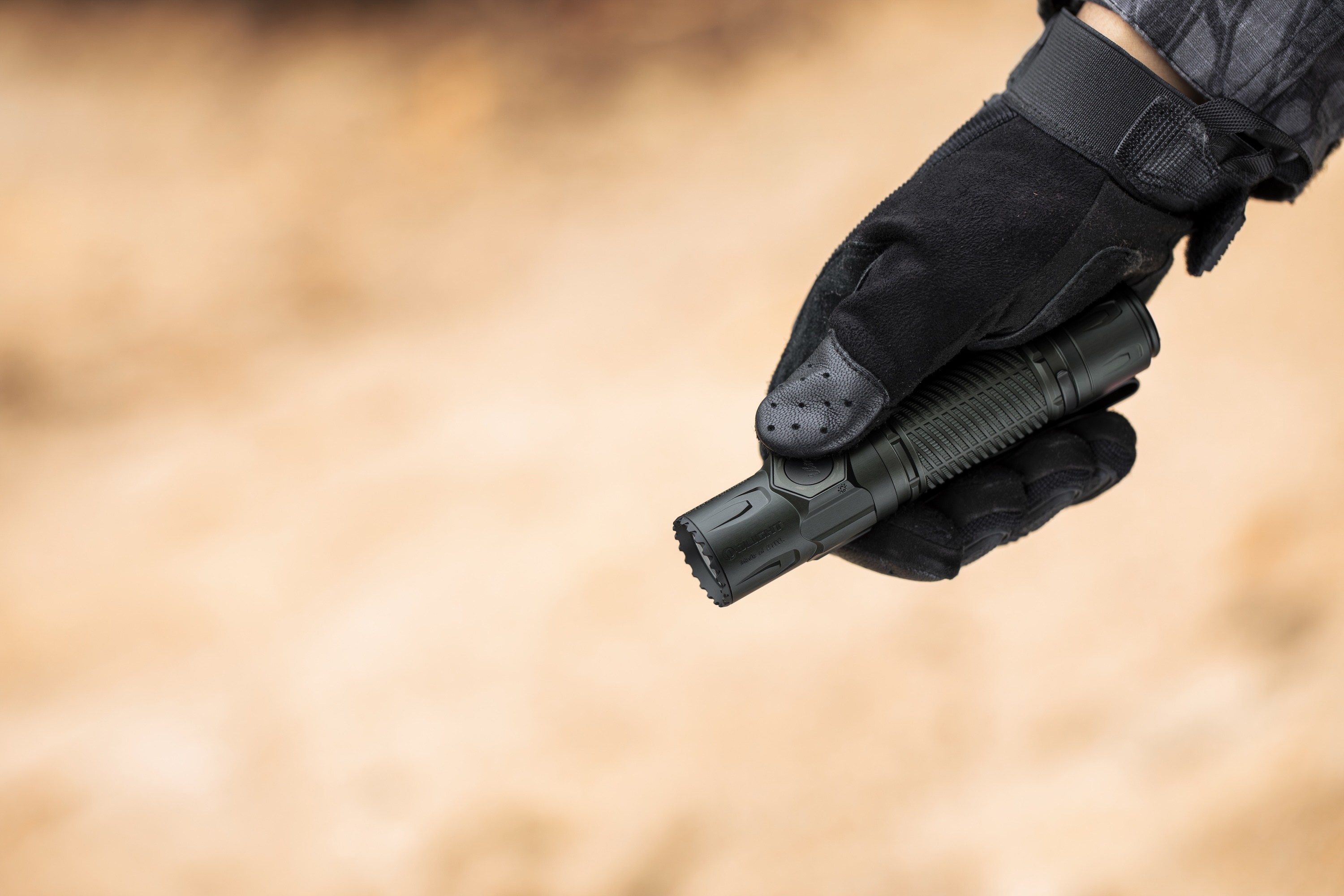
Tactical situations demand reliability and high output. Tactical Flashlights often use 21700 batteries or dual CR123A setups. The 21700 is preferred for search and rescue operations where you need 2,000+ lumens for extended periods. The high discharge rate ensures that the light doesn't step down in brightness too quickly.
Emergency Preparedness and Backup Lighting
For a "set it and forget it" emergency kit, CR123A or Lithium AA batteries are the winners. They have a 10-year shelf life and do not self-discharge as quickly as rechargeable lithium-ion cells. If you keep a light in your car glovebox, the temperature fluctuations can kill a rechargeable battery, but a CR123A will remain ready for years.Lithium primary batteries such as CR123A are widely used in emergency and tactical equipment because of their exceptionally low self-discharge rates and long storage life, allowing them to remain operational for many years when stored properly (Source: Battery Storage Guidelines).
Flashlight Battery Safety and Charging Best Practices
Lithium-ion batteries are high-energy devices and require proper handling to avoid accidents.
Safe Charging and Storage
- Use Dedicated Chargers: Only use chargers designed for your specific battery chemistry. Smart chargers prevent overcharging by cutting off power once the battery reaches 4.2V.
- Never Charge Unattended: While rare, battery failures occur during the charging cycle.
- Storage Voltage: If you are not using your 18650 or 21700 batteries for more than a month, store them at approximately 3.7V (about 40-50% charge). Storing them fully charged or fully depleted shortens their lifespan.
- Check Wraps: If the plastic shrink wrap on your battery is torn, stop using it immediately. The entire metal body of the battery is the negative terminal; a tear can cause a short circuit against the flashlight wall.
How to Extend Battery Lifespan
To get the most out of your investment from the Olight Store, follow these maintenance steps:
- Avoid deep discharge: Try not to let your lithium-ion batteries drop to 0%. Recharging them when they hit 20-30% extends their total cycle life.
- Temperature control: Heat is the enemy of batteries. Do not leave your flashlight on the dashboard of a hot car.
- Storage voltage: If you are not going to use a rechargeable battery for several months, store it at approximately 40-50% charge rather than fully full or empty.
Frequently Asked Questions About Flashlight Batteries
Can Different Battery Types Be Interchanged?
Is 21700 Better Than 18650?
Which Battery Type Lasts the Longest?
What Is the Best Battery for Modern Flashlights?
Conclusion: Match Battery to Your Usage Pattern
The best battery for a flashlight depends entirely on how you intend to use the tool. If you are a professional who uses their light daily, investing in a high-capacity 21700 or 18650 system is the most efficient choice. For those building an emergency kit for a hurricane or roadside kit, the stability of CR123A lithium primary cells is unmatched.
Always prioritize safety by using genuine cells and keeping the wraps in good condition. By understanding these battery types comparison points, you can ensure your light is ready when you need it most, whether you are on a tactical mission or a weekend camping trip. Visit our full range of power solutions and compatible lights at the Olight Store to find the perfect match for your gear.