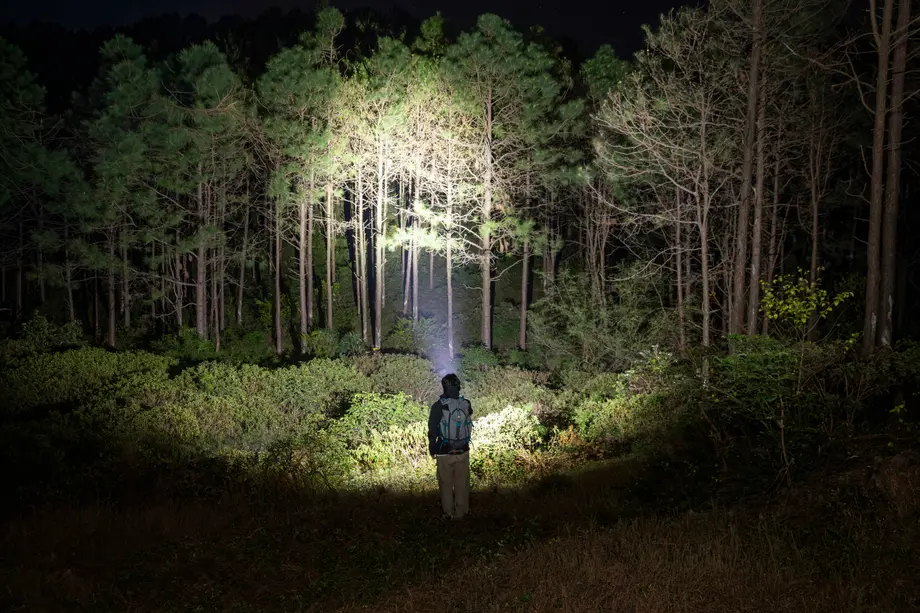
TL;DR:Understanding flashlight beam types is essential for any outdoor enthusiast or professional. The way a flashlight distributes its light—whether it produces a wide wash of illumination for close-up tasks or a concentrated pier of light for long distances—determines its utility in the field. This guide explores the mechanical and optical differences between flood vs throw, the technology behind TIR lens vs reflector designs, and how Olight beam categories simplify the selection process for high-performance EDC tools.
Table of Contents
1. What Is Beam Type 2. Flood vs Spot vs Throw: Key Differences 3. TIR Lens vs Reflector: Optical Design Comparison 4. Candela & Beam Distance: Core Performance Metrics 5. Which Beam to Choose for Different Scenarios 6. Olight Beam Categories: Official Classification 7. FAQ About Flashlight Beam Types
What Is Beam Type
A flashlight's beam type refers to the spatial distribution of light emitted from the light source. While lumens measure the total amount of light produced by the LED, the beam type defines where that light goes. This distribution is controlled by the optical system, which usually consists of a reflector or a lens.
In lighting engineering, beam pattern is classified by angular spread, which is the fundamental standard to distinguish different portable lighting devices.(Source: New England Optical Systems).
The geometry of the optical system determines how much light remains in a central "hotspot" and how much transitions into the surrounding "spill" or "corona." Flashlight beam types are generally classified based on the angle of the light exit and the intensity of the center beam relative to the peripheral light. Understanding these patterns allows users to predict how a tool performs during specialized activities like search and rescue, caving, or general campsite management.
The beam pattern is primarily influenced by:
- The size and type of the LED (Light Emitting Diode).
- The depth and diameter of the reflector or lens.
- The surface texture of the optical components.
High-quality lighting tools offer consistent beam types that avoid artifacts or dark spots, providing a clear field of vision tailored to specific distances.
Flood vs Spot vs Throw: Key Differences
The most common terms used to describe light distribution are flood, spot, and throw. Each serves a distinct purpose and is defined by its beam angle and intensity.
Flood Beam Flashlight
A flood beam flashlight produces a wide, expansive angle of light. It illuminates a large area at a relatively short distance. These lights are designed to mimic natural ambient light, making them ideal for tasks within arm's reach or for lighting up a small room or campsite.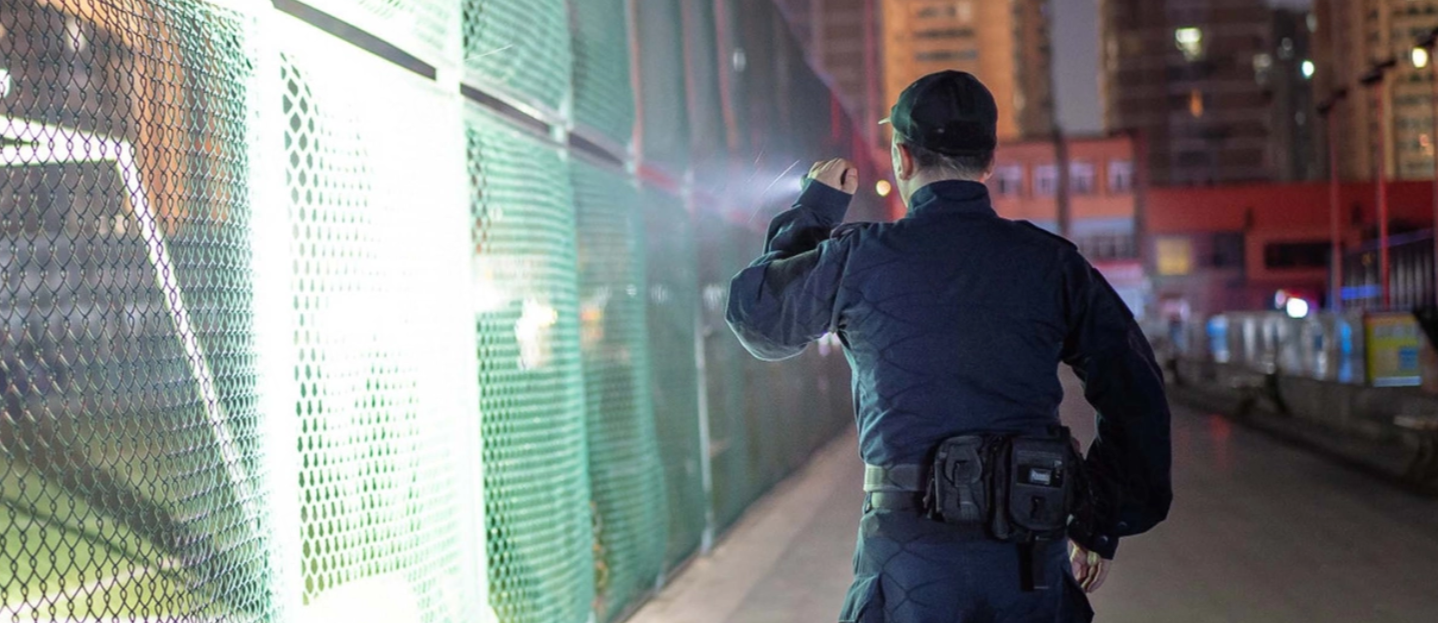
- Beam Characteristics: Soft edges, wide peripheral spill, and an almost non-existent central hotspot.
- Primary Benefit: Reduces eye fatigue during close-up work because there is no blindingly bright center point.
- Applications: Reading maps, repairing equipment, indoor use, and photography.
Spot Beam Flashlight
A spot beam flashlight sits in the middle of the spectrum. It offers a balanced beam that features a distinct central hotspot for moderate distance and enough spill to maintain situational awareness of your immediate surroundings.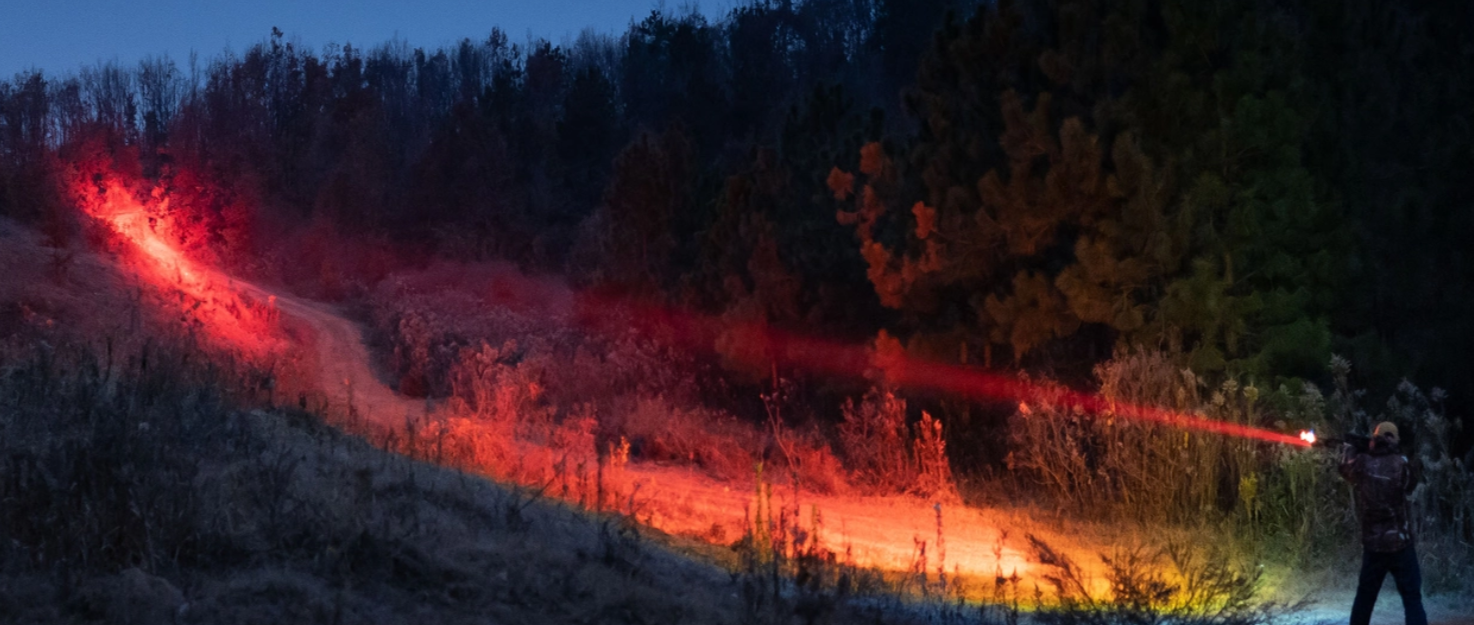
- Beam Characteristics: A clear central beam with a surrounding halo of softer light.
- Primary Benefit: Versatility. It allows you to see both the path ahead and the ground beneath your feet.
- Applications: Hiking, general outdoor exploration, and daily carry (EDC).
Throw Beam Flashlight
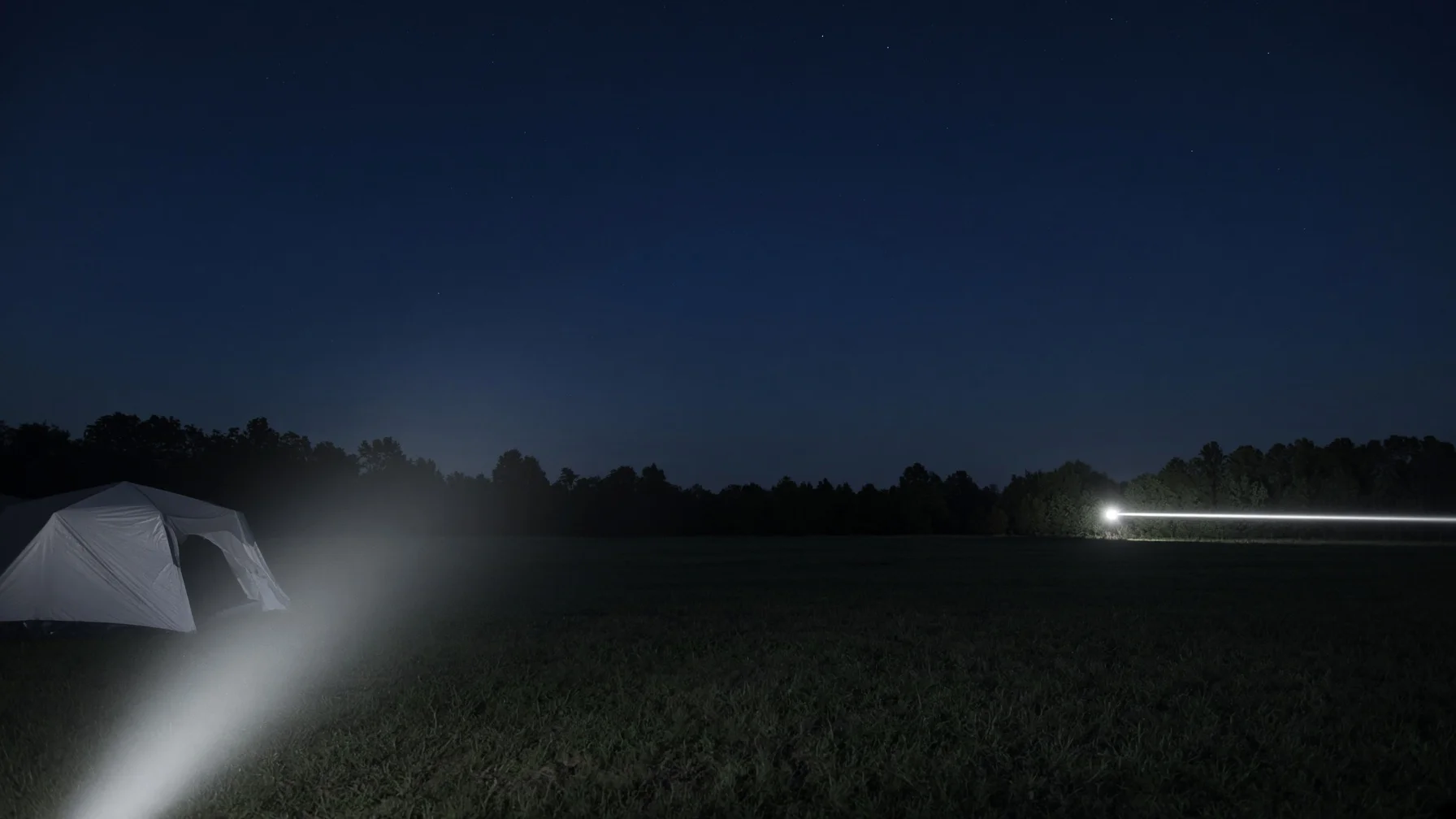
Throw refers to a light's ability to project a beam over long distances. A thrower uses a highly concentrated beam to reach hundreds of meters.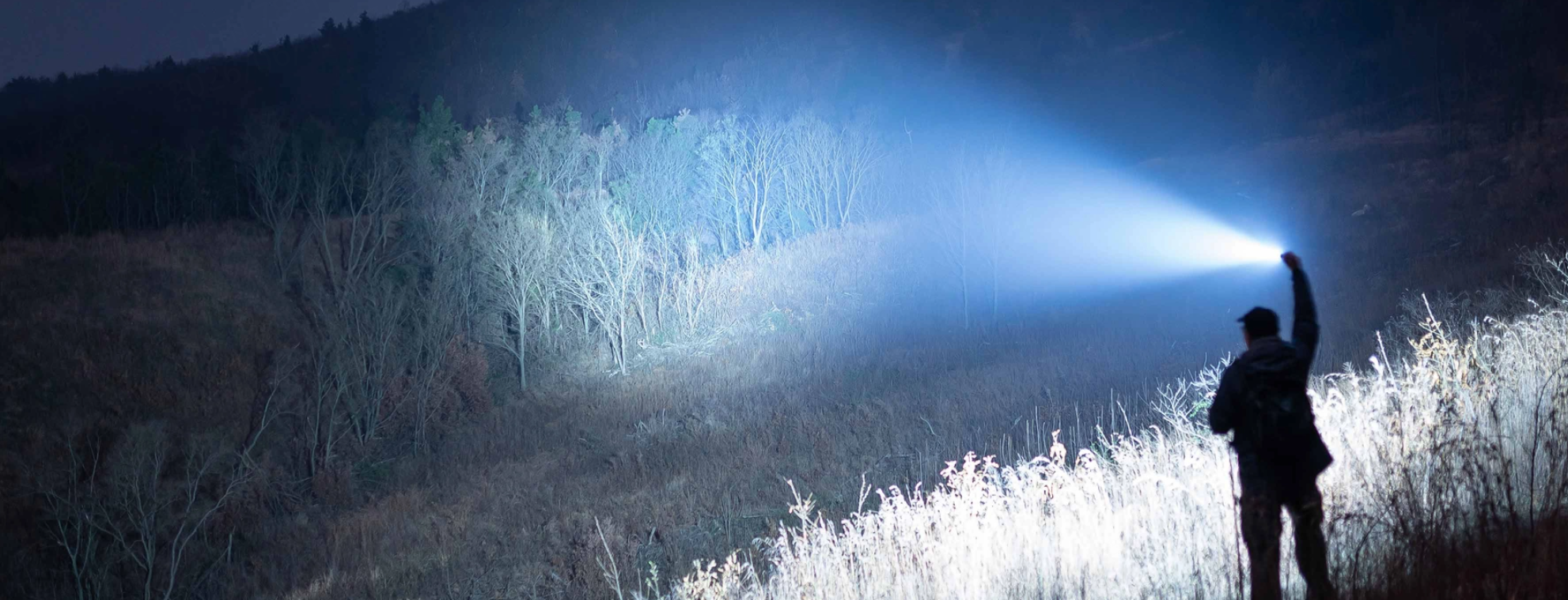
- Beam Characteristics: A tight, intense hotspot with very little spill.
- Primary Benefit: Maximum distance. It pierces through the darkness to identify distant objects.
- Applications: Search and rescue, hunting, maritime use, and large-scale perimeter security.
Summary of Differences
| Feature | Flood Beam | Spot Beam | Throw Beam |
|---|---|---|---|
| Distance | Short (0-20m) | Medium (20-100m) | Long (100m+) |
| Area Coverage | Maximum | Moderate | Minimum |
| Center Intensity | Low | Moderate | Very High |
| Visual Comfort | High for close-up | Balanced | Low for close-up |
TIR Lens vs Reflector: Optical Design Comparison
The debate between TIR lens vs reflector is central to flashlight performance. These are the two primary methods used to shape the light from an LED.
Reflector Optics
Reflectors are the traditional choice. They consist of a silvered, bowl-shaped surface surrounding the LED.
- Smooth Reflectors: Provide a very clean, sharp hotspot and maximum throw. However, they can sometimes produce rings or artifacts in the beam.
- Orange Peel (OP) Reflectors: Feature a textured surface that "scatters" the light slightly. This smoothes out the transition between the hotspot and spill, making it more comfortable for the eyes.
- Pros: Cost-effective, excellent for long-distance throw, and simple to manufacture.
- Cons: Less control over the "spill" light; light that doesn't hit the reflector leaves the flashlight at wide, uncontrolled angles.
TIR (Total Internal Reflection) Lens
TIR lenses are more modern and sophisticated. A TIR lens is a solid piece of optical-grade plastic or glass that fits over the LED. It uses the principle of Total Internal Reflection to capture nearly 100% of the light emitted by the LED.
Total Internal Reflection is a fundamental optical phenomenon, and TIR lenses are widely adopted for high-efficiency light collimation in portable devices.(Source: ScienceDirect).
- Performance: TIR lenses can be engineered to create a wide variety of flashlight beam types. They can produce a very "punchy" beam with almost no spill, or a perfectly uniform flood beam.
- Pros: Highly efficient, very compact, and allows for precise beam shaping. They often produce a more "useful" beam by focusing the spill back into the main beam.
- Cons: More expensive to design and manufacture than simple reflectors.
TIR Lens vs Reflector Choice
For modern EDC (Everyday Carry) lights, the TIR lens is often preferred because it allows for a shorter, more pocket-friendly design while maintaining a high-quality beam. For dedicated long-distance searchlights, deep smooth reflectors remain a dominant choice for raw distance.
Candela & Beam Distance: Core Performance Metrics
When comparing flood vs throw, lumens are not the most important number. Instead, you must look at candela.
Understanding Candela
Candela (cd) measures luminous intensity in a specific direction. While lumens tell you the total output, candela tells you how "bright" the center of that beam is.
- A high-lumen, low-candela light is a floodlight.
- A low-lumen, high-candela light is a thrower.
Flashlight Candela and Range
The relationship between flashlight candela and range is governed by physics. To calculate the effective beam distance (in meters), the industry uses the ANSI/NEMA FL1 standard. This distance is defined as the point where the light reaches 0.25 lux (roughly the light of a full moon).
If a flashlight has 10,000 candelas, its calculated beam distance is 200 meters. However, "useful" distance is typically about half of the rated ANSI distance in real-world conditions with ambient light or humidity.
Why It Matters
When selecting a tool, you should balance lumens and candela. If you are exploring a cave, you need high lumens to light up the whole chamber (flood). If you are looking for a trail marker 150 yards away, you need high candela to ensure the light reaches that far (throw).
Which Beam to Choose for Different Scenarios
Selecting the right flashlight beam types depends entirely on your environment and intent. Use this guide to match the beam to your activity.
- Everyday Carry (EDC) & Home Use: For daily tasks, a balanced spot beam or a wide flood beam is best. You are likely searching for keys, checking under furniture, or walking from a parking lot. A flood beam flashlight provides a wide field of view, ensuring you don't miss anything in your immediate vicinity.
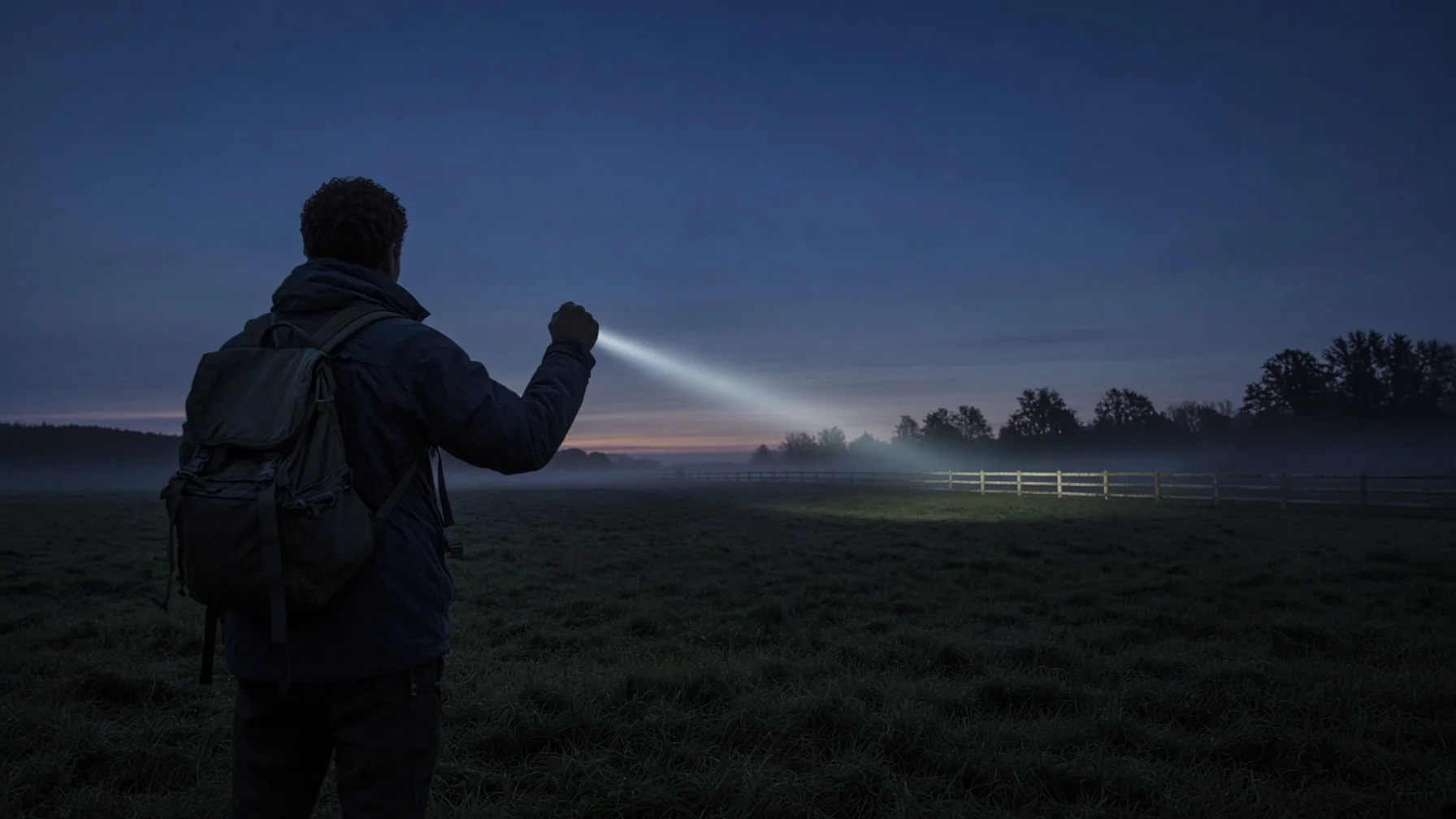
- Hiking and Trail Running: When moving at speed through nature, you need a spot beam. You need to see the ground directly in front of you (spill) while simultaneously spotting obstacles or trail markers 50 meters away (hotspot).
- Camping and Caving: In enclosed or localized outdoor spaces, flood is king. High-lumen floodlights allow you to illuminate a whole campsite for cooking or social interaction. In caving, a wide beam prevents the "tunnel vision" effect that can lead to disorientation.
- Search, Rescue, and Hunting: These activities require maximum throw. You need a high-candela light to identify targets or survivors at extreme distances. A tight throw beam cuts through fog, rain, and distance.
Olight Beam Categories: Official Classification
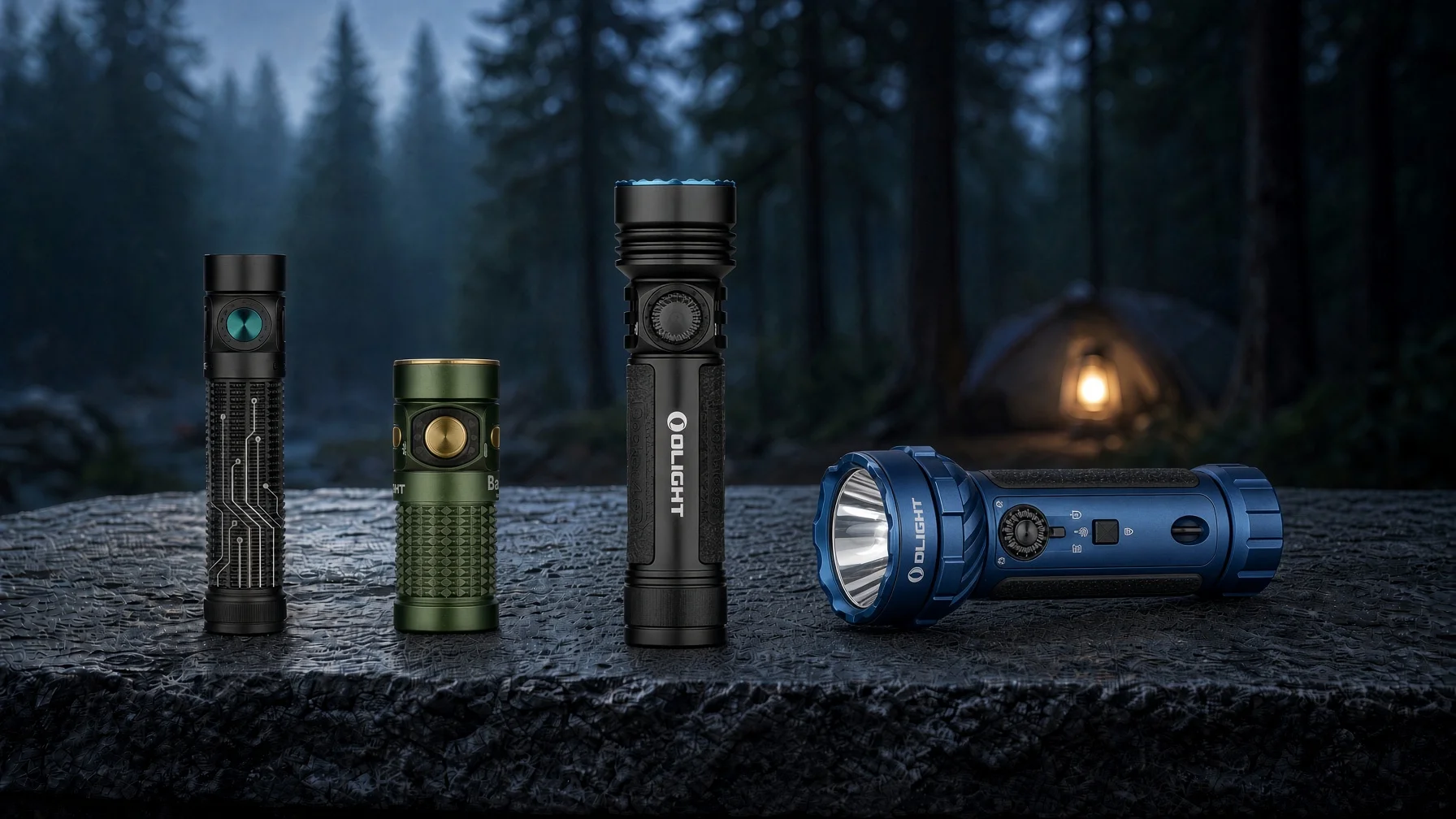
Olight classifies its flashlight beam patterns into three official categories: Floodlight, Spotlight, and Balanced (or Combined) beams. These categories are officially defined by how they distribute light using lumens (total light output) and candelas (beam intensity or focus). The layout below explains how each official beam profile functions, what it does best, and the Olight product series associated with each category.
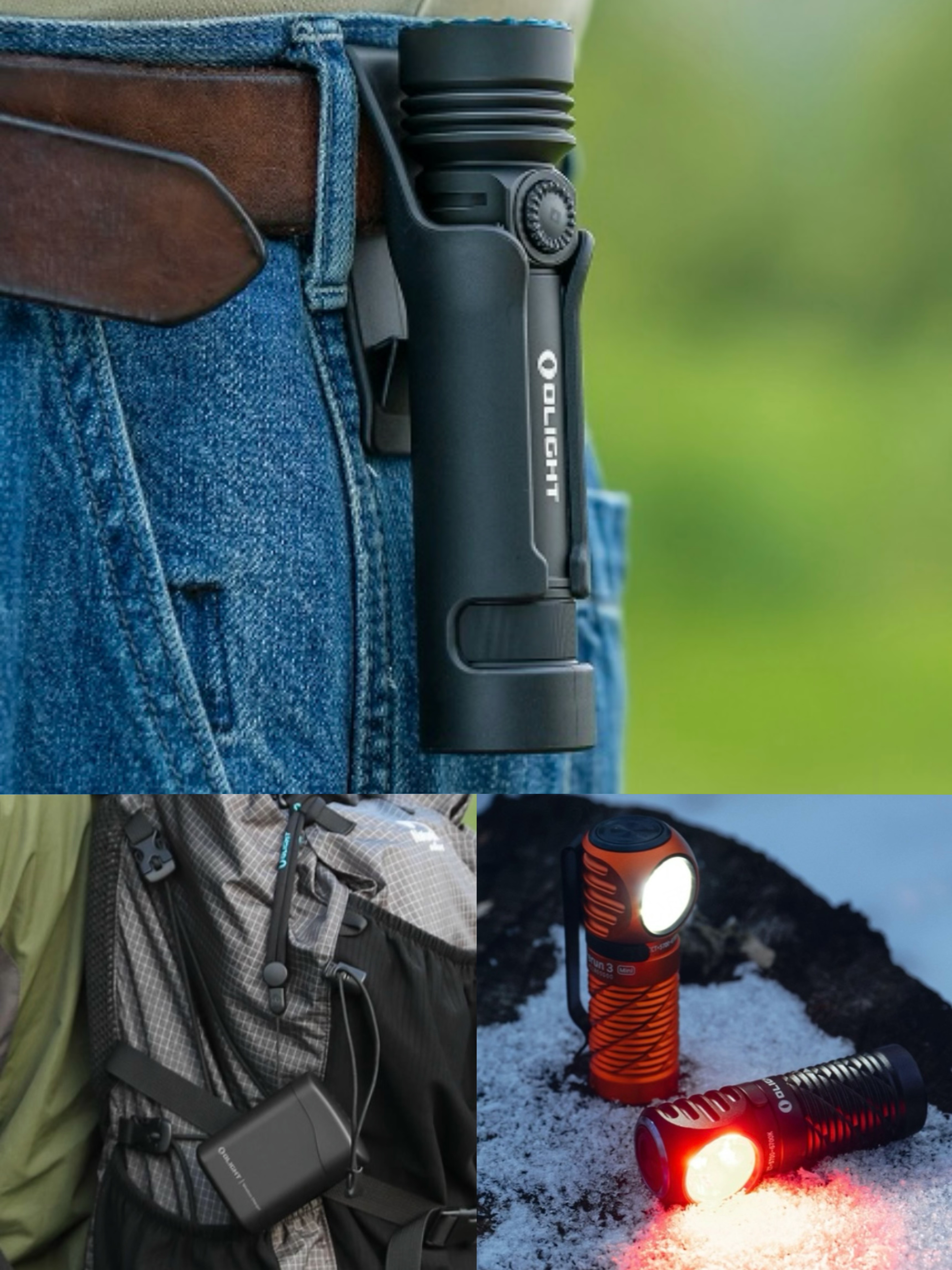
Floodlight Beams (Wide Area)
What it does: This profile produces a very wide, soft, and even spread of light with high lumens but low candela. It does not have a sharp central bright spot.
Best for: Close-up tasks, indoor power outages, camping, and inspecting work areas.
Official Olight Examples:
- Seeker Series (e.g.Seeker 4 Pro)
- Baton Series (Compact Everyday Carry)
- Perun Series (Headlamps and right-angle lights)
Spotlight Beams / "Throwers" (Long Distance)
What it does: This classification uses a tight optical design to force light into a narrow, highly concentrated central beam (high candela). It sacrifices wide area lighting to achieve maximum distance.
Best for: Search and rescue, long-range targeting, route location during hiking, and outdoor exploration.
Official Olight Examples:
- Javelot Series (Dedicated long-range "throw" lights)
- Odin Series (Rifle-mounted tactical lights designed for distance)
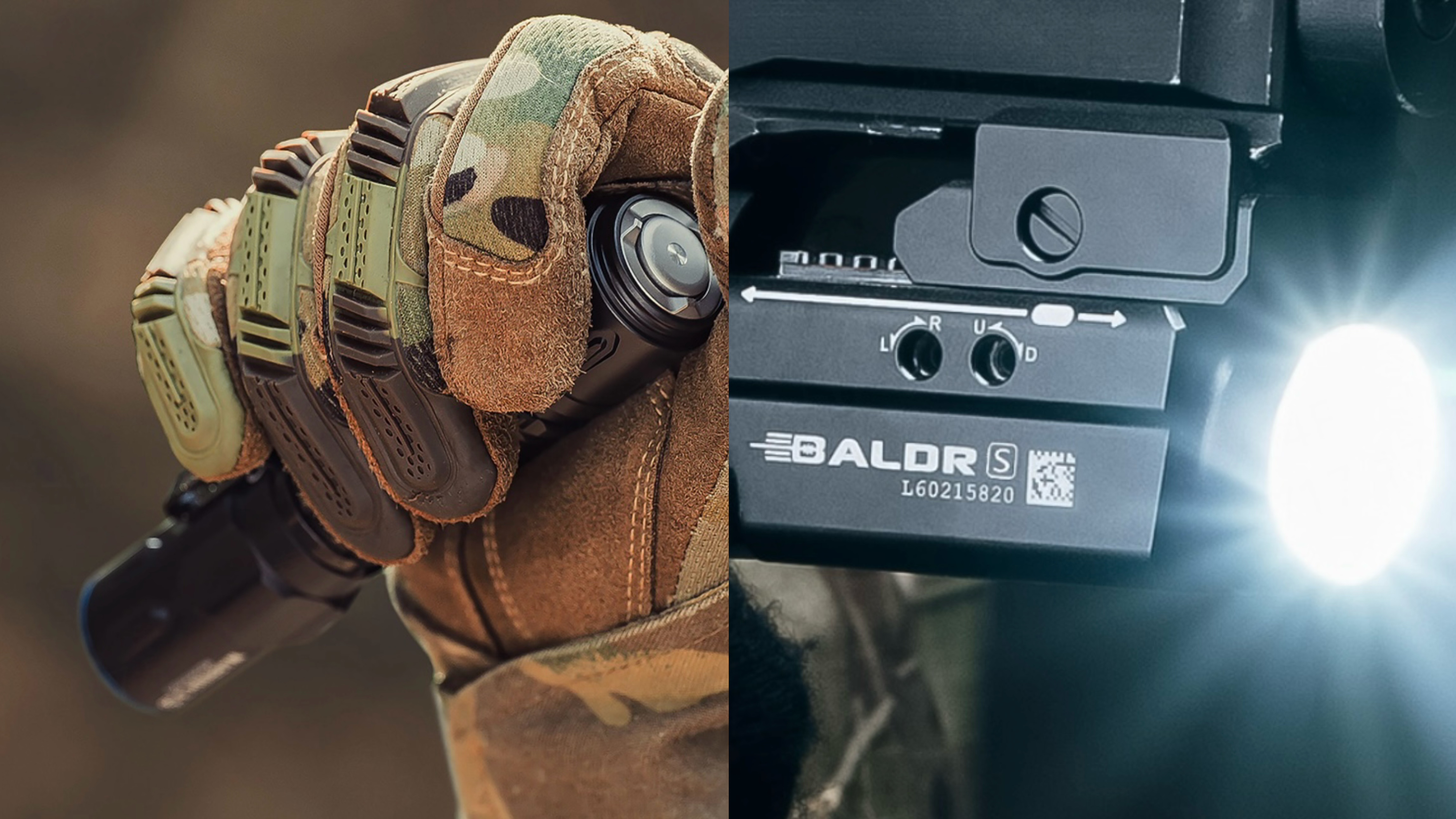
Balanced Beams / Combined (Versatile Dual Use)
What it does: These lights balance both worlds by offering a distinct central hotspot for distance, surrounded by a wider "spill" of softer light to illuminate your peripheral vision.
Best for: Tactical environments, everyday general use, and outdoor activities where you need to see both far ahead and around your feet.
Official Olight Examples:
- Warrior Series (Tactical lights that blend punchy throw with usable spill)
- Baldr & PL Series (Pistol-mounted weapon lights built to balance light spread with target identification)
Multi-Beam Specialty Exceptions
Olight also manufactures advanced multi-light sources that cross into multiple official categories simultaneously.
- The Marauder Series: Features dedicated toggle switches allowing you to manually flip between a pure, room-brightening floodlight and a heavy-hitting spotlight beam.
- The Arkfeld & ArkPro Series: Utilizes a flat unibody design that packs white LED flood/spot beams alongside alternative light sources like UV emitters and lasers on a single multi-source dial.
FAQ About Flashlight Beam Types
Does more lumens mean more distance?
No. Lumens represent the total volume of light. Distance is determined by candela (intensity). A 1,000-lumen floodlight might only reach 50 meters, while a 500-lumen thrower could reach 300 meters. Always check the candela rating for distance.
Can a flashlight have both flood and throw?
Yes. Some flashlights, like the Arkpro Series, utilize separate LEDs or specialized optics to provide both a wide pure flood beam and a concentrated spotlight. This is often the most useful configuration for outdoor enthusiasts.
What is "Spill" and why does it matter?
Spill is the light that escapes the central hotspot to illuminate the area around your feet. In a throw beam flashlight, spill is often minimized to focus all energy forward. In a spot beam, spill is vital for maintaining peripheral vision so you don't trip over obstacles.
Is a TIR lens better than a reflector?
It depends on the goal. TIR lenses are generally better for EDC because they are smaller and create a more uniform, "clean" beam. Reflectors are often better for extreme throwers where a large, deep dish is needed to focus light over several kilometers.
What beam type is best for self-defense?
A high-candela spot or throw beam is preferred for self-defense. The intense central hotspot can temporarily disorient a threat, while the spill allows you to keep track of the surrounding environment.
Understanding the nuances of flashlight beam types allows you to choose a tool that complements your specific needs. Whether you prioritize the expansive reach of a thrower or the soft, broad illumination of a flood beam flashlight, Olight’s diverse categories and optical innovations like those in the ArkPro series ensure you have the right light for every situation. Always consider the balance between TIR lens vs reflector and pay close attention to the flashlight candela and range to maximize your efficiency in the dark.