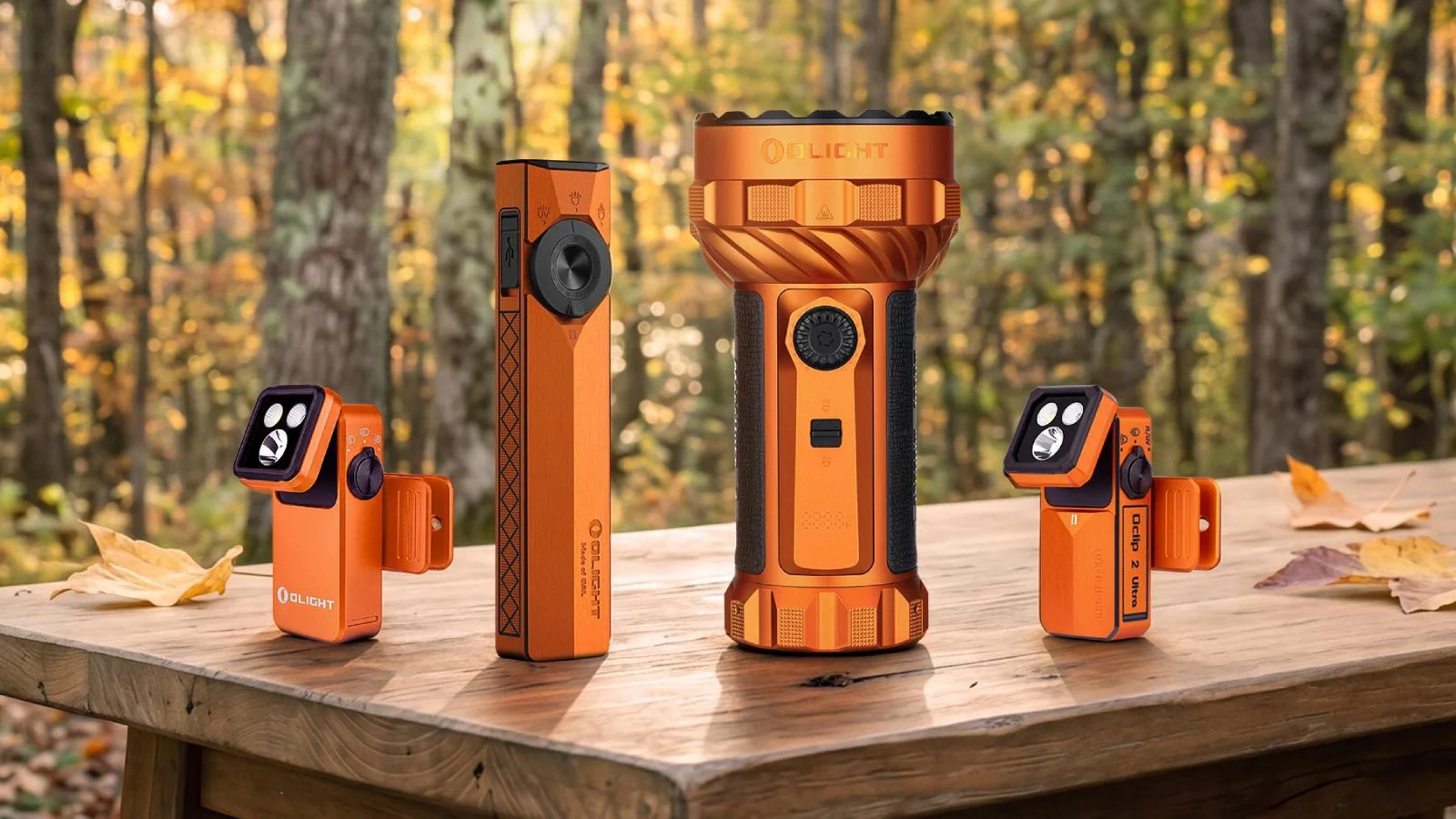
Olight sells some of the gear discussed here. Olight specs and prices come from its product pages as of September 2026; laws, tracking advice and research findings come from the state agencies and sources linked in each section.
⚡ TL;DR
A thermal monocular for deer recovery earns its keep after the blood trail fades, because it spots a downed deer that is still warmer than the ground around it. Search early, while the body holds heat, and keep following blood as long as you have it. First confirm that your state allows thermal during recovery, because several states treat tracking as hunting.
This gear list shows what a thermal monocular for deer recovery kit needs around it at night, and the minimum spec that makes each item useful.
| Job in the recovery | Recommended type | Minimum spec worth paying for | Example model |
|---|---|---|---|
| Scanning for a warm, downed deer | Handheld thermal monocular | 256 x 192 sensor, narrow lens (about 13 mm), 8+ hours of battery | TS004 thermal monocular |
| Following blood, hair and tracks | Headlamp with a steady medium mode | 100+ lumens that last a full night, waterproof body | Olight Perun 3 headlamp |
| Checking a shape at distance | High-output white light | Several hundred lumens, focused beam | Perun 3 on its High setting |
| Marking the trail | Flagging tape or toilet paper | Visible under a headlamp | Any |
| Recording the deer's line of travel | Phone compass and mapping app | Screenshot of the bearing, GPS track | Any |
| Legal cover | Your state's current hunting digest | Rules on tracking hours, lights, thermal and weapons | Your state wildlife agency |
The frustrating part of a recovery usually comes 80 yards in. The blood thins to pinpricks on dry leaves, the flashlight shows nothing but more leaves, and you start wondering how long the deer stays warm. The sections below take those problems one at a time: the law, the cooling clock, the search pattern and the light you carry. If you are still building your night kit, Olight groups its throw-focused hunting flashlights in one collection.
📋 Table of Contents
- 1. Can You Use a Thermal Monocular While Deer Hunting?
- 2. State Rules on Thermal and Night Recovery: Five Examples
- 3. How Long Will a Dead Deer Show Up on Thermal?
- 4. When Should You Use Thermal, and When Should You Stay on the Blood Trail?
- 5. Thermal Monocular for Deer Recovery: TS004 Specs Translated
- 6. How to Run a Thermal Grid Search for a Downed Deer
- 7. Can Thermal See Through Thick Brush?
- 8. How Much Does It Cost to Have a Thermal Drone Recover a Deer?
- 9. What Flashlight Is Best for Blood Tracking a Deer?
- 10. Your After-the-Shot Recovery Checklist
- 11. FAQ
Can You Use a Thermal Monocular While Deer Hunting?
It depends on your state, and the answer for recovery can differ from the answer for hunting. Oregon bans thermal during tracking and recovery because it counts them as hunting. Minnesota bars carrying thermal equipment while you have a firearm or bow. Other states say nothing specific about handheld units, so call your wildlife agency before the season opens.
The key legal idea is simple. Many states define "hunting" or "take" broadly enough to include searching for an animal you already shot. The Oregon Department of Fish and Wildlife says it plainly in its guidance on regulations that limit tech during hunting seasons: using thermal when recovering harvested wildlife or tracking an injured animal is illegal, "as tracking and recovery are considered hunting."
Michigan's deer hunting regulations summary uses similar logic for drones: "Attempting to locate and/or recover game, either dead or wounded, is an act which falls within the definition of 'take.'" That summary does not mention handheld thermal. Read your own state's digest the same way. If recovery counts as take, every rule on hunting hours, lights and devices may apply to the search.
Warning: This article explains how to recover a deer you shot legally. Scanning for live deer with thermal to hunt them at night is illegal in many states, and the equipment rules above exist to stop exactly that. If your thermal shows a deer that is alive, back out and follow your state's rules on follow-up shots.
State Rules on Thermal and Night Recovery: Five Examples
State rules on thermal recovery range from a flat ban to a permit-style system for thermal drones. The five states below show the range. None of them is a template for your state, and rules change every season, so read your current digest and call the agency's enforcement line when the text is unclear.
This table summarizes what each agency or statute says, with the source linked in the paragraphs that follow.
| State | Handheld thermal during recovery | Drones for recovery | Tracking after dark | What to do |
|---|---|---|---|---|
| Oregon | Illegal: tracking and recovery count as hunting | Illegal to locate, monitor or move wildlife | Recovery counts as hunting, so hunting rules apply | Track on foot with a light; no thermal or drones |
| Minnesota | Cannot possess thermal while taking wild animals or while you have a firearm, bow or other implement | Check with Minnesota DNR | Check with Minnesota DNR | Leave thermal home if you carry a weapon on the track |
| Michigan | Not addressed in the deer digest | Illegal, during or after hunting hours | Leashed tracking dog allowed; hand-carried lights allowed when tracking at night | Register a dog tracker; ask the DNR about thermal |
| Pennsylvania | Not addressed in the sources cited here | Game Commission called drone recovery illegal in 2024; confirm current status | Tracking is hunting; call Central Dispatch before tracking after hours | Call 1-833-742-4868 before you go |
| Louisiana | Not addressed in the digest | Allowed with conditions: thermal drone, Part 107 pilot, pilot and hunter unarmed, private land, outside legal hours; banned on WMAs | Private land: lights and a tracking dog allowed | Follow the drone rule word for word |
Oregon. ODFW also bars drones "to locate, monitor or move wildlife." Its guidance cites OAR 635-065-0745 for thermal and ORS 498.128 for drones.
Minnesota. Minnesota Statutes section 97B.086 says a person "may not possess night vision or thermal imaging equipment while taking wild animals or while having in possession, either individually or as one of a group of persons, a firearm, bow, or other implement that could be used to take wild animals." The exceptions cover an unloaded, fully cased firearm or a cased or unstrung bow in a closed vehicle trunk, officers on duty, and coyote or fox hunting outside the regular firearms deer season. None of them covers carrying a weapon on the track with thermal in your pocket.
Michigan. The DNR's dog tracking rules require a permit for trackers, and the deer digest says that at night "artificial lights ordinarily carried in the hand or on the person may be used." The digest also limits lights used to locate wild animals: none at any time in November, or between 11 p.m. and 6 a.m. on other days.
Pennsylvania. LancasterOnline reported in its column on how to legally track a deer after dark in Pennsylvania that the state's Game and Wildlife Code lists tracking under the definition of hunting. Since 2022, the hunting digest has told hunters to notify the Game Commission before tracking after legal hours or on closed days. The Game Commission's contact page lists the Centralized Dispatch Center at 1-833-PGC-HUNT (1-833-742-4868). The same 2024 column reports that the Game Commission called a thermal drone recovery service illegal, and that Senate Bill 1312 proposed a paid wildlife recovery permit for drones. Check whether Pennsylvania law has changed before you hire anyone.
Louisiana. The 2026-2027 Louisiana hunting regulations allow a drone to recover a deer "reasonably believed to be mortally wounded" after traditional tracking fails. The drone must be capable of thermal imaging and carry a light. The pilot needs an FAA Part 107 certificate. Neither the pilot nor the hunter may possess a firearm or other weapon that could take a deer, and the flight must happen outside legal hunting hours on private land where both have permission. The same digest bans drones on wildlife management areas (WMAs).
Safety note: Federal law is stricter on some ground. Michigan's digest notes that "It is a violation of federal law to shine at any time on any national wildlife refuge." Check refuge and public land rules separately from your state digest.
How Long Will a Dead Deer Show Up on Thermal?
No agency or study publishes a single cutoff. A dead deer shows on thermal for as long as its hide stays warmer than the ground around it, and that window depends on air temperature, wind, rain and body size. Treat the first few hours after death as your best chance, and a cold, calm pre-dawn as the next best.
Research on carcass cooling explains why no single number works. In a Missouri study that collected data from 1,484 deer, researchers reported that body size and ambient temperature could influence their time-of-death model, which used carcass temperature as one indicator. A larger animal cools much more slowly on the inside. In a report on an adult female moose, researchers found rumen temperature was still 27 to 28 C at 40 hours after death.
That core heat does not mean a camera will see the animal 40 hours later. A thermal monocular reads surface temperature. Teledyne FLIR explains in its guide on what thermal imaging can and cannot see through that a camera pointed at a wall "will detect heat from the wall, not what's behind it." A deer's hair coat insulates the body, so the camera sees the cooler outer surface, not the warm core.
Contrast matters more than raw temperature. A Czech study of drone thermal searches for roe deer fawns found the camera very reliable from 4 to 6 a.m., when the gap between the animals and their surroundings was largest. After sunrise, sun-warmed ground, rocks and stumps start to look like bodies.
This table turns those factors into a field read of how long your window is likely to be. It is a planning guide based on the sources above, not a measurement.
| Condition | Effect on how long the deer stands out | What to do |
|---|---|---|
| Cold, calm night | Strong contrast: large gap between body and ground | Search the same night if your wait time is up and the law allows it |
| Warm afternoon or sun on the ground | Shorter: warm ground narrows the gap | Wait for dusk or pre-dawn to scan |
| Wind | Shorter: moving air strips surface heat | Scan the downwind edges of cover, where a deer may bed out of the wind |
| Rain or wet snow | Shorter, and range drops | Shorten your scan distance; lean on blood and tracks first |
| Deer lying in water or mud | Much shorter: water pulls heat fast | Check creek edges by eye and light, not only thermal |
| Large buck vs small doe or fawn | Larger bodies hold heat longer | Expect a small deer to fade sooner |
Tip: Write down the time of the shot and the air temperature before you climb down. When you come back, those two numbers tell you whether thermal is still worth carrying or whether you should plan a daylight grid search instead.
When Should You Use Thermal, and When Should You Stay on the Blood Trail?
Stay on the blood trail as long as it leads you somewhere, and use thermal when it runs out, when the deer crossed open ground, or when you need to know whether a shape ahead is a deer. Thermal cannot tell you where a hit deer went. Blood, hair, tracks and your wait time still do that job.
Your wait time comes first, and thermal does not shorten it. The National Deer Association's guide on what to do after you shoot a deer says to wait at least eight hours on a hit behind the diaphragm: "Wait 8 to 10 hours for liver and 10-12 hours for guts." For heart and lung hits, it advises a few minutes with a firearm and 15 to 30 minutes with a bow.
A thermal monocular can tempt you to go in early, because you expect to see the deer before it sees you. That plan fails when the deer beds in cover the camera cannot see through. If you bump it, NDA's advice is to "immediately back out," assume a gut hit and subtract the time already passed from a 10- to 12-hour wait.
This decision table matches common recovery situations to the tool that should lead.
| Situation | Lead tool | Role of a thermal monocular for tracking deer |
|---|---|---|
| Steady blood trail in the woods | Headlamp and your eyes | Scan ahead every few minutes for a bedded deer |
| Blood stops on dry leaves or in grass | Grid search on foot | Sweep each lane before you walk it |
| Deer ran into an open field, pasture or cut crop | Thermal monocular | Glass the whole field from its edge first |
| Standing corn or a cattail marsh | Grid search, tracking dog where legal | Limited: stalks and leaves hide the body |
| Gut-shot deer, wait time not over | Nothing: back out | None until the wait is over |
| Shape ahead, can't tell if it's a deer | Thermal, then a white light | Confirms heat and outline before you walk up |
| Deer may still be alive | Back out quietly | Watch from a distance; don't push it |
The NDA's guide to blood-trailing a deer sums up the order of operations with three cardinal rules: "watch, listen and wait." Thermal belongs after all three.
Thermal Monocular for Deer Recovery: TS004 Specs Translated
The Olight TS004 pairs a 256 x 192 sensor with a 13 mm lens and a 13.5° x 10.10° field of view. That narrow view makes each pixel cover about 1.7 inches at 50 yards, fine enough to pick out a bedded deer across a field. The trade-off is a narrow slice of view: scanning a full circle takes at least 27 looks, and about 33 once you overlap them.
Olight lists these specs for the TS004 on its product page: 50Hz frame rate, NETD under 40mK, a 0.32 inch 800x600 OLED display, 1x/2x/4x/8x digital zoom, a 5000mAh battery rated for up to 11 hours, IP67, a 2.0 m drop rating and a weight of 330g (0.728lbs). It lists a detection distance of 410m and an identification distance of 91m. It sells for $499.00 (regular price, September 2026).
To compare, Olight also sells the TC001 Max, a thermal camera that plugs into a phone. It has the same 256 x 192 sensor but a 56° x 42° field of view. This table divides each field of view by the 256 pixels across the sensor to show how much ground one pixel covers. The math uses Olight's published specs; real images also depend on focus, weather and the scene.
| Distance | TS004: width of view | TS004: one pixel covers | TC001 Max: width of view | TC001 Max: one pixel covers |
|---|---|---|---|---|
| 25 yards | 17.8 ft | 0.83 in | 79.8 ft | 3.44 in |
| 50 yards | 35.5 ft | 1.66 in | 159.5 ft | 6.87 in |
| 100 yards | 71.0 ft | 3.31 in | 319.0 ft | 13.74 in |
| 200 yards | 142.0 ft | 6.63 in | 638.1 ft | 27.49 in |
Here is what that means in the field. Each TS004 pixel covers about a quarter of the width a TC001 Max pixel does, so a deer at any distance spans about four times as many pixels across. That is why the TS004 suits scanning a field edge. The TC001 Max sees a much wider slice and can help close in, but at 100 yards each pixel covers more than a foot. Its IP54 rating and 14°F (-10°C) low working temperature also make it a weaker fit for a cold, wet night.
Note: The TS004's 91 m identification distance works out to about 100 yards. Past that, you can detect a warm shape but should walk closer with a white light before you decide it is your deer.
How to Run a Thermal Grid Search for a Downed Deer
A thermal grid search works in five steps. Start at the last blood, scan a full circle from the highest nearby point, then walk parallel lanes spaced to what you can actually see in that cover. Stop every 20 to 30 steps to sweep ahead and to both sides. Flag each lane's end so nobody searches the same strip twice.
NDA recommends a grid search when you lose the trail and cannot get a tracking dog, noting that "many deer that couldn't be blood-trailed have been found while searching the area around where you last saw them or last found blood." The steps below add thermal to that method.
- Mark the last blood. Hang flagging where the trail ended and save a GPS waypoint. NDA's article on recovering a gut-shot deer also suggests a compass screenshot of the deer's direction of travel right after the shot.
- Scan from high ground first. Stand on a stump, bank or ridge near the last blood. With the TS004's 13.5° view, turn in steps of about 11° so each look overlaps the last, which takes about 33 stops for a full circle. Use 1x zoom to find heat and 2x or 4x only to check it.
- Set lane width to your sight distance. In open hardwoods where you can see 40 yards, lanes 40 yards apart make sense. In thick brush where you can see 10 yards, cut the lanes to 10 yards. This rule of thumb follows the NDA blood-trailing guide's advice to keep every searcher within sight of the next, so no thick spot is skipped.
- Walk the lanes along the deer's line of travel. Start on the side the deer was heading and work outward. Stop, scan ahead and to both sides, then move on.
- Check the likely beds and water. NDA's gut-shot article notes that these deer often seek water, and its blood-trailing guide reports "countless deer near or in creeks or shallow ponds." Scan creek banks, the downhill side of thickets and the edges of standing crops.
This table sets search parameters for the most common recovery ground. The lighting needs assume one person searching on foot for up to four hours.
| Recovery ground | Lane spacing | Thermal usefulness | Light needs | Water and weather needs |
|---|---|---|---|---|
| Open field or pasture | Scan from the edge first; walk only if needed | High | Low light for walking, high beam to confirm | Dew and fog cut thermal range |
| Open hardwoods, leaves down | 30 to 40 yards | Good between trunks | 100+ lumens for blood on leaves | Wet leaves hide blood; flag often |
| Thick brush or cutover | 10 yards | Low: brush blocks the view | Wide flood at close range | Waterproof light, gloves for briars |
| Standing corn | Walk the rows the deer ran | Low: only down open rows | Steady medium mode | Mud underfoot |
| Swamp or creek bottom | Follow the banks | Poor near water, which cools the body | Long runtime, waterproof body | IP67 or better for dunkings |
Tip: Set the TS004 to "white hot" or "black hot" and keep the palette the same all night. Olight lists bird, white hot, black hot, red hot and fusion palettes. Switching palettes mid-search makes a warm log look different from the last one you ruled out.
Can Thermal See Through Thick Brush?
No. Thermal cannot see through leaves, trunks or stalks that block a direct line to the deer. It shows heat through gaps in cover, which is why a deer can light up in thin brush and vanish behind one log. Teledyne FLIR states that "thermal imaging cannot see through trees (or wood)." Walk thick cover in tight lanes instead of scanning it from outside.
Olight's product page says the TS004 "effectively penetrates fog and dense vegetation." In a deer search, read that as a better view than your eyes get in dark or light fog, and as seeing heat through openings in cover. It does not mean the camera sees through a solid screen. FLIR explains the physics: a camera reads the surface it points at, so a wall of leaves shows up at leaf temperature.
Fog and rain have limits too. FLIR's guide says "fog and rain have the potential to severely limit the range of a thermal camera," though thermal often sees farther through fog than your eyes do. Glass is worse: FLIR notes that "glass acts like a mirror for infrared radiation," so you cannot scan a field through a closed truck window.
This list covers other common thermal mistakes on a recovery and how to fix each one.
- Mistaking warm objects for a deer. Sun-warmed rocks, stumps and fresh dirt glow after dark. Fix: check the outline at 2x or 4x zoom, then confirm with a white light.
- Scanning only from the trail. A bedded deer 15 yards off the line can be hidden by one blowdown. Fix: step off the trail to both sides every 20 to 30 steps.
- Trusting a blank screen in thick cover. A blank screen in brush means "not visible," not "not there." Fix: walk the cover in tight lanes.
- Forgetting the wait time. Thermal makes it tempting to go in early. Fix: follow NDA's wait times for the hit you suspect.
- Looking for blood with thermal. Small drops of blood are thin and cool quickly. Fix: use a headlamp for blood and thermal for the body.
How Much Does It Cost to Have a Thermal Drone Recover a Deer?
There is no standard price for drone deer recovery. Independent operators set their own fees, and none of the agency rules cited here sets a rate. Before you compare quotes, check legality: Michigan bans drones for recovery, Oregon bars drones that locate wildlife, and Pennsylvania's Game Commission called drone recovery illegal in 2024. Louisiana allows it under strict conditions.
Where drones are legal, the price reflects what the job requires. Louisiana's rule shows the common pieces: an FAA-registered drone with thermal imaging and a light, and a pilot with an FAA Part 107 Remote Pilot Certificate. The FAA's page for commercial drone operators explains that pilots flying for business under Part 107 need that certificate. Night work, travel, and a search that runs long all add to the bill.
Use these questions to compare quotes on the same terms.
- Is drone recovery legal in my state, on this land, at this hour?
- Is the fee flat, hourly or per acre, and is there a lower fee if the deer is not found?
- Does the price include travel, and how far will the operator drive at night?
- Does the pilot hold a current Part 107 certificate, and is the drone registered?
- Will the pilot end the search if the deer is not clearly mortally wounded, as Louisiana requires?
The break-even math is simple once you have a real quote. Divide the TS004's $499.00 regular price by the operator's typical fee to see how many recoveries it would take to pay for your own unit. A drone covers far more ground from above, though. A handheld unit wins on quick searches near the last blood, and a drone wins on a big property where the deer could be anywhere.
What Flashlight Is Best for Blood Tracking a Deer?
The best light for blood tracking is a white headlamp with a steady medium mode that lasts all night, plus a brighter setting to check shapes ahead. Blood color tells you about the hit, so use white light rather than red for the trail. Keep a hand-held backup in your pocket in case the headlamp fails.
The NDA's blood-trailing guide ties blood color to the hit: "Crimson, frothy blood indicates a hit in the lungs," while "dark red blood usually means a hit to the liver." You need true color to read those clues, which is why white light leads on the trail. Red light helps you walk in and read a map without losing your night vision. For more on light color, see Olight's guide to the best hunting flashlight light color.
The Olight Perun 3 is a headlamp and flashlight in one body. Olight lists 5 white and 2 red modes, a customized 5000mAh 21700 battery, an IP68 rating, 150 g weight and a large metal side button for gloved hands. It sells for $89.99 (regular price, September 2026). This table turns its official runtimes into a four-hour search budget.
| Perun 3 mode (Olight spec) | Output | Rated runtime | Share of battery used in a 4-hour search | Use on a recovery |
|---|---|---|---|---|
| Moon | 5 lumens | 20 days | Under 1% | Filling out tags, reading notes |
| Low | 30 lumens | 89 hours | About 4.5% | Walking in quietly |
| Med | 120 lumens | 25 hours | About 16% | Following blood on leaves |
| High | 600~120 lumens | 300 + 30 minutes | About 73% of the rated runtime | Checking a shape or a thicket ahead |
| Turbo | 3,000~800~600 lumens | 2 + 180 + 30 minutes | Short bursts only | Confirming a deer across a field |
| Red Light (Low) | 15 lumens | 70 hours | About 6% | Map and phone checks |
| Red Light (High) | 60 lumens | 14 hours | About 29% | Walking with night vision intact |
The budget shows why Med is the working mode: four hours use about a sixth of the battery, which leaves plenty for Turbo checks. The limit is weight on your forehead and throw. At 6,400 candela and a 160m (524 ft) beam distance, the Perun 3 lights a field edge but not a far hillside. For long-range checks, carry a dedicated thrower from the hunting collection linked above, and see Olight's guide to the best headlamps for hunting for other head-worn options.
Note: Check your state's light rules for tracking as carefully as its thermal rules. Michigan allows hand-carried lights for night dog tracking but bans using a light to locate wild animals in November. A headlamp aimed down at a blood trail and a spotlight swept across a field look very different to a conservation officer.
Your After-the-Shot Recovery Checklist
A good recovery starts before you climb down. Note the time, the air temperature, where the deer stood and its line of travel. Wait the time your hit calls for, confirm the rules for tracking after dark, then follow blood with a white light and bring thermal in when the blood thins out or the deer reached open ground.
Use this checklist for your next recovery.
- At the shot: watch, listen, and note the time, the temperature and a compass bearing of the deer's exit.
- Before you move: decide where you hit the deer and set your wait time from the NDA guidance above.
- Before dark: read your state's rules on tracking hours, lights, thermal, drones and weapons. In Pennsylvania, call Central Dispatch before tracking after hours.
- Pack the kit: headlamp with a full charge, backup light, flagging, phone with a mapping app, and a thermal monocular for deer recovery only where the law allows it.
- On the trail: follow blood with white light, flag every find, and scan ahead with thermal every few minutes.
- When blood runs out: scan from high ground, then run a lane-by-lane grid search. Call a licensed tracking dog handler where legal.
- If the deer is alive: back out quietly and follow your state's rules on dispatching a wounded deer.
- Once you find it: field-dress it quickly. Wisconsin's agriculture department, in its guide to caring for venison in warm weather, advises: "Aim to chill the carcass surface to 40° F or lower within 24 hours."
FAQ
Changelog
- September 21, 2026: First published. Olight specs and prices checked September 24, 2026.