Olight makes the lights discussed here. Olight specs and regular prices come from its product pages and user manuals as of September 24, 2026. The cost-per-meter, cost-per-watt-hour and minute-30 figures are our own arithmetic on those published ratings, not field measurements. Hunting rules are quoted from state wildlife agencies; check your own state before any night hunt.
⚡ TL;DR
Hunting light price at Olight falls into three tiers. About $55 buys a pocket light for walking in and short tasks. About $140 buys a light that holds real output for hours, which is what blood tracking needs. About $170 adds a harder body and a bigger battery, with almost no extra reach. Choose the tier by how far and how long you need to see.
This gear list sorts each hunting light price tier by job, with the minimum spec worth paying for and an Olight model that meets it (regular prices, September 2026).
| Use | Recommended type | Minimum spec worth paying for | Olight model (regular price) |
|---|---|---|---|
| Walking to a stand or blind | Small clip light or handheld with red | Red light or a 10 to 60 lumen low mode | Oclip 2 Pro, $54.99 (red 40 lumens for 4 hours) |
| Quick checks at the truck, gate or camp | Pocket EDC light | A 1,000+ lumen burst, IPX8 | Baton 4, $54.99 (1,300 lumens, IPX8) |
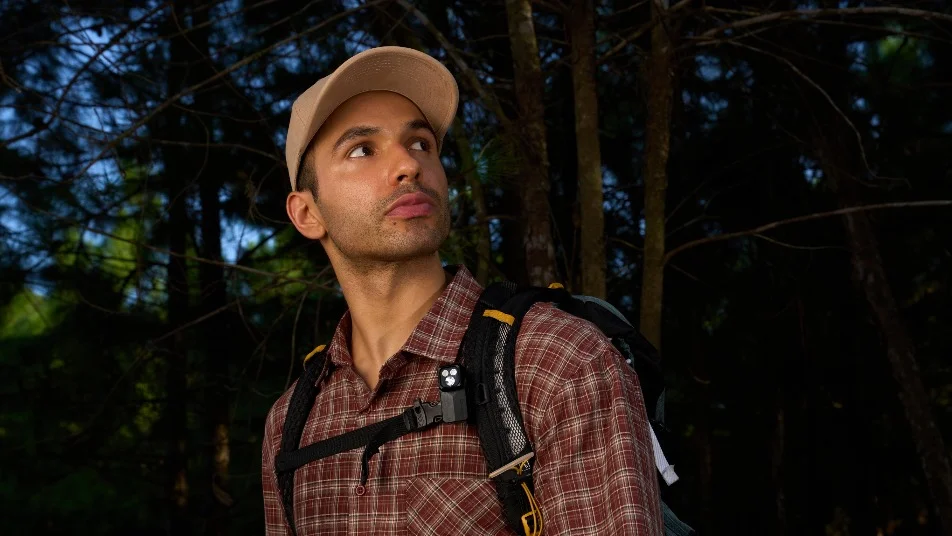
| Field dressing and hands-free work | Clip light on a strap, collar or MOLLE | A 100-lumen flood for 3+ hours | Oclip 2 Pro floodlight (100 lumens for 3 hours 45 minutes) |
| Blood tracking after dark | 21700-battery handheld | 300 lumens for 2+ hours, IPX8 | Seeker 4 Pro, $139.99 (300 lumens for 11 hours) |
| Scanning a field where your state allows it | High-candela handheld | 15,000+ candela, 250 m+ beam distance | Seeker Ultra, $169.99 (17,600 candela, 265 m) |
| Light on target at the shot, where legal | Rail-mounted light | Water rating, locking mount, remote switch | Odin Mini, $139.95 (1,250 lumens, IPX8) |
The trouble with shopping by price is that the box hides the differences you are paying for. Two lights can both claim more than 1,000 lumens and behave nothing alike ten minutes later. A small light that looked great in the garage drops to a fraction of its peak before you reach the first blood spot. A spec sheet that lists 0 to 40°C gets carried onto a stand at 20°F. And a very bright light bought for scanning turns out to be illegal to use the way you planned.
This guide turns Olight's published ratings into numbers you can compare: cost per meter of rated beam distance, cost per watt-hour of battery, and how many lumens each light is still rated to put out 30 minutes after you switch it to maximum. It covers cold and rain, the legal side of very bright lights, and a checklist to run before you pay.
📋 Table of Contents
- 1. Hunting Light Price Tiers: What $55, $140, and $170 Buy
- 2. What Is the Best Light for Hunting?
- 3. Which Hunting Light Price Tier Fits Your Kind of Hunting?
- 4. Baton 4 vs Seeker 4 Pro vs Seeker Ultra: Rated Specs and Price
- 5. What Do the Extra Dollars Buy in a Hunting Light?
- 6. How Do Cold and Rain Affect a Cheap Hunting Light?
- 7. Is a 200,000 Lumen Flashlight Legal?
- 8. What Is the Best Affordable Rifle Light?
- 9. Common Hunting Light Price Mistakes
- 10. How to Pay Less for a Hunting Light Without Buying Twice
- 11. Hunting Light Price Checklist Before You Buy
- 12. FAQ
Hunting Light Price Tiers: What $55, $140, and $170 Buy
A hunting light price near $55 buys a compact light with a strong burst and a short sustained level. Near $140, you get a 21700-battery light whose rated first-hour average is about four times the Baton 4's. Near $170, you add a harder body and a larger battery, with 5 more meters of reach. The jump from $55 to $140 changes what you can do at night. The jump from $140 to $170 mostly buys durability and runtime.
Here is what each tier means in practice:
- About $55: burst and pocket size. The Baton 4 weighs 52.5 g with its battery and reaches 1,300 lumens, but Olight's own runtime table shows that level lasts 1.5 minutes before stepping to 600 and then 300 lumens. Its battery is a 650mAh 16340 cell rated at 2.34 Wh in the user manual. The Oclip 2 Pro costs the same and trades reach for a red light, a floodlight and a clip.
- About $140: sustained output. The Seeker 4 Pro carries an 18 Wh 21700 battery (5000mAh, 3.6V per its manual). After a 2.5-minute Turbo burst at 4,600 lumens, it is rated to hold 1,200 lumens for another 122 minutes, and it runs 300 lumens for 11 hours.
- About $170: materials and reserve. The Seeker Ultra uses Olight's OAL aluminum alloy, which Olight describes as "almost twice harder than standard 6061 aluminum," and a 20.9 Wh battery. Its rated reach is 265 m against the Seeker 4 Pro's 260 m.
So the biggest step in capability comes with the first $85. The last $30 is a choice about how hard you are on gear and how long you stay out.
What Is the Best Light for Hunting?
The best light for hunting is usually two lights, not one. Carry a small light with red or a very low mode for walking in and hands-free work, and a handheld that can hold about 300 lumens for hours for tracking. Add a high-candela handheld or a rail-mounted light only if your state allows scanning or shooting under light for the species you hunt.
One light cannot do all of those jobs well. A tracking light that holds 300 lumens for hours is too bright and too big for a quiet walk to a stand. A clip light that sits on a pack strap will not reach across a bean field. That is why the gear table above splits the work.
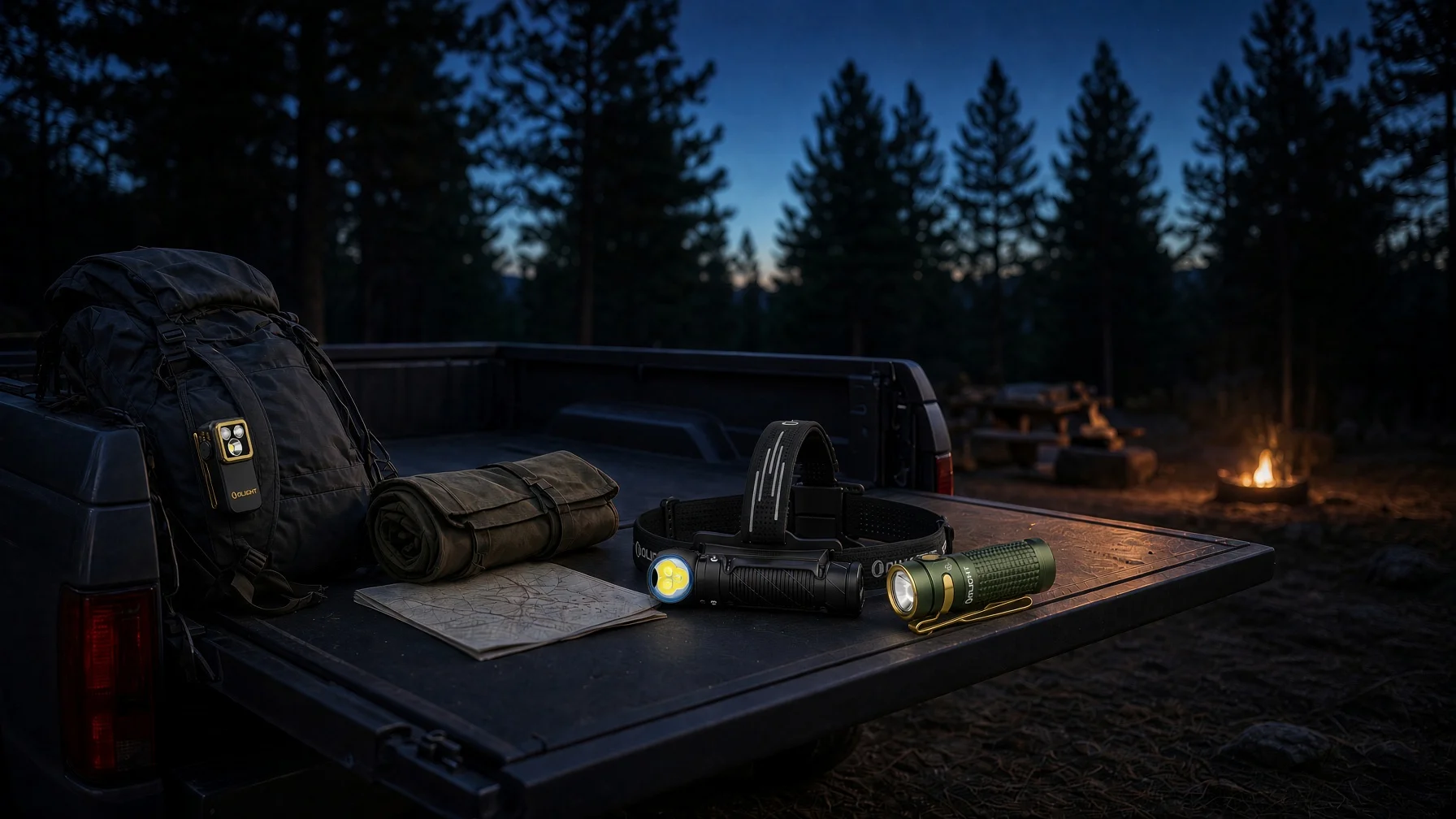
The two-light rule also keeps your costs honest. An Oclip 2 Pro plus a Seeker 4 Pro comes to $194.98 at regular prices and covers walking in, field dressing and a long track. A Seeker Ultra alone costs $169.99 and covers only the tracking and scanning part of the night, because it has no red mode. Olight's full range of hunting flashlights includes other handhelds if your hunting style calls for a different pair.
Red matters more than most buyers expect. The National Park Service notes that people need "from 20 to 40 minutes" to start benefiting from rhodopsin, the rod pigment behind night vision, that a few seconds of bright light break it down, and that "deep red lights do not trigger the neutralization of the rhodopsin," according to its article on dark adaptation and red flashlights. The same article adds that "a dim red light is best." The Oclip 2 Pro's 4-lumen red setting, rated for 27 hours, fits that advice.
Tip: On the walk in, point the light at the ground a few steps ahead and keep it on the lowest setting that lets you see roots and rocks. You keep more night vision and throw less light into the timber.
Which Hunting Light Price Tier Fits Your Kind of Hunting?
Match the tier to the longest steady light you need, not the brightest moment. Walking to a stand needs 10 to 60 lumens for under an hour, which the $55 tier covers. Blood tracking needs about 300 lumens for two hours or more, which starts at the $140 tier. Hound hunting and legal night predator hunts need both runtime and reach, so they push toward $140 to $170 plus a second light.
This scene table lists what each hunting situation asks of a light and the cheapest tier in this guide that covers it.
| Hunting situation | Output that works | Runtime to plan for | Water resistance | Cheapest tier that covers it |
|---|---|---|---|---|
| Deer stand walk-in, morning or evening | Red, or 10 to 60 lumens white | 30 to 60 minutes | Rain | About $55 |
| Waterfowl walk-in through marsh | 60 to 300 lumens, wide beam | About 1 hour | Immersion rating in case it goes in the water | About $55 (Baton 4 is IPX8) |
| Field dressing | 100-lumen flood, hands free | 1 to 2 hours | Rain and blood cleanup | About $55 (Oclip 2 Pro) |
| Blood tracking a lawfully shot deer | Steady 300 lumens | 2 to 4 hours | IPX8 for wet brush | About $140 |
| Raccoon with hounds | 300 lumens, head or hand | All night | IPX8 for creek crossings | About $140, plus a headlamp |
| Coyote or hog night hunt, where legal | Reach past 150 m for identification | Short bursts over several hours | IPX8 | About $140 to $170, plus a rail light |
Hound hunters have a different problem from stand hunters, because the light stays on for hours while you follow the dogs. Our guide to choosing a coon hunting headlamp covers all-night runtime on the head. The handhelds here are the backup and the light you use to find eyes in the tree.
The reach column matters only if you will legally use it. If your state bans shining the species you hunt, a $170 light buys you nothing over a $140 one on that hunt. Read the legal section below before paying for candela.
Baton 4 vs Seeker 4 Pro vs Seeker Ultra: Rated Specs and Price
On Olight's published ratings, the Baton 4 ($54.99) reaches 170 m with 7,225 candela, the Seeker 4 Pro ($139.99) reaches 260 m with 16,895 candela, and the Seeker Ultra ($169.99) reaches 265 m with 17,600 candela. All three are IPX8 and list a 1.5 m impact rating and a 0 to 40°C working temperature in their manuals. The big differences are battery size, sustained output and weight.
This table compares the three on the ratings Olight publishes, with regular prices checked September 24, 2026.
| Rated spec | Baton 4 | Seeker 4 Pro | Seeker Ultra |
|---|---|---|---|
| Regular price | $54.99 | $139.99 | $169.99 |
| Max output | 1,300 lumens | 4,600 lumens | 4,800 lumens |
| Peak intensity | 7,225 candela | 16,895 candela | 17,600 candela |
| Beam distance | 170 m | 260 m | 265 m |
| Turbo sequence | 1,300~600~300 lumens, 1.5 + 2.5 + 73 minutes | 4600~1200~600 lumens, 2.5 + 122 + 35 minutes | 4,800~1,000~600 lumens, 2.5+150+70 minutes |
| Steady mid mode | 60 lumens, 8 hours | 300 lumens, 11 hours | 300 lumens, 12.5 hours |
| Battery (per manual) | 650mAh 3.6V, 2.34 Wh | 5000mAh 3.6V, 18 Wh | 5,800 mAh 3.59 V, 20.9 Wh |
| Weight with battery | 52.5 g | 205 g | 220 g |
| Body | Aluminum alloy | Aluminum alloy | OAL aluminum alloy |
| Water and impact | IPX8, 1.5 m | IPX8, 1.5 m | IPX8, 1.5 m |
| Working temperature (manual) | 0-40°C | 0-40°C | 0-40°C |
| Color rendering (manual) | CRI 70 | CRI 70 | CRI 70 |
The Olight Baton 4 is the pocket option. Its hard limit for hunting is the High mode: 600~300~60 lumens for 7 + 72 + 16 minutes. That means 300 lumens ends around minute 79, well short of a two-hour track. Where it shines is the walk from the truck and the quick look at a gate latch, where 52.5 g in a pocket matters more than runtime.
The Olight Seeker 4 Pro is the tracking light in this trio. Its 300-lumen Med mode runs 11 hours, and Olight describes its larger metal switch as easy to operate "even with heavy gloves." Its limit is weight: at 205 g, it rides in a holster, not a shirt pocket.
The Olight Seeker Ultra adds the OAL body, a crocodile-textured silicone grip and the largest battery here. Olight notes that when it sits in its holster, "its brightness automatically reduces to below 600 lumens for safety reasons." Its limit is that the extra $30 buys only 5 m of extra rated reach, and its Turbo holds 1,000 lumens after the burst where the Seeker 4 Pro holds 1,200.
Rated maximums tell only part of the story, so this second table works out what each light is rated to deliver 30 minutes after you switch to Turbo.
| At minute 30 on Turbo | Baton 4 | Seeker 4 Pro | Seeker Ultra |
|---|---|---|---|
| Rated output at minute 30 | 300 lumens | 1,200 lumens | 1,000 lumens |
| Share of max output | 23% | 26% | 21% |
| Estimated candela at minute 30 | About 1,670 | About 4,410 | About 3,670 |
| Estimated reach to 0.25 lux | About 82 m | About 133 m | About 121 m |
| Average output over the first hour | About 338 lumens | About 1,342 lumens | About 1,158 lumens |
| Minute-30 lumens per dollar | 5.5 | 8.6 | 5.9 |
Note: The candela and reach rows assume peak intensity scales in step with output on the same optic. That is a reasonable engineering estimate, not an Olight rating. Reach uses the ANSI FL1 definition of beam distance, the point where light falls to 0.25 lux, which is explained in our guide to beam distance.
Read the last row as the value line. Per dollar of regular price, the Seeker 4 Pro is rated to put the most light on the ground half an hour into a hunt. The Baton 4 and Seeker Ultra land close together, for different reasons: one is small, the other is priced for materials.
What Do the Extra Dollars Buy in a Hunting Light?
The extra dollars in a hunting light buy four things: stored energy, sustained output, reach and build. Stored energy is the clearest. On regular price, the Baton 4 costs $23.50 per watt-hour of battery, while the Seeker 4 Pro costs $7.78 and the Seeker Ultra $8.13. You pay less per unit of energy in the bigger lights, and energy is what keeps a light bright on a long track.
This table lays out the cost of each thing you are buying, using regular prices and Olight's published ratings.
| Cost of what you buy | Baton 4 ($54.99) | Seeker 4 Pro ($139.99) | Seeker Ultra ($169.99) |
|---|---|---|---|
| Dollars per meter of rated beam distance | $0.32 | $0.54 | $0.64 |
| Dollars per 100 max lumens | $4.23 | $3.04 | $3.54 |
| Dollars per watt-hour of battery | $23.50 | $7.78 | $8.13 |
| Dollars per rated hour at 300 lumens | No steady 300-lumen mode | $12.73 | $13.60 |
| Share of the battery a 2-hour track at 300 lumens uses | Not possible at 300 lumens | About 18% | About 16% |
The table points in two directions at once. The Baton 4 is the cheapest per meter of listed reach, because a small, focused light can post a long beam distance on a tiny battery. It is also by far the most expensive per watt-hour, which is why that reach does not last. If your nights are short, the Baton 4 is honest value. If they are long, the Seekers are the better buy per hour of usable light.
Reach. Candela sets how far a beam carries. At 100 yards (91.4 m), the Seeker Ultra's 17,600 candela works out to about 2.1 lux at full power, the Seeker 4 Pro's about 2.0 lux, and the Baton 4's about 0.9 lux. By minute 30, the Baton 4 is down to an estimated 0.2 lux at that distance, below the 0.25 lux that defines beam distance. Our breakdown of rechargeable spotlight price tiers reaches the same conclusion from the other side: price tracks reach only loosely, and extra dollars often buy runtime, a floodlight or a tougher body instead of meters.
Sustained output. The industry standard now separates bursts from steady light. The Portable Lights American Trade Organization says its 2025 FL 1 revision adds a turbo test method to help consumers "distinguish a brief burst of maximum output from performance that can be sustained over a longer period," according to PLATO's summary of the ANSI/PLATO FL 1-2025 changes. For a hunter, the sustained level is the number to pay for.
Build and grip. The Seeker Ultra's OAL body and textured grip are the main things the last $30 buys. The Seeker 4 Pro and Seeker Ultra both use a rotary switch with stepless dimming and a holster with a lock function, and the Seeker Ultra locks automatically when it goes into the holster switched off. Those details matter with cold, wet gloves on a dark slope.
How Do Cold and Rain Affect a Cheap Hunting Light?
Price does not buy a wider cold rating in this group. The Baton 4, Seeker 4 Pro and Seeker Ultra manuals all list a working temperature of 0-40°C (32 to 104°F). What price buys is reserve: a bigger battery keeps more usable light when cold cuts capacity. Water resistance is IPX8 across all three, and the $55 Oclip 2 Pro is rated IP66.
Cold hits every lithium-ion cell. Cadex Electronics' Battery University explains that "cold temperature increases the internal resistance and lowers the capacity," and that a battery giving full capacity at 27°C (80°F) "will typically deliver only 50 percent at –18°C (0°F)," in its article on discharging at high and low temperatures. The same article says the loss "will recover in room temperature."
Use that as a planning rule, not a spec. If you halve the rated runtime for a 0°F stand, the Baton 4's 60-lumen mode drops from 8 hours to roughly 4, and the Seeker 4 Pro's 300-lumen mode from 11 hours to roughly 5.5. Remember that 0°F is also well below the 0°C floor Olight lists in the Seeker Ultra user manual and the other two manuals.
Warning: Do not charge a light that has been sitting in a freezing truck. Battery University's page on charging at high and low temperatures says that for Li-ion, "no charging is permitted at freezing temperatures." Bring the light indoors and let it warm up first.
Rain is simpler. The International Electrotechnical Commission's IP ratings page explains that the first digit rates protection against solids from 0 to 6 ("no ingress of dust") and the second rates protection against liquids from 0 to 9. The Baton 4, Seeker 4 Pro and Seeker Ultra carry IPX8, an immersion rating. PLATO notes that the 2025 FL 1 revision lets IPX8 test depth and duration vary, so the rating alone does not tell you how deep a light can go, and Olight's product pages for these three do not list a depth.
The Oclip 2 Pro's IP66 is a different kind of rating: dust-tight, with no immersion claim. Treat it as a rain-and-mud light, and do not wade a creek with it clipped low on a pack.
A simple cold-and-wet routine for any tier:
- Carry the light in an inside pocket until you need it, not on the outside of a pack.
- On a cold stand, use the lowest mode that works and save Turbo for identification.
- After a wet hunt, wipe the light dry and let it reach room temperature before charging.
- For hunts below freezing, carry a second light as a backup rather than counting on one battery.
Is a 200,000 Lumen Flashlight Legal?
The hunting rules quoted in this guide do not set a lumen limit. They regulate how you use a light: on which animals, at what hours, and whether you are armed. Texas bans hunting with artificial light "of any form" that illuminates a game animal or bird, so a 100-lumen light breaks that rule as surely as a very bright one. Check your state's current rules before you buy for reach, because digests are reissued every season.
Here is the Texas wording. Texas Parks and Wildlife lists it as unlawful to "hunt with the aid of artificial light of any form that casts or reflects a beam of light onto or otherwise illuminates a game animal or bird," in its hunting means and methods rules. Brightness does not enter into it. The same Texas page lets hunters with legal blindness or a documented permanent disability use laser sighting devices, which shows how narrowly the exceptions are written.
Wisconsin shows how the weapon in your hand changes things. Its shining and night hunting rules ban using a light for shining wild animals while hunting or in possession of a firearm, bow and arrow or crossbow, and say this "includes laser sights on firearms, bows and crossbows." They also ban shining between 10 p.m. and 7 a.m. from Sept. 15 to Dec. 31, armed or not.
This table turns those rules into what they mean when you shop.
| Rule | What the source says | What it means for your purchase |
|---|---|---|
| Texas, game animals and birds | No artificial light "of any form" on a game animal or bird | Buying more lumens does not open any deer hunting option |
| Wisconsin, armed shining | No shining while armed; laser sights count | A weapon light or laser is a shining tool while you hold the gun |
| Wisconsin, fall hours | No shining 10 p.m. to 7 a.m., Sept. 15 to Dec. 31, armed or not | A scanning light has legal limits even with no weapon |
| Wisconsin, point of kill | "A flashlight or firearm-mounted light may be used at the point of kill while hunting on foot for coyote, raccoon, fox or unprotected species" | Reach can be worth paying for on legal furbearer and predator hunts |
| Your state | Rules differ by species, land, hours and weapon | Read your current digest first; our guide to hunting with a light laws compares 12 states |
The other half of the question is whether the lumen figure is real. Olight's Marauder 3 is rated at 25,000 lumens and 250,000 candela, and it weighs 840 g. A light claiming 200,000 lumens would need eight times that output. Some listings may be quoting candela as if it were lumens, or a peak that lasts seconds. Look for ratings reported under ANSI/PLATO FL 1, which the Seeker 4 Pro and Seeker Ultra manuals cite (FL 1-2019). PLATO says the 2025 revision measures turbo output "between one and 10 seconds."
Safety note: However bright your light is, identify the animal and what lies beyond it before any shot, and never point a hunting light at people, vehicles or houses.
What Is the Best Affordable Rifle Light?
The best affordable rifle light is the least expensive one that still has a water rating, a mount that locks and a remote switch, because a light that shifts under recoil costs more than it saves. In Olight's lineup, the Odin Mini fits that description at $139.95 regular price, with 1,250 lumens, 14,400 candela, a 240 m beam distance and an IPX8 rating.
The Olight Odin Mini comes with a removable M-LOK mount that Olight describes as using a slide rail and a mechanical lock, plus a push-to-lock magnetic remote switch. It weighs 176 g with its battery. Its High mode is rated at 1,250~900~700~200 lumens for 6 + 11 + 39 + 14 minutes, and Low at 200 lumens for 5 hours. At 100 yards, 14,400 candela works out to about 1.7 lux at full power.
Its limits are worth knowing before you buy. Olight lists its use as self-defense, law enforcement and tactical, not hunting. It needs an optional adapter for Picatinny rails. And because it rides on a gun, switching it on is shining while armed under rules like Wisconsin's. That state carves out one exception, a firearm-mounted light at the point of kill for coyote, raccoon, fox or unprotected species while hunting on foot, so a rail light is only as useful as your state's rule for your species.
Price is not the only test. For hogs in particular, beam spill and switch placement matter as much as reach, and our guide to the best rifle light for hog hunting compares five options on those points. Olight's range of rail-mounted lights lists the rest.
Note: A rail light does not replace a handheld. Use the handheld to scan and identify, and bring up the weapon light only where it is legal and only to confirm and shoot. That keeps the muzzle from sweeping everything you look at.
Common Hunting Light Price Mistakes
The most common mistake is paying for the biggest lumen number instead of the level the light can hold. The second is assuming the most expensive light is the best one for every job. Both come from reading the burst rating and skipping the runtime table, which is where the real differences between a $55, $140 and $170 light show up.
Here are five mistakes and the fix for each:
- Treating lumens as value. The Seeker Ultra has about 4% more maximum output than the Seeker 4 Pro, yet it is rated to hold 1,000 lumens after its Turbo burst where the Seeker 4 Pro holds 1,200. Fix: compare the second number in the Turbo sequence.
- Assuming the priciest light fits every job. For the walk to a stand, the $54.99 Oclip 2 Pro with its red light is the better tool than the $169.99 Seeker Ultra, which has no red mode. Fix: buy by task.
- Paying for reach you cannot use. If your state bans shining your species, candela does nothing on that hunt. Fix: read your state rule first.
- Buying one light for the whole night. A single light either weighs too much for the walk in or runs out on the track. Fix: use the two-light rule.
- Ignoring the cold floor. All three handhelds here list 0-40°C. Fix: keep the light warm and carry a backup below freezing.
How to Pay Less for a Hunting Light Without Buying Twice
The cheapest way to buy a hunting light is to buy the right tier once. A $55 light that cannot hold 300 lumens for a two-hour track sends you shopping again. Price out the two-light kit that covers your whole night at regular prices, then treat any promotion on Olight's official store as a bonus rather than the reason to buy.
This table prices four common kits at regular prices and shows what each covers and misses.
| Kit | Regular price total | Covers | Misses |
|---|---|---|---|
| Baton 4 + Oclip 2 Pro | $109.98 | Walk-in with red, field dressing, quick checks | A two-hour track at 300 lumens |
| Oclip 2 Pro + Seeker 4 Pro | $194.98 | Walk-in with red, field dressing, long tracks, 260 m scanning where legal | A rail light for legal night shots |
| Oclip 2 Pro + Seeker Ultra | $224.98 | Same jobs, with the OAL body and a 20.9 Wh battery | A rail light for legal night shots |
| Seeker 4 Pro + Odin Mini | $279.94 | Tracking and scanning, plus a rifle light for legal hog or coyote hunts | A red light for the walk in |
Four habits keep the total down:
- Compare regular prices. Olight's prices change during events. The regular price is the fair baseline across brands and months.
- Buy the handheld first. The tracking light is the one that is hardest to replace with a phone. Add the clip light next.
- Skip reach you will not use. For stand hunters who only track, the Seeker 4 Pro gives up 5 m against the Seeker Ultra and saves $30.
- Share chargers. The Baton 4 charges on MCC magnetic cables, and the Seeker 4 Pro and Seeker Ultra take MCC3 or USB-C through the holster, so check what your household already has before buying extra cables.
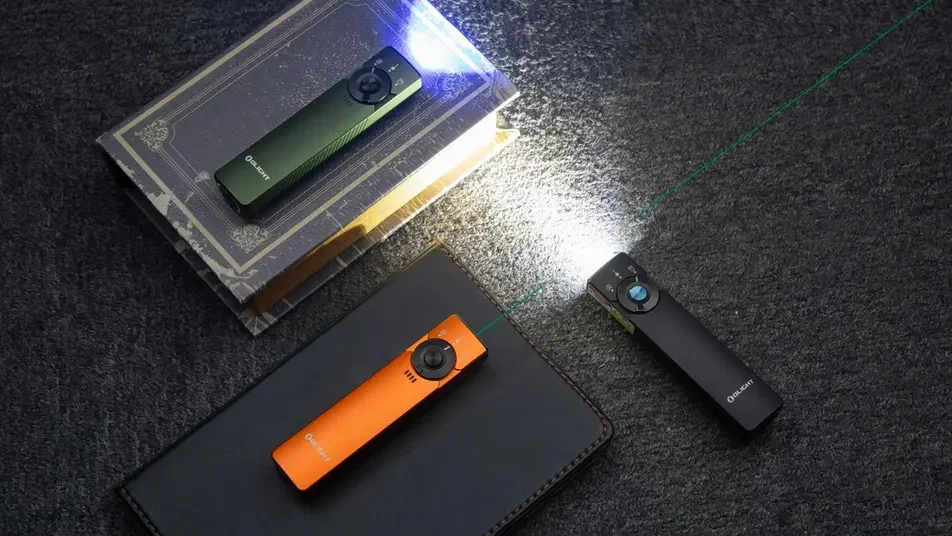
The Olight Oclip 2 Pro is the piece most kits share. For $54.99, it combines a 530-lumen floodlight, a 125 m spotlight and red light, with a clip that grips objects up to 14 mm thick and a 115° head tilt. Its limit is a small 600 mAh battery: the floodlight runs 100 lumens for 3 hours 45 minutes, so it is a walk-in and field-dressing light, not a tracking light. The Oclip 2 user manual adds a caution for anyone with an implanted heart device: "If you have an ICD or pacemaker, avoid close or prolonged contact with this product to prevent possible interference."
Hunting Light Price Checklist Before You Buy
Before you pay any hunting light price, write down the longest steady light you need, the farthest distance you will legally use, and the coldest temperature you will hunt in. Then check each candidate's runtime table, battery size and water rating against that list. The light that meets all three at the lowest regular price is the right buy.
Run these checks in order:
- Legal first. Confirm your state allows light for the species, hours, land and weapon you plan to use.
- Longest steady need. For tracking, confirm a mode near 300 lumens that runs at least two hours on the spec sheet.
- Reach you can use. Size candela to your longest legal identification distance, not to the biggest number on sale.
- Cold plan. Check the working temperature in the manual and plan on less runtime below freezing.
- Water. Choose IPX8 if the light might go in a creek; IP66 is fine for rain and mud.
- Second light. Add red or a very low mode for the walk in.
- Regular price. Compare the regular prices of the kit you need, not a single sale price.
Then charge everything the night before and add both lights to your hunting season gear check, so you find a flat battery at home and not on the stand.
FAQ
Changelog
- September 22, 2026: First published. Olight specs and regular prices checked September 24, 2026; external sources checked September 25, 2026.