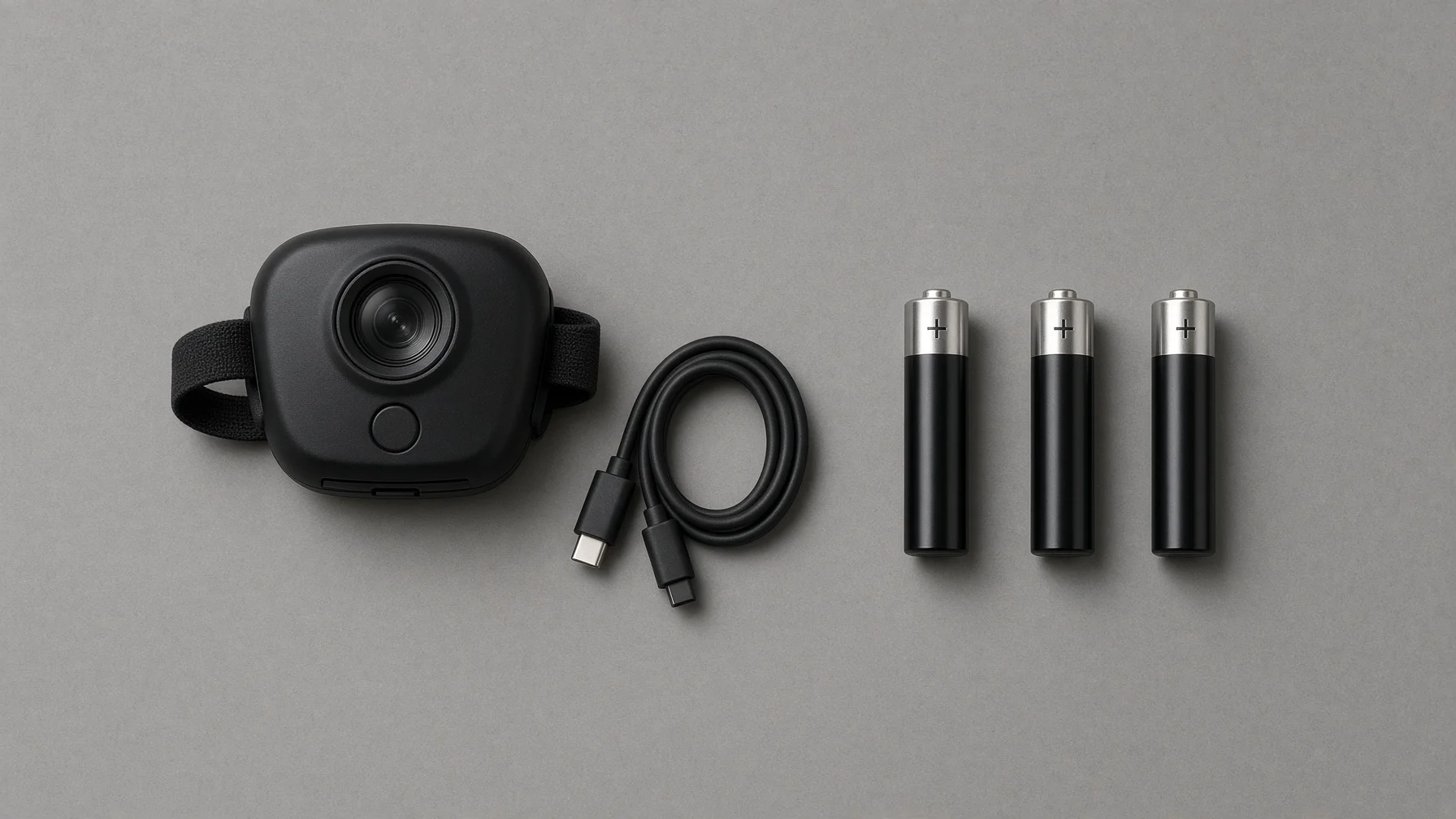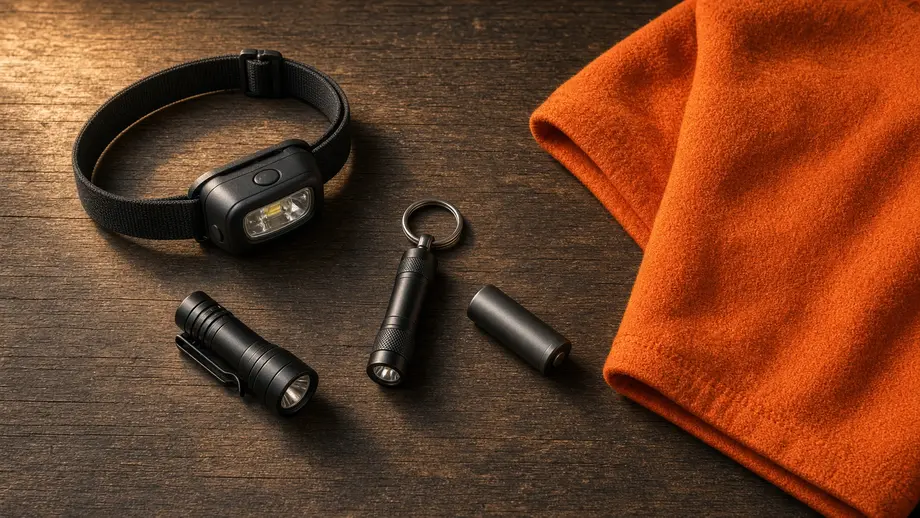
Olight makes some of the lights discussed here. Olight specs and prices come from its product pages and user manuals as of September 2026; safety, legal and battery information comes from the state agencies, hunter education standards and references linked in each section.
⚡ TL;DR
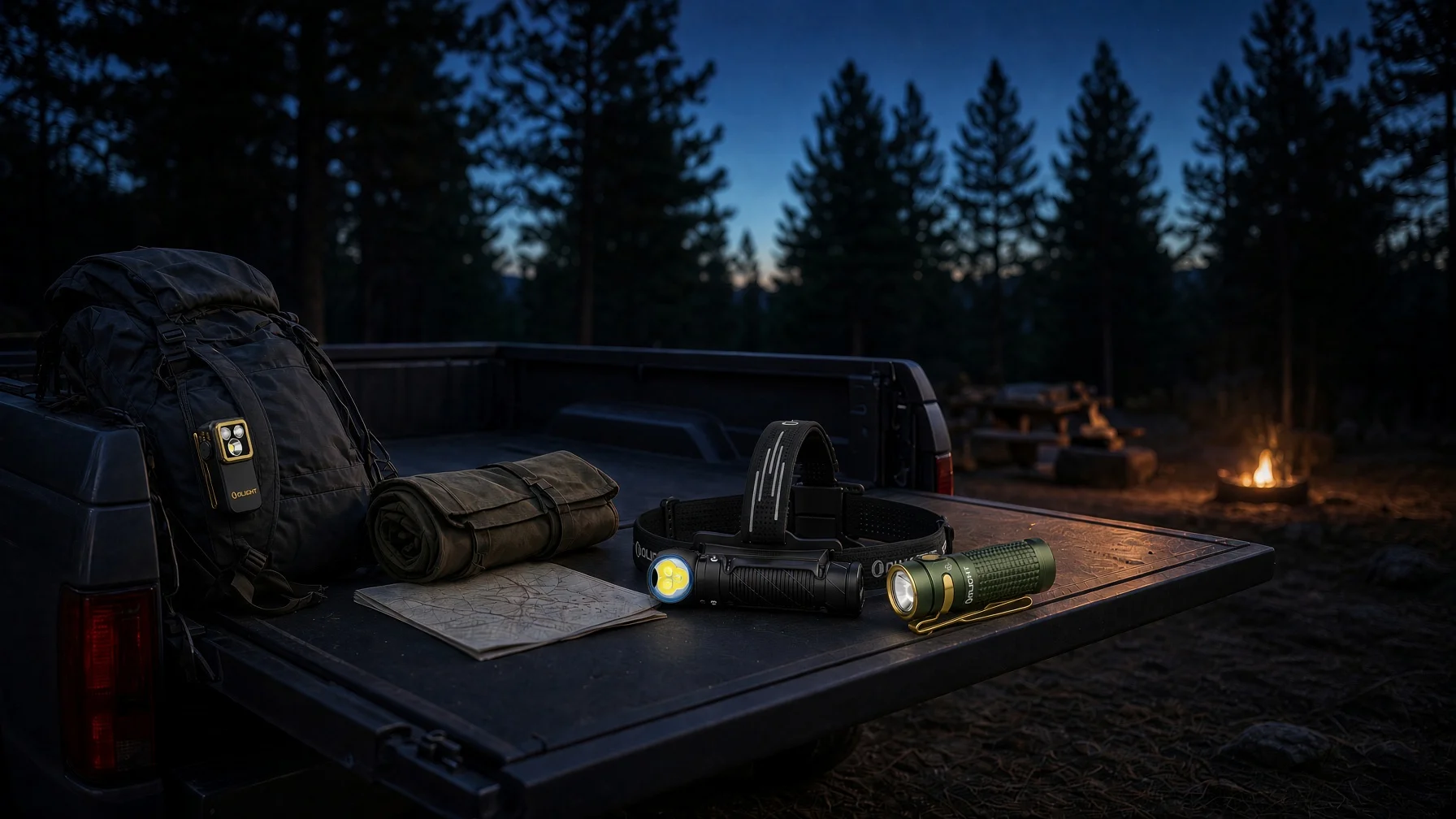
A hunting season gear check works best in three passes: batteries and lights 30 days out, rules and stand hardware the week before, and a full pack-and-walk the night before. For lighting, carry three layers: a headlamp for the walk in, a backup light in a pocket, and a high-output handheld in the truck for the walk out and recovery.
This hunting season gear check table sets out the three core lighting layers plus a key-ring spare and a spare cell, the minimum specs we suggest for each, and one Olight option per row at its regular price as of September 2026.
| Hunting light setup layer | Job on opening day | Recommended type | Suggested minimum specs | Olight option (regular price) |
|---|---|---|---|---|
| Main light (on your head) | Walk in, climb, set up, walk out | Rechargeable headlamp with red light | 100+ lumens for 2 hours, a red mode, IPX4 or better | Perun 3, 3,000 lumens max, IP68 ($89.99) |
| Backup light (in a pocket) | Get you out if the main light fails | Small clip light or keychain light | 100 lumens for 45 minutes, clips hands-free, weighs under 3 oz | Oclip 2 Pro, 530 lumens, IP66 ($54.99) |
| Last-resort light (on your keys) | Find the truck lock, read a map | AAA keychain light | Any output, stored for a year without charging | i3E EOS, 90 lumens, AAA ($12.99) |
| Truck light (in the vehicle) | Walk out, trailhead, legal recovery work | High-candela handheld | 50,000+ candela, IPX7 or better, spare battery | Warrior X 4, 99,310 candela, IPX8 ($129.99) |
| Spare cell (in the pack) | Swap when the main light runs low | Matching rechargeable battery | Same cell as your main light | 21700 5000mAh battery, fits Perun 3 and Warrior X 4 ($26.95) |
Every year, somebody reaches the gate at 4:45 a.m. and finds the headlamp dead from a summer in the truck, or learns at the base of the tree that a stand strap has rotted. Opening morning leaves no time to fix either one. This guide moves those checks earlier, into a sequence you can follow: a month out, a week out, the night before and the morning itself.
📋 Table of Contents
- 1. What Should I Check Before Hunting Season?
- 2. How Many Lights Should I Bring Hunting?
- 3. Do I Need a Backup Headlamp?
- 4. 30 Days Before Opening Day: Batteries and Runtime
- 5. 7 Days Before: Legal Hours, Blaze Orange and Land Rules
- 6. How Do You Check a Tree Stand and Safety Gear Before the Season?
- 7. How Does Cold Weather Affect Flashlight Batteries?
- 8. The Night Before: Pack by Layer and Walk It Dark
- 9. Opening Day Checklist: The Gate Check at the Truck
- 10. A Printable Hunting Season Gear Check for Opening Day
- 11. FAQ
What Should I Check Before Hunting Season?
Before hunting season, a good hunting season gear check covers four things: your lights and batteries, your license and the current regulations, your stand or blind hardware, and your clothing, including required blaze orange. Do the battery work 30 days out, the rules and stand checks the week before, and a full pack and dark walk-through the night before, so nothing gets fixed at the trailhead.
Most lists cover the rifle, the bow and the knife. The items that fail most often on opening morning are smaller: a headlamp battery, a stand strap, a missing permit, an orange hat left on the kitchen counter. This page puts them on a calendar.
Hunter education gives the checklist a frame. The IHEA-USA hunter education standards say "Preparation is important for reducing the likelihood of serious emergencies while hunting." They also say a hunter should leave a hunt plan "With a friend or family member so that searchers will know where to find the hunter." The Pennsylvania Game Commission's safe hunting tips put it in two words: "Plan your hunt!"
Here is how the whole sequence lays out. Each block has its own section below.
- 30 days out: charge, run and time every rechargeable light; retire weak cells; buy spares.
- 7 days out: reread this year's regulations, confirm legal hours and orange rules, inspect stands and fall-arrest gear.
- The night before: charge to full, pack by layer, walk the route in the dark if you can.
- Opening morning: back-time from legal shooting light, then work through the gate checklist.
How Many Lights Should I Bring Hunting?
Bring three lights for a day hunt: a headlamp as your main light, a small backup light that can get you out alone, and a brighter handheld that stays in the truck. Add a spare battery for the main light. Each layer covers a different failure: a dead cell, a dropped light, or a job the headlamp cannot reach.
The layers work because they fail for different reasons. A headlamp dies from a flat battery or a cracked switch. A backup in a chest pocket stays warm and dry and has a separate power source. A truck light never makes the walk, so it is still charged when you get back after dark. If you are shopping for that third layer, Olight's hunting flashlights collection groups its long-throw handhelds and spotlights in one place.
This table shows what each part of an opening day asks of a light. The numbers are our planning suggestions for a typical walk-in whitetail hunt, not legal or manufacturer requirements.
| Part of the day | Typical time on the light | Brightness that works | What matters most |
|---|---|---|---|
| Walk in before legal light | 20 to 60 minutes | 100 to 300 lumens, beam on the trail | Runtime at a middle level, a wide beam at your feet |
| Climbing and setting up the stand | 10 to 20 minutes | 30 to 120 lumens, or red | Hands free, low glare on the tree and your gear |
| Waiting for legal light | 5 to 30 minutes | Red, or nothing | A red mode that does not flash through white first |
| Walk out after legal light ends | 20 to 60 minutes | 100 to 600 lumens | Enough charge left after a cold day |
| Legal recovery or truck work | 10 to 60 minutes | 1,000+ lumens with long reach | High candela, water rating, a spare cell |
Main light: the headlamp
The walk in is the longest stretch of light use, and it is dark from end to end. The Olight Perun 3 headlamp runs 120 lumens for 25 hours on Med and 30 lumens for 89 hours on Low, on a 5000 mAh 21700 battery. Its red light gives 60 lumens for 14 hours or 15 lumens for 70 hours. The large metal side button is, in Olight's words, "concave to avoid unwanted activation during transit or storage," and the manual adds a lockout mode for the pack.
The limit is weight and cold. The Perun 3 weighs 5.29 oz (150 g) with its battery, and its user manual lists a working temperature of 0-40°C. On a frosty morning, see the cold weather section below. For a wider comparison of models, see our guide to the best headlamps, or browse Olight's headlamps collection.
Backup light: small, separate, always on you
A backup only helps if it is on your body when the main light fails. The Olight Oclip 2 Pro clip light clips to objects "up to 14 mm thick, including collars, straps, and MOLLE webbing," so it can ride on a pack strap and aim at the trail. It gives 100 lumens of floodlight for 3 hours 45 minutes and 40 lumens of red light for 4 hours, and weighs 2.66 oz (75.5 g). The Oclip 2 user manual adds a caution for anyone with an implanted heart device: "If you have an ICD or pacemaker, avoid close or prolonged contact with this product to prevent possible interference."
Its limits: the 600 mAh battery is small, so it is a backup, not an all-season main light, and it is rated IP66 rather than for immersion. A cheaper last resort is the Olight i3E EOS keychain flashlight. It runs on "a single widely available AAA battery," gives 90 lumens, and weighs 0.68 oz. Its user manual rates it at 45 minutes on an alkaline AAA or 70 minutes on a NiMH cell, and it has no red mode, so treat it as a key-ring spare, not a second headlamp.
Truck light: reach for the walk out
The truck light handles jobs a headlamp cannot: checking a field edge for a landmark, lighting a trailhead or doing legal recovery work. The Olight Warrior X 4 tactical flashlight is rated at 2,600 lumens and 99,310 candela, with an IPX8 rating. Its Regular Low mode runs 300 lumens for 8 hours, which covers most walks out.
The limits: it weighs 8.78 oz (249 g), it is a handheld and not a headlamp, and its Tactical mode puts strobe on the tail switch, so leave it in Regular mode for hunting. Olight lists both the Warrior X 4 and the Perun 3 as compatible with its Olight 21700 5000mAh battery, so one charged spare covers both lights. For more on cell sizes, see 18650 vs 21700 vs CR123A.
Reach is easy to estimate. Light on a target in lux equals candela divided by distance squared. This table applies that formula to Olight's published candela figures at full output, before any step-down.
| Light (candela) | 10 m (33 ft) | 25 m (82 ft) | 50 m (164 ft) | 100 m (328 ft) |
|---|---|---|---|---|
| Perun 3 (6,400 cd) | 64 lux | 10.2 lux | 2.6 lux | 0.6 lux |
| Oclip 2 Pro spotlight (3,906 cd) | 39.1 lux | 6.2 lux | 1.6 lux | 0.4 lux |
| Warrior X 4 (99,310 cd) | 993 lux | 159 lux | 39.7 lux | 9.9 lux |
The headlamp is plenty for a trail at your feet. At 100 m, only the Warrior X 4 still puts close to 10 lux on a target, which is why it belongs in the truck and not on your head. Output also steps down on high settings; our explainer on thermal step-down in a flashlight covers why.
Do I Need a Backup Headlamp?
Yes, if you walk in or out in the dark, carry a backup light that can get you out on its own. It does not have to be a second headlamp. A clip light worn on a strap works hands-free, and a keychain light covers the last few steps. What matters is a separate battery and a spot on your body, not in the truck.
The logic is simple. A headlamp fails at the worst time because the worst time is when you use it most: in the dark, in cold, far from the truck. A single spare battery does not help if the switch breaks or the light falls from the stand. A second light does.
Match the backup to the walk out. This table checks whether each backup can cover a 45-minute walk out on one charge, using Olight's published runtimes.
| Backup option | Mode for walking | Rated runtime (Olight) | Covers a 45-minute walk out? |
|---|---|---|---|
| Oclip 2 Pro | Floodlight Medium, 100 lumens | 3 hours 45 minutes | Yes, about five times |
| Oclip 2 Pro | Red Light High, 40 lumens | 4 hours | Yes, at a slower pace |
| Perun 3 spare battery | Med, 120 lumens | 25 hours | Yes, if the headlamp itself still works |
| i3E EOS | Single mode, 90 lumens | 45 minutes (alkaline AAA), 70 minutes (NiMH), per the user manual | Only just, on a fresh cell; carry a spare AAA |
Tip: Wear the backup, do not pack it. A light at the bottom of a pack is out of reach on a steep bank at 5 a.m. Clip it to a shoulder strap or keep it in a zipped chest pocket, where your body heat also keeps it warm.
30 Days Before Opening Day: Batteries and Runtime
Thirty days out, start the gear check with power: charge every rechargeable light, run each one at the level you hunt with, and time it against the maker's rated runtime. A cell that falls well short gets replaced now, while shipping still beats opening day. Then store each light partly charged and cool until the night before.
Why a month? Lithium-ion cells lose capacity while they sit, and heat speeds it up. Battery University's storage guide says "Recommended storage is around 40 percent state-of-charge (SoC)" and gives the table below for lithium-ion (Li-cobalt) after a year in storage.
| Storage temperature | Capacity after one year, stored at 40% charge | Capacity after one year, stored at 100% charge | What it means for your headlamp |
|---|---|---|---|
| 0°C (32°F) | 98% | 94% | A cold closet barely hurts it |
| 25°C (77°F) | 96% | 80% | A full charge in a warm house costs about a fifth |
| 40°C (104°F) | 85% | 65% | A full charge in a hot summer truck costs about a third |
Those are Battery University's estimates for one chemistry, not Olight figures. The pattern still holds: the worst place to store a hunting light is fully charged in a hot vehicle, so bring the truck light inside for the summer.
A runtime check you can run at home
You do not need a lab to spot a tired battery. You need a full charge, a clock and the rated runtime. The Perun 3 manual says its figures are tested per the ANSI/PLATO FL 1-2019 standard in Olight's labs, so run your check indoors, not in a cold garage.
- Charge the light to full and let it rest for an hour.
- Pick one mode with a published runtime, such as Perun 3 High, rated at 600~120 lumens for 300 + 30 minutes.
- Turn it on indoors, away from anything that could heat it, and note the start time.
- Check it every 30 minutes and note when it steps down and when it shuts off.
- Compare your total with the rating.
Battery University's guide to capacity loss says "A pack should be replaced when the capacity drops to 80 percent," while noting that the threshold can vary. Applied to the Perun 3 High rating of 330 minutes, a light that quits much before about 264 minutes deserves a new cell. This is a rough check, since runtime and capacity do not track exactly, but it catches the cells that would fail you in November.
Note: Once the check is done, recharge to around half and store the light somewhere cool and dry. Top it off the night before the hunt, not in August.
7 Days Before: Legal Hours, Blaze Orange and Land Rules
The week before opening day, reread this year's regulations for your state and zone. Confirm the season dates, your tags, legal shooting hours for your exact location, blaze orange rules for your season and weapon, and any public land rules. Hours and orange rules differ by state, so a friend's answer from another state does not apply to you.
Legal shooting hours set your whole morning, because they decide when you need to be in the stand. States do not use the same clock. This table compares four states using their agency or statute text as of September 2026. It is a summary to show how much rules vary, not legal advice.
| State | Legal hours (deer and most game) | Blaze color rule | Source |
|---|---|---|---|
| Virginia | One half-hour before sunrise to one-half hour after sunset | During firearms deer season, a blaze hat or upper-body clothing visible from 360 degrees, or 100 square inches at shoulder level | Virginia DWR |
| Pennsylvania | Set by season in the Hunting and Trapping Digest | 250 square inches on head, chest and back combined, visible from 360 degrees, while moving from one hour before legal hours | Pennsylvania Game Commission |
| Wisconsin | Shooting hours tables, adjusted by zone | At least 50% of clothing above the waist and any head covering blaze orange or pink during any firearm deer season | Wisconsin DNR |
| South Carolina | Night hunting runs from one hour after sundown to one hour before sunrise and is unlawful except as the law allows | Check SCDNR rules for your season | S.C. Code 50-11-700 and 50-11-705 |
The Virginia column comes from the Virginia DWR general regulations, which set hours at "One half-hour before sunrise to one-half hour after sunset for nonmigratory birds and game animals." The same page says hunters in an enclosed ground blind must display at least 100 square inches of blaze color "visible from 360 degrees attached to or immediately above the blind."
Pennsylvania's rule matters most for anyone walking in with a headlamp. The 2026-27 Pennsylvania Hunting and Trapping Digest says that when orange is required, "the full amount of orange required for that season must be worn while moving from one hour prior to the start of legal hunting hours and for one hour past the closing of legal hunting hours." In other words, the orange goes on at the truck, not in the stand.
Wisconsin shows why you should check your zone, not just your state. The Wisconsin DNR shooting hours page says "It is illegal to shoot at game before or after the shooting hours listed in the shooting hours tables," and tells hunters to add the minutes for their zone. Its deer hunting page sets the blaze rule for firearm deer seasons.
South Carolina shows why a light on the walk in has to stay on the trail. Under S.C. Code Title 50, Chapter 11, "night" runs from one hour after official sundown to one hour before official sunrise, and Section 50-11-705 makes night hunting unlawful except as the article allows. It also says that displaying artificial light at night "in a manner capable of disclosing the presence of deer, bear, or turkey," together with a centerfire rifle and ammunition, "shall constitute prima facie evidence of night hunting."
Warning: Use your light to walk and set up, not to scan. Keep the beam on the trail and your feet, never sweep fields or food plots before legal hours, and keep your firearm unloaded until legal shooting light. Rules on lights and night hunting differ widely; our guide to laws on hunting with a light compares them state by state.
How Do You Check a Tree Stand and Safety Gear Before the Season?
Check a tree stand before the season by looking over every strap, cable, bolt and weld for rust, fraying or missing parts, confirming the tree is alive and sound, and inspecting your full-body fall-arrest system: vest, tether and lifeline. Then practice wearing it at ground level. Wear it from the moment your feet leave the ground until they are back on it.
Falls are the top risk in the stand. The IHEA-USA hunter education standards state that "Falls from stands are the number one cause of hunting incidents in North America." The Pennsylvania Game Commission says "Hundreds of Pennsylvania hunters have been seriously injured in tree stand-related accidents" and tells hunters to "always wear a full-body, fall-restraint device as soon as your feet leave the ground until they return."
The Game Commission sums up its advice as STEPS. This list pairs each step with what to do during the week before opening day.
- S, safety gear: wear a full-body fall-arrest system whenever your feet leave the ground. Check the webbing, stitching, buckles and tether for cuts, mildew or sun damage, and replace anything past its maker's service date.
- T, tree stand maintenance: "Check your stand for missing or broken parts before each use." Look at ratchet straps, chains, pins and seat fabric. Stands left up all year need the closest look.
- E, evaluate your stand site: "Select trees that are alive and will support your weight." Look for dead limbs overhead and bark that peels loose.
- P, partners and plans: "Hunt with a partner and have a plan in case of an emergency." Leave your stand location and return time with someone at home.
- S, signals: "Carry a whistle or other signaling device should you need assistance." Keep it on your safety vest, not in the pack on the haul line.
The IHEA standards add how to climb: "Use three points of contact when climbing," "Use a haul line to pull up firearms, bows or other equipment," and "Practice at ground level before climbing." If you do fall, they say "Do not panic" because the fall-arrest system will hold you, then "Signal for help" and use the suspension relief strap, or keep moving your legs if you do not have one.
Safety note: Climbing in the dark is when a headlamp earns its place. Set it to a middle or red level before you start up, so you never fumble for the switch with one hand on the tree. Haul the unloaded firearm or bow up on the line after you are clipped in.
How Does Cold Weather Affect Flashlight Batteries?
Cold slows the chemistry inside a lithium-ion cell, so a light gives less runtime and may step down sooner on a frosty morning. The battery recovers once it warms up. The bigger risk is charging: consumer lithium-ion cells should not be charged below freezing. Keep lights and spare cells in an inside pocket, and charge them indoors.
Battery University's temperature guide explains both effects. "The internal resistance of all batteries rises when cold, prolonging charge times noticeably. This also affects discharge performance noticeably with Li-ion." On charging, it says "Many battery users are unaware that consumer-grade lithium-ion batteries cannot be charged below 0°C (32°F)," because lithium plating during a sub-freezing charge causes "permanent degradation in performance and safety."
Olight's manuals set a limit you should plan around. The Perun 3 user manual lists a working temperature of 0-40°C, and the Warrior X 4 manual lists the same 0-40°C range. That is 32 to 104°F. Opening mornings in much of the country start below that range. This is a real limit of these lights for late-season hunts.
Here is how to work with it:
- Carry the spare cell against your body. An inside chest pocket keeps it near body temperature.
- Keep the headlamp under your hat or hood during the sit. Put it back on your head only for the climb down and walk out.
- Plan on less than the rated runtime. Olight's figures are room-temperature figures. For a cold morning, we suggest planning on about half.
- Never charge in the truck at dawn. Bring the light inside and let it warm before you plug it in.
A quick worked example shows the margin. Say your walk in and setup take 75 minutes and your walk out takes 45 minutes: two hours of light a day. The Perun 3 at 120 lumens on Med is rated for 25 hours, or about 12 hunting days at room temperature. At our half-runtime cold planning margin, that is still about six days on one charge. Top it off every few days during the season and you will not run it flat.
The Night Before: Pack by Layer and Walk It Dark
The night before opening day, charge every light to full, pack gear by layer so each item has a fixed pocket, lay out orange and clothing in the order you put them on, and set your departure time by back-timing from legal shooting light. If the stand is close to home, walk the first stretch of the route in the dark with your headlamp.
A fixed pocket for each item is what lets you find it at 4:45 a.m. without taking off gloves. This is the layout we suggest.
- On your head: headlamp, charged, set to a middle level, lockout on for the drive.
- Chest pocket: backup light, whistle, phone.
- Inside jacket pocket: spare battery, hand warmer kept away from the battery.
- Pack hip belt: knife, tags and license, pen, zip bag.
- Pack main compartment: safety vest if not worn, haul line, first aid kit, water, snack.
- Truck: truck light, spare AAA, drag rope, backup clothing, printed map.
The dark walk-through does more than any list. Five minutes on a dark driveway or trail with the headlamp shows whether the strap fits over a winter hat, whether the beam hits the ground at your normal pace and whether you can switch to red with gloves on.
Back-time your opening morning
Back-timing starts at legal shooting light and works backward. This worked example uses a sunrise of 7:00 a.m. and Virginia's half-hour rule. Change the numbers for your own sunrise table, zone and walk.
| Step | Time | Light in use |
|---|---|---|
| Legal shooting light (sunrise minus 30 minutes) | 6:30 a.m. | None; you are settled and still |
| Settled in the stand, firearm loaded only when legal | 6:15 a.m. | Red, then off |
| Climb and set up, 20 minutes | 5:55 a.m. | Headlamp at a middle level or red |
| Walk in, 40 minutes | 5:15 a.m. | Headlamp on the trail |
| Leave the truck, orange on | 5:15 a.m. | Headlamp on; in Pennsylvania, orange required while moving from one hour before legal hours |
| Leave home, 30-minute drive | 4:45 a.m. | Truck light stays in the truck |
In this example, you need a headlamp for 75 minutes before shooting light, most of it before the rules allow you to hunt. That is why the beam stays low and on the path.
Opening Day Checklist: The Gate Check at the Truck
Your opening day checklist at the truck is short, and you run it before you walk: license and tags on you, orange on, headlamp on and working, backup light on your body, spare cell in an inside pocket, safety vest on or packed, firearm unloaded and cased or slung, and your hunt plan left with someone at home.
The gate checklist is the last chance to catch a mistake while the truck is still there. Read it out loud if you hunt with a partner.
- License, tags and any permit or landowner letter are in your pocket.
- Blaze orange is on your head and body if your season requires it.
- The headlamp turns on at the level you want, and red works.
- The backup light is clipped on or in a chest pocket.
- The spare battery is in an inside pocket.
- The safety vest is on, or packed on top where you can reach it.
- The firearm is unloaded and pointed in a safe direction; the bow is cased.
- Someone at home knows where you are and when you will be back.
- The truck light is charged and where you can find it after dark.
After the hunt, recovery rules are their own topic. Some states allow tracking a hit animal after legal hours under specific conditions, and others restrict lights or weapons at that time. If you use thermal for recovery, our guide on a thermal monocular for deer recovery explains when heat beats a blood trail. For a white-light search, the truck light from the three-layer setup above is the tool to reach for.
A Printable Hunting Season Gear Check for Opening Day
This printable hunting season gear check puts every step from this guide on one page, sorted into four blocks: 30 days out, the week before, the night before and opening morning. Print it, tape it inside the gear closet and tick each line. Each item takes a few minutes, and none of them should wait for the trailhead.
30 days out
- Charge every rechargeable light and run a timed runtime check.
- Replace any cell that falls well short of its rating.
- Buy a spare battery for your main light and fresh AAA cells for keychain lights.
- Store lights at about half charge somewhere cool.
The week before
- Read this year's regulations for your state, zone and weapon.
- Confirm legal shooting hours for your exact location and print the table.
- Confirm your blaze orange rule, including any rule for moving before legal hours.
- Inspect stand straps, cables and seat; inspect your safety vest, tether and lifeline.
- Practice with the fall-arrest system at ground level.
- Check public land rules or get written landowner permission.
The night before
- Charge all lights to full.
- Pack by layer, one fixed pocket per item.
- Lay out orange and clothing in the order you put them on.
- Back-time the morning from legal shooting light and set the alarm.
- Leave your hunt plan with someone at home.
Opening morning
- Run the nine-point gate checklist at the truck.
- Keep the headlamp beam on the trail, never across fields.
- Clip in before you climb and haul gear up unloaded.
- Switch to red, then off, once you are set.
- After the hunt, note anything that failed and add it to next year's hunting season gear check.
FAQ
Changelog
- September 22, 2026: First published.