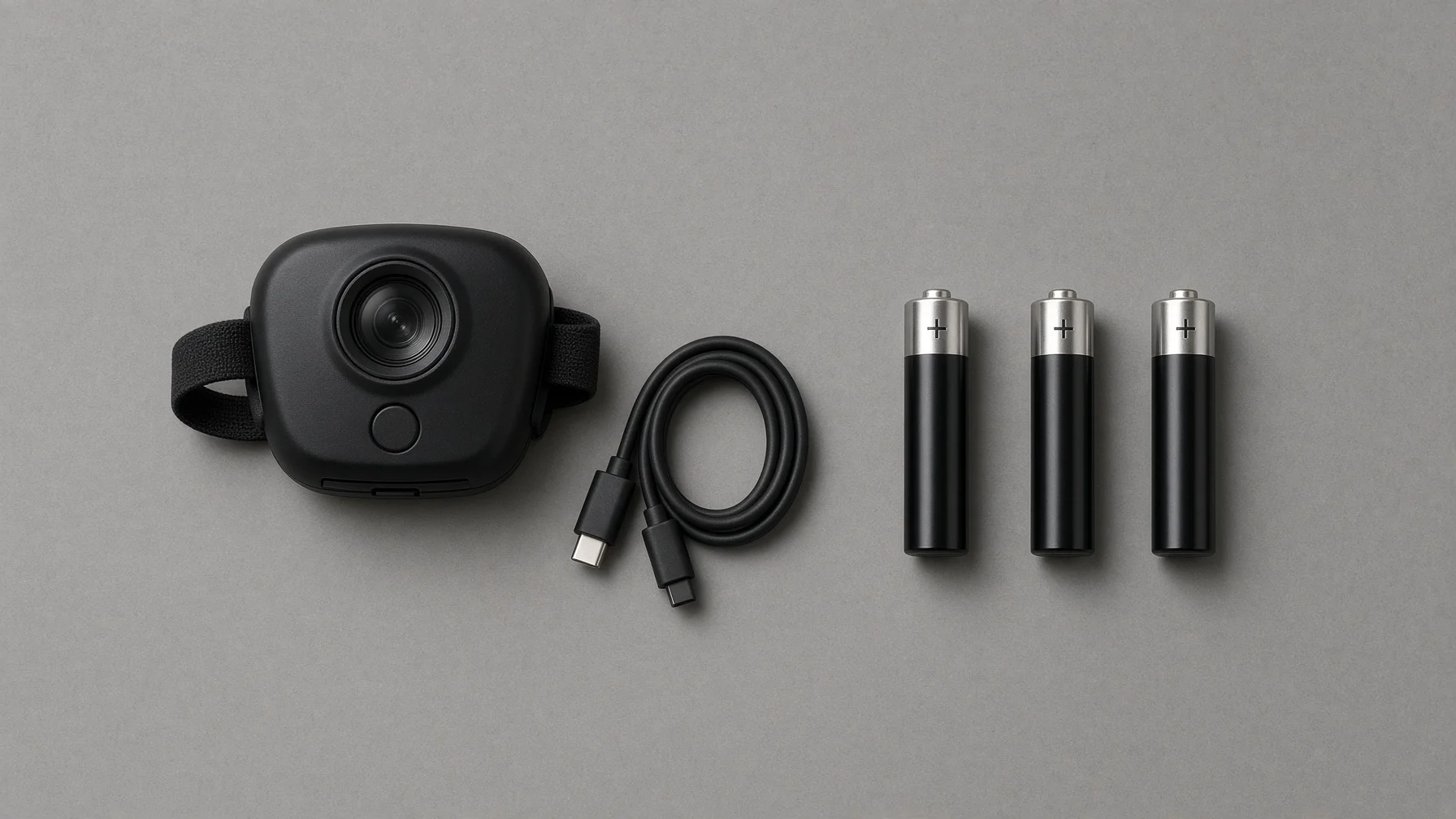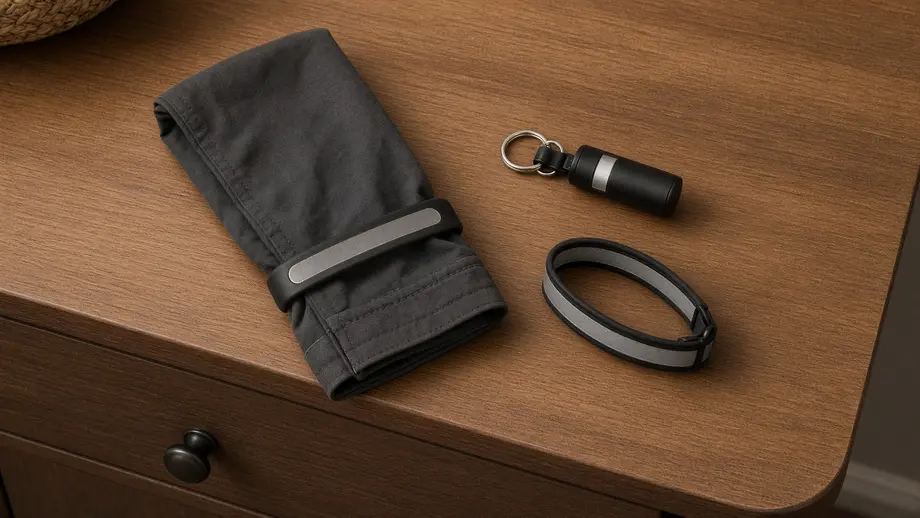
Olight makes some of the lights discussed here. Olight specs and regular prices come from its product pages and user manuals as of September 2026. Sunrise, sunset and twilight times are our own calculations from NOAA's solar equations and may differ by a minute or two from a local almanac.
⚡ TL;DR
Daylight saving time ends at 2 a.m. on Sunday, November 1, 2026, and sunset jumps an hour earlier, to about 4:50 p.m. in New York. Before that weekend, do three things: charge a light, add reflective material to what you wear, and move the light to a spot you can reach in one second.
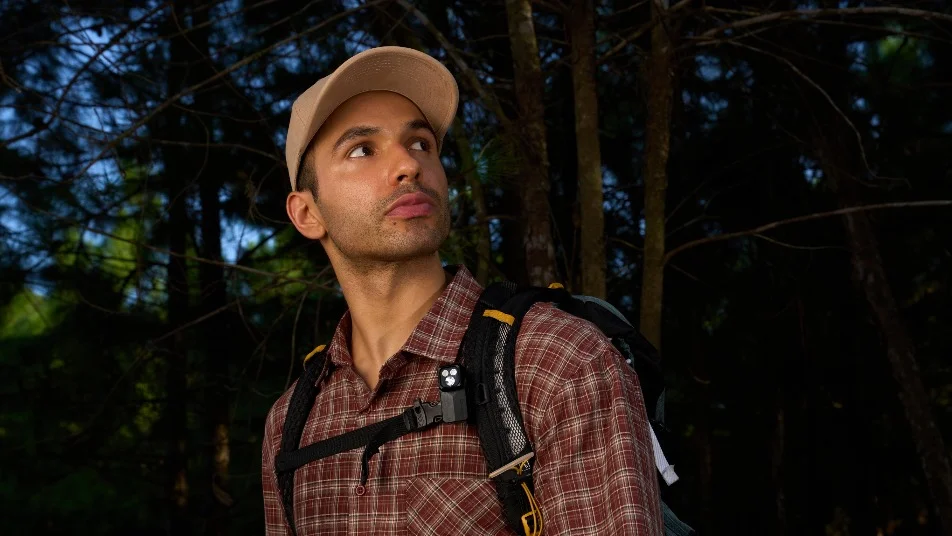
The problem is how fast it happens. The walk from the train you made in daylight on Friday, October 30, happens after dark on Monday, November 2, and nothing about your gear changed over the weekend. The light is still in the bottom of a backpack, the jacket is still charcoal gray, and the phone flashlight is at 20% battery. A small rechargeable light from Olight's range of EDC flashlights, carried where your hand already goes, fixes most of that.
This table is the short gear list for the weeks after daylight saving time ends, with the minimum spec worth accepting for each job.
| Use | Recommended type | Minimum spec to look for | Example model |
|---|---|---|---|
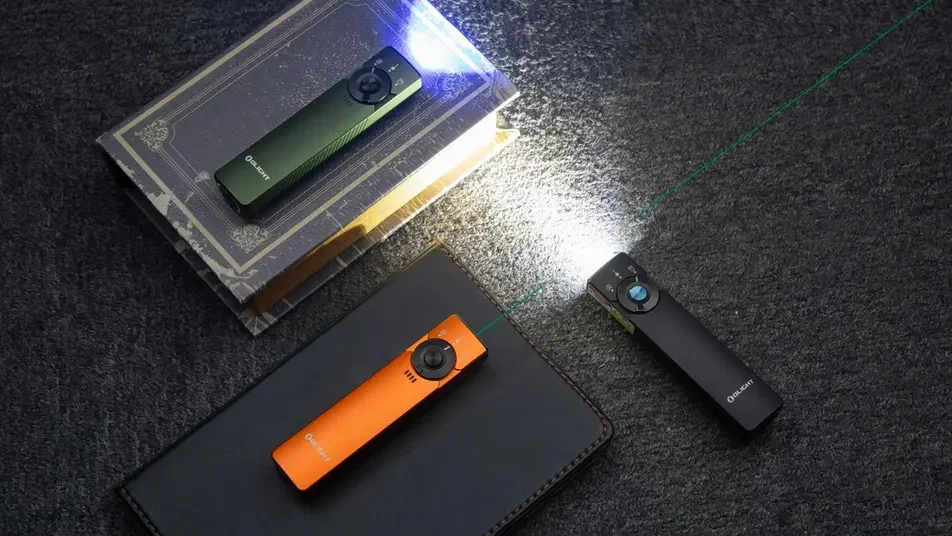
| Being seen by drivers | Reflective bands at wrists and ankles, plus a light facing traffic | Reflective material on moving joints; a steady or flashing light | Olight Oclip 2 Pro clip light (red and white modes) |
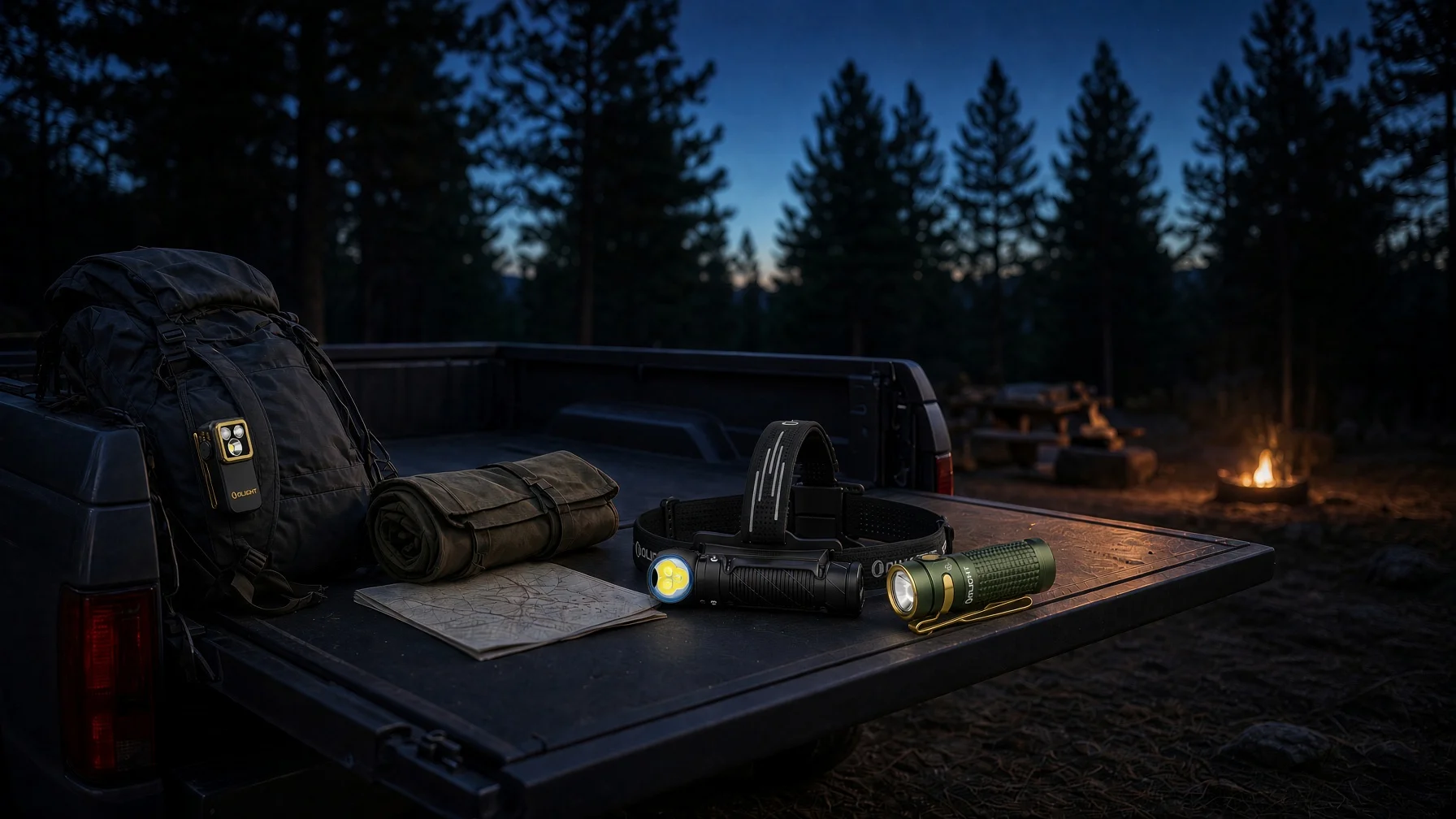
| Seeing the path | Pocket flashlight | 60 lumens or more with an 8-hour mode; IPX8 or IP66 | Olight Baton 4 |
| Always-there backup | Keychain light on your house or car keys | 5-lumen low mode that lasts hours; under 25 g | Olight i1R 2 Pro |
| Hands-free walking with a dog, stroller or bags | Clip light on a strap or collar | Clip that grips 14 mm webbing; 100-lumen mode for 3 hours or more | Olight Oclip 2 Pro or Olight Oclip |
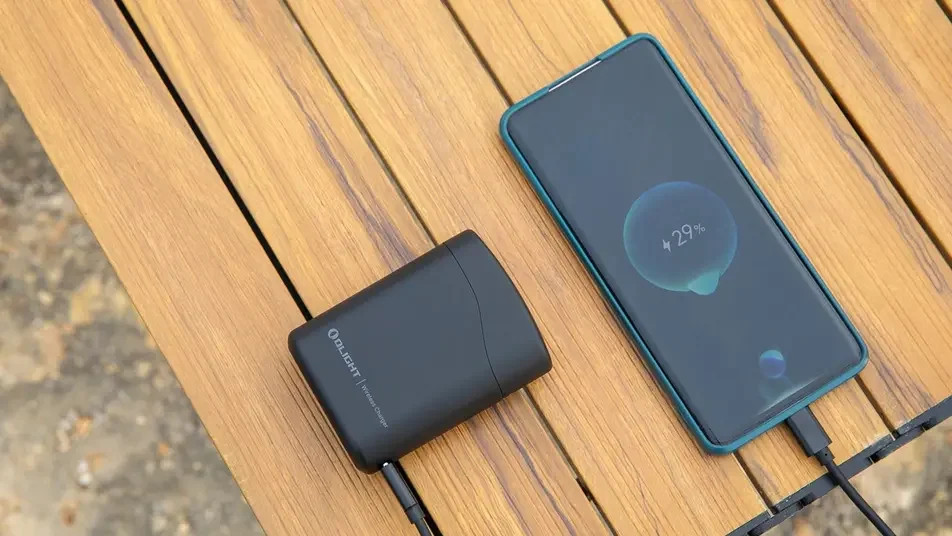
| Arriving home to a dark entry | USB-powered indoor strip light | Runs from a USB adapter or power bank | Olight Ostrip |
📋 Table of Contents
- 1. What Happens When Daylight Saving Time Ends?
- 2. When Does Daylight Saving Time End in 2026, 2027 and 2028?
- 3. Do We Lose or Gain an Hour on March 8th?
- 4. Is Daylight Saving Time Coming to an End Permanently?
- 5. Why Are the Weeks After the Time Change Riskier for Walkers?
- 6. How Do Walking, Biking and Drive-Then-Walk Commutes Differ?
- 7. Being Seen Comes Before Seeing: Reflectors and Side Visibility
- 8. Where Should You Carry a Flashlight on a Dark Commute?
- 9. How Long Will a Flashlight Last on a Winter Commute?
- 10. Which Olight Lights Work for a Dark Commute, and Where Do They Fall Short?
- 11. Do You Need Lights to Bike After Sunset?
- 12. A 10-Minute Checklist for the Weekend Daylight Saving Time Ends
- 13. What Should You Recheck One Month Later?
- 14. FAQ
What Happens When Daylight Saving Time Ends?
When daylight saving time ends, clocks go from 2:00 a.m. back to 1:00 a.m., and one hour of daylight moves from the evening to the morning. The National Institute of Standards and Technology explains that the switch back to standard time "effectively moves one hour of daylight from the evening to the morning." Sunrise and sunset both land about an hour earlier on the clock.
The legal schedule is set by the Uniform Time Act, 15 U.S.C. 260a, which runs daylight time from "2 o'clock antemeridian on the second Sunday of March" to "2 o'clock antemeridian on the first Sunday of November." NIST lists Hawaii, American Samoa, Guam, Puerto Rico, the Virgin Islands and Arizona (except the Navajo Nation) as places that do not observe it, so their evenings do not jump.
For commuters, the evening jump is what hurts. We calculated sunset and the end of civil twilight for ten U.S. cities on the last Friday before the change and the first Monday after it. The U.S. Naval Observatory defines civil twilight as ending when the sun is 6 degrees below the horizon and says that after it ends, "artificial illumination is normally required to carry on ordinary outdoor activities."
This table shows how the same 5:30 p.m. walk changes over one weekend (times are local; "dark" means after the end of civil twilight).
| City | Sunset Fri, Oct 30 | Sunset Mon, Nov 2 | Civil twilight ends Mon, Nov 2 | Sunset Mon, Dec 7 | 5:30 p.m. walk: Friday to Monday |
|---|---|---|---|---|---|
| Boston | 5:39 p.m. | 4:35 p.m. | 5:05 p.m. | 4:11 p.m. | Daylight to dark |
| New York | 5:54 p.m. | 4:50 p.m. | 5:19 p.m. | 4:28 p.m. | Daylight to dark |
| Chicago | 5:46 p.m. | 4:43 p.m. | 5:12 p.m. | 4:19 p.m. | Daylight to dark |
| Denver | 5:59 p.m. | 4:56 p.m. | 5:24 p.m. | 4:35 p.m. | Daylight to dark |
| Seattle | 5:54 p.m. | 4:49 p.m. | 5:22 p.m. | 4:17 p.m. | Daylight to dark |
| Los Angeles | 6:01 p.m. | 4:58 p.m. | 5:25 p.m. | 4:43 p.m. | Daylight to dark |
| Houston | 6:35 p.m. | 5:33 p.m. | 5:58 p.m. | 5:21 p.m. | Daylight, 3 minutes before sunset |
| Atlanta | 6:46 p.m. | 5:43 p.m. | 6:10 p.m. | 5:28 p.m. | Daylight to daylight |
| Miami | 6:40 p.m. | 5:38 p.m. | 6:02 p.m. | 5:29 p.m. | Daylight to daylight |
| Phoenix (no DST) | 5:37 p.m. | 5:34 p.m. | 6:01 p.m. | 5:20 p.m. | Daylight to daylight |
In six of the ten cities, a 5:30 p.m. walk goes from daylight to full dark over one weekend. Mornings get better at the same time: a 7:15 a.m. departure starts before sunrise on Friday in eight of the ten cities and after sunrise in all ten on Monday. By December 7, sunset in Boston is 4:11 p.m., so even a 4:30 p.m. school pickup happens in twilight.
When Does Daylight Saving Time End in 2026, 2027 and 2028?
Daylight saving time ends on Sunday, November 1, 2026, then on November 7, 2027, and November 5, 2028, each at 2 a.m. local time. Those are the first Sundays of November, as the federal law requires. The dark-commute season after each change runs until the second Sunday in March, which in the 2026 to 2027 winter means 133 days.
This table lists the next three fall-back and spring-forward dates, worked out from the rules in 15 U.S.C. 260a.
| Season | Clocks fall back (DST ends) | Clocks spring forward (DST begins) | Days on standard time |
|---|---|---|---|
| 2026 to 2027 | Sunday, November 1, 2026 | Sunday, March 14, 2027 | 133 |
| 2027 to 2028 | Sunday, November 7, 2027 | Sunday, March 12, 2028 | 126 |
| 2028 to 2029 | Sunday, November 5, 2028 | Sunday, March 11, 2029 | 126 |
Those 133 days in the 2026 to 2027 season include about 95 weekdays. That number matters later, when we work out how many times you will charge a light before spring.
Do We Lose or Gain an Hour on March 8th?
You lost an hour on March 8, 2026, because that was the second Sunday in March, when clocks sprang forward from 2 a.m. to 3 a.m. NIST lists March 8 as the 2026 start of daylight time. On November 1, 2026, you gain that hour back. The next spring change is not on March 8: it falls on March 14, 2027.
People mix up the dates because the rule is "second Sunday," not a fixed date. In 2026 the first Sunday of March was March 1, which pushed the change to the 8th. In 2027 March starts on a Monday, so the second Sunday is the 14th. For planning, the extra hour of sleep comes in November and the lost hour comes in March.
Is Daylight Saving Time Coming to an End Permanently?
Not yet. As of September 2026, clocks still change twice a year. The House passed H.R. 139, the Sunshine Protection Act of 2025, by 308 to 117 on July 14, 2026, and the Senate referred it to its Commerce Committee on July 15. It does not become law unless the Senate passes it and the president signs it.
The House-passed text on GovInfo would "make daylight savings time permanent" by repealing the temporary period in 15 U.S.C. 260a. That is permanent daylight time, not permanent standard time. The American Academy of Sleep Medicine takes the other side and calls permanent standard time "the optimal choice for health and safety."
Either outcome changes your commute. Under the current law, a state may exempt itself and stay on standard time all year, as Arizona and Hawaii do, but the law gives states no option to stay on daylight time. If permanent daylight time passed, winter evenings would stay light longer, and the dark would move to your morning. Our calculation for December 7 puts New York's sunrise at 7:06 a.m. on standard time and 8:06 a.m. on permanent daylight time; Seattle's would move from 7:44 a.m. to 8:44 a.m. Either way, someone commutes in the dark.
Why Are the Weeks After the Time Change Riskier for Walkers?
The weeks after the fall change are riskier because many evening commutes move into darkness overnight, and darkness raises pedestrian risk sharply. An Insurance Institute for Highway Safety study found fatal crashes involving pedestrians and bicyclists rose 13% in the five weeks after the fall time change in 2010 to 2019, while crashes among vehicle occupants fell.
The IIHS study in the Journal of Safety Research reported that pedestrian and bicyclist fatal crash counts "were strongly associated with ambient light conditions." That fits older work. A University of Michigan Transportation Research Institute team used the same time-change method and found pedestrian scenarios were the most sensitive to light level, "in some cases showing up to seven times more risk at night over daytime."
National numbers point the same way. NHTSA's 2024 pedestrian fact sheet counts 7,080 pedestrians killed in 2024 and says 76% of pedestrian deaths happened in the dark. In the fall months, 29% happened from 6 to 8:59 p.m., the largest share of any three-hour block. That is the walk home from work, the dog walk and the drive-then-walk from a parking lot.
Note: These are population statistics, not a forecast for your street. Their practical meaning is simple: the evening commute you already know moves into the hours when NHTSA counts the most pedestrian deaths, so change your gear before the clocks change, not after the first scare.
How Do Walking, Biking and Drive-Then-Walk Commutes Differ?
Each commute needs a different mix of being seen, seeing and carrying. A walker needs visibility to oncoming traffic plus a light for uneven ground. A cyclist needs lights that meet state law and a rear red light. A drive-then-walk commuter needs a small light for the lot, the stairwell and the front door. Choose gear by the commute you actually do.
This table sets out what each commute asks of a light, with the lower limits we would accept.
| Commute | Main job of the light | Output that works | Runtime to plan for | Water resistance |
|---|---|---|---|---|
| Walking commute | Being seen by oncoming drivers, then seeing curbs and ice | 60 to 100 lumens for the path; a steady or flashing mode to be seen | Your full dark walk, five days a week | IPX8 or IP66 for rain and snow |
| Bike commute | Meeting the state lamp rule, then seeing the road | A dedicated bike headlight; a clip light only as backup | Ride time plus a margin for cold | Rated for rain spray |
| Drive-then-walk commute | Finding the car, keys and steps; being seen in the lot | 100 lumens or more for a parking lot; 5 lumens for keys | Short bursts, several times a day | IPX5 or better |
Walking commute
On foot, the two risks are drivers who do not see you and ground you cannot see. NHTSA's advice for pedestrians is to "wear reflective materials or use a flashlight at night," and, where there is no sidewalk, to walk "on the shoulder, facing traffic." Walking facing traffic means the cars nearest you come toward your front, so a white light carried in front of your body is the one those drivers see first.
Bike commute
Riders have a legal floor as well as a safety one. California and Florida, for example, require a white front lamp plus red at the rear after dark. Florida's rule starts at sunset, which moves to before 5 p.m. in many cities after November 1; California's starts "during darkness," half an hour after sunset. Olight lists cycling among the Oclip's uses, but none of the lights in this guide is sold as a bike headlight with a handlebar mount or states a visibility distance you can match to a state rule. Use a dedicated bike headlight and tail light, and see Olight's guide to mountain bike lights for what to look for.
Drive-then-walk commute
If you drive, the dark stretch is short but awkward: a big parking lot, a garage stairwell, a porch without a light. Keep a small light on your keys for the car door and a brighter one in the car or a coat pocket for the lot. The winter car emergency flashlight guide covers what to leave in the glove box for a breakdown.
Being Seen Comes Before Seeing: Reflectors and Side Visibility
Being seen matters more than seeing because a driver needs several seconds of warning to stop. California's highway design manual lists 200 feet as the minimum stopping sight distance at 30 mph. A driver who notices you any closer than that may not be able to stop in time, however bright your own flashlight is.
This table turns Caltrans design values into the warning a driver needs at common neighborhood speeds; the seconds column is our own calculation.
| Driver speed | Minimum stopping sight distance (Caltrans Table 201.1) | In meters | Seconds of warning at that speed |
|---|---|---|---|
| 25 mph | 150 ft | 46 m | 4.1 s |
| 30 mph | 200 ft | 61 m | 4.5 s |
| 35 mph | 250 ft | 76 m | 4.9 s |
| 40 mph | 300 ft | 91 m | 5.1 s |
| 45 mph | 360 ft | 110 m | 5.5 s |
The Caltrans Highway Design Manual measures those values from a driver's eye height of 3.5 feet to an object half a foot high on the road, and it points to AASHTO's design policy for the derivation. Treat them as a floor, not a promise. Your goal is to be recognized as a person well beyond that distance.
Where the reflective material sits matters as much as how much you wear. Research led by Queensland University of Technology, summarized in an Australian Research Council impact study, found that "Drivers recognised a pedestrian wearing biomotion markers at a 3.4x longer distance than when wearing a vest with an equal amount of retro-reflective material." Biomotion markers are reflective bands on the moving joints: wrists, elbows, knees and ankles.
Here is a simple framework built from that research and NHTSA's advice, from least to most visible:
- Dark clothes, no light. Nothing on you returns the headlights, so a driver has to pick out a dark shape against a dark background.
- Reflective vest or bag patch. Better, but it covers only your torso and does not show the motion of walking.
- Reflective bands on wrists and ankles. The moving points look like a walking person, which is what the 3.4x result measured.
- Bands plus a light facing traffic. The light catches a driver's eye before the headlights reach you, and a clip light on a strap also lights your side profile.
Tip: Put reflective bands on the ankles first. They move the most when you walk, and they sit low, where a car's low beams are aimed.
Where Should You Carry a Flashlight on a Dark Commute?
Carry your flashlight where your hand can reach it in one second without looking: on the keys you already hold, clipped to a coat pocket or bag strap, or in a front pants pocket. A light in the bottom of a backpack does not get used, because you will not stop on a dark sidewalk to dig for it.
Try this one-second test on the Saturday before the change. Stand up, close your eyes and reach for the light. If you touch it and switch it on within about a second, the spot works. If you have to open a zipper, it fails. The five common spots rank like this:
- Key ring: passes, because keys are already in your hand at the car and the door. A keychain flashlight covers keyholes and short gaps in streetlights.
- Clip on a strap, collar or pocket edge: passes, and it works hands-free. Clip lights suit dog walkers and parents pushing strollers.
- Front pants or coat pocket: passes if the light is the only thing in that pocket.
- Jacket inner pocket: borderline in winter, when gloves slow you down.
- Backpack or purse: fails. Keep a spare there if you like, but not your main light.
Warning: Do not shine a bright beam at drivers or cyclists to get their attention. Point it down at the ground in front of you or at a low angle ahead. Olight's user manuals warn against shining the light into human eyes.
How Long Will a Flashlight Last on a Winter Commute?
Plan for about 30 minutes of light per workday and charge on a fixed day each week. At that rate you need 150 minutes of runtime per five-day week, so any mode rated above that gets you through the week on one charge. Across the 95 or so weekdays of the 2026 to 2027 season, that adds up to about 2,850 minutes of light.
This table applies that 30-minute daily budget to Olight's published runtimes; the last two columns are our own arithmetic.
| Light and mode | Official output and runtime | Workdays per charge at 30 min/day | Charges for 2,850 minutes |
|---|---|---|---|
| Olight Baton 4, Med | 60 lumens, 8 hours | 16 | About 6 |
| Olight Oclip 2 Pro, Floodlight Medium | 100 lumens, 3 hours 45 minutes | 7 | About 13 |
| Olight Oclip 2 Pro, Red Light (High) | 40 lumens, 4 hours | 8 | About 12 |
| Olight Oclip, Med | 100 lumens, 90 minutes | 3 | About 32 |
| Olight Oclip, Low | 10 lumens, 12 hours | 24 | About 4 |
| Olight i1R 2 Pro, Low | 5 lumens, 12 hours | 24 | About 4 |
| Olight i1R 2 Pro, High | 180 lumens, 23 minutes | Less than 1 | Not a commute mode |
Two numbers stand out. The original Oclip's 100-lumen Med mode lasts 90 minutes, so a daily walker using it needs to charge twice a week or drop to Low. The i1R 2 Pro's 180-lumen High lasts 23 minutes, less than one evening leg, so treat it as a burst for the keyhole and the last dark block.
Cold makes this tighter. Olight's Oclip manual lists a working temperature of 0 to 40°C and says that below 0°C (32°F) the light "can only output at the low and medium brightness mode." The same manual notes that runtime "may vary depending on the external temperature and ventilation conditions," so carry clip lights on an inside layer on freezing evenings and plan on charging more often.
Tip: Put the charging cable next to the place you drop your keys, and charge every Sunday night. A fixed day beats "when it looks dim," because many lights step down as they run. The Baton 4's Turbo, for example, is listed as 1,300~600~300 lumens, and a slow fade is easy to miss.
Which Olight Lights Work for a Dark Commute, and Where Do They Fall Short?
The Olight Oclip 2 Pro suits walkers who need to be seen and keep their hands free, the Olight Baton 4 suits anyone who needs to see an unlit path, and the Olight i1R 2 Pro is the backup that is always on your keys. None of them replaces a bike headlight, and each has a limit worth knowing before you buy.
This table compares the four lights on the specs that matter for a commute; lux at 10 m is our calculation from each light's rated candela (candela divided by distance squared).
| Model | Max output | Peak intensity | Beam distance | Lux at 10 m | Weight | Water rating | Regular price |
|---|---|---|---|---|---|---|---|
| Olight Baton 4 | 1,300 lumens | 7,225 candela | 170 m | 72 | 52.5 g | IPX8 | $54.99 |
| Olight Oclip 2 Pro | 530 lumens (floodlight) | 3,906 candela (spotlight) | 125 m | 39 | 75.5 g | IP66 | $54.99 |
| Olight Oclip | 300 lumens | 1,156 candela | 68 m | 12 | 30 g | IPX5 | $29.99 |
| Olight i1R 2 Pro | 180 lumens | 580 candela | 48 m | 6 | 22 g | IPX8 | $21.99 |
Prices are regular prices as of September 2026. You can check each beam distance yourself: rated beam distance is where the beam falls to 0.25 lux, so it equals 2 × √candela. For the Baton 4, 2 × √7,225 = 170 m, which matches Olight's figure. Olight's beam distance explainer walks through the math.
The walker who needs to be seen. The hard part is keeping a light facing traffic while your hands hold a leash or bags. The Olight Oclip 2 Pro clips to objects "up to 14 mm thick, including collars, straps, and MOLLE webbing," and pairs a 115° head tilt with a 360° rotating clip. It switches between a floodlight, a spotlight and red light, and Olight lists "Safety Alert" among its uses. The limit is battery size: at 600 mAh, the 100-lumen floodlight lasts 3 hours 45 minutes, so charge it weekly. The Oclip 2 user manual adds a caution for anyone with an implanted heart device: "If you have an ICD or pacemaker, avoid close or prolonged contact with this product to prevent possible interference."
The unlit path or the dark parking lot. Here you need reach and runtime from a pocket-size light. The Olight Baton 4 is 63 mm long, runs 8 hours at 60 lumens and reaches 170 m. The limit: it rides in a pocket on its clip, so it lights the path only when it is in your hand and does nothing for your visibility while it is put away. Pair it with reflective bands.
The backup that never gets left at home. The Olight i1R 2 Pro weighs 22 g and turns on with a twist of the tailcap; the Olight user manual says a slight turn gives low mode and fully tightening gives high. Its limit is runtime on High, 23 minutes, and a twist switch usually takes two hands. For a broader comparison, Olight's best flashlight roundup covers larger options.
The budget clip light. The Olight Oclip weighs 30 g, has 4-lumen red light, and offers a red strobe at 1 Hz and a white beacon mode, which help you stay visible. It is rated IPX5, lower than the others, and its 100-lumen Med mode lasts 90 minutes. In freezing weather it limits itself to low and medium, which makes it a fall-and-spring light more than a January light.
The dark house at the end of the commute. The Olight Ostrip is a 16.4 ft RGB strip that runs on USB 5V/1A and produces up to 150 lumens in green, which is enough to leave a hallway or garage shelf dimly lit so you are not fumbling for a switch. It is rated IP24, so it is not a porch or yard light, and it is a room light, not something you carry.
Do You Need Lights to Bike After Sunset?
Yes. State vehicle codes such as California's and Florida's require a white front lamp and red at the rear on a bicycle after dark, starting at sunset or "during darkness." After the clocks fall back, a ride leaving work at 5 p.m. in Boston, Chicago or Seattle starts after sunset, when a sunset-based rule like Florida's already applies. Check your own state's code before your first dark ride.
This table summarizes two state rules to show how the details vary; it is not legal advice.
| State and statute | When the rule applies | Front requirement | Rear requirement | Other points |
|---|---|---|---|---|
| California, Vehicle Code 21201 | "during darkness" on a highway, a sidewalk where riding is allowed, or a bikeway; darkness starts half an hour after sunset | White lamp visible from 300 feet in front and from the sides | Red reflector or a solid or flashing red light with a built-in reflector, visible from 500 feet | White or yellow reflectors on pedals, shoes or ankles visible from 200 feet; a lamp attached to the rider may replace the bike-mounted lamp; e-bikes need the rear red at all hours |
| Florida, Statute 316.2065 | "between sunset and sunrise" | White lamp visible from at least 500 feet | A red lamp and a red reflector, visible from 600 feet | A first violation is dismissed with proof that the lighting was bought and installed |
California's Vehicle Code 280 defines darkness as any time "from one-half hour after sunset to one-half hour before sunrise," so its rule starts about 30 minutes later than Florida's. Note what California's rule says about the sides. A white lamp must be visible "from the sides" as well as the front, which covers the angle a driver pulling out of a side street sees you from. White or yellow ankle reflectors also satisfy the code's pedal, shoe or ankle option, and on a moving leg they add the biomotion effect described above.
A 10-Minute Checklist for the Weekend Daylight Saving Time Ends
The weekend of October 31 is the right time to prepare, because Friday's walk home was your last one in daylight and Monday's will be dark in most northern cities. This 10-minute checklist covers charging, visibility and carry position, and it works for walkers, riders and drivers alike.
- Minute 1 to 2: Charge. Plug in every light you carry and any power bank. Wait for each charge indicator to show full.
- Minute 3: Pick the carry spot. Run the one-second test and move your main light to the key ring, a strap clip or a front pocket.
- Minute 4 to 5: Add reflective bands. Put them on your ankles, then your wrists. Add a reflective patch to the back of your bag.
- Minute 6: Set the mode. Learn how to reach your 60 to 100 lumen mode without cycling through Turbo, and how to turn on red or strobe.
- Minute 7: Plan the route. Pick the better-lit streets and crossings for the evening leg, even if it adds two minutes.
- Minute 8: Put a cable where you drop your keys. Pick a weekly charging night.
- Minute 9: Check the bike. Front white lamp, rear red light or reflector, and pedal or ankle reflectors, as your state requires.
- Minute 10: Reset the clocks. Phones update themselves, but change the car clock, the oven and any wall clock.
Safety note: Supervise children who carry lights on the walk home from school or practice. Teach them to point the beam at the ground, never at faces or at drivers, and keep lights with strobe modes out of the hands of kids who will shine them at others.
What Should You Recheck One Month Later?
Recheck your setup around December 1, when sunsets are close to their earliest and the novelty has worn off. Look at three things: whether your light still lasts a full week on one charge, whether your reflective gear is still clean and attached, and whether you actually carry the light every day or have drifted back to the phone.
Use this short list for the one-month review:
- Battery: If the light no longer lasts from one charging night to the next, drop to a lower mode or charge twice a week. Rechargeable batteries lose capacity with age.
- Wear: Reflective tape returns less light when it is dirty or cracked. Wash or replace bands that look dull under a car's headlights.
- Clip and lanyard: Check that the clip still grips and the key ring is not worn thin.
- Habits: If you found yourself using a phone light more than twice last week, your carry spot is wrong. Move the light.
- Route: Note the dark stretches you did not expect, such as a burned-out streetlight, and report them to your city.
By then, sunset in Boston is 4:12 p.m. by our calculation, and it will not reach 5:30 p.m. again until late February 2027. A one-month check keeps the setup working through the darkest part of the season.
FAQ
Changelog
- September 22, 2026: First published. Olight specs and regular prices as of September 2026; sunrise, sunset and twilight times calculated for the 2026 to 2027 season.