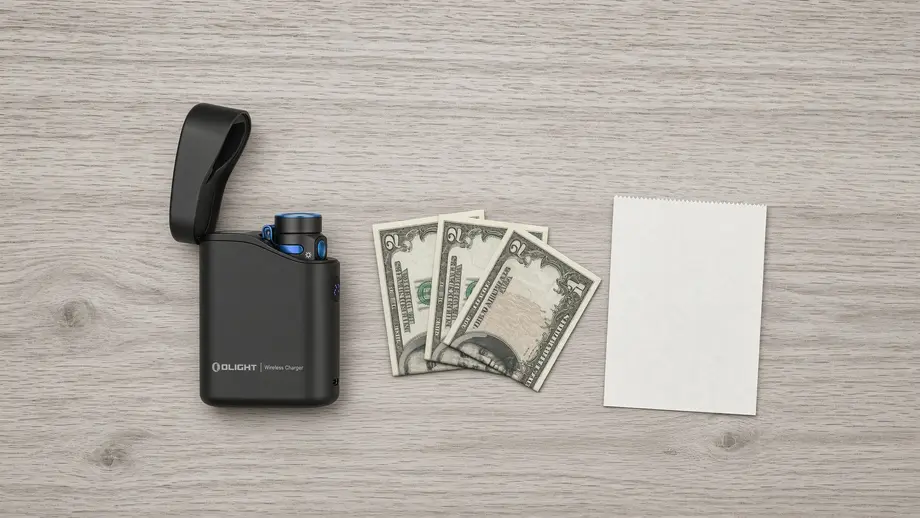
Olight publishes this blog and makes the products discussed here. Olight specs, regular prices, and store ratings come from Olight product pages and user manuals as of September 2026; other brands' warranty terms come from their own sites. Per-dollar figures, ownership costs, and rating averages are our own arithmetic from those published numbers.
⚡ TL;DR
Is Olight worth it? For most buyers, yes in three places: small EDC flashlights, rechargeable headlamps, and clip lights with several light sources, where Olight fits a lot of output into a small body. It is harder to justify if you want standard batteries, a warm high-CRI tint, or a light that mostly sits in a drawer for emergencies.
You have probably seen both camps already. One side posts glowing reviews of tiny, bright Olight lights. The other calls the brand overpriced, complains about proprietary batteries and magnetic cables, and brings up the 2022 recall. Both sides can be right, because the value changes by product line. This guide prices each line against its own spec sheet, checks each common complaint against the facts, and ends with a buying checklist.
This table answers the question "is Olight worth it" by comparing a typical Olight rechargeable light with a light that runs on standard batteries, one factor at a time.
| Factor | Olight rechargeable light | Standard-battery light | Who wins | By how much |
|---|---|---|---|---|
| Output for its size | Baton 4: 1,300 lumens from 52.5 g and 63 mm | Varies by model | Olight, for pocket carry | About 24.8 lumens per gram on the Baton 4 |
| Spare battery | Warrior 3S takes a customized 21700; Olight sells the spare for $26.95 | Cells sold by many brands and stores | Standard-battery light | The spare costs about 22% of the Warrior 3S price |
| Charging | Magnetic cable; Olight lists three cable families (MCC3, MCC Special, MCC 1A) | USB-C port or a separate charger | Standard or USB-C light | Three cable types to track instead of one |
| Warranty on rechargeable batteries | One year, per the Baton 4 user manual | Streamlight: two years on rechargeable batteries | Streamlight | One extra year |
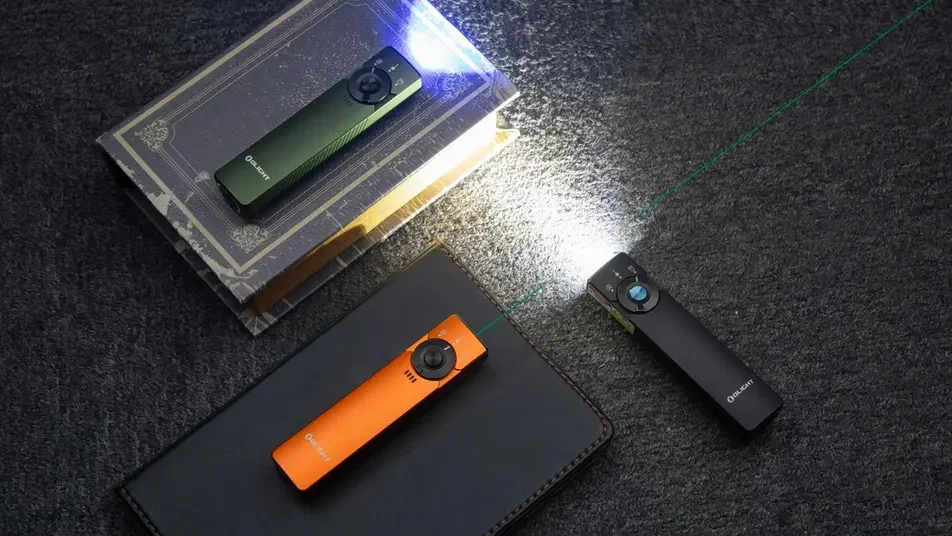
| Features per light | Oclip 2 Pro: floodlight, spotlight, and red light, 115° head tilt, magnets | Usually one white beam | Olight, if you use the extras | Three light sources in 75.5 g |
| Cheap emergency backup | i3E EOS: $12.99, one AAA battery, 90 lumens | Similar keychain lights | Tie | Olight's own AAA option costs less than a spare 21700 cell |
The short version: pay for Olight when size, magnetic charging, and multi-light features matter to you every day. Skip the flagship models when you need a battery you can buy at any gas station.
📋 Table of Contents
- 1. Is Olight Worth It? The Short Answer by Product Line
- 2. What Does Each Dollar Buy? A Value Table From Olight Spec Sheets
- 3. What Are the Downsides of Olight Flashlights?
- 4. Why Does Olight Have a Bad Reputation?
- 5. What Does Owning One Cost After the Checkout Price?
- 6. How Does the Warranty Change the Value?
- 7. Do Police Officers Use Olight?
- 8. Why Is Olight So Popular?
- 9. Who Should Not Buy Olight?
- 10. How to Pay Less: Refurbished, New-Customer Offers, and Sale Timing
- 11. Checklist: Is Olight Worth It for You?
- 12. FAQ
Is Olight Worth It? The Short Answer by Product Line
Olight is worth it for EDC flashlights and headlamps, where compact bodies, magnetic charging, and high output per dollar give you the most for your money. It is a closer call for weapon lights and red dots, where you pay for mounts, switches, and durability rather than lumens. Knives and tools form the smallest line, with the fewest store reviews, so they are the hardest to judge on value.
Here is how each line looks when you price it against Olight's own specs. The anchor models are the ones buyers ask about most, and every price is the regular price, not a sale price.
- EDC flashlights. The Olight Baton 4 costs $54.99 (regular price, September 2026) and fits 1,300 lumens and 7,225 candela into a 63 mm body. You pay for size, not battery capacity: its customized 16340 cell holds 650 mAh. Good value if the light lives in your pocket.
- Tactical flashlights. The Olight Warrior 3S costs $119.95 (regular price, September 2026) for 2,300 lumens, 23,000 candela, and 300 m of beam distance, with a two-stage tail switch and a proximity sensor. Good value if you use the tail switch; overkill as a glovebox light.
- Headlamps. The Olight Perun 3 headlamp costs $89.99 (regular price, September 2026) for 3,000 lumens, a red light, and a 5,000 mAh 21700 battery. It gives the most lumens per dollar of the five anchor models.
- Weapon lights. The PL-MINI 2 costs $79.99 (regular price, September 2026) for 600 lumens, 2,500 candela, and a 260mAh built-in battery in a 73 g body. Its value is the small size and the sliding rail that fits both GL and PIC rails, not output. The tradeoff: 600 lumens lasts 1 minute before it steps down to 60, and the IPX6 rating is lower than the IPX8 on the Baton 4 and Warrior 3S.
- Red dots. The Osight K costs $169.99 (regular price, September 2026) for a 6 MOA green dot, an RMSc footprint, and a side-loading CR1620 battery. The side-loading battery is the value point: Olight says it allows battery replacement "without removing the optic." The tradeoff: Olight's red dots carry lower store ratings than its weapon lights (see the ratings table below).
- Knives and tools. The OKNIFE LK costs $124.99 (regular price, September 2026) for a Bohler M390 tanto blade plus a 400-lumen USB-C rechargeable light in one 86 g tool. It suits people who want one item instead of two. The tradeoff: it has only 60 store reviews and a 4.5 rating, so there is less owner feedback to lean on than for any flashlight above.
You can compare every current model in Olight's range of EDC and tactical flashlights. If you want a ranked list across brands instead, see our roundup of the best flashlights.
What Does Each Dollar Buy? A Value Table From Olight Spec Sheets
Each dollar buys the most raw output in the Perun 3 headlamp: 33.3 lumens and 33.3 lumen-hours at its medium setting per dollar. The Warrior 3S buys the most reach, at 191.7 candela per dollar. The Baton 4 buys size, not energy. Weapon lights score lowest on these numbers because you pay for the mount and switch.
This value table is our own math from Olight's published specs and regular prices. It is not a lab measurement. Lumen-hours multiply the medium-mode output by its rated runtime, which gives a rough sense of how much usable light one charge stores.
| Model (regular price) | Max lumens | Candela | Battery energy | Lumens per $ | Candela per $ | Medium mode | Lumen-hours per $ at medium |
|---|---|---|---|---|---|---|---|
| Baton 4 ($54.99) | 1,300 | 7,225 | 650 mAh x 3.6 V = 2.34 Wh | 23.6 | 131.4 | 60 lumens, 8 hours | 8.7 |
| Warrior 3S ($119.95) | 2,300 | 23,000 | 5,000 mAh x 3.6 V = 18 Wh | 19.2 | 191.7 | 200 lumens, 13 hours | 21.7 |
| Perun 3 ($89.99) | 3,000 | 6,400 | 5,000 mAh x 3.6 V = 18 Wh | 33.3 | 71.1 | 120 lumens, 25 hours | 33.3 |
| PL-MINI 2 ($79.99) | 600 | 2,500 | 960 mWh (0.96 Wh) | 7.5 | 31.3 | No medium mode; 600~60 lumens for 1 minute + 60 minutes | Not comparable |
| Oclip 2 Pro ($54.99) | 530 | 3,906 | 600 mAh | 9.6 | 71.0 | Floodlight 100 lumens, 3 hours 45 minutes | 6.8 |
Three things stand out once the numbers sit side by side.
- The Perun 3 and Warrior 3S carry the same 18 Wh battery, yet the Perun 3 costs $29.96 less. You give up the tail switch, the holster, and most of the reach (6,400 versus 23,000 candela). If you want a floody work and camp light, the Perun 3 is the better buy.
- The Baton 4 stores about one-eighth of the Warrior 3S battery energy (2.34 Wh versus 18 Wh). Its value is that 1,300 lumens fits in a body almost shorter than your index finger, as Olight puts it. If you want a light that runs all evening at medium, a 21700 light gives far more hours.
- The PL-MINI 2 looks weak on every per-dollar column. That is expected: on a weapon light, the price covers the rail fit, the ambidextrous switch, and the holster compatibility Olight lists. Judge it against other compact pistol lights, not against handheld flashlights.
Note: High-output modes do not last. The Baton 4 Turbo mode is rated at 1,300~600~300 lumens for 1.5 + 2.5 + 73 minutes, which means the top output lasts about 90 seconds before it steps down. Our guide to thermal step-down in flashlights explains why every compact light does this.
What Are the Downsides of Olight Flashlights?
The main downsides of Olight flashlights are customized batteries, several types of magnetic charging cable, cool-white tints on the flagship lights, and prices that move with frequent sales. Each one is real, but each also has a workaround. Whether it matters depends on how you use the light, so check each complaint against your own habits.
This table lists the complaints buyers raise most often, what Olight's own pages say, and what you can do about each one.
| Complaint | What Olight's pages show | Does it matter to you? | Workaround |
|---|---|---|---|
| Proprietary batteries | Warrior 3S and Perun 3 use a "Customized 3.6V 5000mAh 21700" cell; Baton 4 uses a "Customized 650mAh 3.6V IMR 16340" | Yes, if you want to buy cells anywhere | Buy one Olight spare at purchase: $26.95 for the 21700; for the Baton 4, pick the 650mAh option on the IMR16340 page |
| Magnetic cables | Olight's cable page lists three families: MCC3, MCC Special, and NEW MCC 1A, each for different models | Yes, if you lose cables often | Keep one spare cable per light family; the cable page starts at $9.99 |
| Cool-white tint, no CRI listed | Warrior 3S lists a "High Performance Cool White LED"; Perun 3 lists 5,700~6,700K; no CRI figure on either page | Yes, for color-critical work such as wiring | Choose a light with a published CRI of 90 or higher; Olight's own spec sheet lists CRI 90 for the neutral-white HCRI version of the Perun 3 Mini |
| Sale-driven pricing | Many product pages show countdown discounts on top of a regular price | Only if you pay full price the week before a sale | Compare against the regular price and buy when you need the light |
| Headband bracket scratches | The Perun 3 page itself warns the metal bracket "is expected to scratch the body of the torch if taken in / out repeatedly" | Only if you care about cosmetics | Leave the light in the bracket when you wear it often |
These tradeoffs are why the same light draws both five-star reviews and angry forum posts. A buyer who charges nightly at a desk rarely notices the cable. A buyer who wants to drop in a gas-station battery during a storm hits the limit on day one.
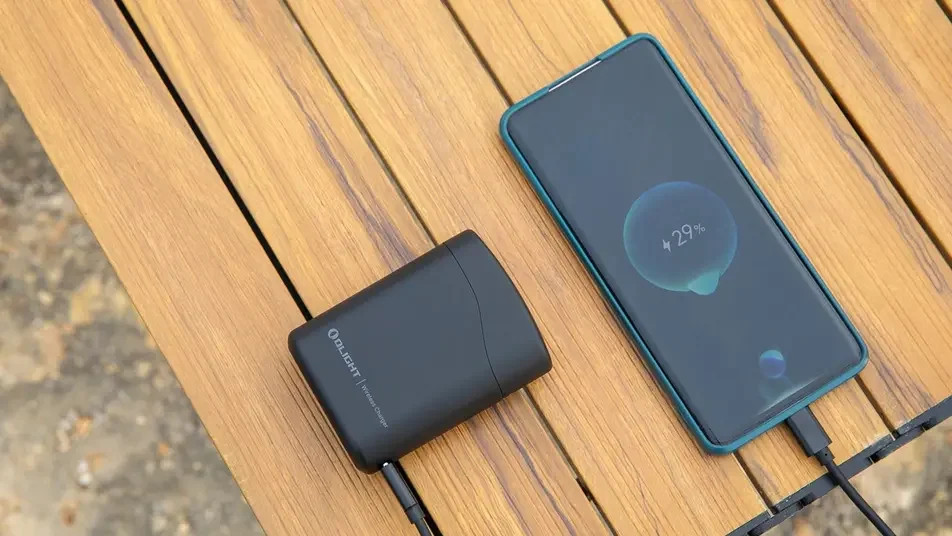
If you want a rechargeable light with fewer of these tradeoffs, pick one with a built-in USB-C port. The Olight Oclip 2 Pro clip light charges through USB-C or MCC, according to Olight's spec sheet, and costs $54.99 (regular price, September 2026).
Why Does Olight Have a Bad Reputation?
Olight's bad reputation in some circles comes from three sources: a 2022 U.S. recall of two flashlight models that could turn on in a pocket and overheat, long-running complaints about proprietary batteries and magnetic chargers, and marketing built around constant sales. Many buyers who never had a problem still repeat these points, so they shape how the brand is discussed.
The recall is the most serious item, and it is documented. According to the U.S. Consumer Product Safety Commission recall notice, the recall covered M2R Pro and Warrior Mini flashlights, about 215,100 units. The CPSC says the lights "can be turned on inadvertently and overheat while stored in the holster or a consumer's pocket, posing a burn hazard." The firm had received 127 reports of lights turning on and overheating, with 22 reports of burn injuries. The remedy was a refund as store credit or a free replacement light.
Current Olight lights handle this risk in a few ways, based on their own spec sheets and manuals. The Warrior 3S has a built-in proximity sensor that drops the brightness when something blocks the lens on high, turbo, or strobe. The Perun 3 side button is concave "to avoid unwanted activation during transit or storage," according to Olight. The Baton 4 manual describes a lock: with the light off, press and hold the button for about 2 seconds until Moonlight turns on and off. The Perun 3 manual lists a lockout mode and a proximity sensor as well.
Safety note: Lock out any high-output light before it goes into a pocket, bag, or holster. A 1,000-plus lumen light that turns on against fabric can get hot enough to burn. If you own an M2R Pro or Warrior Mini from the recall period, check the CPSC notice and stop using it until you confirm its status.
The other two complaints are about ownership cost and pricing, which the previous section covers. They are fair criticisms of the design choices, not safety issues.
What Does Owning One Cost After the Checkout Price?
Owning an Olight costs the checkout price plus a spare battery and a spare cable over the years. With one of each, a Warrior 3S costs about $156.89 over five years and a Perun 3 about $126.93, or roughly $31 and $25 per year. A Baton 4 costs $64.98 with a spare cable, plus one 650mAh spare cell.
This ownership table uses Olight's regular prices for the light, its spare battery, and one magnetic cable. It assumes you buy one spare cell and one spare cable in five years, which is our planning assumption, not an Olight figure.
| Light | Light price | Spare battery | Spare cable (from) | Five-year total | Per year |
|---|---|---|---|---|---|
| Warrior 3S | $119.95 | $26.95 (21700, 5,000 mAh) | $9.99 | $156.89 | $31.38 |
| Perun 3 | $89.99 | $26.95 (same 21700) | $9.99 | $126.93 | $25.39 |
| Baton 4 | $54.99 | 650mAh IMR16340 (see note below) | $9.99 | $64.98 plus the cell | About $13 plus the cell |
Warning: The IMR16340 battery page opens on the 550mAh option at $5.95. Olight lists that cell for the Perun 2 Mini, Perun Mini, and Baton 3, not the Baton 4. Olight lists only the 650mAh option for the Baton 4, so switch the option before you add it to the cart.
Two details help here. First, one spare 21700 fits a long list of Olight lights. Olight's battery page lists the Warrior 3S, Perun 3, Warrior Ultra, Seeker 4 Pro, Odin, and others. If you own two of those lights, one spare cell serves both. Second, Olight also lists a Baton 4 Premium Edition with a charging case that holds a 5000mAh battery and, per Olight, can fully charge the flashlight 5 times, though several Premium colors were sold out in September 2026.
Safety note: Use only the battery type your manual lists. A customized Olight cell has features the light expects. Swapping in an unknown cell can cause the light to fail or overheat.
How Does the Warranty Change the Value?
The warranty adds value only if you read the one that applies to your model. Olight's manuals do not all say the same thing: the Baton 4 manual lists 5 years for repair or replacement, one year for rechargeable batteries, and one year for the magnetic cable. The Perun 3 manual says Olight offers a lifetime warranty in the USA. Check Olight.com for the current terms.
Here is what the manuals say, set next to two well-known U.S. brands. Olight terms come from the English sections of each user manual; the other two come from each maker's warranty page.
| Brand or model | Main product | Rechargeable batteries | Source |
|---|---|---|---|
| Olight Baton 4 | Within 30 days: contact the seller; within 5 years: contact Olight for repair or replacement | One year | Olight user manual (Baton 4) |
| Olight Perun 3 | Lifetime warranty in the USA and several other countries; 2 or 5 years elsewhere | Not listed in that section | Olight user manual (Perun 3) |
| Olight Osight K | Lifetime warranty; covers defects in material and workmanship under normal use, excluding loss, theft, deliberate damage, or cosmetic damage | Not listed (uses a CR1620 coin cell) | Olight user manual (Osight K) |
| SureFire | Repair or replace defects "during your lifetime" | Two years | SureFire warranty page |
| Streamlight | Limited lifetime warranty; some lines, such as the Compact Series and Bandit, are excluded | Two years, along with chargers, switches, and electronics | Streamlight warranty page |
For a light you carry every day, the battery term matters more than the headline term. Batteries wear out first. Olight's one-year battery coverage in the Baton 4 manual is shorter than the two years SureFire and Streamlight give.
The Federal Trade Commission advises buyers to check a warranty's length, what it covers, and how claims work before they buy. Its consumer guide to warranties also says "Save your product receipt with the warranty," because the receipt proves the purchase date. Keep your order email from Olight's store for the same reason.
Do Police Officers Use Olight?
Some police officers use Olight lights, and Olight lists law enforcement as a use for models such as the Warrior 3S and PL-MINI 2. Which brand officers carry is set agency by agency. Each department decides what officers may carry, and some, such as Norman, Oklahoma, require the rangemaster to approve any light mounted on a firearm.
Here is how one department puts it. The Norman Police Department policy manual says tactical lights "may only be installed on a firearm carried on- or off-duty after they have been examined and approved by the Rangemaster." The same manual sets a similar rule for optics and laser sights. So the brand on the box matters less than the approval process. That is also the honest answer to "what flashlight brand do police departments use": the answer lives in each agency's policy and approved-equipment list.
If you work in law enforcement or security, this is the practical order of steps:
- Read your agency's policy on flashlights, weapon-mounted lights, and optics.
- Ask the rangemaster or equipment officer which lights are approved.
- If Olight is not on the list, ask what testing a new model needs.
- Qualify with the light mounted before you carry it, as the policy above requires.
For a handheld duty or patrol light, the Warrior 3S makes a strong case on paper. It has a two-stage tail switch for direct turbo or strobe, 300 m of beam distance, and a holster in the box. For pistol lights, compare mount fit first; our guide to the best pistol light under $100 covers how to check it.
Why Is Olight So Popular?
Olight is popular because it makes small lights that feel like more expensive tools: a 63 mm Baton 4 with 1,300 lumens, magnetic charging that clicks on, and clip lights with several light sources. Its store also shows large review counts, with several EDC models above 3,000 reviews each. Frequent sales and colorway releases keep buyers coming back.
Store ratings are one signal of buyer satisfaction, so we added up the ratings shown on Olight's US product pages for in-stock models in each line. This table is our aggregation of Olight's own store data. Treat it as a starting point, not independent proof.
| Product line | Models counted | Total reviews | Review-weighted rating | Rating range |
|---|---|---|---|---|
| EDC flashlights | Baton 4, Baton 4 Pro, i3E EOS, i3T 2, iMini 2, Oclip | 18,422 | 4.9 | 4.9 on every model |
| Tactical flashlights | Warrior 3S, Warrior Ultra, Warrior X 4 | 2,731 | 4.84 | 4.8 to 4.9 |
| Headlamps | Perun 3 | 773 | 4.8 | 4.8 |
| Weapon lights | PL-MINI 2, Baldr S, Baldr Pro R, Baldr Mini, Odin S, Odin GL, Odin Mini, Odin | 3,297 | 4.75 | 4.7 to 4.8 |
| Red dots | Osight K, Osight C, Osight (3 MOA) | 559 | 4.57 | 4.4 to 4.8 |
| Knives and tools | OKNIFE LK | 60 | 4.5 | 4.5 |
| Battery chargers | OStation X, OStation 2 | 363 | 4.38 | 4.3 to 4.4 |
The pattern matches the value math. The small EDC lights score highest, with the largest review counts. Red dots, knives, and chargers score lower. The PL-MINI 2 page shows the spread inside one product: 92% five-star and 2% one-star reviews.
Reviews on a brand's own store lean positive. The FTC suggests searching the company name with the words "complaint" or "review" to see what other people report, and that advice applies here too. Read a few three-star reviews for the exact model you want. They often name the tradeoff that matters to you.
Who Should Not Buy Olight?
You should not buy an Olight flagship if you need batteries you can buy anywhere, if you judge colors for a living and need a published CRI figure, or if the light will sit unused in a drawer for years. In those cases, a standard-battery light or a small AAA model like the $12.99 Olight i3E EOS serves you better.
This table matches common buyer types to the choice that fits them best.
| Buyer | Better choice | Why |
|---|---|---|
| Daily pocket carrier who charges at a desk | Olight Baton 4 or Oclip 2 Pro | Small body, magnetic or USB-C charging, easy to top up |
| Camper, DIYer, or night worker | Olight Perun 3 | 3,000 lumens, red light, headband, and a 5,000 mAh cell |
| Patrol, security, or home defense (handheld) | Olight Warrior 3S | Tail switch, 300 m beam, proximity sensor |
| Prepper who wants one battery type in every device | Standard AA or AAA lights, or the Olight i3E EOS | Cells available anywhere; no cable to lose |
| Electrician or painter who judges colors | A high-CRI light from any maker | Olight's flagship pages list cool white and no CRI |
| Emergency drawer or glovebox | A standard-battery light | Replace cells when needed; no charging schedule |
| Budget buyer who wants a known brand for less | Refurbished Olight models | 30% to 40% off the listed price on the three refurbished listings priced below |
A rechargeable light stored for months still needs a charge before you rely on it. If you know you will forget, a standard-battery light is the safer emergency choice.
If you mostly want a headlamp, see our best headlamps guide for options from other makers too.
How to Pay Less: Refurbished, New-Customer Offers, and Sale Timing
The easiest way to pay less for Olight is to buy a refurbished model, which ran 30% to 40% below the listed price on the three refurbished listings below, or to wait for a new-customer or seasonal offer. The refurbished selection covers fewer models than the new range, so it works best when you are flexible about model and color. Always compare any deal with the regular price first.
Olight sells refurbished Olight flashlights that it describes as "professionally inspected, restored, and backed by warranty." Here is what the current refurbished pages show, with our savings math.
- Odin Tactical Light, refurbished: $95.99 against a listed $159.99, a saving of $64.00, or 40%.
- Baldr Pro Tactical Light and Green Laser, refurbished: $104.99 against a listed $149.99, a saving of $45.00, or 30%.
- PL-MINI 3 Valkyrie, refurbished: $69.99 against a listed $99.99, a saving of $30.00, or 30%.
A simple rule helps you decide between refurbished and new. If a new unit on sale costs within about 10% of the refurbished price, buy new, because you get a fresh battery and no questions about the warranty start date. If the gap is 30% or more, the refurbished unit is usually the better value for a light you will use hard.
New-customer offers and seasonal sales change often, so check the product page at checkout rather than relying on a figure you saw weeks ago. Two habits protect you from overpaying. First, ignore countdown timers and ask whether the light is worth its regular price to you. Second, buy the spare battery and cable at the same time, so one order covers everything and you can check battery compatibility while the product page is still open. For more budget ideas across brands, see our list of the best EDC under $100.
Checklist: Is Olight Worth It for You?
Olight is worth it for you if you answer yes to most of the checks below. If you answer no to the battery and charging questions, pick a standard-battery light or Olight's AAA models instead. The list takes two minutes and covers the tradeoffs that separate happy Olight owners from frustrated ones.
- Will you carry or use the light at least weekly? Rechargeable Olight lights pay off with regular use.
- Are you fine charging from a magnetic cable, or does the model you want have USB-C, like the Oclip 2 Pro?
- Will you buy one spare battery and one spare cable with the light? Budget $26.95 for a 21700 cell and about $10 for a cable.
- Do you need a published CRI figure? If yes, look beyond Olight's flagship cool-white models.
- Have you read the warranty in your model's manual, including the one-year battery term?
- If the light goes on a firearm, has your range officer or agency approved it?
- Is the price you see the regular price or a sale price, and would you still buy at the regular price?
- Would a refurbished unit meet your needs? The three listings priced above ran 30% to 40% below their listed prices.
FAQ
Changelog
- September 22, 2026: First published.