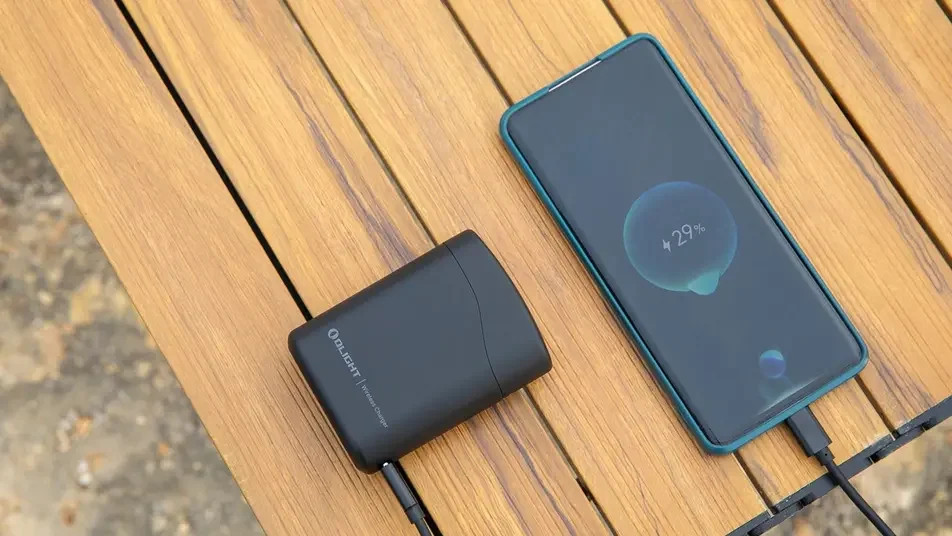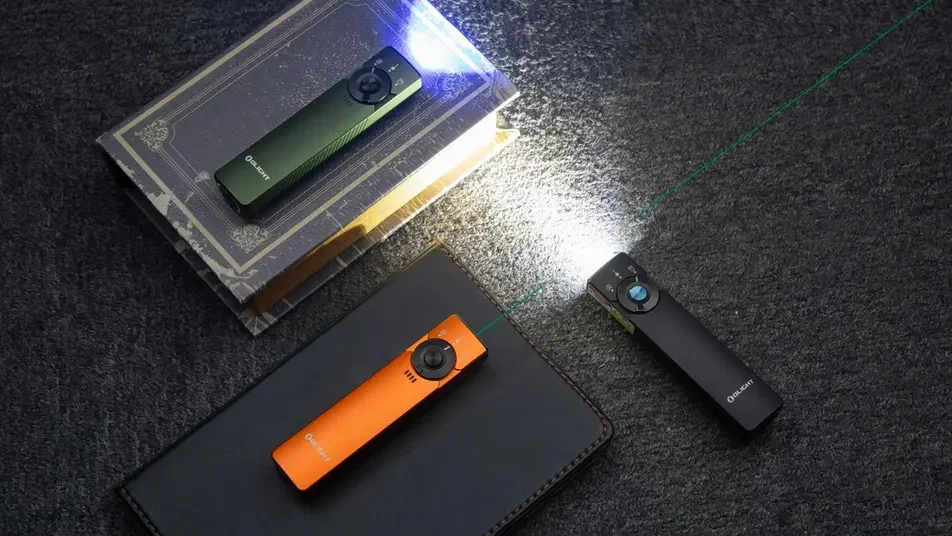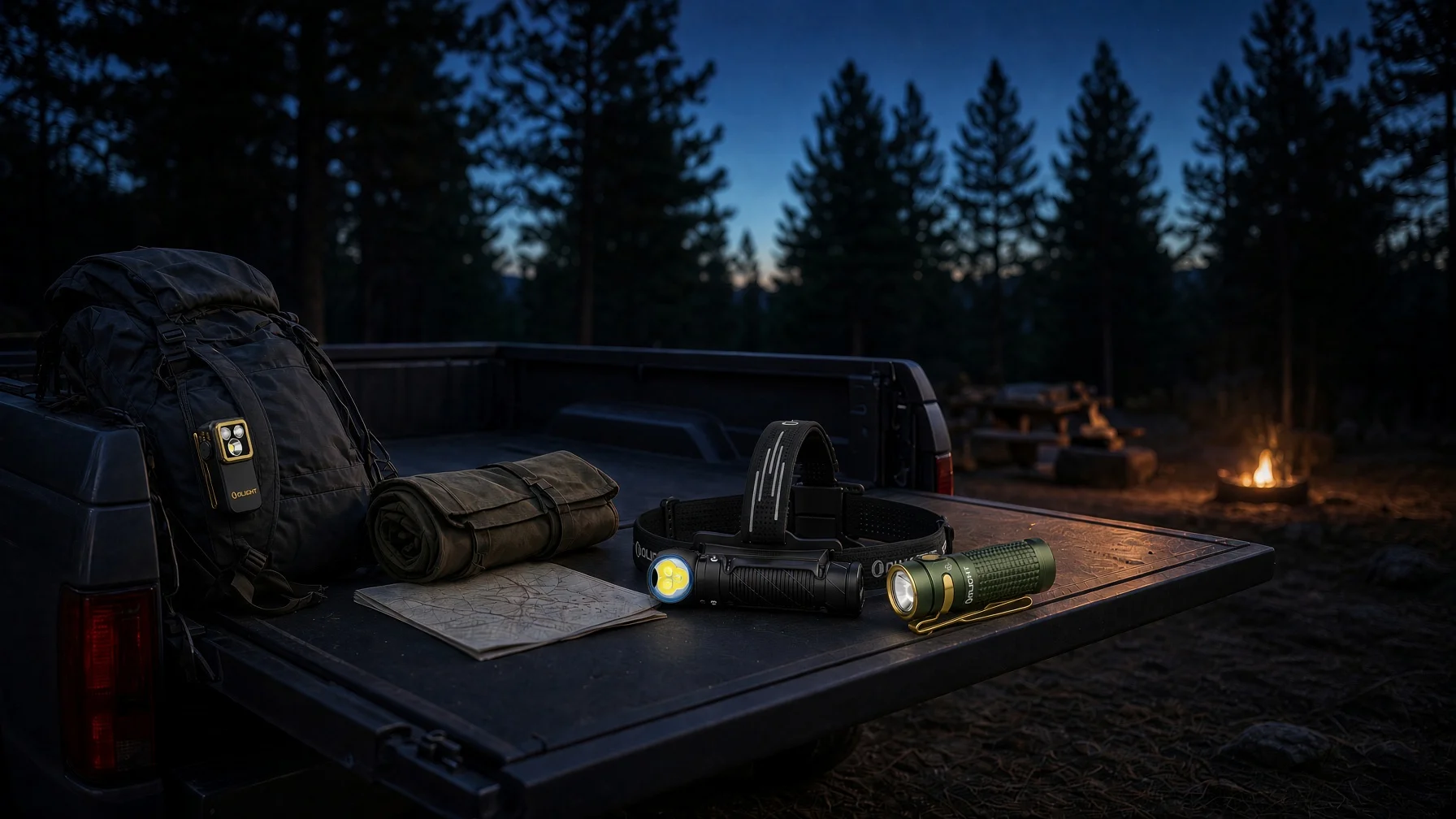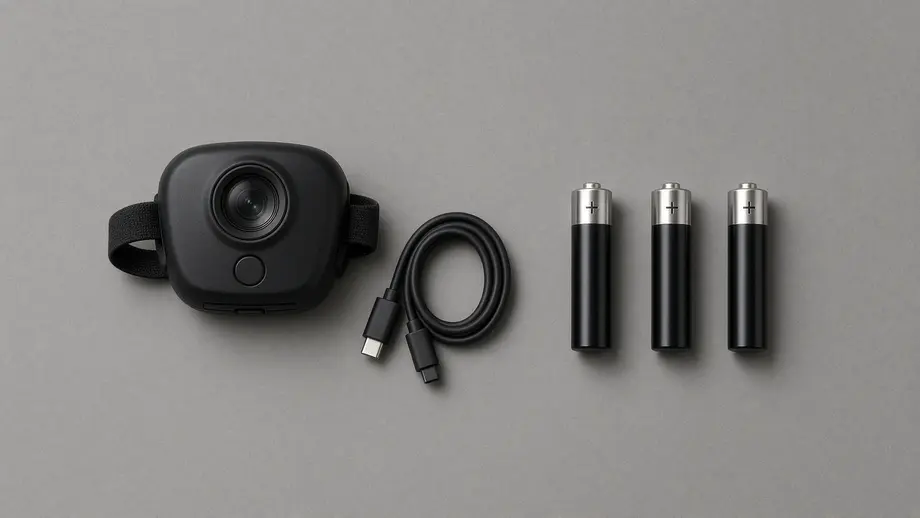
Olight makes some of the lights discussed here. Olight specs and prices come from its US product pages and user manuals as of September 2026; Petzl, Energizer and battery data come from their makers and the sources linked in each section.
⚡ TL;DR
A rechargeable headlamp pays for itself fastest when you run it bright and often. At 30 nights a year on a 300-lumen setting, a three-AAA headlamp burns through about $54 of alkaline cells a year. At 100 lumens a few nights a year, a $20 AAA headlamp stays cheaper for a decade, stores better in a drawer and handles deep cold.
If you just found last year's headlamp with crusted, leaking batteries, you are probably weighing a $20 replacement against a $50 to $90 rechargeable model. You also may worry about the two classic rechargeable problems: forgetting to charge before a trip, and running dry three days from the nearest outlet. This guide works through both with numbers you can check.
This table sums up how a rechargeable headlamp and a AAA headlamp compare, based on the calculations later in this guide.
| Dimension | Rechargeable | AAA | Who wins | By how much |
|---|---|---|---|---|
| Purchase price | $47.98 to $89.99 (Olight examples) | $19.95 (Petzl Tikkina) | AAA | $28 to $70 cheaper up front |
| 3-year battery cost, 30 nights at 300 lm | About $1 of electricity at most | About $162 of alkaline cells | Rechargeable | Gap repaid in 6 to 16 months |
| 3-year battery cost, 5 nights at 100 lm | Under $0.10 of electricity | About $7 of alkaline cells | AAA | Gap takes 12 to 31 years to repay |
| Runtime per charge or set at about 100 lm | 3.5 to 25 hours | 10 hours | Depends on model | Perun 3 runs 2.5 times longer |
| Charge left after 6 months in a drawer | About 65 to 71% (Li-ion estimate) | About 98 to 99% (alkaline) | AAA | Roughly 30 points more |
| Sub-freezing use | Olight Li-ion lights rated 0 to 40°C | Lithium AAA rated to -40°C | AAA | Rated 40°C colder |
| Refuel on a long trip | Needs a power bank or spare cell | Buy AAA almost anywhere | AAA | No outlet needed |
| Waste | One built-in or removable cell | Three cells per set | Rechargeable | 3 to 72 fewer cells a year in the scenarios below |
📋 Table of Contents
- 1. Is a Rechargeable Headlamp Worth It Compared With AAA?
- 2. Where Does the Price Gap Come From?
- 3. How Much Do AAA Batteries Cost Over Three Years?
- 4. How Long Do AAA Batteries Last in a Headlamp?
- 5. How Much Charge Is Left After Six Months in a Drawer?
- 6. What If You Can't Recharge for Days?
- 7. Do Rechargeable Headlamps Work Worse in the Cold Than Battery-Powered Ones?
- 8. Can You Fly With a Lithium-Ion Headlamp?
- 9. What Is the Best Rechargeable Headlamp?
- 10. How Many Lumens Should a Good Headlamp Have?
- 11. What's the Brightest Rechargeable Headlamp?
- 12. Who Should Buy a Rechargeable LED Headlamp, and Who Should Stay With AAA?
- 13. FAQ
Is a Rechargeable Headlamp Worth It Compared With AAA?
A rechargeable model is worth the higher price if you use it at least 15 nights a year at 300 lumens or more, or about 30 nights a year at 100 lumens with a longer ownership horizon. Below that, a AAA headlamp costs less over three years. Many buyers still choose rechargeable for steadier high output, no leaking cells and fewer batteries in the trash.
The cost math depends on three inputs: the price gap, the brightness you actually run and how many hours you log each year. The brightness input matters most. Petzl rates its AAA-powered Tikkina at 10 hours on its 100-lumen setting but only 2.5 hours at 300 lumens, so every step up in brightness multiplies how many cells you buy.
The non-cost reasons are real too. A rechargeable headlamp never needs a store run the night before a trip, and a USB or magnetic cable is easy to leave by the door. A AAA model, on the other hand, can sit in an emergency kit for years with fresh cells and still light up. Choose by how you use the light, not by the sticker price alone.
Where Does the Price Gap Come From?
The price gap comes mostly from the battery and the electronics around it. A rechargeable model includes a lithium-ion cell, a charging circuit, a port or magnetic connector and usually a sealed body. A AAA headlamp ships with three disposable cells and a simpler driver. Housing materials, headband design and extra light colors add the rest.
Here is what each price includes, using current lights from Olight and Petzl as reference points.
| Light | Regular price (September 2026) | Power source | Max output | What the price includes |
|---|---|---|---|---|
| Petzl Tikkina | $19.95 | Three AAA/LR03 (included) | 300 lm | Headlamp, headband, batteries |
| Petzl Tikkina + CORE battery | $54.90 | AAA or 4.5 Wh Li-ion CORE | 300 lm | Hybrid: CORE sold separately at $34.95 |
| Olight Oclip Pro S + Oclip Series Headlamp Strap | $47.98 | 2.146 Wh Li-ion (580 mAh 3.7 V), USB-C | 600 lm | Clip light plus headband |
| Olight Perun 3 | $89.99 | 18 Wh 21700 Li-ion (5000 mAh 3.6 V) | 3,000 lm | Headlamp, headband, magnetic cable, lanyard |
| Olight Perun 3 Mini | $64.99 (sold out on September 24, 2026) | 2.34 Wh 16340 Li-ion (650 mAh 3.6 V) | 1,250 lm | Headlamp, headband and base, magnetic cable |
A few things stand out. First, the cheapest route into rechargeable power is a hybrid. Petzl says the Tikkina "comes with three AAA/LR03 batteries and also works with the CORE rechargeable battery," and it lists alkaline, lithium and Ni-MH AAA cells as compatible. Petzl prices the CORE battery at $34.95 and lists it as a 1250 mAh, 3.6 V, 4.5 Wh lithium-ion pack.
Second, a clip light on a strap is a cheaper route than a dedicated headlamp. The Olight Oclip Pro product page now sells the Oclip Pro S version at $39.99, with up to 600 lumens, IPX6 water resistance and a weight of 1.76 oz (53 g) including its battery. The Olight Oclip Series Headlamp Strap costs $7.99, and Olight lists it as compatible with the Oclip Pro, Oclip Pro S and Oclip Ultra.
Third, the Olight Perun 3 Mini was listed as Sold Out on Olight's US store on September 24, 2026, so it appears in the tables here only as a spec reference, not as a buying recommendation.
How Much Do AAA Batteries Cost Over Three Years?
At 2 hours a night, a three-AAA headlamp costs about $7 in alkaline cells over three years at 5 nights a year and 100 lumens. At 30 nights a year and 300 lumens, the same headlamp needs about $162 of cells. The rechargeable models below use about $1 of electricity or less over the same three years, even at heavy use.
The table below uses these inputs, so you can swap in your own numbers:
- Usage: 2 hours per night, three years of ownership.
- AAA runtime: Petzl's ANSI/PLATO FL 1 ratings for the Tikkina on three AAA cells, 10 hours at 100 lumens and 2.5 hours at 300 lumens.
- Cell price: an assumed $0.75 per name-brand alkaline AAA cell. Multipack prices vary by store and week, so check your own receipt. At $0.50 per cell, cut the battery columns by a third; at $1.00, add a third.
- Electricity: the Perun 3 holds 18 Wh per full charge, according to its user manual. Worst case, you drain it fully on all 30 nights: 30 x 18 Wh x 3 years = 1.62 kWh at the battery, or about 2 kWh from the wall if you assume 80% charging efficiency. At a deliberately high 50 cents per kWh, that is about $1 over three years. Light use costs a few cents.
This is the three-year cost comparison for a $19.95 AAA headlamp and the two Olight rechargeable options.
| Nights per year | Setting | AAA cells per year | AAA cell cost, 3 years | AAA total, 3 years | Oclip Pro S kit payback | Perun 3 payback |
|---|---|---|---|---|---|---|
| 5 | 100 lm | 3 | $6.75 | $26.70 | 12.5 years | 31 years |
| 15 | 100 lm | 9 | $20.25 | $40.20 | 4.2 years | 10.4 years |
| 30 | 100 lm | 18 | $40.50 | $60.45 | 2.1 years | 5.2 years |
| 5 | 300 lm | 12 | $27.00 | $46.95 | 3.1 years | 7.8 years |
| 15 | 300 lm | 36 | $81.00 | $100.95 | 12.5 months | 2.6 years |
| 30 | 300 lm | 72 | $162.00 | $181.95 | 6.2 months | 15.6 months |
How to read it: payback equals the price gap divided by the yearly AAA spend. The Oclip Pro S kit costs $28.03 more than the Tikkina, and the Perun 3 costs $70.04 more. At 30 nights and 300 lumens, the AAA headlamp spends $54 a year on cells, so the Oclip gap is gone in about 6 months.
Note: The 300-lumen rows compare cost, not identical light. Olight rates the Oclip Pro S High mode at 300~180~100 lumens for 1 + 95 + 10 minutes, so it holds about 180 lumens for most of a 2-hour night and needs a recharge after each outing. The Perun 3 High mode is rated at 600~120 lumens for 300 + 30 minutes, which covers a 2-hour night above 300 lumens on one charge.
Note: The payback column assumes you would buy disposable cells for the AAA headlamp. If you already own Ni-MH AAA cells and a charger, the AAA running cost falls sharply. Olight's Olight Ostation Series AA/AAA Batteries Pack lists four 950mAh Ni-MH AAA cells for $5.49, but a charger is extra.
The honest conclusion: on battery cost alone, a rechargeable model wins quickly only for frequent, bright use. For occasional use at moderate brightness, the case for rechargeable rests on runtime, convenience and waste, which the next sections put numbers on.
How Long Do AAA Batteries Last in a Headlamp?
Three AAA batteries last about 10 hours at 100 lumens and 2.5 hours at 300 lumens in the Petzl Tikkina, according to Petzl's ANSI/PLATO FL 1 ratings. Its 7-lumen setting runs 100 hours, and Petzl lists 20 hours of reserve lighting after the 100-lumen burn time ends, so the light dims rather than cutting out. Runtime in any AAA headlamp depends on the brightness setting, the cell chemistry and the temperature, so compare lights at the same lumen level.
A simple way to compare lights is lumen-hours: rated lumens multiplied by rated hours at that setting. It shows how much usable light one charge or one set of cells delivers. The figures below come straight from each maker's published ratings.
This table compares published runtimes near 100 lumens and converts them to lumen-hours and 2-hour nights.
| Light and power | Setting near 100 lm | Rated runtime | Lumen-hours | 2-hour nights per charge or set | Listed weight |
|---|---|---|---|---|---|
| Petzl Tikkina, 3 AAA | 100 lm | 10 h | 1,000 | 5 | 92 g |
| Petzl Tikkina, CORE battery | 100 lm | 7 h | 700 | 3.5 | 92 g headlamp; CORE 23 g |
| Olight Perun 3 | 120 lm | 25 h | 3,000 | 12.5 | 150 g light with battery |
| Olight Perun 3 Mini (CW) | 100 lm | 4.5 h | 450 | 2.25 | 54 g light with battery |
| Olight Oclip Pro S | 100 lm | 3.5 h | 350 | 1.75 | 53 g light with battery |
Three takeaways. The Perun 3 delivers three times the lumen-hours of a AAA set because its 21700 cell stores 18 Wh. The small rechargeables, Oclip Pro S and Perun 3 Mini, trade runtime for weight and give you fewer hours per charge than three fresh alkaline cells. And the hybrid Tikkina runs longer at 100 lumens on AAA cells than on its own CORE pack, according to Petzl.
Tip: Weight figures are not always like for like. Olight lists the Perun 3 at 150 g including its battery but does not list the headband weight, while Petzl lists 92 g for the Tikkina. Compare the whole head-worn weight if comfort is your main concern.
All these ratings assume room temperature. The Perun 3 Mini manual says its runtime figures were produced indoors at 25°C with no wind, and that runtime "may vary depending on the external temperature and ventilation conditions."
How Much Charge Is Left After Six Months in a Drawer?
A lithium-ion headlamp left in a drawer for six months keeps roughly 65 to 71 percent of its charge, based on typical self-discharge rates published by Battery University. Alkaline AAA cells keep about 98 to 99 percent over the same period. Standard Ni-MH AAA cells can be nearly flat. That makes alkaline or lithium AAA the better choice for a light that mostly waits for emergencies.
Battery University's self-discharge figures put Li-ion at "5% in 24h, then 1–2% per month (plus 3% for safety circuit)," alkaline at "2–3% per year" and says nickel-based batteries "lose 10–15 percent of their capacity in the first 24 hours after charge, then 10–15 percent per month." It adds that self-discharge "typically doubles with every 10°C (18°F)," so a glovebox in summer drains faster.
This table applies those published rates to a headlamp charged or loaded with fresh cells and left untouched at room temperature.
| Power source | Charge left after 3 months | Charge left after 6 months | Perun 3 hours left at 120 lm after 6 months |
|---|---|---|---|
| Li-ion with protection circuit | About 80 to 83% | About 65 to 71% | About 16 to 18 hours of the rated 25 |
| Alkaline AAA | About 99% | About 98 to 99% | Not applicable |
| Standard Ni-MH AAA | About 40 to 60% | About 0 to 30% | Not applicable |
These are estimates from generic chemistry data, not readings from a specific light, and the hours column assumes runtime shrinks in proportion to stored charge. Low-self-discharge Ni-MH cells hold charge much better than standard ones. Olight, for example, rates its AA Ni-MH cells at "a charge retention over 70% after 12 Months."
Alkaline cells have their own storage risk: leaks. Energizer says its MAX AAA batteries "hold power for up to 15 years in storage" and are designed to protect devices against leaks "for up to two years after fully used." The safest habit is to store a AAA headlamp with its cells removed or checked yearly. If you find corrosion, follow these steps to clean flashlight battery corrosion before you load fresh cells.
For a rechargeable light, the Oclip Pro S user manual tells owners to "Charge the product completely before storing it for a long period." Top it up every few months so it is ready when the power goes out.
What If You Can't Recharge for Days?
For trips with no outlet, add up the hours you need and plan fuel around them. Multiply nights by hours of light per night, then divide by the runtime per charge or per set of cells at your usual setting. A AAA headlamp refuels with spare cells, a rechargeable one needs a power bank or spare cell, and a small backup light covers failures for either.
Here is a worked example for a 5-night trip at 2 hours a night, or 10 hours of light at about 100 lumens:
- Petzl Tikkina on AAA: 10 hours per set covers the trip exactly, with no margin. Carry one spare set of three cells. Energizer lists its E92 alkaline AAA at 11.5 grams and its L92 lithium AAA at 7.6 grams, so a spare set weighs about 34.5 g alkaline or 22.8 g lithium.
- Olight Perun 3: 25 hours at 120 lumens covers 12.5 nights on one charge at room temperature. For this trip, the margin is large enough that most hikers carry no extra power. The Perun 3 uses a removable 21700 cell, so a charged spare is also an option.
- Olight Oclip Pro S on a strap: 3.5 hours at 100 lumens covers under two nights. Plan to top it up from a power bank after each night, or drop to its 10-lumen low mode, rated for 27 hours, for camp chores.
This table turns the same method into three trip plans.
| Plan | Best for | Extra weight to carry | Main risk |
|---|---|---|---|
| AAA headlamp plus spare cells | Long treks, remote areas, group trips sharing one battery size | About 23 to 35 g per spare set | Cells leak or drain if old; low output at high settings |
| Rechargeable plus power bank | Trips with frequent bright use and phones to charge anyway | Power bank weight | Power bank runs out; charging stops below 0°C |
| Rechargeable plus small AAA backup light | Most multi-day trips | A small backup light and its cells | Two lights to manage |
Tip: Scale the method to longer trips. A 7-night trek at 3 hours a night needs 21 hours of light. The Tikkina needs three sets of cells, or two spares, while the Perun 3's 25-hour rating covers it on one charge with 4 hours to spare at room temperature. In cold weather, keep that margin larger.
Do Rechargeable Headlamps Work Worse in the Cold Than Battery-Powered Ones?
Not always, but most consumer lithium-ion headlamps have tighter temperature limits than lithium AAA cells. Olight rates the Perun 3 and Perun 3 Mini for 0 to 40°C, while Energizer rates its L92 lithium AAA for -40°C to 60°C. Alkaline AAA sits in between at -18°C to 55°C. Below freezing, lithium AAA cells have the widest published operating range.
The myth is that rechargeable models always lose to AAA models in the cold. The real picture depends on chemistry:
- Alkaline AAA: Energizer's E92 datasheet lists an operating range of -18°C to 55°C (0°F to 130°F).
- Lithium AAA: Energizer's L92 datasheet lists -40°C to 60°C for both storage and operation. For sub-zero trips, lithium AAA cells are the strongest option in this comparison.
- Li-ion rechargeable: the Perun 3 user manual lists a working temperature of 0-40°C. The Oclip Pro S user manual lists the same 0-40°C working range and adds that below 0°C (32°F) "the white light is limited to Low and Medium modes," that white Turbo is unavailable between 0°C and 10°C, and that the product "cannot be charged in environments below 0°C or above 50°C."
Charging is the bigger cold-weather limit. Battery University's charging guide says "consumer-grade lithium-ion batteries cannot be charged below 0°C (32°F)," because charging below freezing plates metallic lithium on the anode and permanently degrades performance and safety.
Warning: Do not charge a lithium-ion headlamp or power bank that has been sitting below freezing. Warm it inside your jacket or sleeping bag to room temperature first. The Olight lights in this guide are not the right primary light for trips well below freezing; a headlamp that runs on lithium AAA cells is.
Petzl says its CORE pack "provides excellent lighting performance, even at low temperatures," which shows that cold performance varies by product. Check each light's rated working temperature, not just its power type.
Can You Fly With a Lithium-Ion Headlamp?
Yes. FAA rules allow lithium-ion devices in carry-on bags, and a headlamp cell sits far below the 100 Wh limit: the Perun 3 holds 18 Wh. The headlamp itself may go in checked baggage only if it is powered off and protected from switching on. Spare lithium cells must stay in your carry-on with the terminals protected. Always check your airline's own rules before you pack.
The FAA's PackSafe lithium battery rules say spare, uninstalled lithium ion and lithium metal batteries "must be carried in carry-on baggage only." Lithium-ion batteries are "limited to a rating of 100 watt hours (Wh) per battery," and non-rechargeable lithium metal batteries are limited to 2 grams of lithium content each. The TSA's lithium battery guidance repeats those limits. For the device itself, the FAA's airline passengers and batteries page says "Rechargeable lithium battery-powered devices can be checked only if they are completely powered off and protected from accidental activation." The same page lists dry alkaline AAA cells as allowed in both carry-on and checked bags, provided they are protected from damage and short circuit.
This table applies the rules to the batteries discussed here.
| Battery | Rating from the maker | FAA size limit | Spare in checked bag? | Spare in carry-on? |
|---|---|---|---|---|
| Perun 3 21700 cell | 18 Wh | 100 Wh (Li-ion) | No | Yes, terminals protected |
| Perun 3 Mini 16340 cell | 2.34 Wh | 100 Wh (Li-ion) | No | Yes, terminals protected |
| Oclip Pro S built-in cell | 2.146 Wh | 100 Wh (Li-ion) | Built in; light may be checked only if powered off and protected | Yes |
| Petzl CORE pack | 4.5 Wh | 100 Wh (Li-ion) | No | Yes, terminals protected |
| Energizer L92 lithium AAA | Less than 1 gram lithium | 2 g lithium (lithium metal) | No | Yes, terminals protected |
Note: Alkaline AAA cells are not lithium batteries, so the lithium size limits above do not apply to them. Keep spares in their packaging or a battery case anyway so they cannot short against keys or coins.
Battery safety matters at home too. The U.S. Consumer Product Safety Commission's battery safety overview says reported hazards include "overheating, fire, electrical shock from battery chargers, thermal burns, exposure to alkaline battery electrolytes," and that incidents have occurred "while the product is in use, in storage, and during battery charging." CPSC staff also recommend chargers "suitable for product," so charge each light with the cable its maker supplies and stop using any cell that swells, leaks or overheats.
To avoid a headlamp switching on in your bag, use the light's lockout mode before you pack. The Perun 3 and Perun 3 Mini manuals both describe a lockout mode, and the Oclip Pro S manual says, "If the product is carried or transported, please lock it."
What Is the Best Rechargeable Headlamp?
The best rechargeable headlamp is the one whose runtime at your usual setting covers your longest night out. Among Olight's current headlamps, the Perun 3 fits the most people: 3,000 lumens maximum, IP68, red light and 25 hours at 120 lumens for $89.99. Lighter users may prefer an Oclip Pro S on a headlamp strap for $47.98.
The Olight Perun 3 solves the biggest worry in this comparison: running out mid-trip. Its 25 hours at 120 lumens and 89 hours at 30 lumens beat a set of AAA cells by a wide margin, and it lifts out of the headband to work as a handheld light with a magnetic tail and clip. Its limits are weight and cold: 150 g for the light with battery, and a rated working range that starts at 0°C.
The Oclip Pro S on a strap suits runners, campers and car repairs where a light, removable lamp matters more than runtime. Its 600-lumen Turbo and 1,600-candela beam cover close work and short trail sections, and it clips to a pocket or sticks to steel when you take it off your head. It is the wrong pick for long nights away from power, because it runs 3.5 hours at 100 lumens. The Oclip Pro S user manual adds a caution for anyone with an implanted heart device: "If you have an ICD or pacemaker, avoid close or prolonged contact with this product to prevent possible interference."
For more head-to-head picks across brands, including AAA and hybrid models, see our roundup of the best headlamp options for 2026. You can also compare the full range of Perun series headlamps.
How Many Lumens Should a Good Headlamp Have?
A good headlamp should offer at least 100 lumens for walking a trail and a low mode of 30 lumens or less for camp chores and reading. Runners and anyone route-finding off trail benefit from 300 to 600 lumens. Higher numbers help for short searches, but runtime at the level you use most matters more than the maximum.
This framework matches common night tasks to a lumen range, with reference points from published ratings.
| Task | Practical range | Reference point from maker ratings |
|---|---|---|
| Reading, tent chores, cooking | 5 to 30 lm | Tikkina 7 lm reaches 10 m; Perun 3 Low is 30 lm for 89 h |
| Walking a familiar trail | 100 to 200 lm | Tikkina 100 lm reaches 40 m for 10 h |
| Running or hiking unfamiliar ground | 300 to 600 lm | Tikkina 300 lm reaches 65 m; Oclip Pro S tops out at 600 lm and 80 m |
| Scanning for a trail marker or lost item | 600 lm and up, in bursts | Perun 3 reaches 3,000 lm and 160 m on Turbo |
Brightness costs battery. On AAA cells, going from 100 to 300 lumens cuts the Tikkina's runtime from 10 hours to 2.5 hours, which is why the cost table above swings so hard with brightness. If you are unsure what a lumen number looks like outdoors, our guide to how bright is 2000 lumens walks through outputs from 10 to 10,000 lumens.
Tip: Use the lowest mode that lets you see your footing. It stretches runtime, keeps your eyes adapted to the dark and avoids blinding people around camp. Switch to red light where your headlamp has one.
What's the Brightest Rechargeable Headlamp?
Among the Olight headlamps in this guide, the Perun 3 is the brightest at 3,000 lumens and 6,400 candela, reaching 160 meters. Olight rates that peak for 2 minutes, followed by 800 lumens for 180 minutes and 600 lumens for 30 minutes. That sustained 800-lumen stage is a better measure of usable brightness than the peak figure.
Peak output in any small headlamp is limited by heat. Olight lists the Perun 3 Turbo as "3,000~800~600 lumens" for "2 + 180 + 30 minutes," and the Perun 3 Mini as 1,250 lumens stepping down to 350 lumens with a runtime of "2 + 60 minutes." That drop is normal behavior, not a fault. Our explainer on thermal step down in a flashlight covers why lights dim on Turbo.
AAA headlamps rarely compete on peak output, because three AAA cells cannot deliver the current a 21700 cell can. The Tikkina's maximum is 300 lumens. If you need more than about 300 lumens for long stretches, a rechargeable light is the practical choice.
Safety note: Do not look into the beam of a high-output headlamp or point it at other people's eyes. At 3,000 lumens, dip the beam toward the ground when you talk to someone.
Who Should Buy a Rechargeable LED Headlamp, and Who Should Stay With AAA?
Buy rechargeable if you use your light often, like it bright, or want one light that lives by the door fully charged. Stay with AAA if you light up a handful of nights a year, keep the light in an emergency kit, camp well below freezing or trek far from outlets. A hybrid headlamp that takes both is the flexible middle ground.
This table matches common buyers to a power type and a starting point.
| If you are... | Choose | Why | Starting point |
|---|---|---|---|
| A night runner or frequent hiker (15+ nights, 300 lm) | Rechargeable | Gap repaid in about a year; sustained output | Olight Perun 3 or Oclip Pro S with strap |
| A weekend camper (5 to 15 nights, 100 lm) | Either | Cost gap takes years to repay; pick on comfort and runtime | Oclip Pro S with strap, or a AAA headlamp |
| An emergency-kit owner (a few nights a year) | AAA | Alkaline and lithium AAA hold charge in storage | AAA headlamp with cells checked yearly |
| A winter camper below 0°C | AAA with lithium cells | L92 rated to -40°C; Li-ion cannot charge below freezing | Headlamp that accepts lithium AAA |
| A long-distance hiker far from outlets | Hybrid, or rechargeable plus AAA backup | Spare cells are easy to buy on the trail | Hybrid headlamp, or Perun 3 plus a AAA backup light |
| A tradesperson using a light daily | Rechargeable | Daily use makes disposable cells expensive | Olight Perun 3 |
Before you buy, run this checklist:
- Count your nights per year and your usual brightness setting, then find your row in the cost table.
- Check the rechargeable headlamp's runtime at the setting you will actually use, not its Turbo figure.
- Check the rated working temperature if you camp in winter.
- For multi-day trips, multiply nights by hours per night and compare that total with one charge.
- Plan end-of-life disposal: the EPA says to recycle rechargeable batteries rather than putting them in the trash or municipal recycling bins.
Rechargeable lights also age. Our guide to rechargeable flashlight battery lifespan explains how many cycles to expect and when to replace a removable cell.
FAQ
Changelog
- September 22, 2026: First published. Olight specs and regular prices checked September 24, 2026.